Mass Effect: Andromeda Collector's Edition Guide Developer Interviews and Concept Art
John Ebenger (Cinematic Designer)
John Ebenger Senior Cinematic Designer
FAVORITE ALL-TIME GAME?
The original X-COM. I go back and play it every few years. I have yet to beat Terror of the Deep, though. That game’s a brutal grind, and I usually get distracted halfway through a campaign.
FAVORITE BOOK?
A Soldier of the Great War by Mark Halprin. It’s a beautiful tale about a specific life. Just well-done from start to finish.
FAVORITE BAND?
Weezer when they made The Blue Album/Pinkerton. Now, not so much.
SECRET?
Every game I ship, I try to include one “unconventional” death. Not because I’m sociopathic. Because it’s art! *shifty eyes*
Spoilers
Dragon Age: Origins: Brother Genitivi takes a throwing knife to the skull.
Mass Effect 2: Didn’t get any death scenes, so I spent an inordinate amount of time on Mordin’s song.
Dragon Age 2: Ketojan self-immolates.
Mass Effect 3: Shepard shoots Mordin, and I make you watch him crawl. Because you’re a bad person. And yes, you did shoot him with the Carnifex he gave you as a present in Mass Effect 2. Because you’re a bad person.
Dragon Age: Inquisition: One of the final Sentinels at the Well of Sorrows is drowned in a shallow stream.
Mass Effect: Andromeda: Kallo’s fake death during Movie Night.

HOW DID YOU FIRST BECOME INTERESTED IN A CAREER IN VIDEO GAMES?
I’ve always been a huge gamer, but didn’t really consider making games a possibility when I was young. After graduating university, my brother and I made a Machinima video called “The Brothers Tauren” using World ofWarcraft as an exercise. They were fun, so we made a few more. Within a year, we had jobs here at BioWare.
HOW LONG HAVE YOU BEEN ON THE TEAM?
I’ve been at BioWare for 10 years and on Mass Effect: Andromeda for more than four years, including a hiatus to work on Dragon Age: Inquisition.
GIVE THE READER AN IDEA ABOUT YOUR DAY-TO-DAY TASKS.
My job is basically a combination of a director and cinematographer on a movie. In the early stage of a project, I work with the writers to shape the cinematics of the game, plan how we’ll address each story beat, and discuss how complex certain scenes will be. I also design tools and systems to implement those scenes as quickly as possible. We have to knock out 30 to 40 hours of branching cinematics per game, so we have to work very efficiently.
During implementation, I set up blocking for the characters, animate cameras, direct performance capture, and put those performances into the game engine. When a scene doesn’t have performance capture, I cut together animations from our library to create a performance for the characters.
WHAT WAS YOUR FAVORITE ASPECT ABOUT THE PROJECT?
Using performance capture in a BioWare game for the first time was hugely ambitious. That’s no easy thing with branching scenes, especially for the sheer number of scenes we wanted to create without using our traditional methods. It was a gigantic and challenging undertaking, but it was also exciting.
WHAT WAS YOUR TRICKIEST TASK AND HOW DID YOU SOLVE IT?
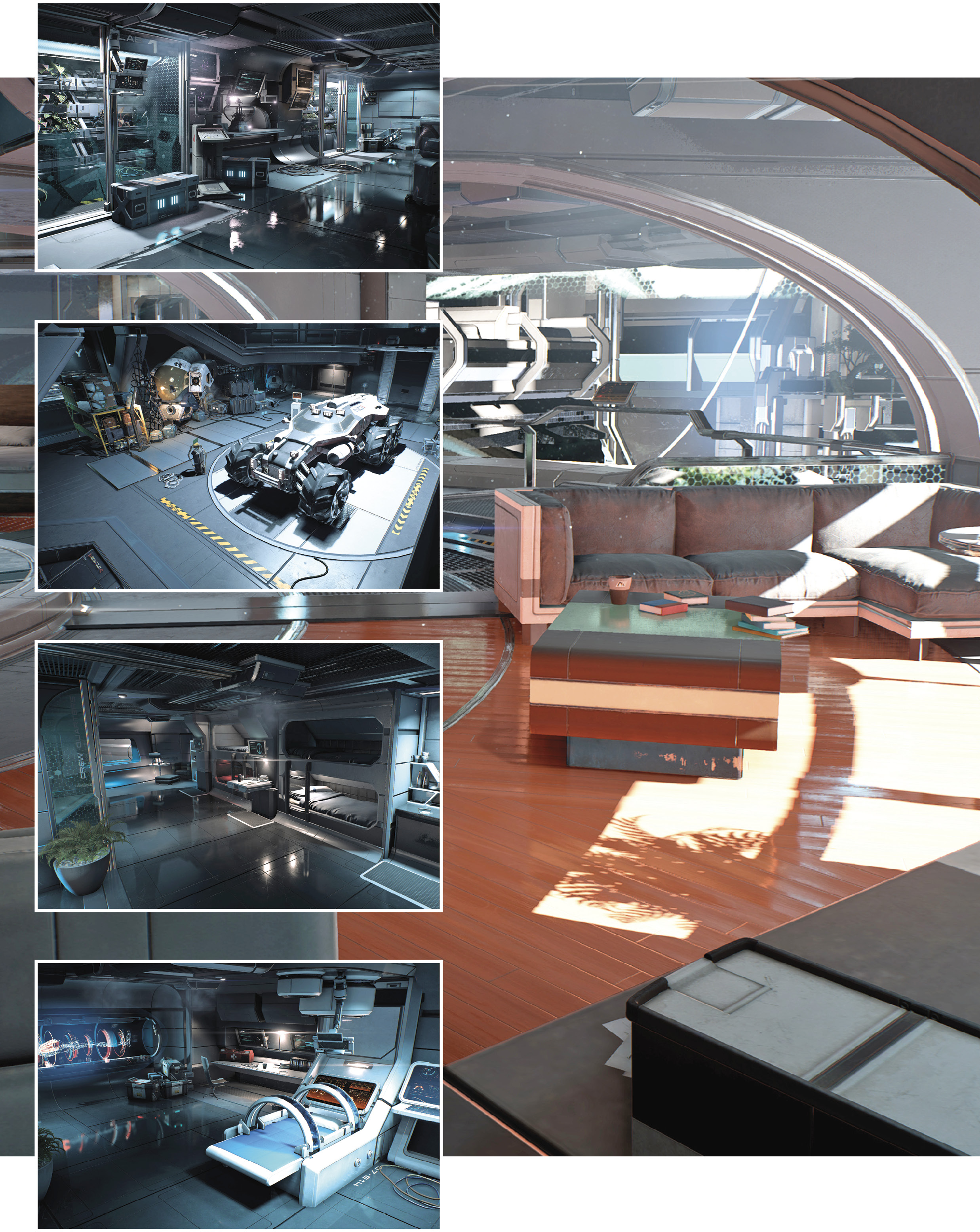
Movie Night was something the Tempest team and I really wanted to do—getting all the in-game crew together for a scene where they can relax, goof around a bit, and interact with each other. The trickiest part was knowing that we had 10 characters, and I could capture only five actors at once while shooting the performance capture. There are 10 characters in the scene, so every segment had to be shot twice to capture them all. I had to be methodical with my staging on/around the couch, including which actors played which characters and who could touch and react to each other realistically on the shooting floor. For example, Peebee and Kallo leaning on each other. Once I’d mapped out their positions/actor combinations, Jo Berry (the writer for the scene) and I sat down and brainstormed what kind of interactions those characters could have, then she wrote the script. The performance capture shoot was challenging, but we got it all. Then I had to brute-force the syncing of the dialogue and reactions when the characters react to the same cue, even though they were shot in different takes. I’m very proud of how it turned out.
MASS EFFECT: ANDROMEDA IS A STORY ABOUT EXPLORATION. WHAT WERE THE CHALLENGES IN TELLING THIS STORY?
Real exploration includes vast swaths of time that are mind-numbingly boring. Especially space exploration. Yes, landing on Mars for the first time would be thrilling. Then you realize that it’s mostly dust and rocks. A little ice at the poles. For a specific subset of people, that would continue to be thrilling for months, but most of us would quickly get bored of the majority of planets we’d land on. So we have to keep it as exciting as possible while still maintaining that sense of the new and the unexplored. It’s a balancing act.
HOW DO YOU WEAVE THE NARRATIVE OF A GAME THAT IS LARGELY OPEN TO PLAYER DECISIONS?
Painfully. Branching narrative means branching cinematics and I cannot understate the amount of work that requires. We do it gladly—that’s the entire point, after all—but there are times when we decide to go big on a choice knowing that means we have to go small on another to keep the project in scope.
HOW DO YOU MAXIMIZE CHARACTER DEVELOPMENT AND STILL GIVE THE PLAYER AGENCY IN THE STORY?
We pick our moments very carefully. For me, as a director on a scene-by-scene basis, the most effective way is to focus on the NPCs. I know exactly what they want and how they’re going to react to the player character, so I put a lot of work into their emotions and reactions. If that works as intended, the player will feel the emotions that Ryder would. There’s nothing worse for the player than tearfully making the choice to kill an NPC, then I cut back to their avatar grinning like a maniac. So again, it’s a balancing act—how much character development can the protagonist have before we’re shoehorning the player into a place they don’t want to be? Your avatar feels this emotion, no matter what you wanted them to feel. That’s a bad place to be, so we’re constantly walking that fine line.