
Elder Scrolls V: Skyrim Special Edition Guide Training Training Part 2: Combat, Development, and Crafting
Combat Improvement
Combat Improvement
By now, you should have skills that aid you in dispatching enemies through melee, ranged, or magical attacks. This section offers advice on maximizing your combat potential no matter how you decide to fight your foes.
General Advice
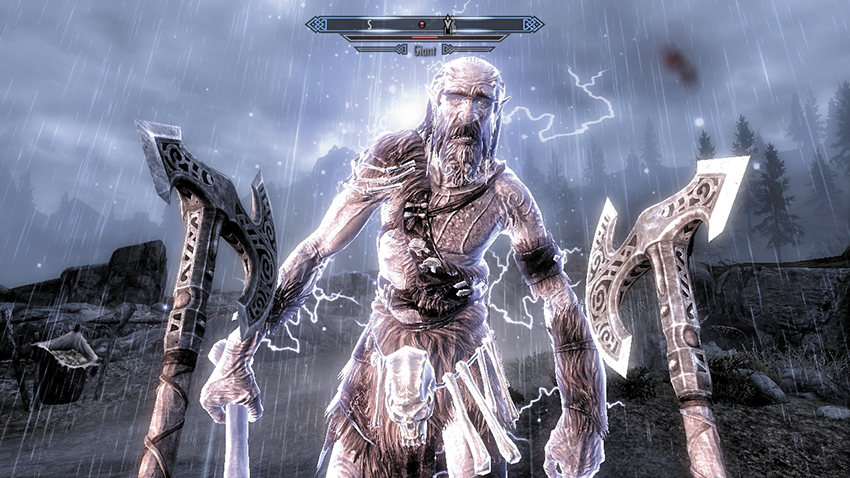
As you set off to explore the realm, you may be overwhelmed with the choices you can make. But remember this sage advice, and you’ll thrive in the wilds of Skyrim:
- Conserve your resources: Your three statistics—Health, Magicka, and Stamina—are all resources you need to conserve. If you sprint into battle (using Stamina), recast your spells right before heading into battle (Magicka), or push on after a difficult battle without pausing to recover your Health, you’re at a disadvantage. Stop and wait for a moment (optionally swigging down a potion) to ensure all three stats have recovered fully before you continue.
- Remember your Shouts and powers: While most of your attention will be on the weapons, spells, or shield in your hands, remember that you have a third option at your disposal. Shouts and powers are among your most devastating abilities: They don’t cost anything to use, and they can dramatically turn the tide of battle in your favor. Make sure to Favorite them, and always know which one you have equipped. Then call on them whenever you need some additional offensive firepower.
- Consumable consumption: Do you find yourself struggling against a particularly troublesome set of foes? Then stop, rummage around in your inventory, and see if you have an item that might help. This could be a healing or fortifying potion, a poison for your weapon, or a scroll with a powerful magic effect. Don’t hoard scrolls; use them!
- Active effects: It’s easy to forget about the Brain Rot you contracted a few hours ago or not to notice when a blessing or buff has worn off. Check the Active Effects list in the Magic menu periodically to ensure you know what is ailing or enhancing you.
- The Favorites menu: This menu allows you to quickly switch between weapons and spells, and it pauses time when you open it, without blocking your view. This gives you a moment to consider your next move.
- Save early, save often! Although the game saves your progress automatically, it’s always prudent to save before trying something dangerous, like running down a hallway lined with swinging blades or investigating that ominous-looking tomb.
- Tuning in the difficulty: The System > Settings > Gameplay menu allows you to change the game’s difficulty at any time—even during combat—which you should try if you’re really struggling or if you’re having too easy a time.
Melee Combat
To maximize your potential in melee combat, choose a weapon you like, learn its rhythm, improve the associated perks, and try to find (or forge) the most potent version of it that you can. If you have problems effectively bringing down foes, be sure you know how to respond to and counter their attacks.
- Choose your weapon: Early in your adventure, try out a variety of weapons and combat styles and see what works best for you. Do you prefer one- or two-handed weapons? If you enjoy wielding a one-handed weapon, do you want a shield, spell, or another weapon in your free hand? Then figure out whether daggers (fast, lowest damage), swords, axes, or maces (slow, highest damage) are your favorite. By learning what you’re most comfortable wielding, you can choose the perks that complement that style.
- The rhythm of combat: Once you’ve settled on a weapon or combat style, practice your tactics. Remember that you and your opponent have a regular attack, a power attack (holding the Attack button down for a slower but more damaging strike), a block (raising your shield or weapon to deflect an enemy blow), and a bash (hitting your foe with a shield or the flat of a weapon). Try to get a feel for how long it takes you to perform these actions with your chosen weapon and how long it takes for your enemies to do the same. As your sense of timing improves, you can better decide whether to attack or defend during a fight, and choose your tactics more strategically.
- Observe and counter: Combat involves more than just attacking. You can take down enemies faster and more effectively by observing their actions and choosing the appropriate counter.
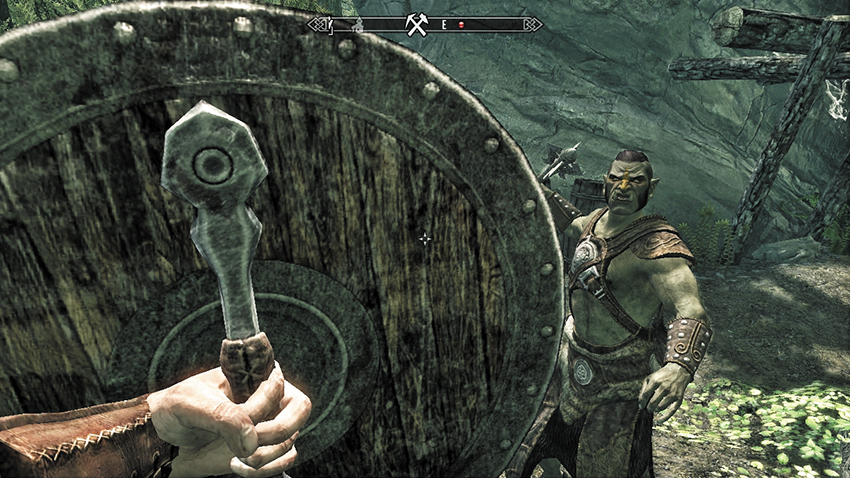
Block if your enemy uses a regular attack.
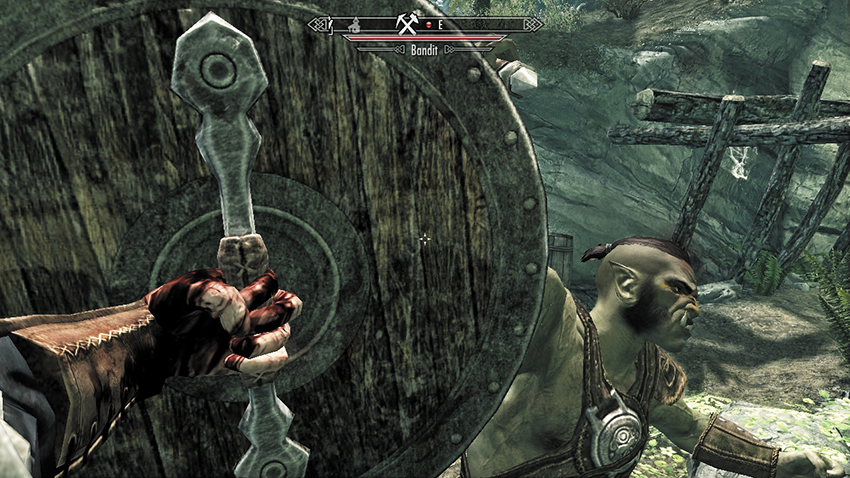
Bash if your enemy uses a power attack to quickly interrupt and stagger them.
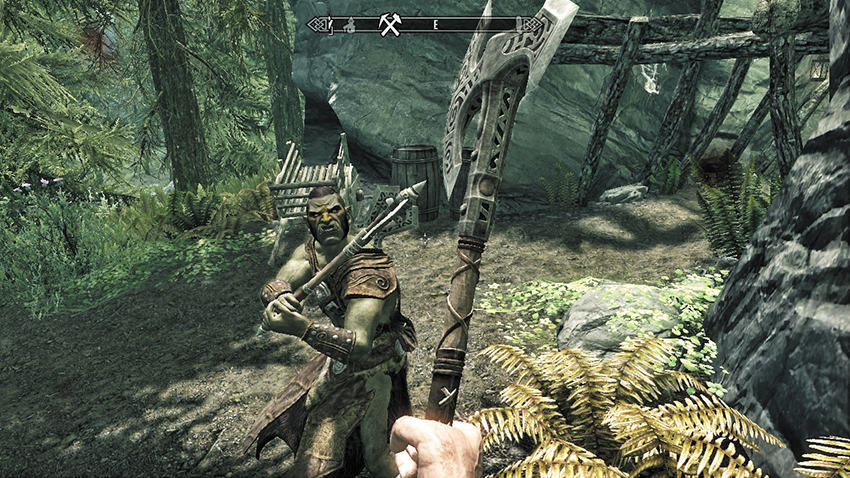
Power attack if your enemy is blocking to break their block and stagger them.
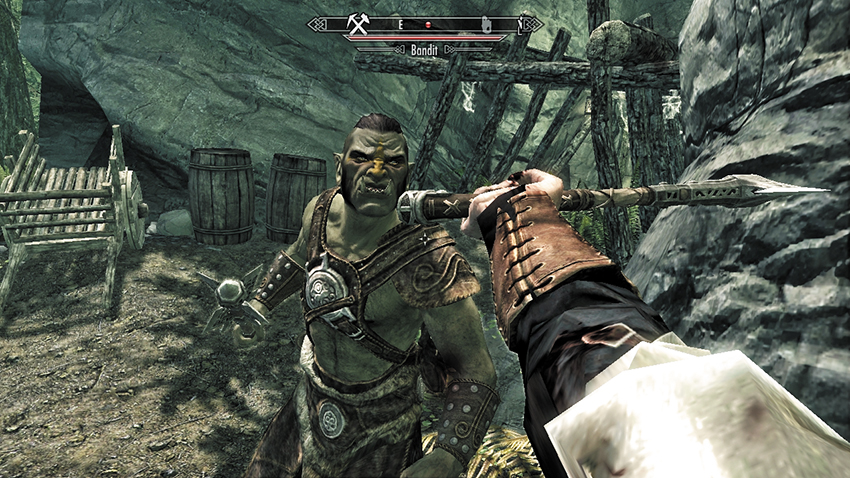
Attack swiftly if your enemy is staggered to cut them down.
Wearing a Cloak: The Destruction line of Cloak spells (Flame, Frost, and Lightning) are ideal if you plan to engage in close combat—even if you’re primarily a warrior with little interest in magic. These spells allow you to damage enemies with both your weapons and the cloak’s magical effects, without requiring much attention (or Magicka expenditure). Cloak spells also don’t damage your Followers, so there’s no need to worry in close quarters.
Ranged Combat
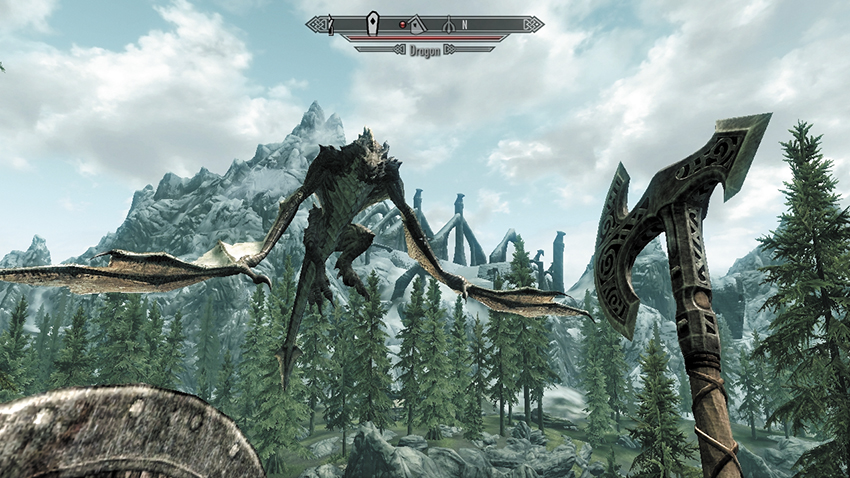
Whether you’re an accomplished archer or learning how to fire an arrow for the first time, it’s always worth keeping ranged combat in mind.
- The backup bow: It always pays to keep a bow and some arrows on hand, even if you don’t plan on specializing in it. You never know when you might encounter a dragon or need to soften up a particularly difficult foe from range.
- Arrow gathering: Be sure to grab arrows at every opportunity. Since they have no weight, there’s no reason not to take and keep every arrow you can find. There’s nothing more frustrating than running out of arrows in the middle of a dungeon, especially if you’re focused on archery.
- Remember to bash: Don’t forget that you can bash with your bow. This usually gives you enough time to fire off one more shot or to sprint away while your enemy recovers so you can line up and fire again.
- Perks of power: Archery perks have a significant effect on your ranged combat repertoire, giving you the ability to zoom in, slow time, and stagger enemies after a successful hit. Just relying on archery can be a very satisfying way to play and can make hunting certain skittish animals, such as elk and deer, a lot easier.
- Ranged combat only: Rarely, you may encounter a foe that can’t be reached by melee weapons. On these occasions, a bow and arrow is imperative, unless you have a ranged spell.
Combat Tactics
- Get the gear: Be sure you’re searching for the correct gear. If you plan to focus on archery, dual-wielding, or another aggressive combat style, then offense is your best defense: Look for enchanted weapons and armor that increase your damage-dealing potential. It is often worth wearing a “weaker” piece of armor if it carries an enchantment that helps your damage output.
- Prepare poisons: Poisons are a great way of quickly increasing your damage potential. Keeping some poisons on hand (via Favorites) is an excellent way to deal with heavily armored warriors or mages using Wards. Even if your weapon doesn’t strike for maximum damage, the poison will.
- Speed and sidestepping: Use speed to your advantage. When wearing light armor or robes, you’re more agile than most of your opponents. This allows you to sidestep their power attacks (and then counter) or to sprint away if you need some space to recover and regroup.
- Staggering attempts: A staggered enemy is much easier to cut down with a flurry of attacks. Power attacks and bashes stagger most foes, but look for other effects that can achieve this, too, such as the Unrelenting Force Shout.
Magic-Based Combat
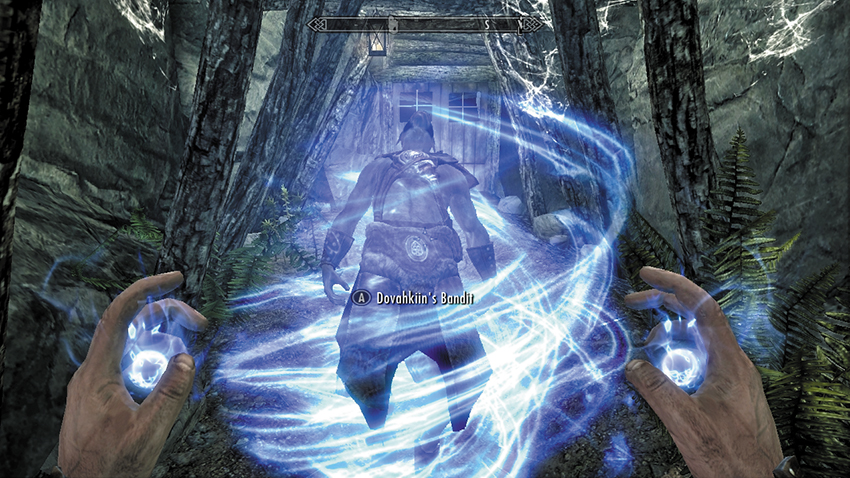
The five schools of magic offer a wide range of offensive and defensive spells to help crush your foes, shield yourself, or augment other combat styles.
The blended approach: In Skyrim, you don’t have to be a “pure” mage to enjoy spellcasting. Any warrior can benefit from a conjured ally, healing spell, or elemental cloak, and thieves can especially appreciate the benefits of Invisibility. Even if you don’t plan to focus on magic, look for spells that can enhance your combat style.
Spell-casting Rank perks: Each school of magic has a series of “Rank” perks (Novice, Apprentice, Adept, Expert, and Master) that dramatically decrease the cost of spells from that school. These perks are critical to your ability to effectively use spells from that school and should be a top priority for any serious mage.
Offensive Spells
Know your area of effect: Many spells damage anything in a wide area. While you can’t be hurt by your own spells, your Followers can be, so use them with care to avoid any unintended consequences. On the other hand, if your only Follower is a summoned Atronach, use spells that match their element at will, since they’re immune to them.
Set your own traps: Rune traps allow you to turn the environment to your advantage. Set one in a narrow space enemies will have to run through or drop one in a hall you can retreat past if combat goes poorly. In a pinch, you can also cast them directly at an enemy, although your other spells are much more cost-effective.
Raising the walls: Though initially somewhat weak, Wall spells become dramatically more powerful at higher levels. Cast them at the feet of a waking Draugr to kill it before it can finish standing up, or back down a hall as you cast a wall out in front of you. Any enemies that advance will blindly race through your death zone.
Conjuring up companions: Be sure to summon a creature or raise a zombie before heading into any major battle. When summoning a creature, pick the one that’s best for your situation. Do you need the ranged offense of a Flame Atronach or the melee toughness of a Frost Atronach? When raising a zombie from those you’ve recently slain, pick someone you haven’t looted already; even zombies are more powerful when well armed and armored.
Defensive Spells
Know your defenses: Both the Restoration line of Ward spells and the Alteration line of Flesh spells offer defensive options for spellcasters. Wards require concentration (tying up a hand) and have a per-second cost, but they are more effective against spells. Flesh spells have a higher initial cost but don’t require concentration. Use Wards when fighting mages, Flesh spells against melee foes, or both in large or mixed combats where you need the extra protection.
Be ready with healing: There are a variety of healing spells to choose from; some heal a large amount of Health at once, while others heal over time at a reduced cost. Most heal only you, but some can heal your Followers as well. Learn a variety of these spells (and flag each of them as Favorites) to be prepared for any situation.
Learn spells for specific situations: Delving into a Draugr crypt? Then pick up a Turn Undead or Detect Dead spell. Exploring a shipwreck? Then grab Waterbreathing to make your diving stress-free. Whatever your need, you can probably find a spell to make your exploration easier or more entertaining.
Stealth-Based Combat
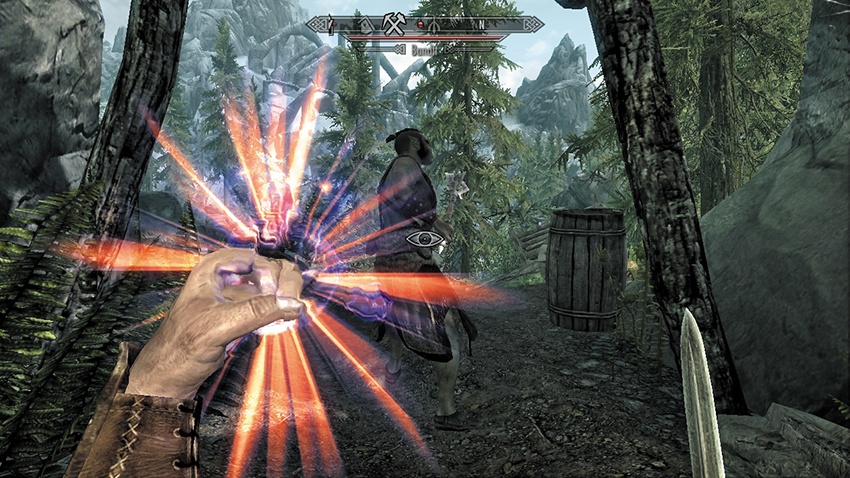
Those who lurk in the shadows, hoping to sneak past enemies or a guard undetected, would do well to heed the following advice:
- Gain the right perspective: It’s dramatically easier to Sneak using third-person view, since you can see patrolling enemies more easily than in first-person.
- Stay hidden: Line of sight is by far the biggest factor in determining whether an enemy can see you. Stay hidden behind walls or cover to remain out of sight. And it goes without saying that using Stealth mode (crouching) is imperative.
- Seek magical aid: Invisibility and Muffle conceal you from your enemies’ sight and hearing, making it much easier to sneak by unnoticed. Learn these spells, collect Invisibility potions, and look for Muffle-enchanted gear to improve your chances of a successful stealth experience. Then give the same augmentations to your Followers. Otherwise, lurk alone.
- Draw out your foes: Enemies leave their posts to investigate sounds, such as an arrow impact. Place your shot carefully, and you can draw them out into the open, giving you a chance to perform a Sneak attack, fire a second arrow (this one into the enemy himself), or slip by undetected.
- Lure foes into traps: For an even more devious twist, shoot an arrow near a trap, and the enemy that goes to investigate may blunder into it and set it off. Combine this with a well-placed Rune Trap spell to create your own kill zones!
Choosing Favorites
The Favorites System means less time spent rummaging through your inventory and more time spent in battle. It allows you to rapidly swap between your preferred weapons, spells, and outfits more easily and to quickly ready a power, potion, or scroll when necessary. Because it takes the hassle out of managing your inventory, it also helps you fight more effectively: you won’t hesitate to change your gear when you can do so in a matter of seconds.
Here is some additional advice on selecting the most effective Favorites:
- Melee combat: Keep your weapon (or weapons) of choice in your Favorites menu. If you use a one-handed weapon, tag a shield as well. If you have enchanted weapons that you only use occasionally (such as weapons with Soul Trap or Paralyze enchantments), those are good choices as well.
- Ranged combat: Always keep a bow in your Favorites list—even mages may need to fall back on it when battling dragons. If you’re primarily focused on Archery, you may want to Favorite specific types of arrows as well—your weakest for dispatching standard enemies and your best for dragons or a particularly dangerous boss.
- Spellcasting: Tag your favorite offensive and defensive spells, including your best Healing spell. Warriors should tag a Cloak spell to make sure they remember to cast it; Thieves should tag Invisibility and Muffle, and mages should tag all the key elements of their arsenal.
- Shouts and powers: Don’t forget to add Shouts and powers to your Favorites list! Your Racial power and Standing Stone power are both essential. Also tag the Shouts you use most frequently.
- Armor and outfits: Depending on your play style, you may find it helpful to Favorite armor or sets of clothing as well. Thieves in particular may find it useful to Favorite a set of armor or clothing to use when sneaking and another to switch back to if you’re discovered!
- Items: Tag a set of healing potions as a Favorite so you can quickly swig them in combat without frantically fiddling with the inventory during a fraught battle. Warriors may want to do the same with stamina potions and mages with Magicka potions.
- Activities: Don’t forget to Favorite items depending on your current activity. If you’re exploring a dungeon, you may want to Favorite a torch or staff for light. When hunting for a hidden treasure, Favorite the treasure map for quick reference.