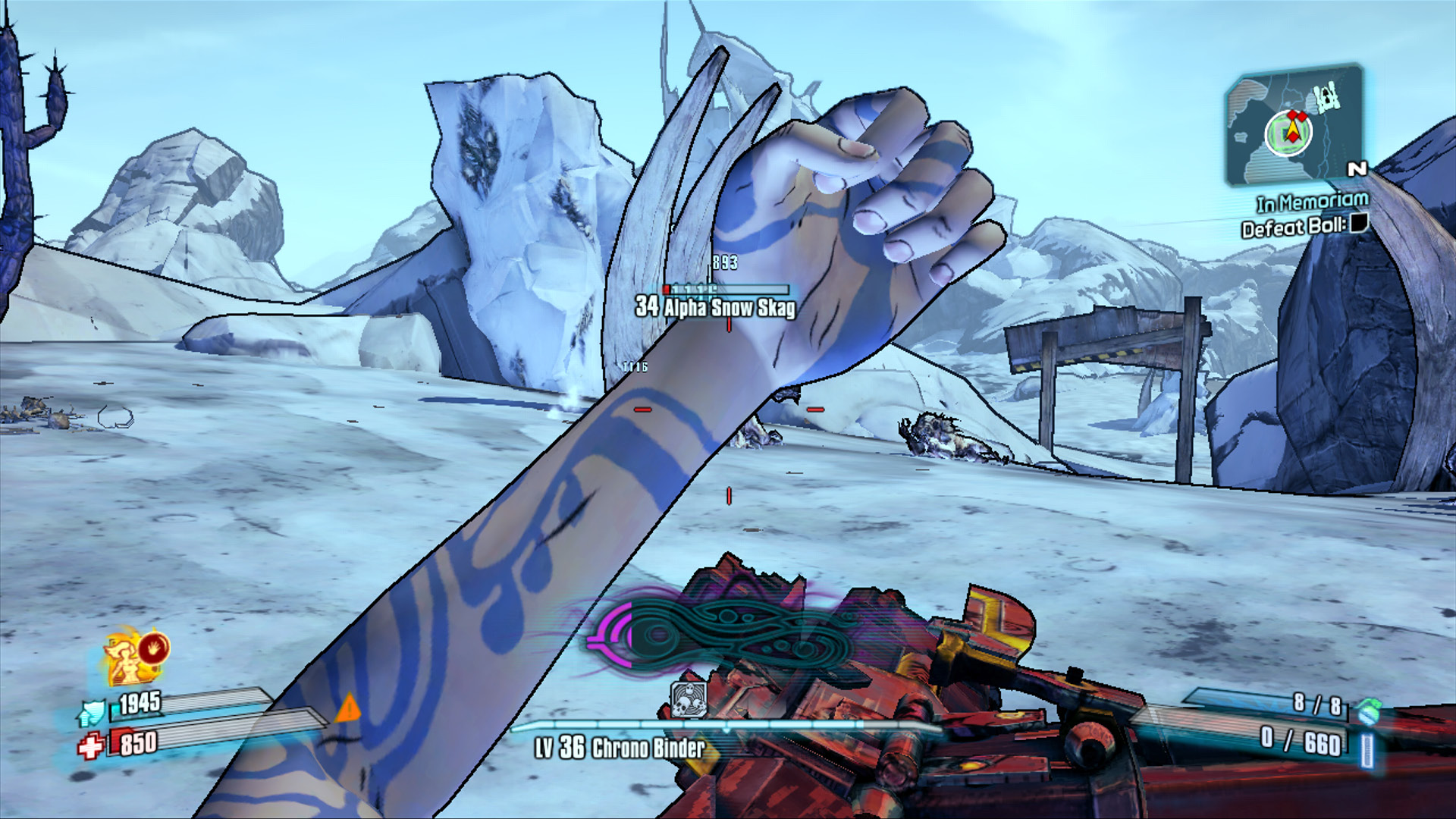
Most of your interaction with the natives of Pandora involves exchanging gunfire. That’s their loss—you’re probably a very nice person, so long as others don’t approach you by snarling and opening fire. But that’s what most people (and things) here are going to do, so you’ll need to be comfortable with munitions.
Each gun you receive has its accuracy stat on the item card, and of course the higher the number, the better it is for marksmanship, but that number doesn’t tell the full story. This figure indicates how likely the gun is to fire dead center, but it doesn’t reveal how the gun’s aim and spread are affected by the gun’s recoil. It also doesn’t account for the stability of the weapon, which is expressed as the natural, uneven sway you’ll experience just as a function of being a person holding an object and pointing it at other objects. Weapons may have unusual ammo types or behaviors that aren’t expressed on the weapon card, and pieces from different manufacturers handle differently, anyway.
Accuracy isn’t the be-all, end-all, and you might find that some gun types, or even certain gun types from only certain manufacturers, handle the way you feel like a weapon should handle for you to be happy with it, regardless of what the accuracy stats say. And higher accuracy isn’t even always necessarily better. Against swarms of wildlife scampering and swarming at close range all around you, like varkids or skags, accuracy will be the last thing on your mind.
If you fire without aiming down sights, the weapon will be hip-fired, and accuracy won’t be as good as it could be. Most weapons really won’t be viable when they’re outside of close or mid range and simply hip-fired. If a weapon happens to have an exceptionally tight reticle without zooming in, then perhaps it’s still viable, but apart from Hyperion weaponry, most guns require you to zoom for distance work. To draw a tighter bead on targets, you can aim down the sights of your current weapon. This improves accuracy greatly, and depending on the optics on your current gun, this may enable a helpful zoom view.
Accuracy is expressed visually via the cone of fire—a four-point reticle in the center of the screen that blooms or shrinks to show how stable the current weapon is handling. It expands while you’re firing or sprinting, which represents a decrease in the accuracy of the weapon in hand. When at rest, the cone of fire shrinks to a minimum width, which is finer or broader depending on the gun. Weapons with a particularly tight minimum cone of fire make good hip-fire pieces. When aiming carefully, aim down the sights. This shrinks the cone of fire down to the center of the screen right away, even while jumping. The recoil generated by repeated fire still means you’ll want to fire mostly in controlled bursts even while zooming in, unless the weapon in hand is extraordinarily stable. Take the extra time to find an aiming sensitivity setting you’re really comfortable with, then use a little discipline and aim carefully for critical areas!
Dealing All the Damages
So, where should you choose to aim? Well, you can just aim ambivalently in the general direction of whatever beast is drooling on approach, and some wild weapons even force that tactic, but if you’re toting precision hardware or a scope or both and have a little spare time to aim, you should go for Critical Hits.
Hello…Goodbye.
Different types of enemies have different extra-vulnerable areas. Against flesh-and-blood humanoids, it’s naturally the noggin, so shoot those troops in the head. Other creatures have squishy heads, even if they’re small targets relative to the size of the creature, like with skags and bullymongs. But against loaders, their weak points are the red sensor “eyes” and the joints where their robotic limbs connect to their torso—there’s not really a vulnerable “head” to speak of. And some creatures, like spiderants and varkids, have their weakest areas around their tails or hindquarters, so they’ll seek to wall off access to their backsides with their sturdier fronts.
Apart from going for Critical Hits, you can take other measures to maximize damage. The new Eridium-derived Slag element, when applied to enemies, doubles all damage they receive from non-Slag weapons. This makes even damage from standard ammunition heavy, especially Critical Hits. Fire, Shock, and Corrosive weapons each have types of enemies where one will fare better than the others, pressing your advantage further if you arm correctly. And of course, every character has skills that give a straight-up increase in particular types of damage, like guns, melee, grenades, certain elements, and so on. And some skills between characters work beautifully together—Maya’s Reaper skill increases her damage against enemies with more than half health, while Zero’s Killing Blow skill radically ramps up his melee damage against low-health foes. Maya softens them up, and Zero finishes them off.
You’ll inevitably run out of ammunition in your current magazine while dumping outlandish firepower into the beasts of Pandora. When a mag runs dry, the character you control will automatically reload the weapon. If you wish to reload before every round is expended from the magazine, press the reload button or key. This doesn’t interfere with your character’s movement. So if you’re in a tight spot and low on ammo, there’s nothing stopping you from sprinting away from enemies while reloading! He who fights and runs away lives to fight another day, as they used to say back in the old Hyperion Claptrap factory.

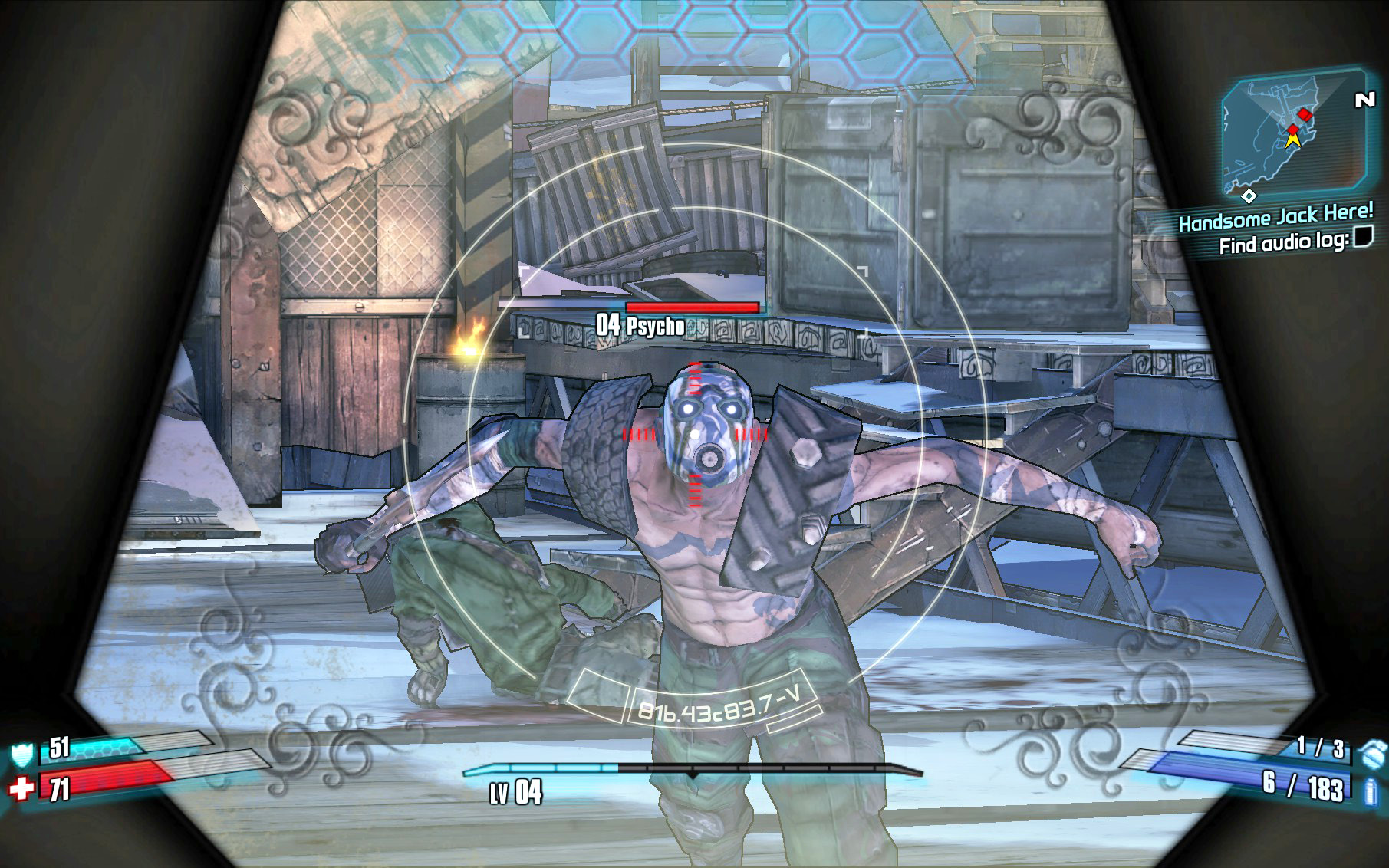
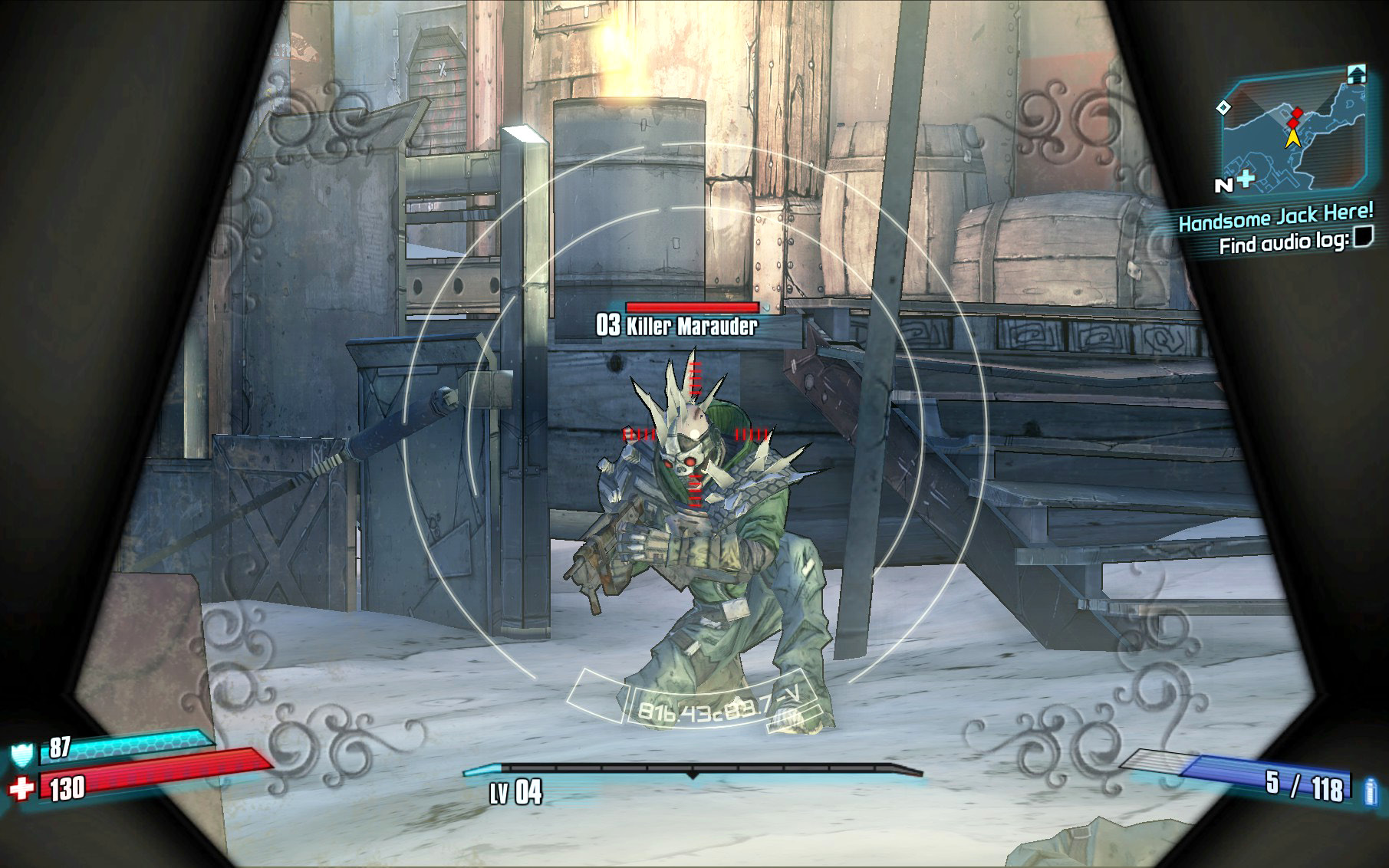 Hello…
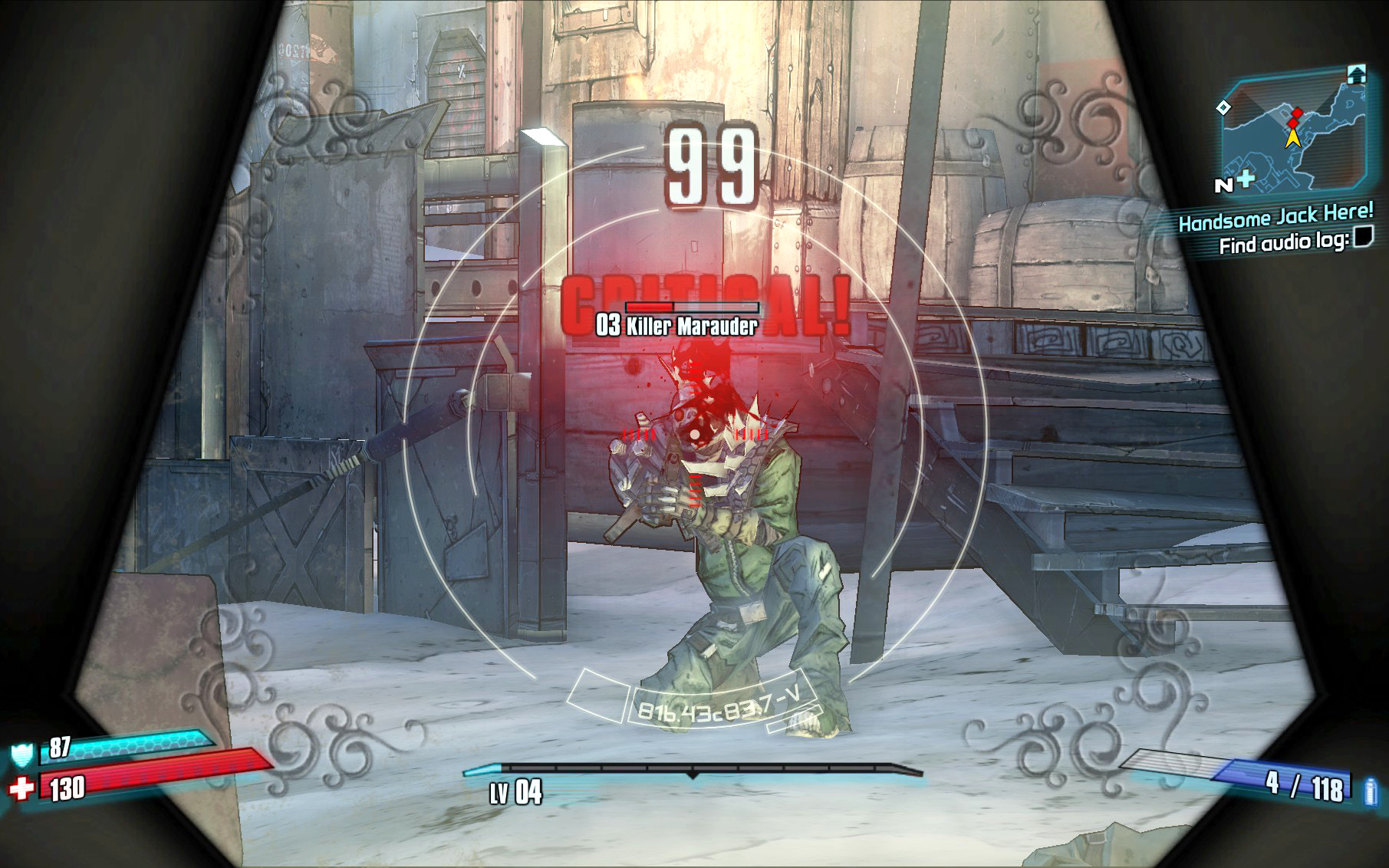 Goodbye.