
The Witcher 3: Wild Hunt The Complete Edition Guide Training
Movement
It is important to learn the basics of movement so you can maneuver your way into and out of any situation, whether it’s a leap onto a horse, or a slide down a mountain. This section guides you through the main elements of movement.
On Foot
Geralt can walk, run, or sprint through the world (the latter of these costing Stamina). You can combine different speeds of movement with your ability to jump to climb ledges, or vault over large gaps.
Movement during combat is handled using the same controls, but Geralt himself moves differently. He naturally points himself at the nearest enemy that he’s in range of striking, or has been attacked by, in an attempt to prevent attacks from behind. You can also lock your camera on to enemies, which focuses Geralt’s movements entirely around them. This is especially useful during one-on-one encounters, as all of Geralt’s movements, evasions, and attacks, are aimed at that target. In encounters where Geralt faces many foes, it’s important to be more flexible about how Geralt moves through the battle.
Sliding
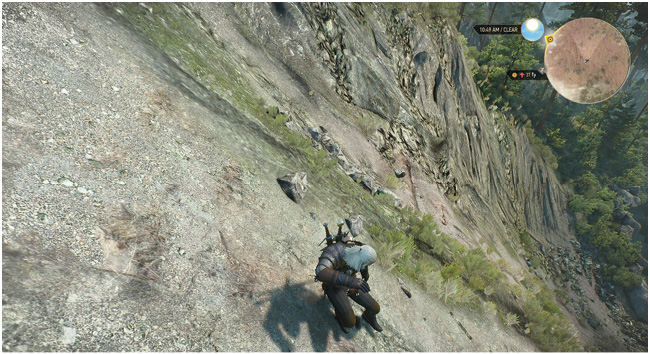
Geralt starts to slide down a hill if the terrain is too steep to traverse. You can control his slides downhill to a limited degree, speeding him up and slowing down as needed, and you can steer him. If you’re willing to risk serious injury or death, this is one of the fastest ways down a mountain, short of taking leaps off of sheer cliffs to your certain death. In certain areas, such as the highest point of the island of An Skellig, sliding down mountains is practically encouraged!
Climbing And Jumping
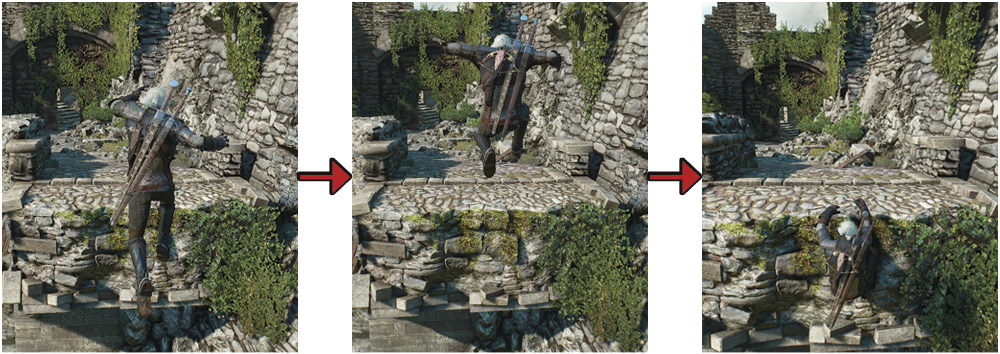
Geralt can jump over small obstacles, clamber over fences and onto crates, climb ladders (by standing near one and using the climb button), or jump up to reach climbable ledges. Combined with Sprinting, you can make some impressive long jumps into otherwise isolated areas. You can also catch ledges as Geralt is falling, so if you’re just short of making a jump you’re able to grab the far ledge. Hold down the Jump button as you’re in mid-air to enable Geralt to grab ledges he’s leaping toward, or press the Jump button just as you reach the ledge.
Swimming
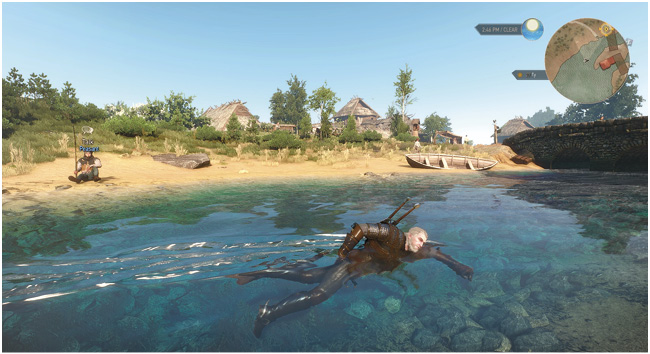
Geralt is a powerful swimmer, able to “sprint” using the same controls as you would on land. You can also dive underwater to explore areas and seek treasure, just be aware Geralt can’t stay underwater forever. If he runs out of breath, he loses Vitality over time until he either dies or gets air in his lungs. Need to lengthen your time underwater? Swig down a Killer Whale potion before you submerge.
Geralt’s ability to fight underwater is limited entirely to his crossbow, so try to avoid underwater combat unless absolutely necessary. use auto aiming for aiming and firing your Crossbow if you’re caught by underwater foes. Or fight from a riverbank using ranged attacks such as Signs and Bombs, as well as crossbow bolts.
Roach The Trusty Steed: Riding On Horseback
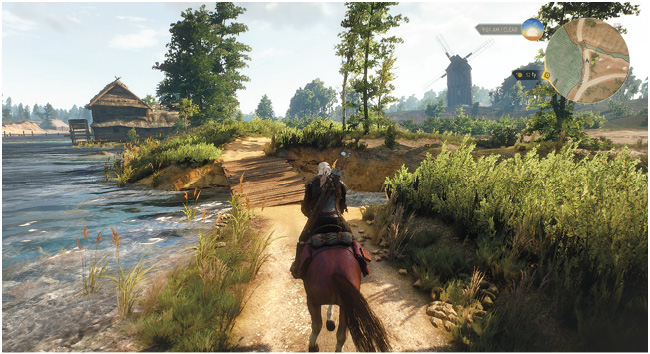
Geralt’s trusty steed, Roach, handles similarly to Geralt himself. Roach is a constant companion and is yours from the start of your adventure. If you ever get separated from your horse, just whistle for her. If you need to make a quick escape, mount Roach while she or Geralt is moving.
Roach obviously cannot climb up sheer cliffs, but she can make even longer jumps than Geralt if you have enough speed. Roach naturally proceeds at a slow trot, which allows you to easily navigate through highways, byways, and villages without causing a disturbance by running into people. You can also hold down the Sprint button to gallop, while a double tap before holding the button down spurs Roach into a full canter. You can maintain the canter only for as long as Roach has Stamina (displayed at the bottom of your screen).
Roach The Untrusty Steed: What The Buck?
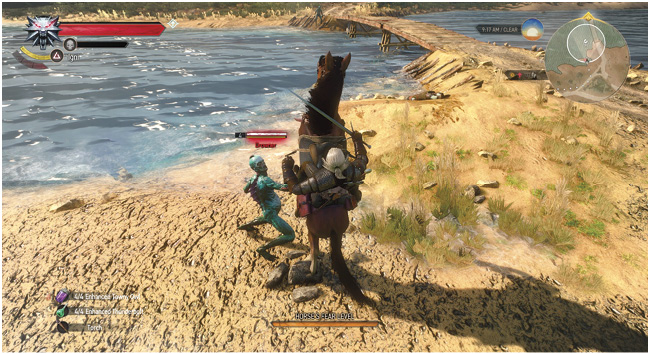
For all the loyalty, Roach is just a horse, and there are things Roach simply does not like to deal with. On this list is just about anything that possesses killing intent toward Roach or Geralt. If you’re on horseback and enemies draw close, Roach begins to panic. If the Horse Fear Meter fills up, Roach bucks Geralt off, causing damage and stunning you, leaving you vulnerable to foes. Either ride past the enemy at a gallop, or dismount and fight. You can fight while on horseback, but it is a risky proposition when you factor in Roach’s skittishness. Roach and other horses can kick you or your enemy while in a panic, which can also stun you, so be extremely careful when battling around Roach.
Riding The Road (Automatically)
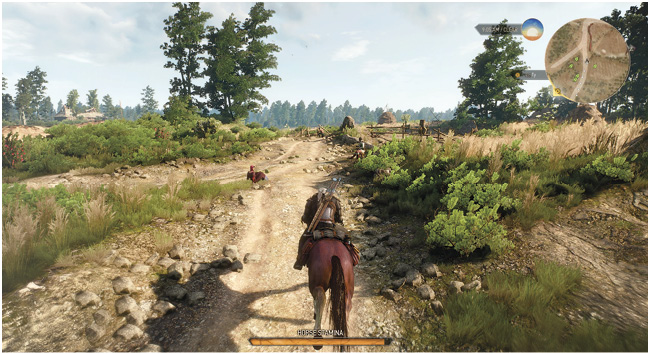
As long as the Sprint button (and only the Sprint button) is held, any horse you’re riding automatically follows the road. Horse Stamina is not depleted while automatically riding the road. Manually controlling your steed changes the horse’s heading during turns, or if you wish to depart from the road. When you’re back on the road, simply press the Sprint button again to automatically engage your gallop. This ability isn’t available during Horse Races or when a horse must be ridden quickly during certain quests.
By Boat
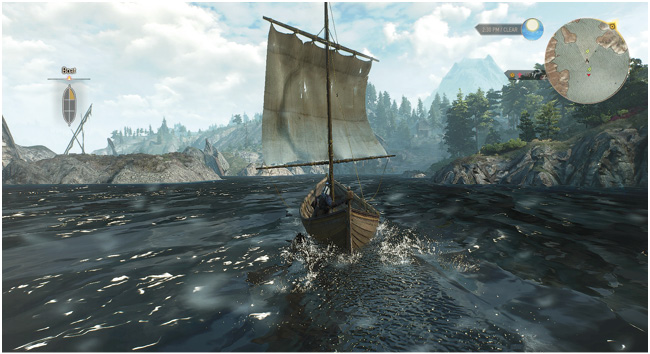
The islands of Skellige seem like an obvious place for sailing, but even in Velen (No Man’s Land) there are rivers and lakes that are more easily crossed by boat—places Roach cannot reach. You can use the crossbow while on a boat if necessary, but avoiding combat altogether is a better choice if possible. The small sailboats Geralt can commandeer aren’t the most durable craft and can be sunk by persistent threats, leaving you stranded in hostile waters.
Boats can sink if they take too much damage, and their rating is indicated by an on-screen display that appears when you travel by boat. Enemies may try to attack while you’re sailing, and can rip apart a boat with horrifying ease. Keeping your speed up and avoiding such foes is usually the best course of action. Running aground by scraping on rocks or beaches also may damage a boat, so careful navigation is always required.
Preternatural Planning: Witcher Senses
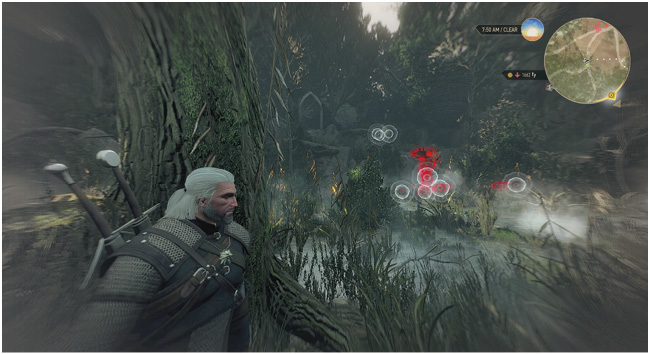
A Witcher possesses preternatural senses, greater than those of any normal human, and Geralt’s have been honed over years of monster slaying. Whenever your adventure calls for it (indicated by an objective prompt in your quest, Geralt’s self-narration, or a clue from a quest you’re following), that may mean there’s something of interest that your Witcher Senses can reveal. Usually Witcher Senses are used to spot possible evidence of a monster’ passing during a Contract, but they can be used to locate loot, find herbs to pick up in a field, or to search for evidence of a crime or nefarious activity. You cannot use these senses while sprinting or riding at a full canter. During combat (on foot), you can’t use Witcher Senses either, but you can while attacking on horseback; try choosing your next target from any surrounding threats while maneuvering between foes.
Feel free to employ Witcher Senses at any time you like; such as a walk through a forest so you can “see” the sounds of wildlife (and more importantly, monsters approaching).