
The Witcher 3: Wild Hunt The Complete Edition Guide Training Combat
General Advice For Combat
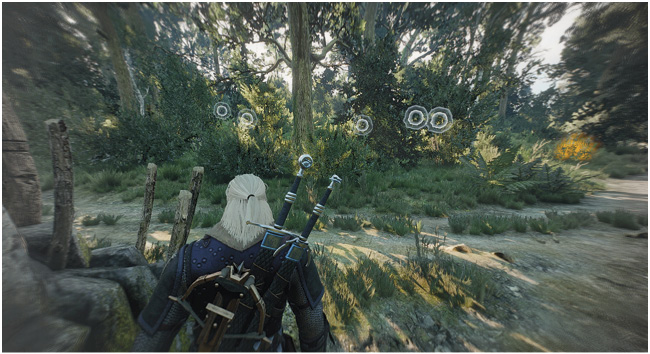
The following tactics are intended to remind you of some basic rules on preparing for and engaging the enemy under any circumstance.
Pay attention to your surroundings: The fights that go the worst are the ones that start when the enemy has surprised you. If you’re on foot scouting for supplies, pay attention to your Witcher Senses, which indicate nearby sound or movement.
Meditate before and after a battle, if possible: If you’re lucky enough to see a battle coming, meditation is useful before it happens. On Story and Sword! or Just the Story! difficulty settings, Geralt completely heals with a single in-game hour of meditation. More importantly, you can replenish potions, bombs, or oils that you’ve used if you have the materials on hand. After a battle, you can mediate for another hour to undo any damage.
Drink potions, apply oils, and prepare your quick-use items: If you know what you’re going to fight before the battle begins, use the appropriate oils on your weapons; you can’t do so while in combat. If you have potions that are effective against your upcoming opponents, use them. If you’re ambushed and don’t have time to set up for a fight, it helps to have general quick-use items prepared in your shortcut slots. That way, you at least know what you have immediately available for use even when you’re blindsided.
Use your Mutagens: Mutagens can be used to create decoctions that are supremely useful when taken alongside regular potions. However, you should definitely save some to enhance sets of Character Abilities you’ve chosen in the Character panel. Serious gains in Geralt’s stats are possible, making the Witcher more durable and harder hitting with both sword and Sign.
Use Quen: It’s usually a good idea to have Quen active before combat begins. It’s too useful to be able to absorb a hit with no consequences, and if you’ve powered Quen up in your Character Ability trees, it can be even more effective as your last line of defense.
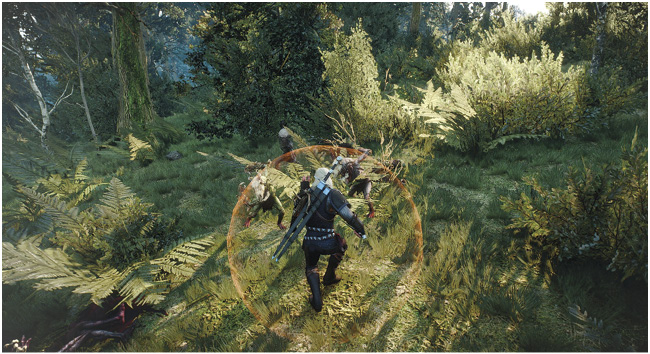
Open the fight on your terms: Whether your plan is to simply charge into the crowd or snipe from afar with explosive crossbow bolts, you should always try to open battles with the initiative. Have buffs ready and oils applied, then strike first and strike hard. Once the fight is on, you have significantly less control over what your enemies do, so make those opening seconds count.
Strike the enemy from their flanks: If you can, attacking an enemy from the side or back can be devastating, even against well armored foes. Once combat begins, most enemies face you. However, well-timed dodges and evasive rolls can create opportunities to cause devastating wounds to your foe.
Do not allow yourself to remain surrounded: Geralt and Ciri are both quite maneuverable on their feet. Use this skill to avoid being encircled by the enemy. It’s much harder to defend yourself if you’re being attacked from all sides at once.
Destroy the ranged threats first: When dealing with many foes at once, it’s often easy to get distracted by serious threats, especially if you’re being assaulted from all sides. Bow- wielding humanoids can deal heavy damage while you’re occupied with melee fighters. In these instances, run down and eliminate the ranged threats as soon as possible. Against humanoids, catching bowmen before they can switch to their own swords results in certain death for them, and affords you one less problem to worry about. When it comes to monsters, however, those with ranged abilities are never the weak foes of the group. If you mean to take them out first, they will make you work for it.
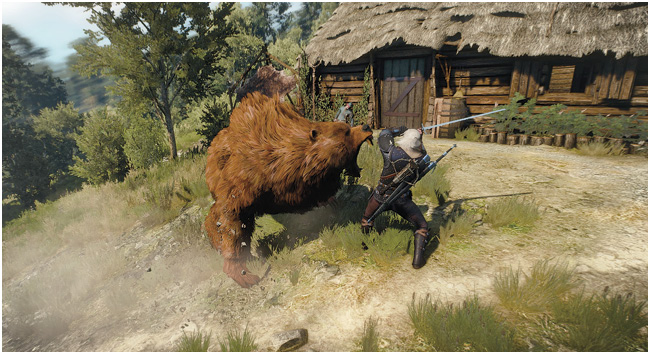
Manage your Stamina: You need Stamina to fight effectively with sword and Sign alike. Without Stamina, you cannot evade, dodge roll, parry, counter-attack, or cast Signs. You can use potions during combat to regenerate Stamina quicker, but the real essence of Stamina management is to make the correct moves at the appropriate time. One solution is to wear light armor, but this comes with its own set of problems.
Manage your Adrenaline: Adrenaline builds up with every blow you land on the enemy, and is lost for every blow you sustain. Each Adrenaline point earned improves weapon damage by 10%, maxing out at a 30% increase. Getting wounded is something you always want to avoid when it comes to managing Adrenaline, but there are certain abilities that require spending it. Save Adrenaline for crucial moments in a fight to maintain that bonus damage for as long as possible.
Use Signs wisely: Signs are one of your greatest combat advantages, but they can also get you killed just as easily. Casting a Sign takes all of Geralt’s Stamina, and he cannot cast again until his Stamina is fully restored.
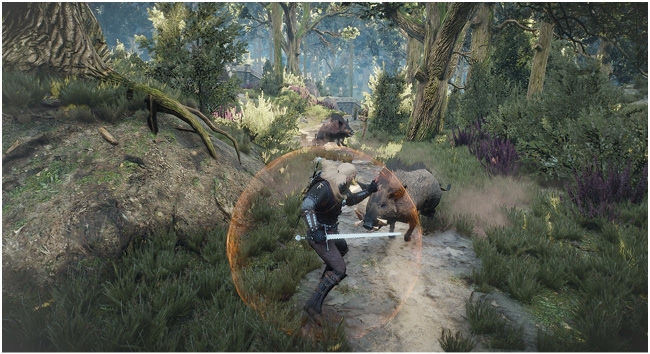
Maintain your equipment: Don’t go into battle with damaged weapons and armor. Repair at a blacksmith or armorsmith (or use repair kits) on a regular basis to maintain your gear. It also helps to use grindstones and workbenches to further improve the effectiveness of your swords and armor, if only for a short time. Yrden is also effective at slowing opponents down enough to set up flanking opportunities.
Know your enemy’s level: An enemy’s health bar reveals everything you need to know; whether they are harmed by a silver sword (silver health) or steel sword (red health), whether they are an easy kill (shown by their level compared to yours); a worrisome challenge (shown by the skull instead of their level number); or a foe you’ve locked onto (shown by a gold diamond around their level number).