
Super Smash Bros. Ultimate Guide Wii Fit Trainer
Brawler Arsenal
Grounded Attacks
Neutral Attacks
Neutral Attacks
| Move | Damage | Note |
|---|---|---|
|
Neutral attack 1 |
2 |
Kicking hitbox in back. |
|
Neutral attack 2 |
2 |
— |
|
Neutral attack 3 |
3 |
— |
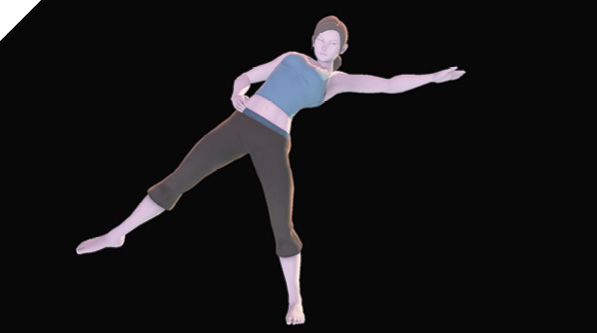
Wii Fit Trainer’s routine begins with a simple arm stretch, leg extended backward for balance. Both the extended arm and foot have hitboxes (along the area under her arm, accounting for crouchers), so Wii Fit Trainer covers front and back with a quick neutral attack! Hold down a neutral attack input, and Wii Fit Trainer whiffs this attack until you let go. On hit (or whiff if tapping instead of holding neutral attack), Trainer goes from extending an arm to a raised deep-knee stretch, which falls into a forward lunge. Wii Fit Trainer moves forward a little during this three-hit combo. The hitting area for the second and third stretches surrounds the forward knee. Enemies struck by the third hit—the knee lunge—will find themselves planted in the dirt briefly, until they shake out of it.
While the rear-facing kick on the first neutral attack is weak in terms of damage, it has shocking knockback power once foes have damage built up to medium percentages or higher. Like with the back-hitting portions of side tilt, you can use this on purpose after jumping just past an enemy with a double-sided neutral air attack or forward air, landing up close with Wii Fit Trainer’s back to them.
Dash Attack
| Move | Damage | Note |
|---|---|---|
|
10 |
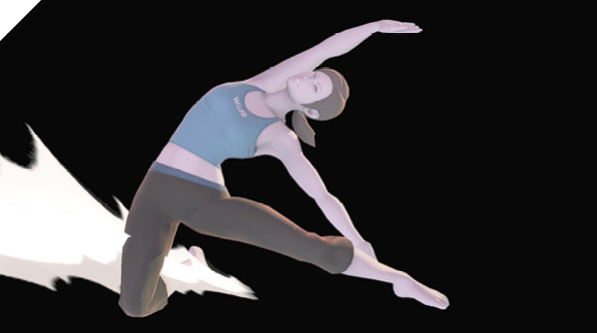
From a dash, Wii Fit Trainer slides to a stop while executing a side and spine-bending stretch. The torso is tilted sideways with both arms extending forward, making a big launching hitbox in front. The launching angle is slightly different depending on whether you hit early or late with the dash attack’s hitbox.
Defensive Attacks
Tilts
| Move | Damage | Note |
|---|---|---|
|
Side tilt |
11 |
Launching hitbox in back. |
|
Up tilt |
10 |
Arm intangible. Hitbox on back hip. |
|
Down tilt |
13.5 |
— |
Side Tilt
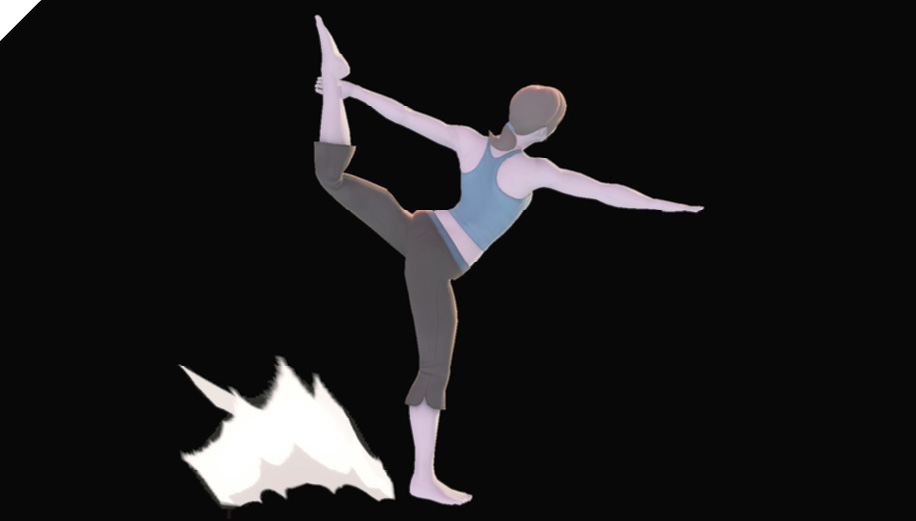
Wii Fit Trainer’s side tilt attack is a buffer version of the first neutral attack poke. Wii Fit Trainer extends one arm forward and slightly down, while raising one leg high in back. This not only opens up Wii Fit Trainer’s back and shoulders, but also strikes enemies on either side. In front, the arm jab works as a quick poke. More surprisingly, the raised leg in back works as a weak launcher! This doesn’t have much range (it’s hard to target a standing foe with the launching-backward portion, you’d have to stand flush against them, then side tilt in the other direction without moving away at all), but can provide incidental coverage to Wii Fit Trainer’s back in party battle modes, not to mention allowing you to use a “wrong direction” side tilt as an anti-air against someone falling in behind. If you do pop someone up right behind Trainer with the back coverage of side tilt, you can usually combo them. At low percentages, immediately pop them up higher with up tilt (also facing the wrong direction), then short-hop up for another hit with up air or back air attack. At higher damage, you have to jump straight up to nail them with back air attack at the jump’s apex.
Up Tilt
For this twist and stretch, Wii Fit Trainer reaches high with one arm while reaching toward the ground with the other. The result is a poke that points straight up, the arm intangible to help Wii Fit Trainer beat out incoming air attacks. Hits with the upstretched arm pop victims straight up, but Trainer’s toned backside during this stretch also has a small hitbox, which can pop foes up at a slight diagonal angle behind Trainer.
Down Tilt
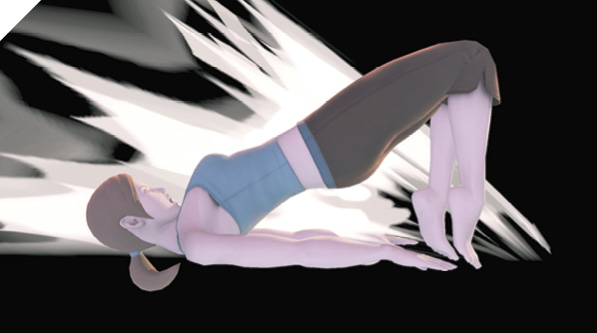
Lying on the ground, Wii Fit Trainer starts the beginning of a tabletop stretch, arching knees upward in front while his or her shoulders are still on the ground. Like with the third hit of the neutral attack combo, down tilt slides Trainer forward during execution, though he or she flips back to the original position during the lag after the hitting portion ends.
Down tilt may beat out ground attacks with Wii Fit Trainer’s low profile, and hitboxes that surround the chest and legs; only the head has no attack portion.
Smashes
| Move | Damage | Note |
|---|---|---|
|
15.5-21.7 |
Hits both sides. |
|
|
Up smash |
18.0-25 |
Intangible briefly just before and during beginning of attack. |
|
Down smash |
12.0-16.8 |
Hits both sides. |
Side Smash
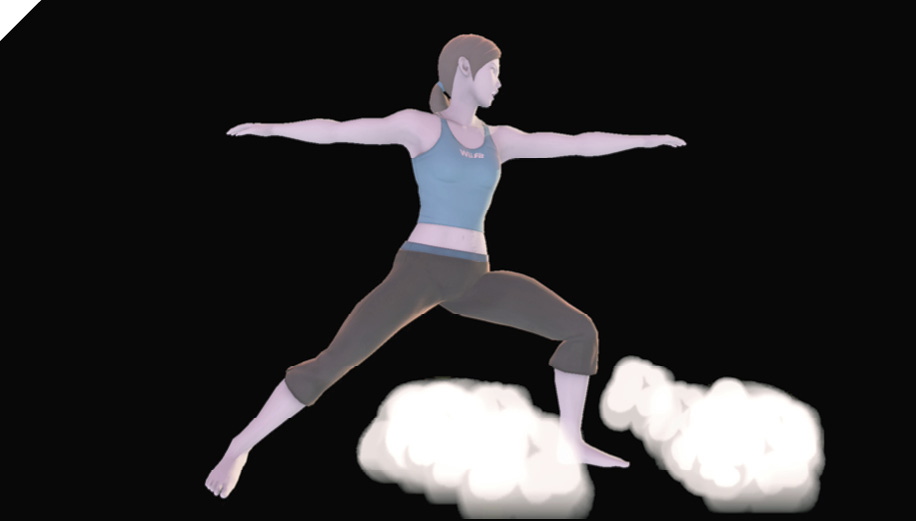
Wii Fit Trainer steps forward and extends both arms out to either side. The hitboxes on both arms extend a generous bit past and around his or her hands, giving this great priority even if the arms aren’t technically intangible. The only catches are that attacks coming from straight above or below will hit Wii Fit Trainer in the vulnerable head/legs, dodging the arms entirely.
While this has a hitbox behind Trainer, like many other exercises, the forward-stepping portion means it’s a happy accident when the back hitbox strikes, not something you’re likely to aim on purpose.
Up Smash
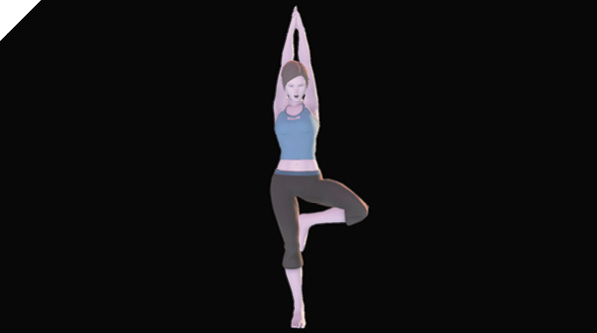
Trainer crouches a bit, placing palms together, before jabbing them straight upward. Fully extended, the arms stretch well above the head, covering low airspace, as well as providing a supplemental hitbox around Wii Fit Trainer’s torso. As Wii Fit Trainer juts both hands sharply up, he or she is fully intangible just before the attack portion, and briefly during it.
Up smash is one of Wii Fit Trainer’s most useful attacks, since it’s fully intangible as the strike starts, it covers either side up close while also shooting down jumps and short hops, and adds a high-damage juggle-combo tool. The only remotely bad thing to say about this attack is that, since it’s an up smash, it’s not particularly fast to hit, even uncharged. Make sure you have enough time to activate it without being interrupted before intangibility starts (being fair, as a clear-out option, this attack is still faster to hit than side smash or down smash, though the range laterally is much less).
Down Smash
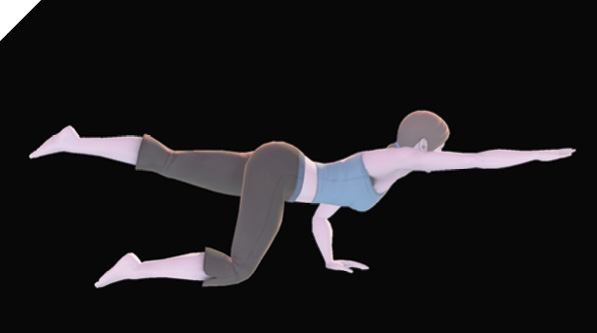
From all fours, Wii Fit Trainer extends one arm straight forward and the opposite leg straight back. This works the core; stretches the lower back, hips, and shoulders; and hits anyone in front or behind. The low profile and generous hitboxes on leg and arm enable this to knock away anyone encroaching on Wii Fit Trainer on the ground, but beware that this attack has slightly below-average speed for a smash attack intended as a panic tool used to get multiple people off you. If you have enough time and space to get this attack out, it’s great, but if there’s any chance enemies will be closer in, up tilt is better in every way.
Grabs
| Move | Damage | Note |
|---|---|---|
|
1.3 |
— |
|
|
Front throw |
3, 7 |
Forward throw. |
|
Back throw |
3, 6 |
Back throw. |
|
Up throw |
8 |
Launches foe into potential juggle. |
|
Down throw |
7 |
Bounces foe just behind Trainer. |
Grabs
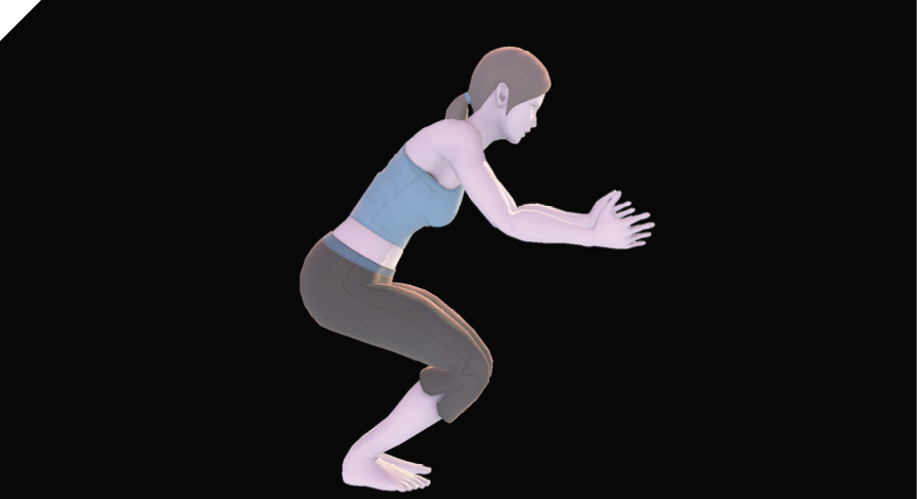
Wii Fit Trainer’s speed, two-sided poke attacks, and quick grab work together to give him or her a powerful throw game. The forward throw spikes the victim forward like they’re a volleyball, while the back throw plants both feet squarely on them before kicking them away. The up throw variant is a typical juggle starter, enabling Wii Fit Trainer to immediately attack upward for a combo. Finally, the back throw bounces the victim slightly behind Wii Fit Trainer, also enabling combos (if in a more awkward position), or better stage presence if the ledge is behind you.
Aerial Attacks
Aerials
| Move | Damage | Note |
|---|---|---|
|
9 |
Max damage late in attack. |
|
|
Forward air attack |
12 |
Hits on back foot. |
|
Back air attack |
13.5 |
— |
|
Up air attack |
10 |
— |
|
Down air attack |
13 |
Meteor smash on downward hit. |
Neutral Air Attack
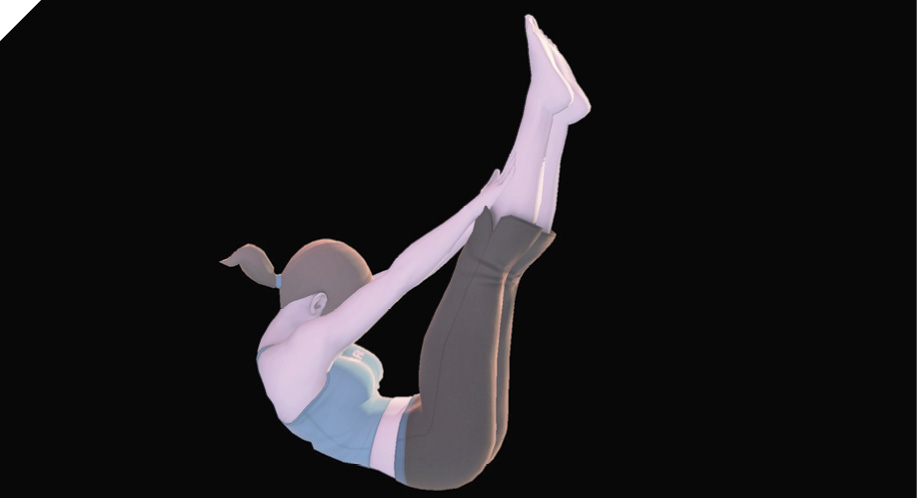
This move shows off Wii Fit Trainer’s gymnast-like aerial flexibility. Wii Fit Trainer begins sprawled, arms and legs out with hitboxes around hands and feet. Hitting with these early portions launches the victim up over Wii Fit Trainer, kind of like how Luigi’s up smash works. Hit in front, and they’re popped up and over to Wii Fit Trainer’s back; hit in back, and they’re popped over to the front. After these initial hitting frames, limbs out, Wii Fit Trainer scissors arms and legs upward. The move’s damage is at its peak when arms and legs meet, and the hitbox is like a big circle centered on Wii Fit Trainer’s knee.
Used to hit early, right when the button is pressed, neutral air attack is a good all-purpose jumping attack that covers both sides. Use it whenever you’re unsure which side you’ll encounter an enemy air-to-air, or when falling on standing opponents. It’s possible for the extended hits to drag the enemy into position for the scrunching hit to catch them too, making neutral air a multi-hit move if well-positioned.
Forward Air Attack
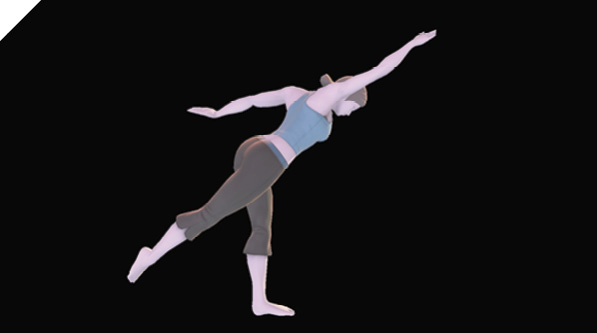
Forward air attack is like grounded neutral attack, hitting up-forward with a stretched arm and down-back with a leg jutting for balance. When aiming with the front side of the attack, you want to come up at higher-altitude targets, launching them diagonally up and away. If targets are behind and below Wii Fit Trainer in the air, the hitbox on the back leg can spike them quickly downward! This rear-hitting kick can also work as a kind of “cross-up,” falling right past someone on the ground.
Back Air Attack
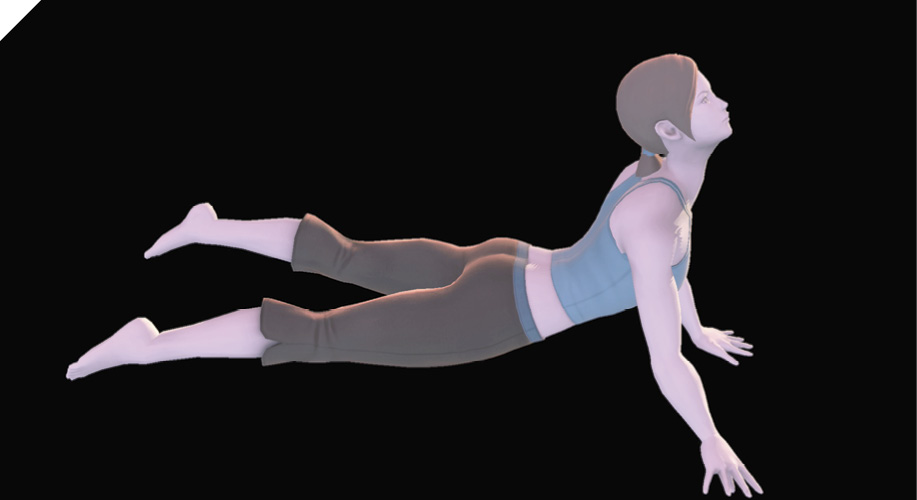
Wii Fit Trainer enacts a little cat-pose stretch while floating through the air, sticking both legs out behind. This is Wii Fit Trainer’s fastest-hitting air attack, striking slightly faster than up air or even neutral air attack. Only on the initial leg extension does this do full damage, so aim to hit with the beginning of the attack. This is the most direct air tool for kicking back at anyone who approaches from behind, and can also be used aggressively thanks to turnaround tricks (like running, tapping the opposite direction to pivot and slide, then backflipping toward the target with back air attack).
Up Air Attack
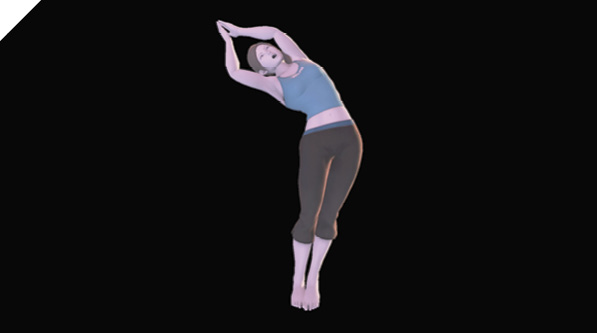
In midair, Wii Fit Trainer makes an arm steeple and rotates the upper body in an arc going from front up to back. This is great for opening up the obliques and traps, as well as covering all upward angles while in midair. There’s no intangibility on Wii Fit Trainer’s limbs here, but the hitbox extends well above his or her hands, so the priority is still terrific. It’s also just a tiny bit slower than back air attack, when speed is of the essence. In lots of situations, you should be able to juggle someone with a short-hopping or jumping up air attack before they can get away, like after tossing someone upward with up throw, or launching them with up tilt or up smash.
Down Air Attack
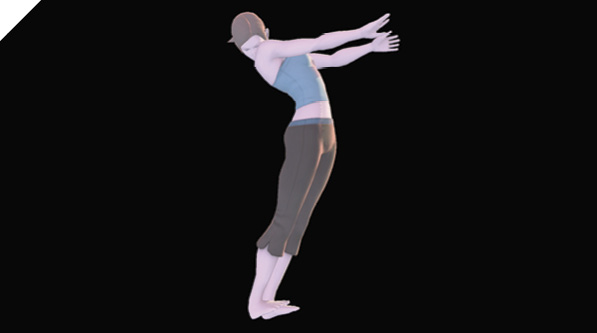
This aerial downward-leg extension is slow for an air attack, hitting in about the same time as most uncharged smash attacks, but has great use on direct hits against someone immediately below. At medium-damage percentages and higher, centered down air attack hits bounce victims off stages for juggle combos, or simply kick them straight down into pits before they can react. Though the timing is exacting, this leads to niche uses like aiming the down air attack stomp at a foe’s fingers as they grasp hold of a ledge; with perfect timing, you can spike them off the ledge right as they grab it, before the usual ledge-intangibility period begins.
Special Moves
Specials
| Move | Damage | Note |
|---|---|---|
|
Neutral special |
5-21 |
Projectile must be charged. Charge can be canceled. Heals small amount of damage. |
|
Side special |
15 head, ~6-9 ball |
10 on late head hit. Ball damage varies with travel distance. Ball can be rebounced. Header can be canceled with Shield input. |
|
Up special |
5x3 |
Mash Special input for more height. Lag until landing. |
|
Down special |
0 |
Buffs attack and knockback 20-25% for ~10 seconds. Repeat uses require longer breaths. |
Neutral Special: Sun Salutation
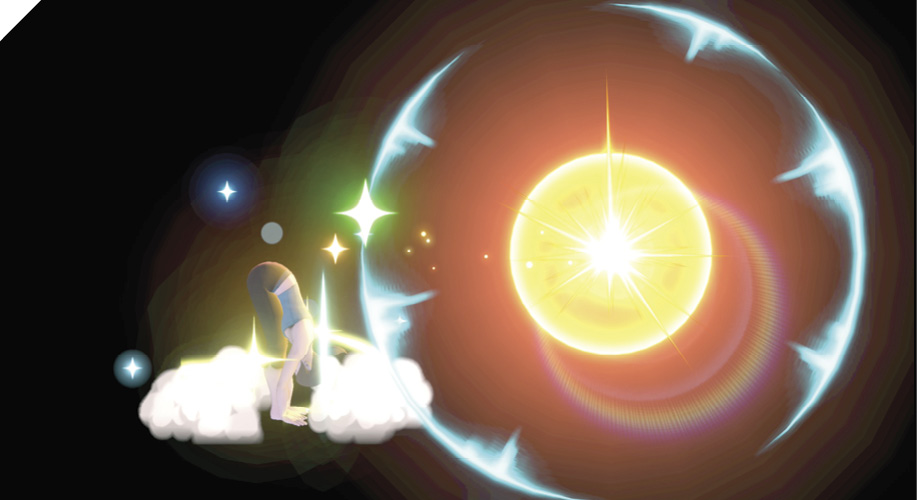
The classic “good morning” stretch is the basis for Wii Fit Trainer’s neutral special. Upon first input, he or she begins charging, imbued with the feel-good vibes of the pose. Like other chargeable specials for fighters like Samus and Donkey Kong, Wii Fit Trainer can interrupt the charging pose if desired, like if aggressors are incoming. In midair, you can cancel Sun Salutation’s charging by double-jumping or air dodge; on the ground, it can be canceled by rolling to either side, an on-the-spot dodge, or jumping. Otherwise, when the follow-up shot is fully charged, Wii Fit Trainer stops charging automatically. Like with other fighters with similar charging mechanics, you can build up a full charge in bits and piece, picking up a little more charge whenever it’s safe to do so.
Or, while charge is in progress, tap the input again to release the little growing sun, shooting it straight forward for anyone else in the way to enjoy. Meanwhile, Wii Fit Trainer heals a tiny bit of damage! (Just a little bit, around 1%, but every bit adds up, and the vast majority of fighters have no such option.) Sun Salutation’s power can vary from fairly weak for an instant shot (starting charge, then immediately firing for a small shot), to very strong for a fully charged projectile.
Oddly, the gathering solar energy pushes back antagonists in front of Wii Fit Trainer, but doesn’t hurt them.
Side Special: Header
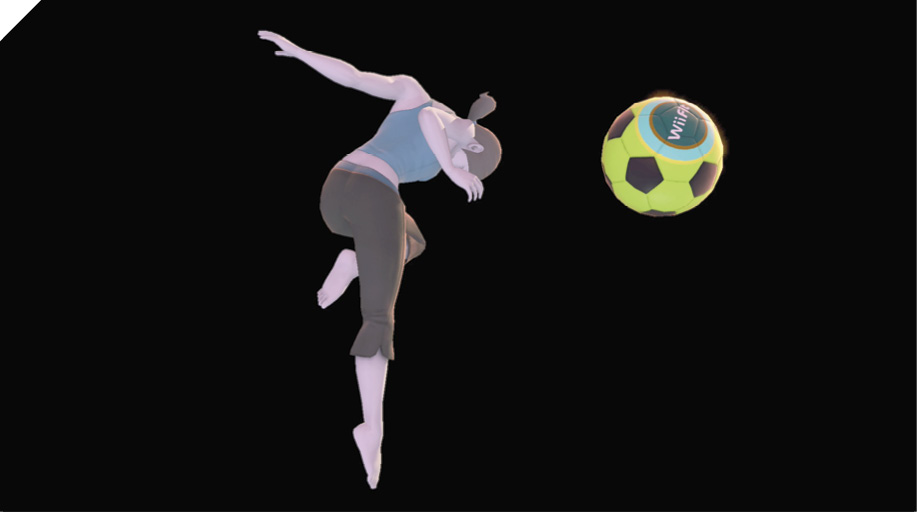
Wii Fit Trainer tosses a soccer ball a short distance straight up, leaping afterward to spike it with a sick header. This is a projectile setup, a projectile shot, and a physical attack rolled into one move.
Tap the initial input, and Wii Fit Trainer automatically heads the ball down-forward at about a negative 30-degree angle. It travels in a gently diminishing slope until it bounces off a surface or fighter.
Tap the initial input, then press it again right away to make Trainer headbutt early, on the way up instead of at the top. This launches the ball more outward than down-forward, so its descent is more of a gentle curve than a direct line. Once gravity catches up with the ball, it falls at more of a negative 45-degree angle.
Basically, a regular release is for aiming down-forward, and an early spike is for aiming out and away. Both have uses depending on the distance of enemies and the layout of a stage.
Either way, a spiked ball bounces for several seconds before disappearing; striking it again while it’s traveling redirects it, so one projectile can essentially be reused! This can keep up until the ball naturally disappears. Beware that a soccer ball in play might get used against Wii Fit Trainer; enemies can hit the ball to bat it right back at Trainer, or to knock it out of his or her control before the Header connects!
While a soccer ball is active and bouncing around, inputting side special again causes Wii Fit Trainer to perform the rising Header, but without throwing
another ball. As before, a regular side special input makes him or her headbutt at the top of the little jump, while double-tapping Special results in a headbutt just after leaping. Follow-up Header hits can be used to bounce a ball-in-progress back at a foe it’s just bounced off of, but Headers (sans ball) can also be used on purpose as direct-damage attacks, almost like another short hop option. A Header that hits someone with the downward thrust can act as a quasi-meteor smash too.
That’s not all, though. The initial rising setup pre-spike reverses falling momentum when used in midair, so it adds an extra, unpredictable aerial/offstage recovery option for Wii Fit Trainer. When drifting down toward attacks or back toward the stage, Header can be used to send a projectile toward foes while altering Trainer’s jump arc, with a double jump and Super Hoop special still in your back pocket.
Finally, Header can be canceled before it hits by tapping the Shield button. Trainer forgoes headbutting the ball and instead drifts back to earth, spinning gently like during Super Hoop lag. The ball persists until it disappears normally, just without being spiked. After the lag from the faked Header ends, you can still hit the ball to redirect it as though it had been spiked normally. This allows you to be a bit less predictable on occasion with soccer ball trajectories. There are a lot of different ways to use this: Fake a Header facing enemies, then land and neutral attack to send the ball bouncing at them at ground level, lower than they expected. Fake a Header facing away from enemies, then short-hop through the ball and kick it toward them at a quick rising angle with back air attack. Or just fake a Header, then forget about the ball and rush straight for the opposition, using Headers as melee attacks until the ball disappears.
Up Special: Super Hoop
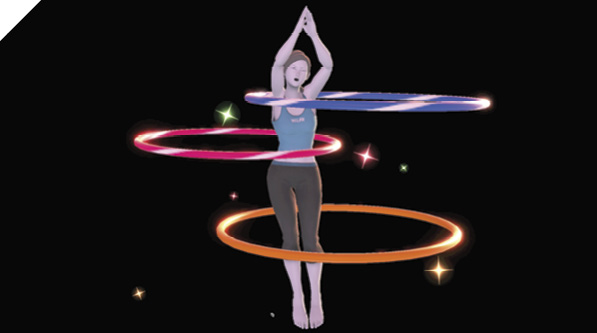
Wii Fit Trainer crouches low, tensing up legs, before jumping upward, gracefully swiveling to spin three Hula-Hoops at once. The crouching windup is the only preamble, as the attack is active as soon as Trainer is surging up from the squat. Each Hula-Hoop can hit each opponent one time, making this a potential three-hit combo by itself. Unusually, the Super Hoop up special can be directed left or right during the ascent (for most specials of this kind, the direction can only be altered while floating down afterward). At the end of Super Hoop’s upward travel, Wii Fit Trainer drifts down, unable to act again until landing (besides steering the drift).
The primary purpose of this move is recovery from offstage. Rapidly tap the Special button during travel to float even higher, up to 50% more than without mashing the input. Super Hoop can be used to attack foes jumping above, or to combo tumbling targets, but the hitboxes surround the Hula-Hoops rotating around Wii Fit Trainer’s body, meaning they mostly cover lateral space around Wii Fit Trainer. The hands and feet sticking out the top and bottom aren’t protected by the Hula-Hoop hitboxes, and aren’t intangible, so Trainer might get cleanly knocked out of this attack by higher-priority moves aimed straight up at the feet or straight down at the hands.
Down Special: Deep Breathing
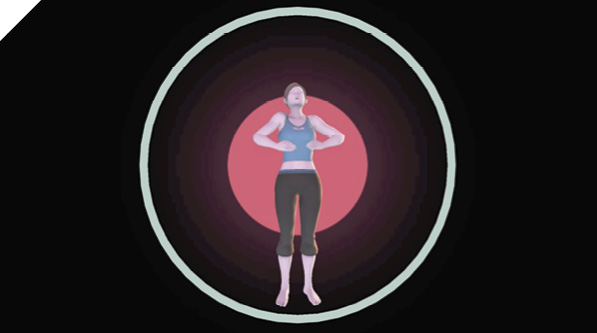
The key to any solid exercise or stretching routine is mindful breathing. Brawling with the likes of Mario, Bayonetta, and PAC-MAN is no different. Trainer’s down special begins a deep inhalation, indicated by a shrinking circle closing in on Wii Fit Trainer. Once the shrinking white circle overlaps the solid red circle over Wii Fit Trainer, press the Special or Attack button to complete the breath. Properly done, this slightly reduces Wii Fit Trainer’s accumulated damage, and temporarily increases his or her damage and knockback dealt! The buff to damage potential lasts for just under 10 seconds.
The first use of Deep Breathing finishes pretty quickly, so it’s easy to work into your game plan. If used too often, Deep Breathing takes longer each time you repeat it, while diminishing slightly in the percentage of the increase. However, it resets over time. The first use grants a 25% damage and knockback buff, while the second use gives 20%. Deep Breathing applications after the first can take quite some time, so cancel out of the animation by tapping left or right to roll if attackers are on the way. (You can’t cancel the charge by sidestepping or jumping, though.)
Since the buff lasts 10 seconds, which isn’t really very long, it’s important to judge when it’s a good time to apply Deep Breathing for maximum effectiveness. One obvious place is right after hitting or throwing someone a long way off the stage; before they drift back within sight of a ledge, you should have time to take a short deep breath, making sure any moves you take to keep them from returning have a little extra pep.
Final Smash: Wii Fit
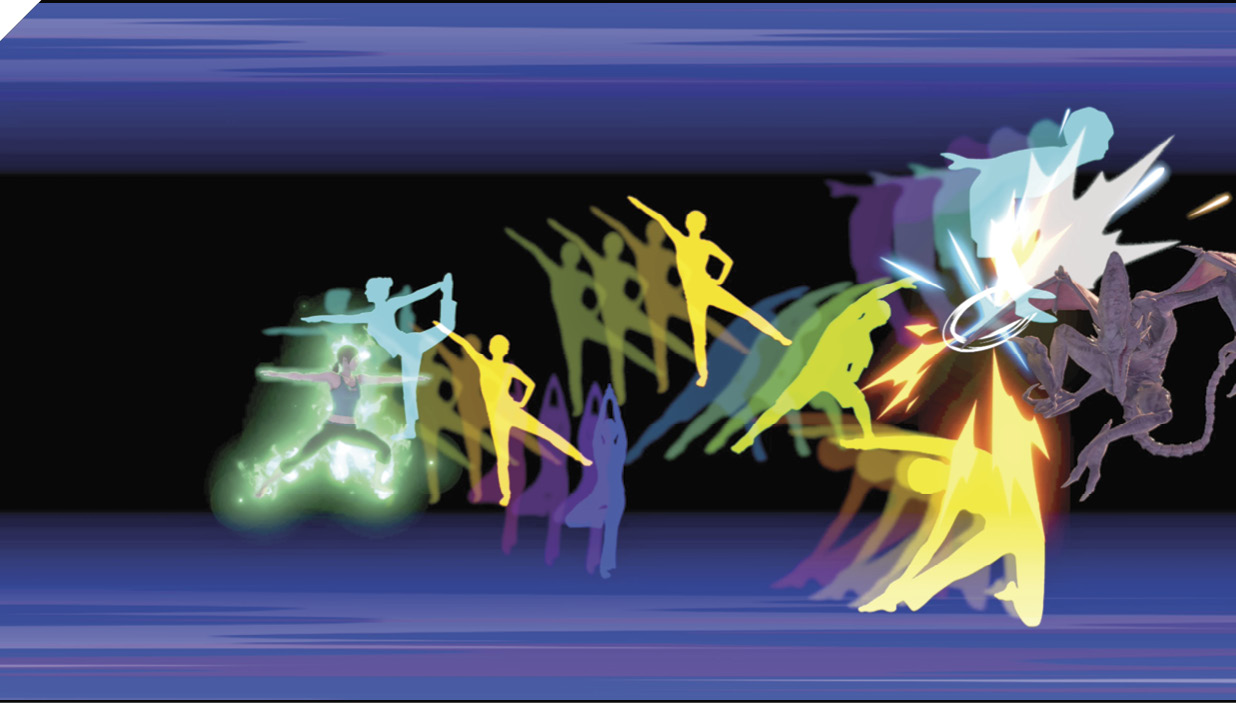
With the energy from a crushed Smash Ball (or filled FS Gauge) coursing through your favorite personal Trainer’s veins, he or she is ready to lead the most brutal workout in Super Smash Bros. Ultimate. Upon activation, Wii Fit Trainer strikes a pose and sends forth an army of aerobic athlete silhouettes, finishing with a gigantic final shadow emulating the look of Wii Fit Trainer’s backturned side tilt. Of all the Final Smashes in the game, this is one of the farthest-reaching, laterally, so just line up as many adversaries as possible on one side, then invite them all to join the sweat session.