
Tales of Xillia 2 Guide 1 Game System Game System
Enemies
The Four Enemy Types
Enemies are divided into four types. You can see their type if you target them with  and look at their icon (see chart). Some linked partners are better than others against certain enemy types.
Combat Types
| Enemy Type | Description |
|---|---|
 Power Power |
Uses attacks that knock down or knock back, have strong guard |
 Speed Speed |
Fast movement speed |
 Magic Magic |
Attacks mostly with artes |
 Boss Boss |
Strong foe that attacks in event battles or as Elite Monsters |
Enemy Levels Change Over Time
Enemy levels have a range in each area. For example, Sapstrath Deepwood is 23–41 at Chapter 7. The initial level matches your party’s average level when they enter the area for the first time, so if it’s 25, the enemy is level 25. If it’s less than 23, the enemy is 23. If it’s more than 41, the enemy is 41. At certain levels and in Character Episodes, the enemy level range changes, and their level is recalibrated to your current average level.
Special Enemy Behavior
|
Aim for Weak Points for Critical Hits
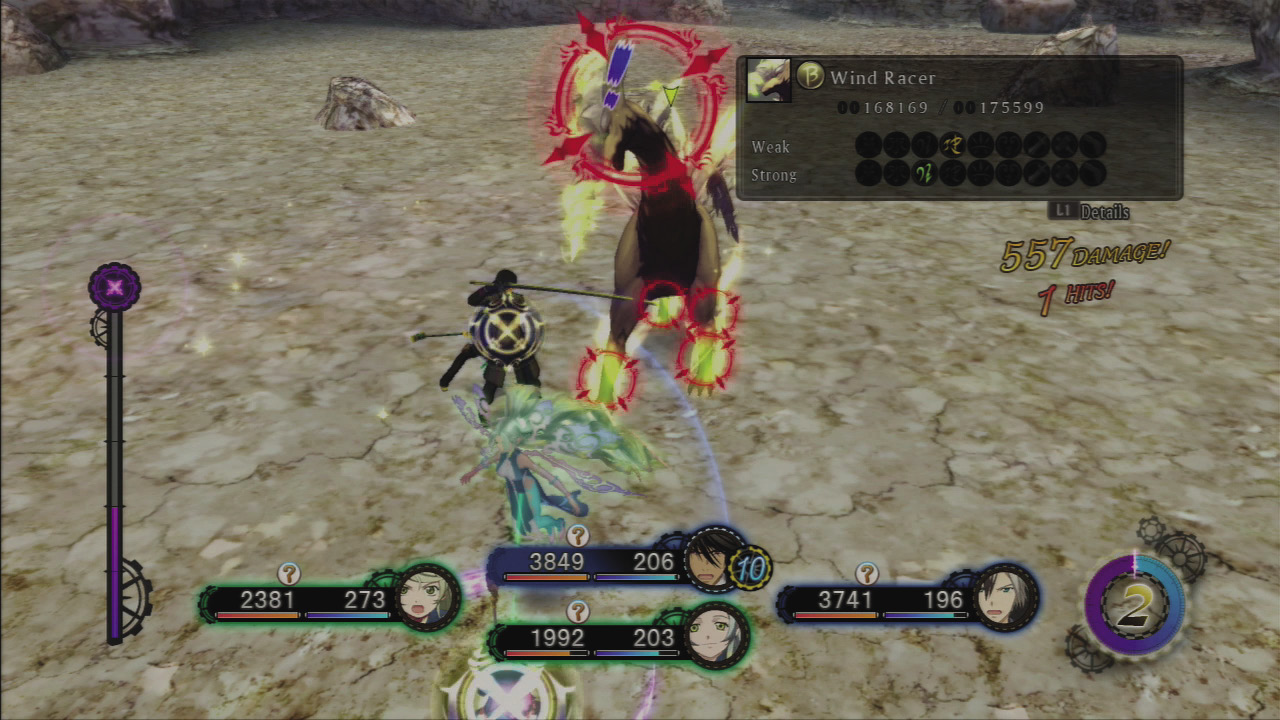
Some bosses have weak points and you’ll always score critical hits if you hit them there with an attack that does any damage (even if they’re resistant to it). You can see them (as red circles) if you press  when you have Ludger’s Reconaissance skill set.
Defeat Enemies to Boost SP
You begin with 3 SP, and each time you learn a skill, you gain SP equal to half of what it would cost to set it. Each character has certain enemies they can defeat to earn additional SP bonuses. These foes differ for each character, and there are usually 26–36 foes per character. Enemies in areas you can’t return to and foes you only battle once are not counted. There are two to three stages of SP bonuses, so keep battling foes for higher SP bonuses! You can see which monster corresponds to which character, how many you’ve defeated, and how many you need to defeat to earn bonuses in the in-game Enemy Data menu.
Target the Highest Priority Enemy
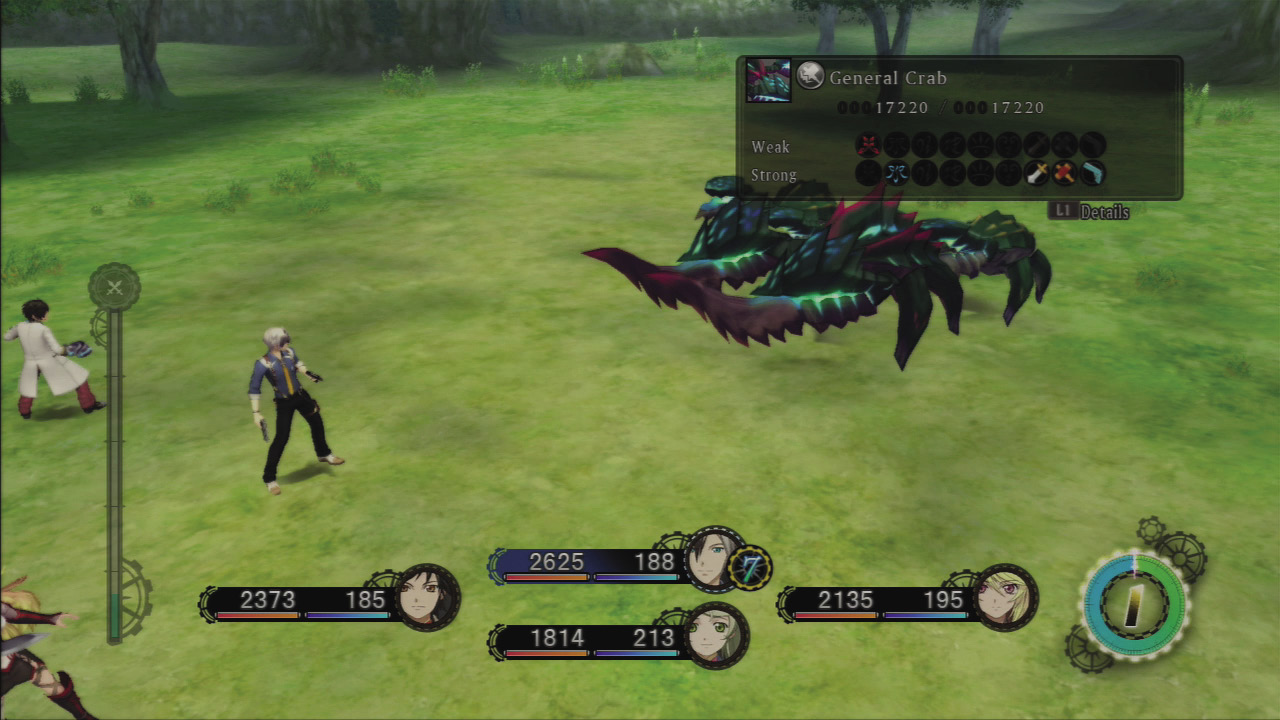
The first “move” you should make is to check your enemies’ stats and prioritize which foe to tackle first. The decision is pretty simple—attack the most dangerous foe first. Yet, there are times when you want to remove weaker enemies first if one of them has a lot of HP (especially with bosses). The goal is always eliminate the biggest threat, but sometimes that means clearing a path by wiping out other foes first. At the start of combat, hold  and use the left stick to choose a target to check enemies’ HP, resistances, and so on.
Special Enemies
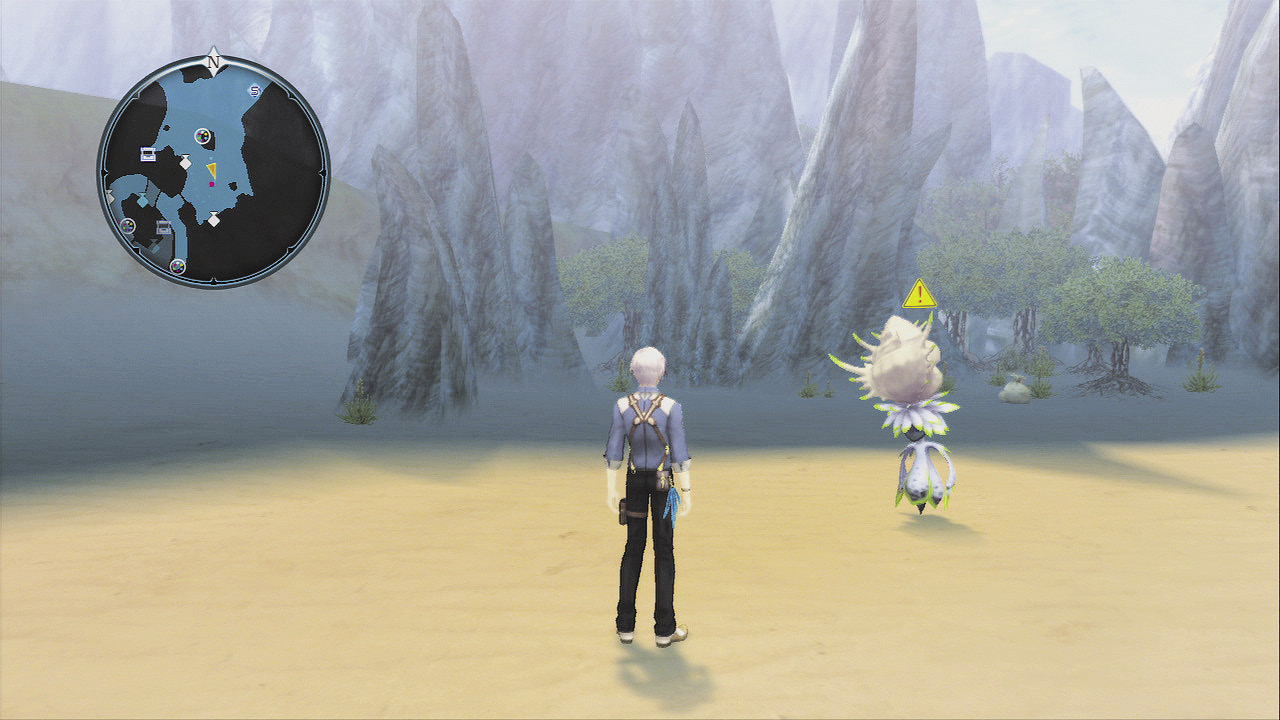
Enemies with a ! on a yellow triangle are strong enemies who are one difficulty rank higher than your current level.
There are also two rare enemies that appear about 5% of the time when you enter an area.
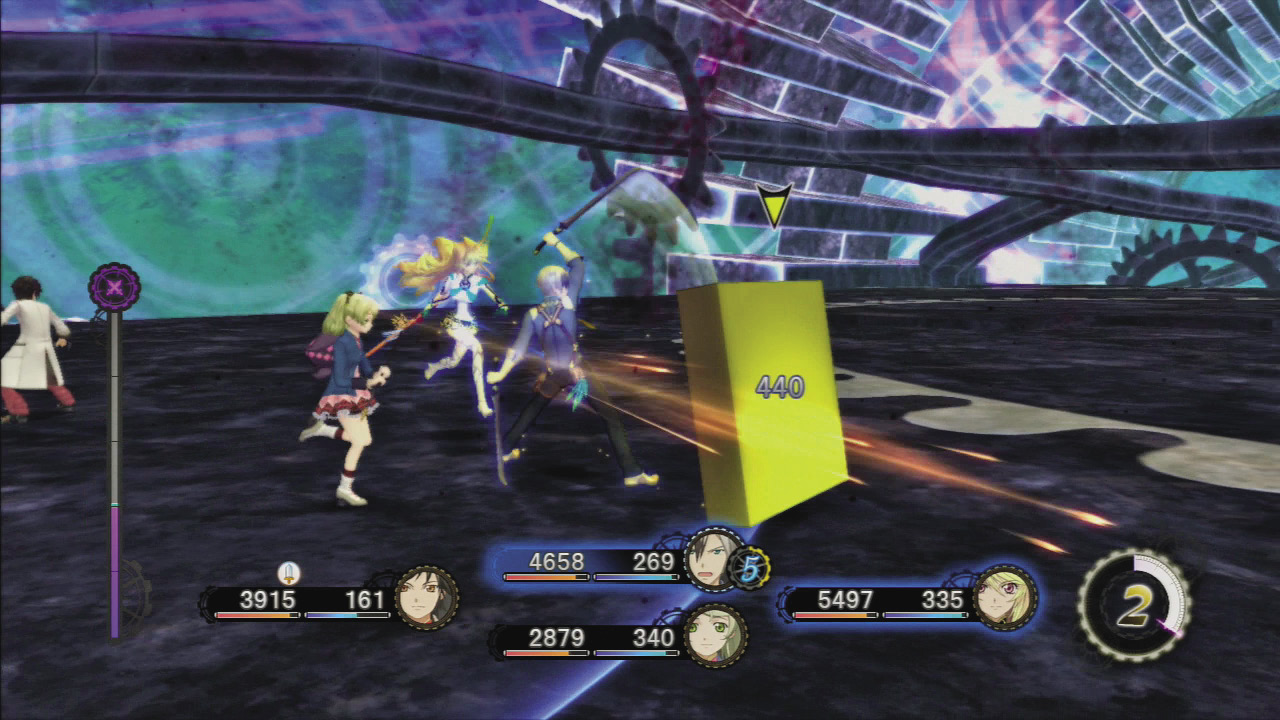
The Bacura has extremely high defense and can’t be staggered. You earn lots of EXP and elemental ore for defeating them.
The Gald Freak has an Iron Stance and attacks with counterattacks. It gives lots of gald when defeated.