
UFC Undisputed 3 Guide Gameplay How to Play
Striking
Striking is the art of attacking the opponent with the hands, elbows, knees, and feet. Though strikes come in many forms, they all fall into two important categories: quick strikes and strong strikes.
Quick Strikes
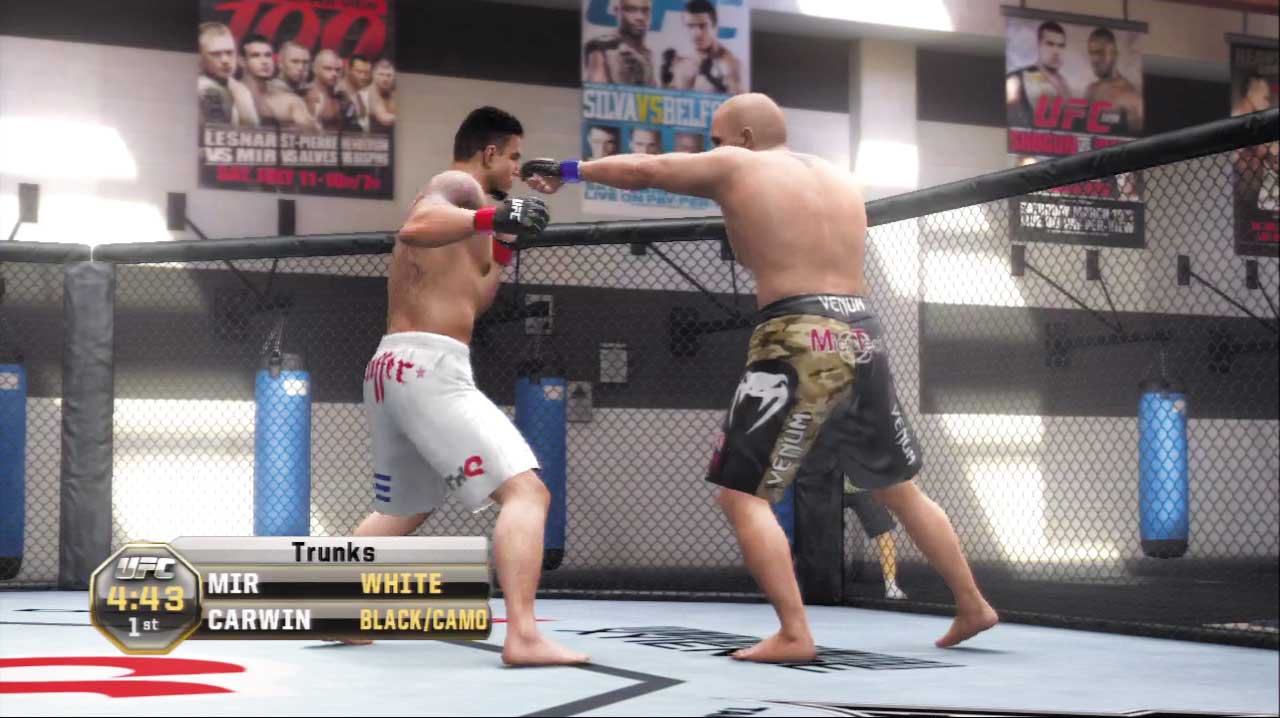
Simply press any of the punch or kick buttons without manipulating the Movement stick to throw quick strikes, such as jabs and straights. Quick strikes are faster than strong strikes and cost less Stamina to perform, but they also inflict significantly less damage.
Use quick strikes to get the opponent to react and help you set up more powerful blows and takedowns. The speed and range of these short, crisp punches also make them ideal for countering aggressive strikers and breaking up their combos.
Strong Strikes
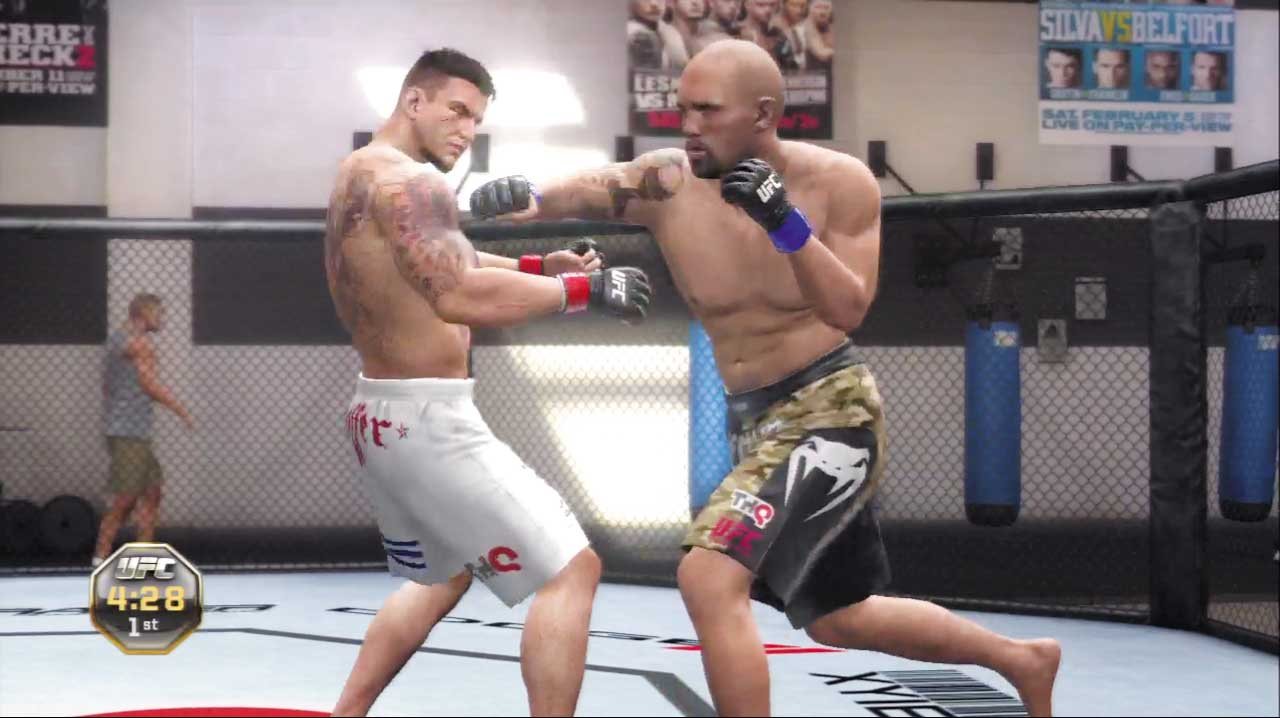
Strong strikes are a bit slower than quick strikes and cost more Stamina to unleash, but they also land with greater force and are capable of instantly KO’ing an opponent. This makes strong strikes ideal for times when you want to pour on the damage.
Use care when performing strong strikes, however, because these slower strikes are easier to interrupt by fighters who like to initiate exchanges with quick strikes. Don’t rely too heavily on these power shots—mix in quick strikes to avoid becoming too predictable!
Technique Strikes
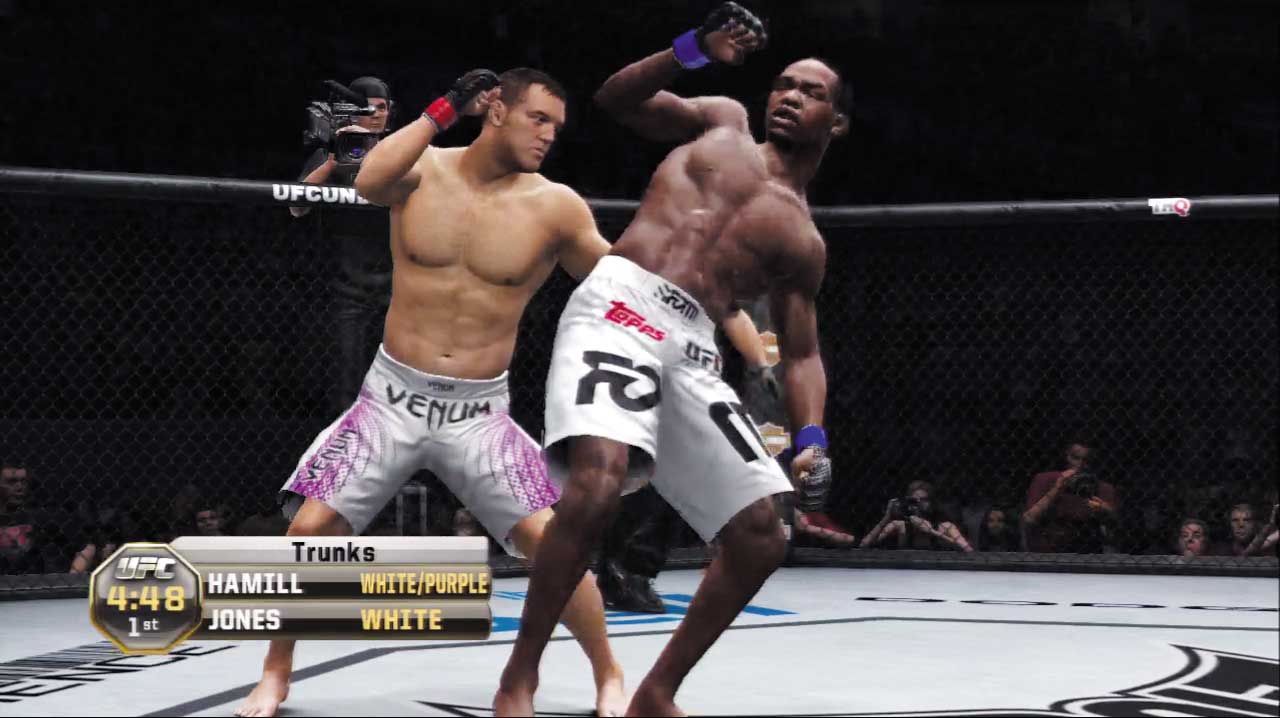
Hold the Technique Modifier trigger when striking to unleash powerful technique strikes, such as head kicks and spinning back-fists. All technique strikes are considered strong strikes, so they can KO opponents instantly if they land flush.
Technique strikes allow for diversity in a fighter’s stand-up game, opening up avenues for creativity on the feet. Technique strikes cost even more Stamina to perform than strong strikes, but they’re also more effective.
Step and Dash Strikes
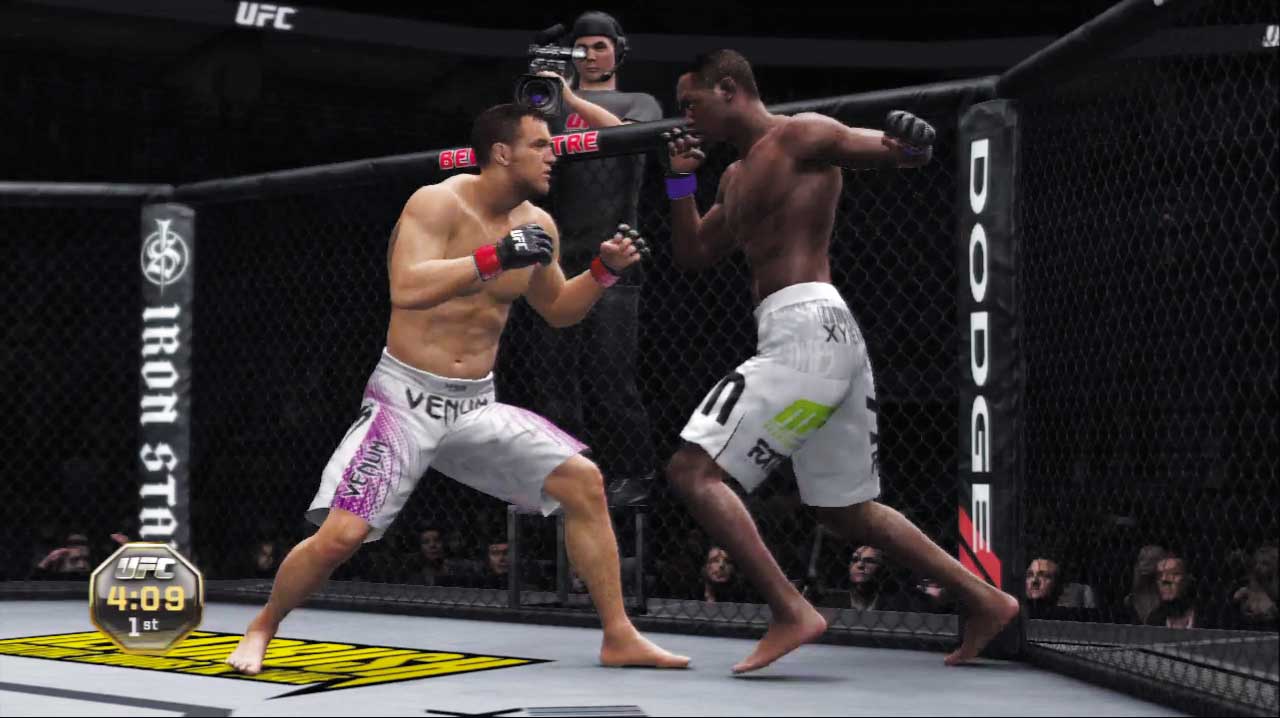
Special strong strikes can be unleashed by using footwork in conjunction with your attacks. Simply strike while stepping or dashing to unleash powerful step strikes and dash strikes that can really rock your opponent. Step and dash strikes are always considered strong strikes, capable of KO’ing foes in a flash!
Strike Damage
Strikes have another important characteristic—the manner in which they inflict damage. Depending on your fighter’s style, he may favor throwing more sharp attacks or more heavy attacks.
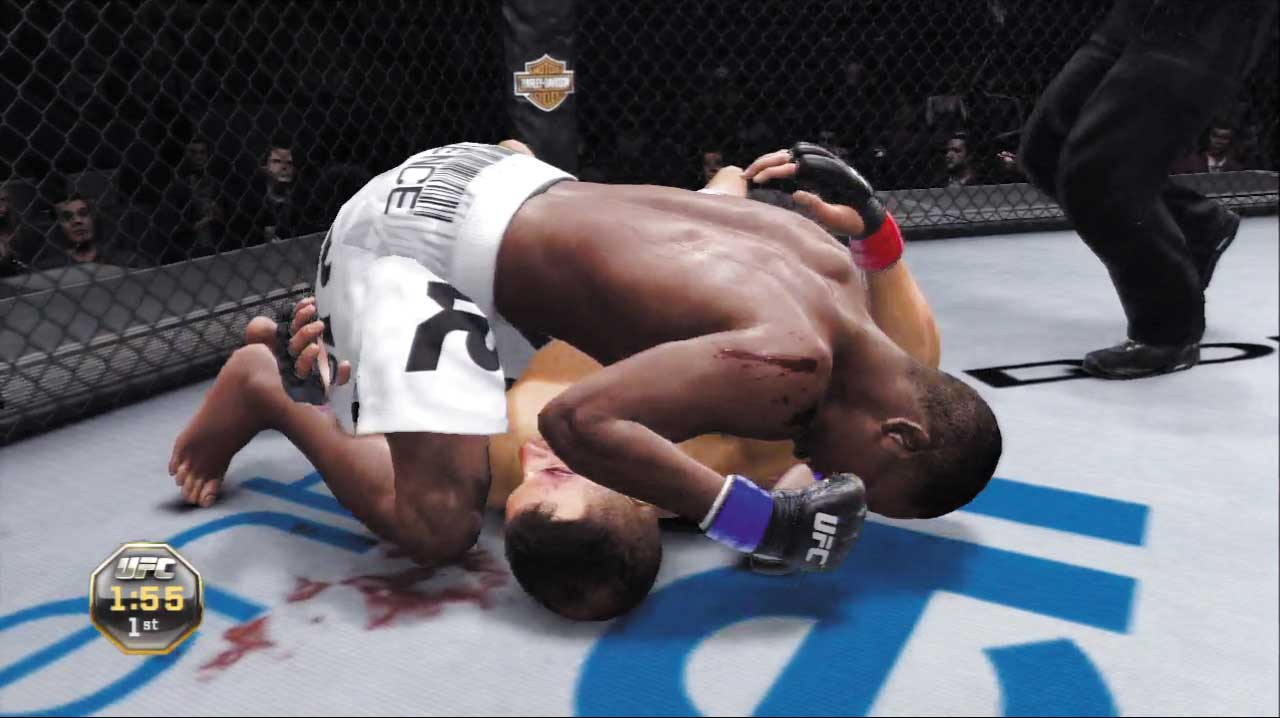
Sharp attacks like elbow strikes are more likely to cause cuts. Hone in on the opponent’s wounds with elbows from the clinch or on the ground—cut him badly enough and the referee may be forced to stop the fight!
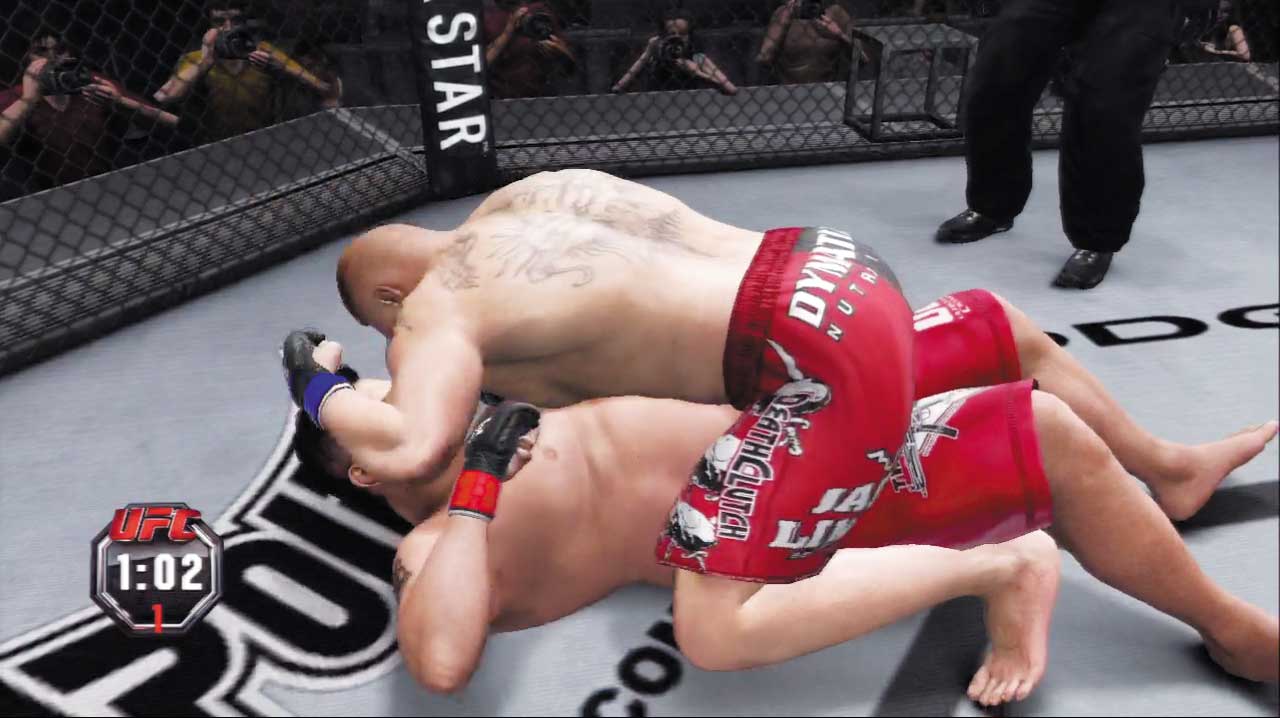
Heavy attacks like hammer fists are more likely to rock the opponent, making them highly vulnerable to being finished by TKO or submission.
Height Modifier
Press and hold the Height Modifier trigger to change your fighter’s targeting zone. While the trigger is held, your fighter will target the enemy’s body with punches and his legs with kicks.
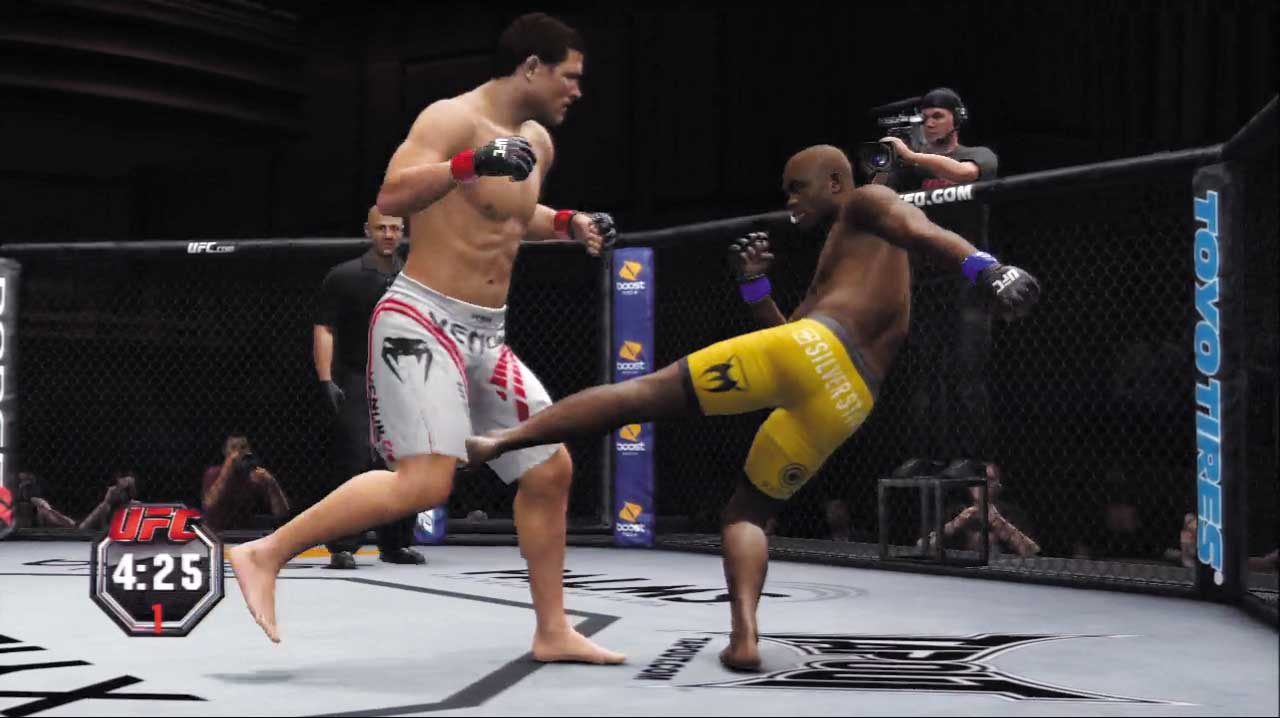
Body shots and leg kicks are often under-utilized aspects of striking. Use the Height Modifier trigger to throw out these relatively low-risk strikes, looking to catch the opponent off guard and create openings in their defense. Mixing up the height of your strikes keeps the opponent guessing and makes your combos more challenging to block and counter.
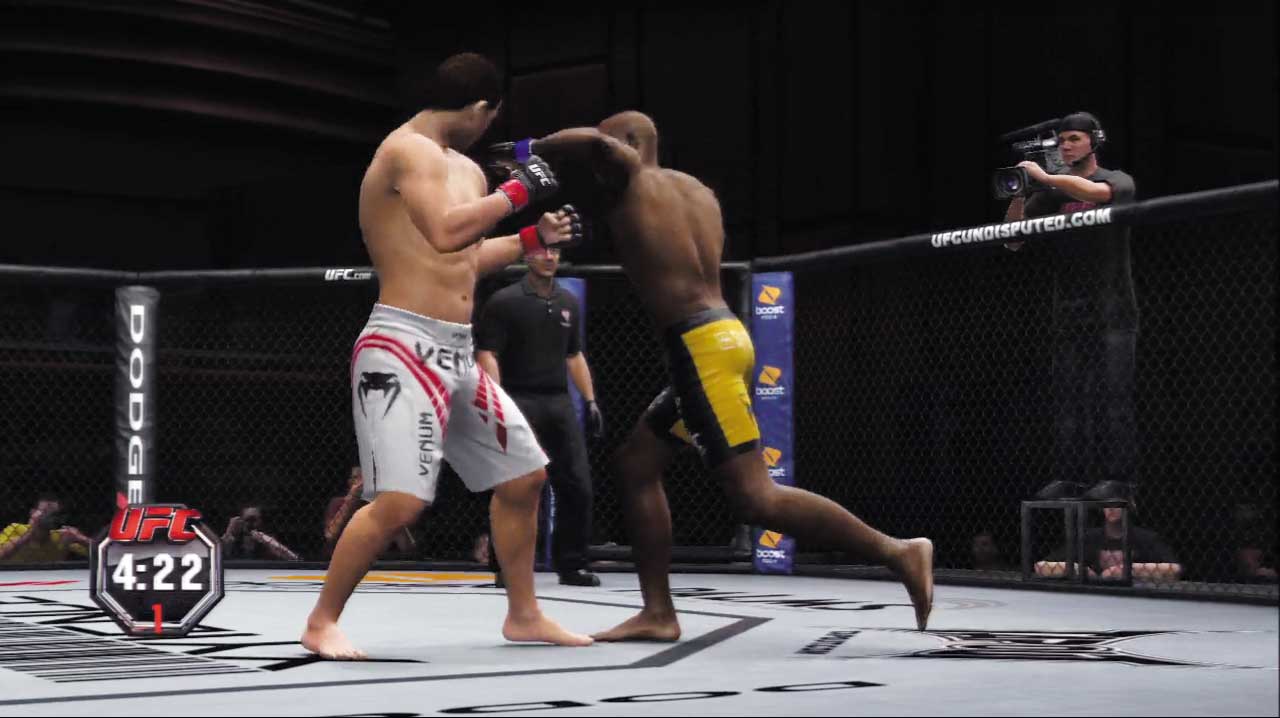
Leg kicks and body shots also commonly cause defensive opponents to press forward, exposing them to sharp counters. When you’ve got your opponent rocked, try throwing punishing body shots to get him to drop his hands and expose his head!
Combos
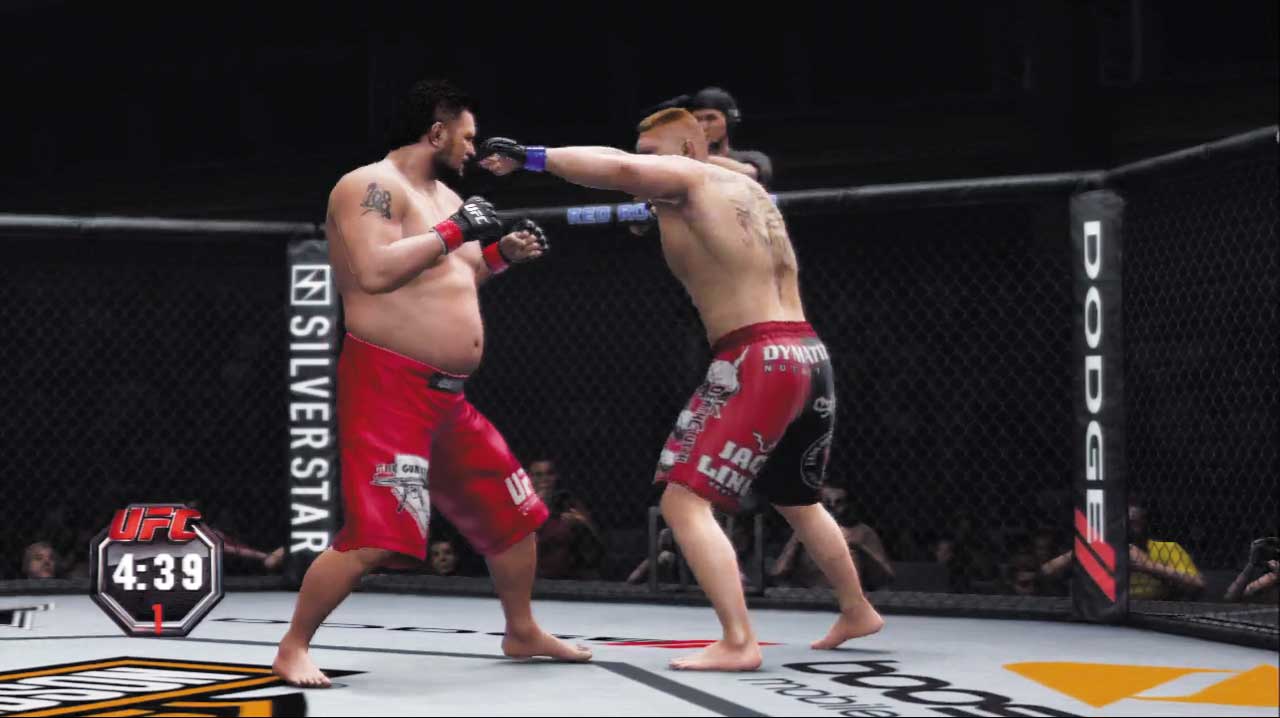
Though anything’s possible inside the Octagon, single strikes aren’t likely to win you many fights. Frantic button-mashing isn’t the way to go, either.
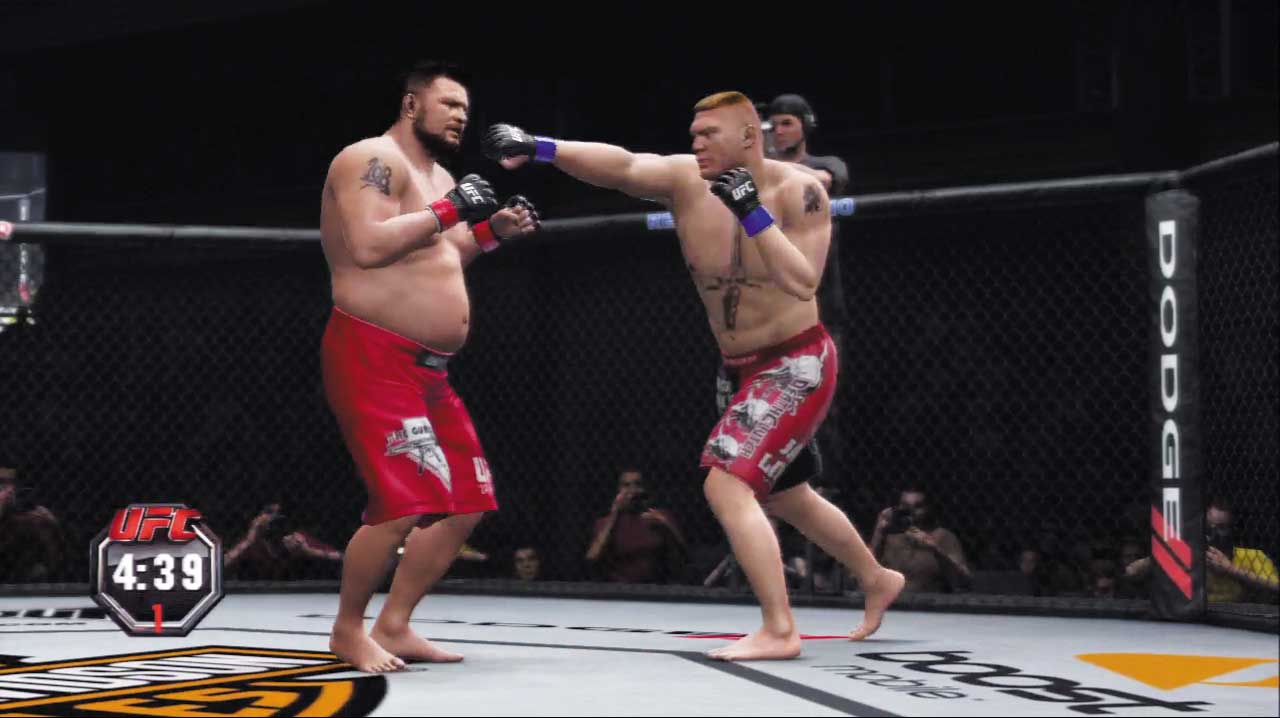
Instead, practice the fine art of timing your strikes and stringing together effective combos. Discover combos that work for you, then drill them over and over, just like any UFC fighter would do.
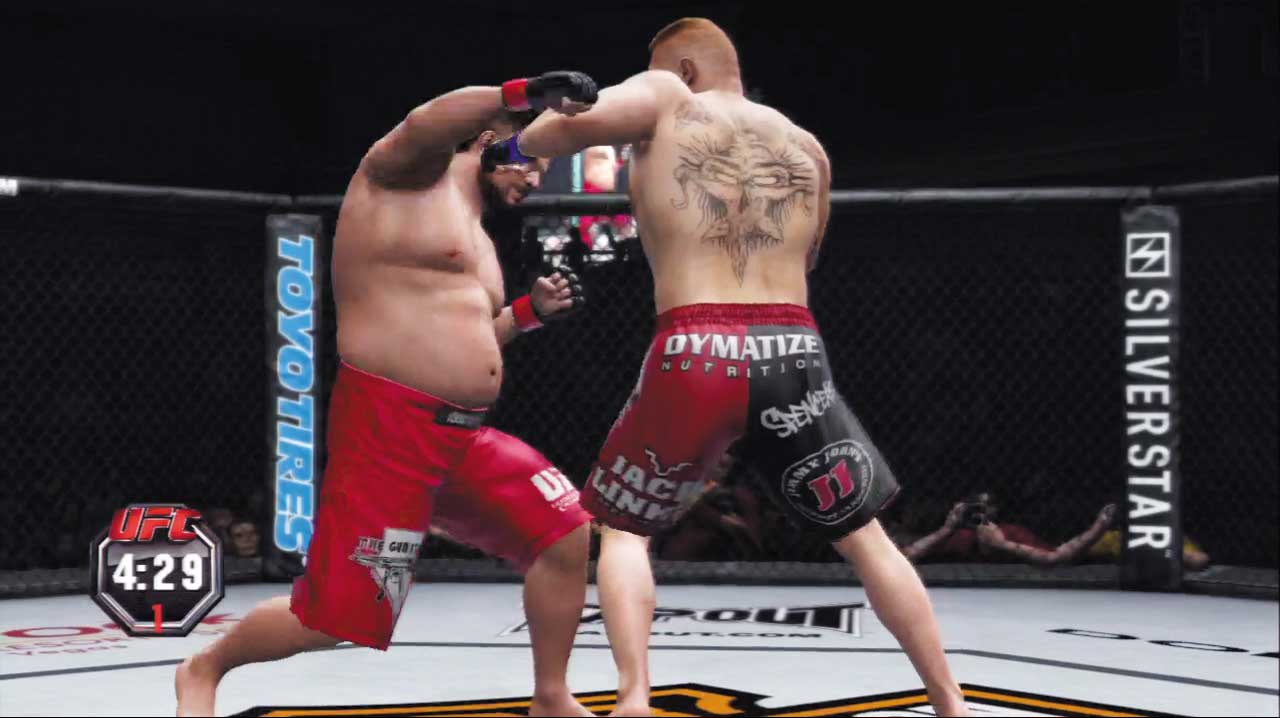
With enough practice, you’ll soon be able to keep your cool and unleash precise combos that can quickly rock your rival!
Here are the general rules of thumb when it comes to combos:
- Attack from one side, then the other (left, right, left, right, etc.). This uses your body’s natural momentum to help you chain strikes together.
- It’s a good idea to begin most combos with quick strikes—this may potentially interrupt the opponent’s attack, kicking off your combo with a stiff counter.
- You may combo from quick strikes to strong strikes, and from strong strikes to strong strikes. However, you cannot combo from strong strikes to quick strikes.
- Step, dash, and technique strikes are all considered strong strikes, and behave as such during combos.
To illustrate, here are a few basic combos. Drill these until you can effortlessly perform each one, then look to add even more strikes to the combo:
-
Quick left punch, strong right punch
Quick left kick, quick right punch, strong left punch
Quick left punch, quick right punch, technique left kick
Step right punch, strong left punch
Feints
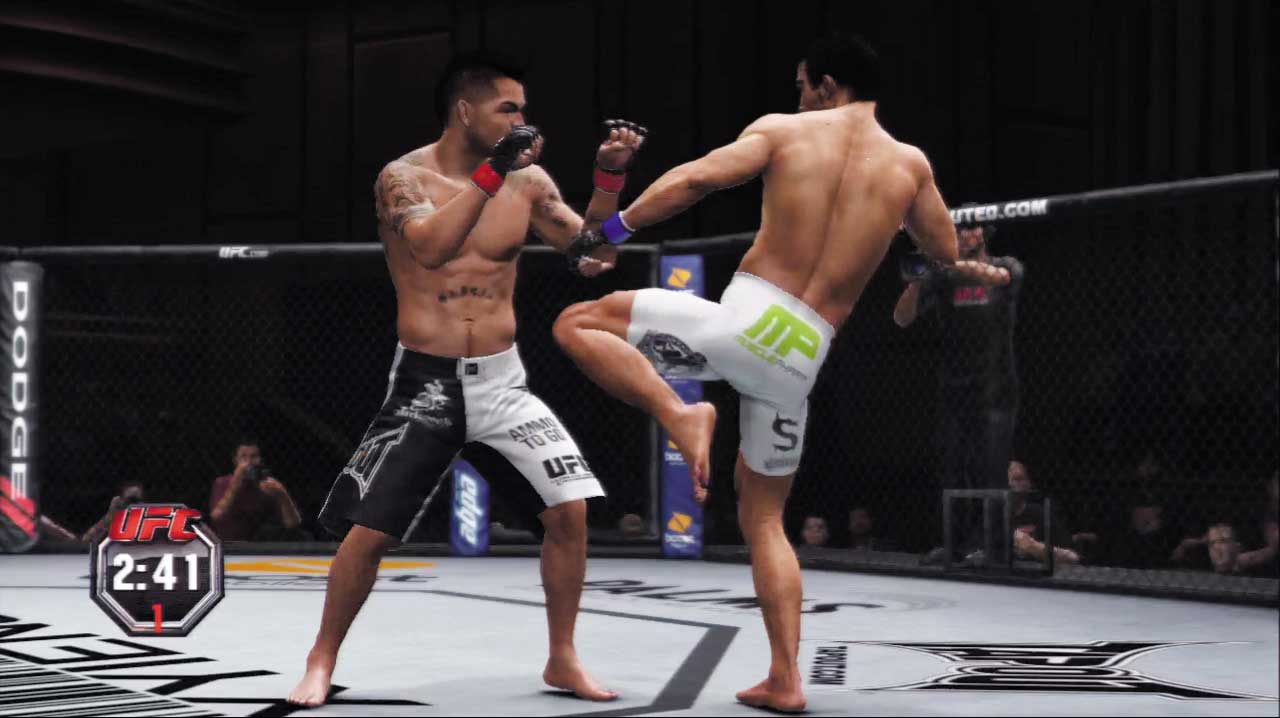
Hold both block triggers when striking to throw out short feints instead of real strikes. Or fake takedowns by holding both triggers and tilting the Clinch/Grapple stick toward the opponent.
Feints such as these are useful for getting defensive opponents and counterpunchers to react. Use feints to throw off a counter-fighter’s timing, then look to land clean counters of your own when they react.