Mobile Gaming Guide — Tips, Tricks, and Strategies for Today's Hottest Mobile Games Splendor
Mercantile Moves
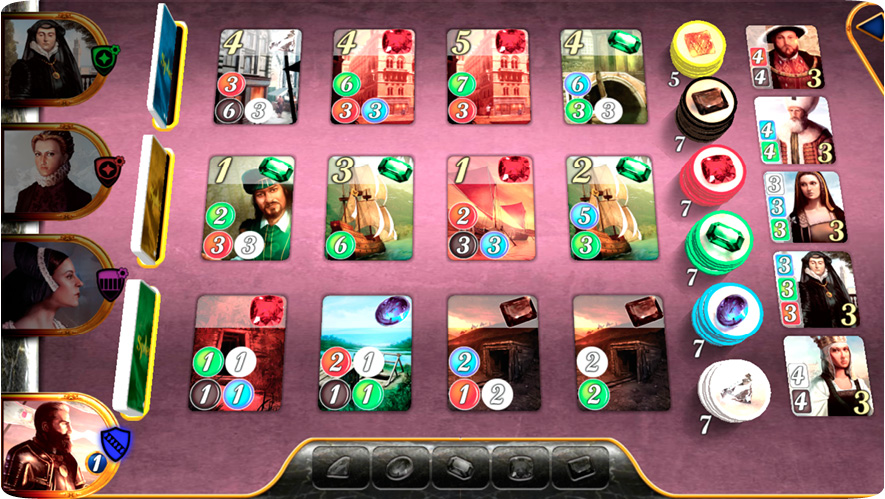
The main game begins with three decks of development cards, numbered 1, 2, and 3. Level 1 cards are the cheapest to purchase and only a few include prestige points. Cards from levels 2 and 3 are more expensive, but worth more prestige points. Four cards from each deck are placed face up, while the remaining cards go into individual draw piles. Noble tiles are also put in play. The number in the lower right of the tile represents their prestige point value.
Six stacks of gem tokens are placed next to the development cards. Five of the stacks represent different types of gems, and the number in use varies depending on the number of players. The sixth stack is always five gold tokens, which are wildcards. When making a purchase, gold tokens act as jokers, meaning they can be used in the place of any other gem.
Actions on Your Turn
During each turn, you may take one of four actions: take three gem tokens of different colors, take two gem tokens of the same color, reserve a development card and draw a gold token, or purchase one development card.
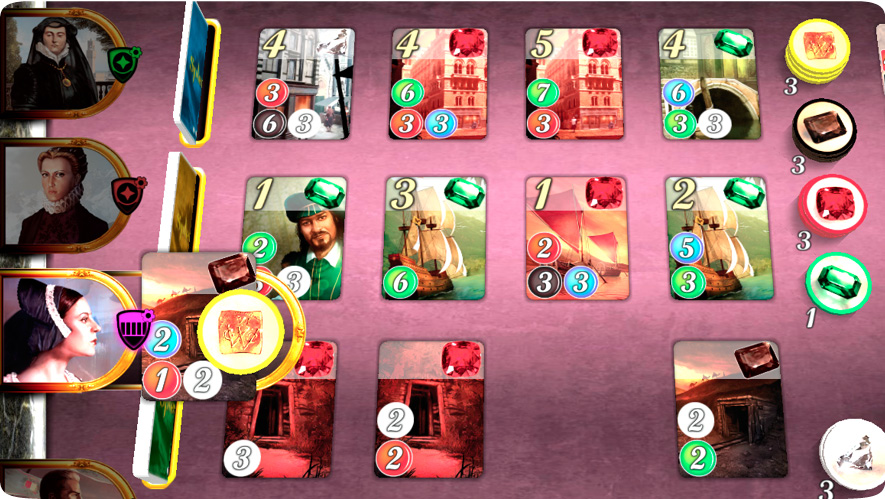
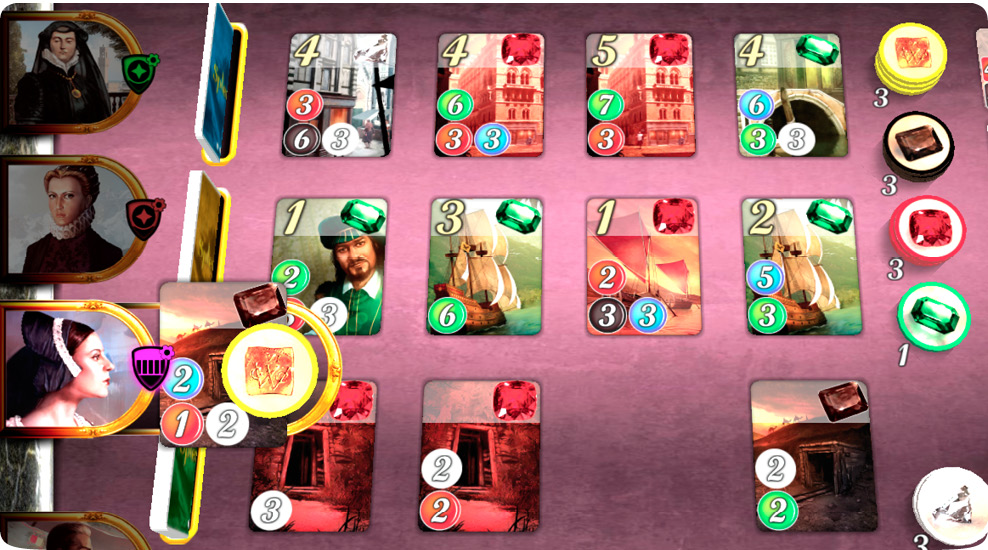
The cost of a development card appears in the lower left corner. The colors of the circles match the gems needed for the purchase, while the numbers in the circles indicates how many of each gem is required. Tokens used to purchase development cards are returned to their respective stacks after you select a development card.
The gem in the top right corner of the development card becomes a permanent gem for future purchases, and for impressing nobles. The number in the upper left corner (does not appear on all development cards) indicates its prestige points value. When a development card is purchased or reserved, the top card from the draw pile is put in its place.
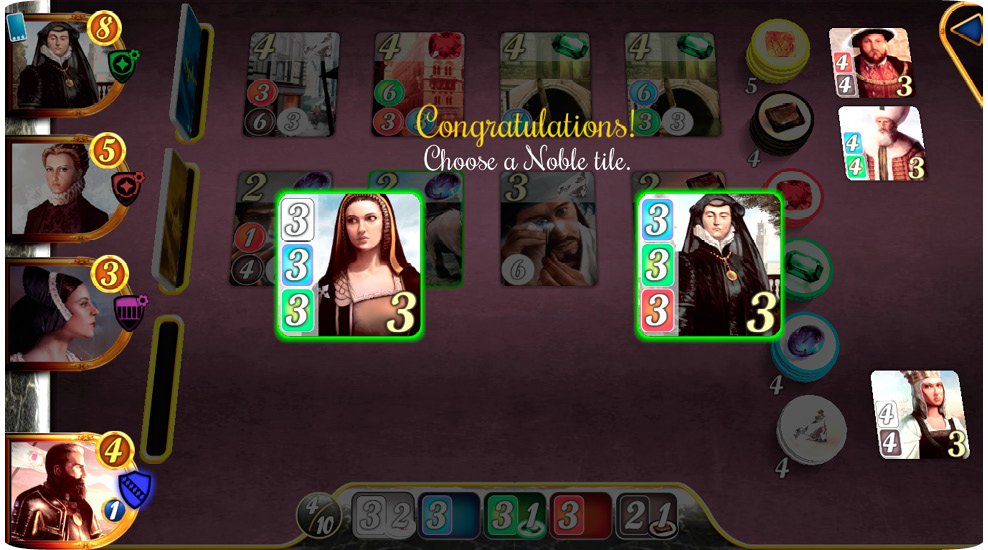
Only permanent gems impress nobles. You must earn enough gems to match the numbers on the left side of their tile to claim the tile and prestige points. You can claim only one tile per turn. Noble tiles are not restocked.
Ending the Game
When a player achieves 15 points, the game ends as soon as every player has taken an equal number of turns. If player 1 gets to 15 first, then the remaining players each get one more turn. If player 2 reaches the goal first, then everyone except player 1 gets another turn.