Mobile Gaming Guide — Tips, Tricks, and Strategies for Today's Hottest Mobile Games Hades’ Star
Profit-Driven Galactic Exploration
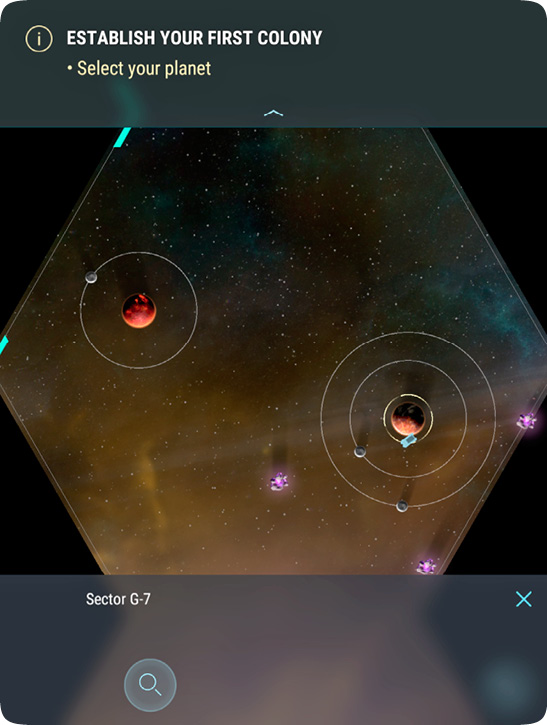
The opening tutorial begins with establishing a colony, then covers the construction of space stations and spaceships. Ignore the tutorial when it insists on using crystals to speed up research or production.
Resources
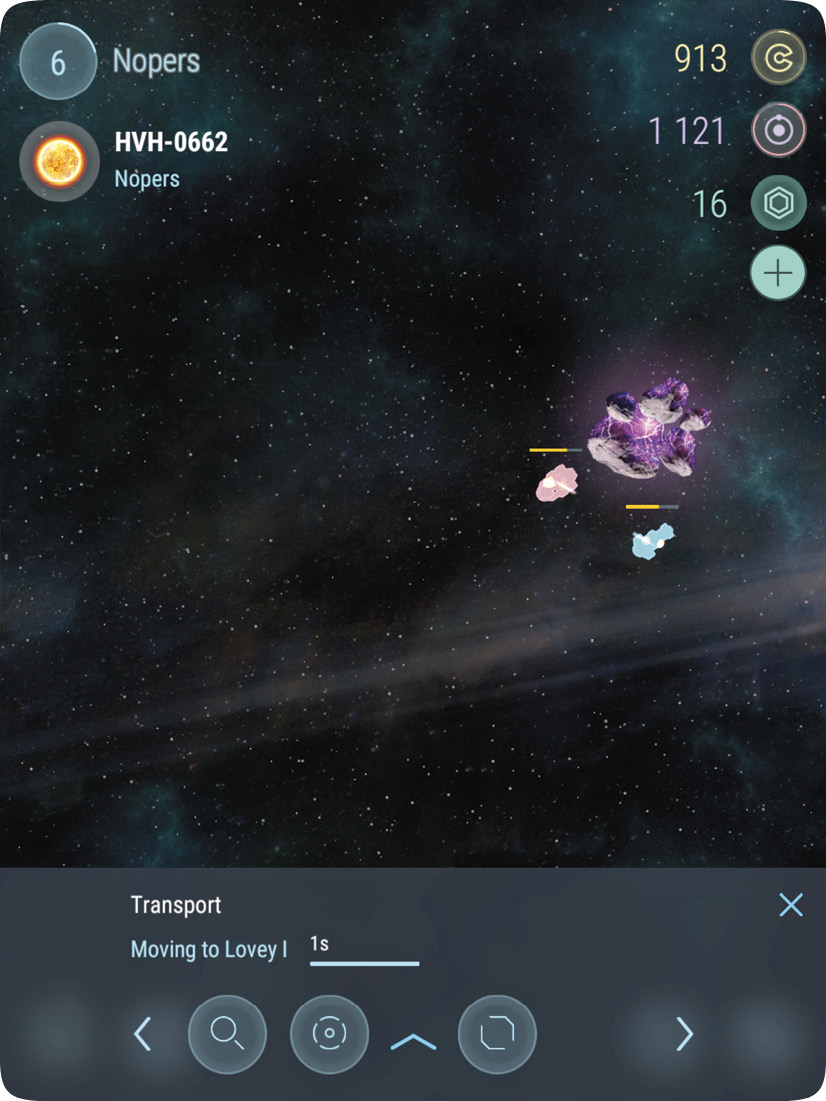
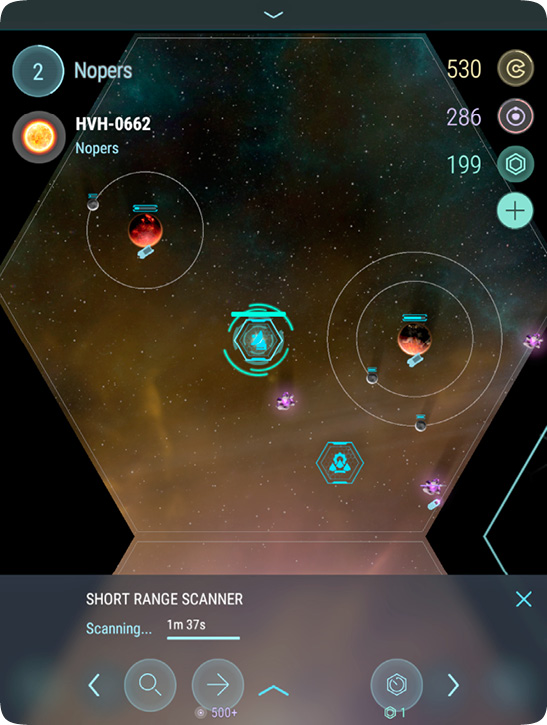
The top right corner of your screen shows three resource trackers: credits, hydrogen, and crystals. Colonized planets and transports ferrying goods between planets and natural satellites increase your credits. Hydrogen is produced by some colonized planets and is also harvested by miners working asteroid fields. Crystals are a premium currency purchased with real money or earned through completing achievements.
Credits are spent to build and upgrade planets, stations, and ships, and to conduct research. Hydrogen fuels ship and station movement. Without hydrogen, your fleet can’t go anywhere. Crystals are a wildcard. You can trade crystals for artifacts, credits, and hydrogen, or spend them to finish upgrades or research instantly.
Planets
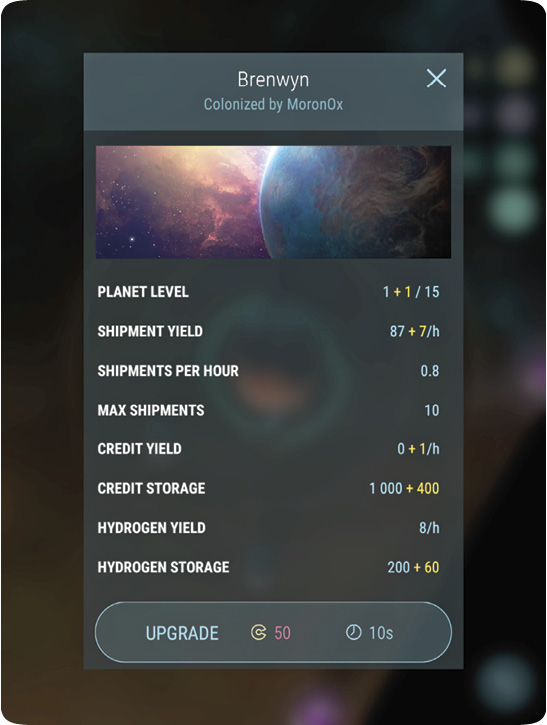
There are six types of planets you can colonize: desert, fire, water, terran, gas, and ice. Depending on the type of planet, it will produce a combination of shipments, credits, and hydrogen. Upgrading a planet costs credits but increases its production output and storage capacity.
Space Stations
Space stations act as your production and research facilities. There are eight space stations that you can build and upgrade:
Shipyards build and upgrade your fleet. The size of your fleet is limited by the level of your shipyard.
Short range scanners reveal adjacent sectors. You must scan the surrounding sectors before you can travel to them.
Red star scanners detect stars on the verge of supernova and transport ships adjacent to the scanner to that star’s system.
Research stations reverse-engineer the artifacts brought back from the red star trips into the modules that improve your starships.
Diplomacy stations link your system with one owned by another player, allowing for shipments and defensive aid.
White star scanners are gateways used for battles between corporations.
Warp lane hubs are linked together to allow travel between two points without consuming hydrogen.
Trade stations generate and receive shipments like a planet or natural satellite; however, they do not increase your overall credit and hydrogen storage capability.
Your Fleet
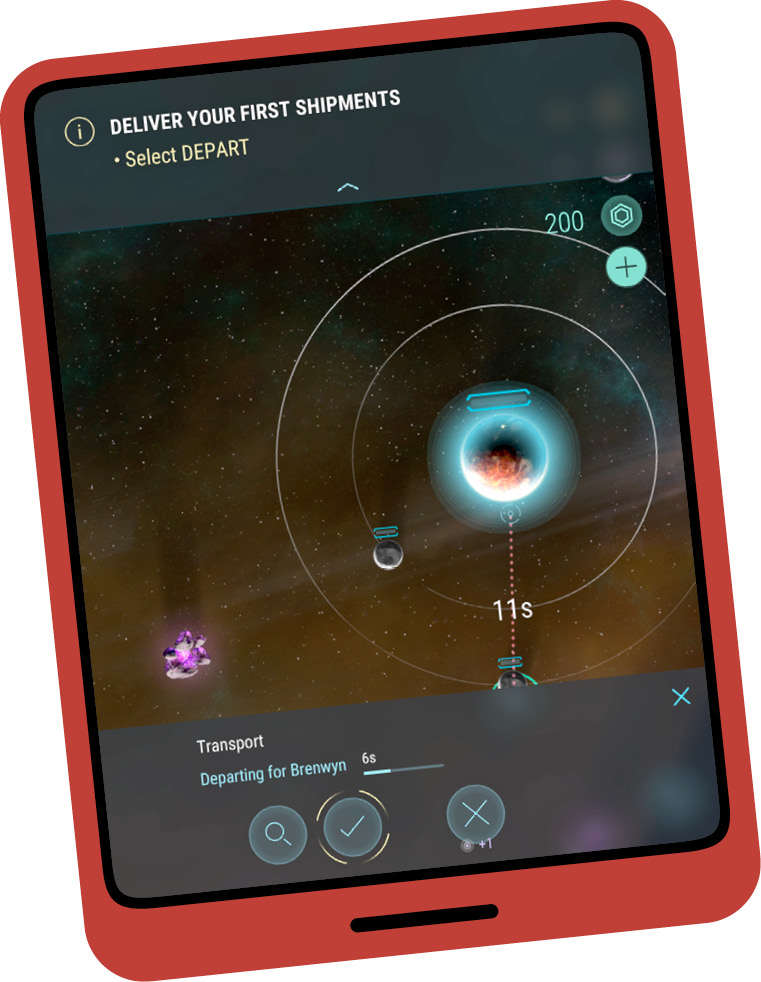
The spaceships under your command come in three types: battleship, miner, and transport. Miners extract hydrogen from asteroid fields, transports carry shipments, and battleships protect all of your interests.
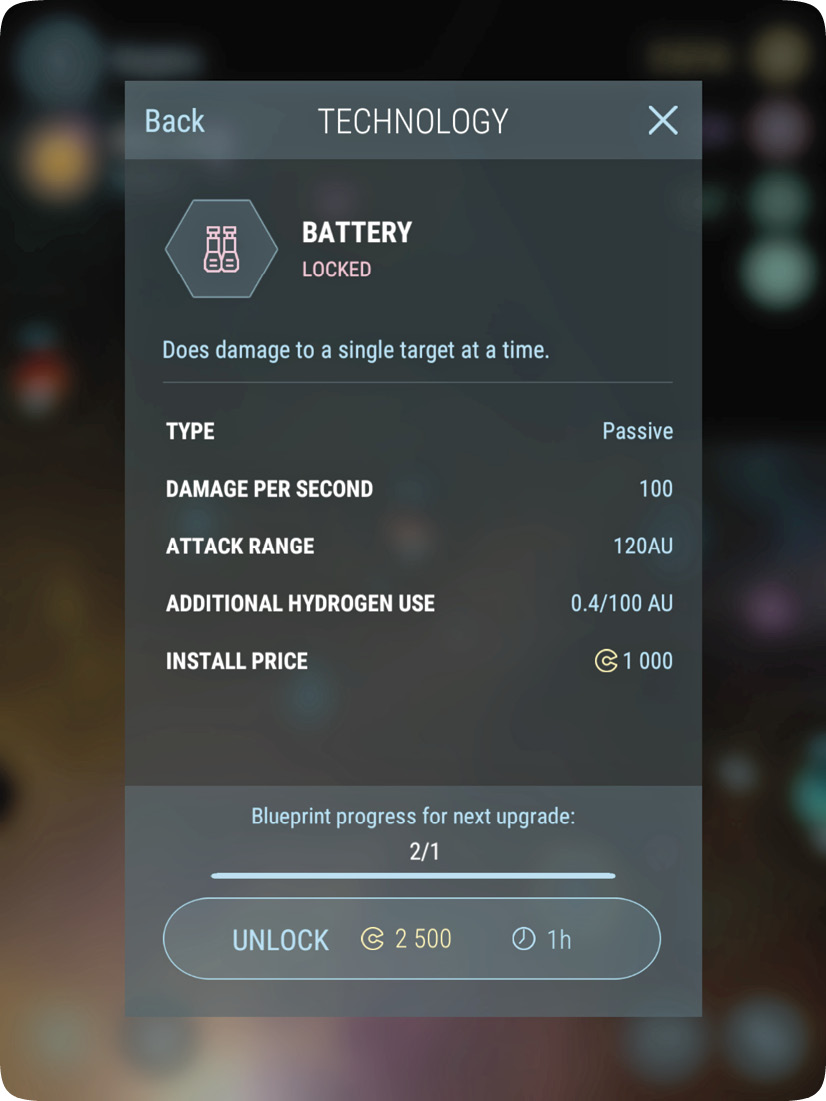
The shipyard assembles your fleet, where you can also spend credits to upgrade the blueprints used to build the ships. The modules derived from artifacts are used to customize your ships.
Opposing Forces
Computer-controlled Cerberus ships are always hostile and are typically encountered around red stars, but some will also pop up in yellow star systems. While you are competing with other players for artifacts, combat between players must be prearranged.