
Pillars of Eternity Guide Training
Game Mechanics
Game Options
Game options have a significant effect on the game. For example, difficulty not only determines how tough it is to prevail in combat, but also determines the types and number of enemies you encounter. You can choose your level of challenge during the game (except for Path of the Damned). You can also toggle a series of options for guidance and information from the game. There are numerous features to remove a lot of the in-game assistance and notifications if you’d rather rely on your own wits.
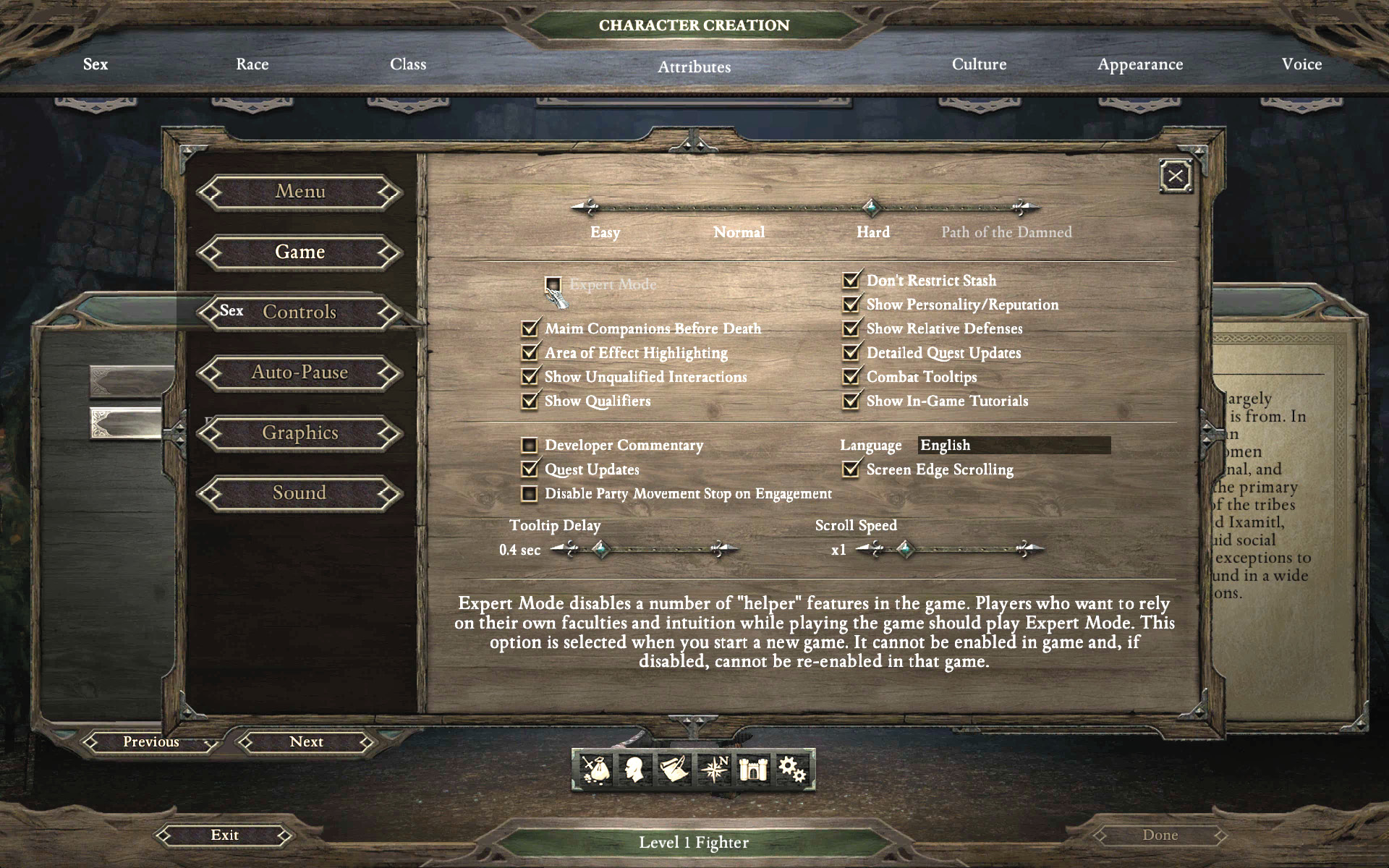
Difficulty
Easy
The Easy difficulty requires minimal micromanagement and forgives mistakes in combat.
Normal
The Normal difficulty requires strategy and efficiency, but forgives a few mistakes in combat.
Hard
The Hard difficulty is suited for Infinity Engine veterans who are looking for a challenge. Survival requires micromanagement and optimization of stats through items, spells, and abilities.
Path of the Damned
In Path of the Damned difficulty, enemies receive a bonus to most stats, and encounters have more enemies. This setting cannot be changed once the game is started.
Challenge Modes
Expert Mode
This disables all of the helper features in the game. This is for players who want to rely only on their own faculties and intuition while playing the game.
Trial of Iron
If Trial of Iron is enabled and the party is killed, the game ends and you must start again.
Resting
Your party must rest to recover Health and heal many Afflictions. This is also the only means for restoring many spells and abilities. There are even repercussions to postponing rest. The longer a character goes without resting, the more Fatigue they acquire. Once they hit certain Fatigue threshold, they can suffer penalties to their maximum Endurance, Accuracy, and all of their defenses. The only way to remove those penalties is to finally give the character the rest they need.
Resting locations
To begin resting, it’s important to find a suitable location. The player has a variety of places to choose to from and each location has its unique advantages and disadvantages.
Inns
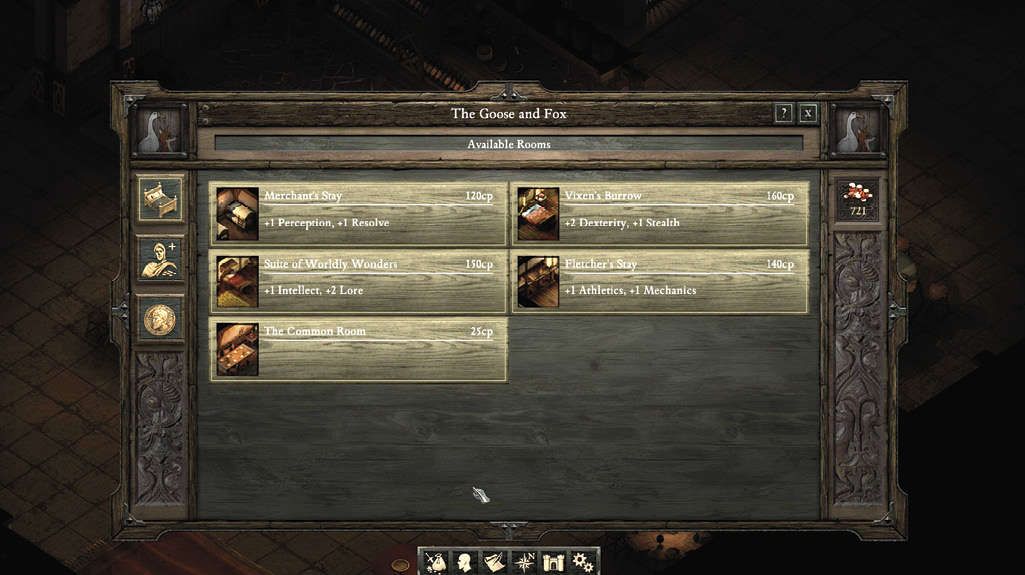
The player may choose to rest at any inn, but inns are located only in villages and cities, which may be far from a combat location. It costs a small amount of money to rest at an inn, but the characters can receive a resting bonus for doing this if they opt for the more luxurious rooms.
Stronghold
The player can rest at the Stronghold once it has been repaired.
Camps
In most wilderness and dungeon locations, players can choose to use a Camp Supply to rest. Camp Supplies are items that can be purchased in most cities and (occasionally) found as items in the world. The party can carry a fixed number of Camp Supplies, based on the level of difficulty:
Easy: 6
Medium: 4
Hard: 2
Resting Conditions
While exploring the wilderness and dungeons, Camps are the most utilized type of Resting location. The continued series of combat encounters can leave the party drained or damaged and can require the party to rest. However, there are several conditions that can prevent Rest. These are very important to keep in mind especially deep within an enemy’s domain.
- Party is in combat.
- Any party member has been seen by an enemy.
- The location is marked as No Rest.
- Characters are not all within X meters of each other.
- Party has no remaining Camp Supplies.
Dispositions
Disposition tracks a player’s reputation throughout their travels. The player’s actions within the game often leave an impression on other characters. Many events or interactions that take place later in the game can be influenced positively, negatively, or simply differently as a result of the player’s disposition in a given context.
Faction Reputations
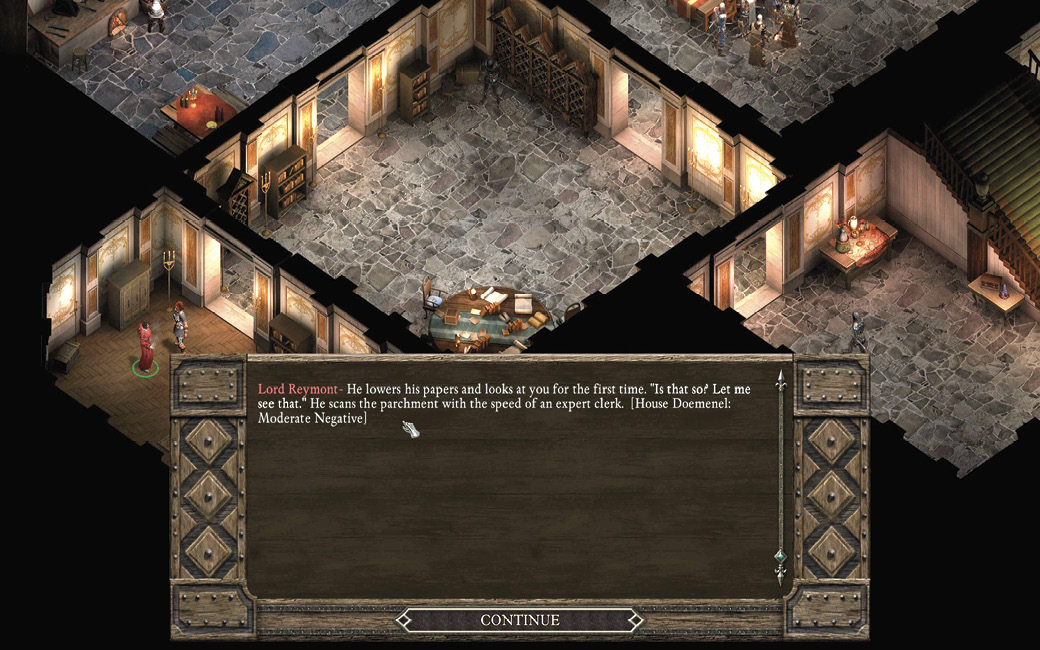
If the player positively or negatively interacts with a member of a faction (e.g., The Dozens, House Doemenel, etc.), they are notified that they’ve gained or lost esteem in that faction’s view of them. The player’s standing with their impacted factions is recorded and updated on their character sheet.
Personality Reputations
The player’s overall behavior impacts how the world views them. There is no overt morality or judgment associated to these traits. In other words, a “good” character can get in as much trouble as a “bad” character. Personalities are also not one-dimensional. A player known for their honesty might also develop a reputation of eerie stoicism.
There are 10 different personality types available at the player’s discretion, based on their actions or deeds. The type of personality a player has cultivated is visible on the character sheet. Each of those types contains three ranks or titles, which reflect how the character has consistently presented themselves over time.
The following is a list of the different personality types, along with a few examples of how the player might be judged:
Benevolent: charitable, kind, soft, or weak.
Cruel: merciless, sadistic, brutal, or imperious.
Clever: sarcastic, sassy, foppish, or irreverent.
Stoic: tight-lipped, cool-headed, or simple-minded.
Aggressive: hot-headed, bold, or impatient.
Diplomatic: cautious, tame, or courteous.
Passionate: zealous, romantic, or obsessive.
Rational: practical, standoffish, or cold.
Honest: guileless, sincere, or straightforward.
Deceptive: dishonest, manipulative, or shrewd.