
Pillars of Eternity Guide Training Character Creation
Vitality
Vitality – Endurance and Health
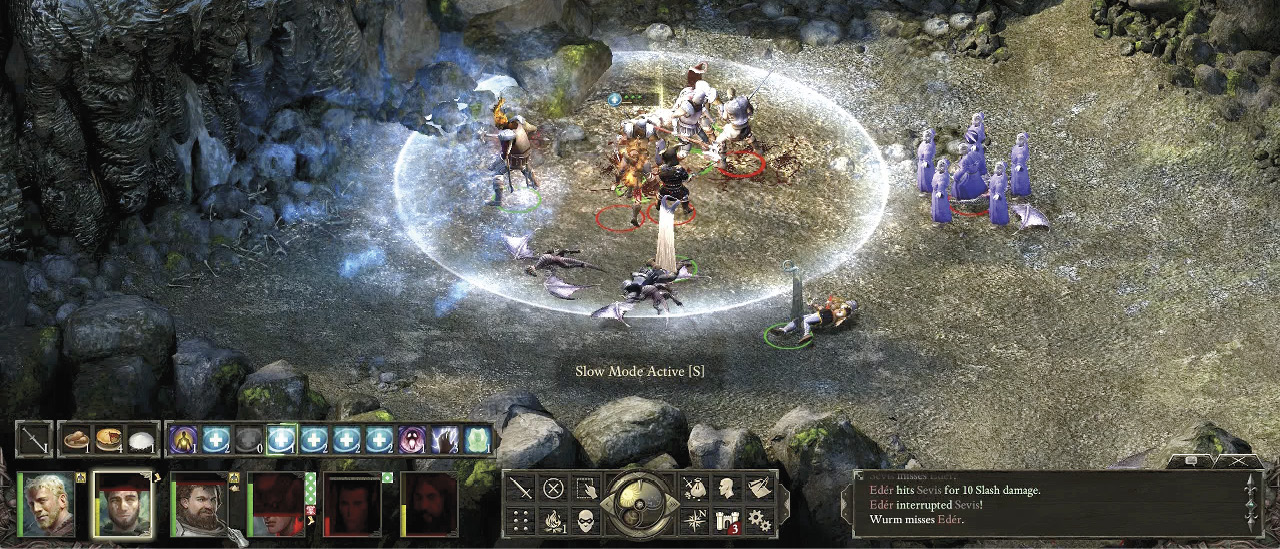
Character’s vitality is represented by two values: Endurance and Health. It is the measure of how much punishment a character can withstand before going unconscious, maimed or dying.
Endurance
Represents resistance to short-term injury or how much general abuse a character can withstand before they are knocked unconscious. Endurance is relatively easy to replenish or regenerate through items, abilities, and spells. These can be used on the battlefield to turn the tide of combat. Once combat has ended, Endurance replenishes quickly.
The majority of damage a character takes applies to Endurance. If a character loses all of their Endurance, they will be knocked unconscious and will die unless tended to. An unconscious character cannot move or take any actions. However, some abilities allow characters to revive an unconscious party members during combat. Otherwise, they are out of the fight until combat ends.
Health
Health represents long-term injury or how much damage a character can take before they are maimed or die. Health is much more difficult to recover than Endurance. It doesn’t regenerate on its own and neither items nor spells can bring it back. Only resting can restore Health and restore maimed status. The Health of the party is a limiting factor that makes the player consider how far they are venture before resting.
Health loss occurs at the same time as Endurance loss, but a character has much more health than endurance. When a character loses all of his or her health, they are not only knocked unconscious, but also receive a Maimed status when revived. Sustaining any damage while maimed kills the character.
Defense
Defensive stats grants character’s protection in combat. The higher a character’s Defense, the more likely the opponent is to miss an attack.
Each type of defense (other than Deflection) is equally influenced by two stats. Aside from level, the attributes that contribute to each defense are the primary determining factors of that defense. Class rarely has a significant influence on a character’s defenses. However, Class does impact the starting point for each defensive stat. For example, fighters start with the highest deflection score, barbarians have a high starting Fortitude and low Deflection, while Monks have balanced defenses across the board. Regardless of their Class, characters gain 3 additional points to all defense at every level.
The four types of defenses and their respective attacks are:
Deflection
Based on: Level/Class
Deflection is the defense used to resist direct melee and ranged attacks against the character that are not area of effect (AoE). It is defined by the character’s class, level, Perception, and Resolve, but may also be influenced by shields, certain weapons, Talents, and other effects from spells or items.
Fortitude
Based on: Might and Constitution
Represents a character’s endurance to “body system attacks” such as poison or disease.
Reflex
Based on: Dexterity and Perception
Represents a character’s ability to dodge area of effect attacks.
Will
Based on: Intellect and Resolve
Represents a character’s strength of mind and resistance to mental attack.