
Pillars of Eternity Guide History and Lore
Empires and Nations
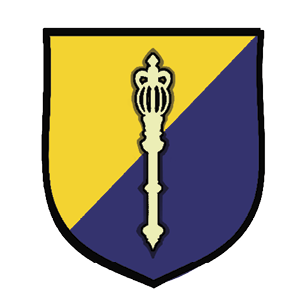
Aedyr
(AH/EH-deer, Aedyran)
People from the expansive Aedyr Empire and its former colonies, Dyrwood and Readceras. Aedyr literally translates as “Many Deer,” but means “People of the Deer,” referring to a 2,500 year-old tribe that became a kingdom 600 years ago. It merged with the elven kingdom of Kulklin in 2399 AI. Among the Aedyr, there is no significant cultural divide between humans and elves. Because of their close contact and integration in spite of physiological differences (such as longer elven lifespans), their culture and legal system have developed a variety of unique concepts, such as the haemneg, or ceremonial marriage. Ethnic Aedyr (mostly humans and elves) have fair skin and a variety of hair and eye colors, with blue and green being common. Among other cultures, Aedyr clothing is known for being relatively simple in construction and often using large, colorful striped or checkered patterns for accents.
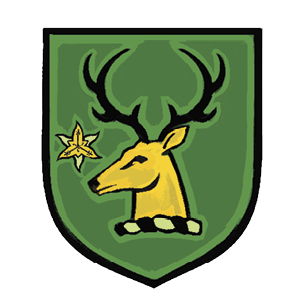
Dyrwood, Free Palatinate of
(DEER-wood, Aedyran)
The independent nation that was formerly a colony and later a large, remote duchy of the Aedyr Empire. Led by their duc, Admeth Hadret, the people successfully fought for their independence over an excessively burdensome campaign to colonize the dangerous ruins of Eir Glanfath. (Locals refer to the conflict as “the Liberation.” In history books, it is known as Hadret’s Rebellion.) Despite the fact that they are no longer, properly speaking, a palatinate (nor a duchy), the people of Dyrwood continue to refer to their home as a “Free Palatinate” out of pride. Most residents of the Dyrwood are Aedyr humans, elves, and dwarves, but many are also culturally integrated orlans or children of Glanfathan elves. Despite having fought a war with the Aedyr Empire in the past, they are now trading partners and have maintained few grudges. Their one continued point of contention is exploration and colonization of Eir Glanfath, which Aedyr continues to push through official and unofficial means.
Eir Glanfath
(EH-eer GLAHN-fath, Glanfathan)
The name natives give to an indeterminately old elven kingdom that covered the entire forest southeast of the Bael River. Though they were not technologically advanced compared to contemporary civilizations, they had accomplished a number of architectural and astronomical feats that explorers and scholars are still trying to understand. Whatever the extent of Eir Glanfath’s kingdom was, its ruins had been abandoned for centuries, possibly even millennia, before Vailians or Aedyr arrived in the area (though some evidence suggests that boreal dwarves and aumaua from far south did trade with them in the distant past). The so-called “Glanfathan” elves in the forest seemed to have no cultural connection to the kingdom and were living in nomadic communities instead of the old structures. Eir Glanfath’s ruins are not understood by anyone, and early misinterpretations over their significance resulted in two small-scale conflicts: The Broken Stone War and The War of Black Trees, the latter of which ended with a fire that consumed a vast section of the Dyrwood.
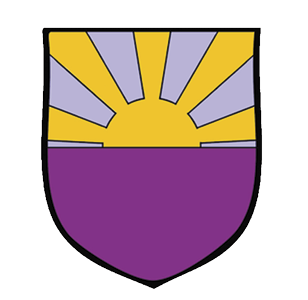
Readceras, The Penitential Regency of
(RAY-ahd-seh-rahs, Aedyran)
The ecclesiastic nation that was formerly an Aedyr colony and later an independent theocratic dictatorship (the Divine Kingdom of Readceras). Two centuries ago, a popular religious movement took hold in the countryside, in part sparked by the collapse of the nation’s vorlas (purple dye-producing plant) market, its resultant poverty, and general civil unrest. The leader of the movement was a farmer named Waidwen who claimed that the Aedyr god of light, Eothas, had appeared to him in the night and told him to punish the colonial governor for leading the people to ruin. Waidwen’s success led to his apparent transformation into a living vessel for Eothas, after which he became the first and only “divine king” of the country. His rule produced a subsequent purge of heretics and followers of other faiths across the nation. Events related to this purge led to the Saint’s War with Dyrwood, which informally ended in 2618 AI when Waidwen was apparently destroyed by a massive bomb north of Halgot Citadel (popularly renamed Godhammer Citadel).
Vailians
(VAY-lee-ahns, Vailian [non-standard “ai” pronunciation])
Most Vailians come from the Vailian Republics, a federation of independent city-states made up of former colonies from the Grand Empire of Vailia. They are a powerful mercantile force in the southern hemisphere, trading with more partners than any other nation or empire. Five cities are considered “grand” republics and have greater voting power in their electoral council: Spirento, Ancenze, Selona, Ozia, and Revua. The federation is widely known for its access to most major commodities in the world, including slaves, and for its habit of impressing (abducting) foreigners into service on their naval vessels. Ethnic Vailians (humans and a small number of dwarves) have dark brown skin and tightly spiraled, dark brown hair. They most commonly have brown or black eyes, but occasionally have green, hazel, or grey eyes. Vailians pride themselves on their well-made and intricately-decorated clothing, often made with rare materials and dyes to which they have easy access.