
Halo 5: Guardians Guide Multiplayer Tactical Primer
Pro Gamer Profiles
Three long-time Halo veterans contributed to the guide, ensuring the authenticity and accuracy of the multiplayer content. So before you read any further, take a moment to meet the pros. Combined, Walshy, Elamite, and Cpt Anarchy have nearly 30 years of professional gaming experience—pay close attention as they offer their unique insight on Halo 5: Guardians’ competitive game modes.
Walshy
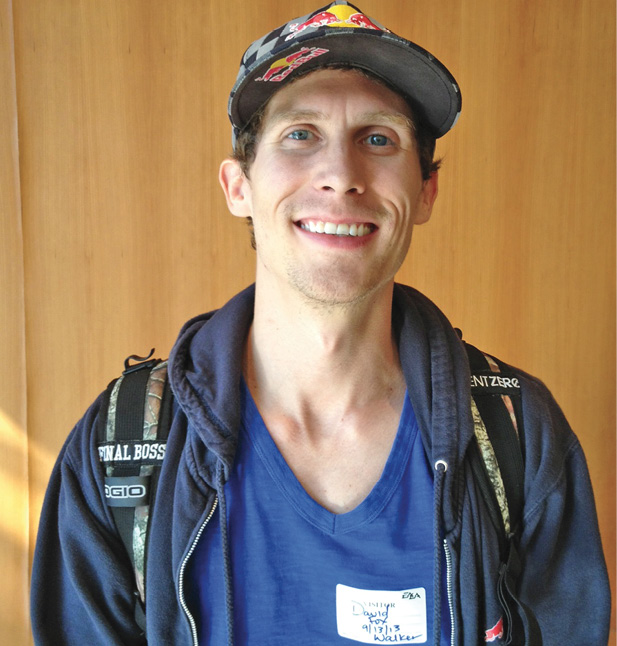
Name: David “Walshy” Walsh
Twitter: @Walshy
Age: 31
From: Grand Rapids, Michigan
Professional Player: 2002-2012
Favorite Game Type: Capture the Flag
Favorite Map: Truth
Favorite Weapon: Battle Rifle
Favorite Power Weapon: Sniper Rifle
Favorite Vehicle: Warthog
Controller Settings
Buttons: Recon
Sticks: Default
Inversion: Inverted
Sensitivity: 3
Crouch: Hold to crouch
Auto-Stabilize: Off
Claw or Not: Claw
Notable Gaming Accomplishments
» Won 30-plus national/worldwide tournaments on five different video game titles
» Was personally sponsored by such brands as Red Bull, Sony Ericsson, Old Spice, and Stride Gum
» Three-time MLG National Championship winner in 2004, 2005, and 2007
» Won the MLG 2007 National Championship with Final Boss team without dropping a single game
» Won a $43,000 Dodge Charger SRT8 in GameStop’s Battlefield 2: Modern Combat tournament
Bio
David “Walshy” Walsh is one of the most recognizable names in the professional Halo scene. Walshy won more than 30 national Halo events from 2002 until his retirement in 2012 and was one of MLG’s first players to be signed to a $250,000 management contract. Although Walshy retired from competing in tournaments in 2012, he is still heavily involved with the Halo scene by streaming online, creating YouTube videos, commentating at every major tournament, and expanding Halo’s audience with annual promotional events in China, South Korea, and Singapore.
Walshy Tips
» Watch and learn. Theater mode isn’t just for watching that sweet killing spree you got last game. In fact, the majority of my games that I watched when I was competing were the games I lost or played poorly. I mostly pay attention to my deaths and use a risk/reward assessment to determine if a death was something that could be avoided with the knowledge I had at the time. There are plenty of times in Halo where someone might pull off a great flank on you or you might miss a Battle Rifle shot; those deaths are unavoidable and shouldn’t be judged. Instead focus on what is within your control and try to find situations where you have recurring deaths, then experiment with a different route.
» Are you not entertained? Spectator mode isn’t only a great medium of entertainment to watch the top pros play—you can use it to take notes and watch how the pros move across the map and work together.
» Be well rounded. It’s great to be an expert with a specific weapon or role, but being a well-rounded player is important if you want to make the biggest contribution to your team. All the best players have specialties—mine were objective work and close-quarter combat—yet they still know how to do everything at a high level.
» Find your sensitivity level. One recurring question I get from players is “What sensitivity should I use?” It’s a tough one to answer because each player is different and has varying levels of control over their aim. My best advice is to find the highest sensitivity that you can play on where you can still consistently win your mid- to long-range battles. The majority of pros in every previous Halo played on a sensitivity between 3 and 5 because it gave them the steady aim needed to win the long-range fights and the look speed needed for close encounters.
» Have fun. This should be the easiest tip since you are playing a video game, but I know when I was pursuing a professional career in gaming that sometimes I would take the fun out of the game and perform worse because of it. If you aren’t enjoying the game, make sure to take a break from competitive play once in a while to enjoy one of the many fun game modes that Halo has to offer.
A Chat with Walshy
Prima Games: Before we dive into Halo 5: Guardians, let’s just talk about the series as a whole. You’ve been playing Halo as long as anyone. What initially drew you to the game? What sets it apart from other competitive shooters?
Walshy: What initially drew me to Halo was its skill and strategy. I remember the first time playing against my older brother Jason, and every time I died it was because he had better aim and played smarter than me. Halo is set apart from other competitive shooters for multiple reasons, such as aiming skill, strategy, and teamwork. The aiming skill is easy for casual players to pick up but still impossible for professionals to perfect. The strategy is always changing, with players finding better setups and more efficient objective routes. The teamwork has separated players at the top ranks–you can’t be a lone gun in the team-based games and expect to win.
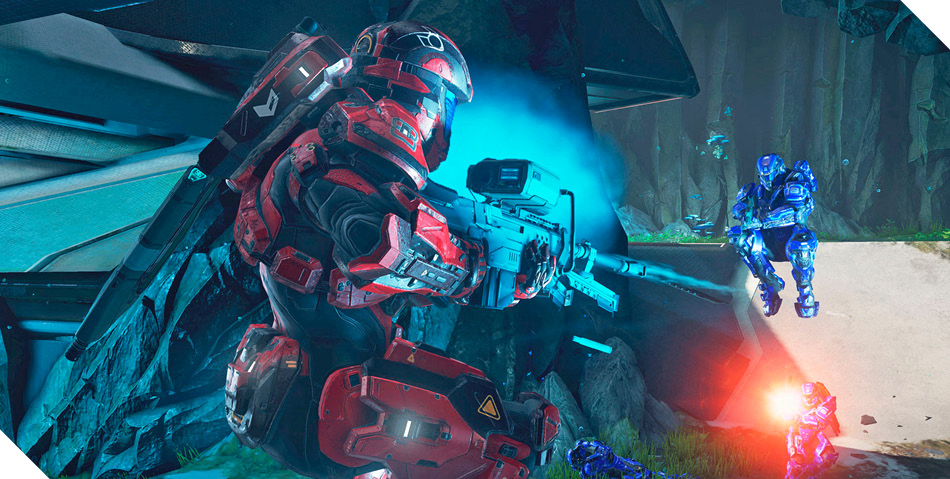
PG: Was there a particular moment when you realized you had the skills to go pro? What were those first tournaments like?
Walshy: I was the best out of my friends after playing for a few months. Halo: CE wasn’t on Xbox Live, and I wanted to test my skills against others, so in 2002 I went to a tournament down in Nashville, Tennessee, where I placed fifth out of about 300 people in the individual event. The next tournament I placed first. The tournaments have drastically changed in size and competition over the years. The first tournament I went to wasn’t even streaming online, and first place took home $4,000, whereas five years later the tournaments were broadcast online and on TV, and my team took home the first place prize of $100,000. It’s been an incredible experience to see the scene grow so much in a short period of time.
PG: Now retired from professional play, you’re a Halo ambassador of sorts, having traveled around the world to promote the franchise. What kind of reception have you received during these international visits?
Walshy: Halo has been growing around the world, and I love every minute that I get to travel abroad and share my passion. The reception has been unreal—I’ve met fans overseas who have been watching me compete in Halo tournaments since 2006!
PG: Now let’s talk about Guardians. There have been some big changes since Halo 4. What are you most excited about? Do you feel these new additions will fundamentally change the way the game is played?
Walshy: The biggest change in Guardians compared to previous Halos is the movement. Mastering how to effectively use the Thruster Pack will be a huge skill gap between players. Even though there are major changes in Guardians, the fundamentals are still the same—Halo games are won by working as a team to control the map, power weapons, and power-ups.
PG: As a Halo commentator, what maps and game modes would you like to watch during tournaments?
Walshy: I prefer to commentate on objective games like Capture the Flag because it allows me to highlight the top teams’ strategy of how they move to set up for a flag pull and how they position themselves while escorting the flag back across the map.
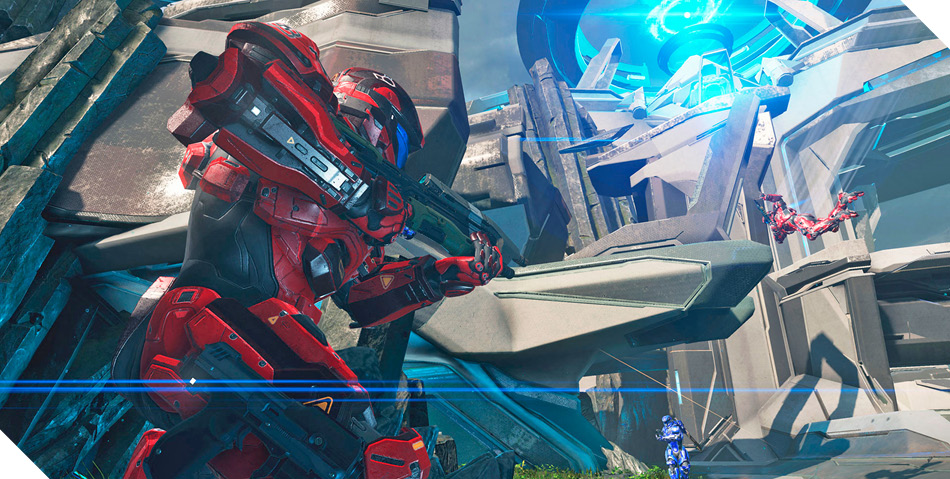
PG: During the production of this guide, you’ve had a chance to play with 343 Industry’s in-house pro team. What was it like playing with/against these former teammates and opponents?
Walshy: I always have a blast when I’m with the 343 crew! We all have so much history with each other, so it was non-stop fun, competitive Halo games together. But the competitions didn’t stop in the studio; even during our free hours we would find something to compete in, like pool or mini-golf.
PG: Surely there was at least one memorable moment from these gameplay sessions. Does anything stick out?
Walshy: We were playing Capture the Flag on Fathom, and Mason “Neighbor” Cobb was running the last flag back to win the game. I was the only player alive and was hiding in his Base—I ended up assassinating Neighbor, killing Elamite for a double kill, and running back a counter flag capture for the win!
PG: Breakout is a completely new competitive game mode. What adjustments do players need to make in this mode?
Walshy: Conserving grenades. One well-placed grenade can change the round in this game mode and can give your team an advantage for the rest of the round. Learning how and where to bank grenades is a crucial skill.
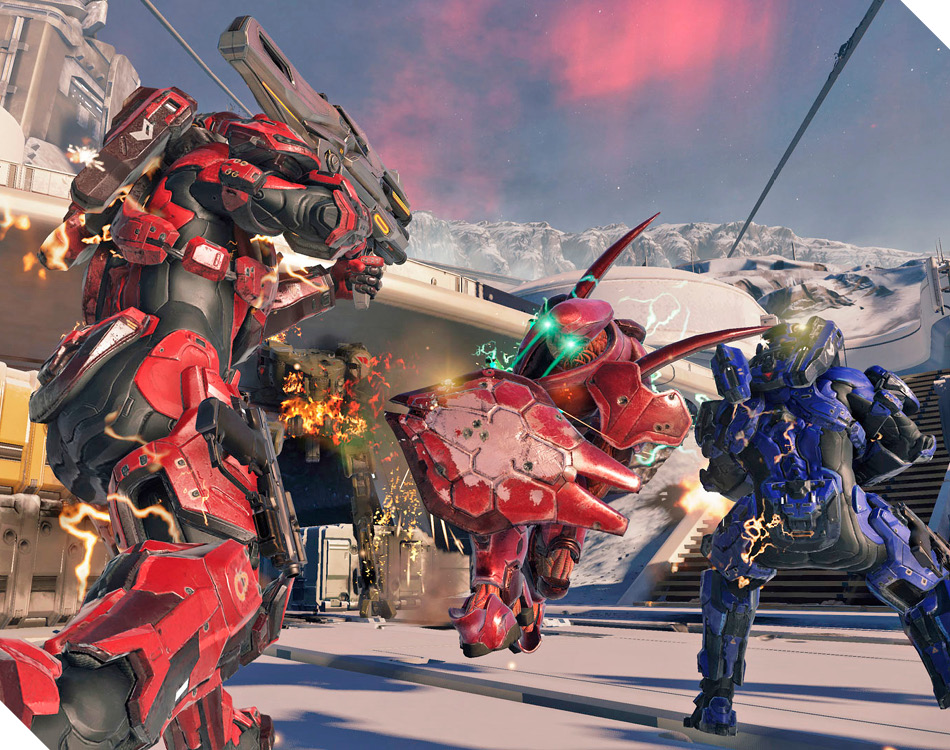
PG: Although not designed as a competitive mode, Warzone offers a whole new way to experience multiplayer. What are your thoughts on Warzone? Do you think it will expand the game’s player base?
Walshy: Warzone is fun and I see it being the perfect game mode to play with a group of friends with varying skill levels, because it’s all about working as a team and securing the objectives. Halo has always been known for being a sandbox shooter with different game modes to suit gamers’ preferences, and I think Warzone has the potential to lure in even more new players!
PG: Halo has clearly changed your life, but you wouldn’t have experienced the success you have without discipline and a strong work ethic. What advice can you give to players seeking to go pro?
Walshy: Improve every day. I of course enjoyed the time I played, but I always had a facet of my gameplay that I tried to focus on and improve every time I picked up the controller. The two biggest things that helped me were 1) keeping a notebook where I wrote down things to learn and 2) going over game films where I did poorly. It is much less fun to watch games where you failed, but you learn so much from critiquing your own gameplay.
Elamite
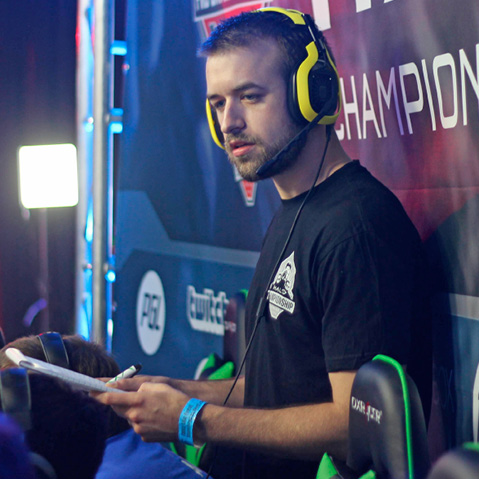
Name: Kyle “ElamiteWarrior” Elam
Twitter: @Elamite
Age: 27
From: Kentucky
Professional Player: 2006-present
Favorite Game Type: Capture the Flag
Favorite Map: Midship
Favorite Weapon: Halo 2 Battle Rifle
Favorite Power Weapon: Energy Sword
Favorite Vehicle: Banshee
Controller Settings
Buttons: Bumper Jumper
Sticks: Default
Inversion: Not inverted
Sensitivity: 3
Crouch: Hold to crouch
Auto-Stabilize: Off
Claw or Not: Semi-Claw
Notable Gaming Accomplishments
» 2008 Halo 4v4 champion
» United States Halo champion
» Seven first-place finishes at MLG Championships
» International champion with tournament wins in Canada and Europe
» First ever Halo pro player champion, Halo pro coach, and Halo caster/commentator
Bio
Kyle “Elamite” Elam has been a professional gamer since 2006. He has won championships in multiple games and been a member of some of the most successful teams in Halo history, including unparalleled success in Halo 3. He has traveled internationally, competing and winning tournaments across Canada and Europe. Early in his career, he was nominated for breakout player of the year before continuing his success by becoming the 4v4 and FFA (Free-for-All) National Champion just two years later. He is considered to be one of the most intelligent players in the game and is known for his ability to fill almost any role on his teams. He went on to coach and manage for one of the top gaming organizations in the world, Team Liquid.
Elamite Tips
» Teamwork is key. Winning a game in any first-person shooter requires a team effort. In some games, players can be successful running solo routes, racking up kills on their own. But in a game like Halo (with health, shields, and abilities), moving together and team shooting is the only way to effectively and consistently secure kills.
» Know what your strengths and weaknesses are as a player in both your overall play and within the specific dynamics of the game. The multitude and variety of weapons and game types require a player to approach each match differently. The routes and angles that you take and the power positions to control can change between different game types, even within the same map. Proper map positioning and power weapon control takes practice and experience. Be aware of how to time the weapons, and always be in position to grab or at least contest the respawn of the weapon. This will also teach you where you need to be rotating on the map as well as escape routes after you have secured the weapon.
» Don’t be afraid to study the game. Reviewing your own gameplay as well as the gameplay of other professional players can yield more improvement and better results than actually playing the game. It is important to have a good mix of time played versus time spent studying. This can help avoid plateauing and allows for further improvement of your gameplay.
» Communication is one of the most important aspects of the game. Winning comes down to the split-second decisions made throughout the game. The more information you and your teammates have given to each other the more you are enabled to make best possible decisions in game. Be careful, though; too much or useless chatter only clouds your teammates’ ability to contribute.
» Play to win. It takes a lot to win a game, and all players need to contribute. Pay attention to not only where the enemy is on the map, but where your teammates are as well. Know who is in the best position to grab a weapon or “run” the objective—there isn’t time to sort out who should do what, and when the dust settles, it’ll already be too late.
Cpt Anarchy

Name: Carlos “Cpt Anarchy” Morales
Twitter: @CptAnarchy
Age: 26
From: Oakland, California
Professional Player: 2005-present
Favorite Game Type: Capture the Flag
Favorite Map: Coliseum
Favorite Weapon: Scattershot
Favorite Power Weapon: Sniper Rifle
Favorite Vehicle: Mantis
Controller Settings
Buttons: Bumper Jumper
Sticks: Default
Inversion: Not inverted
Sensitivity: 3
Crouch: Hold to crouch
Auto-Stabilize: Off
Claw or Not: No
Notable Gaming Accomplishments
» First place WSVG New York City 2007 National Championship (Halo 2)
» First place WSVG Dallas 2006 Qualifier (Halo 2)
» Finished third at three MLG National Championships (Halo 2 & Halo 3)
» Twenty-four top eight finishes at MLG tournaments
» Consistently placed top eight in Free-for-All competitions in Halo 2
» Maintains pro status in Halo 2, Halo 3, and Halo: Reach
» Part of the USA Network TV show that showcased MLG during Halo 2
» Pro evaluator/instructor at the 2010 MLG Colorado combine
Bio
Carlos “Cpt Anarchy” Morales is a veteran professional Major League Gaming Halo player. He started out in late 2004 (MLG San Francisco), making his presence known by placing top four in Free-for-All and top eight in the 4v4. Shortly after Halo 2 was released he became a force, consistently moving up the rungs from top eight to top six to second place. Cpt Anarchy was part of the original 12 who signed to a $250,000 contract by MLG. With team Str8 Rippin he was able to attain multiple top three finishes consistently and won two tournaments under the World Series of Video Games league; one included a championship. Anarchy has had an extremely successful professional gaming career dating back to MLG’s prime. His versatility as a slayer and aggressive objective player made his play unpredictable in Major League Gaming and the Halo series. Morales was also able to make a name for himself in the Free-for-All (FFA) competitions. Anarchy has been a top threat across the Halo franchise, consistently placing top eight in 4v4 competitions.
Cpt Anarchy Tips
» Learn the weapons. When playing a new game it’s best to start up a custom game or go into a free-for-all playlist and learn which weapons are the most dominant and efficient for key situations. Halo 5: Guardians’ vast selection will make it even harder to find the weapons for your play style. This is crucial if you plan on taking the pro route, as top players take advantage of weapons in any scenario. I prefer long-range weapons, but I also balance them with a medium-range weapon. For example: Battle Rifle and Scattershot.
» Communicate. If you plan on competing at the highest level you really want to practice your call-outs. Communicating and small talk are two different things when you break this subject down. It’s okay to call out locations of enemies or positions on the map, but it’s better to say commands to make more direct small talk call outs. Allowing for the best plays by you and your teammates. For example:
“I’m with you”: Lets your teammate know you are there in order to make the right push.
“Stay alive”: So simple yet so many people never do it. If you die and are covering your teammate via death cam, let him know he’s the last person alive and in a situation where he must stay alive while he waits for spawning teammates.
“You have no help” or “I left you”: Lets your teammate know that he’s in a position with no help and that he should relocate or stay alive until help comes.
“I’m baiting you”: This one is huge in tournament play. Allows for the opposing team to get out-played if you’re communicating with your teammate properly. Also lets your teammate know that he’s not being hung out to dry in a key situation, which tends to happen a lot in the lower ranks of play. Allows for proper baiting and switching techniques with your teammate. Think of baiting as casting out your teammate out on a hook, hoping the enemy bites. When your teammate reaches the intended area and draws attention, reel them back or jump in and join the fight.
If you can practice these phrases and techniques, your communication will be taken to a whole new level. Being precise and brief keeps the airwaves less hectic and clear for listening.
» Visit the Theater. Watching recorded matches in the Theater is one of the best ways of getting better in any competitive atmosphere. This allows for further understanding of situations where you die or believed you had help. When you find the right group of players to form your everyday matchmaking team or competition team, going into Theater together after losses or key victories improves your game dramatically. Being able to give constructive criticism is huge—just learn how to take it. What you think is the right play might be different in someone else’s mind and may play out differently from what you picture. Coming to an understanding of what the right play is makes Theater mode crucial. Visit the Theater after competitive team scrimmages, studying what setups worked best for key situations in map control or map takeover.
» Learn your abilities. In this game it’s important to know what’s off-limits and what’s not. Abilities such as thrusting and clamber allow for unique jumps. Many jumps look impossible, but if you link some of your moves together and time them properly, the jump is attainable. Going into a map through custom games is the best way to do this, giving you unlimited time as well as zero enemies to worry about. The best players learn and take advantage of any ability to win rounds and games. It’s best you do the same!
» Work on your mental game. When it comes to competing, or just gaming in general, it’s important to keep a positive mindset. Once you start thinking negatively it tends to set your game back, as you second-guess each play. Also, avoid complaining. If you complain less your game will improve dramatically, and your teammates will stop muting you or reporting you with bad feedback—nobody likes listening to babies cry. Keeping your composure is key at the top level of play. Best times I ever had with my teammates were when we had intense but calm call-outs and cleared the air after games with some humor, allowing for less stressful play going into the following game. If you can stay level-headed, you’re already one step ahead of the game!