
Dark Souls III Guide (Steam) Gameplay
Choosing Equipment
Weapons
Your weapon has a huge impact on how your character plays. Each of the major weapon categories (from Daggers to Greatswords to Hammers to Spears) has completely different movesets, speeds, and Weapon Skills. Within those categories, the individual weapons also have their own quirks, sometimes varying the moveset slightly, requiring different attributes than the norm, providing some unique magical benefit, or possessing an unusual or entirely unique Weapon Skill.
There is no wrong choice of weapon. It can be overwhelming to worry that you might be messing up by choosing to level your basic Broadsword or Mace early in the game, but don’t worry— you’re not.
Any weapon in the game can see you through, even the humble Dagger. You may certainly struggle against some foes or bosses, but in the absolute worst case, you can always farm up more Souls and materials to level another weapon.
In the course of a single playthrough without much farming but with fairly thorough exploration, you can expect to level several weapons comfortably to high level, and at least one weapon to max without trouble.
Early in the game, spend time experimenting with different weapon categories just to get a feel for their basic movesets. Once you find one you like, pick a weapon in that category, and then go ahead and enhance and infuse it.
Later, after you are more experienced and you have seen more of the weapons offered in the game, you can start a new character with a specific weapon in mind that you want to build around stat-wise.
Ranged Weapons and Tools
A bow should be a weapon used by any build, unless you have a very specific reason to avoid doing so. You don’t need to invest heavily into Dex to use the earlier bows in the game, and any bow and a stack of cheap arrows can make some really difficult or annoying encounters become considerably easier or entirely trivial.
A more serious Dex build with a leveled bow and a stack of more powerful arrows can inflict some serious damage at a distance—definitely explore such a build at some point, even if it’s not on your first character.
As far as tools go, don’t skimp out on consumables. Later in the game, when you are leveled and have a good set of equipment and useful support spells, simple Firebombs and Throwing Knives are less important. But early in the game, magical coatings for your weapons and throwing weapons can be a huge boon against difficult enemies.
Throwing weapons gain stat-scaling effects in Dark Souls III, so a highly skilled character can get some extra mileage out of the basic throwing weaponry.
Early consumables are generally pretty cheap, and farming up enough Souls to buy big stacks of them isn’t excessively time-consuming.
Later in the game, you have no excuse for fighting enemies with nasty status attacks without a stack of curatives on hand.
Armor
Your chosen armor set largely boils down to a simple choice: light or heavy?
Light armor typically lets you stay under 50% weight limit, giving you quick dodge rolls and better mobility. It also often has higher elemental Resistances than heavier armor.
Heavy armor gives better physical protection, and the toughest heavy armor can make normal enemy encounters a lot less threatening when you have a deep HP pool. The downside here is that keeping your burden level low is tough without really high stats.
There aren’t really armor classifications, as far as actual light/medium/heavy armor. It’s generally relative to your personal weight limit and what sort of mobility and dodge roll you find most comfortable.
Likewise, shields are generally a tradeoff between weight, total protection percentages, and Stability, a key stat for blocking powerful attacks.
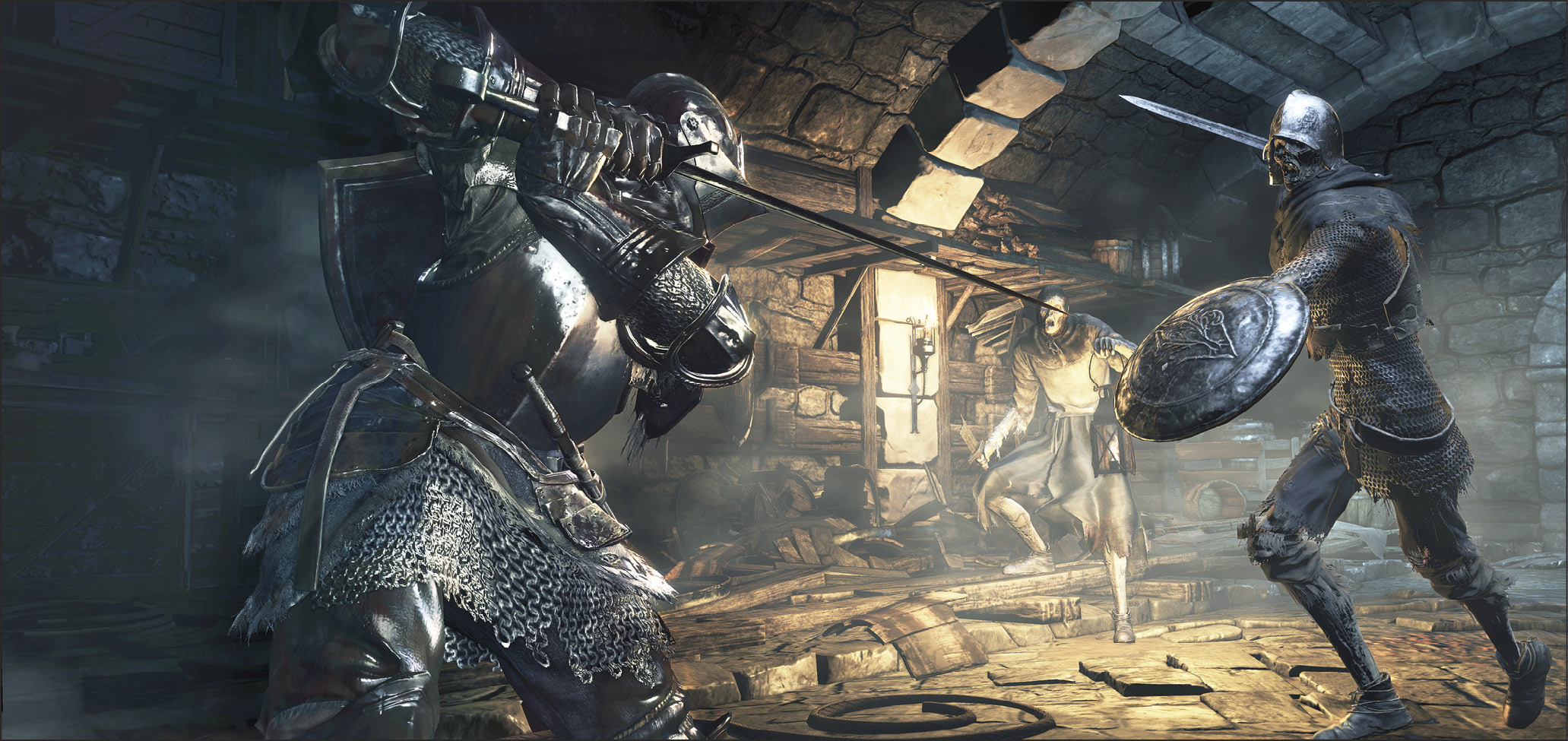
If you’re super confident in your dodging and parrying, a suit of light armor and a basic Buckler may be all you need throughout the entire game. On the other hand, if you find certain enemies, areas, or bosses difficult to evade, a heavier suit of armor and a tougher shield may make for easier combat.
There’s nothing stopping you from swapping armor around at any time, so feel free to mix and match armor pieces from different sets to reach a comfortable weight level. If you have trouble with a specific fight, try raising or lowering your weight and defense, and see how you fare.
Rings
Rings provide a bevy of useful supportive abilities, increasing your defense or offense, providing various useful utility effects, and generally acting to enhance any style of play (heavy physical, ranged, spellcasting, evasive, and so on).
There’s rarely “One True Set” of rings to wear. What you use depends on what you have available to you first and foremost, then what suits your build, and finally, whatever you personally prefer using.
Some rings provide simple, basic, and useful benefits, such as the Chloranthy Ring’s Stamina regen boost, which is helpful for pretty much any character.
It’s easy to slot all of your ring slots with such generalist buffs, and there’s nothing wrong with that. However, you should make an effort to experiment at least a little with every new ring you find, unless its effect is totally wrong for your build (Sorcery boosters when you aren’t using Sorcery and the like).