
Dark Souls III Guide (Steam) Gameplay
Archetypes
The Jack of All Trades
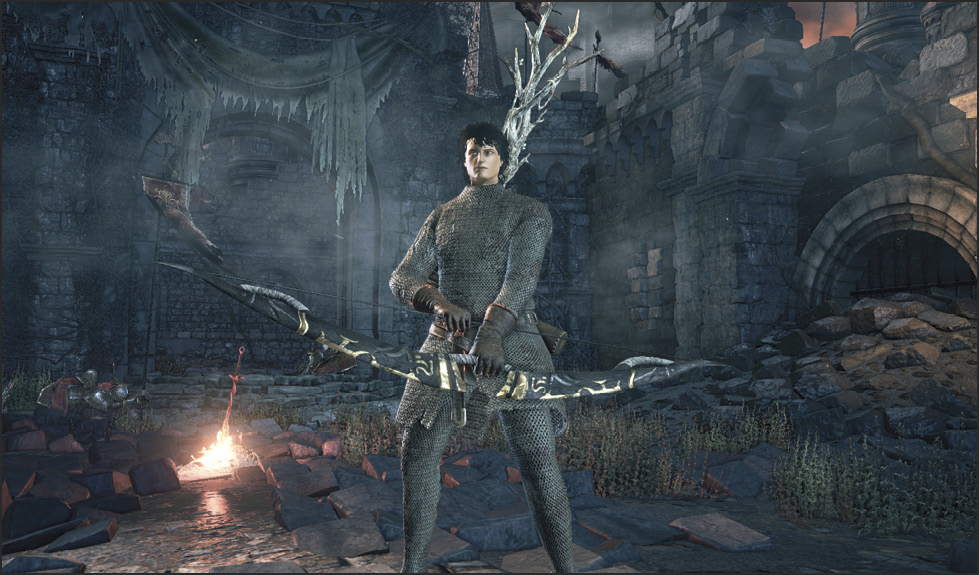
The dabbler, the dilettante, this style of build invests a little bit into a lot of areas.
Raise your stats just enough to equip a shiny new weapon, just enough to wear a favored suit of armor comfortably, and just enough to test out a new spell.
Playing this way means you gain less benefit from scaling effects on upgraded weapons. Also, you are likely to have a bit less raw HP and Stamina than a more focused character, and certainly less FP and Int/Faith than a heavy caster.
However, in exchange, you gain the ability to do just about anything in the game, at least to a degree. You can use Str or Dex weapons, even some Int/Faith weapons; you can use bows and crossbows; you can use specialized Catalysts; and you can make use of all three schools of magic.
Weaponry
Whatever you like! Try to keep both a one-handed and a two-handed weapon around that you enjoy using. If you’re having any trouble against a specific enemy or boss, switch to the other weapon and see if you have an easier fight.
As far as upgrades go, because the heavy stat scaling upgrades won’t give you as much benefit, you may want to look at upgrades that have little (or even no) scaling effects and simply give strong raw damage values.
Mix up your damage types, as well: both basic physical attacks and your elemental damage. Keeping a magic weapon in your back pocket for fighting flame demons or a fire weapon to incinerate flammable foes is just a good tactic.
For ranged weapons, try to make use of specialized elemental ammo; it can make up for some of the damage boosts you don’t gain from straight stat scaling on your bow. You could also go with Raw, Fire, or Deep weapons and crossbows to commit wholeheartedly to ignoring scaling altogether.
Armor
If there’s any build that skews toward a non-committal, middle of the road weight limit, this is the one. A sturdy regular shield with 100% physical absorption and a mix of armor that keeps you somewhere below 70% load should suit you just fine for the majority of the game.
Likewise, your ring set can essentially be anything that supports your current favored loadout. General-purpose rings work best, but you can always try out specialized rings that benefit ranged combat, magic, parrying and counterattacks, or whatever suits your current gear.
This is another area where playing a generalist can benefit you down the line when you try other character concepts, as this archetype is most likely to have the stats available to dabble in every area of play that rings can enhance.
The Brute
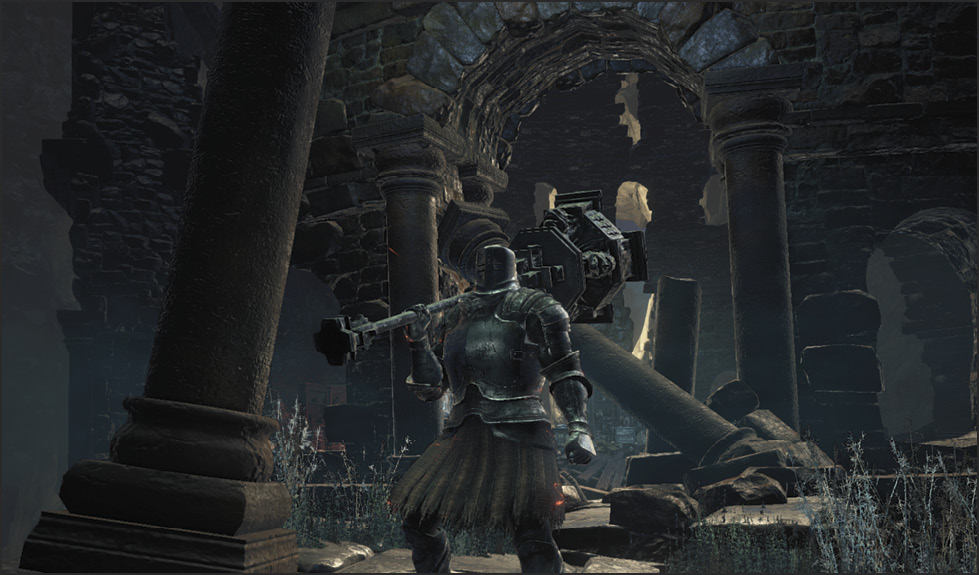
Pump your Str, your HP, your Stamina, and occasionally your Vitality if your burden is getting too high. Smash everything under heavy clubs and massive swords. You can pretty much ignore Attunement, Int, Faith, and Luck.
If your chosen class happens to be very close to a stat requirement for useful early spells, go ahead and grab them—same goes for bow/crossbow usage. But don’t go out of your way. At most, you want a backup healing spell or support buff; otherwise, everything gets pounded into dust.
Simple, straightforward, and very effective, this is probably the easiest build to progress through the game. If you are both new and you don’t find a generalist approach appealing, this sort of focused setup can cruise through early game fights that late-blooming builds may struggle with, and it still scales perfectly well into the late game, if perhaps not with quite as much finesse.
Weaponry
Hammers and Great Hammers are ideal for this, with natural Str requirements and scaling. However, you can also take a meaty Greatsword or Ultra Greatsword or any solid one-handed weapon you enjoy using and slap a Heavy Gem on it to maximize its Str scaling.
Armor
Find the heaviest armor you can bear to use and the earliest Greatshield with 100% physical absorption and high Stability.
As you progress through the game, keep boosting your armor’s weight as your Vitality improves, and keep an eye out for tougher Greatshields with higher Stability.
Once you have some spare materials and Souls for upgrades aren’t a strain on you, go ahead and max out your shield’s upgrades. Shield upgrades don’t provide much of a statistical benefit, but they do boost Stability slightly. If you’re going for your best impersonation of a brick wall, you want all the defensive benefits you can get.
If you want to double-down on your defenses, you can equip rings that provide defensive benefits just to squeeze every bit of possible mitigation and effective HP out of your build.
If you find that really heavy armor and a Greatshield is too much to handle early on either in terms of speed or stats, just go for heavier mid-weight armor and a normal shield with good defenses and block values. You can always squeeze into the heavy stuff later as your Vitality increases, or equip it for specific boss fights or tough areas when you don’t mind the decreased mobility in favor of better Poise, defense, and shield-blocking Stability.
The Fencer

Nimble and agile, this archetype focuses on using Dex-based weaponry, bows, Weapon Skills that provide mobility or rapid attacks, and added status effects from hitting enemies repeatedly.
To maximize your mobility, keep your weight as low as possible. Emphasize dodge rolls, parries, and backstabs to get the most out of weapons with enhanced critical damage.
Other than Dex, you want to raise Vigor and Endurance for HP and Stamina, but your Vitality requirements are generally going to be lower because you aren’t wearing or using as much heavy gear.
You can dump the saved points from Vitality directly back into Dex/Vigor/Endurance if you want, or consider investing in either Sorcery or Miracles, with a bit of Int or Faith. Examine the spell lists and see if any relatively cheap spells appeal to you.
Another option is to invest some points in Luck, which provides slight benefits to bleeding and poison application. A few weapons are also influenced by Luck, so there are some gear loadouts that can benefit from this approach.
Weaponry
High Dex scaling weaponry like Daggers, Thrusting Swords, Curved Swords, Katanas, or even Claws are all suitable. You want light, fast weapons that let you stay mobile in combat. Look for weapons that have critical values above 100. Added bleed, poison, or frost (as well as elemental damage) are all desirable because you can stack up added effects quickly with a flurry of blows.
Additionally, the high Dex bows work great with this setup, and you can get some pretty solid ranged damage as a “free” benefit of focusing heavily on Dex.
You can also use the Sharp Gem to convert a weapon to stronger Dex scaling, or if you really want to push the status effect gimmick hard, apply a Blood or Poison gem to push bleeding or poison application even higher.
Another viable option is making use of the paired dual-wield weapons. The majority of them are Dex-focused; only the Twin Axes and Hammers lean toward Str.
Armor
Look for lightweight armor and a light one-handed shield, selecting anything that can keep you under 50% load. If you are choosy about your gear and raise Vitality a bit, you can potentially even go under 25% load for really nimble movement.
A shield with parry is a good choice if you plan on really emphasizing counterattacks. If you find that parrying is simply too difficult, go with a shield that allows Weapon Skills so you can make use of your main hand arts while keeping your shield active.
Keep an eye out for rings that provide boosts to critical damage effects (backstabs and parry counterattacks), as well as rings that grant benefits for rapidly and continuously attacking.
The Caster
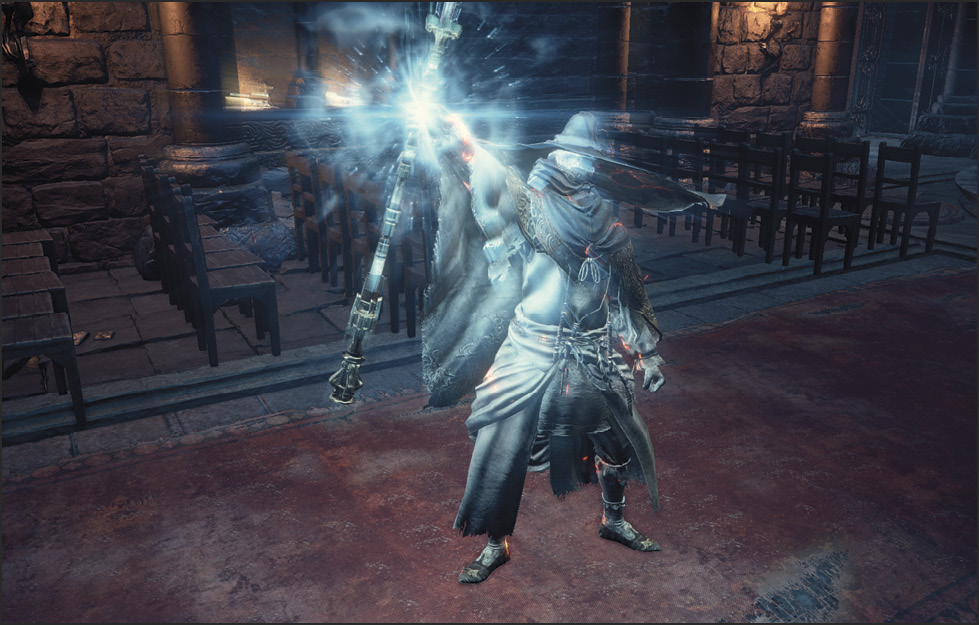
Any character focusing heavily on spellcasting falls under the caster archetype, though whether you make use of Sorcery, Pyromancy, or Miracles (or even a mix of all three) heavily influences how your character feels and the types of weapons and equipment that you use.
This is by far the most difficult archetype to get off the ground if you insist on trying to use spells as your primary offense. Late in the game, with a developed character, high stats, lots of gear, and access to many spells, this becomes considerably easier.
Early on, however, you are typically constrained to one or two basic attack spells and a single support spell, with a limited FP pool at a time when your Estus Flask charges are restricted, as well.
The main trick to playing a caster is to recognize that you don’t need to only cast spells to progress. You can and should still make heavy use of melee combat, ranged weapons, and tools, just like other archetypes.
There are non-scaling weapons you can find or create using Raw, Fire, or Deep gems. Once your Int, Faith, or both are at a higher level, you can pursue caster-focused gem upgrades (Crystal, Chaos, Blessed, and the like).
Using a non-scaling weapon early eases some of the pain of not having a high Str or Dex to gain “free” damage from. Also, you can start the game with a Fire Gem as a Burial Gift, giving you easy access to a solid weapon immediately.
Having access to ranged offensive spells can be quite useful against some enemies that are vulnerable to elemental damage. While you may find that some foes are simply too fast (or some bosses too dangerous) to use attack magic against easily, you can always make use of utility spells.
Be careful not to overinvest in Attunement and Int or Faith early in the game. Try to get your Vigor and Endurance to a comfortable level so you can still fight enemies with reasonable HP and Stamina.
Weaponry
Make use of non-scaling weapons early in the game, followed by caster-attribute weapons later. There are also caster-specific weapons that can act as Catalysts while still allowing you to keep a weapon at the ready. These special tools generally have less Spell Buff than equivalent Catalysts, but they are more flexible and allow for quick spell usage mid-combat while still letting you use a shield or two-hand wield the weapon.
There are quite a few different Catalysts that provide unique benefits for Sorcery and Miracles, though only Pyromancy has the single Flame item.
Experiment with your equipment positioning. If you keep your Catalyst in your right-hand slot, you can keep your shield up in your left; if you use your Catalyst in your left hand, you can keep a weapon up in your right.
Depending on the spells you are using (and how comfortable you are with dodging vs. blocking), you may find that you prefer to have your magic always at hand. Alternately, you may be comfortable swapping it in and out, to either your left or right hand.

Armor
Because your points are stretched by investing in Attunement and one or more caster stats, you will likely find investing heavily in Vitality problematic, at least early in the game.
Consequently, favoring lighter armor is natural, as well as a small or medium shield.
There are quite a few rings that provide benefits to one school of spellcasting. Combining various weapons, Catalysts, rings, and even some armor that gives magical benefits can all boost the power of your spells.
Unfortunately, most of these won’t be accessible to you until fairly far into the game, so really stacking them up is limited to the late game (or New Game Plus).
Again, don’t overemphasize “caster gear” over other options that are likely to help you more in early game combat. Keep a keen eye on the damage output of your offensive spells compared with the weapons you have access to, and swap around your gear appropriately.