Call of Duty: Infinite Warfare Guide Multiplayer Basic Training
Combat
Weapon Usage
Basic weapon handling is straightforward. You can fire your weapon from the hip by simply holding the trigger, or for more accurate fire at a distance, you can aim down the sights by holding the Aim button first.
Hipfire is inaccurate at anything past very short range, and is generally preferred on shotguns, SMGs, and some pistols. A few ARs and LMGs also have a hipfire accuracy bonus, and there are attachments that can improve hip fire accuracy.
ADS is the preferred method of shooting at enemies at any distance outside CQC. Even at short to medium range, ADS is still going to down targets more quickly than hip firing, for the majority of weapons.
Sniper rifles have one extra step when you’re aiming. You can hold your breath by holding the Sprint button while aiming through a full sniper scope.
Without holding your breath, sniper scopes have noticeable sway as the sight drifts slightly. While held, the sight is completely stable, allowing you to land a shot exactly where you’re aiming.
All weapons actually have some amount of idle sway while you’re aiming, but it’s both more noticeable and more controllable on sniper rifles.
Landing headshots on enemies deals bonus damage, although on the majority of weapons, a headshot won’t shave a shot off the number it takes to down a target—unless the target is already damaged or at very long range for some weapons.
There are two attachments that increase headshot damage, and with one equipped, those do allow you to kill a target quicker if you score one or more headshots. If you ever get dropped incredibly quickly at short range by someone with a lucky hipfire spray, that’s likely what killed you.
When you take damage in combat, your aim is thrown off slightly (we refer to this as flinch), and this can easily cause you to miss shots, especially when firing at medium- to long-range targets.
The Marksman perk can reduce this felt flinch, allowing you to stay on target more reliably when using a sniper rifle.
Weapon Control
All weapons have recoil when fired, and while you can control this to some extent by learning which direction your weapon drifts when firing and compensating, as a general rule, if you’re firing on full auto, you’re not as accurate as semi-auto or firing in short bursts.
For most weapons, you can use full auto fire reliably at short range, short bursts at medium range, and single shots or very short bursts at long range.
Some weapons are made for medium- to long-range fire, and have minimal recoil, allowing you to fire longer bursts (or even full auto) and still stay roughly on target.
Some attachments can improve your accuracy or reduce recoil, giving you an edge in long-range engagements.
Weapon Damage
Most weapons trade off accuracy and damage. The more accurate a weapon is, the slower it kills, either because it fires more slowly to begin with or because each bullet does less damage.
The majority of weapons in the game have similar kill times against weapons in their class, and that usually means against weapons made for the same range.
Most of these are pretty obvious: shotguns, SMGs, and pistols for short-range work, ARs for medium range, and LMGs and sniper rifles for medium to long range.
There are some exceptions, and with attachments you can customize a weapon to perform a bit better at a different range band. You can tinker with an SMG to be a bit more accurate at medium range, or an AR to perform better at close to medium and medium to long ranges.
The modular weapons generally switch range bands when transformed, giving you a two-in-one weapon that can fight effectively at two different distances. They usually aren’t quite as strong as a natural weapon of that range, but still an improvement over using, say, a sniper rifle for close to medium engagements.
Sniper rifles can kill in a single shot, but depending on how powerful the specific model is, it may require you hit from the waist, chest, or neck up to land that single-shot kill.
Reloading
Reloading is a simple act, but an important one, and misuse of it can easily get you killed.
First, reloading after every kill is a bad idea. You have enough bullets in almost any weapon, except maybe certain secondary pistols, to take down multiple targets with a single magazine.
The Dexterity perk can double your reload speed, but this can serve to amplify a bad habit, rather than aiding you with the faster reloads.
This is doubly true if your weapon has a larger than normal basic magazine, or you’re using a ballistic weapon with the Extended Mags attachment.
Get into the habit of downing a target, waiting for just a moment, and then, if no additional targets have appeared, ducking behind cover for a moment and reloading.
You can reload on the run, so there are definitely situations where dropping a target and staying mobile while reloading is a good idea, but killing an enemy, starting a reload, and continuing to sprint into enemy territory is usually a very, very bad one.
Mechanically, reloading takes place in a few stages. The speed of your reload depends on the weapon you are firing, and whether you have fully emptied the magazine.
A completely empty mag (or belt, or clip) takes slightly longer to reload, as part of the reload animation includes pulling a charging handle or racking a slide.
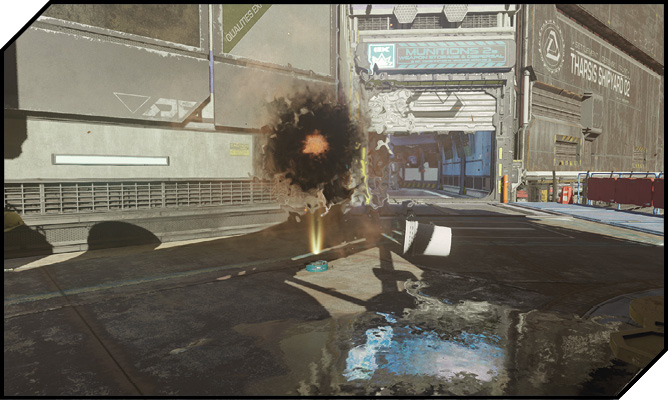
A partially empty mag reloads a bit faster, with no extra animation.
On many weapons, the time it takes for the ammo to be added back into the magazine is actually faster than the full reload animation. It’s possible to cancel the animation by double tapping weapon switch.
If you want to reload cancel by sprinting (a trick many veteran Call of Duty players are accustomed to performing), there is an option in the controls menu that allows you to cancel a reload by beginning a sprint, rather than continuing to reload when you start running.
Melee
Melee attacks are a weapon of last resort, as they won’t kill unless you are behind your target. From the front, they’ll daze and deal damage, but leave you open to being shot.
If you have the Combat Knife equipped, melee strikes from any angle are lethal and silent.
Otherwise, stick to firing your weapon in close-range encounters. If you fire and your enemy melees, odds are you come out standing.
Equipment
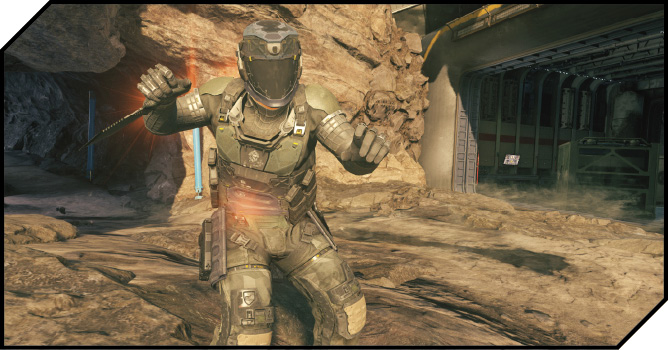
Equipment encompasses Lethal and Tactical gear, which includes a wide range of grenades and several other devices.
Equipment can be very useful (particularly for securing objectives), but it’s important to understand that by spending class building points on equipment, you’re using up permanent points for temporary items.
The exception is if you run the Warfighter Rig’s Resupply trait, which allows you to refill Lethal and Tactical gear from packs dropped by enemies.
Otherwise, it’s extremely important that you get full use from your equipment every life. Otherwise, you’re better off investing those points into a perk, weapon, or attachment.
The Stryker Rig also has several passives that can make your equipment more effective in objective modes.
For general aggressive play, Resupply is a better choice, but for specific objective play, Stryker’s Relay and Hardened traits can be quite effective.
The Gung-Ho perk allows you to throw equipment on the run, particularly useful for Jammer and Blackout Grenades that you can toss as you move to assault an area at high speed.
Cover
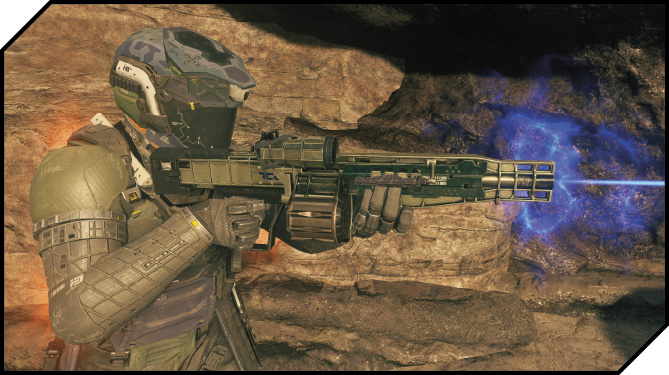
Using cover in combat is crucial to survival, but keep in mind that Rig thrusters mean that hiding behind cover isn’t a guarantee of safety. An enemy can easily jump over your head and attack from above.
Still, using cover for mid- to long-range firefights is vital. Always look for nearby cover before posting up to cover a lane, and whenever possible, move between cover when the coast is clear so whoever you took down doesn’t know where you’re standing if they return.
Hard cover is any cover thick enough that you don’t need to worry about bullet penetration getting you killed. This is important if an angry enemy with an FMJ LMG is spraying bullets at you.
Soft cover is either thin enough that bullets can penetrate, or simply visual distraction that makes you harder to spot but not necessarily any harder to hit.
Any cover is better than standing in the open. The only time you should be in the open is because of an objective, and even then, strafing constantly or going prone is better than standing immobile.