
Left 4 Dead 2 Guide Essentials Movement and Combat
The Environment
It is important to know the general layout of the campaign you’re playing through. The Walkthrough section gives you specific routes and areas to pay attention to, but there are some environmental cues you can use:
Environmental Hazards
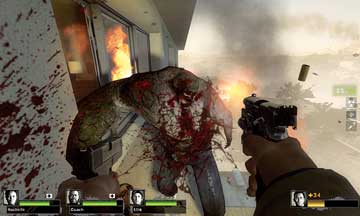
The Walkthrough has plenty of information on the few dangers not posed by the Infected, and you should know what to do when you encounter them in the environment:
Ledges, balconies, and areas with no safety barrier are dangerous (as shown), as you can be shoved off, plummeting to a messy death or additional pain when you hit the ground.
Water: shallow water impedes your movement; deep water kills you.
Areas of dense foliage (such as a cane field) make finding friends difficult (especially incapacitated ones). They also make avoiding Witches problematic.
Open windows and gaps during a corridor can be used for an ambush (especially by a Smoker).
Carnival games are a fun diversion, but don’t get preoccupied at the expense of a flank attack. Let your teammates guard you.
Trigger Switches
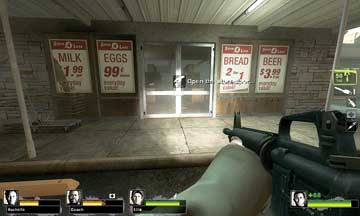
Certain locations require a switch to be pressed to release a gate, or to open up a subsequent area. The noise this makes usually triggers a Horde of Common Infected to race in.
Conversely, there are other switches you flick to turn off a noise and thereby stop a continuous stream of foes.
It is better to flick switches as quickly as possible, so you can deal with any battles sooner (as foes always appear, and you usually want to kill a minimum number of them).
Unique Objects
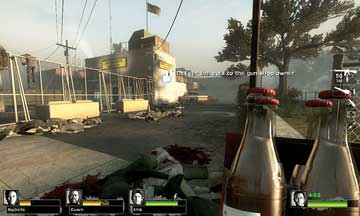
During the campaigns, various objects can be carried (and used to Melee Shove enemies in front of you) to a necessary location in order to further progress in your adventure.
These include Fuel Cans (which also form the basis of Scavenge mode), cola bottles, and even a small garden gnome.
Doors and Doorways
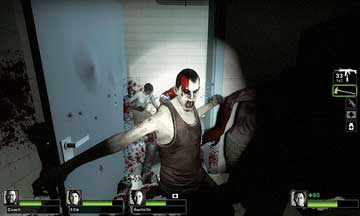
Many buildings have doors to open and peer inside, although breaking and entering is called for most of the time.
Some doors have holes in them; these were made by Infected bursting through. It is wise to close doors behind you to prevent the Infected from ambushing you.
Plus, a closed door provides a warning of encroaching foes: You can hear the door being bashed in.
Doorways simply must be entered adeptly with teammates checking both sides to avoid an ambush from your flanks.
Lighting Your Way
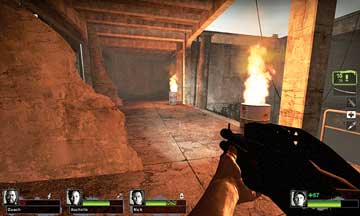
Getting lost is always a problem, especially in the gloom of the swamps or dilapidated Milltown.
Not to worry though. There are visual cues that light your way. Even in daylight conditions, it is wise to move to areas where there is a light source, whether that’s a flaming barrel porch light or a floodlight near a humming portable generator.
These lights usually point you in the direction you should head to next.
Landmarks
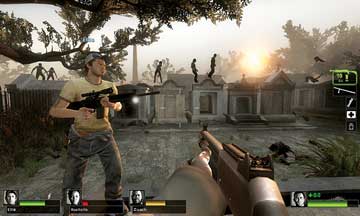
Without a compass, it can be easy to get lost in the mazes of streets and buildings or the swampy forest, so rely on more than a good sense of direction to aid you.
Spot an outhouse, vehicle, structure with a sign on it, stone arch or obelisk, or even the position of the sun, and use these landmarks to guide you in the correct direction.
Rescue Closets
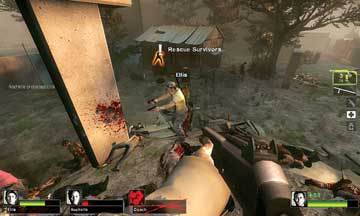
When a teammate has shown breathtaking incompetence during a Campaign, Versus, or Single-Player game, they die.
However, they soon respawn in a building or room a few twists and turns ahead of where they fell. These “Rescue Closets” (AKA spawn closets) require you to open the door to free them.
Doing so is advisable, even if you deem the player a hindrance to your team!
One-Way Drops
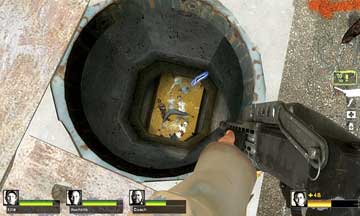
There are quite a few places across the five campaigns where you have to (usually) fall or move on to the next section of exploration, and can’t make your way back to a previous area.
This particular part of your route is mandatory and known as a “one-way drop.” Have all of your team head down the drop together, whether it’s down a manhole (as shown), off the roof of a bus, or off a balcony.
If you stagger your drops, Special Infected usually corner the straggler at the rear and kill them without the possibility of rescue. You have been warned!