Playing With Super Power: Nintendo Super NES Classics Guide The Legend of Zelda: A Link to the Past
Hyrule
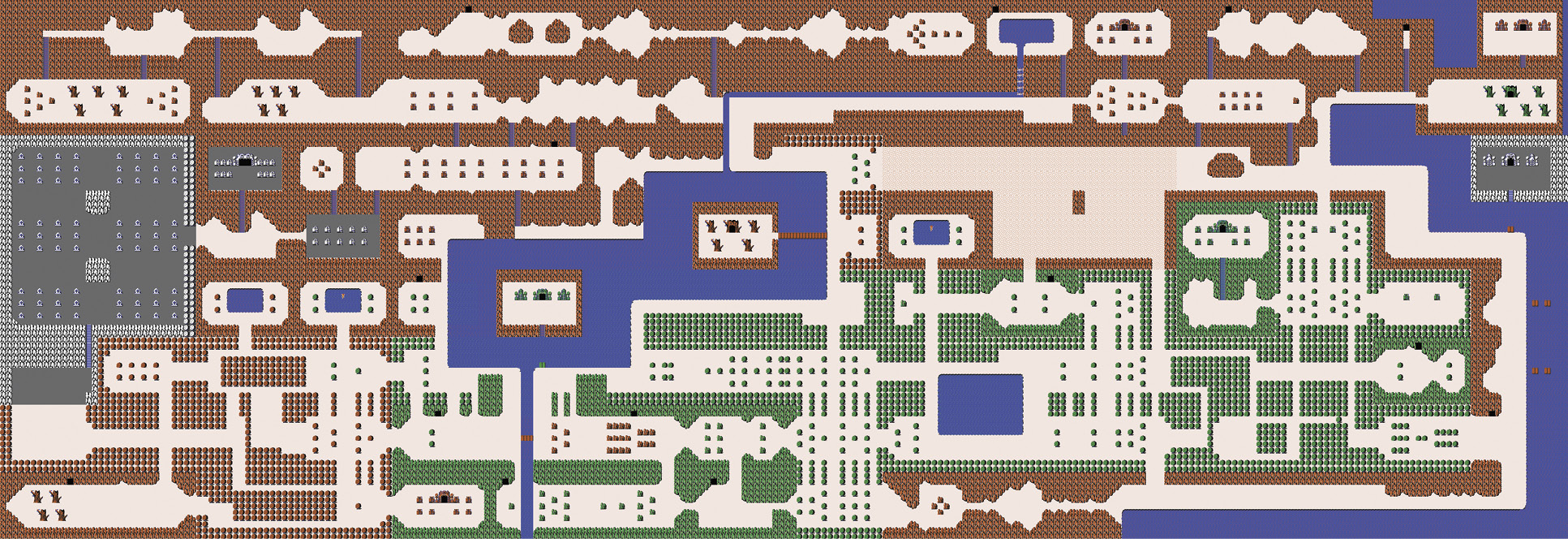
The Legend of Zelda’s world map measured 16 screens wide by eight screens high, while the entirety of its dungeons could be combined to fit into a single rectangular shape. Because the developers had accidentally used only half of the intended dungeon designs, a Second Quest was added where starting a new game after beating it would rearrange the location of items and increase the difficulty of enemies and dungeons. Conversely, A Link to the Past’s alternate worlds were no accident. By creating two nearly identical overworlds, the game could be much longer without doubling the amount of memory used. The game’s code treats the Dark World as a graphical overlay for the Light World, with only the differences between them being saved to memory. Additionally, a custom compression system was utilized to reduce the memory usage of the game’s rich color palette.
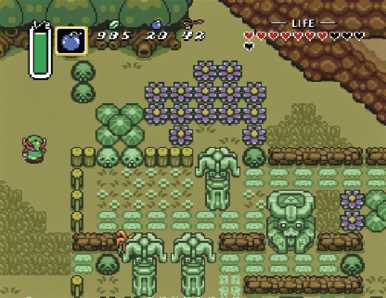
A Link to the Past’s vastly larger and more diverse portrayal of Hyrule altered the original game’s near total non-linearity. Exploration does not always provide immediate gratification; items and passages are often hidden in plain sight, but Link initially lacks the items required to reach them. Despite the series’ iconic top-down perspective, Nintendo was able to add verticality, giving the on-screen environments multiple height levels. Link can occasionally jump (or fall) off a ledge, but can never climb upward without a ladder. These are just a few of the ways A Link to the Past offered a consistently layered gameplay experience.
Enemies
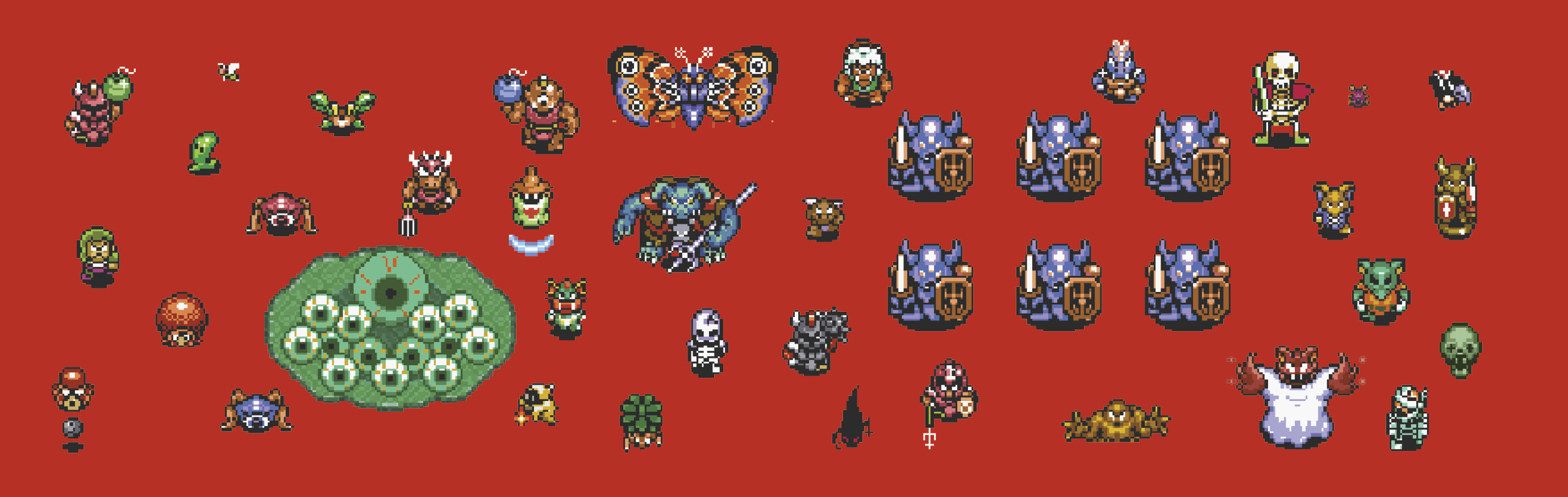
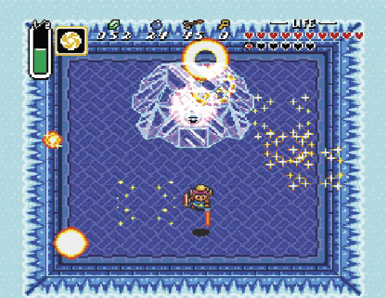
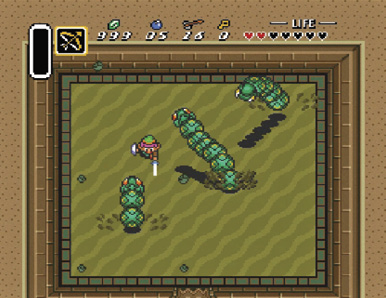
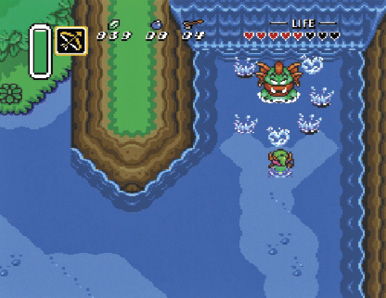
As Link’s weaponry was expanded, so too were the dangers he faced. Alongside returning adversaries such as Wizzrobes and Wallmasters, a multitude of new enemies were introduced in A Link to the Past, with the Light World and Dark World being inhabited by their own unique threats.
Light World
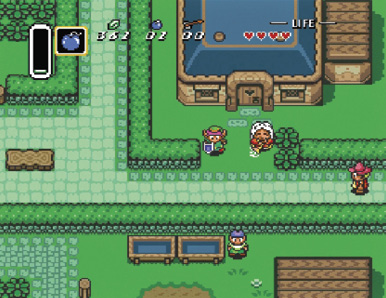
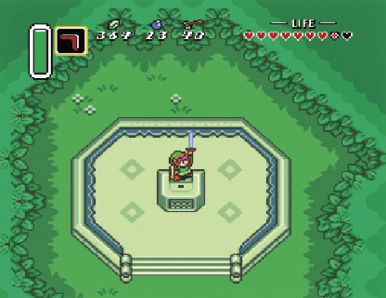
As depicted in the game’s story, the world was created by three Golden Goddesses. Known primarily as the land and kingdom of Hyrule, it was alternately referred to as the Light World in A Link to the Past to contrast with the Dark World. Because all Zelda games are intertwined in some way, the Light World also includes the lands of Labrynna and Holodrum from the Oracle of Ages/Seasons games, as well as the Sky, the land above the clouds where the events of The Legend of Zelda: Skyward Sword took place.

Dark World
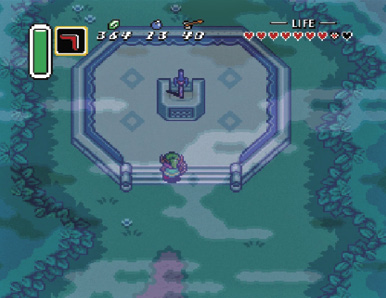
During the creation of Hyrule, the Golden Goddesses also created the Golden Land, a mythical parallel world and home to the Triforce. The Golden Land, later known as the Sacred Realm, was breached by the thief Ganondorf and corrupted upon his use of the Triforce. The alternate world was twisted to match Ganondorf’s evil, and became known as the Dark World. At the end of the game, Link uses the Triforce to wish away Ganon’s corruption, and the Dark World is reverted to its former glory as the magical Golden Land.
Other alternate realms exist within the Zelda universe, including the Twilight Realm. As seen in The Legend of Zelda: Twilight Princess, the Twilight Realm was created to imprison those who used dark magic to attempt to steal the Triforce from the Golden Land. Eventually, the banished lost their ambitions of domination and became the Twili, a civilization within the Twilight Realm with their own technology and their own ruling princess, Midna.