
Prima Games eGuides
primagames.com Browse Redeem a code Help
Playing With Super Power: Nintendo Super NES Classics eGuide
Sign in My Guides

Sign in or create an account

We'll email you a link. No password needed, and if you don't have an account yet, the link makes one.

By creating an account or signing in, you agree to our Terms of Service and Privacy Policy.

Have a password?

Had an account on the old eGuides site, or a code from a printed guide? Help and troubleshooting

Sign in with a password

By signing in, you agree to our Terms of Service and Privacy Policy.

Check your email

A sign-in link is on its way. It works once and expires in 15 minutes. Open it and you're in, with an account if you didn't already have one.

Contents

  • Earthbound
    • Overview
    • Development
    • Characters
    • Say “Fuzzy Localization!”
    • Places of Interest
    • 16 Bits
    • Confidential Information
    • Legacy
    • Earthbound Credits
  • Super Fans
    • Introduction
    • Sam Filstrup
    • Artist Spotlight: Studio Tamago
    • Ben Hickling
    • Sam Santala
    • Artist Spotlight: Orioto
    • Sophie Pearson
    • Nadyasonika
    • Artist Spotlight: Alain “Wuppes” Wildgen
    • Fansite Spotlight: Zelda Universe
    • Xavier Garcia
    • Gonzalo “Genzoman” Ordoñez
    • Music Spotlight: Video Games Live
    • KlausBoss
    • Artist Spotlight: Per Fhager
    • Fansite Spotlight: Metroid Database
    • Artist Spotlight: Dan Cattell
    • Fansite Spotlight: F-Zero Central
    • Zoki64
    • Ted Graves
    • Li Kovacs
    • Music Spotlight: Metroid Metal
    • Artist Spotlight: Josue Martinez
    • Fansite Spotlight: Starmen.Net
    • PrinceOfRedroses
    • Artist Spotlight: Tsurera
    • Fansite Spotlight: StarFox-Online
    • Thiago Almeida
    • Artist Spotlight: Jenni Källberg
    • Efraim Rodríguez
    • Artist Spotlight: Gnomo del Bosque
    • Fansite Spotlight: DK Vine
    • Layze Michelle
    • Matthew Z.
    • Artist Spotlight: Joel Sousa
  • Realizing the 16-Bit Dream
    • Introduction
    • Launch Titles
    • Lifespan
    • Legacy
    • Design
    • Under the Hood
    • Across the Generations
    • Accessories
    • Top 20 Best-Selling Games
    • Nintendo Hardware Museum
  • Super Mario World
    • Overview
    • Development
    • Characters
    • World 1: Yoshi’s Island
    • World 2: Donut Plains
    • World 3: Vanilla Dome
    • World 4: Twin Bridges
    • World 5: Forest of Illusion
    • World 6: Chocolate Island
    • World 7: Valley of Bowser
    • World 8: Star World
    • World 9: Special World
    • 16 Bits
    • Confidential Information
    • Legacy
    • Super Mario World Credits
  • The Legend of Zelda: A Link to the Past
    • Overview
    • Development
    • The Hero of Hyrule
    • Hyrule
    • Franchise Firsts
    • 16 Bits
    • Confidential Information
    • Legacy
    • The Legend Of Zelda: A Link To The Past Credits
  • Super Mario World 2: Yoshi’s Island
    • Overview
    • Development
    • Characters
    • World 1
    • World 2
    • World 4
    • World 5
    • World 6
    • 16 Bits
    • Confidential Information
    • Legacy
    • Super Mario World 2: Yoshi’s Island Credits
  • Kirby’s Dream Course
    • Overview
    • Development
    • Abilities
    • Demo Play
    • Traps & Tricks
    • Courses
    • 16 Bits
    • Confidential Information
    • Legacy
    • Kirby’s Dream Course Credits
  • Donkey Kong Country
    • Overview
    • Development
    • More Than Just a Pretty Ape
    • Soundtrack
    • Characters
    • Animal Buddies
    • Donkey Kong Isle
    • Kongo Jungle
    • Monkey Mines
    • Vine Valley
    • Gorilla Glacier
    • Kremkroc Industries, Inc.
    • Chimp Caverns
    • Gangplank Galleon
    • 16 Bits
    • Confidential Information
    • Legacy
    • Donkey Kong Country Kredits
  • Super Metroid
    • The Metroid Menace
    • Development
    • Samus
    • Zebes
    • Crateria
    • Brinstar
    • Wrecked Ship
    • Maridia
    • Norfair
    • Tourian
    • 16 Bits
    • Confidential Information
    • Legacy
    • Super Metroid Credits
  • Star Fox
    • Overview
    • Development
    • Characters
    • Items
    • Courses Overview
    • 16 Bits
    • Confidential Information
    • Legacy
    • Star Fox Credits
  • Super Mario Kart
    • Overview
    • Development
    • Racers
    • Items
    • Tracks Overview
    • Mario Circuit
    • Ghost Valley
    • Bowser Castle
    • Choco Island
    • Koopa Beach
    • Vanilla Lake
    • Rainbow Road
    • Notable Foes
    • Battle Mode
    • 16 Bits
    • Confidential Information
    • LEGACY
    • Super Mario Kart Credits
  • F-Zero
    • Overview
    • Development
    • Gameplay
    • The Machines and Their Pilots
    • Tracks Overview
    • Mute City I/II/III
    • Big Blue, Sand Ocean, Death Wind I/II
    • Silence
    • Port Town I/II
    • Red Canyon I/II
    • White Land I/II
    • Fire Field
    • 16 Bits
    • Confidential Information
    • Legacy
    • F-Zero Credits
  • Star Fox 2
    • Overview
    • Development
    • Teaching a Young Fox New Tricks
    • Invisible Legacy
    • Characters
    • Locations
    • But Wait, There Was More…
    • Enemy Gallery
    • Star Fox 2 Credits
  • Super Punch-Out
    • Overview
    • Development
    • Minor Circuit
    • Major Circuit
    • World Circuit
    • Special Circuit
    • 16 Bits
    • Confidential Information
    • Legacy
    • Super Punch-Out!! Credits
  • Kirby Super Star
    • Overview
    • Development
    • The History of Twinkle Pop
    • The Evolution of the Inhale
    • Games
    • 16 Bits
    • Confidential Information
    • Legacy
    • Kirby Super Star Credits

Playing With Super Power: Nintendo Super NES Classics Guide › Star Fox 2

Teaching a Young Fox New Tricks
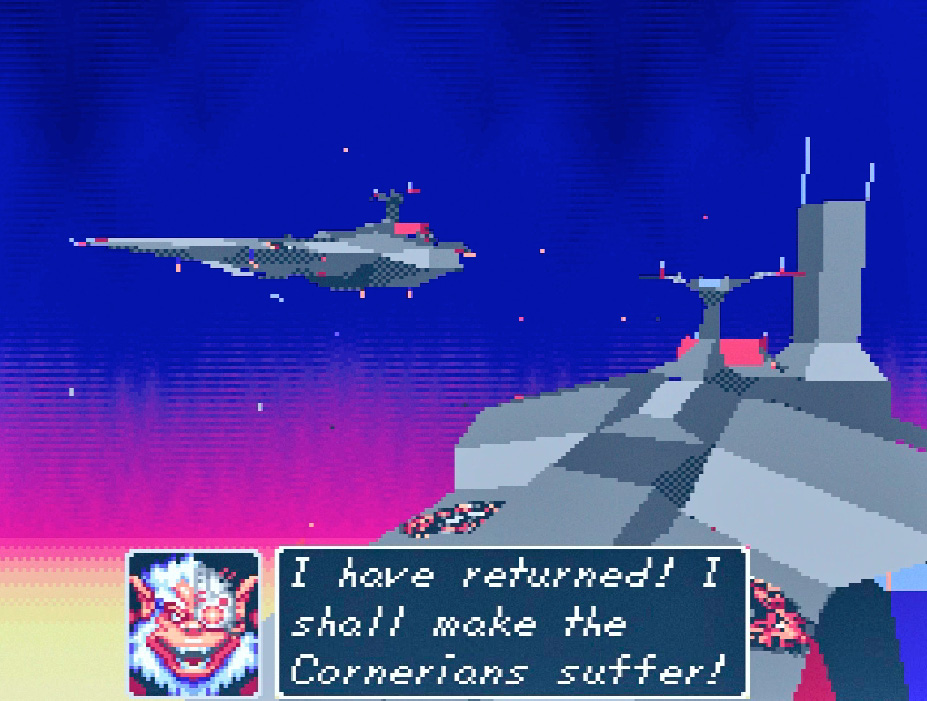
Whereas Namco’s Starblade had largely influenced the original Star Fox, Namco’s Star Luster, released in 1985 for the Famicom, as well as Argonaut’s own Starglider series, inspired more open-ended space combat. Not coincidentally, Star Luster was included in the Japanese version of Star Fox: Assault, which was developed by Namco in 2005. The goal of non-linear gameplay gave birth to Star Fox 2’s “All-Range Mode,” allowing the Arwing to fly unrestricted in 360 degrees. The Arwing comes equipped with a new chargeable homing shot to balance the now more chaotic space battles, and a mini-radar provides the location of enemies in the vicinity, as they no longer fly on a scripted path into the player’s line of sight.

All-Range Mode is just one of several substantial departures from the first Star Fox. To accompany the open-ended combat, the linear “levels” were replaced with a single map of the Lylat System. In the bottom left-hand corner is Corneria, with the Great Fox battleship from which the Star Fox team is deployed hovering in its orbit. This marked the Great Fox’s first appearance, though it appears again in Star Fox 64 and throughout the series as the mobile headquarters of the Star Fox squadron.

In addition to Corneria are the familiar planets of Fortuna, Macbeth, Titania, and Venom. Eladard, a new world never before seen and never seen again in the Star Fox universe, appears exclusively in Star Fox 2. Non-planet locations of interest include Meteor, enemy battleships, and the Cornerian Satellite Defense System. On the opposite end of the screen is Venom, and Andross’ massive base. The objective of the game is to travel around the Lylat system destroying enemy bases at the key locations while intercepting enemy fighters and missiles aimed at Corneria. Enemy battleships launch more fighters over time, and planets captured by enemy forces launch Interplanetary Ballistic Missiles (IPBMs). If the Arwing comes into contact with an enemy or captured planet on the map screen, the player is immediately taken to the corresponding combat stage.

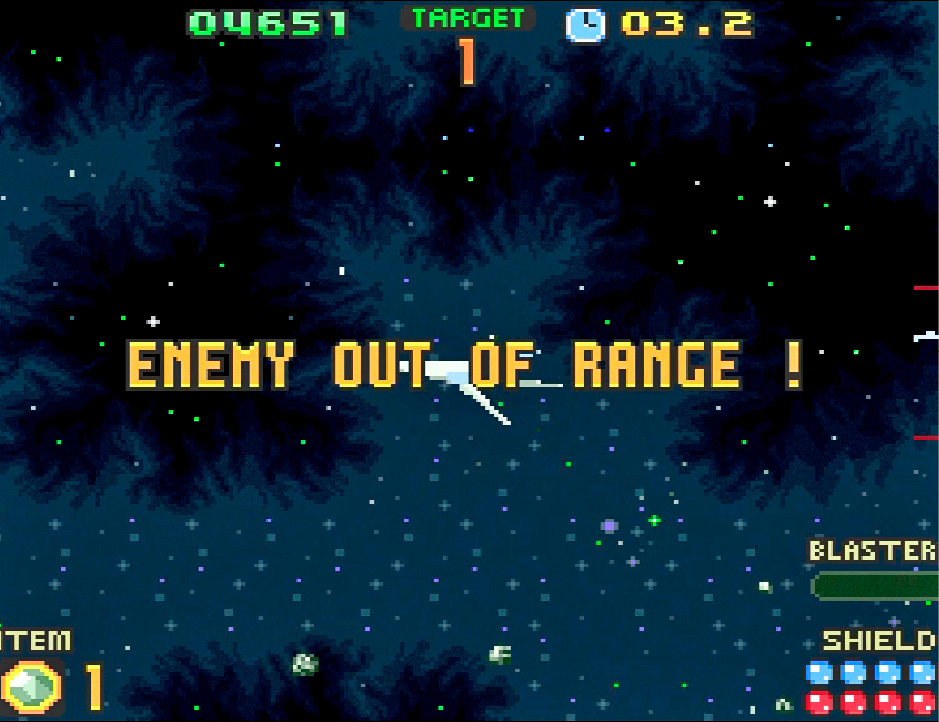
Most notably of all, the entire game is timed. When the Arwing is moving on the map screen, time advances, allowing enemy forces to converge on Corneria from their point of origin, wherever that may be. Combat also progresses time, so while Fox is trying to shoot down missiles or destroy an enemy base, any other enemies can attack the defenseless Cornerian homeworld. Each successful attack does a varying amount of damage, denoted in percentages, and if the total damage reaches 100%, Corneria falls and the game is lost.

While some missions can be completed in a matter of seconds, anything involving a base or a drawn-out dogfight with the game’s trickier enemies can eat up dangerous amounts of time. Even on Expert, the difficulty per mission is not particularly unreasonable, but managing all threats at all times is where Star Fox 2 truly tests the player.
To aid the Star Fox team on their missions, the Arwing has been outfitted with the ability to transform into a bipedal ground unit called the Walker. The Walker can only be deployed on planet surfaces and inside bases, and has complete lateral freedom. In this mode the Walker retains the Arwing’s abilities to shoot and use items, and can also jump. The Walker is required to complete certain objectives where buttons need to be pressed to open entrances to or inside bases. While the easier Walker-specific objectives are as simple as running to the target and standing on it, triggering a cutscene, higher difficulties can require the Walker to push button platforms over or into position before activating them. There are also slot-machine-style triggers that must be shot until they are properly aligned, light platforming challenges, and an underwater base! It sounds simple, and by today’s standards undoubtedly is, but for the second Star Fox title it stands out as an enterprising amount of variety.

Keep reading with a free account

The first 3 sections of Playing With Super Power: Nintendo Super NES Classics are open to everyone. An account opens the rest of it, and every other guide in the archive. It's free, and there's nothing to buy.

Bought guides on the old Prima Games site? Your account and every guide you own moved here, so there's nothing to buy again. Sign in.

Create a free account Or browse our free guides

PreviousDevelopment NextInvisible Legacy