
Playing With Super Power: Nintendo Super NES Classics Guide Donkey Kong Country
Development
The New Model
In the summer of 1993, Tony Harman was traveling the globe in search of the next big thing. At the time, Mr. Harman served as Product Acquisitions and Development Manager for Nintendo of America, and he was about to make his greatest discovery. Upon visiting the humble offices of Rare, Ltd., nestled away in the English countryside, Mr. Harman viewed an impressive demonstration of a 3D-modeled boxer running on the Super NES. It wasn’t a game, but rather a glimpse into the future: Nintendo’s future, and the future of video games.

Nintendo president Hiroshi Yamauchi was not convinced, however, even given Rare’s existing relationship with Nintendo. Rare had been no stranger to the original NES; they were one of the first Western developers granted a publishing license after reverse-engineering Nintendo’s hardware. The company proved to be a prolific developer during the 8-bit days, producing dozens of games before seemingly going silent altogether at the onset of the 16-bit age.
Yet still, Nintendo of Japan didn’t believe an external developer could create a first-party Nintendo game up to the company’s high standards. Mr. Harman proposed a deal with Mr. Yamauchi that instead of one of Nintendo’s commercials—whose budgets averaged in the low millions—Mr. Harman and Rare would use the money to create a gaming project. The worst that could happen was that Nintendo was short a single commercial. Mr. Yamauchi finally agreed, and once again the ape with the odd name would forever shape Nintendo’s fortunes.
It’s difficult to explain just how impactful Donkey Kong Country was at the time of its release. Modern games can easily churn out real-time visuals eons beyond the pre-rendered visuals of Donkey Kong Country. But in 1994, having a video game feature visuals from the same machines that brought the dinosaurs in Jurassic Park to life was literally unbelievable—until it wasn’t. To further contextualize the circumstances: Toy Story, the world’s first fully computer-animated feature-length film, was released a year afterDonkey Kong Country.
Upon seeing a work-in-progress version of the game, Nintendo president, Hiroshi Yamauchi, noted what an amazing addition the game would be for the Nintendo 64. When he was told the game was actually for the Super NES, Mr. Yamauchi completely rearranged Nintendo’s plans for that year’s Winter CES to make Donkey Kong the star of the show. Nintendo execs took to the stage and played out a lengthy, tongue-in-cheek safari skit, eventually revealing the triumphant return of their Kong who had reigned king over the arcades a decade prior. Again, the audience believed this to be a promising new title for Nintendo’s upcoming Silicon Graphics-powered 64-bit console, but were left awe-struck when it was revealed to be the 16-bit Super NES.
Exposed
To further illustrate the disparity between now and then, gamers in 1994 rarely had the opportunity to glimpse unreleased games outside of tiny screenshots in magazines or brief glimpses in commercials. For Donkey Kong Country, Nintendo pulled out all the stops. A VHS tape titled Donkey Kong Country: Exposed was sent to Nintendo Power subscribers. The 15-minute-long video featured a tour of Nintendo of America’s headquarters in Redmond, Washington. That alone was like getting a golden ticket to Willy Wonka’s factory. Instead of Oompa Loompas, various NOA staff members from the secretive Treehouse are introduced as they revealed behind-the-scenes tidbits about the game.
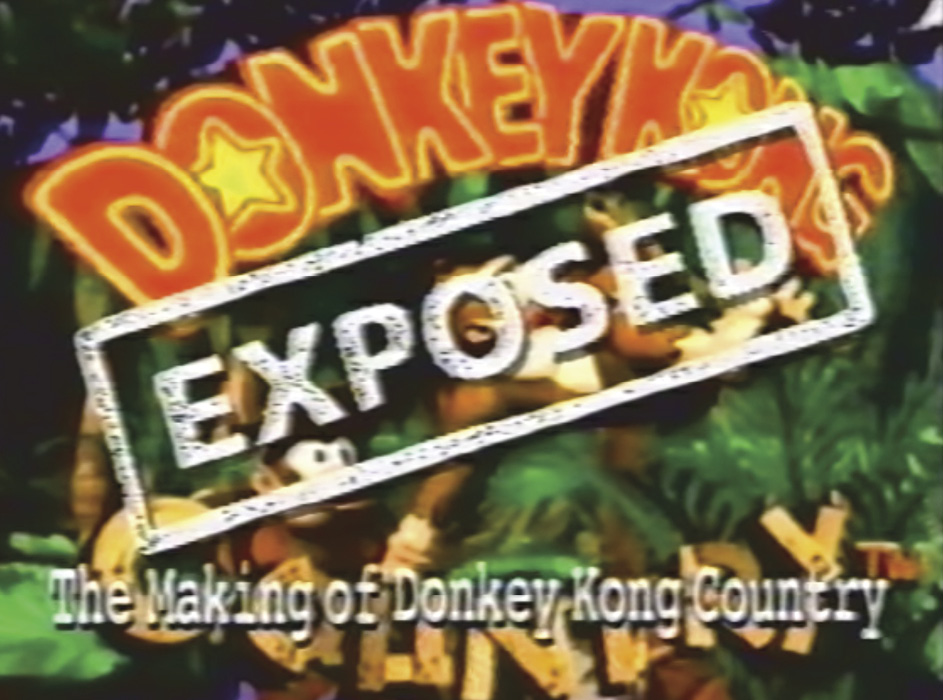
The Treehouse, named after Donkey Kong’s home, was where Nintendo of America worked on the quality assurance and localization of Donkey Kong Country. Access to the Treehouse was so limited that even high-ranking executives had never stepped foot inside. Again, to have a home video delivered to your doorstep, giving you access to the most covert department of a notoriously enigmatic company, was an unparalleled experience for fans.
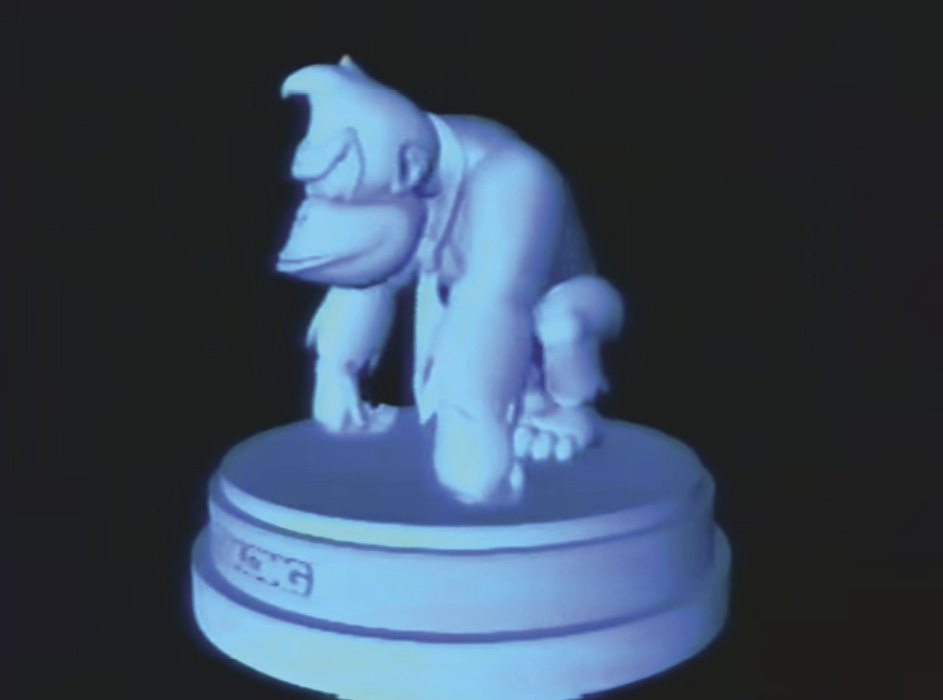
Extensive gameplay is shown throughout the video, with testers enthusiastically discussing their favorite parts of the game and revealing specific secrets. Now anyone who had seen this tape would have exclusive knowledge of cool things to try out and show off to their friends when the game came out. As the teaser builds to the apex of its closing montage, with thunderous drumming alongside gameplay highlights, text on the screen calls out Nintendo’s competitors by name and reminds everyone that Donkey Kong Country will be exclusive to their console. Their 16-bit console. They had the ace up their sleeve and they weren’t afraid to shout it from the treetops.

Donkey Kong Country: Exposed was one of the most successful video game marketing campaigns ever devised. Fans could watch the video with no prior knowledge of or interest in Donkey Kong Country, and 15 minutes later it was the only thing they could think about. Needless to say, the game was a relentless success, selling nearly 10M lifetime copies worldwide and single-handedly prolonging the commercial viability of the Super NES at a time when everyone else was pushing newer and more expensive hardware in an attempt to maintain relevancy.