
Playing With Super Power: Nintendo Super NES Classics Guide Realizing the 16-Bit Dream
Under the Hood
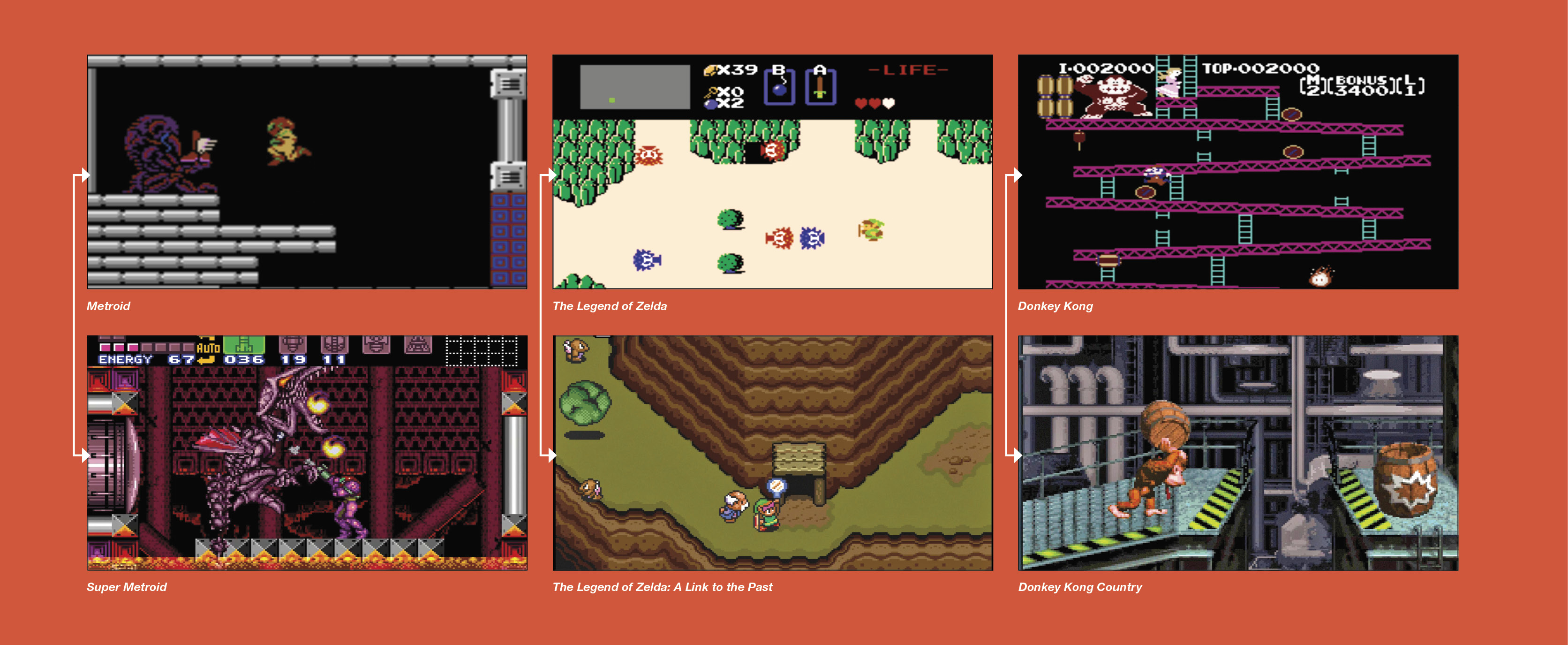
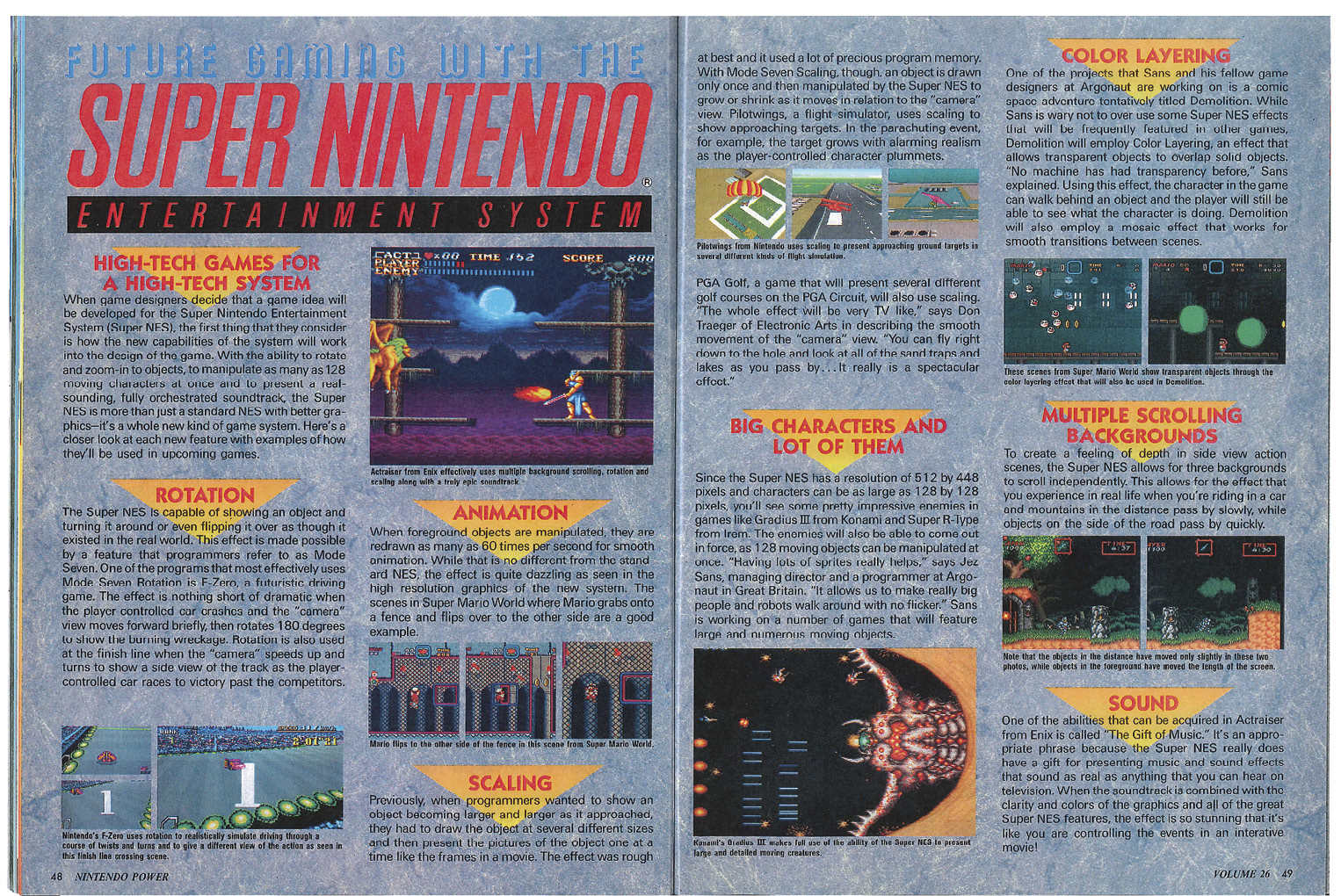
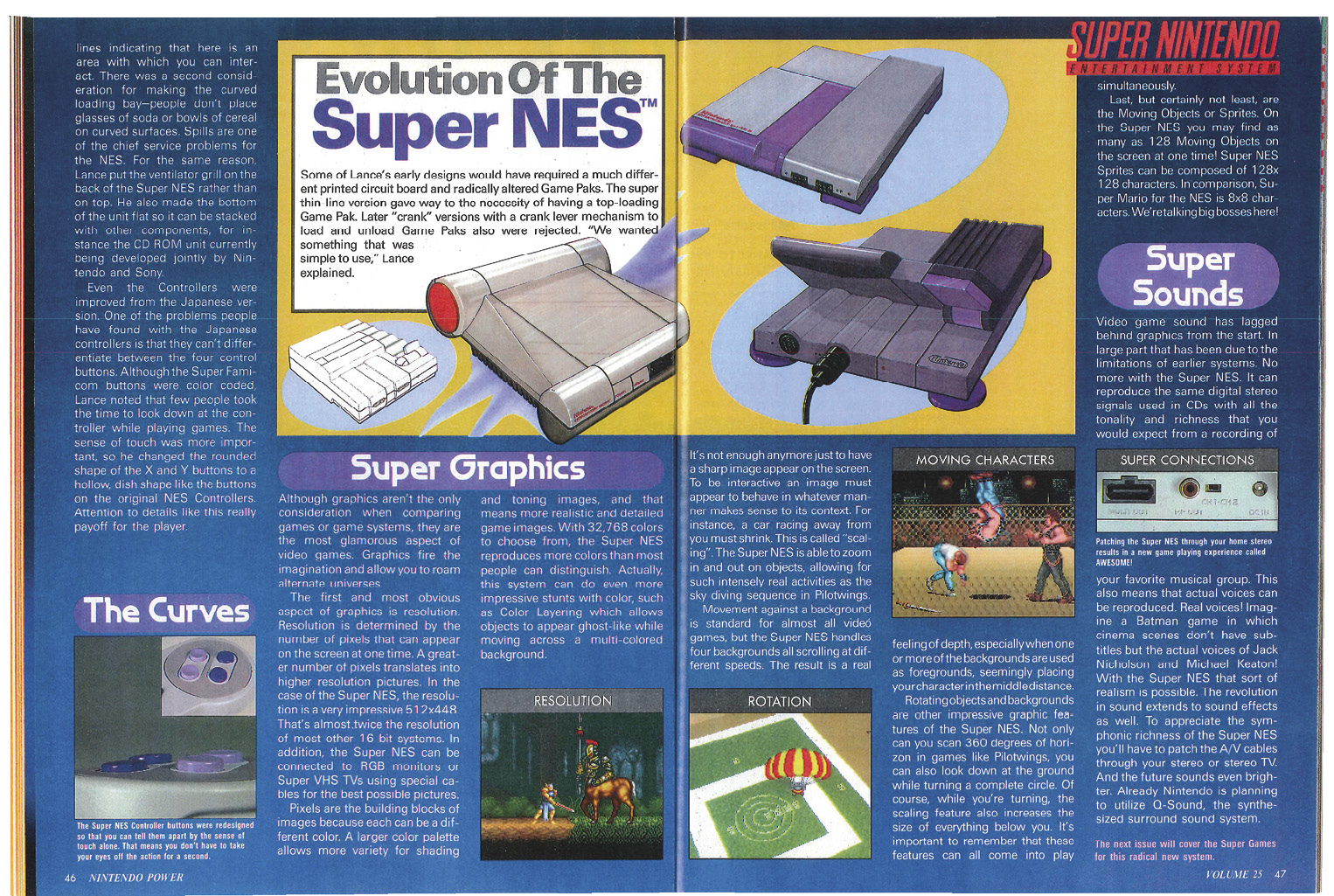
The 8-bit NES featured an available color palette of 48 colors and six grays. It could display up to 64 on-screen sprites simultaneously. The Super NES, by comparison, had a palette of 32,768 colors with double the on-screen maximum for game objects. Every other aspect of the Super NES’s technical capabilities was equally superior to its predecessor, allowing developers to immediately create bigger games that both sounded better and looked far more visually stunning.
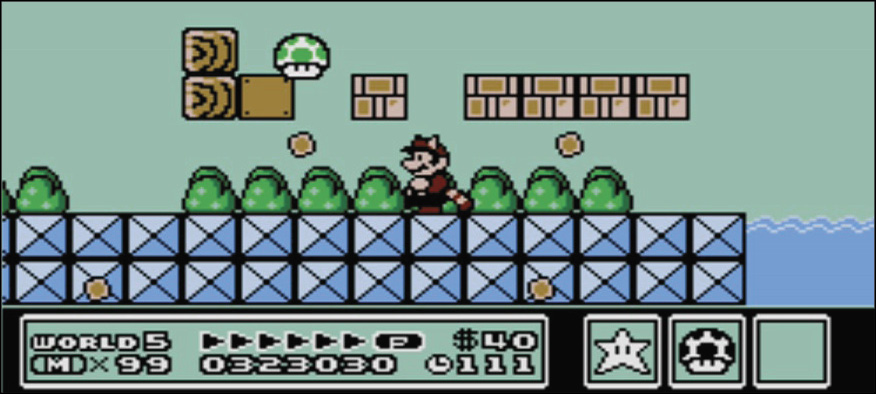
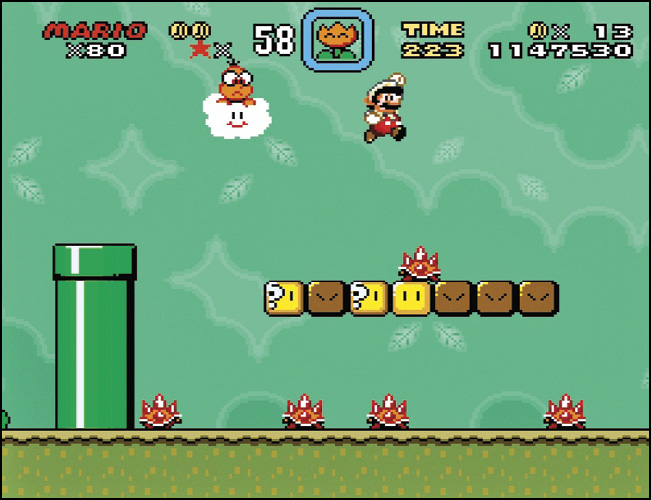
This is easily demonstrated by comparing two games from each console: Super Mario Bros. 3 (released toward the end of the NES’s life cycle), and Super Mario World (released as a launch title for the Super NES).
Graphics Comparison: NES v Super NES
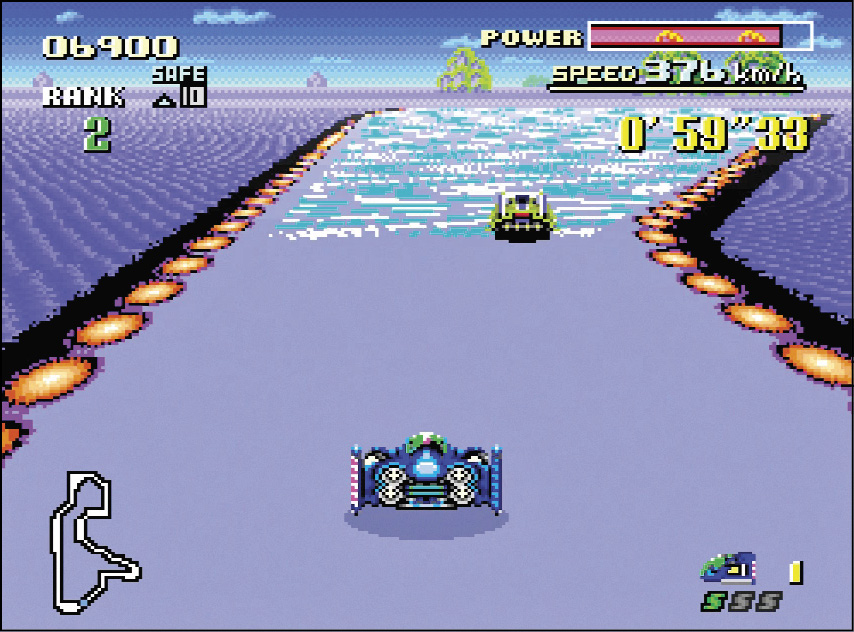
Apart from simply richer audio and visuals, the Super NES touted eight graphics modes (Mode 0-7), though it was Mode 7 that helped define both Super NES games in general and Nintendo’s marketing for the system. Mode 7 essentially allows a background layer to be rotated and scaled, often used to give the impression of three-dimensional graphics. Super NES launch title F-Zero pioneered the use of Mode 7 for racing games, though developers did find ways to utilize it under other circumstances, such as boss battles in Super Mario World, Contra III: Alien Wars, and Super Castlevania IV, as well as the world map when viewed from the airship in Final Fantasy III.
Enhancement Chips
For many of the system’s most notable titles, the Super NES’s modular onboard hardware was bolstered by custom chips shipped in each Game Pak. The Super FX chip series is the most well-known, allowing the 16-bit console to display the cutting-edge 3D graphics seen in Star Fox, but there were many others. The Super Accelerator 1 (SA1) provided a more powerful alternate core processor over the standard Super NES chipset for use in games like Super Mario RPG: The Legend of the Seven Stars. The Cx4 chip was used in Capcom’s Mega Man X series to achieve 3D wireframe effects and advanced sprite manipulation.
Custom chips were key to extending the Super NES’s lifespan, allowing for games that would otherwise be literally impossible on the system. Some custom chips were developed for a very limited number of games, or like the OBC-1, used exclusively for a single title—in this case, Metal Combat: Falcon’s Revenge for the Super Scope.