
Playing With Super Power: Nintendo Super NES Classics Guide Donkey Kong Country
Legacy
Donkey Kong Country quickly became the best-selling non-Mario game on the Super NES. Its sequels both earned spots in the top 10 best-selling titles as well, solidifying the newly minted universe and Rare’s work in Nintendo history. The series dealt a swift and definitive blow to any lingering competition at the time, and Donkey and Diddy have gone on to have many more adventures since their 16-bit days.
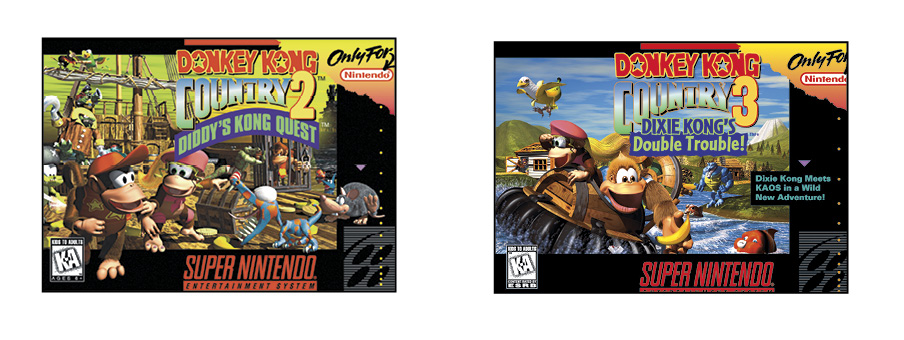
Donkey Kong Country 2: Diddy’s Kong Quest
1995, Super NES
Donkey Kong Country 3: Dixie Kong’s Double Trouble!
1996, Super NES
Donkey Kong Country received two sequels for the Super NES. Diddy and his girlfriend, Dixie, star in the second game, while Dixie and her cousin Kiddy Kong are on a mission to rescue Donkey and Diddy in the third. Dixie and Kiddy introduce new gameplay mechanics, such as Dixie’s helicopter hair ability, which allows her to float short distances.
The sequels were received very well, with certain members of Rare even stating they felt they were better games than the original. Game Boy Advance ports for the entire trilogy were released with minor tweaks, as is tradition.

Donkey Kong Land Series
1995-1997, Game Boy
The Donkey Kong Country trilogy received a sister series on the Game Boy. Also developed by Rare, each game was modeled after the Donkey Kong Country title released the year prior, but featured all-new stages and plot points. Like its console counterpart, Donkey Kong Land’s visuals pushed the Game Boy beyond what anyone had believed the handheld was capable of.

Diddy Kong Racing
1997, Nintendo 64
Diddy Kong Racing was Rare’s take on the kart formula popularized by Super Mario Kart and Mario Kart 64. Unique features included an Adventure Mode with a Super Mario 64-esque hub that required a set amount of golden balloons to unlock doors leading to new races or boss battles. Each of the eight playable characters could choose between different vehicle types (kart, hovercraft, or plane) for each race. This concept would later be introduced in the Mario Kart series.
Diddy Kong Racing marked the first appearance of Rare’s Banjo and Conker characters, both of whom would go on to star in their own games for the Nintendo 64.
A version of Diddy Kong Racing was released for the Nintendo DS in 2007. A sequel, Donkey Kong Racing, was in development for the Nintendo GameCube but was ultimately canceled.

Donkey Kong 64
1999, Nintendo 64
Rare’s Donkey Kong swan song brought the unique elements introduced in the Country trilogy into a fully 3D adventure. Donkey Kong 64 featured five different playable Kongs, each with their own unique abilities and items to collect.
The game was the first to require the Nintendo 64 Expansion Pak, which increased the console’s available memory for bigger games and improved graphics.
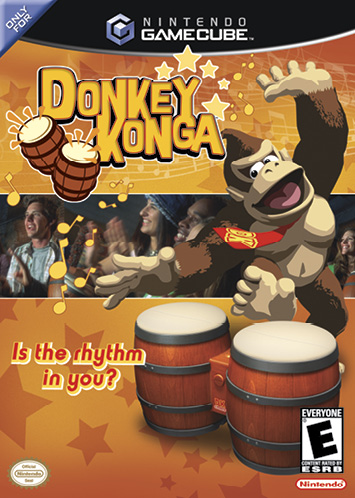
Donkey Konga Series
2003-2005, Nintendo GameCube
Developed by Namco’s Taiko: Drum Master team, Donkey Konga was a series of music rhythm games that used special peripherals called DK Bongos. Both licensed songs and music from popular Nintendo games were included among the playable tracks.
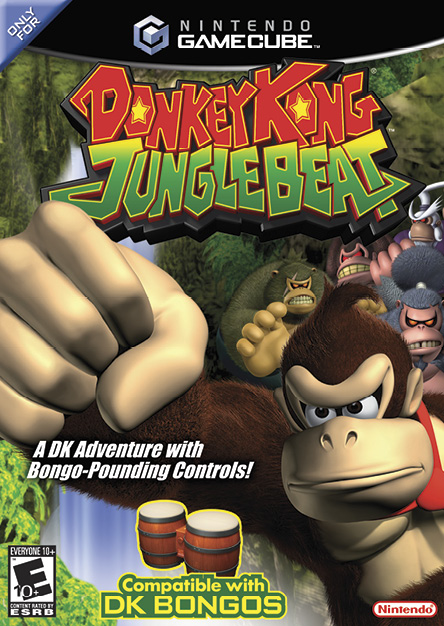
Donkey Kong Jungle Beat
2005, Nintendo GameCube
Combining Donkey Konga’s music-based gameplay and Donkey Kong Country’s platforming mechanics, Donkey Kong Jungle Beat was the best of both worlds. Using the DK Bongos to control Donkey Kong, players progressed through levels attempting to keep their combo counter as high as possible.
Donkey Kong Jungle Beat received a Wii port in 2009, and is referenced as both a stage and Donkey Kong’s Final Smash attack in the Super Smash Bros. series.
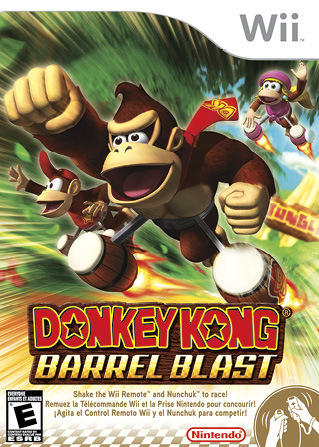
Donkey Kong Barrel Blast
2007, Wii
Donkey Kong Barrel Blast was a racing game somewhat similar to Mario Kart. It was developed with the intention of utilizing the DK Bongos, but was later switched to the Wii Remote and Nunchuk when the GameCube version was canceled.

Donkey Kong Country Returns
2010, Wii
Ten years after Donkey Kong 64, Metroid Prime developer Retro Studios revived the series on the Wii. As was the case with Metroid, Retro’s take on the classic franchise was extremely well-received. Donkey Kong Country Returns featured cooperative gameplay and the same iconic 2D platforming from the 16-bit days, but with actual 3D graphics. Retro Studios claimed each level had three times the amount of textures and polygons as many areas in Metroid Prime 3: Corruption.
A port, Donkey Kong Country Returns 3D, was released for the Nintendo 3DS in 2013.

Donkey Kong Country: Tropical Freeze
2014, Wii U
Retro Studios followed up their success on the Wii with Donkey Kong Country: Tropical Freeze for the Wii U. New playable characters were added, including Dixie and—for the first time ever—Cranky Kong. Their unique abilities were required to collect every item in the game, similar to Donkey Kong 64.