
Playing With Super Power: Nintendo Super NES Classics Guide Super Mario Kart
16 Bits

 Super Famicom Box Art
Why is everyone so close together on this turn? This seems like a serious hazard.
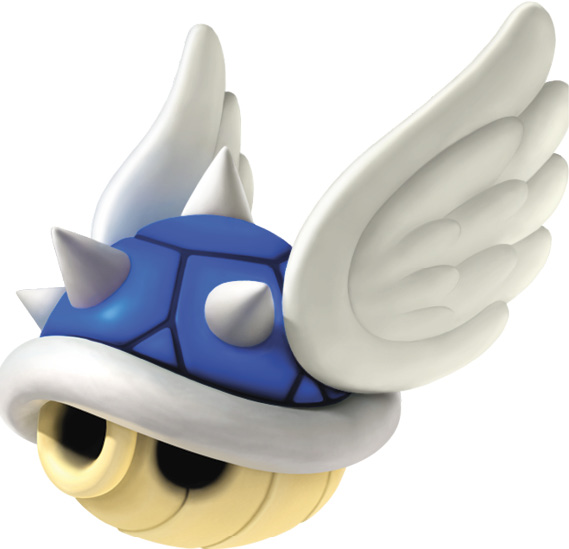
 Spiny Shell
Super Mario Kart is the only entry in the series where the Spiny Shell, aka the Destroyer of Friendships and Consumer of Salty Tears, does not appear.
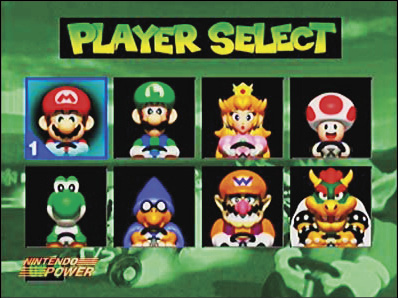
 Magikoopa
In Mario Kart 64, Koopa Troopa was originally going to be replaced by Kamek, a Magikoopa, before Wario took his place instead.

 The Life of Coins
Coins in the Mario Kart series have served various functions as they try to find their place in the always changing imaginary economy. After their removal in Mario Kart 64, Coins returned in Mario Kart: Super Circuit with a few adjustments, including an increased speed bonus limit of 55, allowing racers to outrun Red Shells!
In Mario Kart DS Coins were used as part of certain missions, and in Mario Kart Wii they appeared in a special mode called Coin Runners.
With Mario Kart 7 and 8, Coins once again resembled their humble beginnings in Super Mario Kart, increasing players’ speed. Coins also became a collectible currency used for unlockables.
Nintendo started to have fun with Coins in Mario Kart 8, replacing them with Rupees in Hyrule Circuit, and Bells on the Animal Crossing track. On the Mute City and Big Blue tracks inspired by F-Zero, Coins are collected via the futuristic Pit Rows.
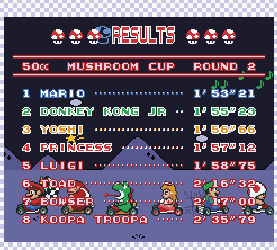
 Rivals
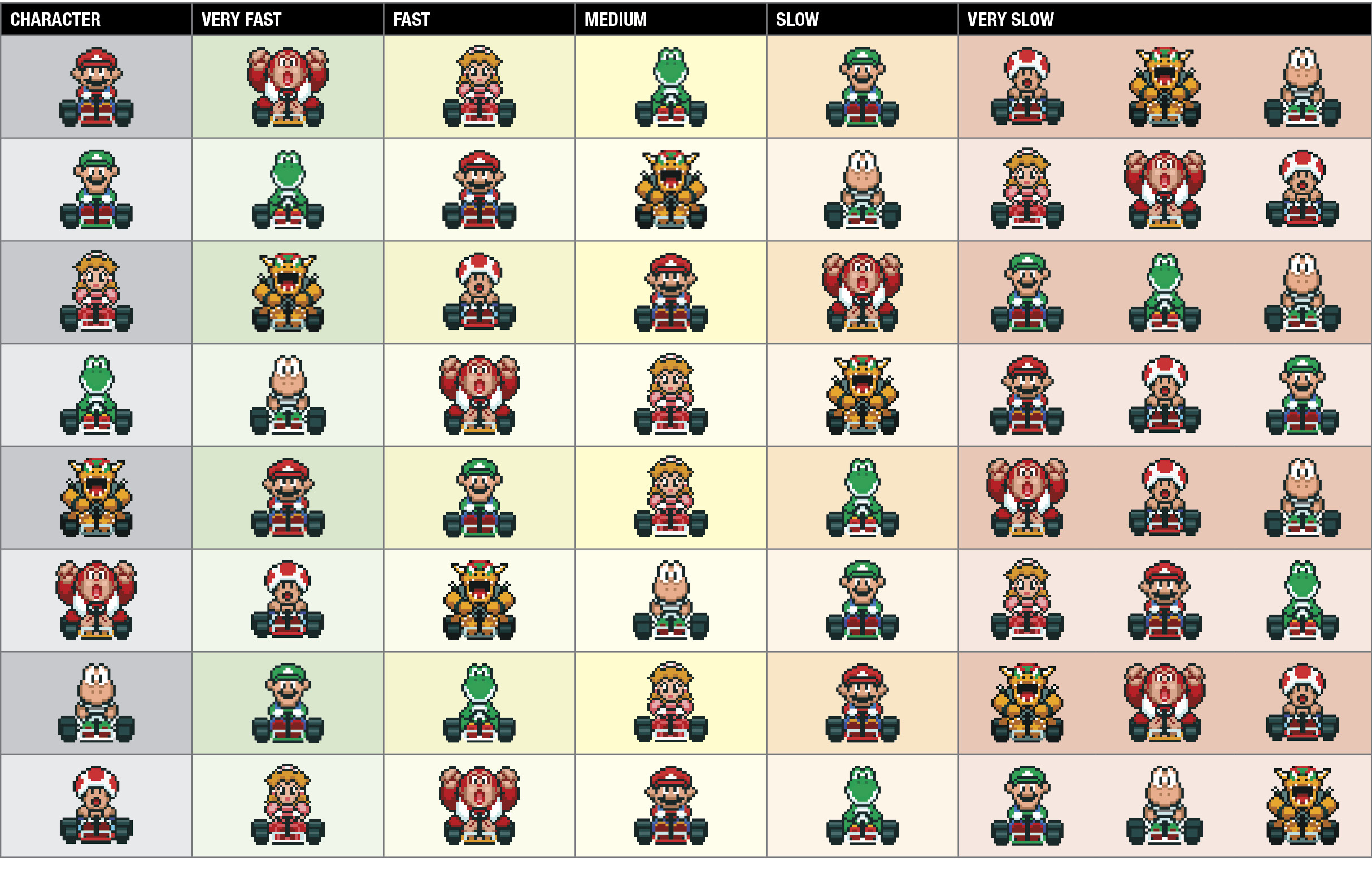
Super Mario Kart features a rival mechanic unique to each racer. Depending on which character you choose, you are assigned rivals of varying speeds. This determines which AI racers finish in which order, and it is always the same, except under rare circumstances. For instance, slower rivals usually get stuck in lower positions if they spin out, but faster rivals quickly recover their pre-assigned positions even after taking a hit. If a fast rival can’t catch back up before the race ends, they rank lower than they normally would. Doing this causes a shift in the rivals for the remainder of the cup, and the speed of the rivals has nothing to do with the character’s weight class.
Rival Order
 Oil Can
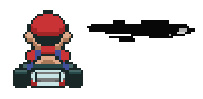
In the early days of development, there was an Oil Can item that would spill out on the track. This item was replaced by the Banana Peel, which works exactly the same, but the oil slick still appears as a hazard on the Mario Circuit tracks.
 Lonely Battlefield
Battle Mode was completed very early on in development, but at first there were no obstacles on the battle course. Players could drive around freely and attack each other with rapid fireball attacks, gaining a point for each successful hit. After testing this out, the developers would get dizzy spinning around in an empty field, so they started to add in walls and other landmarks.
 VB Mario Kart
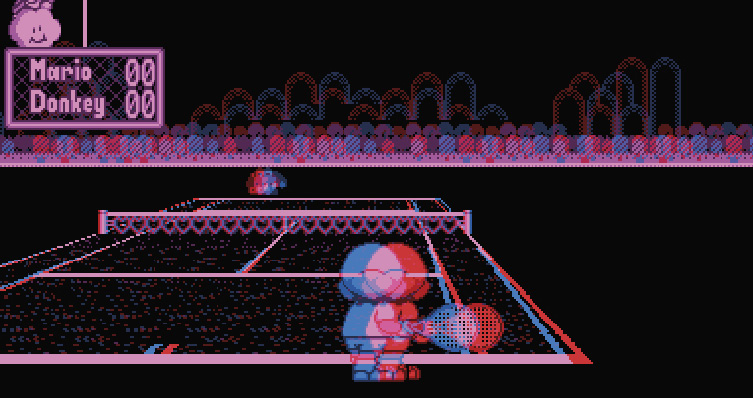
A German magazine titled Big N claimed in their August 2000 issue that VB Mario Kart, a Mario Kart game for the Virtual Boy, had been canceled along with a number of other titles. However, this was the only mention of the game. Like, ever.

 Feather Wait
The Feather item would not appear in a Mario Kart game again until Mario Kart 8 Deluxe, over two decades after Super Mario Kart’s release.
 Mario vs. Luigi
Despite often being sidelined in the main Mario Bros. franchise, Luigi’s legendary reputation in the high-stakes world of go-kart racing has garnered more Mushroom Cup tracks named after him than his brother. Luigi’s Circuit (or Luigi Raceway, as it’s called in Mario Kart 64) appears in the Mushroom Cup across three different Mario Kart titles, whereas Mario Circuit only appears in the introductory cup once (Super NES), and Mario Kart Stadium appears in Mario Kart 8 Deluxe.
 The DK Lineage
Super Mario Kart is the only Mario Kart game to feature Donkey Kong Jr. Due to the success of Donkey Kong Country, all future Mario Kart entries featured Donkey Kong, who is actually Donkey Kong Jr.’s son, with Cranky Kong, aka Donkey Kong Sr., canonically being the character featured in the original Donkey Kong game. Makes sense, right?
 Rubbing’s RAcing
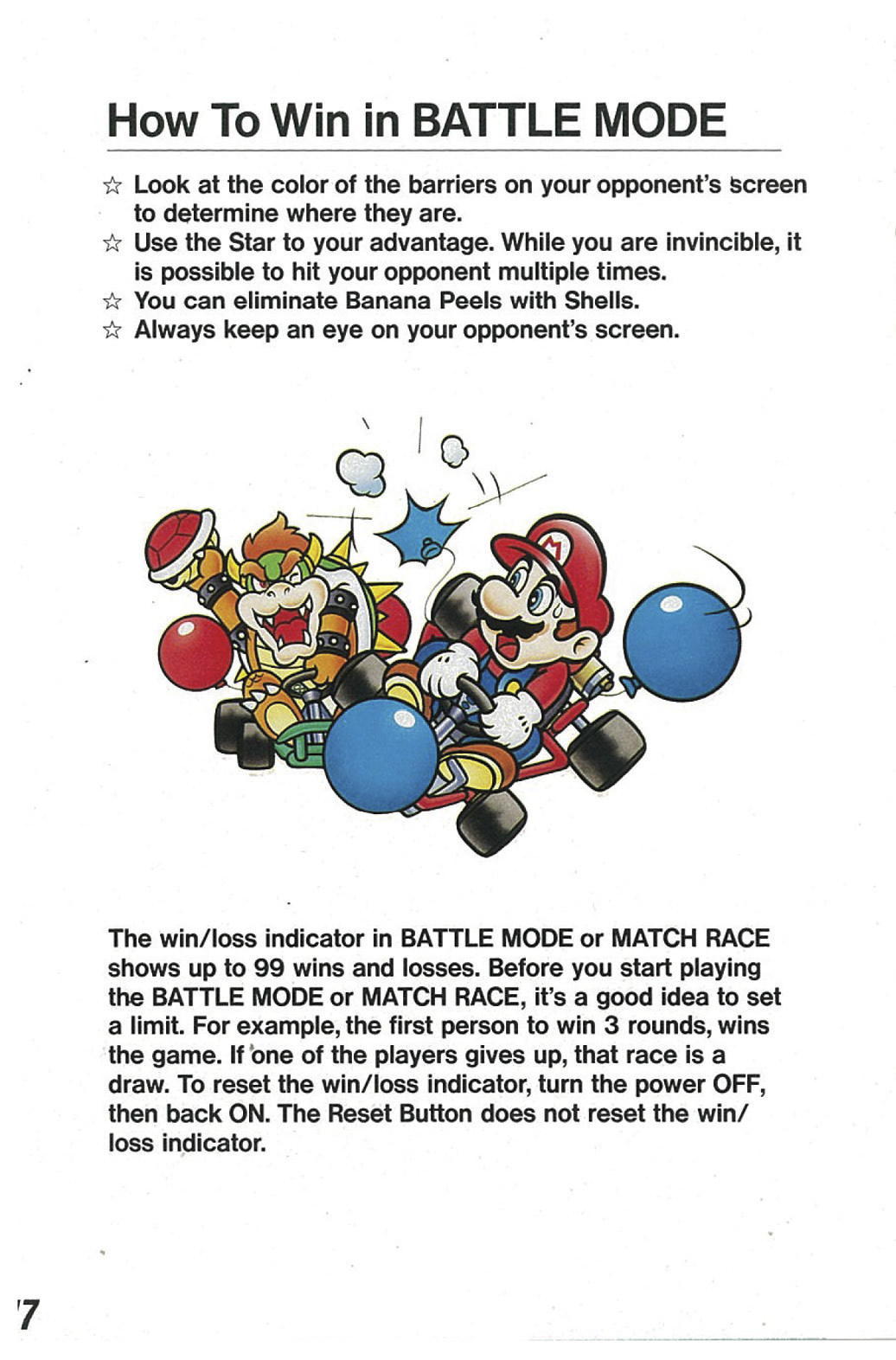
Peeking at your opponent’s location in a split-screen game is commonly considered cheating, but not in Super Mario Kart. The instruction booklet actually insists upon it!

 Stars and Pipes
When under the effects of the Star item, driving through an obstacle turns the tables and knocks them out of the race, including pipes! Does anyone know a good plumber?

 The Princess
The Princess’ name in Japan was Princess Peach since her debut in Super Mario Bros., yet was changed to Princess Toadstool in the English instruction booklet. In later Western releases her name would fluctuate between the two (she even signs her letter to Mario in Super Mario 64 as both), up until Mario Kart 64 in 1996, at which point she became universally referred to as Princess Peach.
 Rainbow Death Trap
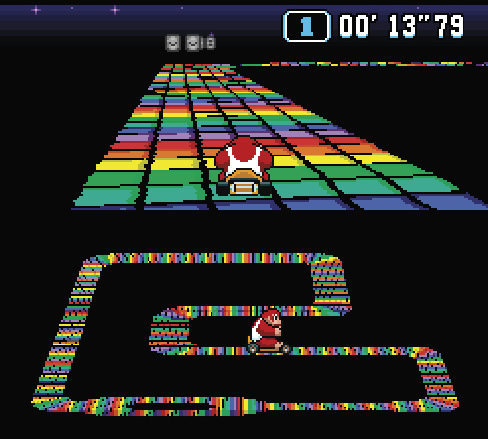
As discovered in a prototype of the game, Rainbow Road was originally much narrower. However, the AI fell off constantly, so our childhood selves may have them to thank for the track not being even more difficult than it already is.
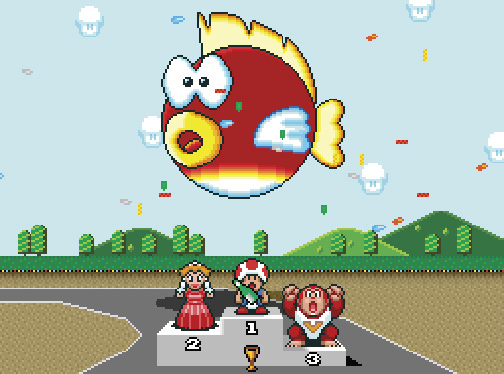
 Alternate Victory Screens
Instead of the giant Cheep Cheep dropping the trophy on your head, in unreleased versions of the game there was a time when securing 2nd place would cause a Super Koopa Troopa to fly by and get hit by the champagne cork. Placing 3rd would result in four flying Koopa Troopas passing overhead, with the last one getting hit by the cork as well.