
Playing With Super Power: Nintendo Super NES Classics Guide Super Metroid
16 Bits

 Super Famicom box art
The excellent Super Famicom artwork increases the contrast between Samus and her enemies. The characters and lighting are more defined, and Kraid manages to get most of his body in the shot instead of just his feet.
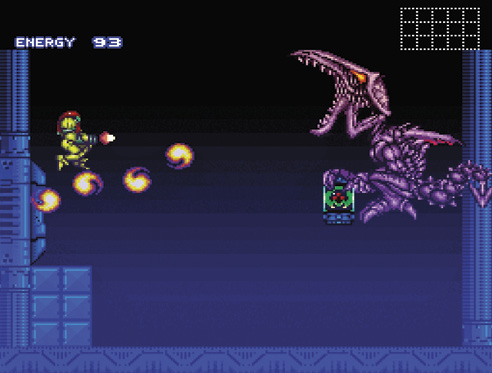
 Space Hunter
The series was originally titled Space Hunter, before being changed to Metroid, a portmanteau of “android” and “metro subway”.
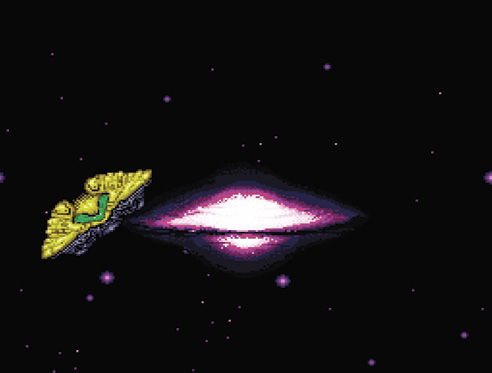
 The end
Super Metroid was originally intended to be the end of the series. Yoshio Sakamoto, who directed almost every 2D Metroid game to date, saw the return to Zebes and the “final” showdown with Mother Brain as a way to close the loop on the adventure that both Samus and players started many years prior.
 Varia Suit
The oversized spherical pauldrons of Samus’ Varia Suit came about due to the monochromatic color scheme of the Game Boy. In Metroid II: Samus Returns, there was no way to show suit upgrades via color changes, so the Varia Suit was given a cosmetic modification to help differentiate it. This design stuck, and has been emblematic of Samus’ armor even since. The name “Varia” is a mistranslation of “Barrier,” but was made canon and Samus is depicted in the Varia Suit more often than her original Power Suit.
 The Alien Connection
The development team was heavily inspired by the 1979 film, Alien, and its sequel, Aliens. Metroid, in turn, makes several references to the Alien films: Ridley, the alien dragon, has the same name as Alien director Ridley Scott; the Metroid-infested planet, SR388 (named after a Yamaha motorcycle), has a similar name as LV-426, the exomoon where the crew of the Nostromo first encounters the facehugger eggs; Samus’ suitless outfit shown at the end of the games—especially Metroid II—is similar to Ellen Ripley’s hypersleep attire, and both franchises feature self-destruct sequences as part of their climaxes (with Samus having destroyed four planets total, thus far). H.R. Giger, who designed the aliens from the films, also deeply influenced the Metroid series.
 Samus
Samus
Samus may have gotten her straightforward demeanor and unyielding courage from Sigourney Weaver, but her look was inspired by another Hollywood actress, Kim Basinger. Mr. Sakamoto was especially fond of Basinger’s performance in My Stepmother Is an Alien.
“Samus’ last name, Aran, comes from a popular Brazilian footballer, Edson Arantes do Nascimento (famously known as Pelé).
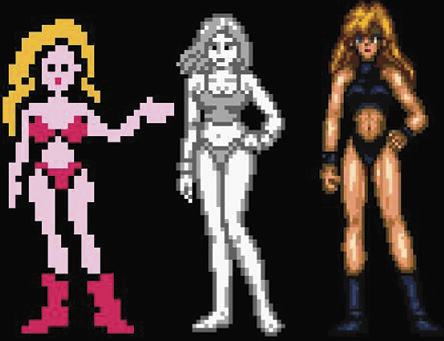
 Samus’ Identity
Despite her gender eventually playing a sizable role in the character’s plot and popularity, making Samus female in the original NES game was mostly an afterthought. As development was coming to an end, the team was looking for ways to reward players for quick completion times. One staffer casually suggested making Samus female, and the rest is history.
 Super Smash Samus
Samus has appeared as a playable character in every Super Smash Bros. game. As of Super Smash Bros. Brawl (2008), Zero Suit Samus was made as a separate playable version of Samus. She is quicker and more agile outside of the suit, and is a popular choice for casual and competitive players alike.
 Break Room
During the final stages of development, the Super Metroid team rarely left the office and instead slept in a break room. In the official Japanese strategy guide, artist Toru Osawa stated, “We were tense, couldn’t sleep, couldn’t go home, and couldn’t even take a bath. It stank!”
While the team openly jokes about it, they said other Nintendo of Japan members who also shared the break room with the Super Metroid staff were not so upbeat, and often gave them “weird looks.”
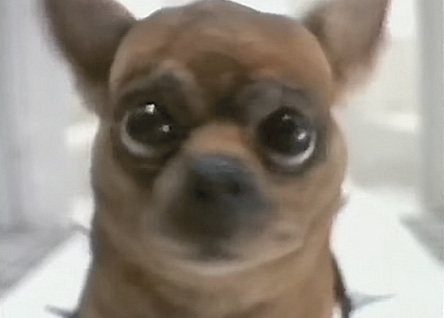
 Killer
The commercial for Super Metroid featured a vicious Doberman named Killer. A scientist unleashes Killer into a testing room to ensure the game is the most intense experience possible. After a few moments, the door is opened and Killer re-emerges… as a frightened Chihuahua. “Ship it!” the scientist shouts.
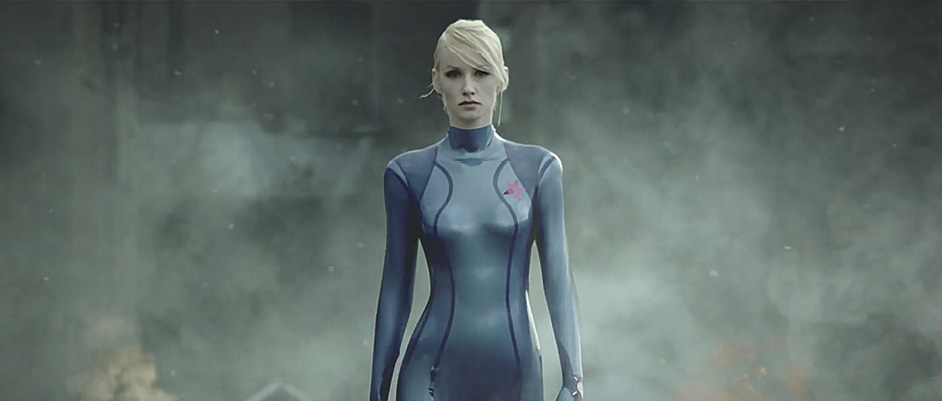
Although Samus herself appeared in various Metroid game commercials in her Power or Varia Suit, it wasn’t until Metroid: Other M that she was depicted out of her armor by a live-action model.
 Zabeth
In the title sequence of the original Metroid, Zebes is called “Zebeth.” However, the instruction manual and all future instances of the planet are spelled as “Zebes.” In Japanese, the sounds made by “s” and “th” are often interchangeable.
 Crystal Flash
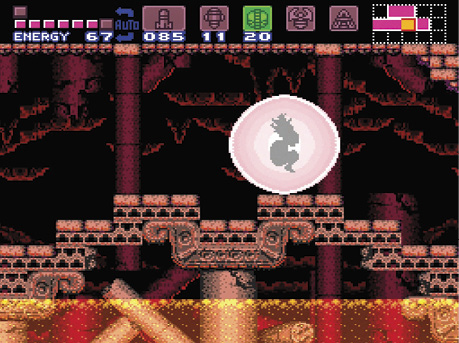
One of Samus’s many undocumented special abilities is the Crystal Flash. When Samus’s energy is below 51 with no reserves and she holds at least 10 Missiles, 10 Super Missiles, and 11 Power Bombs, she can trigger this technique to replenish her health.
According to the Super Metroid comic in Nintendo Power, the Crystal Flash was taught to Samus by the Chozo who adopted her. While the technique can only be used in Super Metroid, Samus’ Final Smash in Super Smash Bros. Brawl pays homage to it.
 Save or Kill the Animals?
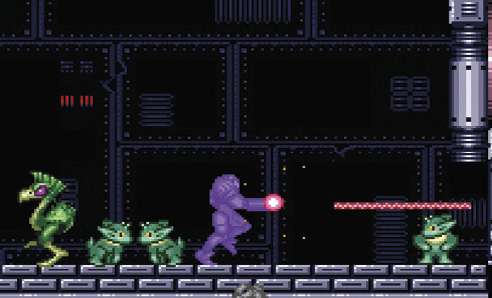
During the final escape sequence after defeating Mother Brain, Samus can return to the room where she first obtained the Morph Ball bombs. There she finds the three friendly Etecoons and Dachora, who had previously demonstrated the walljump and Shinespark abilities for her, trapped. Shooting the wall opens a passage and the critters escape. This slightly alters the ending of the game, where a small light can be seen in the distance racing away from the exploding Zebes. This is lovingly referred to as “saving the animals” and has become a staple of speedrunning marathons. Donations can vote to save the animals or “save the frames” (i.e. let the animals die to get a faster completion time), and the bidding war for this decision has raised hundreds of thousands of dollars for charity each year. These same creatures reappear in Metroid Fusion.

 Kaiju Battle Cries
Several of Super Metroid’s giant bosses let out sounds that are virtually identical to those used for certain kaiju in the Godzilla films. Can you match the boss to its Monster Island counterpart?
 Golden Cheat
The developers left a debug cheat in the final game, referred to as the Golden Torizo Code. When entering the room where the Golden Torizo boss is found, pressing all of the controller’s face buttons grants Samus every item in the game except for the Screw Attack (which is obtained directly after defeating the Golden Torizo), 700 Energy, 300 Reserve Energy, 100 Missiles, 20 Super Missiles, and 20 Power Bombs.
 Sound in Action
Super Metroid: Sound in Action was a Japan-only music CD released in June, 1994. The disc included the Metroid soundtrack, composed by Hirokazu Tanaka, and the Super Metroid soundtrack, composed by Kenji Yamamoto and Minako Hamano, with a total runtime of 58:49.