Playing With Super Power: Nintendo Super NES Classics Guide F-Zero
Gameplay
If F-Zero had been a mere tech demo with amazing visuals but shallow gameplay, the game’s impact would have been considerably less profound. Nintendo’s Entertainment Analysis & Development (EAD) Division, spearheaded by Mr. Miyamoto, wasn’t interested in creating an aesthetically pleasing husk. “The important thing is how the game feels in the first 2 or 3 minutes. That’s the window of time in which the player’s heart is seized,” Mr. Miyamoto explained in Introduction to Game Design.
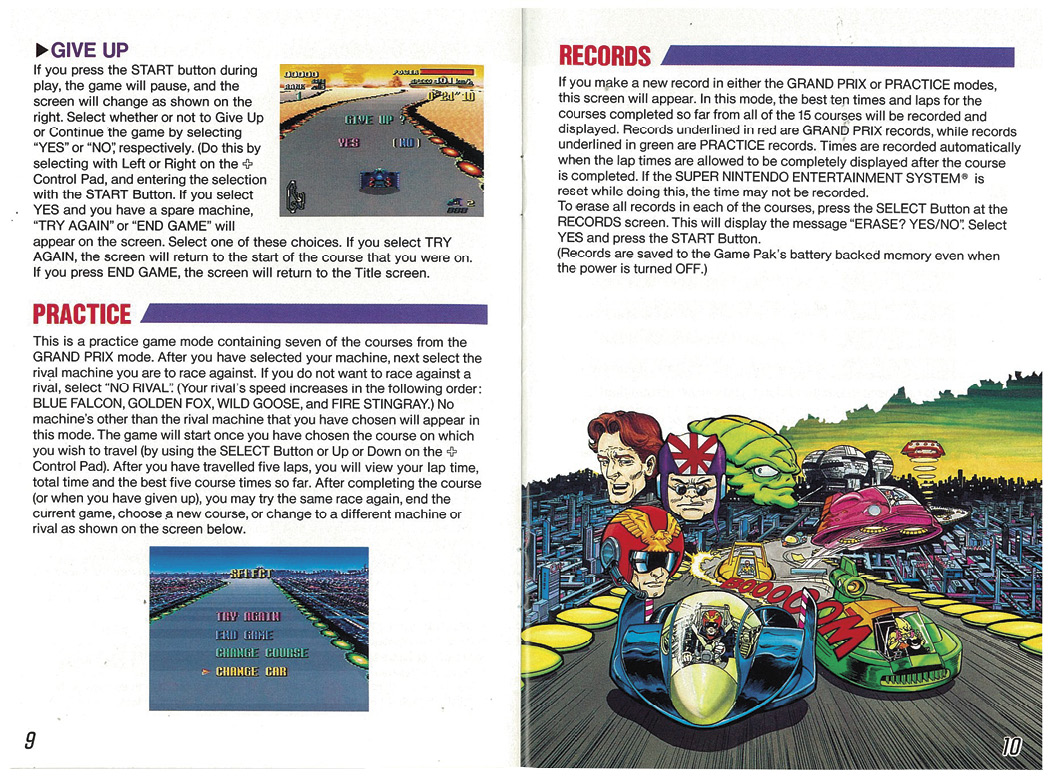
Like Super Mario World, F-Zero provides players with a seemingly simple set of mechanics with no small amount of hidden depth. The basic formula is familiar enough. Each Grand Prix consists of five races; each race takes place on a unique track and has five laps. F-Zero uses elimination-style rankings, requiring the player to move further up in position each lap or risk being disqualified.
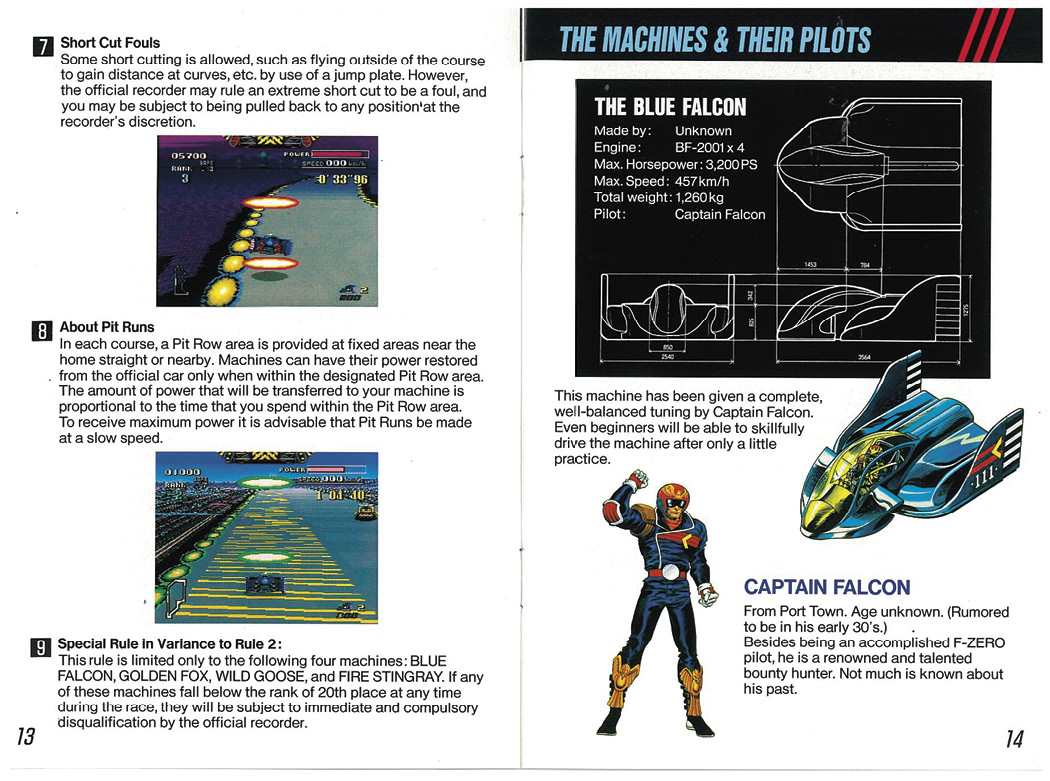
The game’s 15 unique tracks are split among three leagues: Knight, Queen, and King. Each league has four different difficulty settings (with the fourth, Master, being unlocked upon successfully completing the league on Expert difficulty). There are also four different racers, each with their own strengths and weaknesses that modify the way every aspect of the game needs to be approached.
“The important thing is how the game feels in the first 2 or 3 minutes.”
The game starts out innocuously enough, with Knight League tracks like Mute City I and Big Blue introducing basic elements such as leisurely turns, jumps, and rough patches that can slow vehicles down. New players undoubtedly learn the hard way about the Anti-Gravity Guide Beam that encapsulates the track, but it’s the backmarker racers who quickly become the bane of any F-Zero aficionado. Even on the easiest tracks, these randomly generated vehicles begin appearing after the first lap and can force the player into tricky or seemingly impossible situations. That super easy turn you made on the first lap? Now there’s a slow vehicle in your driving line. From a design perspective it was a clever way to ensure each lap always provided a somewhat unique challenge; from a gamer perspective, it was the #1 cause of UCDs (Unnatural Controller Death) in the early 1990s.
Each vehicle has a set amount of Power, which can be depleted by ramming other pilots, hitting the guide beam, or touching magnetic rails and land mines. Once the Power bar is gone, the vehicle explodes and the race needs to be restarted. If all of a player’s “spare machines” are used, they can no longer compete in the current Grand Prix. Pit Row automatically repairs damaged vehicles when driven through, and became a staple of the futuristic racing subgenre.
Completing a lap provides a Super Jet, which is a manual turbo boost that lasts four seconds. While logic would dictate a speed boost is best used on straightaways, the Super Jet allows vehicles to drive through rough patches without losing speed or survive certain shortcut jumps that would otherwise be impossible. Making use of the SNES’s new L and R shoulder buttons, vehicles in F-Zero can shift their weight to either side, allowing additional precision when taking sharp turns or avoiding hazards. Mastery of these two mechanics is key to succeeding.
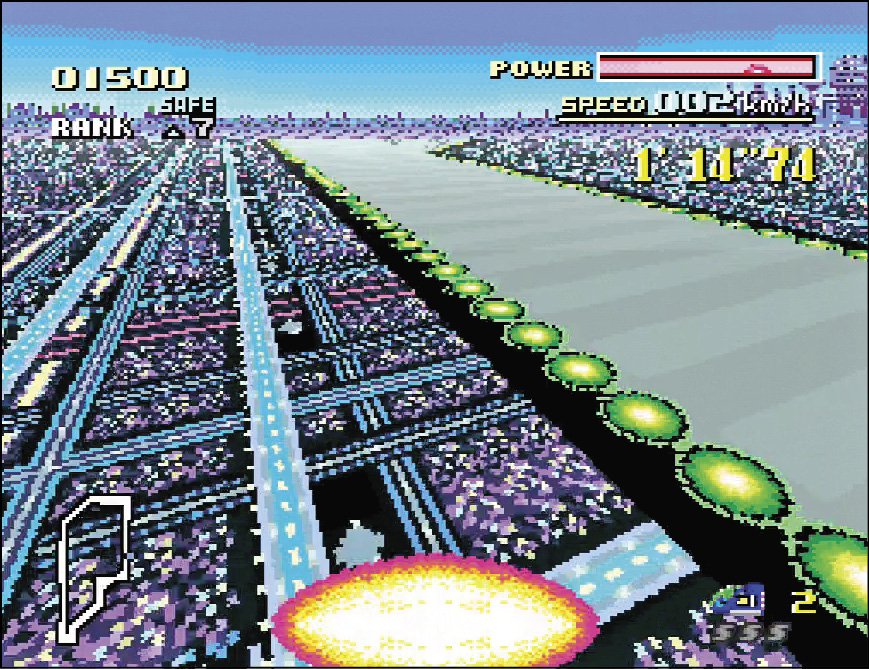
It’s not long before F-Zero begins to ramp up the difficulty, introducing increasingly technical tracks with 90-degree turns, S-turns, U-turns, and a variety of obstacles and hazards, not the least of which being land mines sprinkled throughout certain tracks like Red Canyon and Fire Field. Magnetic poles in Port Town suck the player’s vehicle toward them, doing damage and reducing speed when contact is made.
In first place, anything less than perfect racing causes the named AI pilots to magically appear from behind and try to overtake you. The always looming guide beam is incredibly dangerous at high speeds and in the game’s many tight corridors, causing the player to bounce uncontrollably and rapidly dwindling away their Power.
F-Zero is arguably one of Nintendo’s most difficult titles. Completing all three Grand Prix Leagues in first place, let alone on Master, was a true badge of honor for early Super NES adopters.