
Playing With Super Power: Nintendo Super NES Classics Guide The Legend of Zelda: A Link to the Past
Development
Link’s Peter Pan-inspired green attire, flute-playing, adversarial shadow, and friendly female fairies are hard to miss. Somewhat less known is that the name “Link” originated from a concept where the main character would travel between the past and distant future. Unlike Ocarina of Time’s future Hyrule, this future would have featured advanced technology, and the Triforce would have been made from electronic chips. The two eras would be connected by the hero, who would act as a “link” between them. The sci-fi idea was scrapped in favor of a “heroic fantasy,” but the hero’s name stuck, as did the concept of dual worlds which would become a recurring theme throughout the series.
By the Lake
The original NES game was unusual in many ways. Initially designed as a launch title for the Famicom Disk System, the first pass of the game used the Japan-only peripheral’s ability to write and rewrite game data in order to allow players to create custom dungeons that could be shared with each other. The feedback emphasized playing dungeons over creating them, so Nintendo scrapped the Mario Maker-esque aspect altogether. With just dungeons, the developers felt the game was missing something. The Hyrulean overworld was born from a desire to create a genuine sense of exploration and wonder, largely inspired by co-creator Shigeru Miyamoto’s childhood hikes through the Japanese countryside. He recalls first stumbling unexpectedly upon a beautiful lake, and as he continued to explore, he discovered amazing new things along the way. Years later, Mr. Miyamoto used the fond memory of these real-life adventures as the foundation for something even more fantastic. As the Disk System was never made available for the NES, The Legend of Zelda was released as a traditional cartridge, becoming the first home console game to feature an internal battery for saving game progress (prior games used complex passwords, if anything).
While the instruction booklet (and its sealed minibook of secrets) provided tips on playing, the game itself dropped the player into the wondrous land of Hyrule and let them figure everything out on their own. It was designed to be the antithesis of the linear Super Mario Bros., which was in development simultaneously by the same team. The vast majority of the game can be accessed right from the beginning, with only increased danger acting as a barrier to entry. Dungeons can be completed in any order, and new items are added to the hero’s inventory with no explanation of their purpose. An intended side effect of this cryptic design was that players would get together and share their asymmetrical experiences. Few games throughout the history of gaming would be so brazen as to intentionally eschew the basic learning tools players have come to expect, including most Zelda titles. A handful of notable exceptions, such as the Dark Souls series, Super Metroid, and early versions of Minecraft, managed to capture some of the magic of the original The Legend of Zelda by following its enigmatic approach.
The breakout success of the original game provided an early model for the action-adventure genre, but its 16-bit successor set that model in stone.
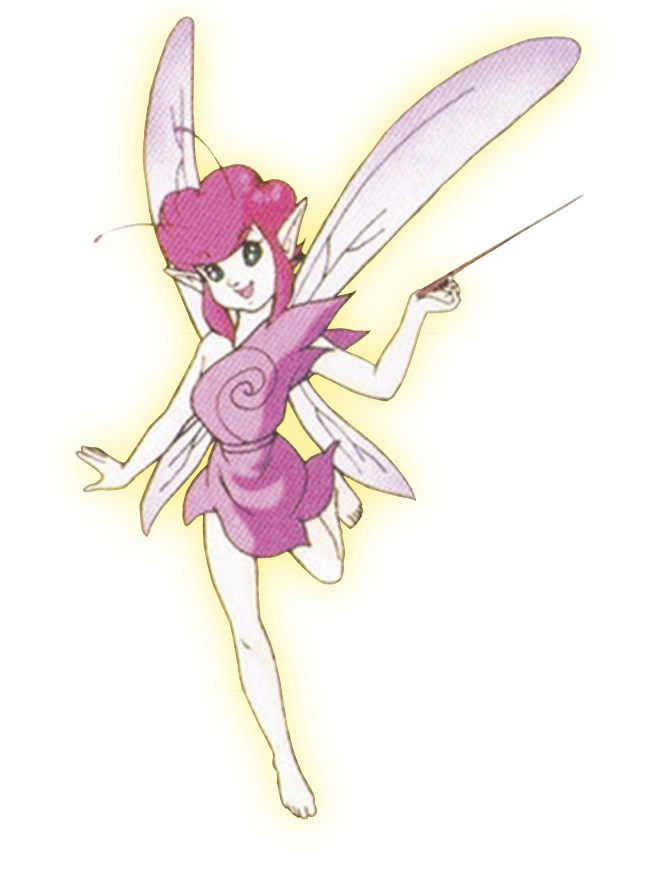
Triforce of the Gods
Following the release of Zelda II: The Adventure of Link, which memorably stands apart from all other titles in the series as a challenging side-scrolling platformer with RPG-centric experience points and player growth, Nintendo began development on a third Zelda game for the NES. Mr. Miyamoto produced while Takashi Tezuka continued in his role as director. Mr. Miyamoto had claimed since the first game that the third Zelda would expand the playable roster to feature a trio, akin to more traditional party- and class-based RPGs. The group would include an elven swordsman, a magic user, and a fairy used for reconnaissance, who ended up appearing as a transformation spell in The Adventure of Link instead. Zelda 3, as it was initially called, never featured this system, though multiplayer did become a recurring feature later in the series—usually only consisting of multiple versions of Link, however. The game was moved to Nintendo’s upcoming 16-bit console shortly after development began. This change provided more time and a considerably larger budget. What started as a modest 8-bit project would eventually become the largest Super NES game upon its release.
Whereas The Legend of Zelda was intentionally opaque, A Link to the Past delved deep into the struggle between light and dark, establishing many persistent elements of the Zelda mythos. The game begins with a rich and surprisingly dark prologue involving the ritual sacrifice of young maidens. A young boy is summoned to Hyrule Castle via a telepathic plea from a prisoner held within its dungeon. Once there, Link learns of his lineage as the last Knight of Hyrule from his mortally wounded uncle, taking up his fallen relative’s sword and shield. Link then rescues Princess Zelda in a thrilling prison break, escaping through the castle’s shadowy underbelly, all within the first 15 minutes.
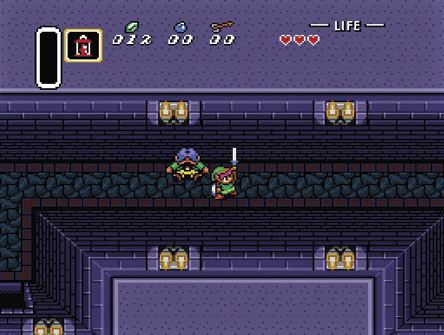
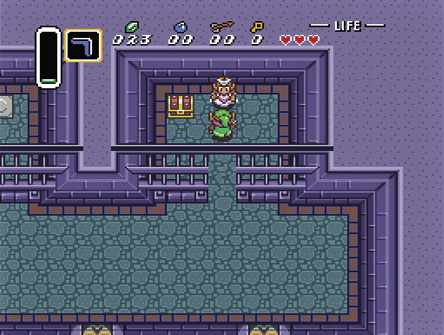
After Link escorts the princess to the Sanctuary through a secret passage and learning of the legendary weapon needed to stop the game’s antagonist, the vast expanse of Hyrule opens to the player and the adventure truly begins.
Magic Mirror
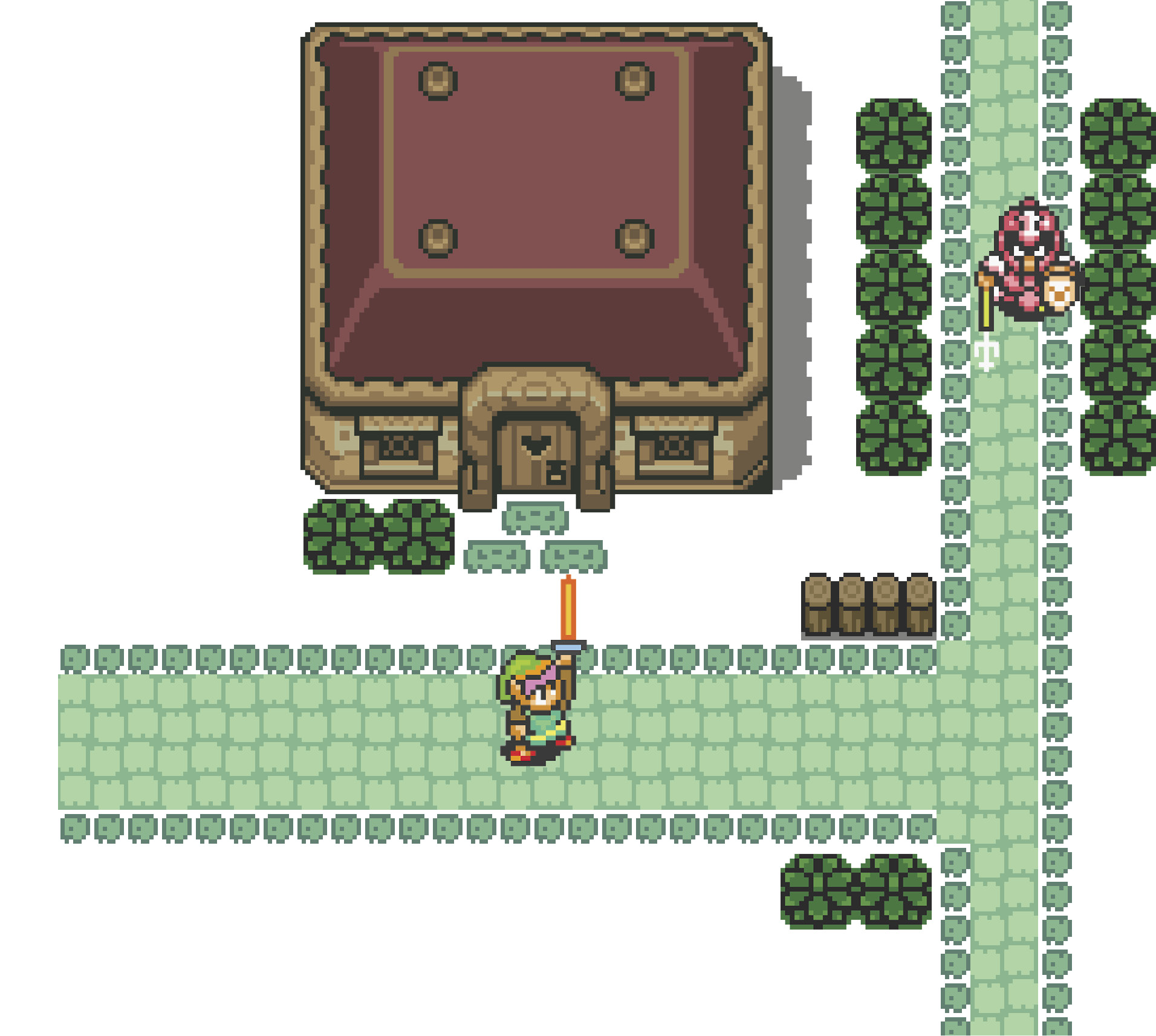
Even decades later, A Link to the Past remains a showcase for exceptional 16-bit pixel art. Hyrule is filled with details that other games either couldn’t handle, or didn’t take the time to, such as clouds casting shadows on the ground and fish flopping about after Link drains a lake. The game opens with a stunning rainstorm effect that would not have been possible on the NES.
Before A Link to the Past, our imaginations filled in these details because they had to. Afterward, games that didn’t include them felt lifeless by comparison.
Dungeon Design
A Link to the Past features a total of 12 dungeons—more than any other Zelda game to date and tied only with its eventual successor, A Link Between Worlds.
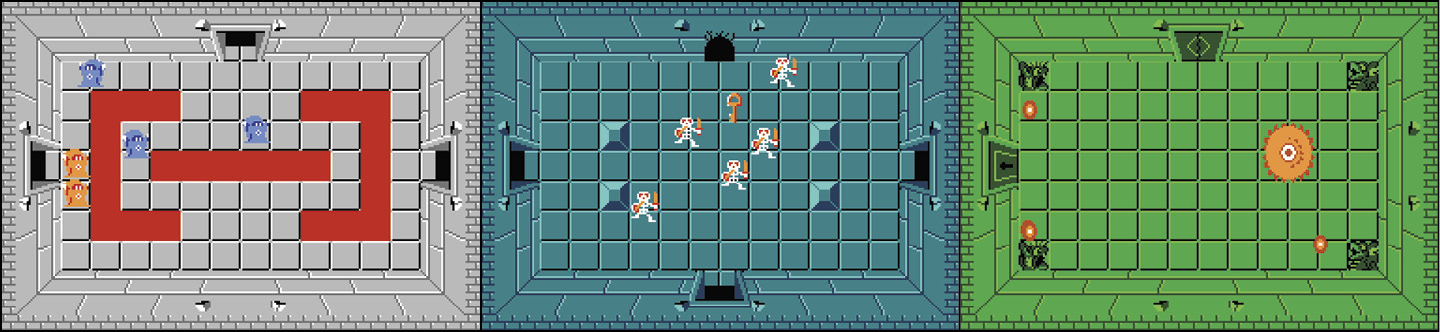
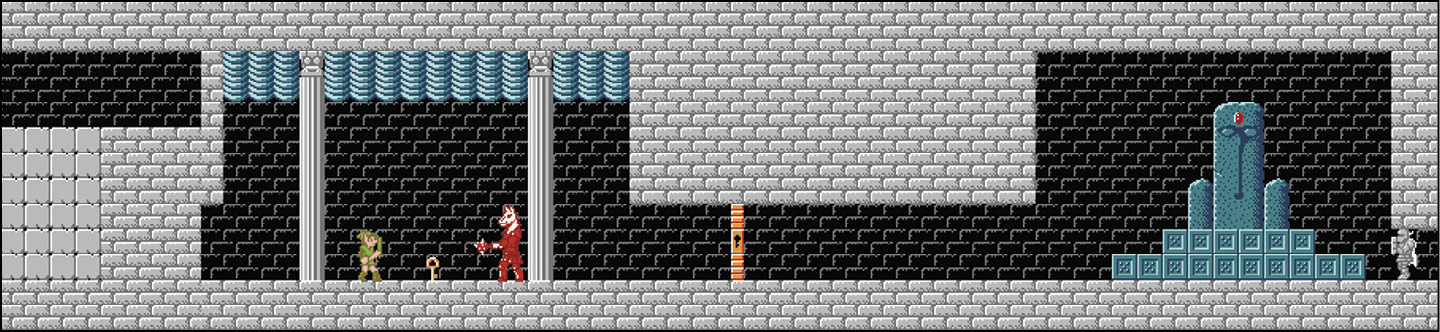
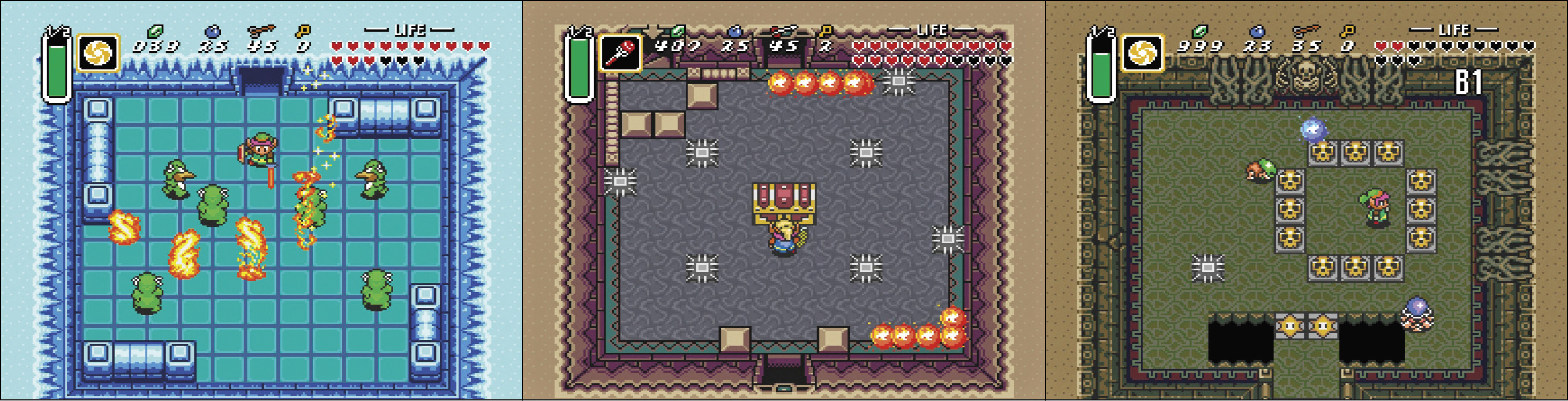
In both The Legend of Zelda and Zelda II, dungeons and palaces, respectively, aren’t particularly distinctive beyond their color palettes. Thanks to the advanced graphical capabilities of the Super NES, A Link to the Past introduced thematically driven dungeons built around distinctive motifs such as fire and ice. This practice would become especially prevalent in the 3D Zelda titles, where the elements feature heavily into the dungeons’ design, appearance, and naming schemes. Water Temple, anyone?
Dungeon Comparison
Music
Composer Koji Kondo largely established the musical identity of the series through A Link to the Past, introducing recurring themes for Princess Zelda, Ganon, Hyrule Castle, and the fairies. The overworld theme, Hyrule Overture, which Mr. Kondo composed in a single day for the original NES game, returns in a greatly enhanced form thanks to the 16-bit console’s superior stereo sound.
Coincidentally, both The Legend of Zelda’s classic dungeon theme and Ninja Gaiden’s somber prologue music drew inspiration from the same 12-minute song by English rock band, Deep Purple.