
Playing With Super Power: Nintendo Super NES Classics Guide Kirby Super Star
Legacy
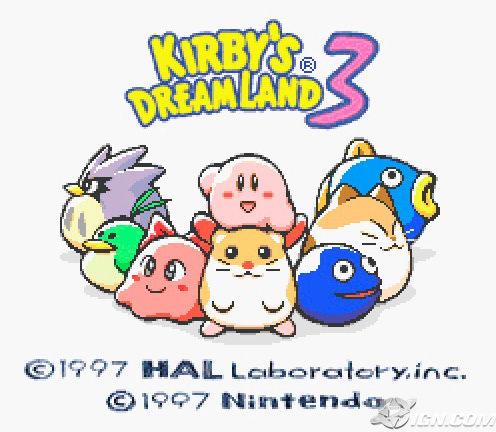
Kirby’s Dream Land 3
1997, Super NES
The final first-party Super NES game released and the first of the Dream Land saga to be released on a home console, Kirby’s Dream Land 3 introduced what would become a recurring theme in later titles: the use of specific arts and crafts as a visual style. Namely, Dream Land 3’s visuals evoked a pastel pastiche seemingly drawn from crayons. Despite this softer aesthetic, Kirby’s Dream Land 3 is also known for one of the franchise’s most graphic boss battles. The final boss, Zero (or 0), is a giant floating sphere that shoots projectile blood emitted from slits in its body. The eye eventually detaches from the sphere to a fairly gory effect and, once defeated, explodes in a similarly gory manner.
To date, Kirby’s Dream Land 3 is also the last Kirby title where Kirby’s animal friends appeared in non-cameo roles. First introduced in Kirby’s Dream Land 2, different animal friends can be ridden by Kirby, and he can grant them unique capabilities when paired with Copy Abilities.
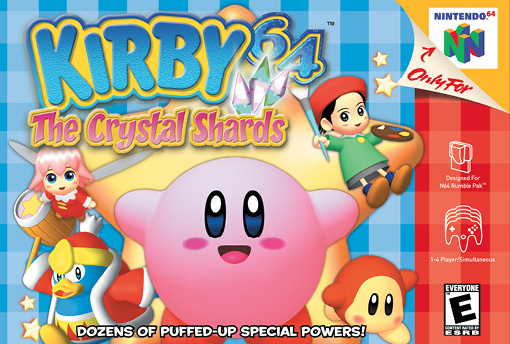
Kirby 64: The Crystal Shards
2000, Nintendo 64
After making his Nintendo 64 debut in Super Smash Bros., Kirby got his own 64-bit title. Unlike Super Mario 64, Kirby 64: The Crystal Shards maintained the series’ 2D roots, albeit with 3D graphics. Of particular note, Kirby 64 introduced the mechanic of combining Copy Abilities to create new ones. For example, combining the Stone and Burning abilities generates the Volcano ability.
Kirby 64 also replaced Kirby’s signature victory dance with the character turning to the camera, waving, and saying hello.
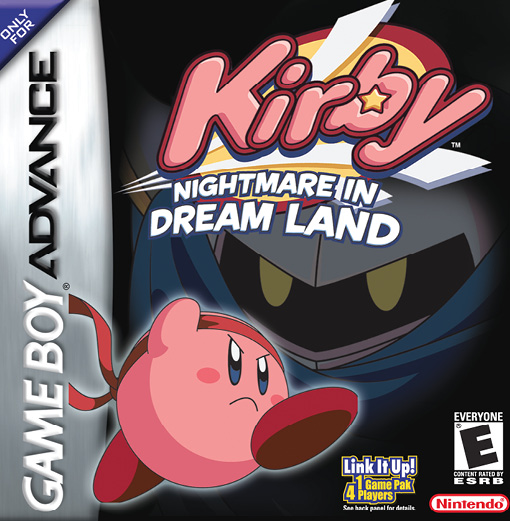
Kirby: Nightmare in Dream Land
2002, Game Boy Advance
Kirby: Nightmare in Dream Land was a portable remake of Kirby’s Adventure. Key changes included a reduction in overall difficulty, four-player support, and hats for most Copy Abilities, which the original did not feature, as it was released prior to Kirby Super Star.
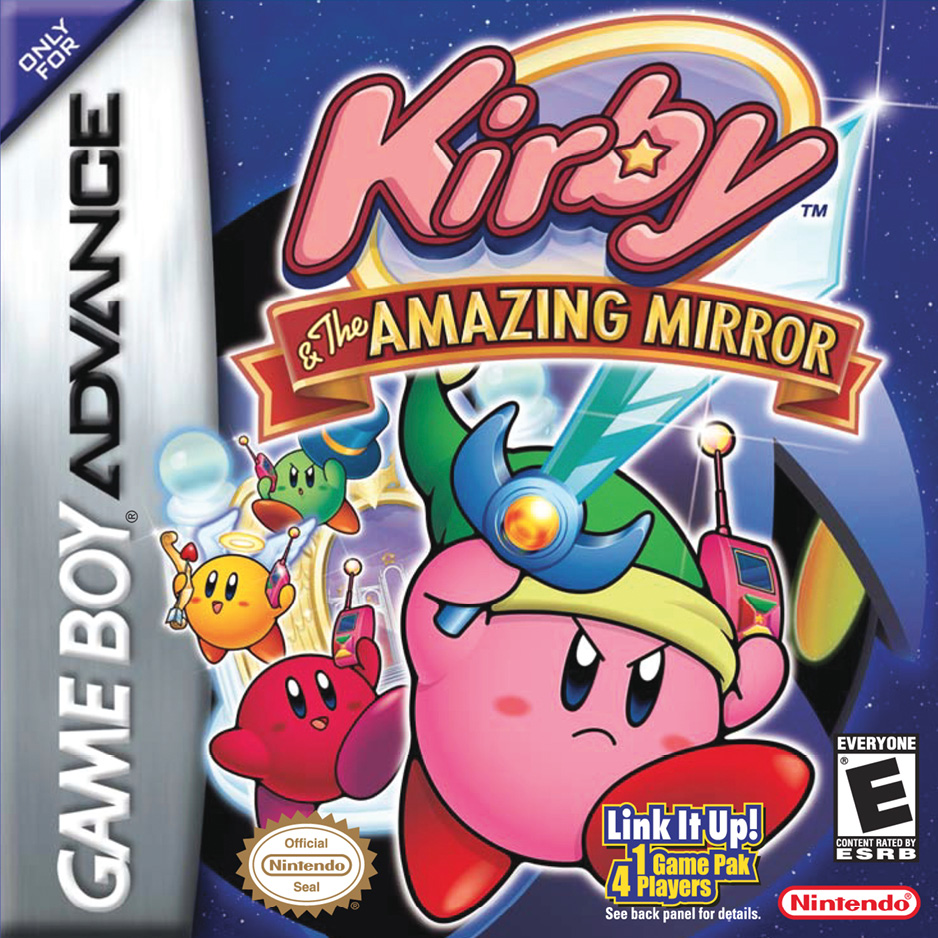
Kirby & the Amazing Mirror
2004, Game Boy Advance
Kirby’s final appearance on the Game Boy Advance, Kirby & the Amazing Mirror, greatly expanded upon Nightmare in Dream Land’s multiplayer support, allowing the player to call up to three other player- or CPU-controlled Kirbys to his aid with an in-game cell phone (Kirby’s so stylish!). Certain portions of the game required multiple Kirbys to work together in a manner similar to The Legend of Zelda: Four Swords. While the gameplay was otherwise classic Kirby, the layouts of the stages were open-ended, as originally seen in the Great Cave Offensive. The Amazing Mirror added a few new Copy Abilities, including Cupid, Missile, and Smash, the last of which allows Kirby to play more like his Super Smash Bros. counterpart. Super Smash Bros.’s disembodied gloved bosses, Master Hand and Crazy Hand, make a rare cameo appearance as bosses in The Amazing Mirror and the primary source of the Smash Copy Ability.
Kirby & the Amazing Mirror marked series creator Masahiro Sakurai’s last contribution to the Kirby franchise (as Special Advisor).
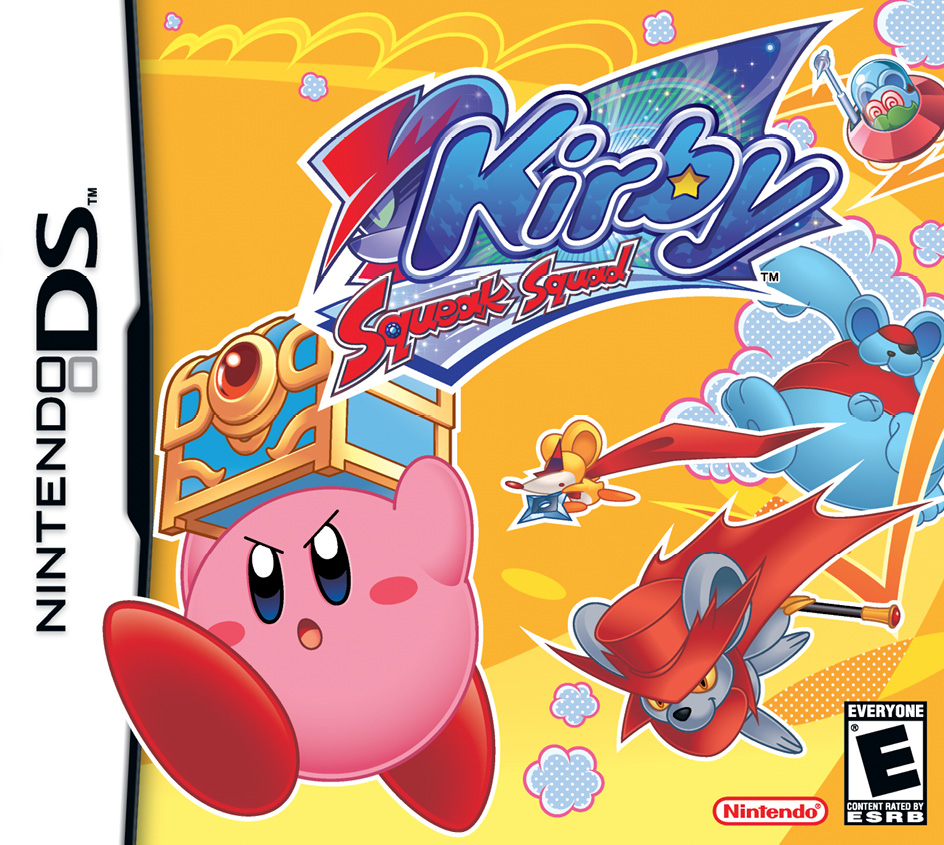
Kirby: Squeak Squad
2006, Nintendo DS
Known as Kirby Mouse Attack in PAL territories, Kirby: Squeak Squad pits Kirby against a band of treasure-stealing mice known as Squeaks. Kirby: Squeak Squad put an emphasis on environment interaction, such as burning away obstacles or freezing a body of water to use for traversal. New Copy Abilities included Animal—one of the original ability concepts scrapped for Kirby’s Adventure—along with Bubble, Ghost, and Metal. Using a system similar to the Deluxe Copy Abilities from Kirby Super Star’s Milky Way Wishes game, Kirby can store abilities and access them at any time in the Copy Palette. Abilities in the Copy Palette can be combined via “Mix,” a mechanic similar to that seen in Kirby 64.
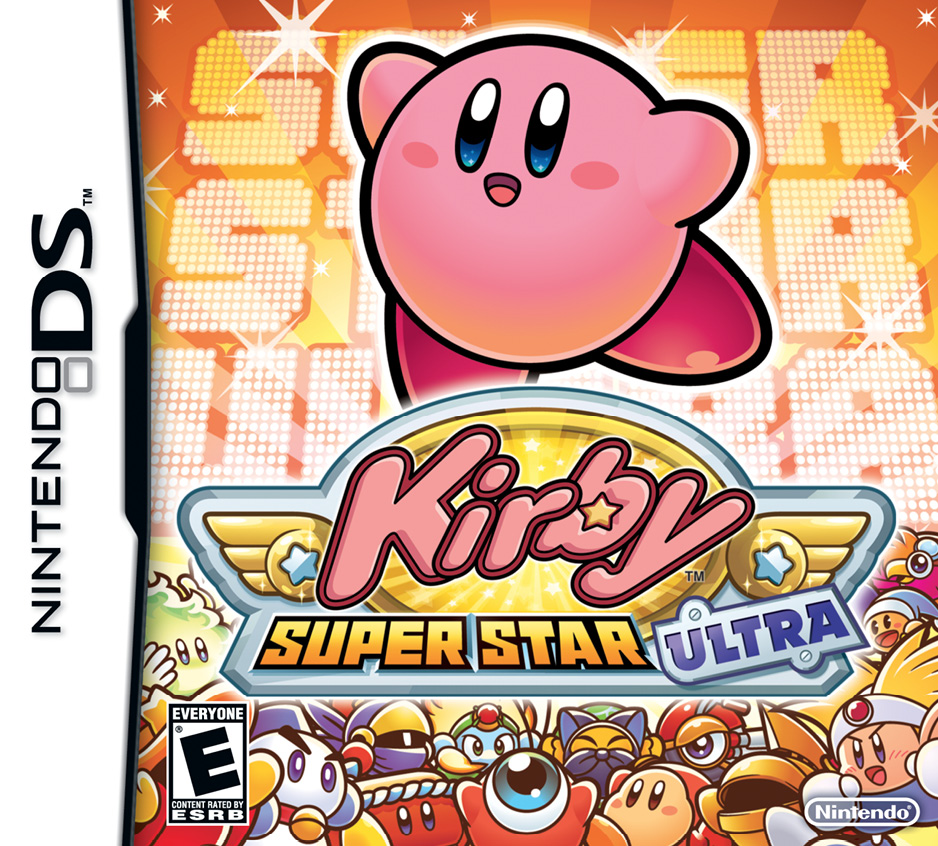
Kirby Super Star Ultra
2008, Nintendo DS
Twelve years after its release, Kirby Super Star was remade for the Nintendo DS. Kirby Super Star Ultra features all of the original game’s content, but with added functionality, such as the ability to play certain mini-games like Gourmet Race with two players.
Several new games were added, essentially doubling the already robust compilation’s content: Meta Knightmare Ultra replaces Kirby with Meta Knight as the playable character in games like Spring Breeze, Dyna Blade, the Great Cave Offensive, Milky Way Wishes, and even Revenge of Meta Knight! Helper to Hero allows the player to play as any Helper in the game in a boss rush Endurance Mode. Revenge of the King is an enhanced version of Spring Breeze, which itself was an enhanced version of Kirby’s Dream Land.
Other enhancements include improved visuals, CG cinematics for each game, new mini-games, and even a blooper reel that is unlocked by completing the new True Arena game.
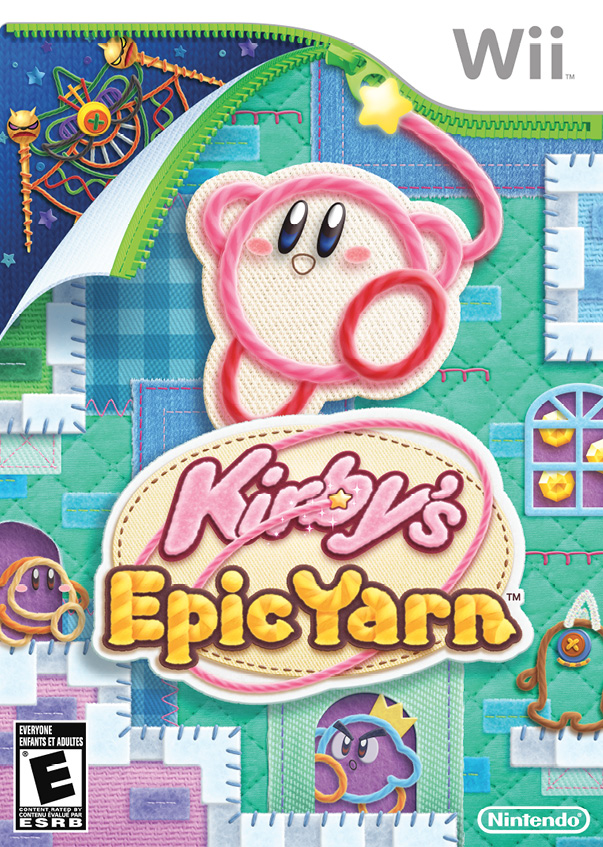
Kirby’s Epic Yarn
2010, Wii
Kirby’s Epic Yarn takes its unique visual cues from a Japanese commercial for Kirby’s Adventure from over a decade and a half prior. Following the arts-and-crafts approach seen in other titles like Kirby’s Dream Land 3 and Kirby Canvas Curse, characters and environments in Kirby’s Epic Yarn are composed of beads, buttons, patchwork materials, and, of course, copious amounts of yarn. This extends to Kirby himself, cursed by a magic sorcerer, whose stringy yarn-like body can no longer inhale anything. This causes a drastic shift in the usual Kirby platforming routine, as Kirby must instead manipulate the world by pulling at threads and zippers or transforming himself.
The thematic mechanics, imaginative visual style, and easy-going yet rewarding gameplay have made Kirby’s Epic Yarn one of the more memorable and beloved entries in the entire franchise.
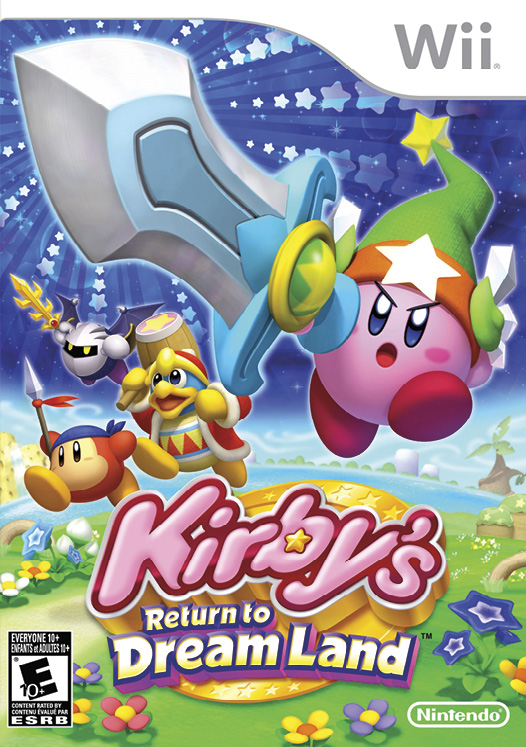
Kirby’s Return to Dream Land
2011, Wii
The enemies in Dream Land must be particularly tasty, as Kirby can’t seem to get enough of this place! Kirby’s first outing for the Wii provides the most visually stunning 3D rendition of Dream Land yet seen, while retaining the colorful and cartoony art style from classic titles.
A handful of Copy Abilities received powerful “Super Ability” versions, such as Ultra Sword. Up to three other players can join the adventure at any time, and players can select among Meta Knight, King Dedede, Bandana Waddle Dee (who debuted in Kirby Super Star’s Megaton Punch mini-game), and different-colored Kirbys. The Kirbys are the only characters that can use Copy Abilities, while the other playable characters have their own movesets.
Kirby’s Return to Dream Land—or some variation of—was in development for roughly 11 years. During that time the development team attempted to create three different Kirby games, starting with a four-player 3D title for the GameCube. This game was shown off publicly at the Electronic Entertainment Expo before being quietly canceled. The second title would have been a free-roaming 3D adventure game similar to Super Mario 64—a first for the Kirby franchise. Producer Shigefumi Kawase explained that the game never achieved the standard of quality they were aiming for, and so it too was scrapped. The third game was a more traditional 2D platformer with a visual style modeled after a pop-up book.
Eventually, Kirby’s Return to Dream Land incorporated elements of all three canceled games. Critical reception was positive and the game sold over 1.5M copies worldwide.
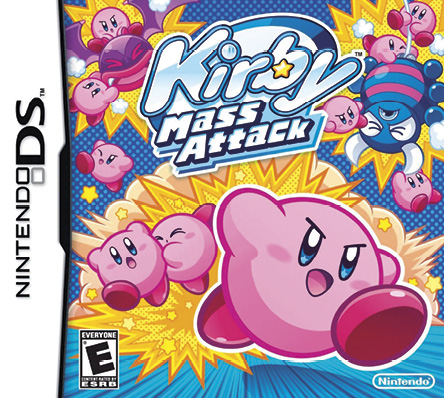
Kirby Mass Attack
2011, Nintendo DS
What’s better than one Kirby? How about 10! In Kirby Mass Attack, up to 10 Kirbys can be controlled by the player at once, using the DS’s stylus and touchscreen. The gaggle of Kirbys follow the “heroic heart” around the screen, navigating obstacles and attacking enemies in a Pikmin-like mob. Because there is rarely room for all 10 Kirbys to stand apart, they often adorably crawl and stand on top of each other.
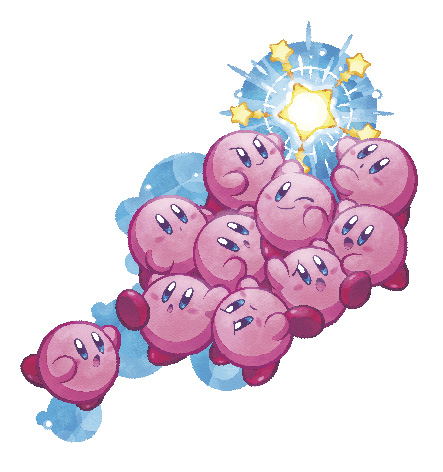
Kirbys can be damaged and eventually even die, floating away as little Kirby angels. However, eating fruit sends in reinforcements until the full complement of Kirbys is reached.

Kirby’s Dream Collection: Special Edition
2012, Wii
Kirby’s Dream Collection was a compilation game commemorating the character’s twentieth anniversary. Kudos to Kirby for eating anything he wants and still looking as good as he did 20 years prior!
The six classic titles included on the special-edition disc are Kirby’s Adventure, Kirby Super Star, Kirby 64: The Crystal Shards, and Kirby’s Dream Land 1, 2, and 3, alongside a few new Challenge mini-games. The Kirby’s History Mode provides a retrospective on the entire series, as do the soundtrack CD and 48-page book included in the package, revealing many previously undisclosed tidbits and concept art from Kirby’s past.
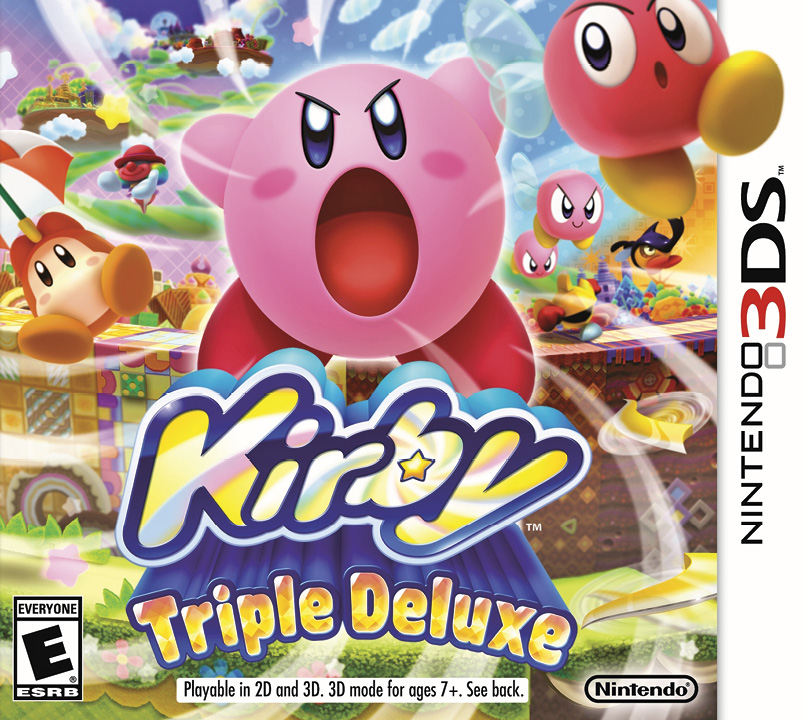
Kirby: Triple Deluxe
2014, Nintendo 3DS
Kirby: Triple Deluxe starts where Milky Way Wishes from Kirby Super Star ends. Another 2.5D platformer, Kirby: Triple Deluxe utilizes the 3DS’s unique visual capabilities by allowing Kirby to switch between 2D paths in the background and foreground via a 3D Warp Star. Upon completion, the entire game can be replayed as King Dedede.
Two mini-games from Kirby: Triple Deluxe were released as standalone downloadable titles for the Nintendo eShop: Dedede’s Drum Dash Deluxe and Kirby Fighters Deluxe.
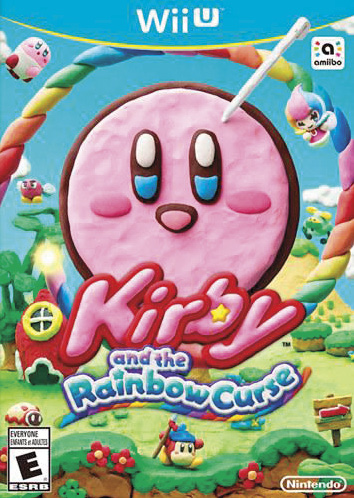
Kirby and the Rainbow Curse
2015, Wii U
Kirby and the Rainbow Curse combines solid four-player gameplay, a clay-inspired motif, and the rainbow rope mechanic seen in its predecessor, Kirby: Canvas Curse. This is one of a limited few Kirby games not to feature Copy Abilities, though Kirby and his companion Waddle Dee can use their paintbrushes or transformations in combat.
The game was known as Kirby and the Rainbow Paintbrush in PAL regions.
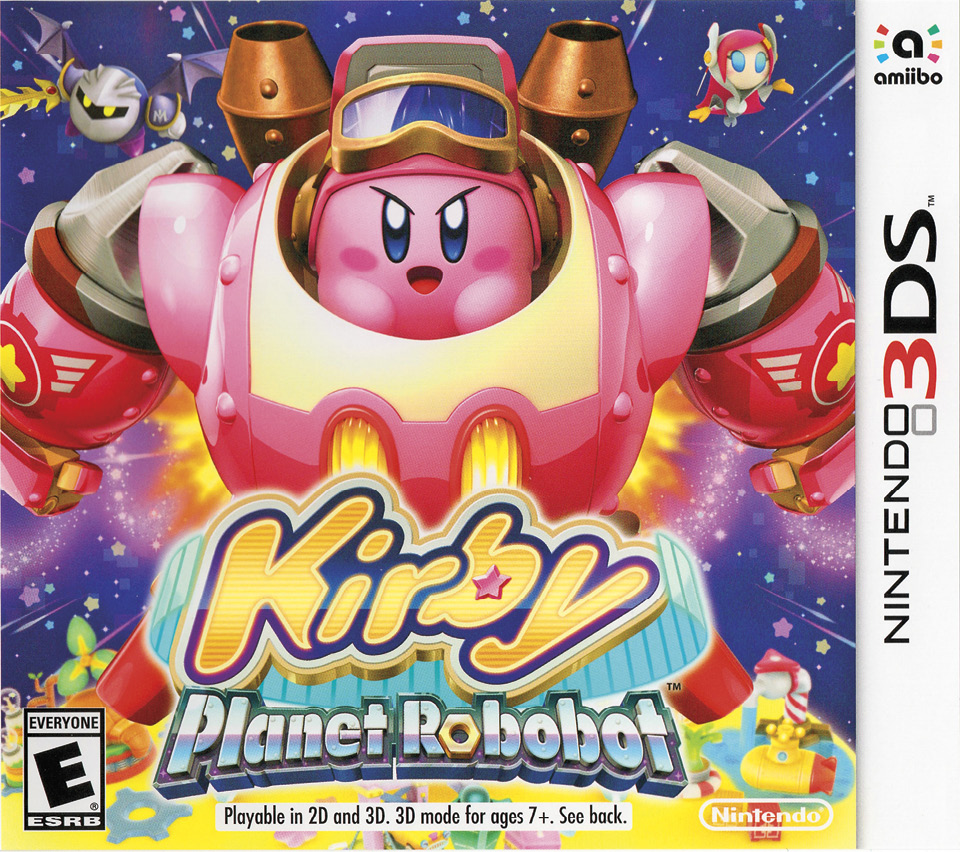
Kirby: Planet Robobot
2016, Nintendo 3DS
Kirby: Planet Robobot is largely similar to Kirby: Triple Deluxe, albeit with the introduction of a controllable mech called Robobot Armor. The Robobot Armor can change “Modes” by absorbing Copy Abilities from enemies, giving it a variety of new appearances and powers.
Certain unlockables are available primarily via Kirby-themed amiibo, such as the Smash Bros. and UFO Copy Abilities, as well as alternate appearances for the Hammer, Sword, and Parasol abilities.
As with Kirby: Triple Deluxe, two mini-games from Kirby: Planet Robobot were also released as standalone downloadable titles: Team Kirby Clash Deluxe and Kirby’s Blowout Blast.