
Playing With Super Power: Nintendo Super NES Classics Guide F-Zero
Legacy
F-Zero was a breakout success on its own, but even long after its release its impact can still be felt in modern racing games. At the time, F-Zero inspired the creation of everything from Daytona USA to Psygnosis’ Wipeout series, the latter helping to further blossom the futuristic racing subgenre. Similar games have had their ups and downs throughout the years (anti-gravity pun intended), but F-Zero itself has been dormant for over a decade.
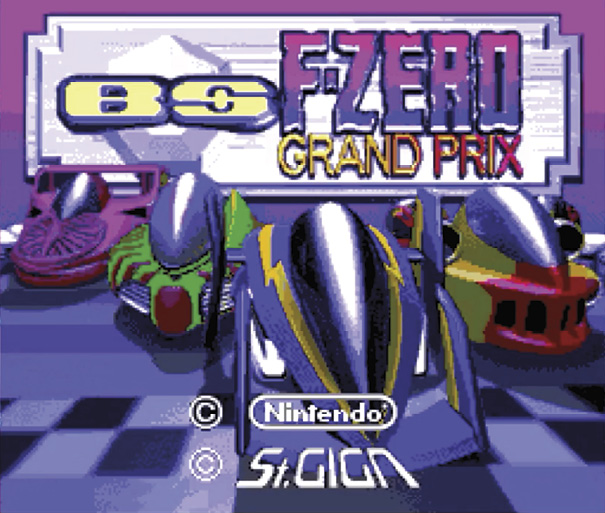
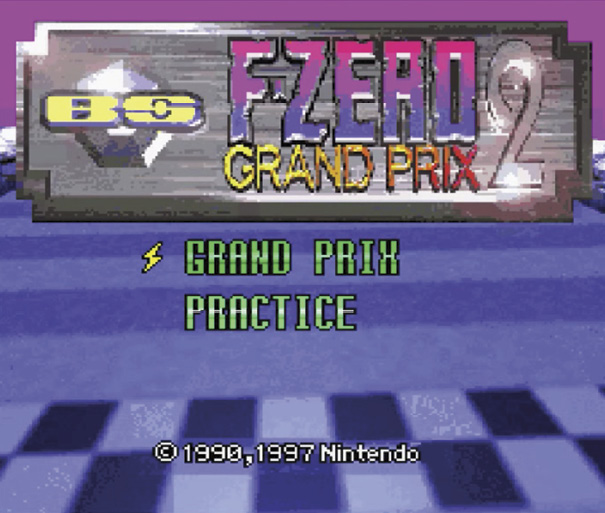
BS F-Zero Grand Prix, BS F-Zero Grand Prix 2
1996/1997, Satellaview
Japan received two extensions to the original F-Zero via the Super Famicom’s Satellaview add-on. For the first Grand Prix title, players could download four new pilots/machines and four new tracks during set broadcast times. A year later, the BS F-Zero Grand Prix 2 event offered a few new tracks including Metal Fort I/II, Forest I/II/III, and Mute City IV.
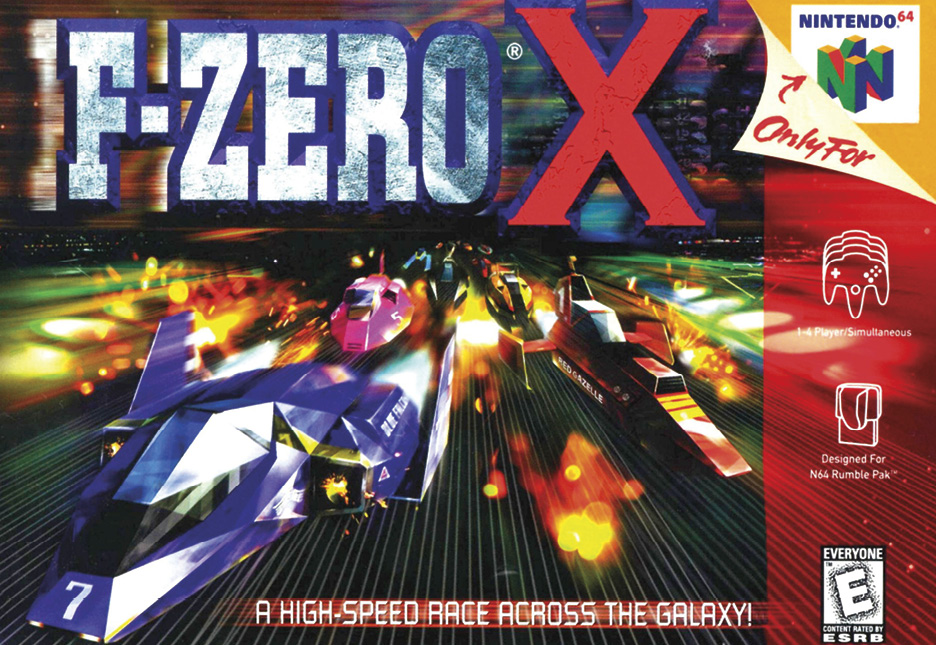
F-Zero X
1998, Nintendo 64
Developed once again by Nintendo EAD, F-Zero X (originally titled F-Zero 64), ushered high-speed futuristic racing into three dimensions. The game was faster, the tracks were crazier, and the music was heavy metal…er. F-Zero X introduced Death Race, a mode where players must try to defeat 29 other racers by spinning or ramming into them as quickly as possible.
F-Zero X featured over two dozen pilots and machines, new and returning tracks including an appearance by Super Mario Kart’s Rainbow Road (yes, really!), and the X-Cup, which randomly generated new tracks with each playthrough.
In April 2000, the F-Zero X Expansion Kit was released in Japan as the first-ever add-on disk for the Nintendo 64 Disk Drive. It added 12 new tracks, a car editor, and a robust track editor.
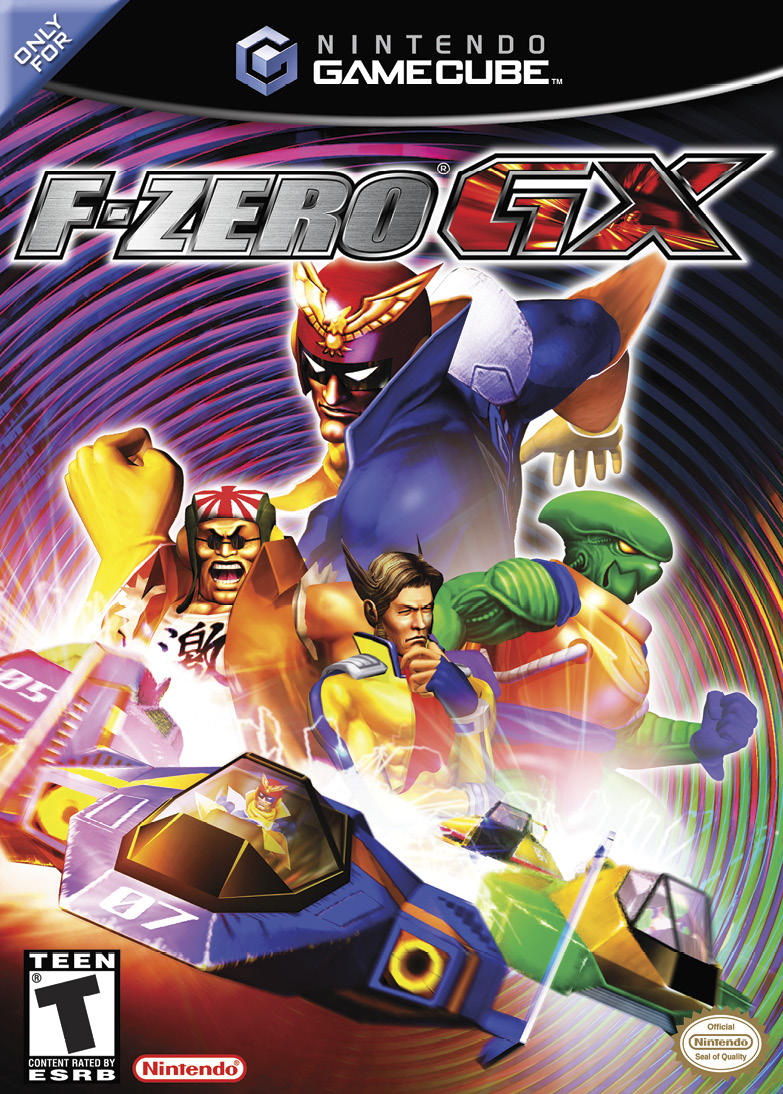
F-Zero GX, F-Zero AX
2003, Nintendo GameCube / Arcade
A decade after the original game inspired the creation of Daytona USA, Nintendo released F-Zero GX for the Nintendo GameCube and its arcade counterpart, F-Zero AX. They were co-developed by none other than Amusement Vision, a subsidiary of Sega, led by Toshihiro Nagoshi, the designer of the original Daytona USA. Amusement Vision had previously collaborated with Nintendo on two Super Monkey Ball titles for GameCube.
F-Zero GX introduced a Story Mode with special missions and some of the most insanely wacky CG endings ever made.
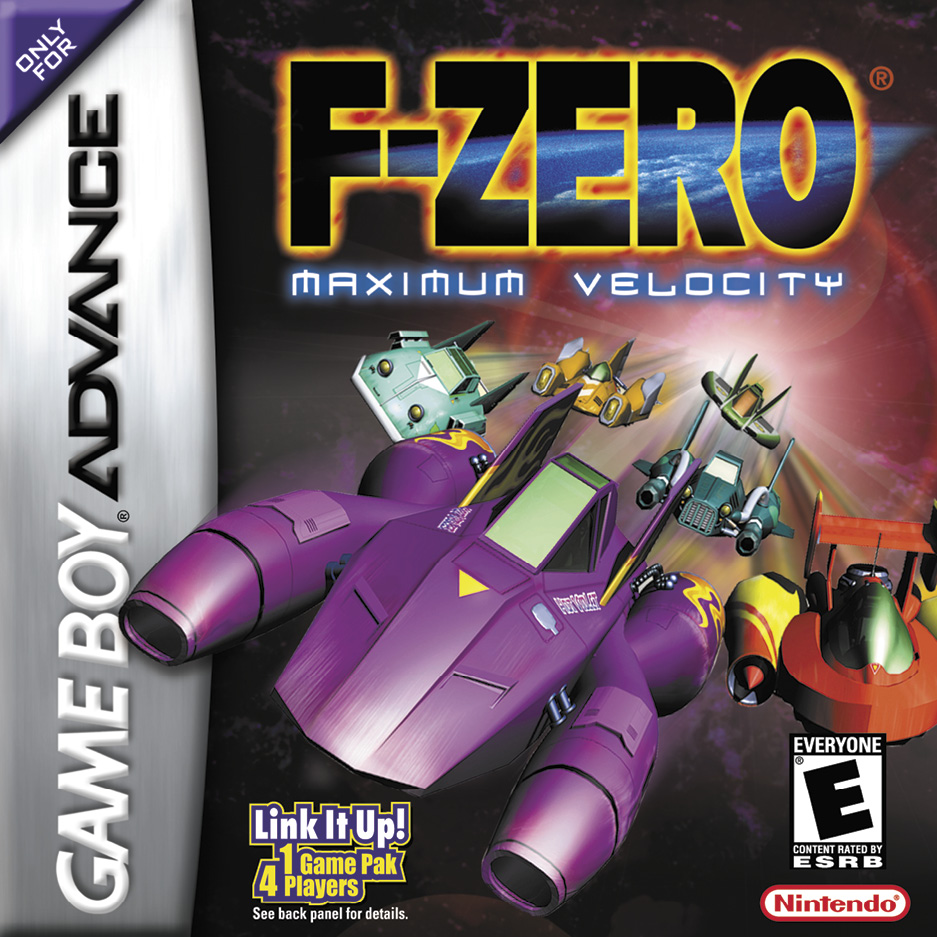
F-Zero Maximum Velocity
2001, Game Boy Advance
F-Zero Maximum Velocity was a launch title for the Game Boy Advance and returned the series to non-3D roots, closely resembling the original F-Zero. It is the only F-Zero title to not feature Captain Falcon, Dr. Stewart, Pico, and Samurai Goroh. Two to four players could play the game with a link cable.
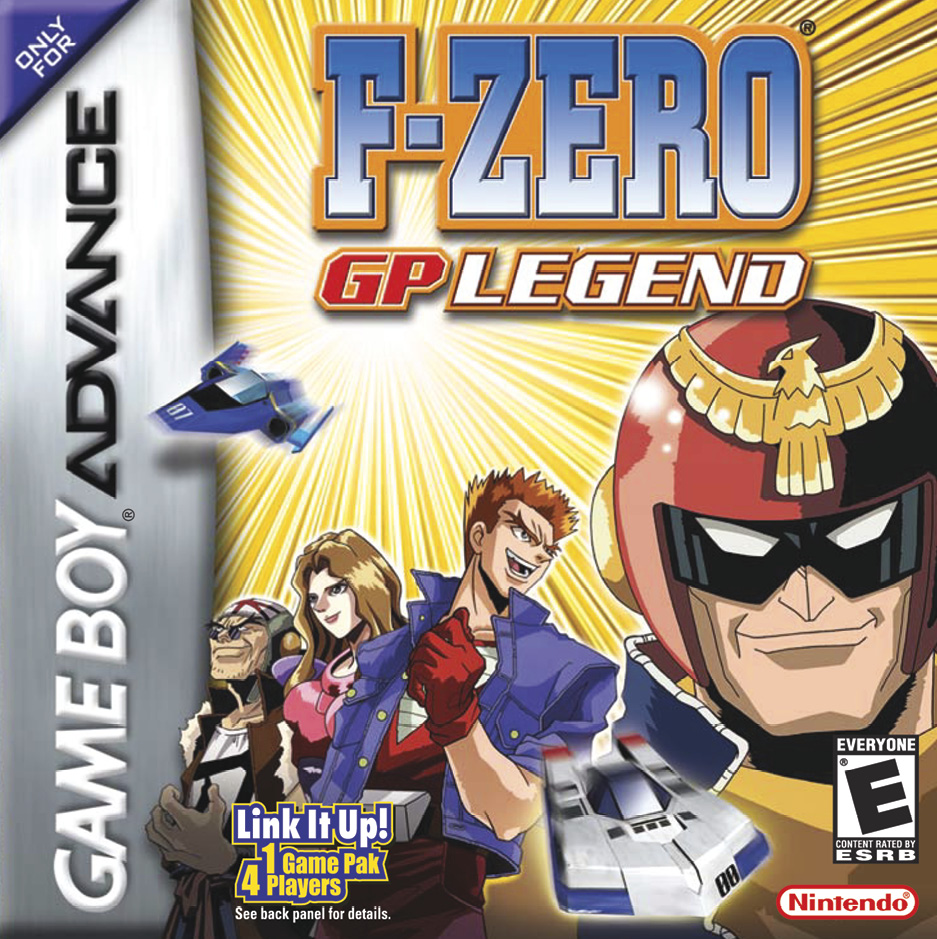
F-Zero GP Legend
2003, Game Boy Advance
Tying in to the anime of the same name, F-Zero GP Legend rebooted the plot of the series. Eight of the game’s 30+ pilots could be used in Story Mode. Rounding out the game options were Grand Prix, Training, Link (multiplayer), and Zero Test, a series of challenges that awarded players bronze, silver, or gold medals based on their performance. This was the last F-Zero game released in the West.
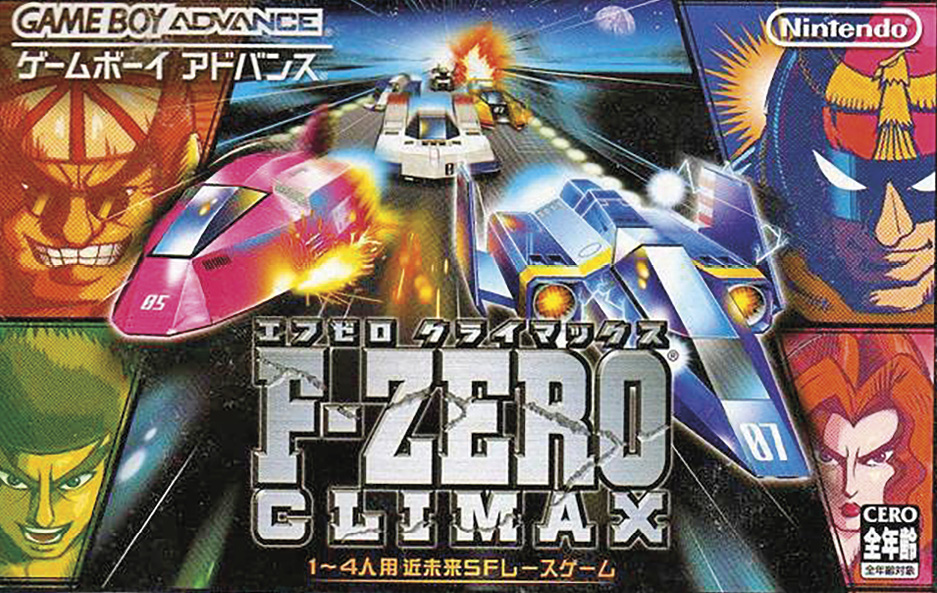
F-Zero Climax
2004, Game Boy Advance
Another Japan-only release and the final F-Zero game to date, the fittingly named F-Zero Climax ended the series with an astonishing 50+ tracks spread across the game’s various modes. The Game Boy Advance’s visual capabilities were largely comparable to the Super NES’s, complete with Mode 7 scaling and rotation—meaning that after more than a decade of sequels, the last F-Zero title was most reminiscent of the first.