
Playing With Super Power: Nintendo Super NES Classics Guide Realizing the 16-Bit Dream
Accessories
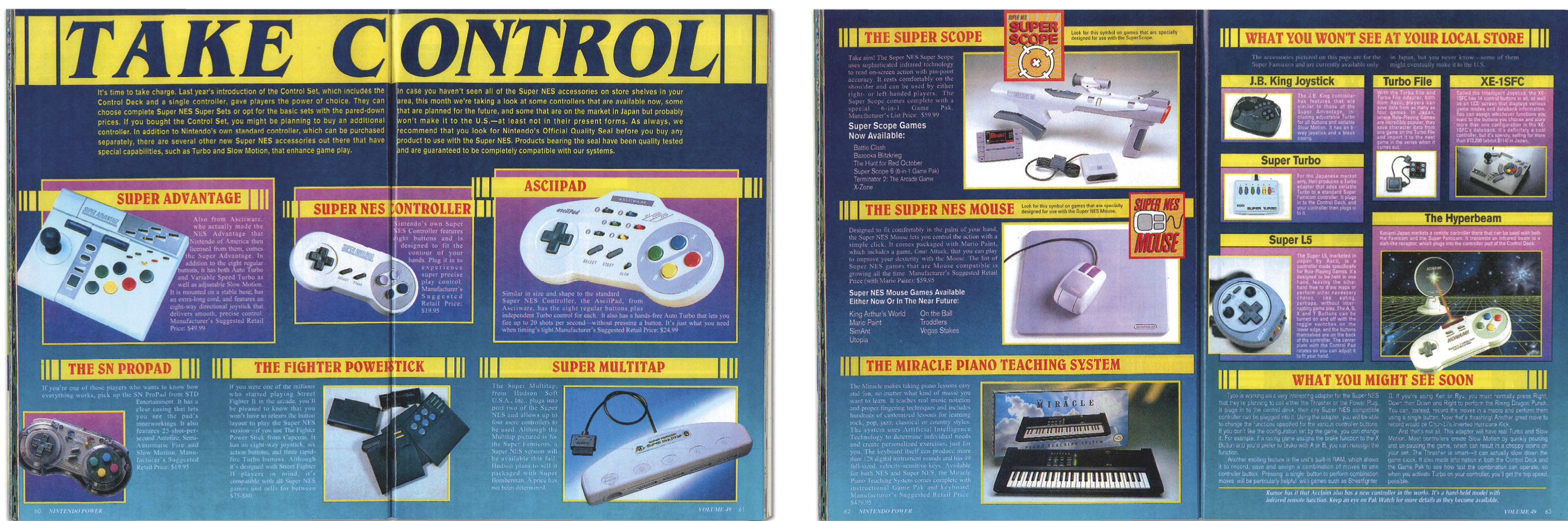
Although the Super NES didn’t get a robot companion or Power Glove, it did receive its fair share of first- and third-party accessories. Some of the standouts included a golf club, baseball bat, and exercise bike!
Controller
The standard Super NES controller introduced a number of innovations that have since become industry standard. Shoulder buttons labeled “L” and “R” were placed at the top of the controller, which, combined with two new buttons on the face of the controller, tripled the available inputs over the NES. This allowed for drastically more complex gameplay mechanics to be introduced during the 16-bit era and is generally used as the default button layout for most modern controllers.
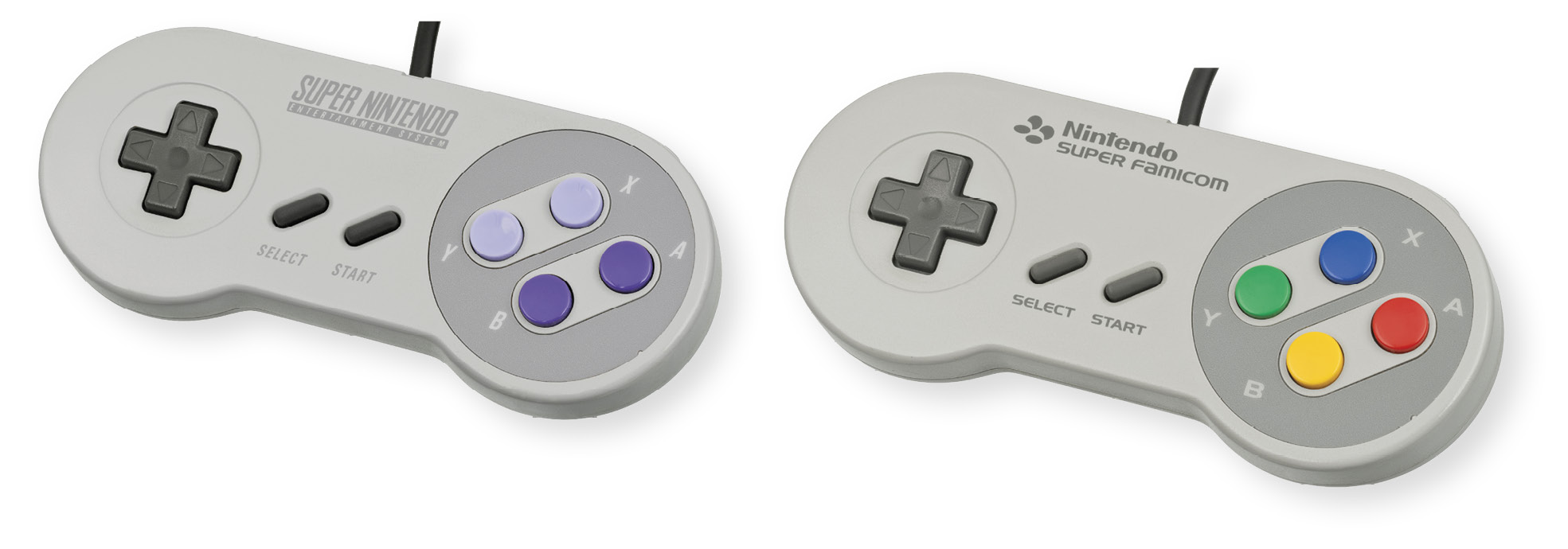
The Super NES controller was designed to be more ergonomic than its rectangular predecessor, and the dog bone-style design proved so popular it was retroactively applied to controllers accompanying the lower-priced NES-101. Lance Barr added an important feature. Unlike the Super Famicom controller, the X and Y buttons on the Super NES controller were made concave, to help players quickly differentiate them from the rounded A and B buttons.
Super NES Mouse (1992)
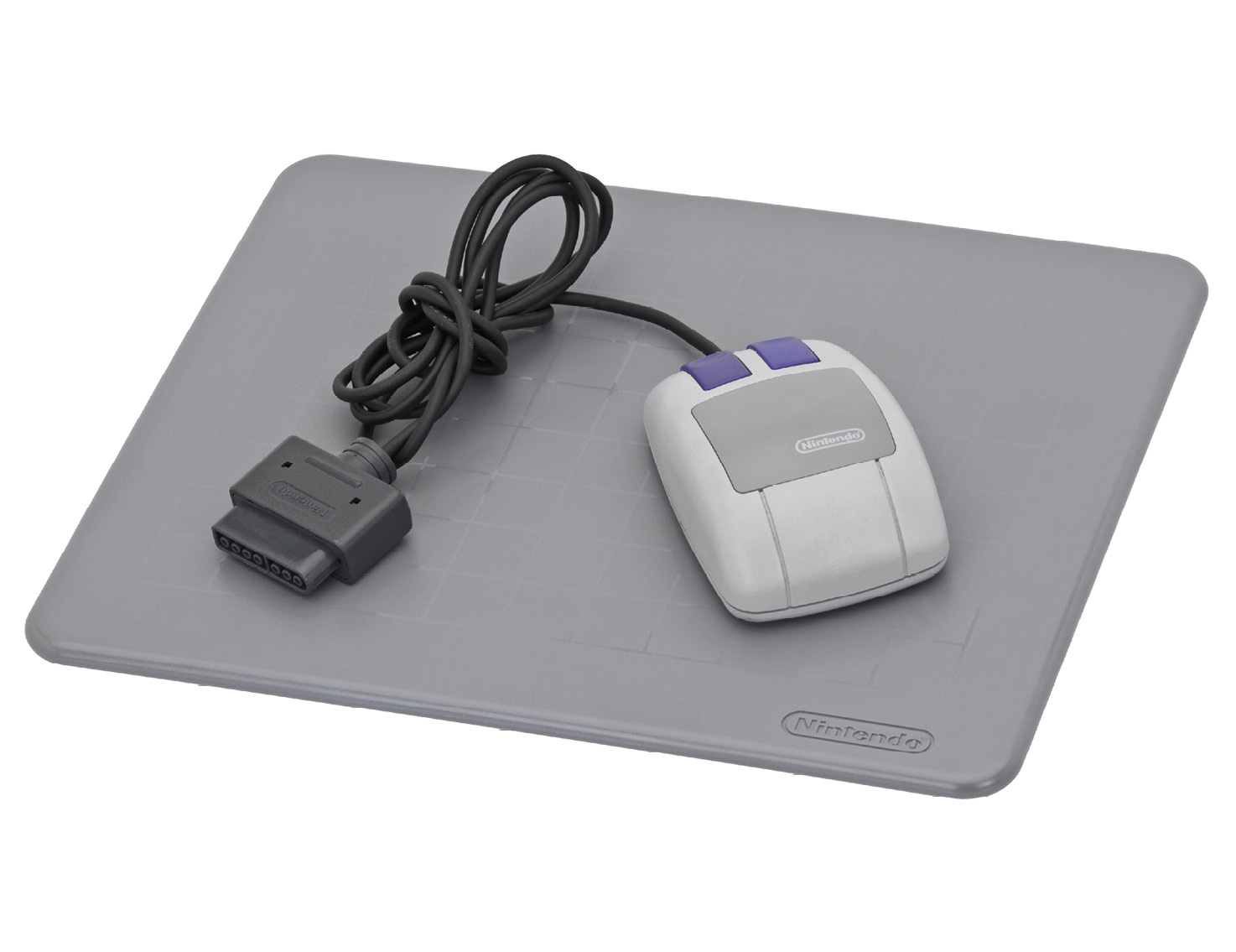
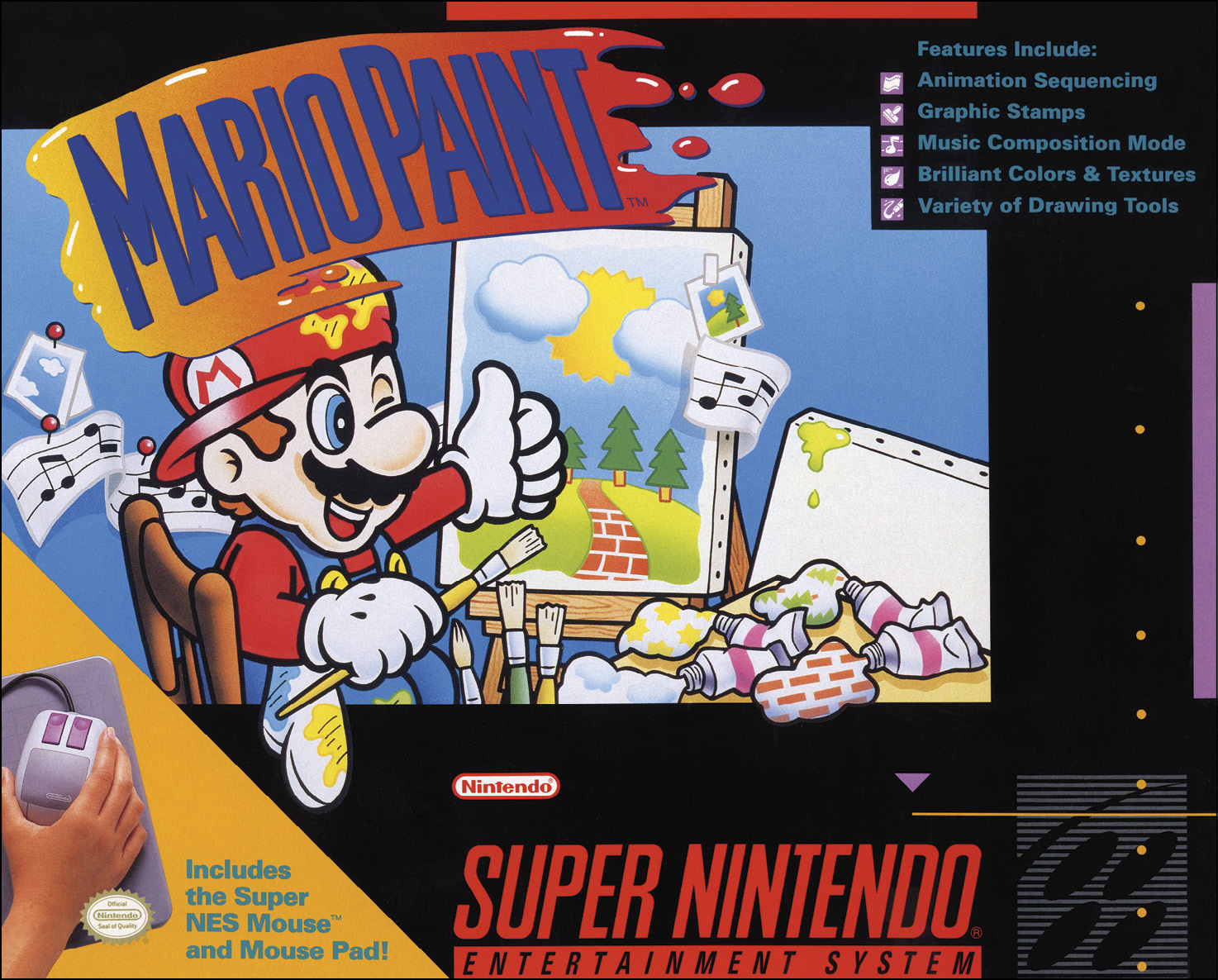
The Super NES Mouse and mouse pad came bundled with Mario Paint. Mario Paint featured a collection of creativity applications such as painting, swatting flies, and animating small scenes, all of which required the mouse to play.
Mario Paint has maintained cult status throughout the years as devout artists attempt to recreate pop culture theme songs in the game’s relatively rudimentary music composer.
Super Scope (1992)
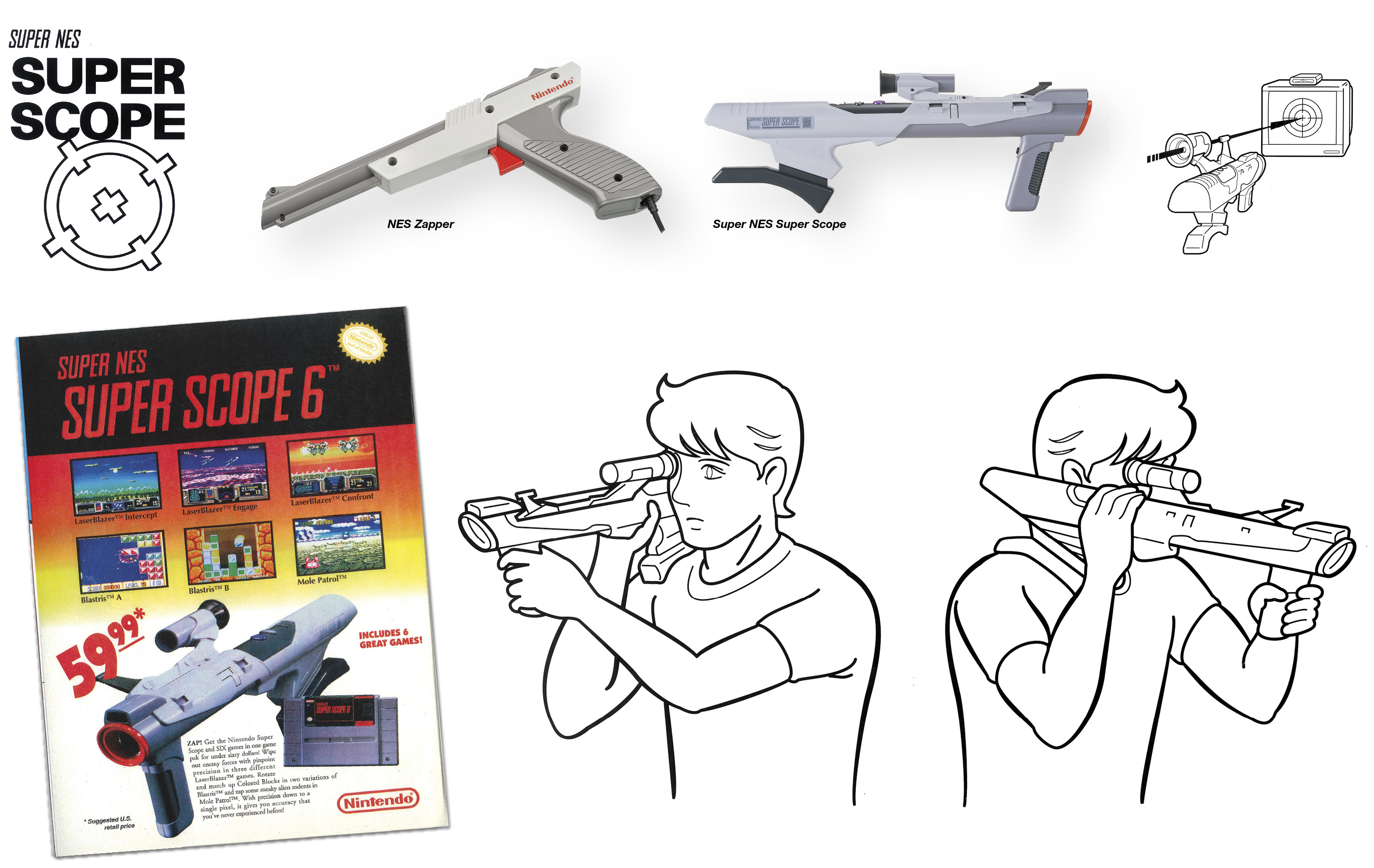
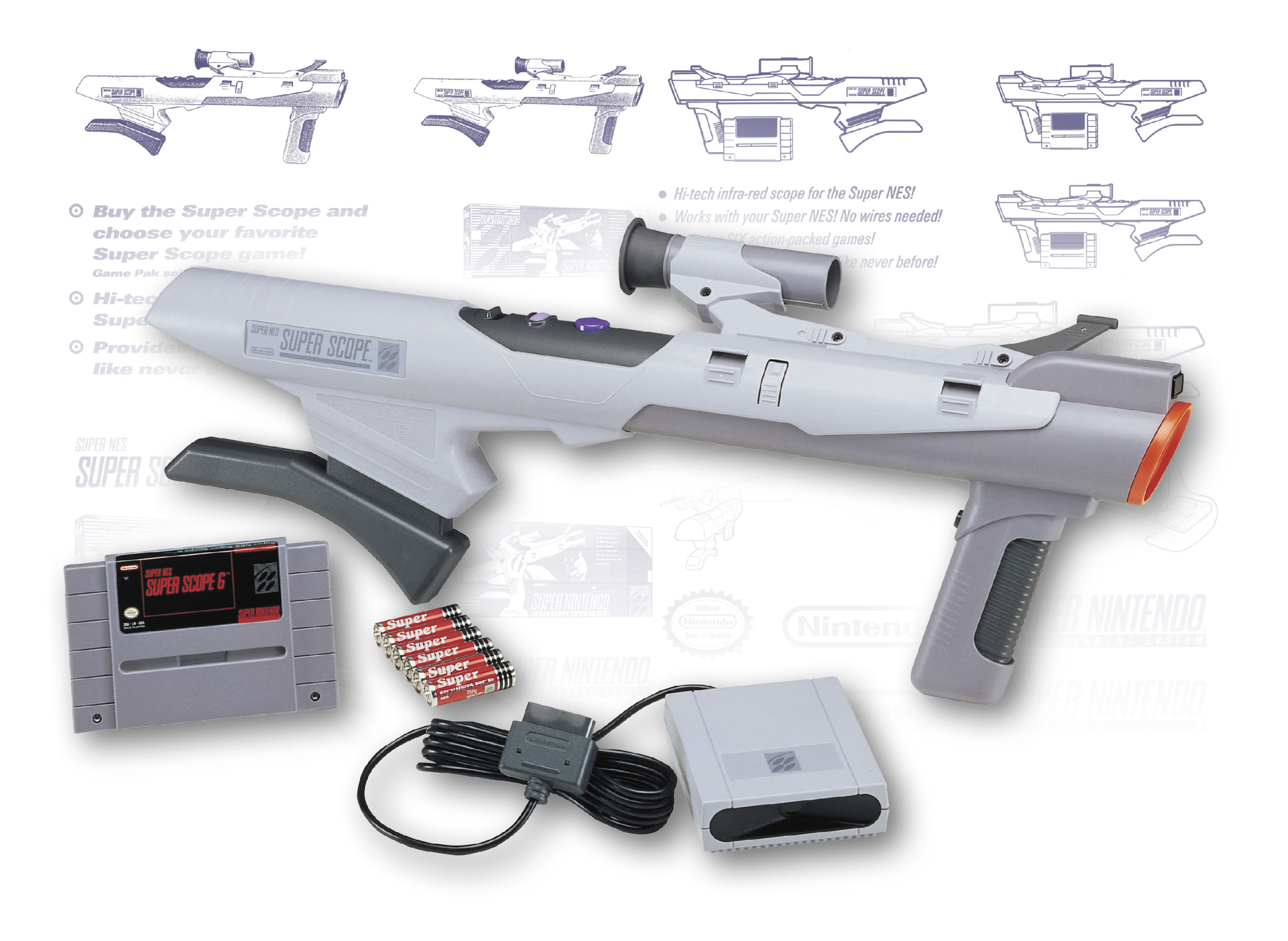
Not to be outdone by the NES Zapper popularized by Duck Hunt, the Super NES’s light gun transmitter was modeled after a bazooka! The Super Scope came bundled with a receiver and the Super Scope 6 compilation that included games like Blastris, Intercept, and Mole Patrol. The peripheral was ultimately compatible with a dozen total games, including Yoshi’s Safari, Battle Clash, and T2: The Arcade Game.
The Super Scope made an appearance in the Super Mario Bros. live-action film as the black-colored “Devo gun” used by King Koopa to devolve his target. More recently, the Super Scope lives on as an item in the Super Smash Bros. series.
Super Game Boy (1994)
The Super Game Boy adapter cartridge enabled Game Boy Game Paks to be played on a Super NES. This was not done through emulation, meaning the Super Game Boy contains the same hardware as an actual Game Boy. In some cases, Game Boy titles were enhanced through the Super NES hardware, providing improved sound or even multiplayer functionality.
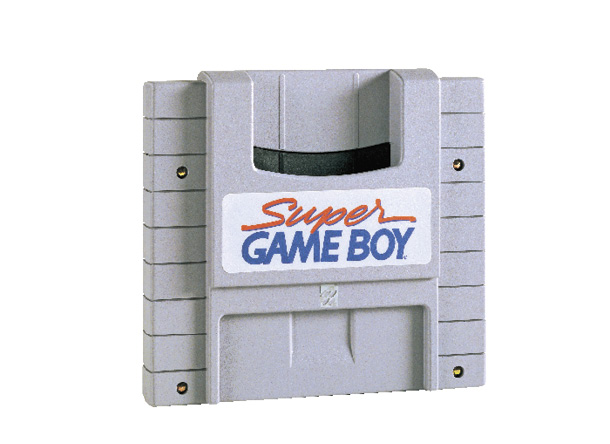
A Super Game Boy 2 was released in Japan in 1998 with several minor improvements, and rectified an issue with the original that caused games to be played 2.4% faster than their intended speed.
Satellaview (1995)
One of the coolest Super Famicom-only add-ons was the Satellaview modem system. A subscription-based service allowed players to download live content created specifically for the Satellaview. The Satellaview system received signals via radio waves from a satellite TV station through BS (broadcast satellite) tuners, which could be rented or were automatically provided as part of the satellite radio subscription service.
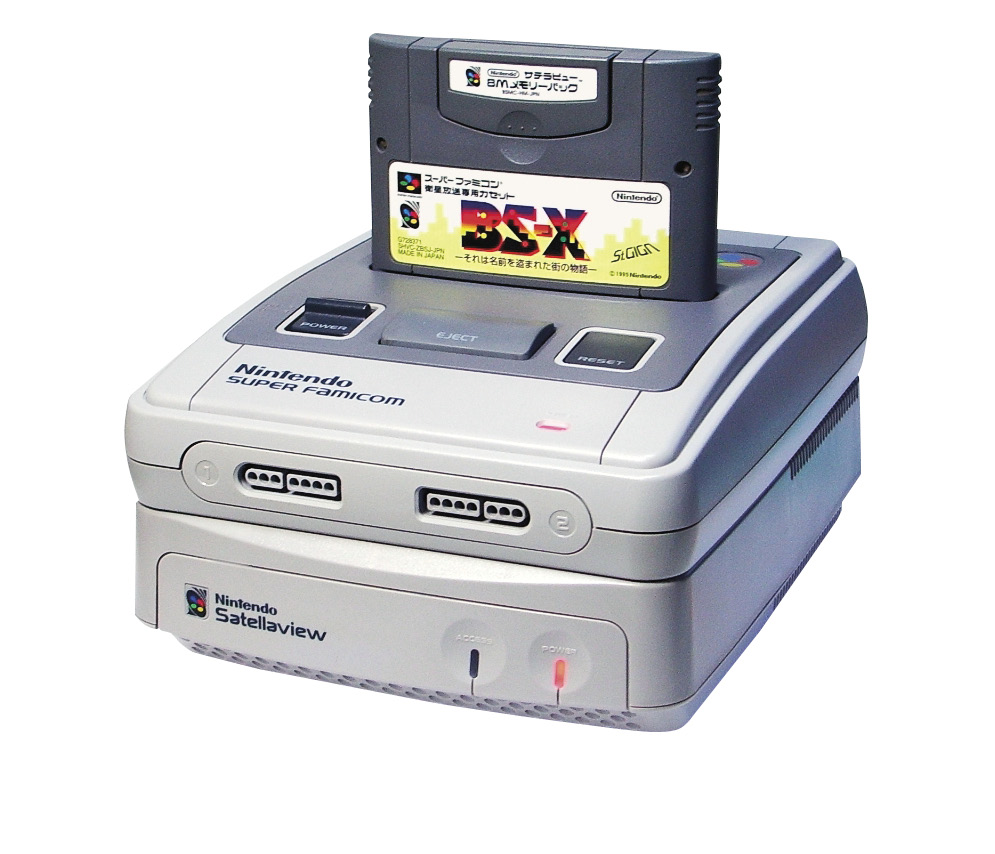
While modern gamers are used to having ubiquitous Internet at their fingertips, the services and experiences provided by the Satellaview were cutting-edge for a Japanese home console. Nintendo had previously released a similar add-on, the Family Computer Network System, for the Famicom in 1988. Lessons learned with the “Famicom Modem” were implemented in the development of its successor, the Satellaview.
The hardware came bundled with a Game Pak whose Japanese title translates to BS-X: The Story of the Town
Whose Name Was Stolen. This provided a game-like interface in which players controlled a male or female avatar who could explore a virtual town. Locations in the town corresponded to downloadable content from the Satellaview broadcasts.
Regularly scheduled programming known as The Super Famicom Hour included gaming-related radio broadcasts, digital magazines, downloadable Satellaview-exclusive expansions to F-Zero, enhanced 16-bit ports of TheLegend of Zelda, and the mega-Kirby compilation title, Kirby’s Toy Box.
Due to the way in which they could be obtained and the fact that downloading new content would overwrite existing downloads, many Satellaview games are extremely rare and have unfortunately never been released outside of Japan. The final broadcast was on June 30, 2000.
Nintendo Power Carts (1997)
Another unique game distribution service limited to Japan was public kiosks that allowed players to download Super Famicom and Game Boy games onto specialized Nintendo Power flash cartridges. Game downloads were generally discounted compared to buying the physical retail package, and stores would provide customers with printed versions of instruction manuals. These cartridges used “blocks” to represent available storage space, similar to the blocks of memory featured in future Nintendo systems. The Nintendo Power service ended on February 28, 2007.
Super NES-CD
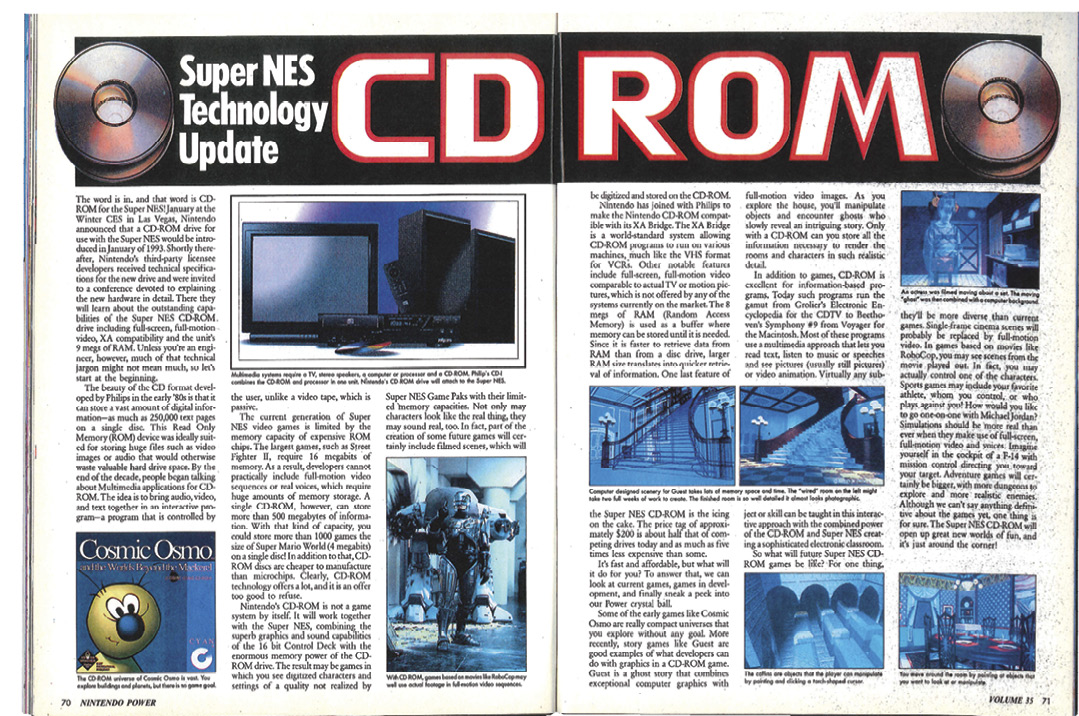
The Super NES-CD (alternatively known as the Super Disc) was a canceled add-on that would have played CD-ROM-based games. Originally developed in a partnership with Sony, who had provided the audio chip for the Super NES, conceptualizing for the 32-bit Super NES-CD started as early as 1988. One of the principal games in development for the system was Square’s Secret of Mana, which was eventually modulated to fit in a Super NES Game Pak instead.