
Prima Games eGuides
primagames.com Browse Redeem a code Help
Playing With Super Power: Nintendo Super NES Classics eGuide
Sign in My Guides

Sign in or create an account

We'll email you a link. No password needed, and if you don't have an account yet, the link makes one.

By creating an account or signing in, you agree to our Terms of Service and Privacy Policy.

Have a password?

Had an account on the old eGuides site, or a code from a printed guide? Help and troubleshooting

Sign in with a password

By signing in, you agree to our Terms of Service and Privacy Policy.

Check your email

A sign-in link is on its way. It works once and expires in 15 minutes. Open it and you're in, with an account if you didn't already have one.

Contents

  • Earthbound
    • Overview
    • Development
    • Characters
    • Say “Fuzzy Localization!”
    • Places of Interest
    • 16 Bits
    • Confidential Information
    • Legacy
    • Earthbound Credits
  • Super Fans
    • Introduction
    • Sam Filstrup
    • Artist Spotlight: Studio Tamago
    • Ben Hickling
    • Sam Santala
    • Artist Spotlight: Orioto
    • Sophie Pearson
    • Nadyasonika
    • Artist Spotlight: Alain “Wuppes” Wildgen
    • Fansite Spotlight: Zelda Universe
    • Xavier Garcia
    • Gonzalo “Genzoman” Ordoñez
    • Music Spotlight: Video Games Live
    • KlausBoss
    • Artist Spotlight: Per Fhager
    • Fansite Spotlight: Metroid Database
    • Artist Spotlight: Dan Cattell
    • Fansite Spotlight: F-Zero Central
    • Zoki64
    • Ted Graves
    • Li Kovacs
    • Music Spotlight: Metroid Metal
    • Artist Spotlight: Josue Martinez
    • Fansite Spotlight: Starmen.Net
    • PrinceOfRedroses
    • Artist Spotlight: Tsurera
    • Fansite Spotlight: StarFox-Online
    • Thiago Almeida
    • Artist Spotlight: Jenni Källberg
    • Efraim Rodríguez
    • Artist Spotlight: Gnomo del Bosque
    • Fansite Spotlight: DK Vine
    • Layze Michelle
    • Matthew Z.
    • Artist Spotlight: Joel Sousa
  • Realizing the 16-Bit Dream
    • Introduction
    • Launch Titles
    • Lifespan
    • Legacy
    • Design
    • Under the Hood
    • Across the Generations
    • Accessories
    • Top 20 Best-Selling Games
    • Nintendo Hardware Museum
  • Super Mario World
    • Overview
    • Development
    • Characters
    • World 1: Yoshi’s Island
    • World 2: Donut Plains
    • World 3: Vanilla Dome
    • World 4: Twin Bridges
    • World 5: Forest of Illusion
    • World 6: Chocolate Island
    • World 7: Valley of Bowser
    • World 8: Star World
    • World 9: Special World
    • 16 Bits
    • Confidential Information
    • Legacy
    • Super Mario World Credits
  • The Legend of Zelda: A Link to the Past
    • Overview
    • Development
    • The Hero of Hyrule
    • Hyrule
    • Franchise Firsts
    • 16 Bits
    • Confidential Information
    • Legacy
    • The Legend Of Zelda: A Link To The Past Credits
  • Super Mario World 2: Yoshi’s Island
    • Overview
    • Development
    • Characters
    • World 1
    • World 2
    • World 4
    • World 5
    • World 6
    • 16 Bits
    • Confidential Information
    • Legacy
    • Super Mario World 2: Yoshi’s Island Credits
  • Kirby’s Dream Course
    • Overview
    • Development
    • Abilities
    • Demo Play
    • Traps & Tricks
    • Courses
    • 16 Bits
    • Confidential Information
    • Legacy
    • Kirby’s Dream Course Credits
  • Donkey Kong Country
    • Overview
    • Development
    • More Than Just a Pretty Ape
    • Soundtrack
    • Characters
    • Animal Buddies
    • Donkey Kong Isle
    • Kongo Jungle
    • Monkey Mines
    • Vine Valley
    • Gorilla Glacier
    • Kremkroc Industries, Inc.
    • Chimp Caverns
    • Gangplank Galleon
    • 16 Bits
    • Confidential Information
    • Legacy
    • Donkey Kong Country Kredits
  • Super Metroid
    • The Metroid Menace
    • Development
    • Samus
    • Zebes
    • Crateria
    • Brinstar
    • Wrecked Ship
    • Maridia
    • Norfair
    • Tourian
    • 16 Bits
    • Confidential Information
    • Legacy
    • Super Metroid Credits
  • Star Fox
    • Overview
    • Development
    • Characters
    • Items
    • Courses Overview
    • 16 Bits
    • Confidential Information
    • Legacy
    • Star Fox Credits
  • Super Mario Kart
    • Overview
    • Development
    • Racers
    • Items
    • Tracks Overview
    • Mario Circuit
    • Ghost Valley
    • Bowser Castle
    • Choco Island
    • Koopa Beach
    • Vanilla Lake
    • Rainbow Road
    • Notable Foes
    • Battle Mode
    • 16 Bits
    • Confidential Information
    • LEGACY
    • Super Mario Kart Credits
  • F-Zero
    • Overview
    • Development
    • Gameplay
    • The Machines and Their Pilots
    • Tracks Overview
    • Mute City I/II/III
    • Big Blue, Sand Ocean, Death Wind I/II
    • Silence
    • Port Town I/II
    • Red Canyon I/II
    • White Land I/II
    • Fire Field
    • 16 Bits
    • Confidential Information
    • Legacy
    • F-Zero Credits
  • Star Fox 2
    • Overview
    • Development
    • Teaching a Young Fox New Tricks
    • Invisible Legacy
    • Characters
    • Locations
    • But Wait, There Was More…
    • Enemy Gallery
    • Star Fox 2 Credits
  • Super Punch-Out
    • Overview
    • Development
    • Minor Circuit
    • Major Circuit
    • World Circuit
    • Special Circuit
    • 16 Bits
    • Confidential Information
    • Legacy
    • Super Punch-Out!! Credits
  • Kirby Super Star
    • Overview
    • Development
    • The History of Twinkle Pop
    • The Evolution of the Inhale
    • Games
    • 16 Bits
    • Confidential Information
    • Legacy
    • Kirby Super Star Credits

Playing With Super Power: Nintendo Super NES Classics Guide › Kirby’s Dream Course

Development

Although Kirby Super Star is one of the most memorable Kirby titles ever made, it wasn’t the vacuum-powered anthropomorphic alien balloon’s SNES debut. That honor belongs to Kirby’s Dream Course, an imaginative and surprisingly sophisticated mini-golf game.

Developed by HAL Laboratory in tandem with EarthBound, Kirby’s Dream Course originated as a Kirby-less game called Special Tee Shot. Special Tee Shot was officially advertised before being retooled as a Kirby title, though the original game did eventually see release several years later exclusively via the Super Famicom’s Satellaview broadcast service.
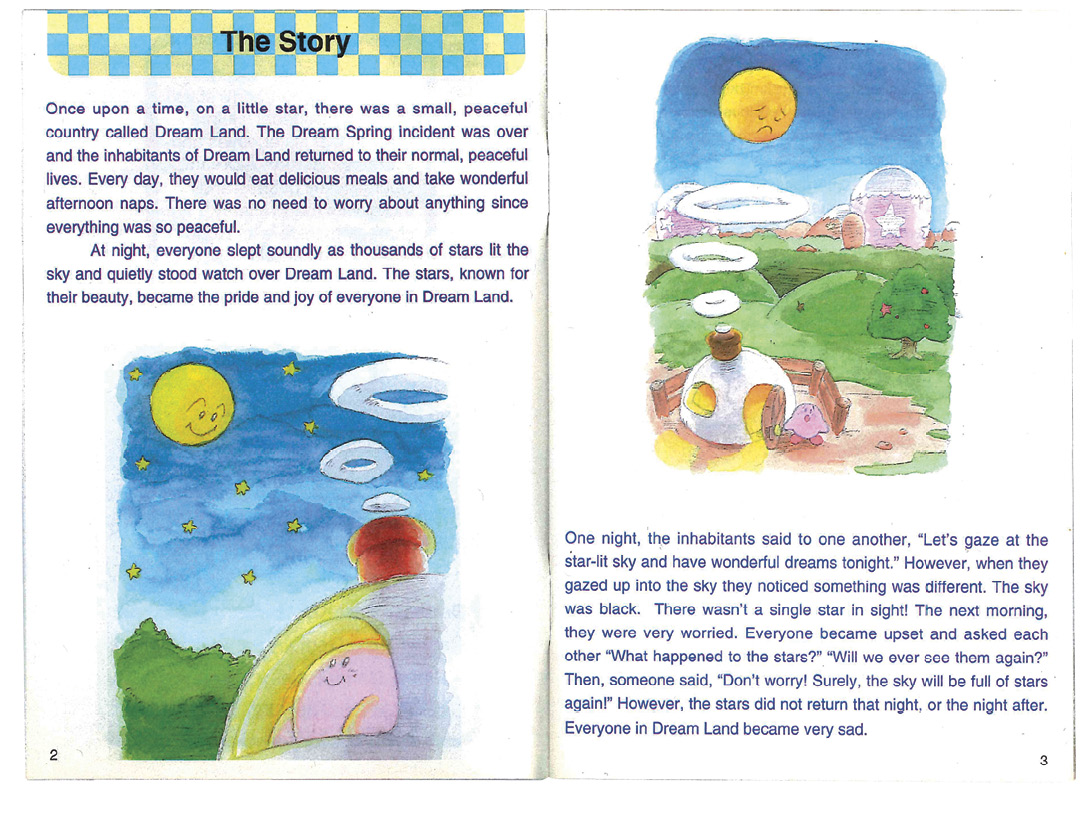
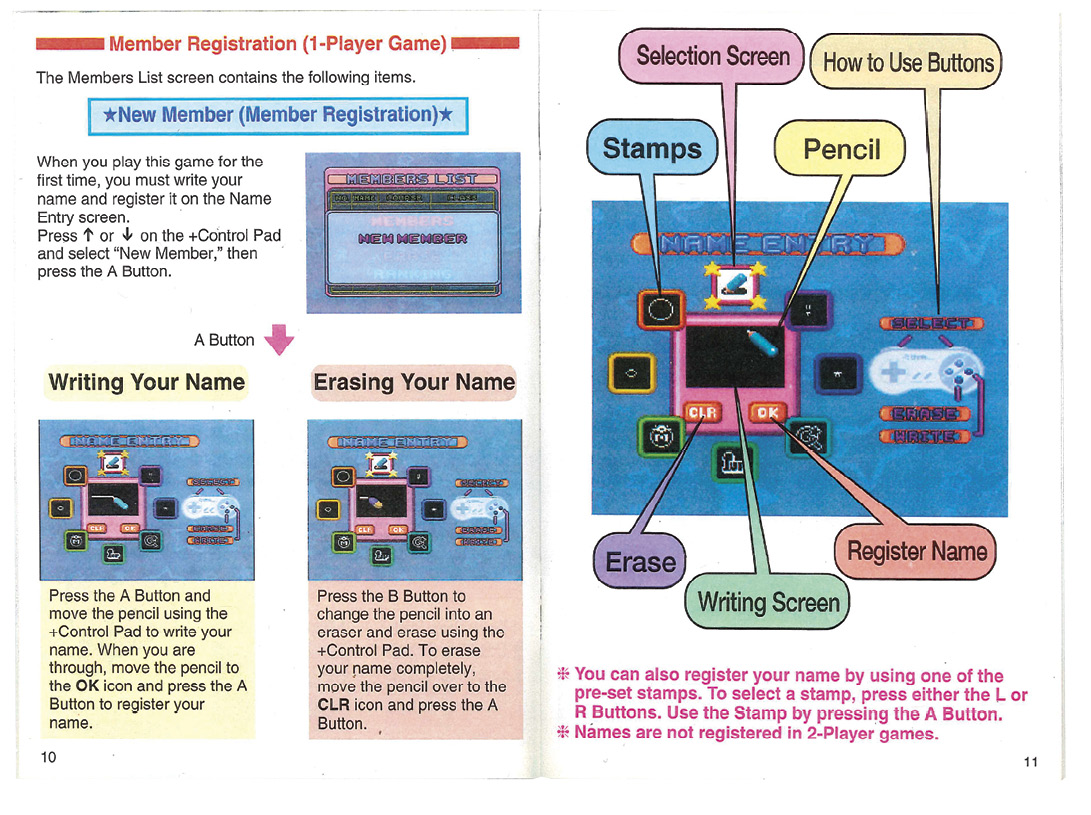
The storied development is likely the reason Kirby’s Dream Course is one of the most challenging and technical games in the entire Kirby series, which has historically skewed toward accessibility and relative simplicity. This design philosophy was perhaps best demonstrated in 2010’s Kirby’s Epic Yarn, which was unanimously hailed as being notably easy, yet remarkably enjoyable and rewarding. Kirby’s Dream Course, on the other hand, still defies domination to this day, with only a small handful of extraordinarily devoted players laboring to contend with its intricate mechanics and more demanding courses.

On the surface, Kirby’s Dream Course fused the mini-golf formula with Kirby’s patented, lively visuals. Each hole takes place on an isometric, pseudo-3D checkerboard, complete with obstacles and enemies lifted from the Kirby-verse. The goal of the game is to set up shots in a way that Kirby collides with each enemy. The final remaining enemy then turns into the “cup,” and when Kirby enters the cup the hole is complete. This rule alone greatly expands the possible methods a player can use to finish any hole in the game.

But it wouldn’t be a Kirby game without Copy Abilities, and Kirby’s Dream Course further augments the potential strategies for each hole with an assortment of familiar powers obtained from certain enemies. For players looking to complete each of the game’s courses in as few shots as possible, the secret is chaining abilities together so that a single shot can carry Kirby all around the map, hopefully ending triumphantly in the cup.
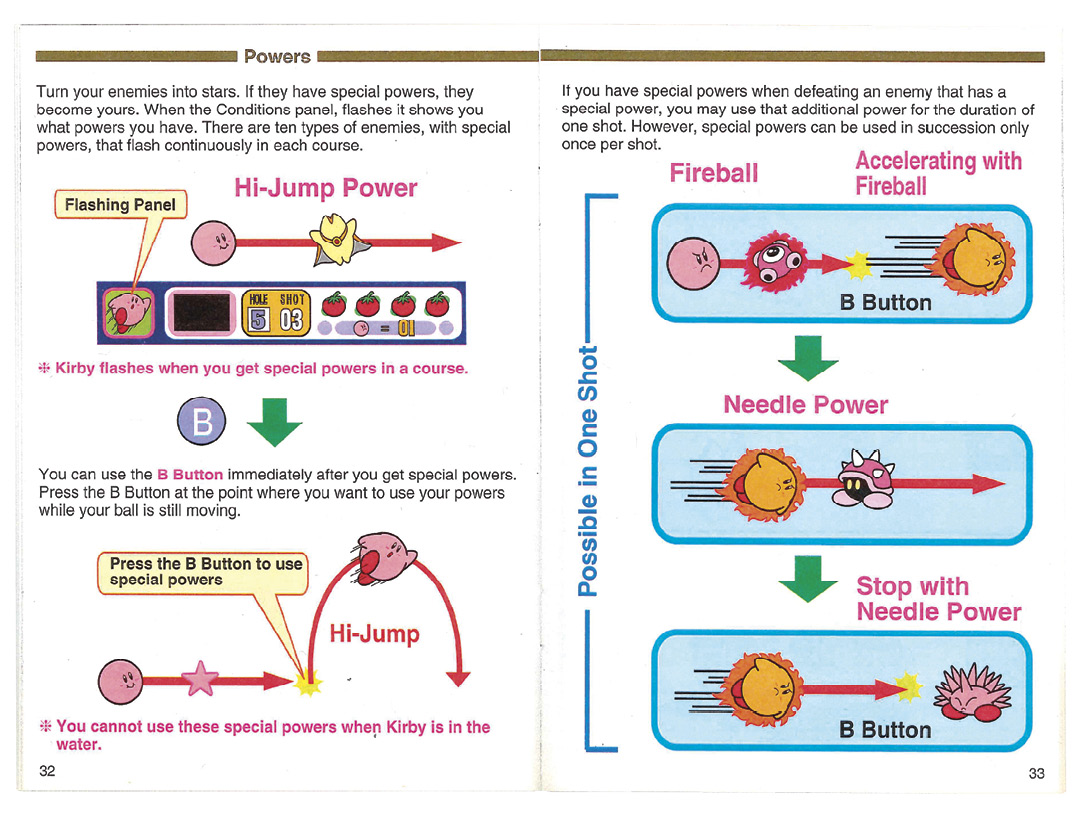
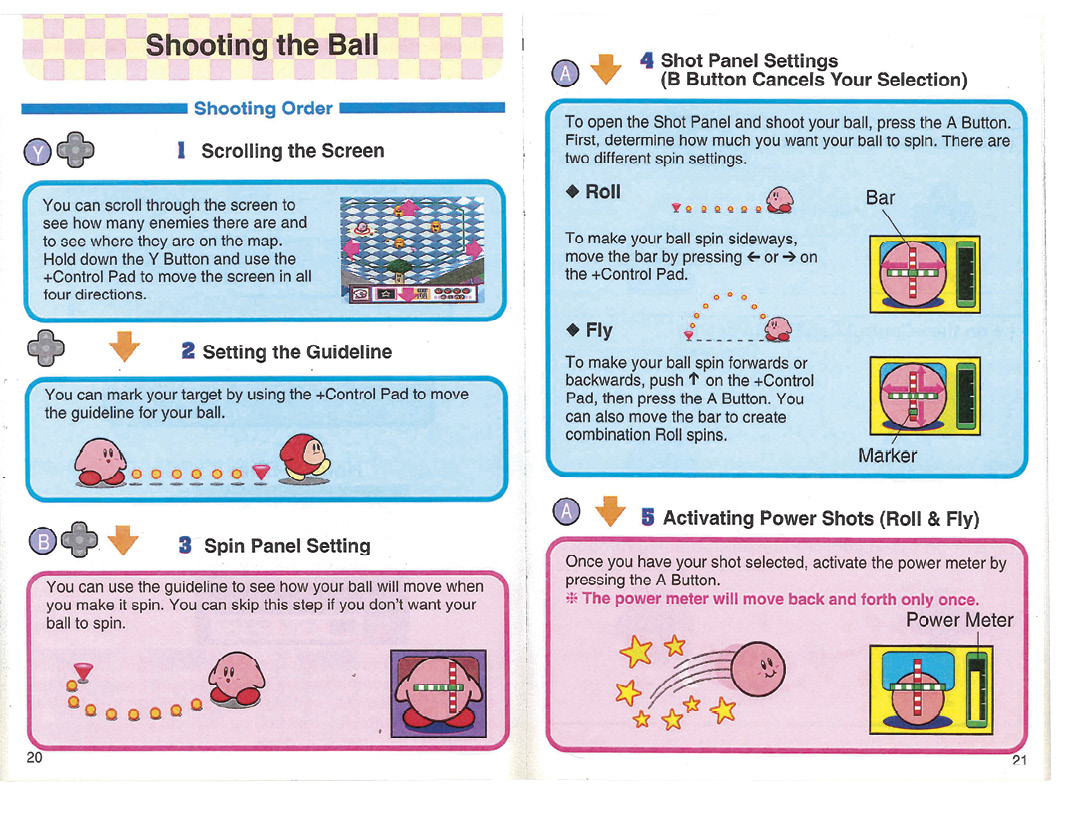
On their own, these mechanics aren’t particularly daunting. However, Kirby’s Dream Course includes a very robust shot system similar to Nintendo’s Golf for the NES, which was the first golf game to feature a power gauge for aiming. Players can not only perform a variety of trick shots such as top spins and back spins, skipping Kirby over bodies of water and banking Kirby off the environment, but once a shot has been taken, Kirby’s movement can be “boosted” to extend farther or bounce higher by timing precise button presses. It’s all incredibly in-depth, and requires exponentially more skill and cunning as the holes become larger and more intricate.

Keep reading with a free account

The first 3 sections of Playing With Super Power: Nintendo Super NES Classics are open to everyone. An account opens the rest of it, and every other guide in the archive. It's free, and there's nothing to buy.

Bought guides on the old Prima Games site? Your account and every guide you own moved here, so there's nothing to buy again. Sign in.

Create a free account Or browse our free guides

PreviousOverview NextAbilities