
Dragon Age Inquisition Guide Getting Started
Combat Primer
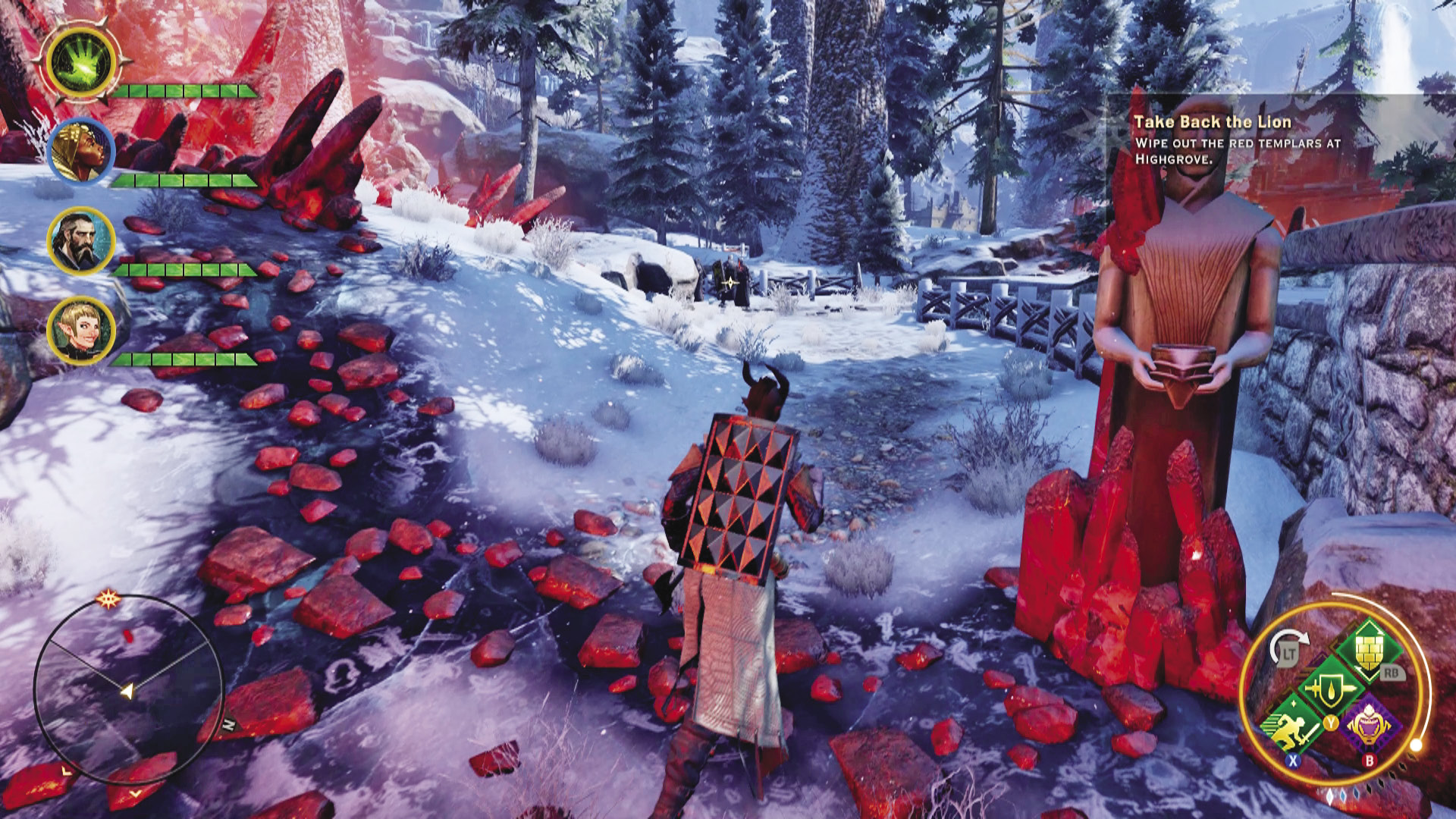
Your journey through southern Thedas isn’t without peril. Demons, creatures, and hostile forces attack with minimal provocation, calling on you to defend yourself and your allies. There are two different ways to approach combat in Dragon Age: Inquisition. You can either play the game third-person, like an action RPG, or you can take a more tactical approach through the use of the tactical camera. There is no right or wrong way to do this—it all comes down to personal preference.
When playing in the third-person perspective, face your intended target and then press and hold the attack button or key. Alternatively, you can lock on to a target to keep it centered in the camera view. Initiating basic attacks causes your character to unleash a series of slashes, arrows, or elemental projectiles, using an equipped weapon. While basic attacks are effective, they aren’t the most powerful—rely on your character’s offensive active abilities to pour on even more damage. But not all abilities are offensive. Abilities like Barrier, Leaping Shot, and Evade are defensive, preventing your character (and sometimes the entire party) from taking damage. Abilities consume stamina, mana, or focus, and as such cannot be activated frequently—and each ability has a cooldown period, too. So save your abilities for those critical moments when you need an extra boost in offense or defense to turn the tide.
Tactical Camera
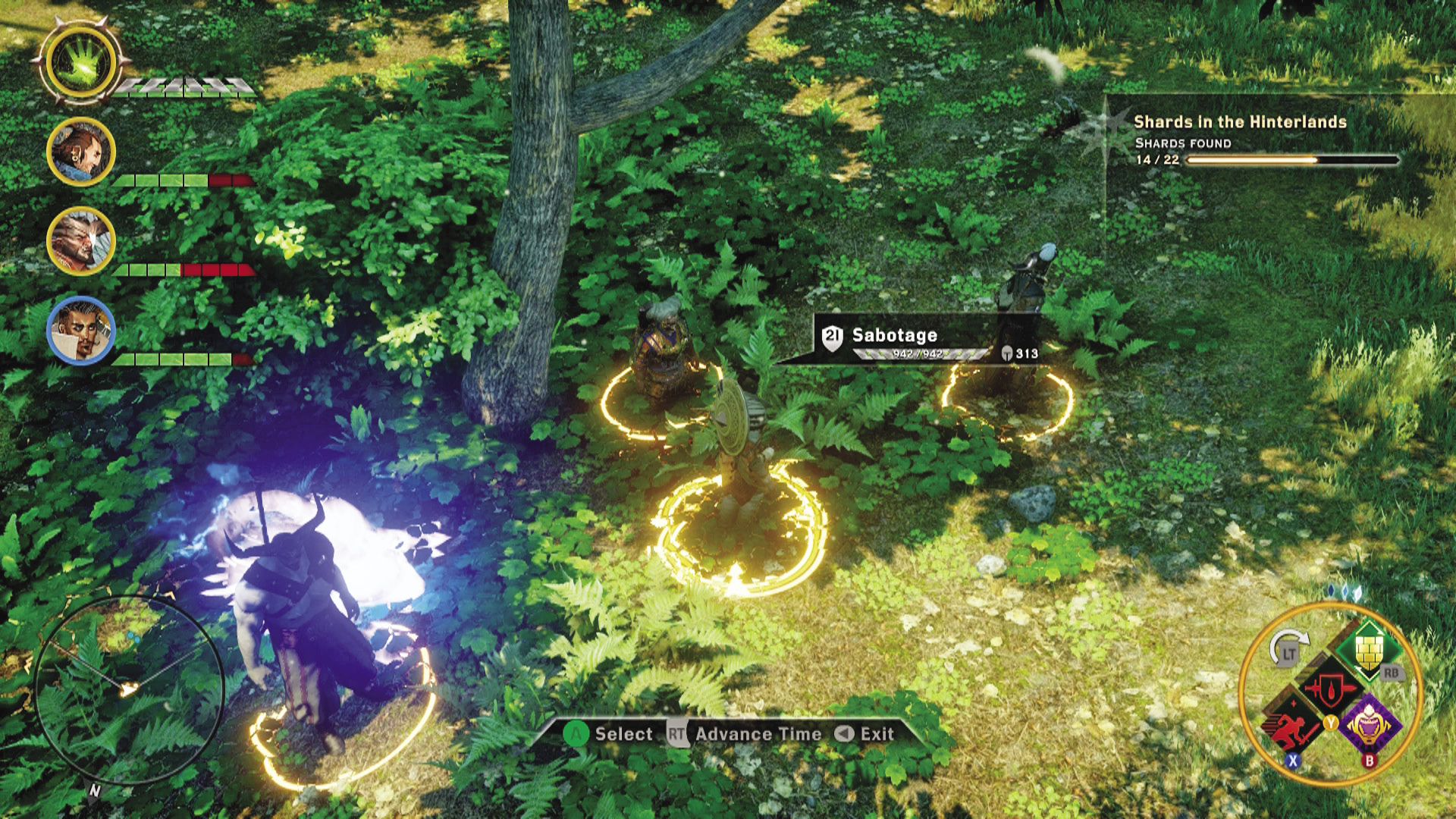
The tactical camera pauses the action, allowing you to view the battlefield from a top-down perspective. While the game is paused, you can issue orders to all your party members, instructing them to move, defend, attack, or use one of their mapped active abilities. Once orders are issued, you can either return to the third-person perspective or stay within the tactical camera to advance time, watching from above as your orders are carried out. Using the tactical camera’s reticle, highlight enemies to view details within their information box. Here you can see the enemy’s name, health, and armor, as well as any resistances, vulnerabilities, and immunities. This information alone tells you exactly what kind of weapons/abilities will be effective. For example, if an enemy is resistant to cold-based damage but vulnerable to fire-based damage, consider changing your weapons and abilities to compensate.
Potions and Grenades
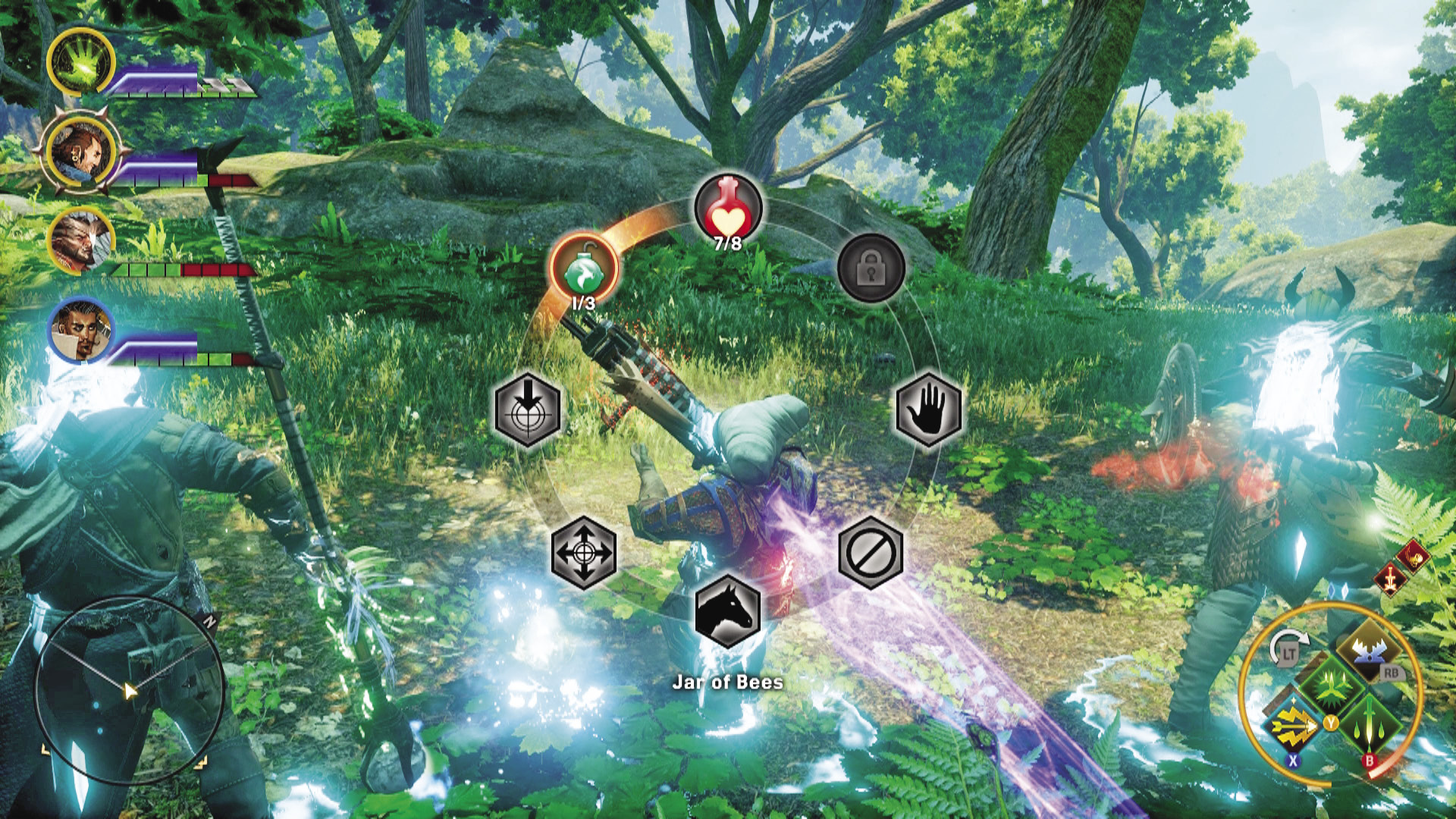
No matter how defensive you are, damage is going to happen and you’ll need a way to heal. Fortunately, your party is equipped with eight health potions. (This number can be increased to 12 by purchasing the More Healing Potions Inquisition perk.) Individually, your party members can be equipped with secondary potions that can benefit them in various ways, such as providing temporary resistances to elemental damage. You can unlock more potions by finding or purchasing potion recipes and crafting them from herbs. Potions can be consumed from the in-game radial menu. This menu also allows you to deploy grenades—deployment works similar to that of an area-of-effect (AoE) ability. Grenades aren’t readily available but can be crafted, much like potions. Before adventuring into new areas, make sure party members are well equipped with potions and grenades.
Party Composition
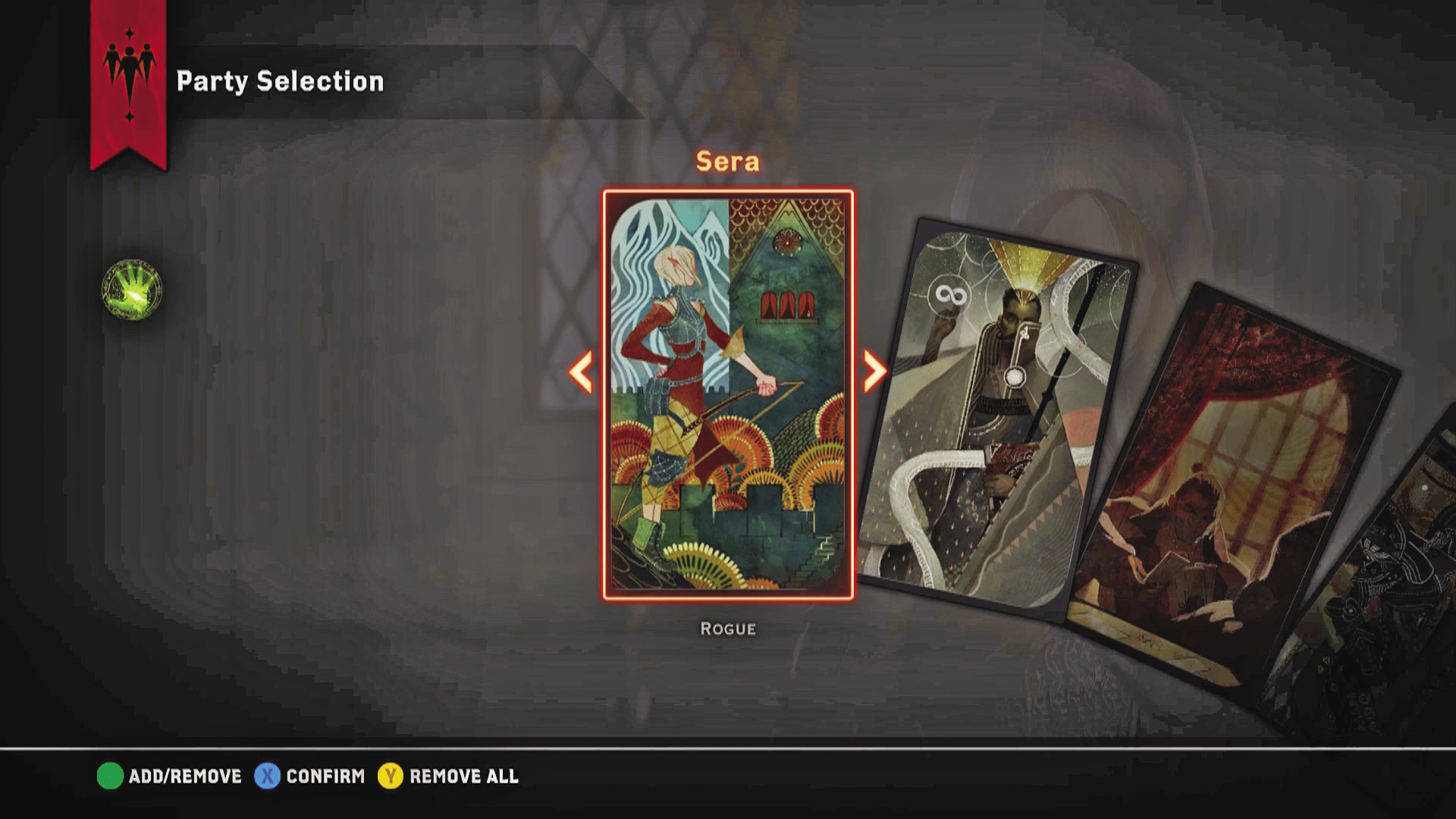
Before you venture out into the wilderness you’re prompted to select your party members. As a general rule, it’s wise to travel with a balanced party, with at least one warrior, one rogue, and one mage present. In addition to having unique skills (like wall bashing, lock picking, and veilfire), each class has tactical strengths and abilities. Mages and rogue archers specialize in ranged combat, while warriors and dual-wield rogues rely on melee attacks to dish out damage. Having a mix of melee and ranged fighters should serve your party well. Consider making two warriors, a rogue archer, and a mage as your default lineup. While this may not be the best combination for your style of play, it’s merely a sample of a well-balanced party. Experiment with your own lineups, paying close attention to the strengths and weaknesses of each class. For an in-depth analysis on each class, including a discussion of all abilities, reference the Classes and Abilities chapter.