
Dragon Age Inquisition Guide Behind the Scenes at BioWare
Behind the Scenes at BioWare
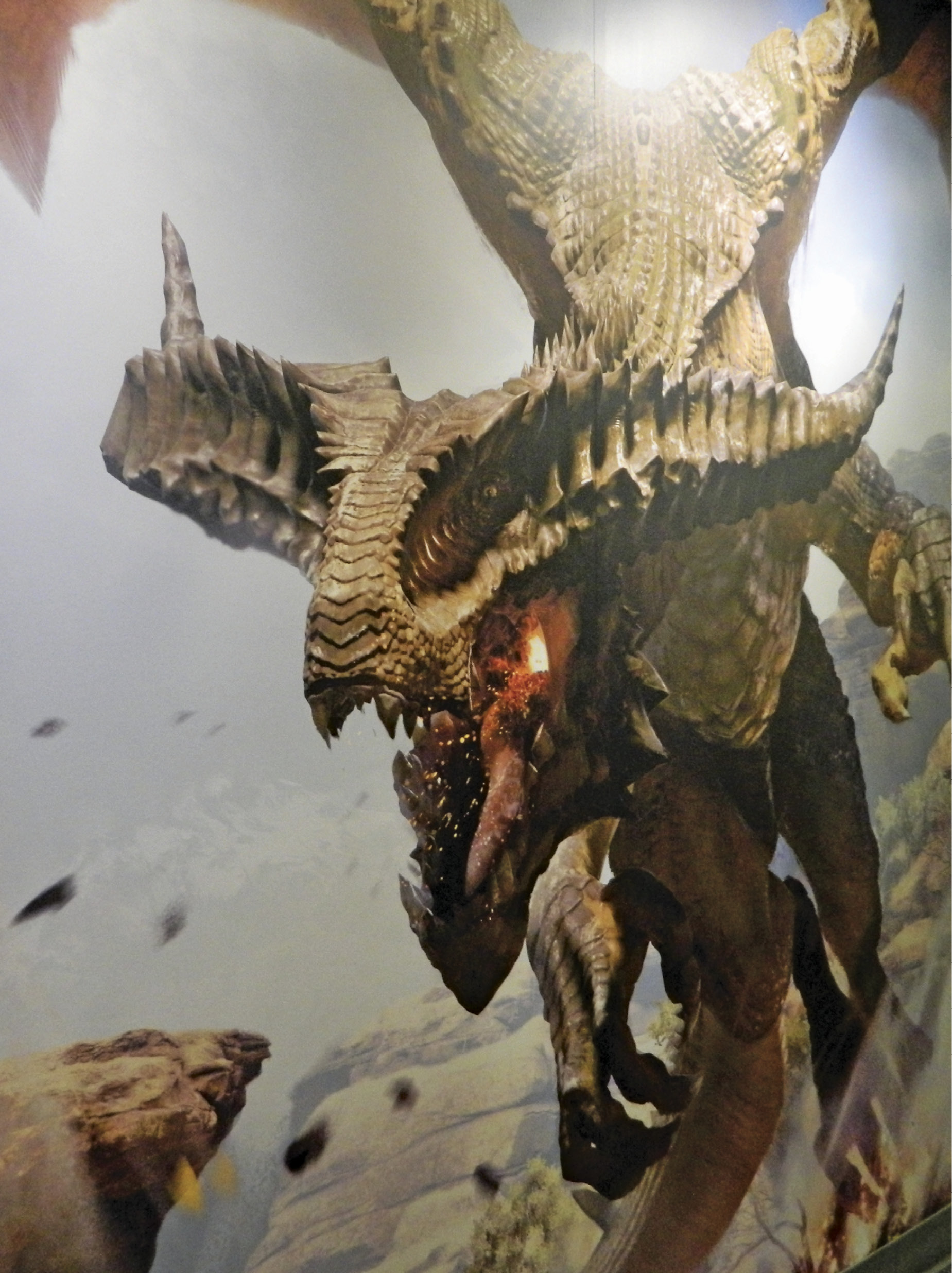
The dragon that guards the entrance at BioWare
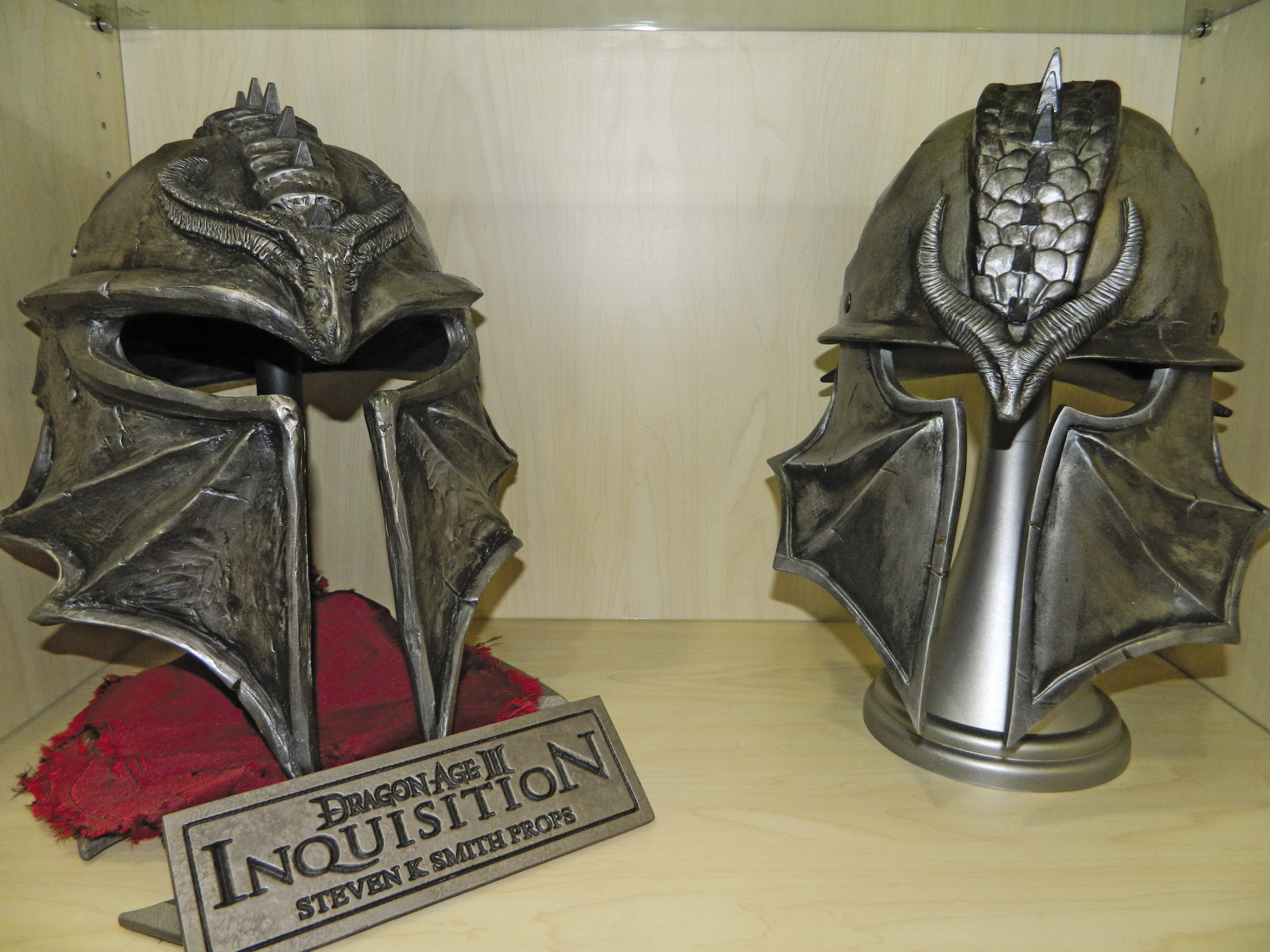
Inquisitor helmets
Ask anyone at BioWare Edmonton and they’ll tell you the same thing: Dragon Age: Inquisition is the largest and most ambitious game they’ve ever made. Coming from BioWare, that’s a bold statement. But after only a few hours of playing the game, it became clear—they’re not exaggerating. So exactly what does it take to create a Dragon Age game? We wanted to find out. So in early September of 2014, we hopped on a plane and flew north, landing in beautifully spacious Edmonton, Canada, the northernmost metropolis in North America—but not the coldest. When we weren’t busy playing the game (dying frequently in multiplayer) we had a chance to sit down with several members from the talented Dragon Age team. It was a busy time at the studio, as the game was entering its certification phase. But despite their hectic schedules, the team was very generous with their time, answering all of our questions. Here’s what they had to say.
The Vision
Derek French, studio ops
BioWare admin, the heart of the studio
Mark Darrah, Executive Producer
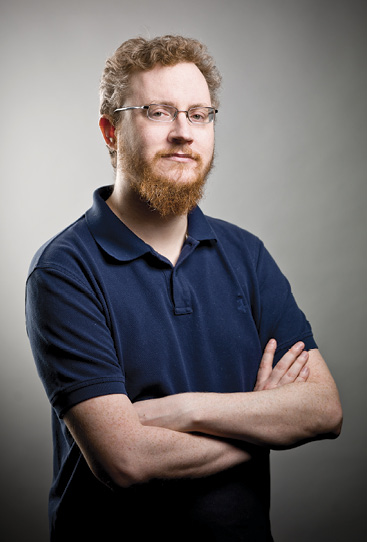
Prima Games: We’re only a few weeks away from the release of Dragon Age: Inquisition. How do you feel right now?
Mark Darrah: Tired.
PG: Just tired? Anything more to add?
MD: Tired but excited to have people play the game we have put so much time and effort into.
PG: Following the release of Dragon Age II, what kind of goals did you set forth for Dragon Age: Inquisition?
MD: There were a lot of things I wanted to do with Dragon Age: Inquisition: Get us back to the exploration of BioWare games of the past. Re-embrace some of the more core aspects of the genre like crafting. Really give visuals an equal seat at the table.
PG: Exploration is a huge part of the game. How do you balance these extraneous exploration activities and the critical path storyline?
MD: We wanted to make sure that when you go to an area that it serves the Inquisition’s goals in some way. While there are lots of things to do, there is some thematic element linking this space back to the overall story.
PG: This is the first BioWare game using the Frostbite engine. How has Frostbite impacted production?
MD: Frostbite is a spectacularly beautiful engine. It was not, however, designed for an RPG (role-playing game). We have had to add these capabilities in.
PG: We’re big fans of the game’s cooperative multiplayer. Was this always part of the game plan?
MD: Yes. Before Dragon Age: Inquisition even started we had a team investigating this kind of co-op experience for Dragon Age.
PG: Now that the project is wrapping up, what are you most proud of?
MD: I think we have managed to create a huge, beautiful game that is still inherently a BioWare game.
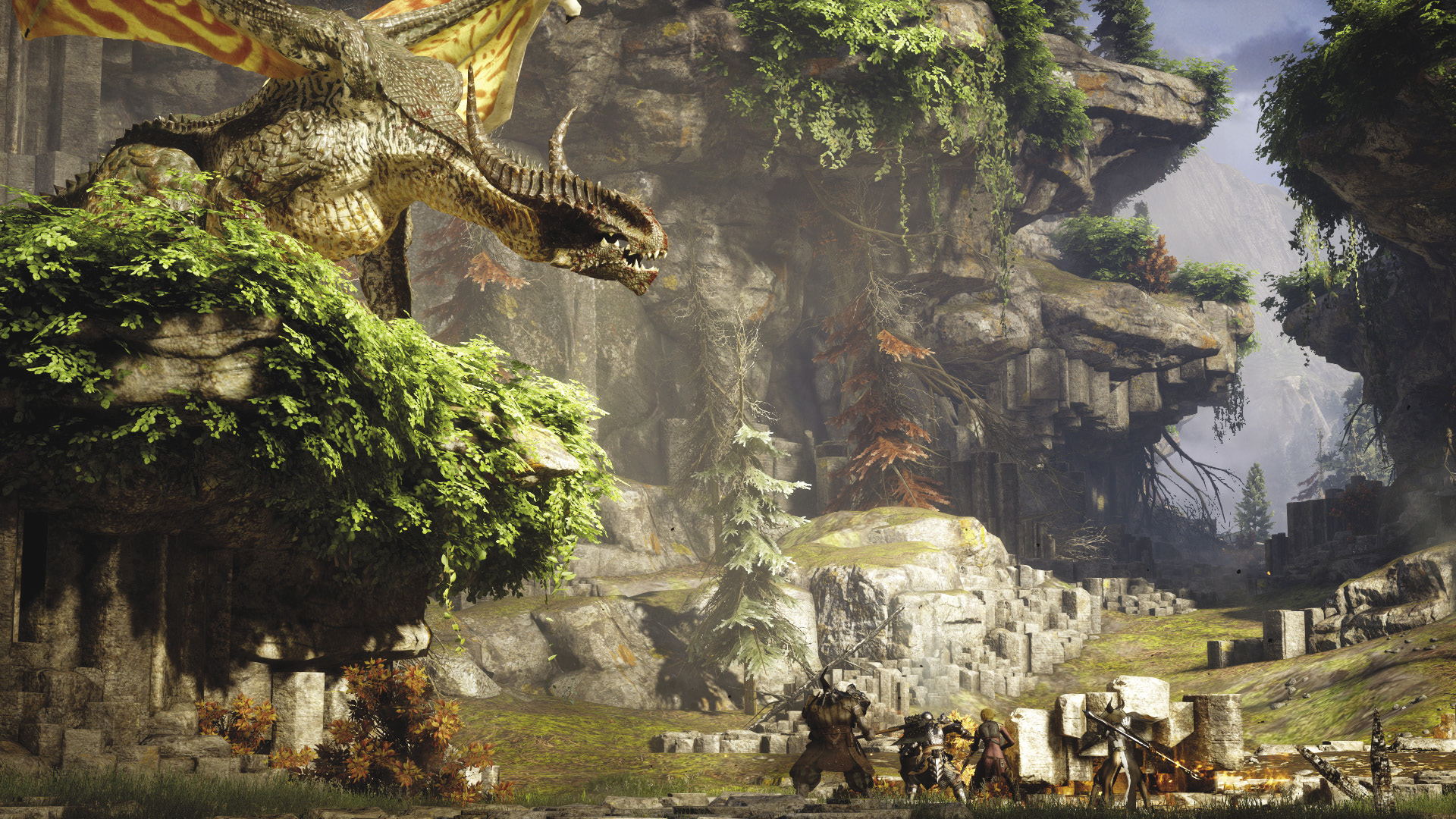
“We wanted to make sure that when you go to an area that it serves the Inquisition’s goals in some way.”
Matt Goldman, Art Director

Prima Games: As art director, what are your responsibilities?
Matt Goldman: My duties and responsibilities are pretty varied and change depending on the phase of the project. My overarching responsibility is to ensure the team has clear, consistent direction and that they are empowered to make decisions and do their jobs effectively. During pre-production that means hammering out the vision with the senior leads, deciding on technology, creating “gold standard” examples, and representing the art and animation pillar in all discussions.
During production I review and provide feedback on all assets, from concept to execution. That can be many steps before an idea makes it off the drawing boards and the design team has it moving and working correctly in game. On Dragon Age: Inquisition the art and animation team assumed fairly gigantic proportions, with people working in all disciplines all over the world. At various point we had teams in Edmonton, Montreal, Nanjing, St. Petersburg, Shanghai, Stockholm, and Vancouver, as well as freelancers. Having a strong vision and the ability to describe it accurately is paramount.
In the final stretch I play the game: a lot. I file bugs, track down errors, and look for last-minute opportunities for art and animation to enhance the design. Toward the end our goal is to perfect the “final frame.” This requires endless subtle tweaking, balancing, and modification. This is also where smart decisions are needed to ensure 30 frames per second on all platforms.
Throughout, I work with a team of project managers to ensure logistics and dependencies: money, people, time, equipment. An army marches on its stomach, after all.
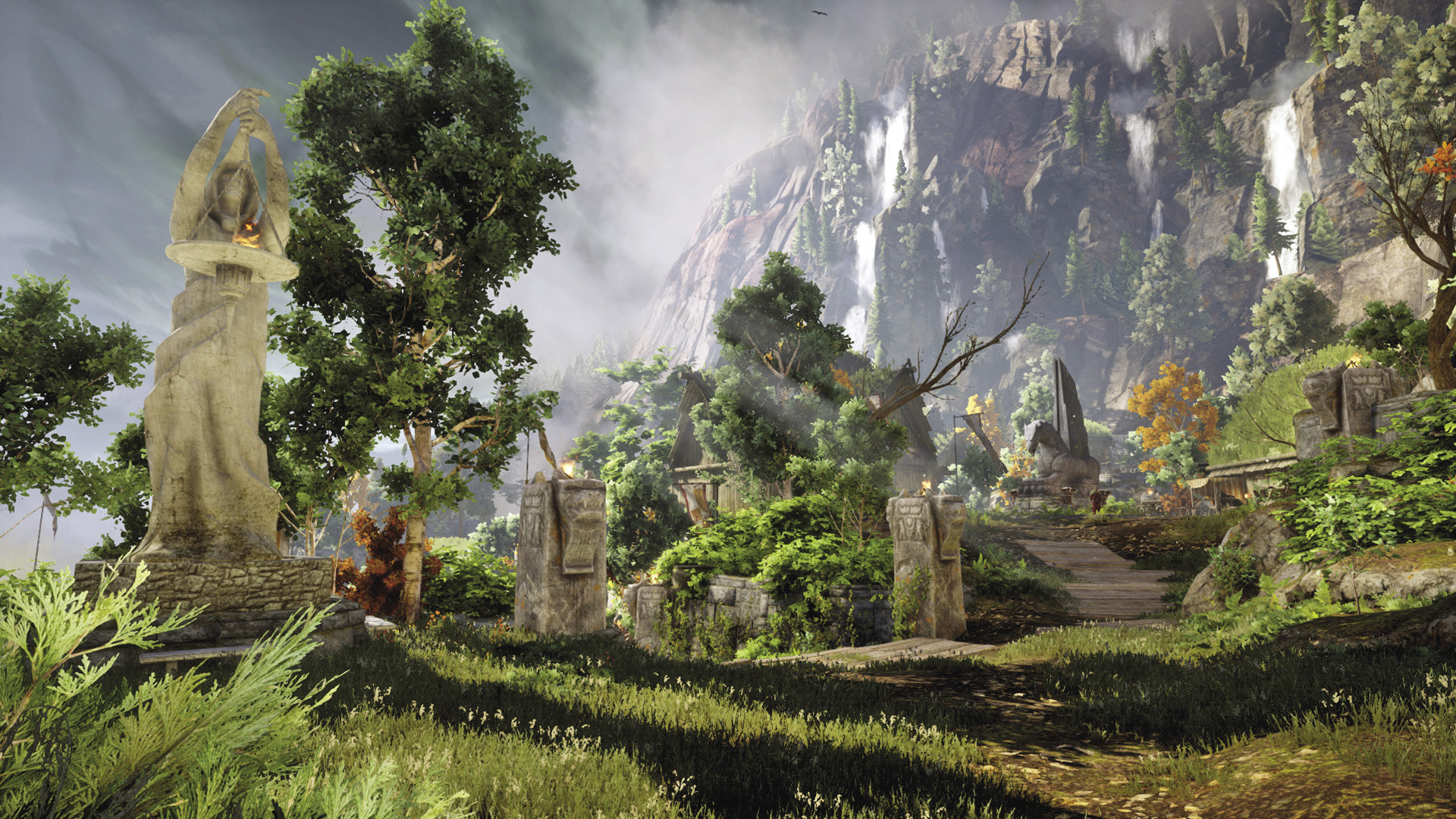
“Illustrating and populating the setting is not only important, it’s super fun.”
PG: How important is the game’s setting when creating the game’s imagery?
MG: The setting is paramount in an RPG. Dragon Age is about exploration, making choices in politically complex and morally nebulous situations, and being the person you want to be. The setting is in effect the biggest character of the game. Illustrating and populating the setting is not only important, it’s super fun.
The premise of Dragon Age is an exploration of what would happen if Faustian bargains were a real possibility. The world of Thedas hangs in a strange moment—like an Enlightenment-era Europe unable to break the fetters of religion because demons really do exist. The strong cautionary nature of the story arcs and these historical parallels drew me back again and again to Northern Renaissance painters like Breughel and Holbein.
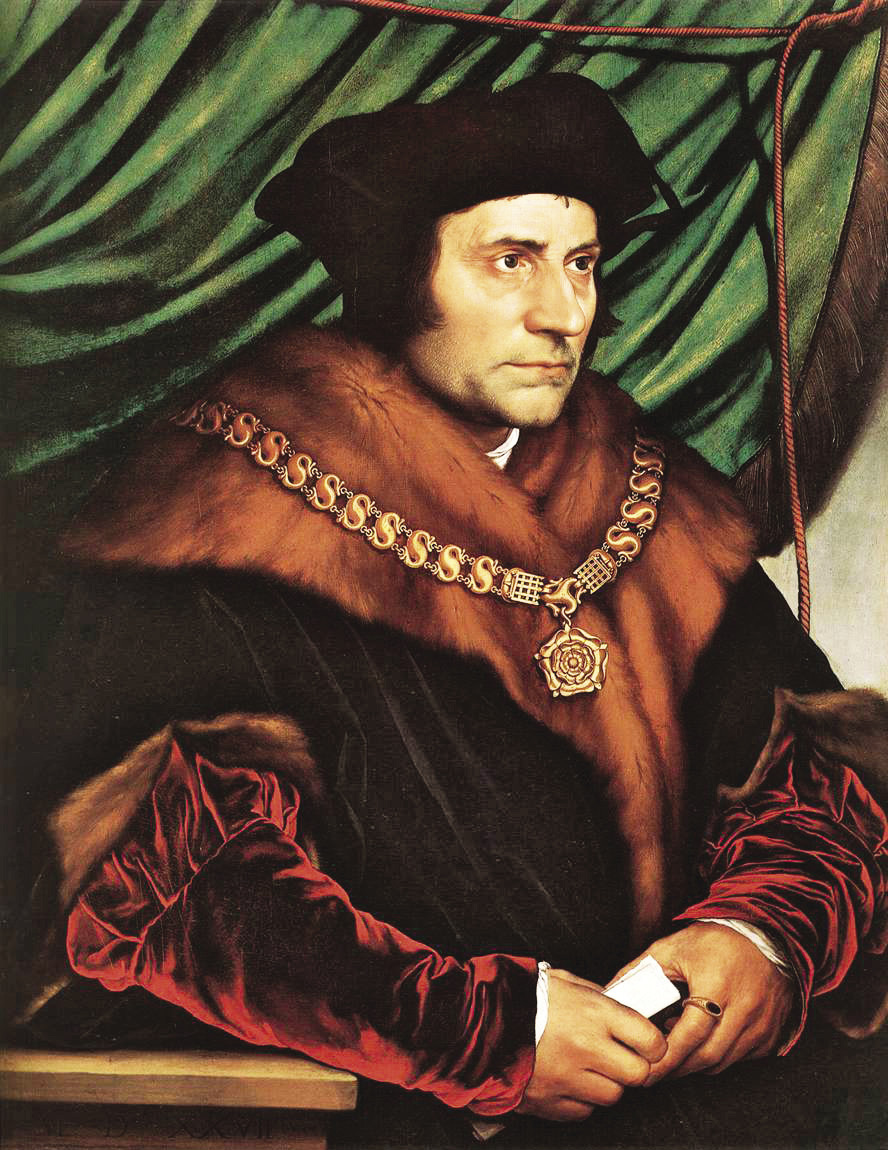
Portrait of Sir Thomas More, by Hans Holbein
This portrait of Sir Thomas More to me is a perfect encapsulation of the moral dilemma of Dragon Age and artistic goals of our team. Sir Thomas More was a progressive humanist, diplomat, and author. He was also an Inquisitor and fought against the Protestant Reformation with “traditional”’ methods. A very intelligent compassionate man caught between the past and future. This portrait by Hans Holbein was a technical sensation at the time of its creation. For Dragon Age we aimed to emulate the rich specular materials, juicy juxtapositions of the mid-tonal palette, and luminous flesh tones.
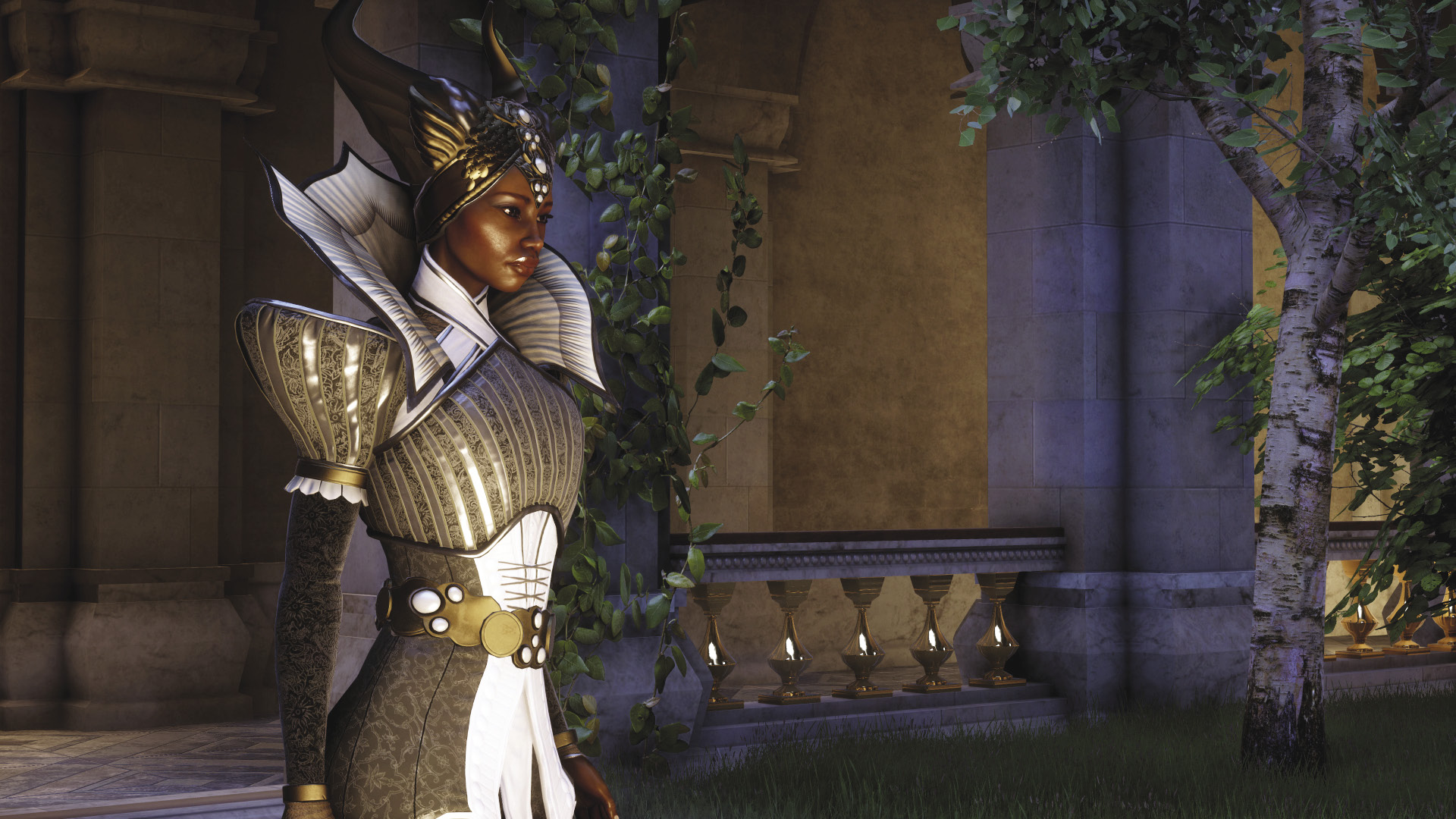
Modern high fashion helped inspire Orlesian and Tevinter costume design.
A huge varied setting like Dragon Age can’t really be created out of a single image, though. We cast our inspiration net far and wide. Some of our favorites: secular Gothic architecture, sod huts, early-20th-century illustrators, Viennese Secession, modern high-fashion concepts, Japanese print-making, cinematographers Kurosawa and Kubrick, Mongolian fur hats, stealth fighters, Empire furniture, and ecology.
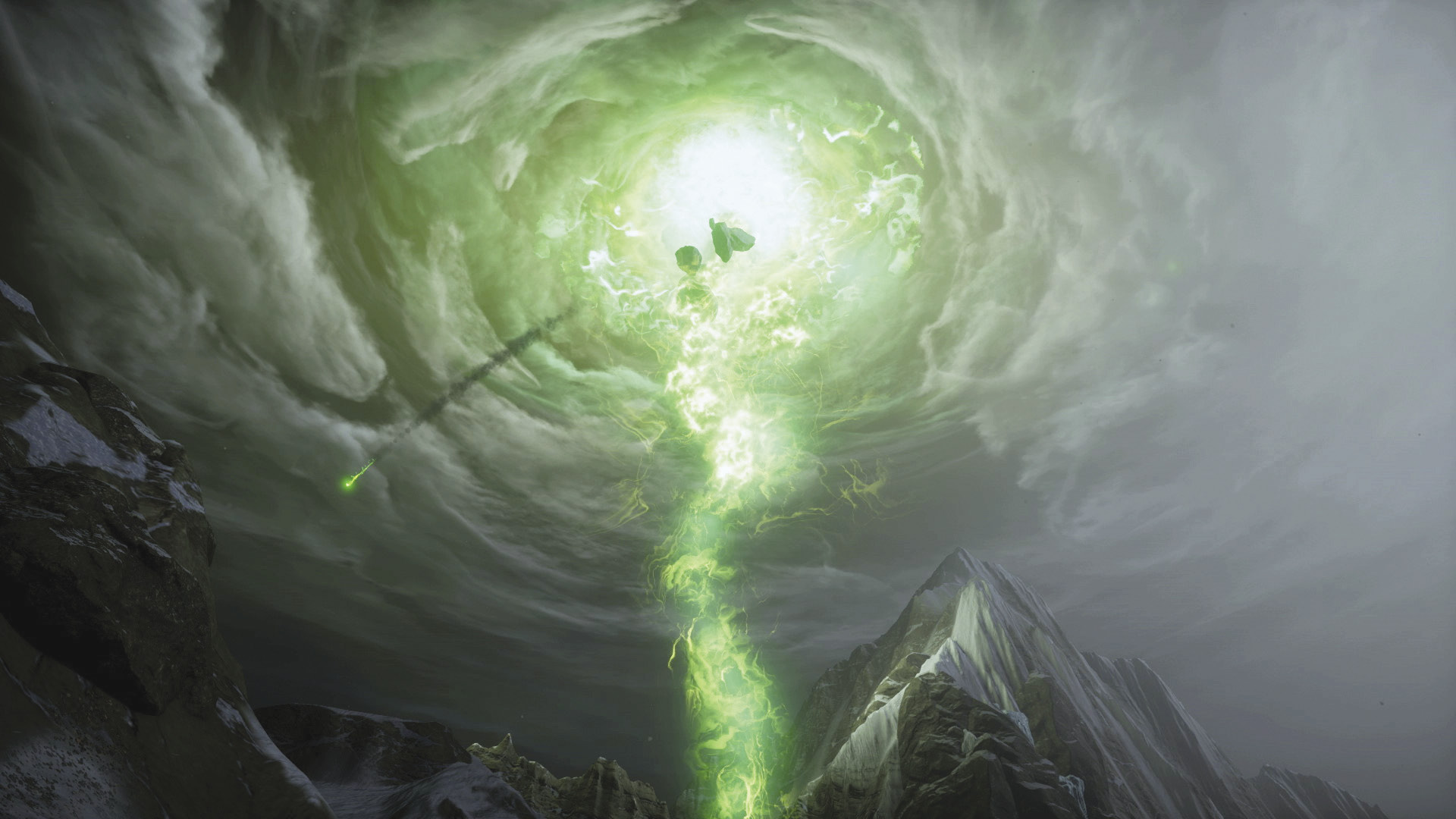
“The player character survives a mystic explosion and emerges from the dream world of the Fade imbued with some pretty strange powers.”
PG: Was the tarot card motif always a part of your vision?
MG: Hanging an appropriate metaphor around the user interface (UI) is always a key decision. It can also be pretty tricky because sometimes the UI can represent in-world information: maps, notes, and objects that the Inquisitor would actually handle. Sometimes the UI is abstracting information that is only for the player, like the options and tactics screens. Early on we settled on the idea that the direction would be “Altered Vision,” which is derived from the initial premise of Dragon Age: Inquisition; the player character survives a mystic explosion and emerges from the dream world of the Fade imbued with some pretty strange powers. Throughout the game this idea of inspection and “Altered Vision” manifests in several ways: the Inquisitor’s ability to see and manipulate Fade rifts, magic ocularum skulls, astrarium star-gazers, treasure maps, and runes illuminated by Veilfire. For the more abstract cases we initially experimented with recursive cabalistic type runes, but these proved too slow and annoying to use. The tarot cards metaphor came out of a discussion where we were trying to streamline the process of selecting your party for a mission. Since the game treats with the themes of faith and destiny, the idea of the player acting as Fate and dealing their character a life hand really clicked. We have a great concept team, and these illustrated cards were an opportunity to let loose after many months of grinding away at the details. We thought our fans would enjoy an actual tarot deck, so we created an entire functional tarot deck of 72 cards, plus many more for the codex entries.
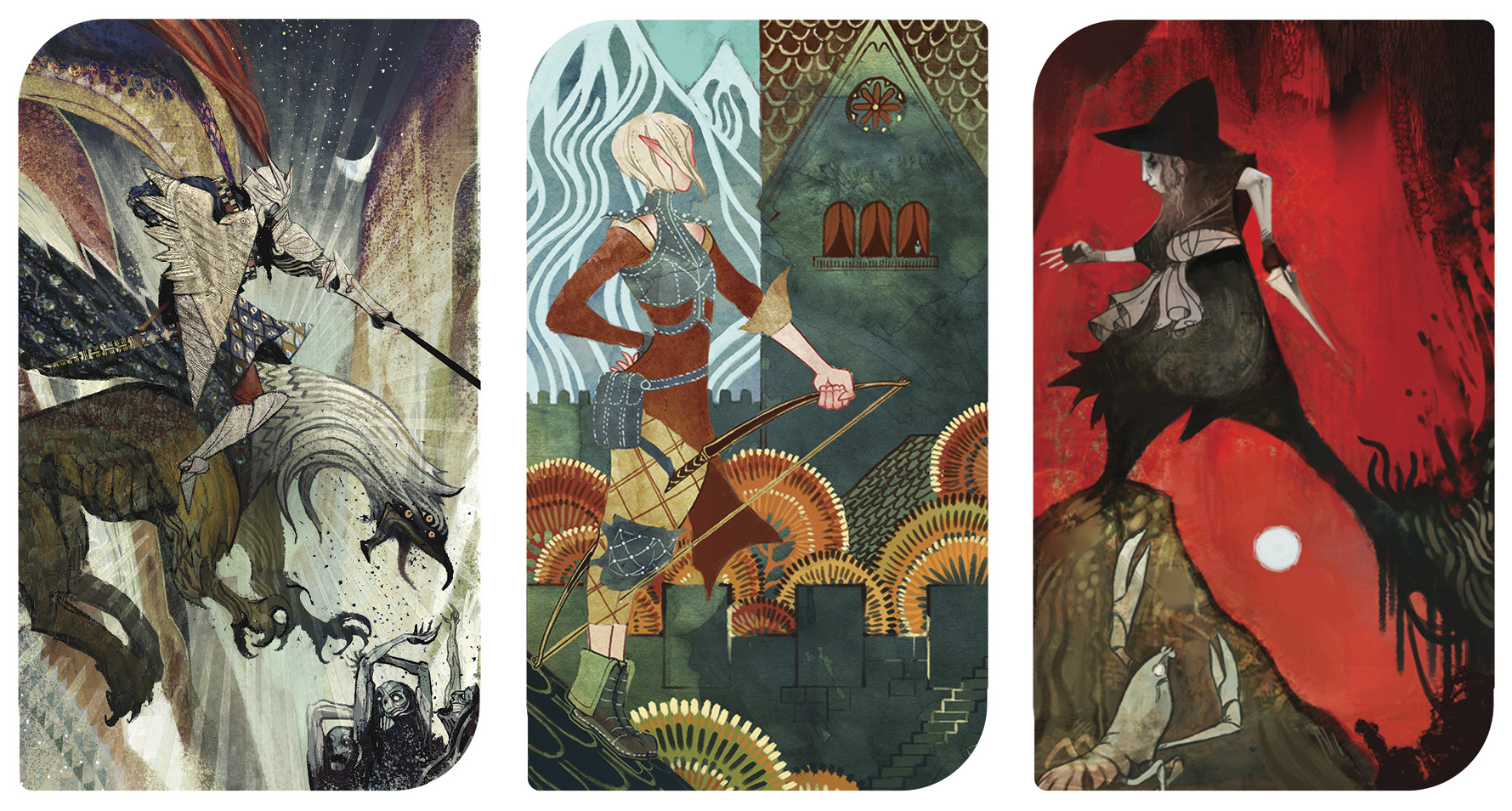
“The tarot cards metaphor came out of a discussion where we were trying to streamline the process of selecting your party for a mission.”
World Design
Kris Schoneberg, Senior Level Designer
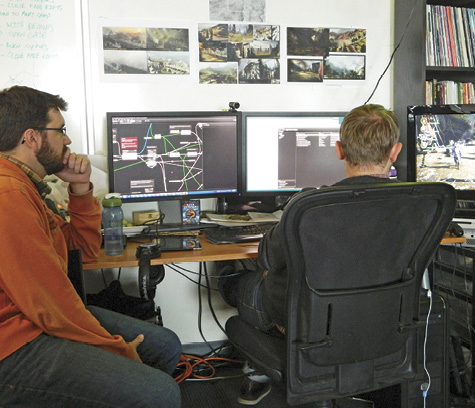
Bastiaan and Dean trying to reproduce a bug
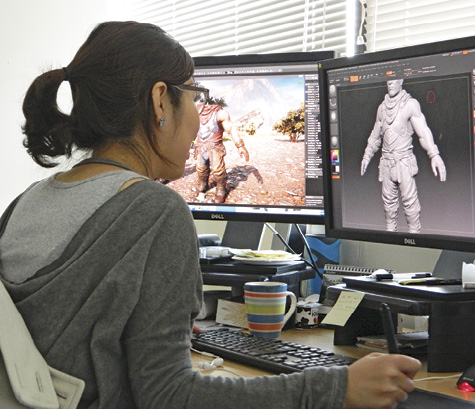
U Ri So working on Varric armor variants
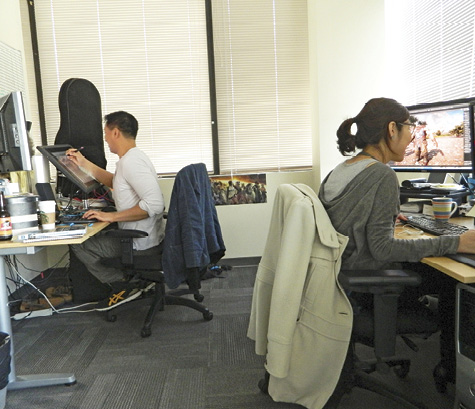
Ramil and U Ri creating the characters of Dragon Age: Inquisition
Keith Warner, Lead Designer

Prima Games: How would you describe your job?
Keith Warner: I have the pleasure of supervising the level design team. We implement all of the content, working with the artists, animators, writers, combat designers, the cinematics team—all of the other departments—to make sure the game flows as it should. We set up the systems the player interacts with during exploration. We ensure all of the NPCs (non-player characters) say the right things at the right time. Basically we set up the flow of events and the feel of a living world that the player experiences.
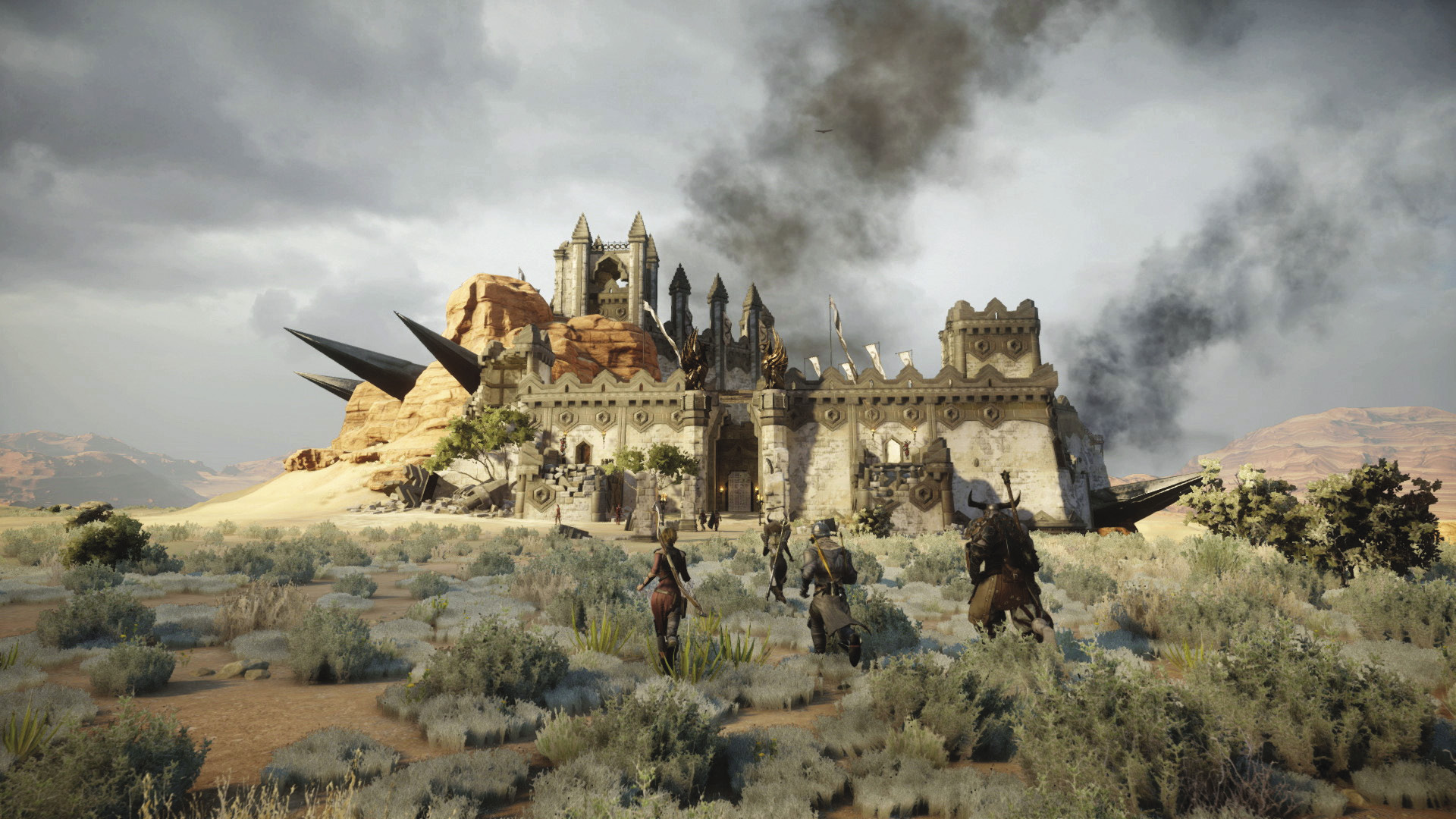
“There are a myriad of activities in the game, and one goal we had was to try to ensure that none of those activities felt meaningless in context of the story of the Inquisition.”
PG: From the beginning of the project, what was it like to take this new open-world approach?
KW: For me, I wanted to give the player the freedom to explore, to get “off the path.” The story should be guiding the player through a level, but I wanted to create distractions along the way. I wanted the player to be able to set her own goals and be able to choose her own path through the game, all while trying to make sure the player always had a feel of being the Inquisitor and leading an organization. There are a myriad of activities in the game, and one goal we had was to try to ensure that none of those activities felt meaningless in the context of the story of the Inquisition. Whatever the player does in exploration—closing Fade rifts, establishing camps, completing quests and requisitions, even identifying all of an area’s landmarks—contributes to expanding the Inquisition’s influence in the world at large.
PG: What impacted the decision to compose the world of multiple locales instead of one sprawling map?
KW: Most of this was driven by our desire to let the player experience a far wider range of Thedas than we have shown them before. Thedas is a vast continent. Having that be an area the player could run across in 15 minutes did not do it justice. Going back to a world map truly lets the player come to understand the scale of the world and the various empires and conflicts that he becomes embroiled in. We take the player from the snowy peaks of the Frostback Mountains to the deserts of the Western Approach, to the bogs of Ferelden and the jungles of the Arbor Wilds, as well as plenty of places in between.
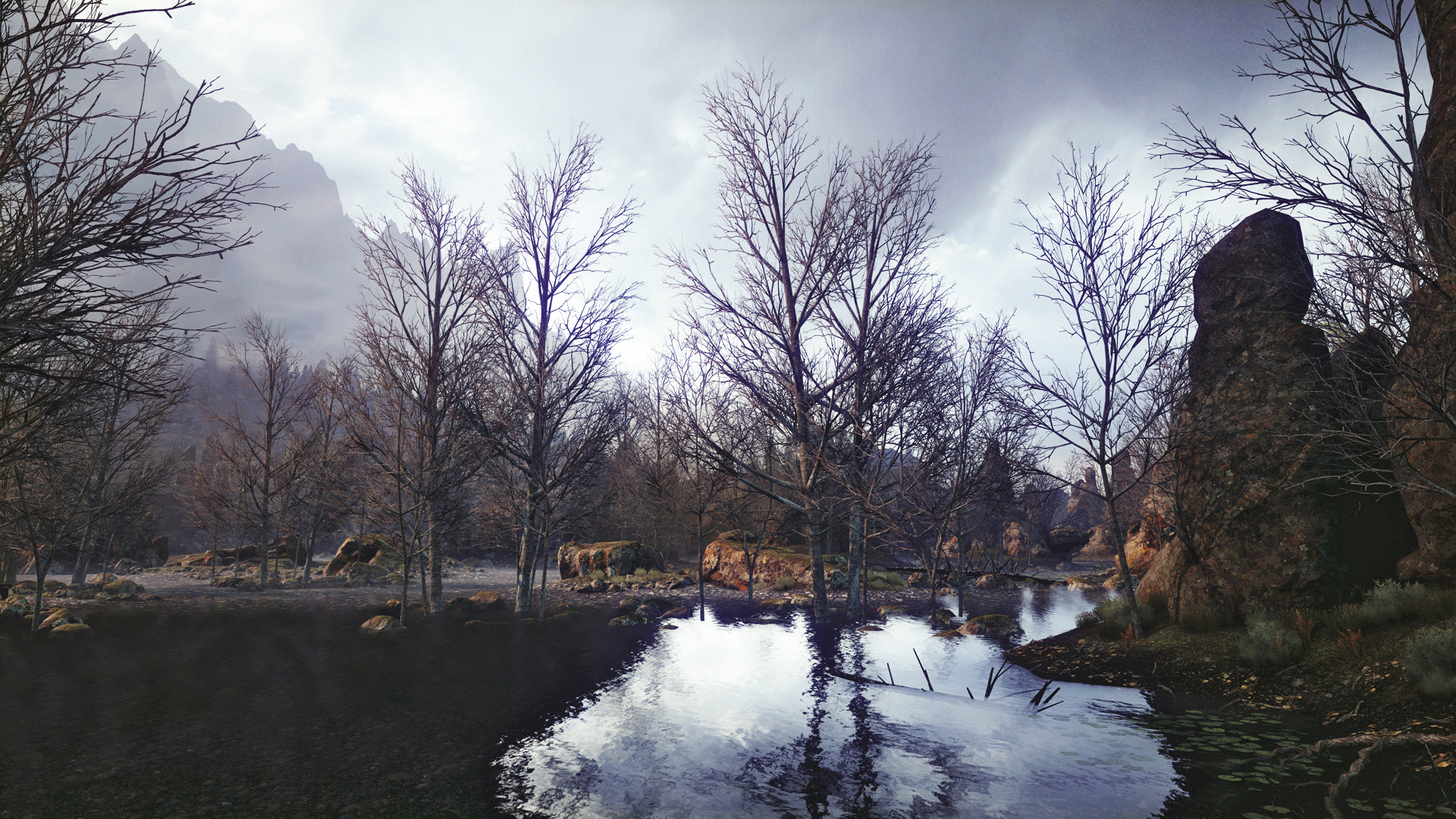
“Thedas is a vast continent. Having that be an area the player could run across in 15 minutes did not do it justice.”
PG: Given the scale of these locales, how important was it to maintain a fast-travel system?
KW: Fast travel was definitely important in our levels, but we had to be careful in how we used it. We didn’t want the player just jumping from point A to point B; maintaining a sense of scale is important to the feel of our areas. But we also didn’t want the player to be forced to run across spaces she has already explored multiple times (unless she is back looking for something specific, like a particular crafting node or wildlife creature). Having the player be able to expand the Inquisition’s influence in our wilderness by setting up new camps and discovering new fast-travel points allows the player to establish new hubs from which they can explore and new destinations to fast travel between.
PG: How challenging was it to meld the critical path with these various exploration activities?
KW: Story has always been one of BioWare’s strengths. How to integrate it into our open world spaces was the new challenge we faced. Because the Inquisitor is the leader of an organization that grows from a few followers to a world-changing force, it felt natural to tie the growth of the Inquisition to advancing the story. All of the activities the player can get up to in the wilderness contribute to the growing influence of the Inquisition. As the Inquisition’s fame and power spread, others throughout Thedas start to pay attention to it, and that unlocks new opportunities to the player to advance the critical path. The war table at the player’s stronghold was the embodiment of this—a place for the player to “spend” the power he has been growing—sending his forces out to unlock new bits of the story and new areas to explore.
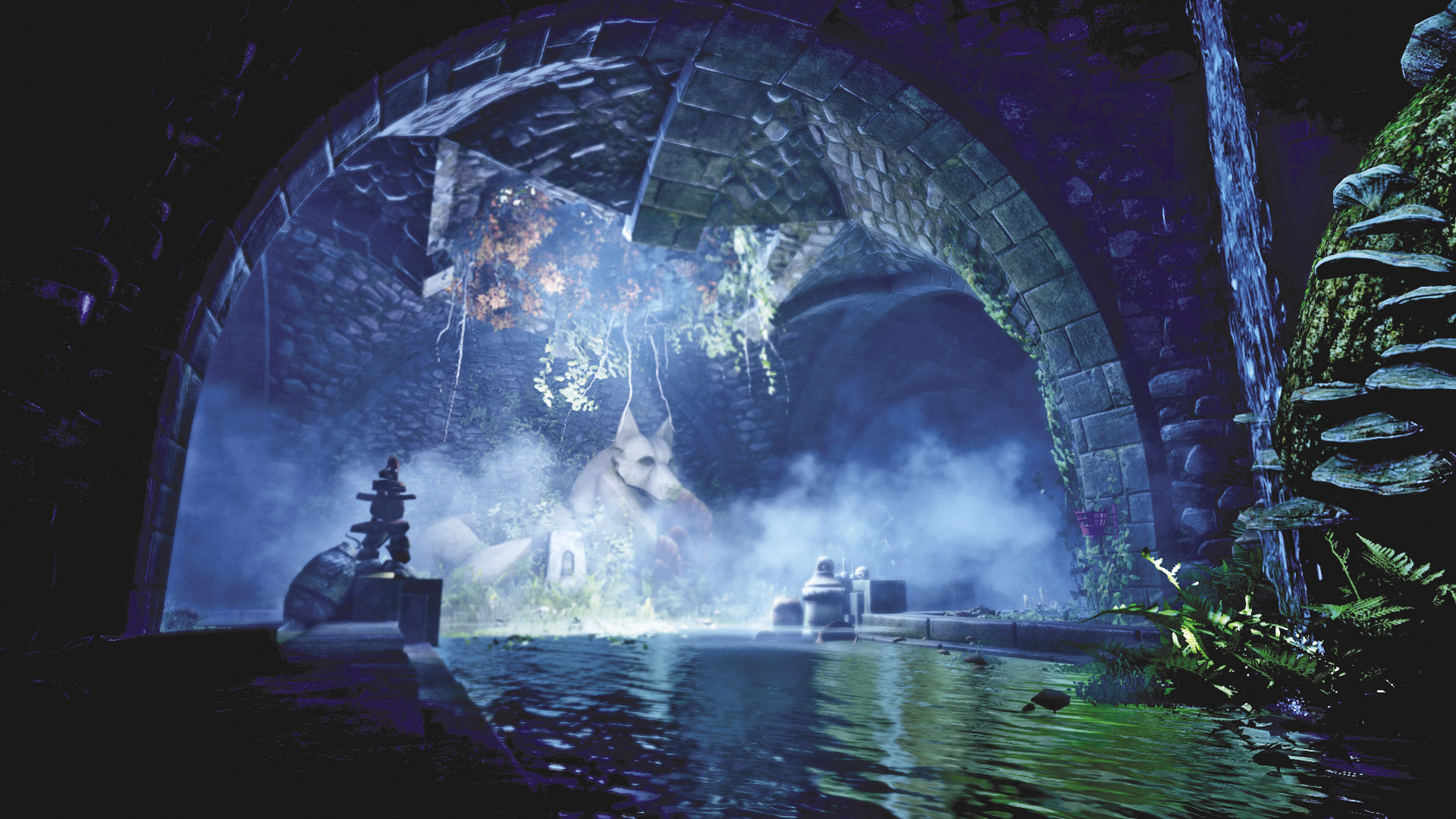
“The Lost Temple of Dirthamen is a fun, old-fashioned dungeon crawl that I really enjoy.”
PG: Do you have a favorite locale?
KW: I have lots of favorites. The Lost Temple of Dirthamen is a fun, old-fashioned dungeon crawl that I really enjoy. Undead. Creepy old elven tomb. Body parts. I’m sold. For wildernesses, it’s so hard to choose. I really enjoy the Exalted Plains. Demons stalking the battlefields of the Orlesian civil war with a poor group of Dalish caught in the middle. The story in that level is really well integrated into the exploration. There are so many parts of that level to explore and discover as well, including a couple of hidden caves and dungeons that I hope people find.
Brad Paras, Level Designer

Prima Games: You work with the wilderness team. What are your responsibilities?
Brad Paras: As a wilderness level designer, I’m responsible for working with writers and artists to craft open spaces that players can freely wander and explore. The world of Thedas is such an interesting place to work with because no matter where you go, there’s some history to uncover. When building wildernesses, we start by selecting an area of Thedas and drawing a top-down map that defines the local regions. This map is used to guide the creation of the terrain and plan where the major moments of the level will take place. As the level designer, I’m responsible for adding quests, wildlife, enemies and any other interactive content the player might encounter as they explore the space.
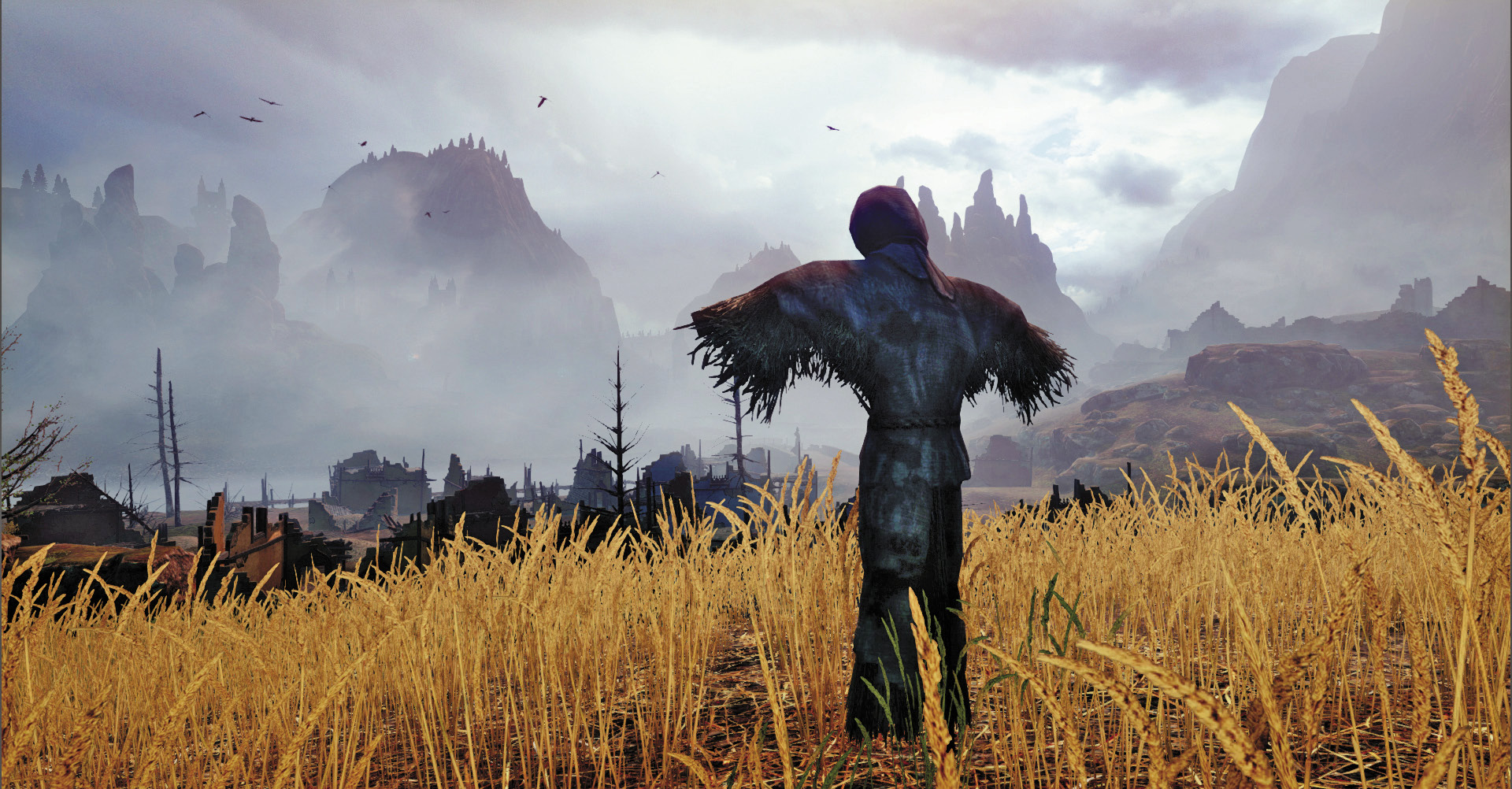
“The world of Thedas is such an interesting place to work with because no matter where you go, there’s some history to uncover.”
PG: You’re a bit of an explorer. How did your experience in the outdoors influence your work?
BP: When I’m not working on video game worlds, I like to spend my time exploring the outdoors. Some of my more memorable experiences involved climbing the endless ladders of the West Coast Trail, hiking to the bottom of the Grand Canyon, snowshoeing across icy glaciers, trekking though the Himalayas, sleeping atop an active volcano, and careening down a hill on my mountain bike while being chased by a grizzly bear. These experiences often inspire ideas and provide tangible, photographic reference that informs the spaces I work on. With each new adventure, I’m amazed at the sheer variety of environments this planet has to offer and try my best reflect this in my work.
“The player is constantly rewarded for exploring because they’re sure to uncover new and exciting content.”
PG: How tough was it to create environments with regions that felt unique?
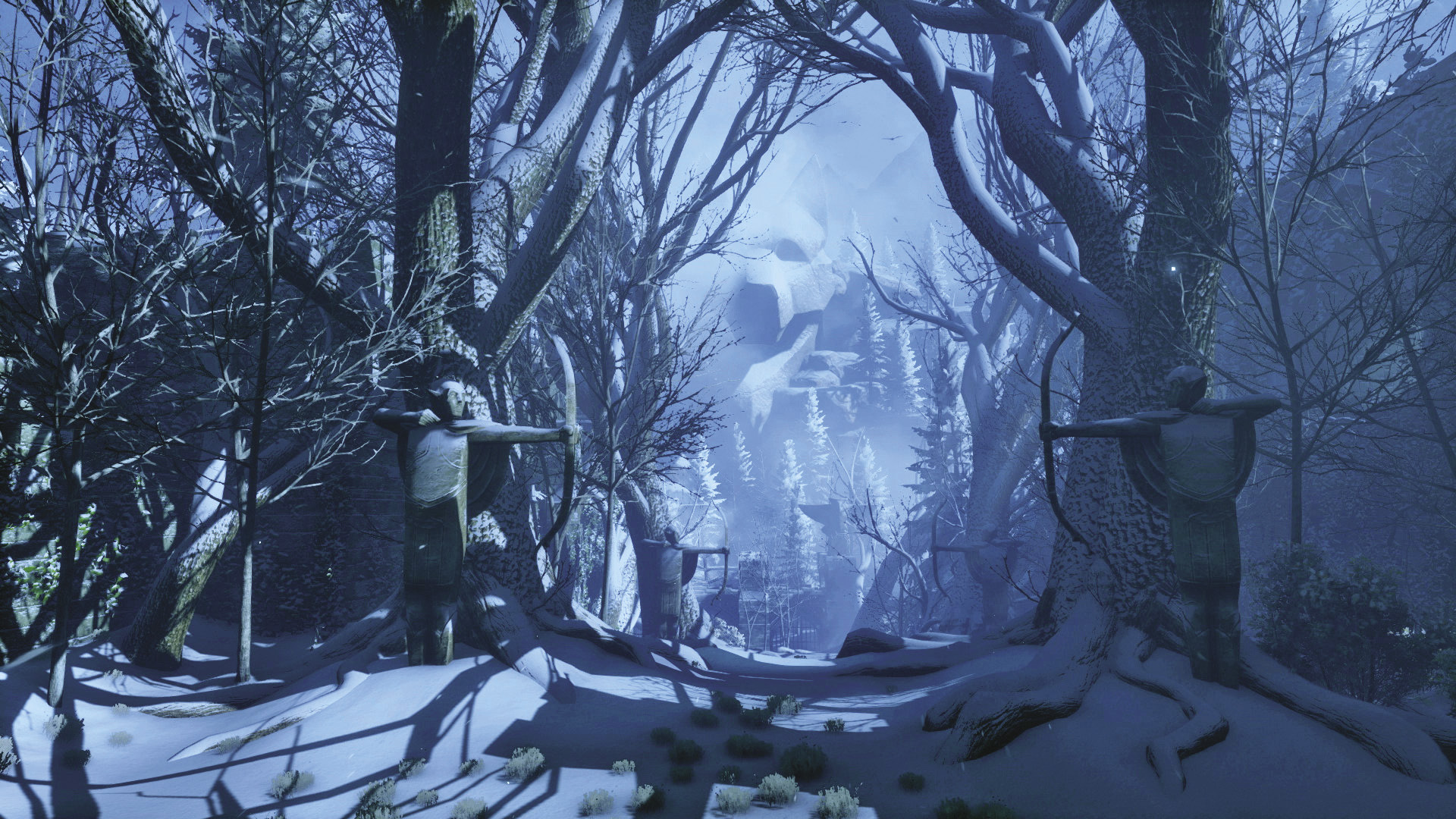
BP: Modern world-creation tools make it surprisingly easy (relatively speaking) to quickly create realistic, massive environments. We experimented with such spaces during pre-production and quickly came to the realization that size isn’t everything—without variety, players become bored and lost. So instead we focused on creating detailed environments with distinct regions. This meant that each area of a level was given a pre-defined, unique look and feel that dictated the type of content that was put in the space. The end result is that the player is constantly rewarded for exploring because they’re sure to uncover new and exciting content.
PG: How are random encounters reactive to a player’s actions?
BP: Meaningful experiences occur when a player’s actions have lasting impact. The wildernesses in Dragon Age: Inquisition are living spaces that evolve over the course of the game. Characters comment on past events, quests react to your choices, and the environment can change to reflect the current state of the world. The random encounters that you experience are also reactive. Major plot points affect who you’ll encounter, and if you decide to pick on a faction of enemies, their population will likely decrease. This reactivity shows the player that their actions affect the world, the people in it, and ultimately, their own experience.
PG: Do you have a favorite locale? Why?
BP: It’s difficult to choose a favorite locale because each environment has elements that I enjoy. Because I grew up in the Pacific Northwest, the blustery coast line and dense rainforest of the Storm Coast appeal to me on a nostalgic level. However, when the snow and cold rolls into Edmonton this winter, I plan to lose myself in the dunes and canyons of the Forbidden Oasis and Hissing Wastes.
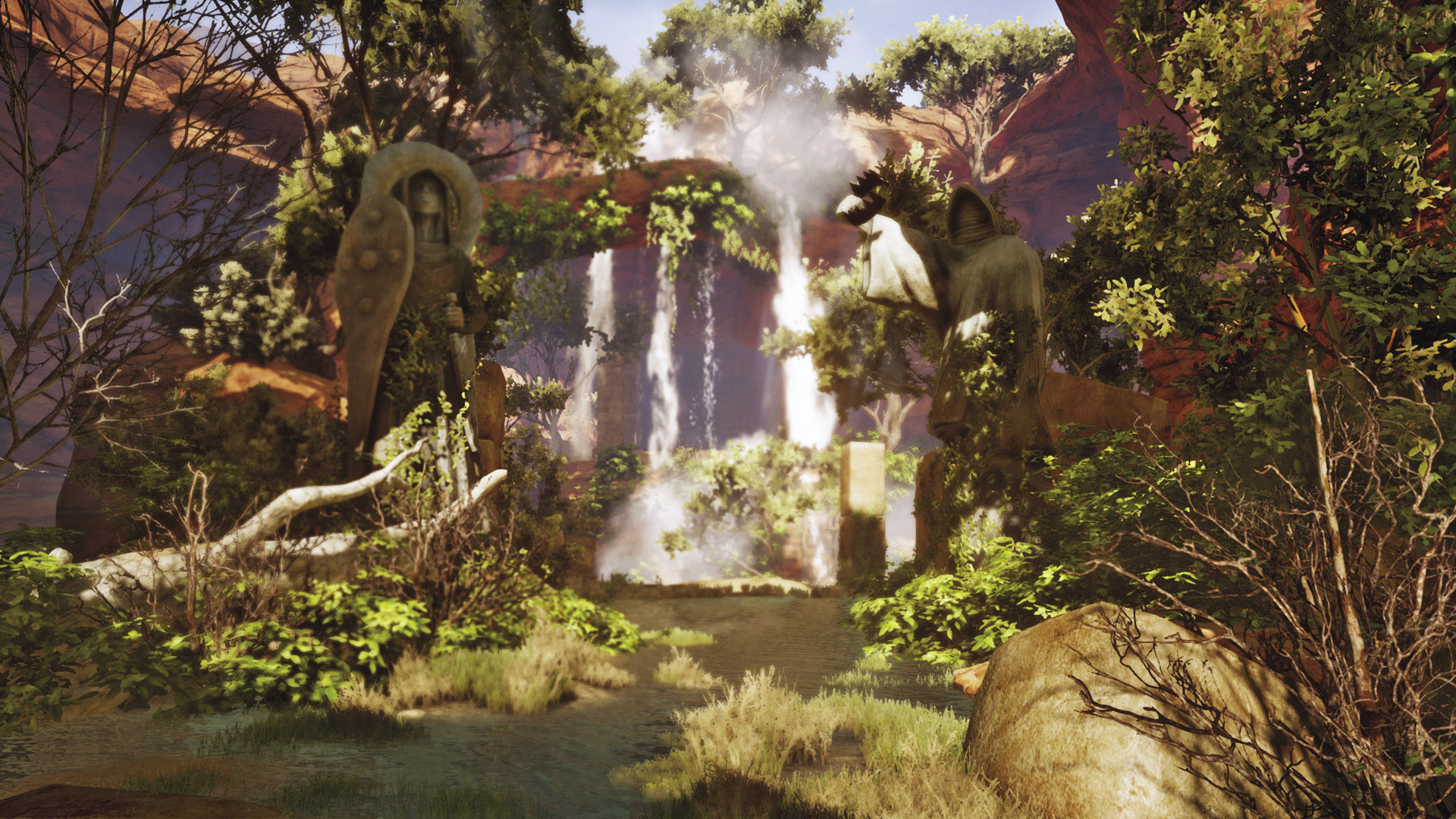
“When the snow and cold rolls into Edmonton this winter, I plan to lose myself in the dunes and canyons of the Forbidden Oasis and Hissing Wastes.”
Andrew Farrell, Senior Artist
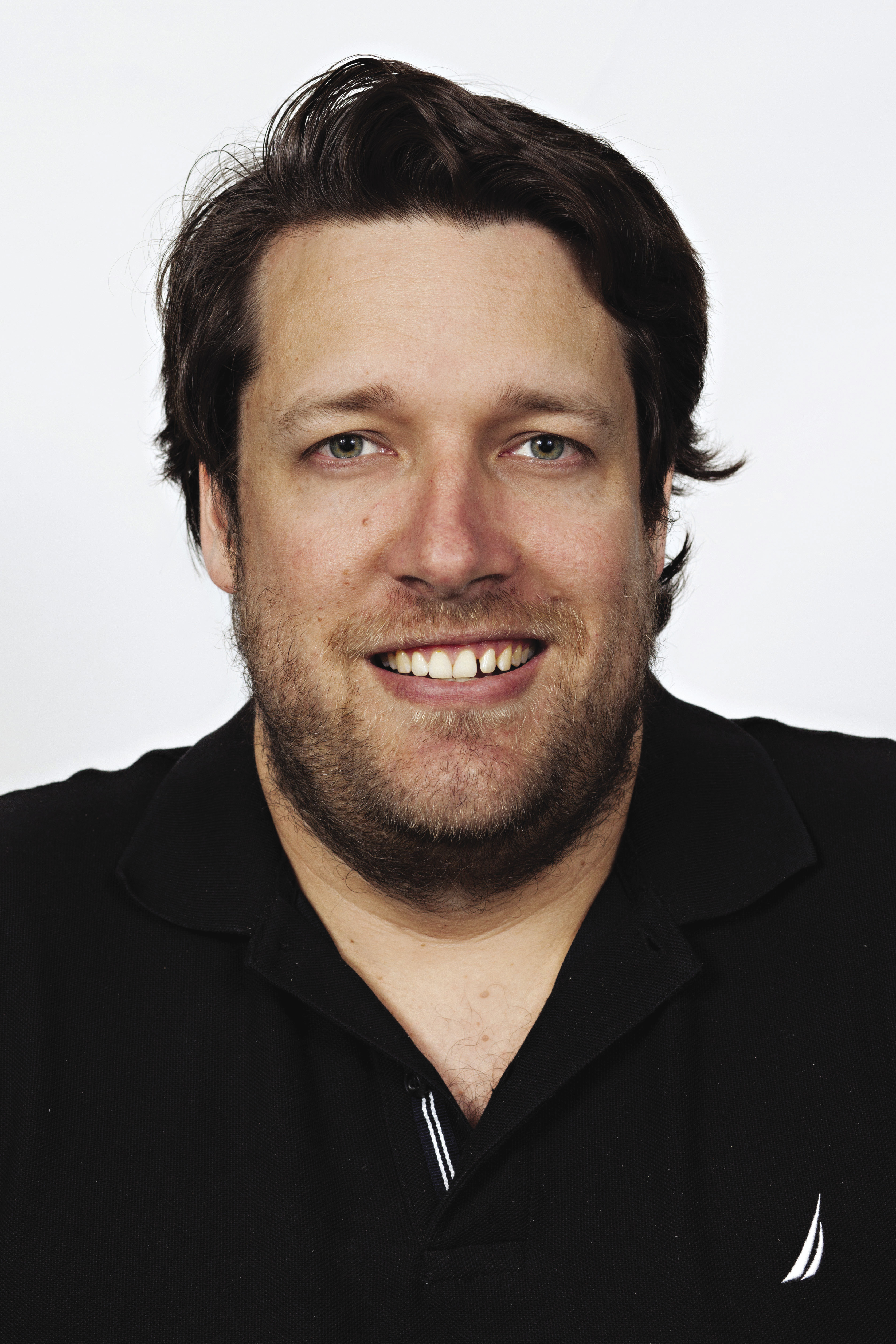
Prima Games: What have your responsibilities been on Dragon Age: Inquisition?
Andrew Farrell: Environment art, world building, and lighting.
PG: When creating a new locale, what kind of direction do you get? Are you just told to create a forest or a desert?
AF: It starts with a concept and a “razor”—a short sentence giving the overall theme for the area.
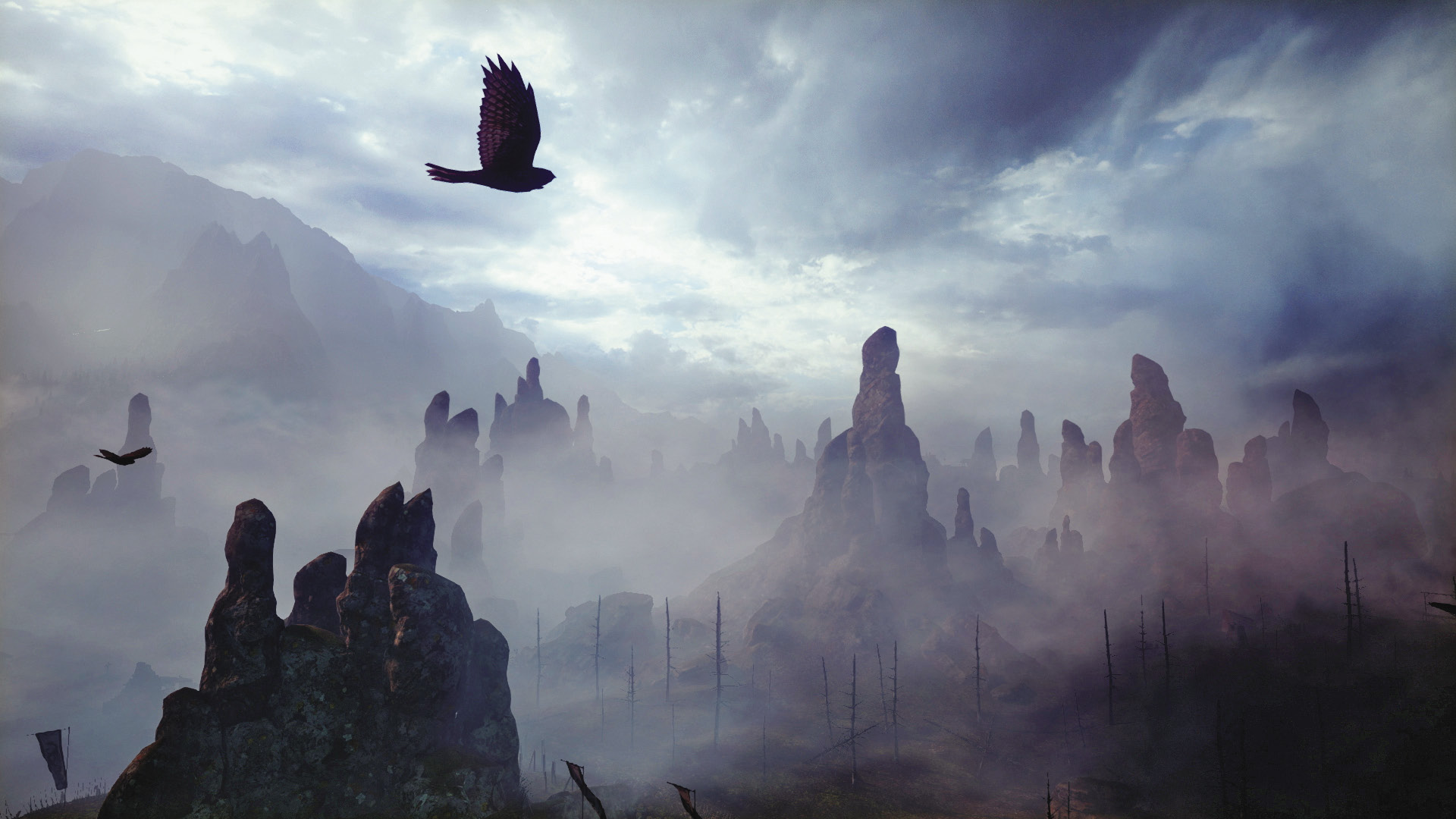
“We spent a lot of time figuring out the size of open sections of areas that worked well for the wildlife systems.”
PG: Let’s talk about scale and density. How do you determine if a locale is too big or too small?
AF: We never went crazy on the size of the zones—we were more concerned with the density of content we wanted in each area. That started giving us metrics on how much space we needed for these areas, how much occlusion for streaming and creature culling and slope angles that would work well with our combat.
Most of our areas are around 1–2 square kilometers. We do have some that are a bit bigger or smaller, but that’s about the size we went for. We never made one area the same as another, and there is a bit of an evolution of how we made these zones in the game. Some have been in the game from two years ago and have been built upon over the years, and some only got made six months ago.
We spent a lot of time figuring out the size of open sections of areas that worked well for the wildlife systems and how much occlusion you needed to make an entertaining experience for the player. Toward the end we worked out what worked with our style of gameplay and the systems that worked within the wilderness levels; these areas were around 200–300 square meters with some small occlusion that could fit a few of our systems together without tripping over each other but kept a nice density for the player.
PG: How has the introduction of mounts impacted your approach to creating new environments?
AF: To be honest it didn’t. We focused on the party experience and how that would play, and the mount was a minor thought for us.
PG: Is there a locale you’re particularly proud of?
AF: The Storm Coast. I took my love for the coastal wilderness areas where I grew up and poured it into that level.
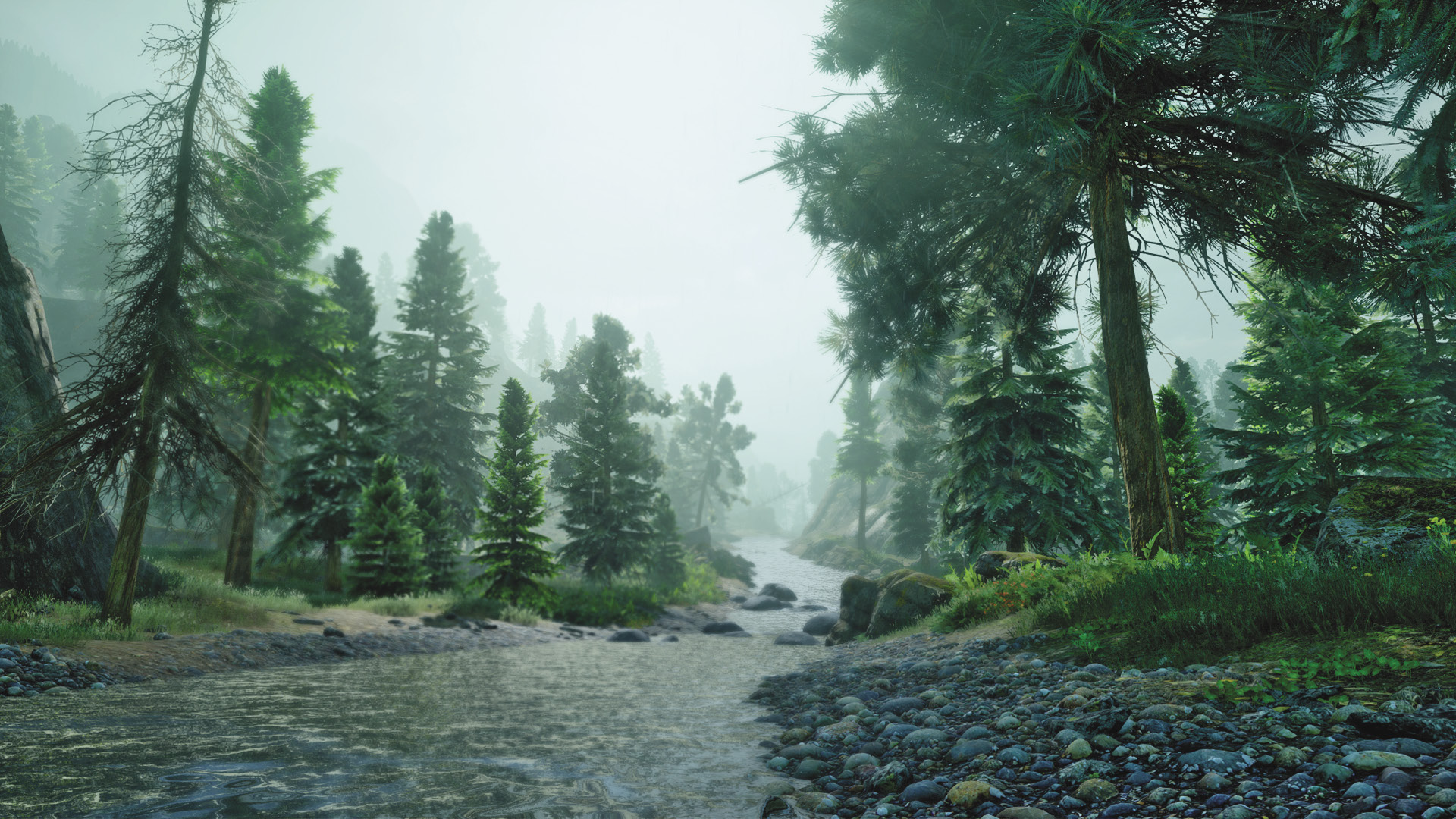
“The Storm Coast. I took my love for the coastal wilderness areas where I grew up and poured it into that level.”
Mark Wilson, Technical Designer

Prima Games: How would you describe your job here at BioWare?
Mark Wilson: The description would change depending on the day! I’ve been incredibly fortunate to have the opportunity to work on so many different parts of Dragon Age: Inquisition, from helping to shape the Frostbite engine to better support RPGs better, to developing the systems used to create the level content, and most recently to scripting some of the music cues.
Typically, the role of a technical designer is to work between level design and programming, creating building blocks (scripting snippets, or whole mechanics and systems) to facilitate content creation.
PG: Your team was involved with creating the Fade rifts. What kind of work went into ensuring each Fade rift encounter was unique?
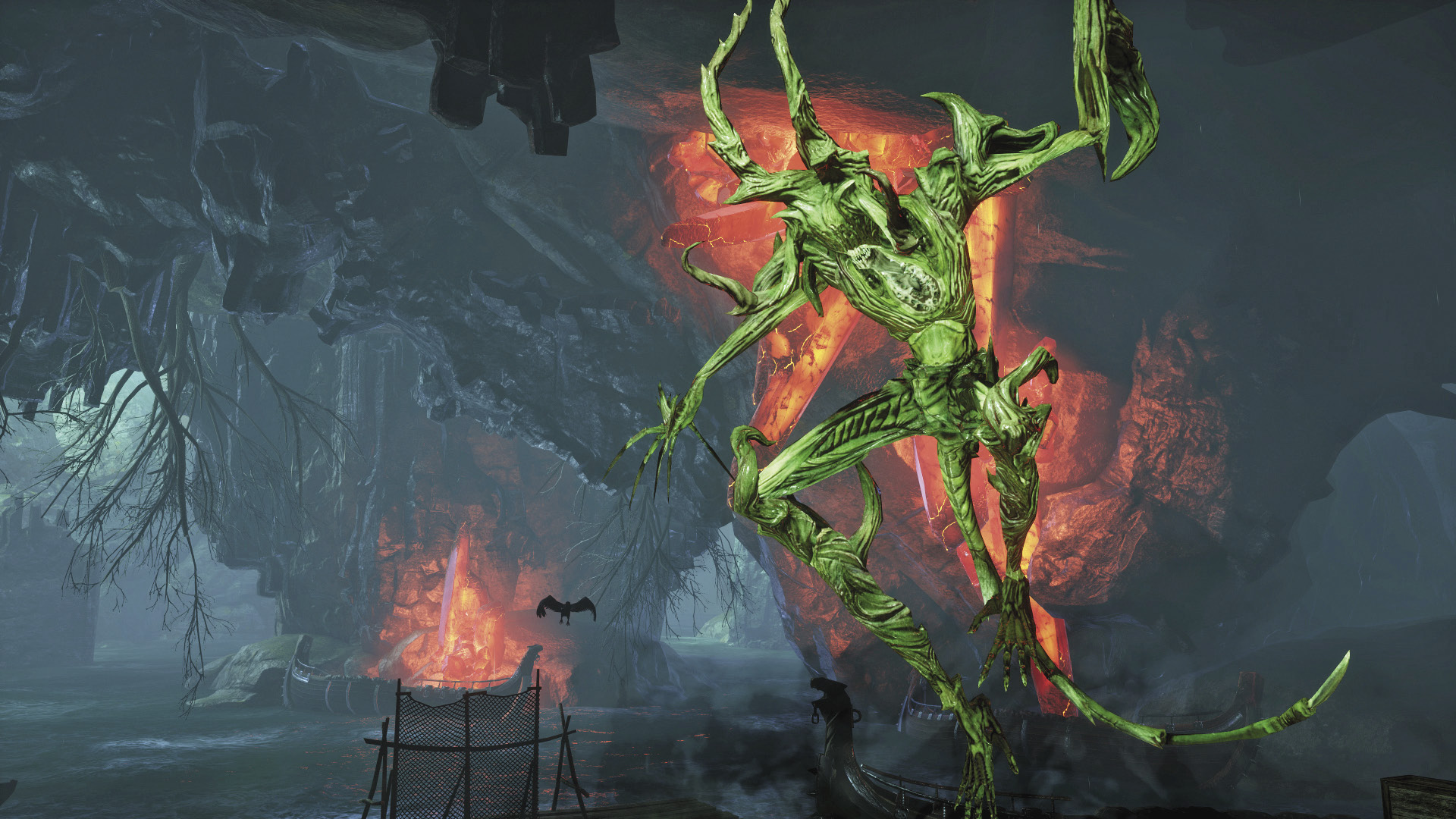
“There’s a huge diversity to how a Fade rift encounter might play out.”
MW: Fade rifts are central to Dragon Age: Inquisition, and players have the opportunity to defeat a lot of them throughout the game, so we knew it was important to provide an experience that had depth and variety.
Specifically, the Fade rift encounters are divided into six level ranges, with different configurations of the demon faction spawned in each wave. Level design further customized the encounters by tweaking the location of the Rift, the spawn positions, and the rate of the Rift’s attacks.
We also considered the number of possible party compositions, which abilities the player might have chosen, and how these configurations can interact with the Fade rift and demon faction.
With these factors combined, there’s a huge diversity to how a Fade rift encounter might play out. From internal testing, I’ve heard of so many different “best ways” to tackle the Fade rift, so I’m excited to see what players will do.
PG: You also worked on the Search function. How did that evolve?
MW: A few of the designers had been experimenting with the idea of hidden objects, and how they might be discovered. We wanted to avoid pixel-hunting, and instead aimed for a hint-based hot/cold mechanic. After a few experiments of varying success, we ended at the “sonar” implementation you’ll see in the game.
Later on, we partnered the Tab Highlight functionality (from previous Dragon Age games) with the Search mechanic, highlighting nearby interactables within the environment. It’s a strong thematic match with Search, and sound design did some great work to differentiate between the possible outcomes (i.e., different sounds to indicate whether you’re pinpointing a hidden object, if you’ve highlighted nearby interactables, or if there’s nothing at all nearby).
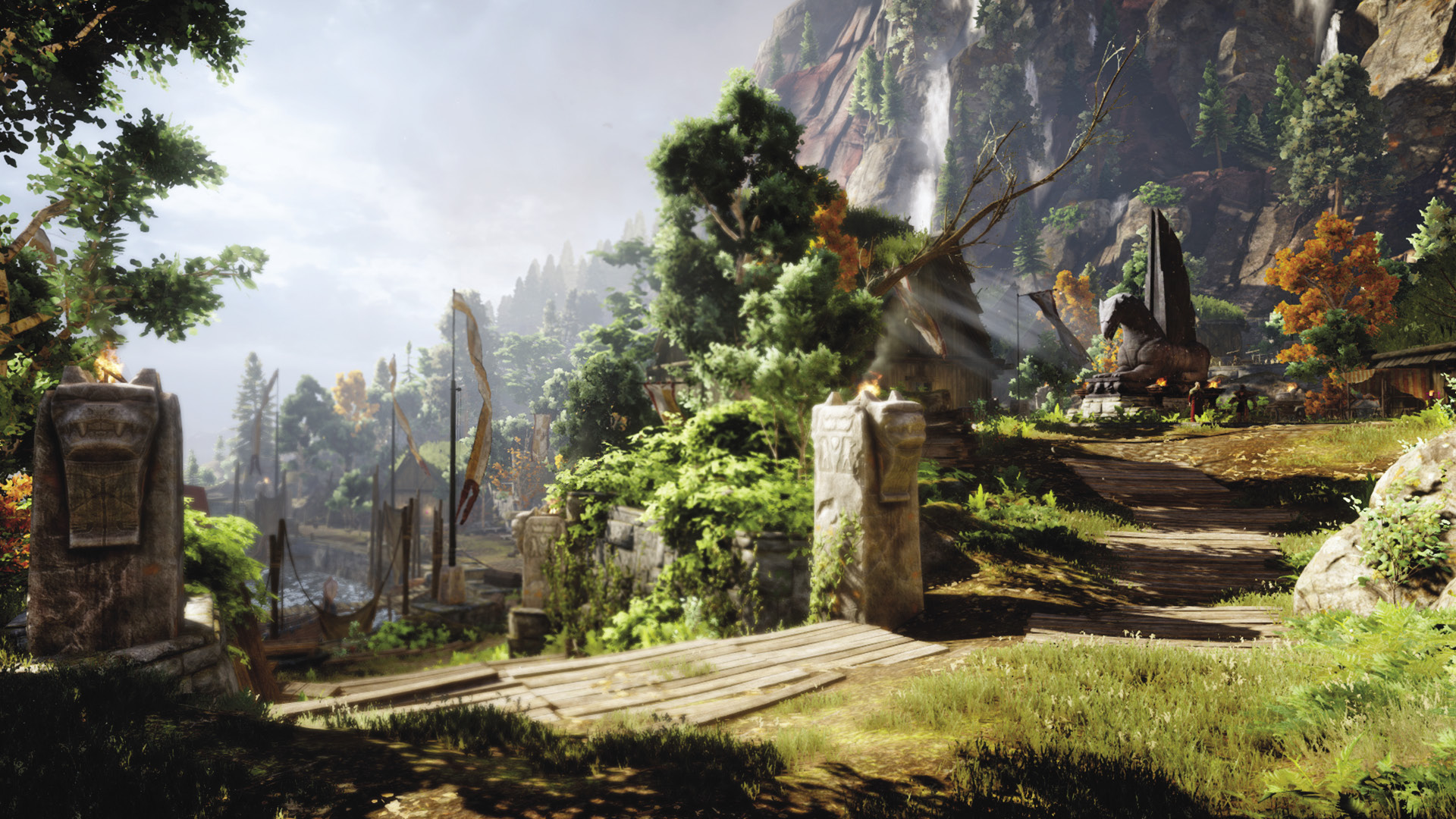
“The level designers did a great job of finding interesting locations that showcase the incredible environment art.”
PG: The oculara provide these wonderful vista moments. Was that intentional?
MW: We definitely wanted to provide the opportunity for them to be used in that way, yeah. The ocularum was actually a combination of a few simpler ideas: a viewing platform, a magical lock and key, and a game-wide collection. The system was also built to allow quick and easy relocation of both the ocularum and associated shards, so we could easily iterate on their placement if any number of factors changed.
The level designers did a great job of finding interesting locations that showcase the incredible environment art as well as draw the player off the path to discover other loops in the exploration areas.
PG: Out of all the elements you’ve had a hand in designing, do you have a favorite?
MW: It’s tough to call out anything specific as a favorite; it’s such a huge game! I am most proud of how the systems all combine to support the exploration experience. There was a collaborative effort between the design, art, and writing teams to ensure that the mechanics made sense within the lore and environment. We set out to create an exploration experience that didn’t feel tacked on to the rest of the game, and I think we accomplished that.
I feel really privileged to have worked with such an amazing team and can’t wait for the fans to get their hands on the game!
Characters and Story
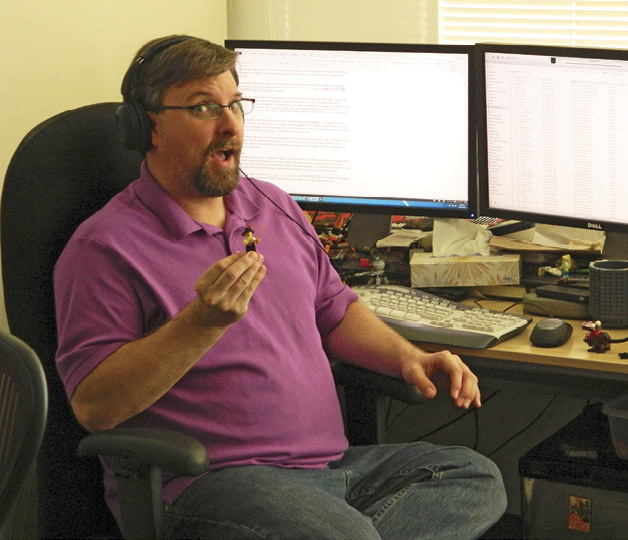
Patrick Weekes with a wall of text
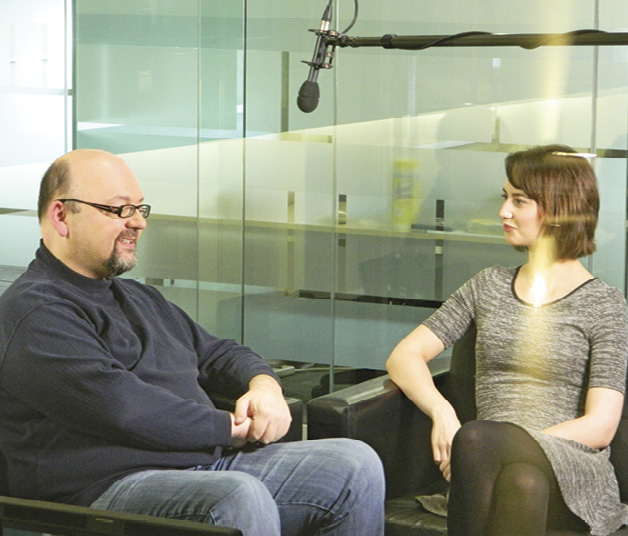
Lead writer David Gaider being interviewed
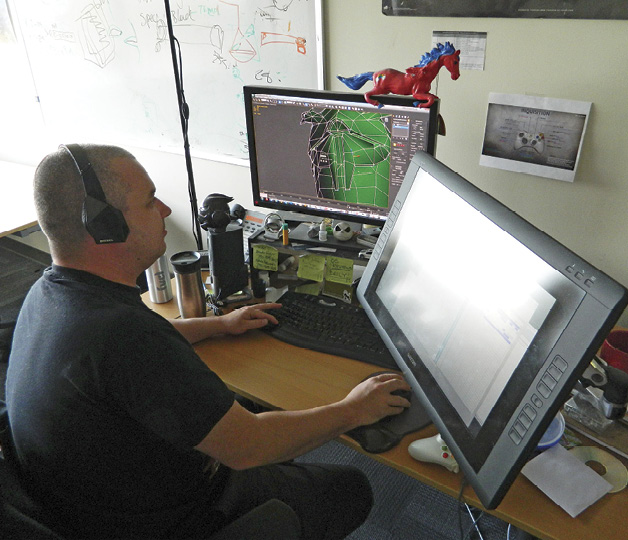
Shane Hawco, Lead Character Artist
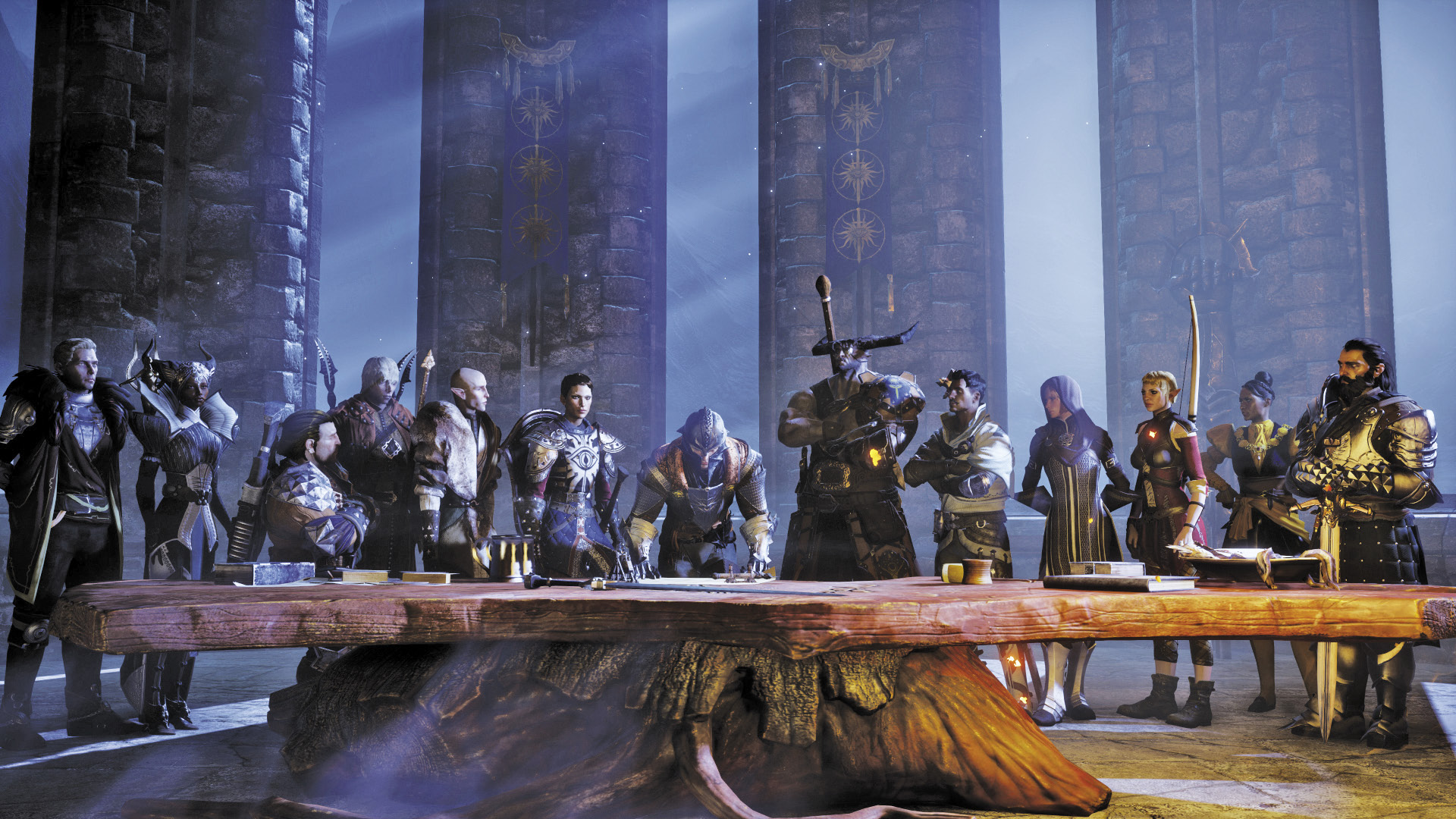
“They never fail to collectively blow me away with the detail, depth, and heart that they give to new characters.”
Karin Weekes, Lead Editor

Prima Games: As lead editor, what are your day-to-day tasks?
Karin Weekes: It depends on the stages of the various projects the editors works on, but we’re a multifaceted team that wrangles quite a few tasks simultaneously. When writers are working on game dialogue, we’re working closely with them on voice, flow, and “traditional edit-y things.” We then edit the technical parts of the dialogue files: Are the correct boxes checked, are conditionals present/correct, and so forth. We then undertake a similar process for all the non-voiced text in the game, working with various design teams to edit that and prepare it for translation. We stay in touch with the voice-over and localization teams as they record and translate to pass along information as they need it. At the same time, we’re editing various things for the studio, like blog posts and text for the Dragon Age Keep website; we also provide lore “consultation” for teams working on ancillary projects like novels and games produced outside the studio.
PG: The lore of Dragon Age is vast. Is it difficult to keep track of everything happening in Thedas, both past and present?
KW: It’s definitely no small task! When I was hired at BioWare onto the Dragon Age: Origins team, my first task was to put together a wiki to track DA lore and story elements. That went marginally well, but was just for the first game. My fellow editor Ben Gelinas was hired after Dragon Age II to create a Confluence site that would hold game lore plus the lore from books, comics, and other ancillary products created in the DA world. Some of that material was then used to create the World of Thedas lore book. But then we made another game: Once Inquisition ships, we’ll start archiving all its new lore, as well. It is a daunting, never-ending, but admittedly fun process.
PG: What is it like working closely with the writers to develop so many rich and unique characters?
KW: My take is that editors are like the enforcers on a hockey team: The writers create amazing characters and the world they inhabit; the writers and editors work together to clarify rules and parameters; the editors then help make sure the designers play by those rules and keep the lore intact. And sometimes the writers are the ones we’re reminding about the rules, which often leads to spirited debate. Getting to talk with and sometimes be soundboards for the writers as they’re creating is wonderful, and they never fail to collectively blow me away with the detail, depth, and heart that they give to new characters.
PG: We love creating different party combos and listening to the banter between party members. It must be fun working on this dialogue.
KW: Editing banter is hands-down my favorite part of dialogue editing. The editors spend several weeks laughing, IMing zinger lines, and calling each other over to read exchanges out loud—as well as occasionally berating the writers for making us get misty and creating all the feels.
PG: Do you have a favorite character?
KW: Flemeth remains my favorite Dragon Age character. She’s a strong, gorgeous “woman of a certain age” who is incredibly powerful and harbors no fools. She’s scary and mysterious, complicated and canny—you might not always know exactly what she’s getting at, but you just know better than to argue with her, because she’ll likely as not turn into a dragon and eat you. It just doesn’t get any better than that.
User Interface
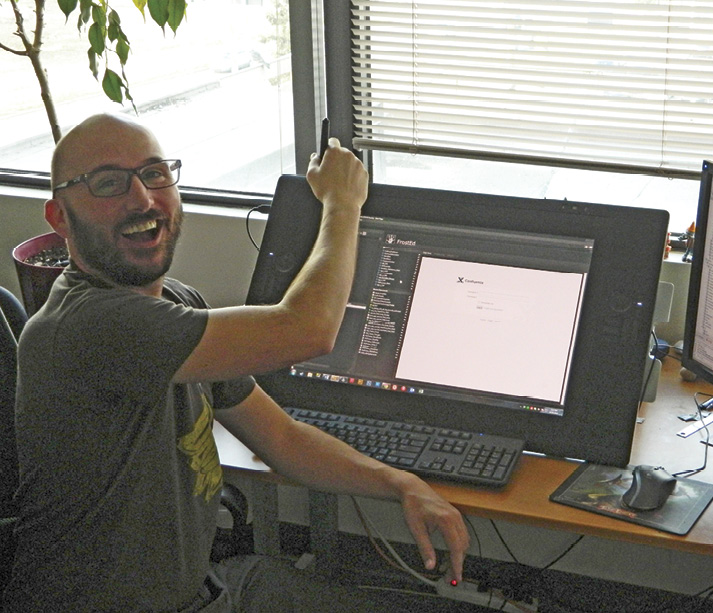
Tyler Lee, demonstrating how to art
Tyler Lee, UI/RPG Lead

Prima Games: What does your job entail?
Tyler Lee: I’m responsible for the interface design and the systems that let the player customize their character and play-through. I work with design, programming, and other artists to develop game systems like character creation, the war table, crafting, inventory, and more.
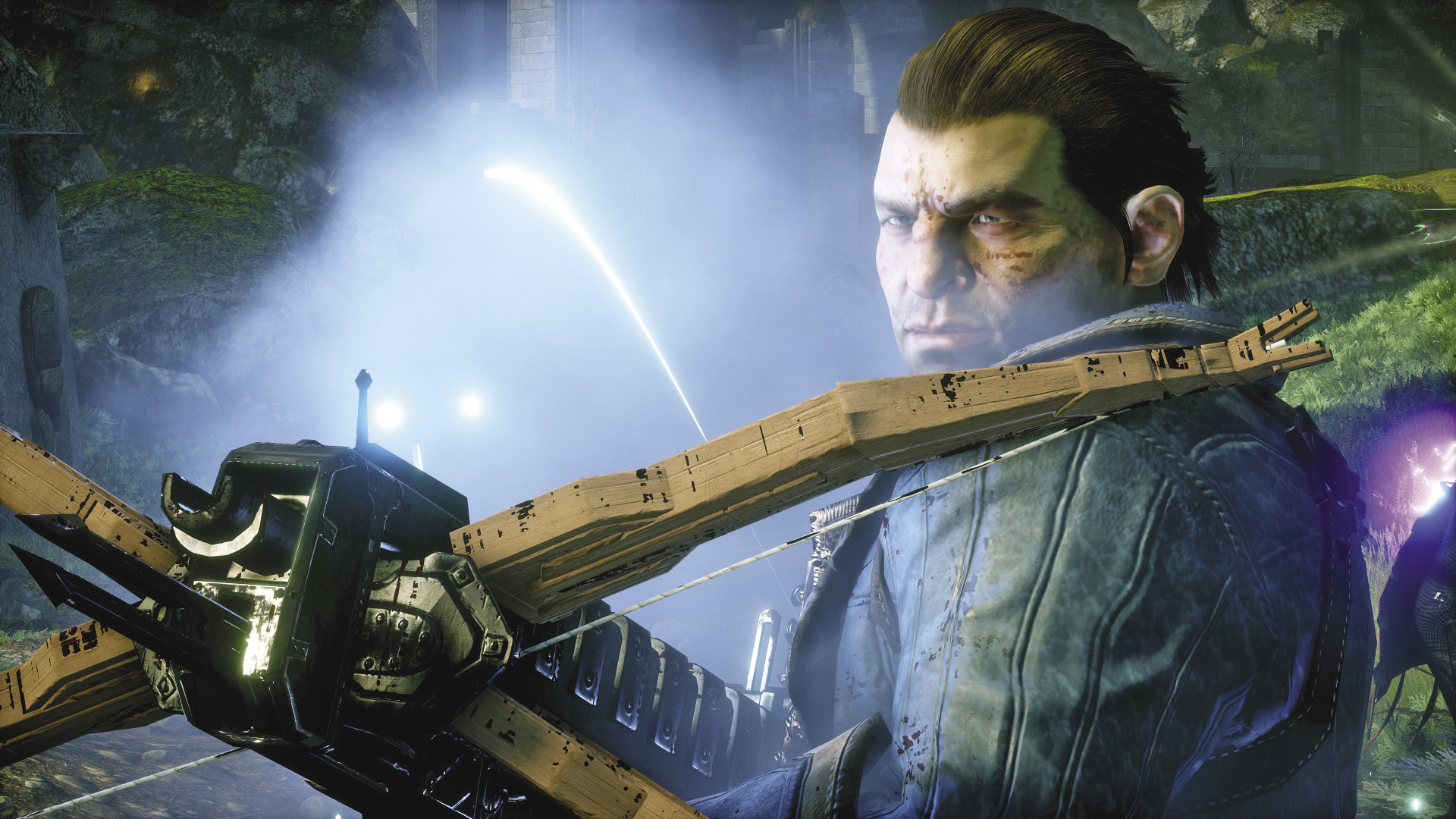
“We wanted to bring back full character customization for your entire party, while keeping the followers’ appearances iconic.”
PG: What kind of challenges did you face when designing the game’s inventory system?
TL: Well for one, we were starting from scratch with an engine that had never had the concept of player inventory. That gave us a lot of room to design exactly what we wanted based on what we’d learned from previous titles. We wanted to bring back full character customization for your entire party, while keeping the followers’ appearances iconic. In addition, with the game design moving into a larger open space with more freedom of exploration, we knew it had to be bigger than anything we’d done before.
PG: How did the ability trees eventually come together?
TL: It was an evolution of the improvements we made in Dragon Age II. We wanted to be able to create trees that weren’t limited in shape or size, and to have more depth and rewarding paths to explore. In the beginning, we used the trees as a guideline for archetypes and potential play styles we wanted to create, focusing on the abilities themselves. As these abilities were refined, the trees went through iteration and evolved through balancing and play-testing to what they are now.
PG: What was it like working on the war table?
TL: Character building! It was very challenging to create a way for the player to feel in control of this powerful organization, building and shaping it with their choices. There were many designs that we implemented, looking for the best way to complement the exploration gameplay, combat, and the story. Of course, it helped working closely with some very smart people (thanks, Webbsley.)
PG: This is clearly an iterative process. How do you know when to stop tweaking something?
TL: We get a lot of feedback, from focus testing and our fellow vocal developers (an open-door policy is crucial). When something moves in the right direction, you hear about it, and that’s often the time for you to take a step back and move on to something else. With such a broad game as Dragon Age, you have to spin a few plates, moving from one area to another. The best part is when it all starts becoming fun as a whole—then the tweaks get smaller and turn into polish.
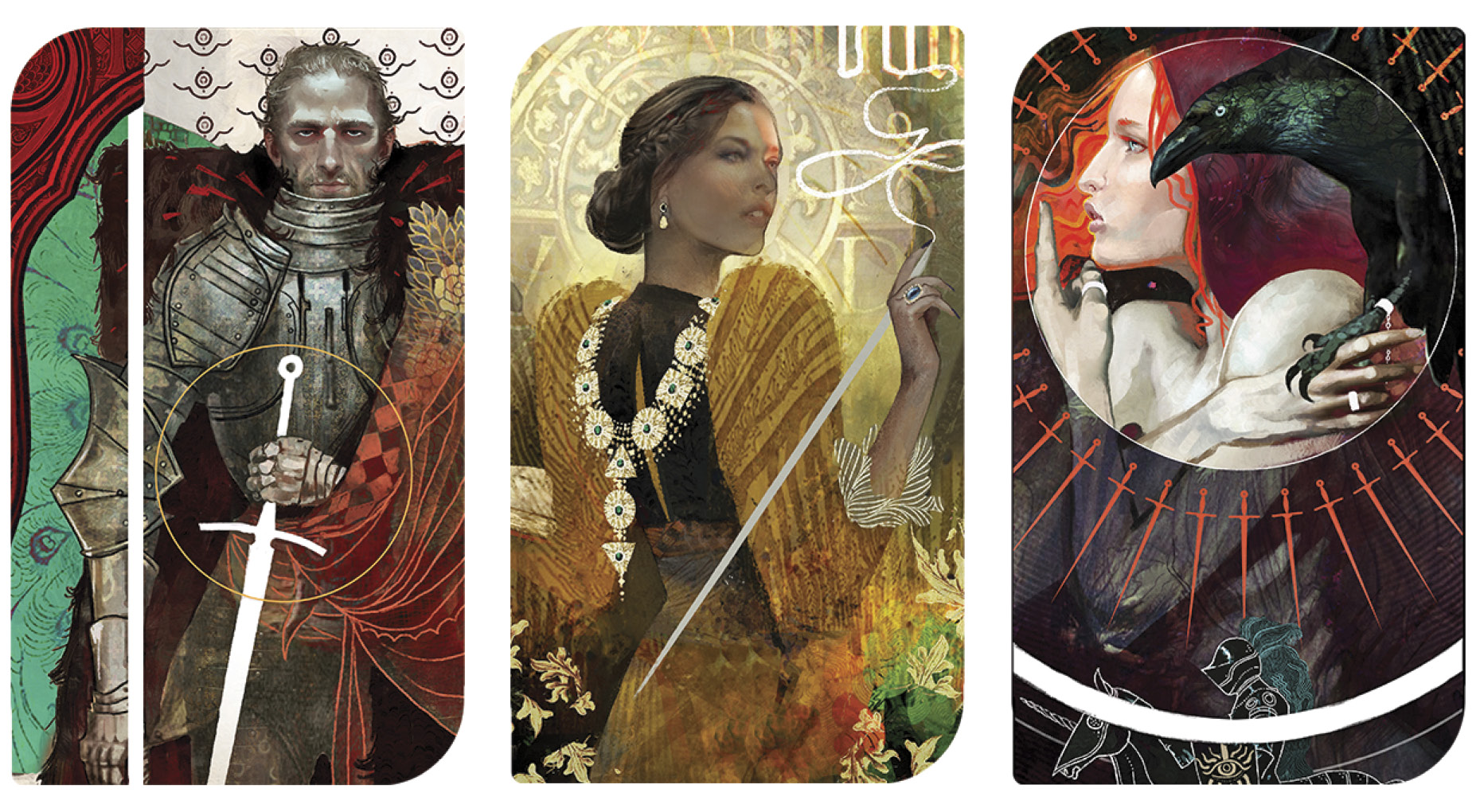
“I love the illustrated art that we’ve used to help convey the characters.”
PG: Is there a particular UI element you’re proud of?
TL: I love the illustrated art that we’ve used to help convey the characters, and how the story relates to and evolves with the followers. That and the low-health portraits—I’m a child of Doom and have always wanted to do that.
Animation
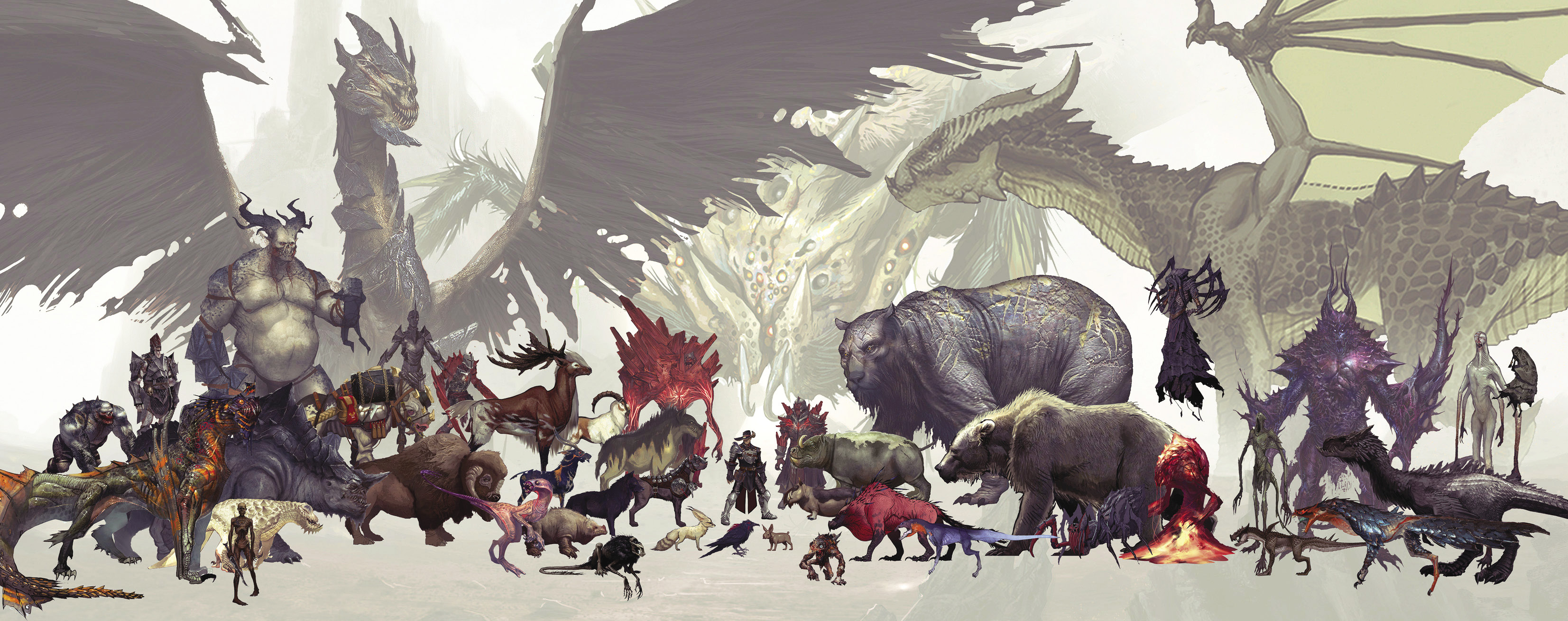
Early concept art of the creature lineup
Steve Middleton, Lead Technical Animator

Prima Games: As a technical animator, what are your responsibilities?
Steve Middleton: Technical animators work with character artists, in-game animators, cinematic animators, and programmers to deal with all of the technical aspects of animation in the game. Our team takes the static character models and sets them up for animation. This includes rigging the characters and creatures, weighting the character models, adding any procedural animation for elements such as cloth and hair, setting up run-time IK (inverse kinematics), and building/maintaining a suite of animation tools for the project.
PG: What was the biggest challenge for you on Dragon Age: Inquisition?
SM: Probably the most difficult thing on Inquisition was finding ways to deal with the sheer amount of character and creature content in a game of this scale. We realized early on that we had to come up with better strategies for rig and animation sharing than we had in the past. Some of these worked well, and some of them we’ll continue to improve for next time. Strategic external partnerships were also key in helping to offset the workload: We would set the standards by which these partners worked, and there would then be a standard review process as work was completed. On Inquisition, we had support from external studios in China, Russia, and India.
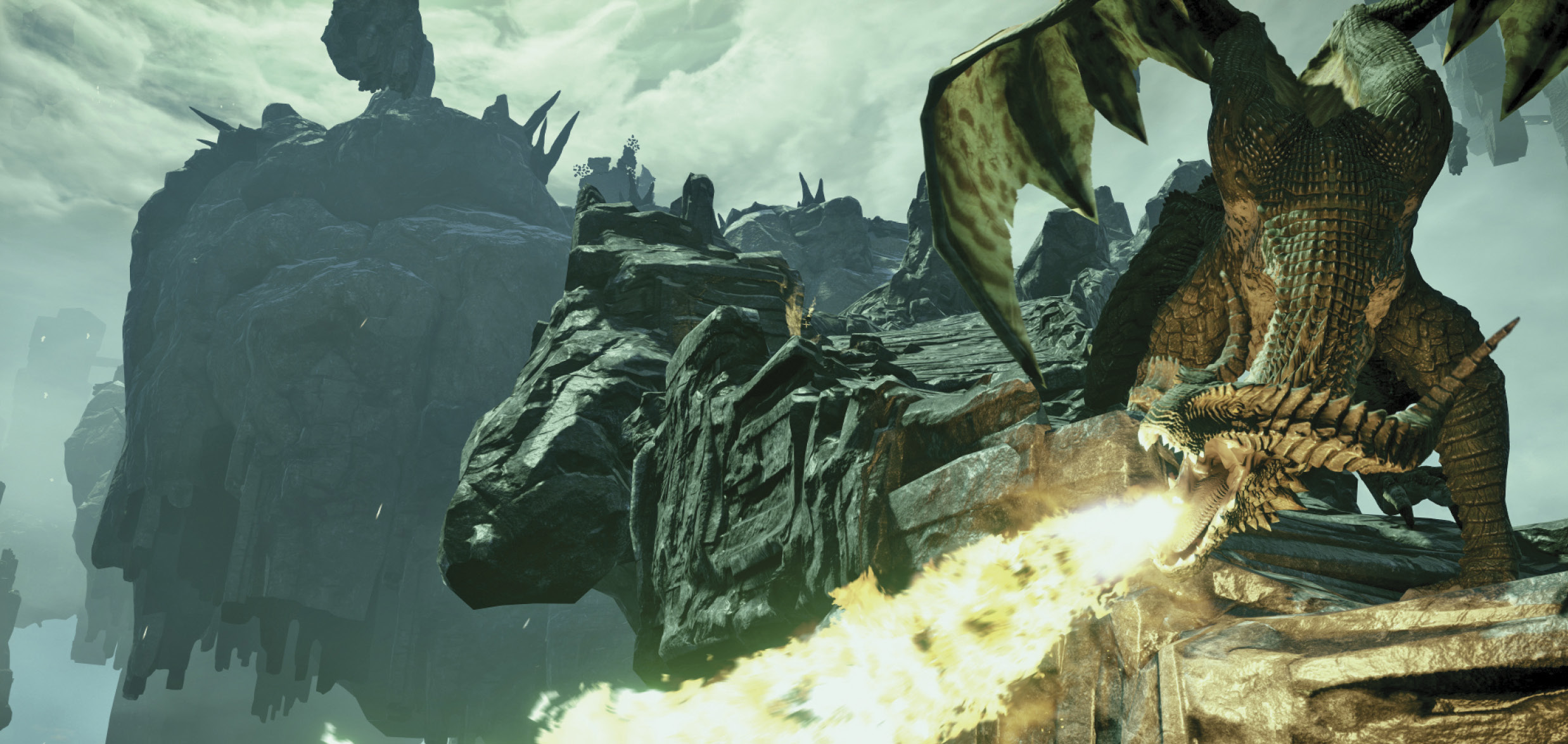
“Overall, I’m incredibly proud of the results we achieved with the dragons in this game.”
PG: What was it like working on the dragons?
SM: One of the best things about working on a franchise like Dragon Age is getting to work with fantasy creatures. Obviously this isn’t the first Dragon Age game to have dragons, but the team really wanted to take them to a whole new level with Inquisition.
As with most of our creatures in DA, we rely heavily on hand-keyed animation, since motion capture just isn’t an option. This means our rigs need to be well-made and animator-friendly. For successful creature animation, a lot of development needs to go in before an animator can even start working. High-quality animation requires a solid animation rig, which, in turn, requires versatile rigging tools—something we are continually developing.
A big change in direction with the dragons in Inquisition was to try to make them more animal-like and less anthropomorphized. In order to accommodate this and several other changes, we worked with the character art team to completely recreate the rig.
Overall, I’m incredibly proud of the results we achieved with the dragons in this game. The combat works wonderfully well without being scripted, and their movement feels very believable.
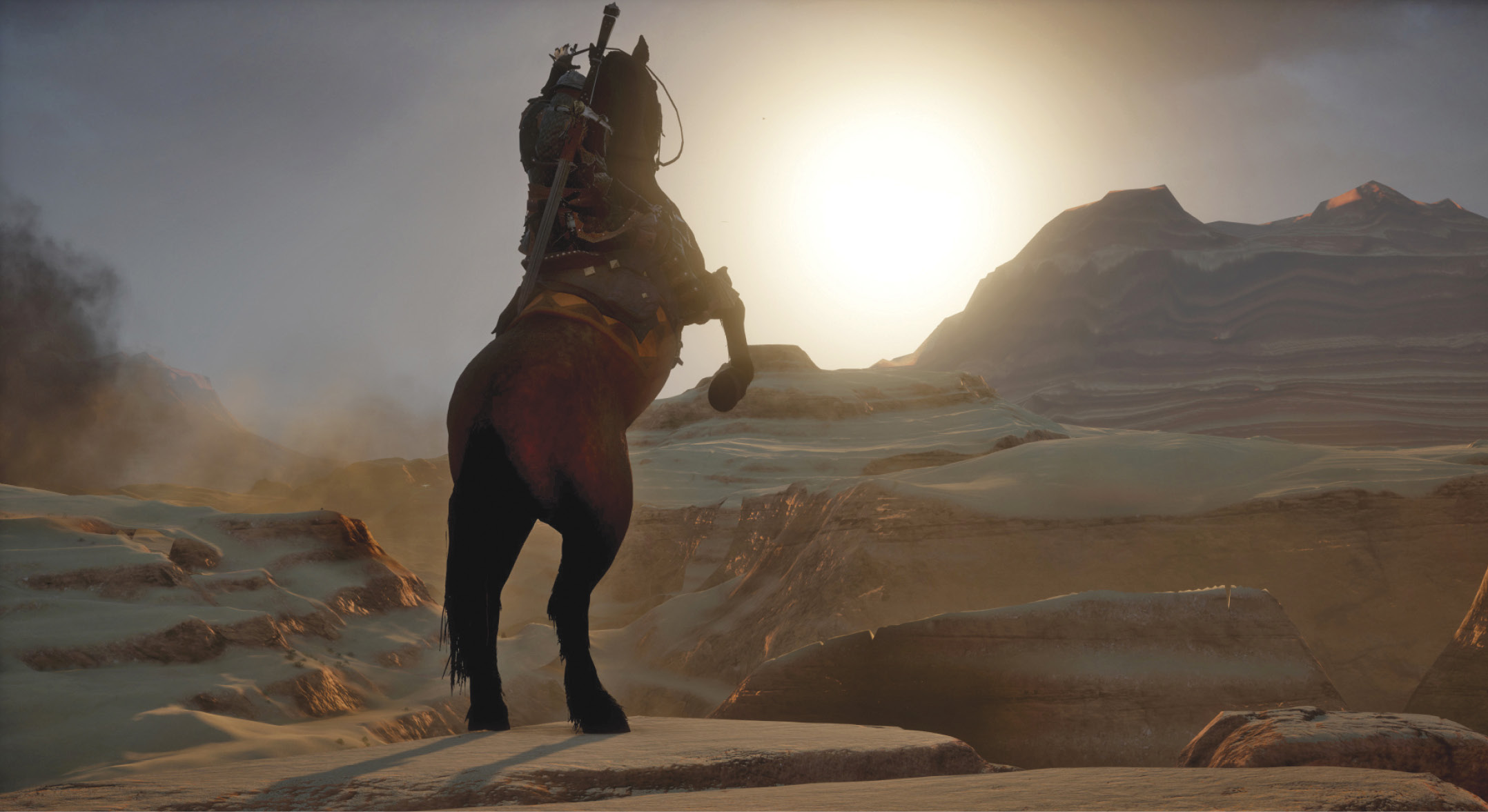
“The bar has been set fairly high in games for horses, and we wanted to make sure that ours held up.”
PG: When designing the movement of the mounts, did you study real horses?
SM: Yes, we organized several field trips to study horse movement, sound, and behavior. We were also lucky enough to have a couple of developers with a lot of first-hand horse experience on the team here at BioWare (thanks, Aaron and Liz). The bar has been set fairly high in games for horses, and we wanted to make sure that ours held up—and keep in mind, horses are just one of the mount types in Inquisition.
PG: What has it been like working with Frostbite? Has it been a positive collaborative process, working with others outside of BioWare?
SM: While every engine transition has its bumps, our experience moving to Frostbite has been very positive. As the DA team has gone through this transition, I’ve really noticed two big wins. First of all, there’s the tech: We’ve leap-frogged ahead with rendering fidelity and capabilities of a sophisticated engine, which took us far ahead of where the Eclipse engine was at. Of course that’s helped a huge amount, but I find the second win even more important: BioWare has contributed a significant amount to Frostbite throughout the production of Inquisition, and in doing so, we’ve become a part of something exciting that is happening between the various studios at EA. Many teams are choosing to adopt the Frostbite engine, and as the Frostbite community gets larger, we’re seeing even further opportunities to collaborate at deeper levels with creative teams within the organization. It’s something I’m glad to be a part of, and it will only continue to make our games better.
Skyhold and Haven
Jason Hill, Technical Designer

Prima Games: Can you describe your involvement in creating Haven and Skyhold?
Jason Hill: I am the primary level designer for the village of Haven and Skyhold. My primary responsibilities involve building the layout of the level with the level artists, finding places for and setting up all of the characters and player interactions, and setting up the non-interactive ambient life in the area. The followers themselves are very complicated and take a lot of effort to implement. There were many other designers involved in their scripting over the course of the project.
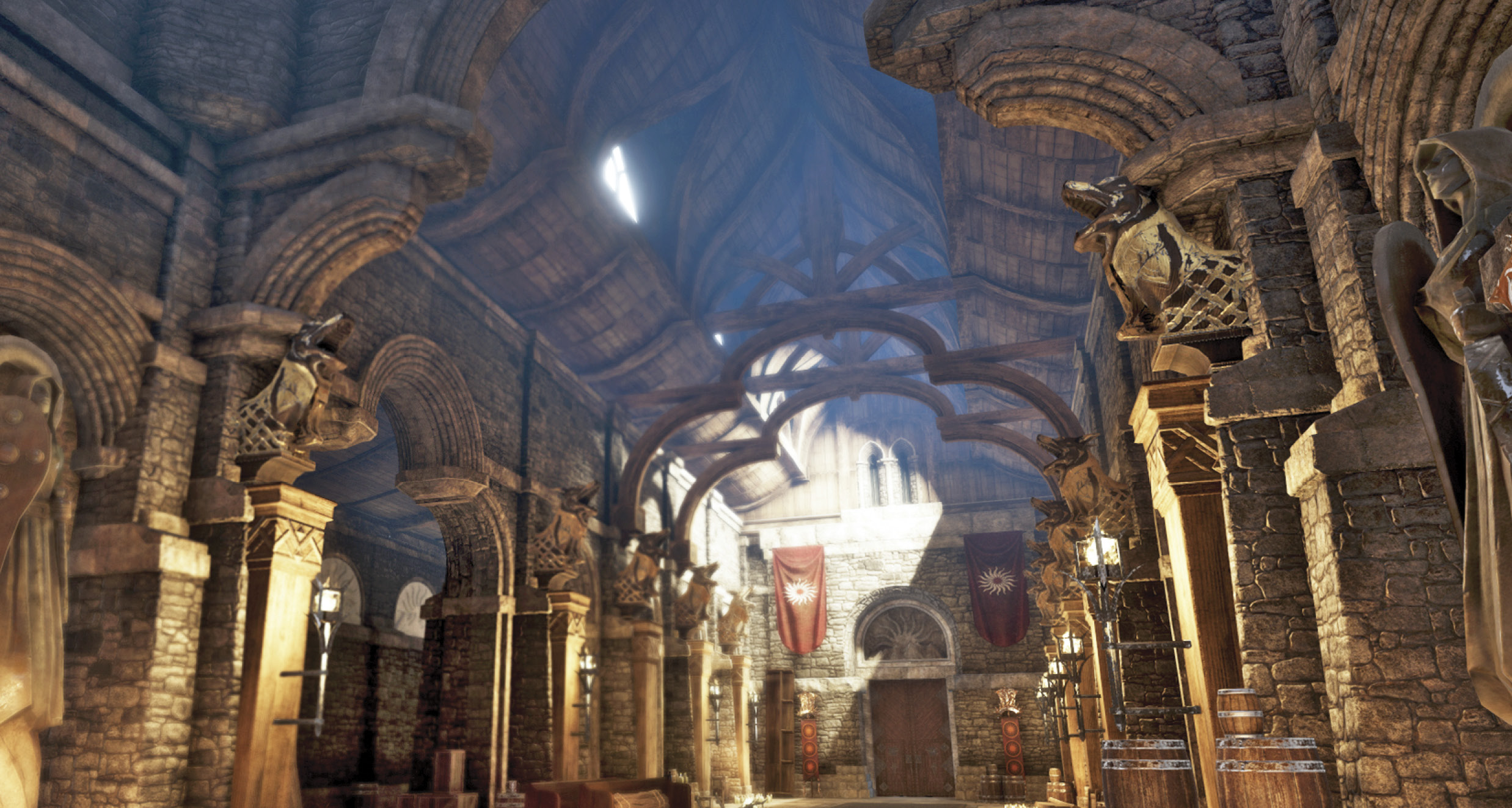
“The area represents camaraderie and new beginnings, and we wanted the player to feel an emotional attachment of some sort through their interactions.”
PG: Haven serves as the Inquisition’s first home base. What sort of story and visual elements needed to be conveyed when designing Haven?
JH: Very early on in development, we talked about the Inquisition symbolically being the player’s 10th follower. Haven and Skyhold needed to be the physical manifestation of that concept. For Haven the primary theme revolves around the formation of the Inquisition. It’s about watching as the people around you gather and work together in response to recent tragedy. We worked hard at showing the various roles of the characters in the village. Traditionally minor characters that offer you services have personalities. You can get to know them if you so choose. Haven goes through a little bit of growth and change as well over time. The area represents camaraderie and new beginnings, and we wanted the player to feel an emotional attachment of some sort through their interactions.
PG: How did Skyhold need to differ from Haven?
JH: Skyhold continues to reflect the state of the Inquisition and as such represents the setback endured by our heroes. The Inquisition arrives to find a disheveled, broken stronghold. It’s going to, once again, require the people to come together to overcome hardship. It represents hope against a seemingly unsurmountable opposition.
We focused more attention on the growth of Skyhold over the course of the game. There are many things that will react to current events. People may join your cause and can be found milling about. Workers will be rebuilding and strengthening the castle. New features may be added based on how you run your Inquisition. There are many neat things that may or may not happen based on how you play.
Technically, Skyhold has a lot more content to manage than Haven. All of the follower friendship plots take place there. There are more merchants. There are a few newly introduced features in the crafting system. It was a challenge to be flexible enough to support changes in the design as we iterated. At some point, it becomes a lot more difficult to add a new room for something. As different as Skyhold is from Haven, there is still a sense of familiarity that is important with your followers and the various game interactions the player has gotten used to.
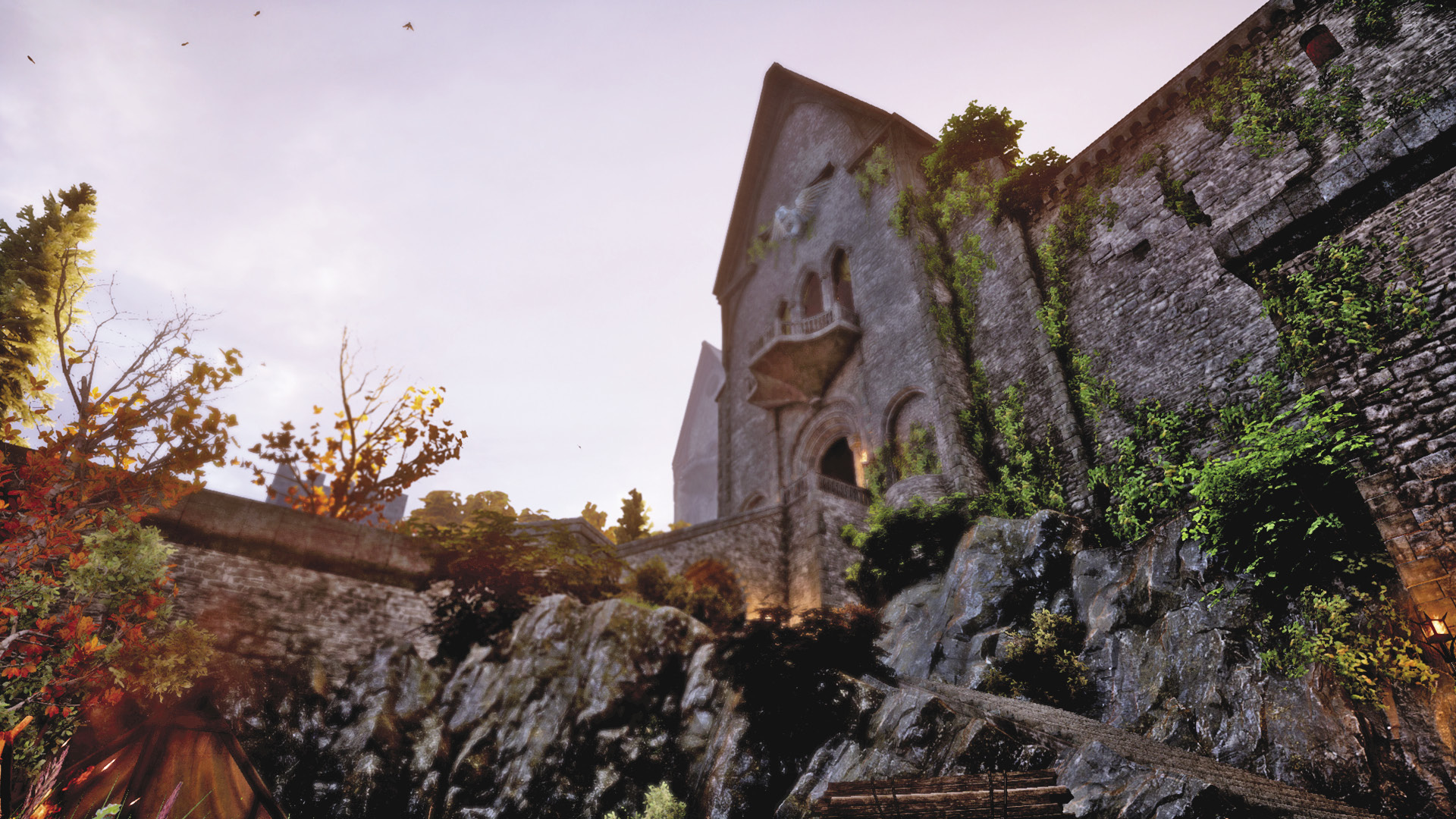
“Skyhold continues to reflect the state of the Inquisition and as such represents the setback endured by our heroes.”
PG: How did you determine where the different followers would hang out in each hub?
JH: While we were iterating on and locking down the layout of Skyhold (there were several iterations, each improving and expanding upon the previous), the design pod sat down and looked at each follower. We tried to look at each follower’s personality and ask ourselves “where would they hang out?” We started by mapping them out quick visually. This let us make sure we had a good spread across the base. Some followers, like Dorian, were easy. We had those locked in pretty early. A couple others were trickier and moved around a bit. Once we felt that each follower was fairly solid, the art team went in and did some renovations. It was really awesome to see the character’s spaces turn into a reflection of themselves.
PG: Skyhold can be upgraded and customized. Was this intended to allow players to create their own unique Inquisition?
JH: Yes, we wanted to give the player the chance to have Skyhold match their play style. It’s similar to how there were some situations in dialogue where the player’s choice didn’t match well with the in-game outcome. It would have been unfortunate if the player had made all these choices out in the wild but always came home to the same people and base. The customizations are fun simple things the player can play around with and create something they can call their own. We wanted to give the player a sense of ownership over Skyhold.
Early on we also decided we didn’t want to tie in-game bonuses or buffs to the customizations. To add “+10 strength if you hung the Fereldan drapes” would have created a min/max situation where there would be specific combinations you had to use to make the game easier. Their purpose is for the player to express themselves, not to be a requirement for success.
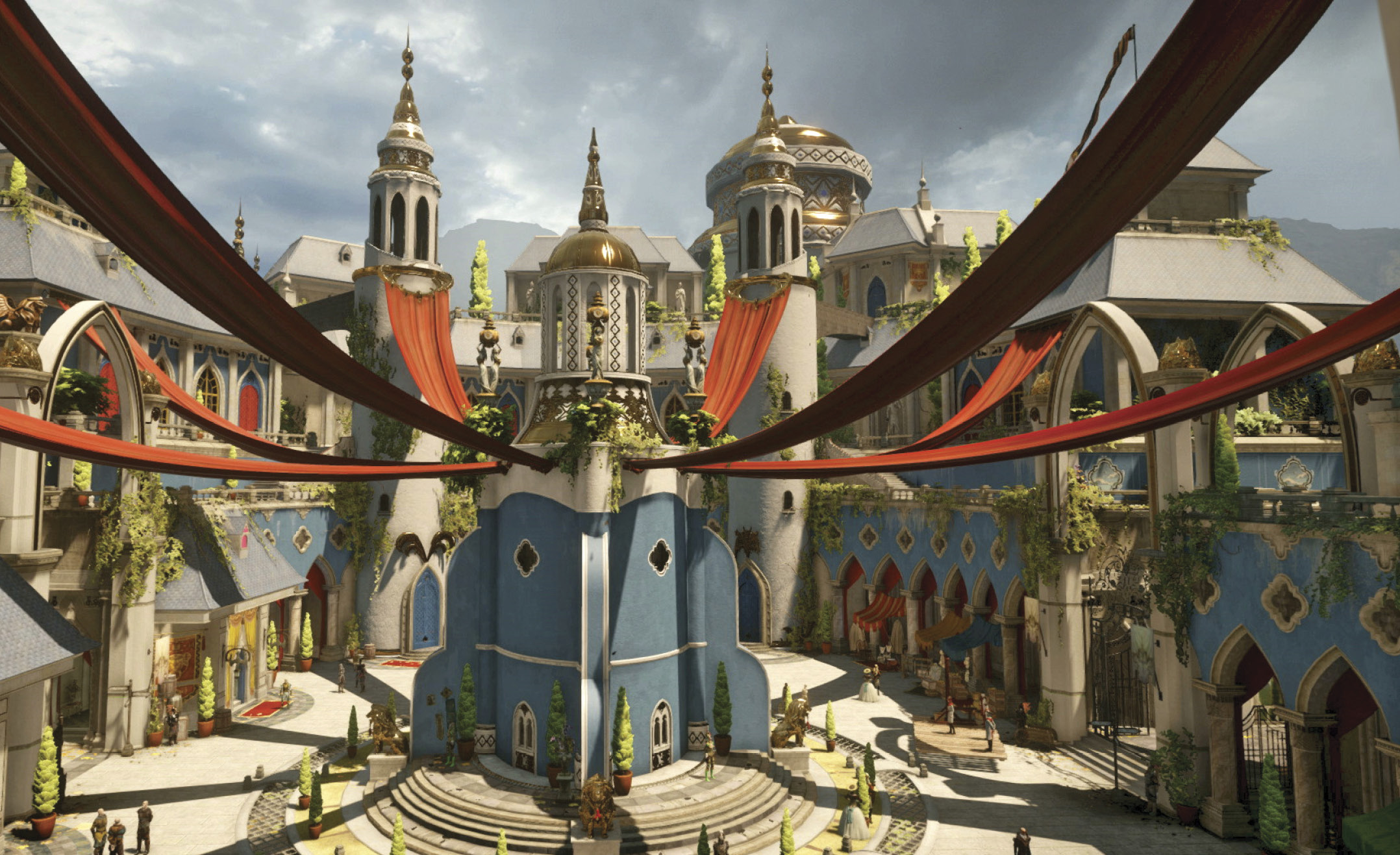
Looking to redecorate Skyhold? Visit Val Royeaux to purchase new beds, drapery, and windows.
PG: Can players find any secrets or Easter eggs in Haven or Skyhold?
JH: As always, our friendly neighborhood writing team has managed to insert some awesome side dialogues for the player to find. I had many a good laugh reading line after line while scripting them into the game. Keep your eyes open and don’t leave any stone unturned—you never know what you will find!
Combat
Daniel Kading, Lead Encounter Designer

Prima Games: Coming from Relic Entertainment, what lessons from the RTS (real-time strategy) genre carried over to the combat system in Dragon Age: Inquisition?
Daniel Kading: The tactical camera interface has a lot in common with an RTS. They both entail issuing indirect commands to multiple units to defeat multiple foes. A consistent control language was therefore important; you’re already asking players to keep track of a lot of simultaneously moving parts, and if your control scheme isn’t intuitive it piles onto that, and risks pushing out of the realm of “challenging” and into the realm of overwhelming and frustrating.
Past that is emphasizing how combat is the intersection of the party’s actions, the enemy’s actions, and the environment. When a battle involves numerous pieces, the environment can become the most game-changing aspect of the fight, allowing players to completely neutralize foes by blocking choke points for melee or line-of-sight for ranged. We amplified this by creating player abilities that capitalize on naturally occurring traits of a multi-unit battle—granting bonuses for elevation differences, relative facing, grouping and isolation, or distance from targets. The goal was to create lots of high-payoff opportunities that players can learn to spot and act upon.
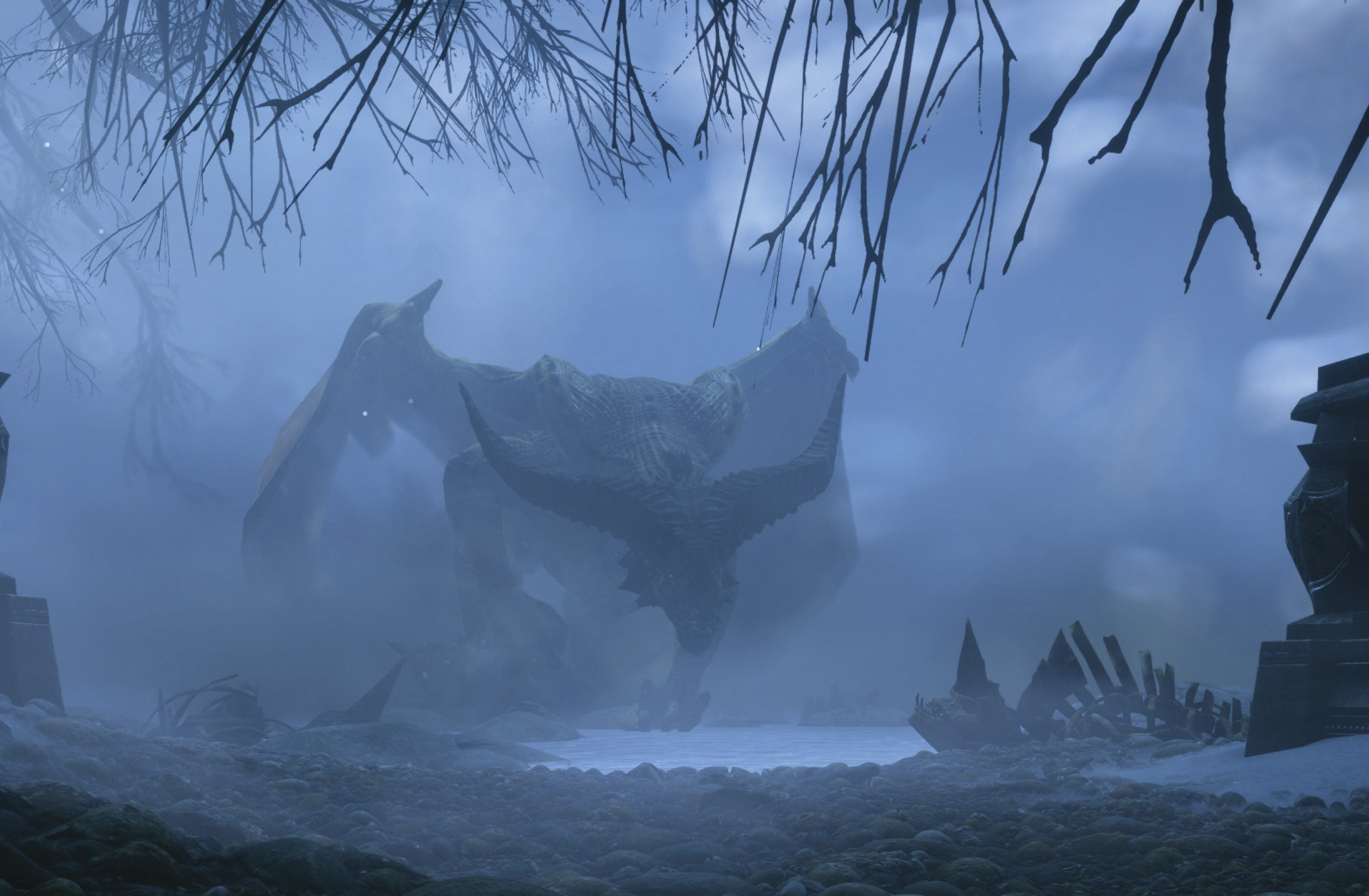
“When a battle involves numerous pieces, the environment can become the most game-changing aspect of the fight.”
PG: There are essentially two combat systems, but they have to work together seamlessly. That couldn’t have been easy.
DK: It definitely had challenges, but the trick to it was that it was not so much building two combat systems, it was creating a single combat system that could be played with two interfaces, built to appeal to completely different play styles: a room that you can look into through two windows. This meant building actions and environments that were enjoyable and valuable both in measured, precise placement, or in reflexive, twitch-style play. Certain abilities are more at home in one mode than another—traps and walls benefit from careful placement in pause-and-play, while counters and blocks feel most natural in the cadence of real time. But all are learnable, and players will gravitate toward abilities that best fit their style.
PG: When it comes to balancing combat, how do you account for the numerous possibilities in regards to the various classes, abilities, and enemies?
DK: With four party members choosing from three classes, various weapons, and hundreds of abilities and passives, the only thing we know is that we don’t know what a given player will bring to a given fight. There’s no ability we can count on the party having available, so fights can’t hinge on a single tactic. As such, encounters are built to provide numerous opportunities. They can be stacked in the enemy’s favor in terms of strength of numbers, level, or enemy type, but the environment and positioning of the enemies can allow for things like sneaking up on them, placing your tank in a choke point while your ranged allies pick them apart, even sometimes knocking them off nearby ledges. The most important philosophy behind creating fun encounters is that enemies exist to be defeated, and by ensuring there are multiple clever routes towards that goal, then all Inquisitors and their parties will find an opening that they can exploit with their unique powers.
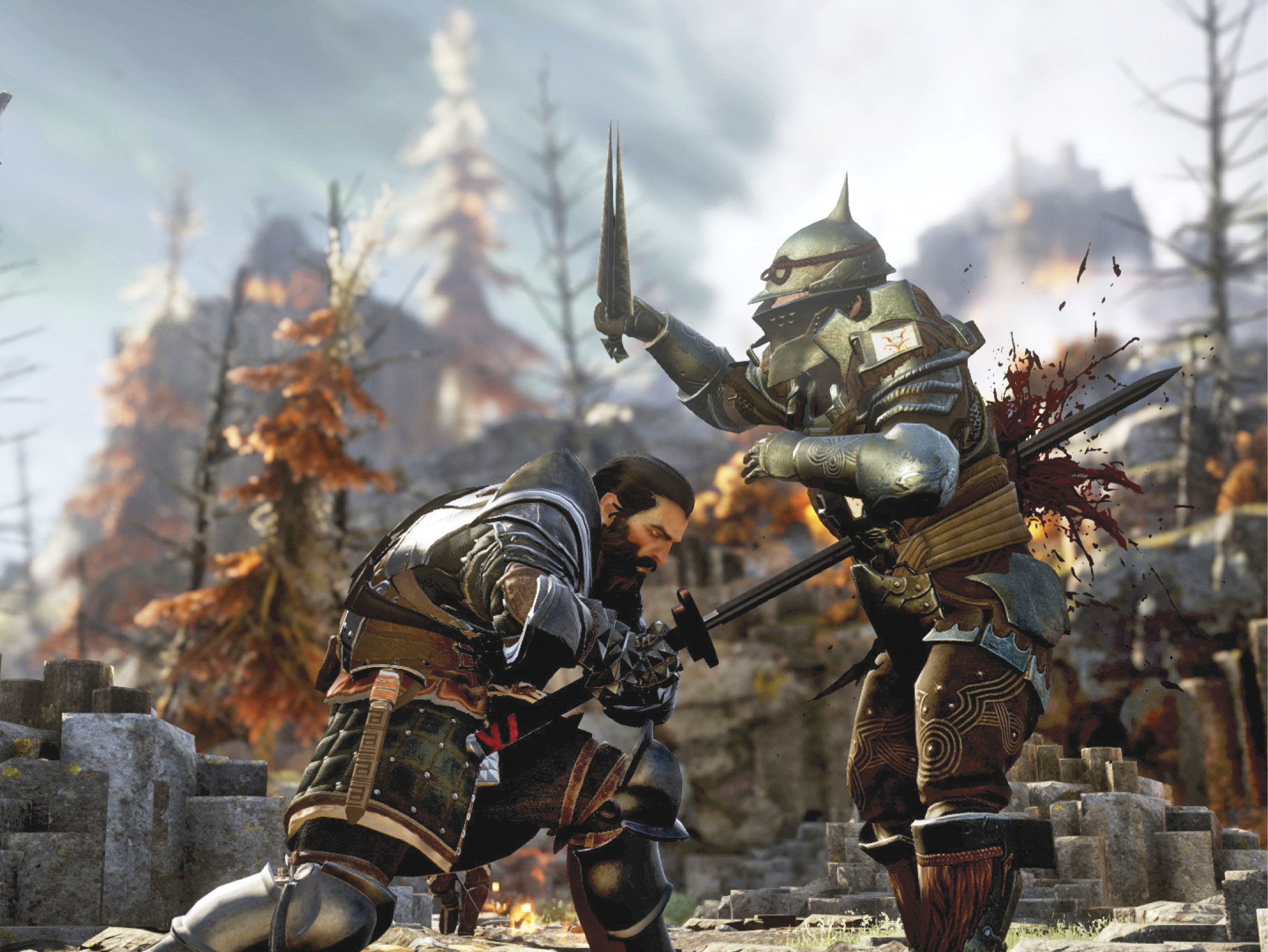
“The most important philosophy behind creating fun encounters is that enemies exist to be defeated.”
PG: Do you have any advice for new players? What kind of terrain/environmental opportunities should players look for before rushing into combat?
DK: Shield-bearing warriors gain additional defense against attacks that strike from the front; combine that with a narrow choke point and the Shield Wall ability and you can potentially shut down all melee attackers. The Champion specialization ability Line in the Sand or the mage ability Wall of Ice allows you to blockade much wider passages. Archers can purchase the Death from Above passive ability early on; this empowers all damage they deal if they can just find a small hill, some rocks, or even piles of boxes. Line-of-sight blockers will not only stop enemy projectiles, but they can stop enemies from perceiving you entirely if they aren’t yet alerted to your presence and you don’t get too close. Lastly, many Fade rifts may seem to be elevated beyond the player’s reach, but if you analyze the terrain you will always find some location that you can sneak or run to that will allow you to use the Inquisitor’s Disruption power to stun and clobber all of the demons defending it.
PG: When you get the opportunity to play, what is your favorite class and ability?
DK: I enjoy playing a dual-wielding rogue, with a collection of conditional high-damage abilities, such as Twin Fangs, Deathblow, and Shadow Strike. Combine those with Stealth and upgraded Flank Attack (which places me into stealth as well), and I can weave between abilities and opportunities to tear down individual targets. All three of those damage abilities are combo detonators as well, so by putting a Winter-specialized mage in my party I get ample opportunities to flank and detonate frozen targets for the Shatter combo.
Crafting
Yaron Jakobs, Lead Systems Designer

Prima Games: Crafting is a big part of Dragon Age: Inquisition. What was the main goal when implementing the new crafting system?
Yaron Jakobs: Right from the start, the main goal of the crafting system was to make a system that is attractive also for players who don’t usually craft. You can see in many games lots of cool crafting mechanics, but usually most players do not engage with them. To achieve this goal, we had a selection of secondary goals that can pave the way: make sure it’s possible to craft really powerful items (more powerful than loot), let the player customize the appearance of the crafted item as well as the stats, and, finally, have an easy-to-use interface. I think we’ve managed to reach these goals, but I’ll leave that for the players to judge.
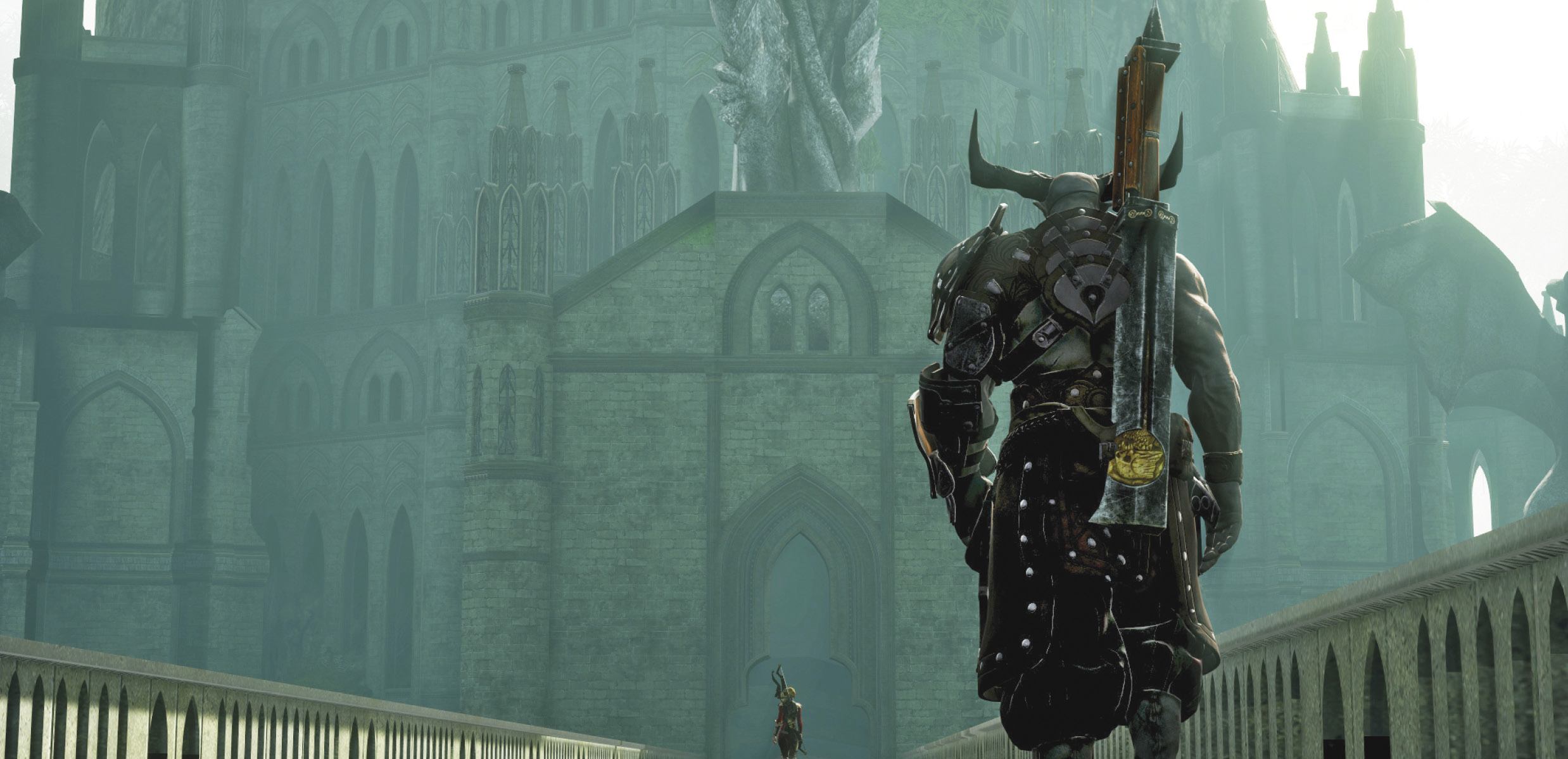
“The main goal of the crafting system was to make a system that is attractive also for players who don’t usually craft.”
PG: What are the differences between the tier 1, tier 2, and tier 3 crafting materials?
YJ: A “tier” is an equivalent of “level”. Most items have a level range between 1 to 23 to show their relative power. However, some items like schematics and materials cannot have a level since they don’t represent a single notch in the progression. Each such item has a potential to make an item with a range of levels. For example: A tier 1 dagger schematic can make daggers from level 4 to level 11, depending on which materials are used. Therefore, we use tiers to specify the relative level grouping of these items: Tier 1 is early-game, tier 2 is mid-game, and tier 3 is end-game.
PG: How can a player increase the chances of creating a masterwork item?
YJ: First, find out what power you’d like to use for the masterwork slot. Once you know the power then you’ll need to find out where it can be found: Hunt a specific animal? Collect a metal node? Fabrics dropped by an enemy? Once you have this information it’s gathering/hunting time—since masterwork items have a low drop chance you may need to try a bit, but eventually the desired drop would appear.
PG: Is there ever a concern that a player could craft an item that is too powerful?
YJ: Yes, although this is not necessarily a bad thing. If you put a lot of effort and research into finding all the proper materials and schematics, put yourself at risk to acquire them, and then finally make something cool, then this sounds like a deserving reward.
PG: Do you have a favorite aspect of the crafting system?
YJ: Enchanting is my clear favorite—it allows attaching runes into weapons. These not only look cool, they offer significant damage bonuses.
Dragon Age Keep
Leah Shinkewski, Dragon Age Keep Producer

Prima Games: What are your responsibilities as Keep producer?
Leah Shinkewski: As the producer for the Dragon Age Keep website, I am responsible for the vision of what the Keep should be, on behalf of Dragon Age players—while working closely with the game team and franchise leadership to ensure the Keep is always aligned to what Dragon Age needs—past, present, and future.
PG: What is the Keep?
LS: At its core, the Dragon Age Keep is the way to establish your impact on the world of Thedas leading up to Dragon Age: Inquisition. With the Keep you’ll be able to relive past choices, discover new possibilities, and share your unique Dragon Age history with friends.
The Keep will allow you to customize over 300 choices across Dragon Age: Origins and Dragon Age II to recreate your unique world history and import it into Dragon Age: Inquisition at the start of a new game.
Completely free to use and web-based, the Dragon Age Keep is accessible from any modern browser on your desktop computer, tablet, mobile device, or console—no downloads or plug-ins required.
PG: With so many possibilities, how likely is it that you’ll have the same world state as another player?
LS: It would be nearly impossible to have the same world state as another player. That’s the amazing thing about the Dragon Age Keep—there are so many possibilities to explore!
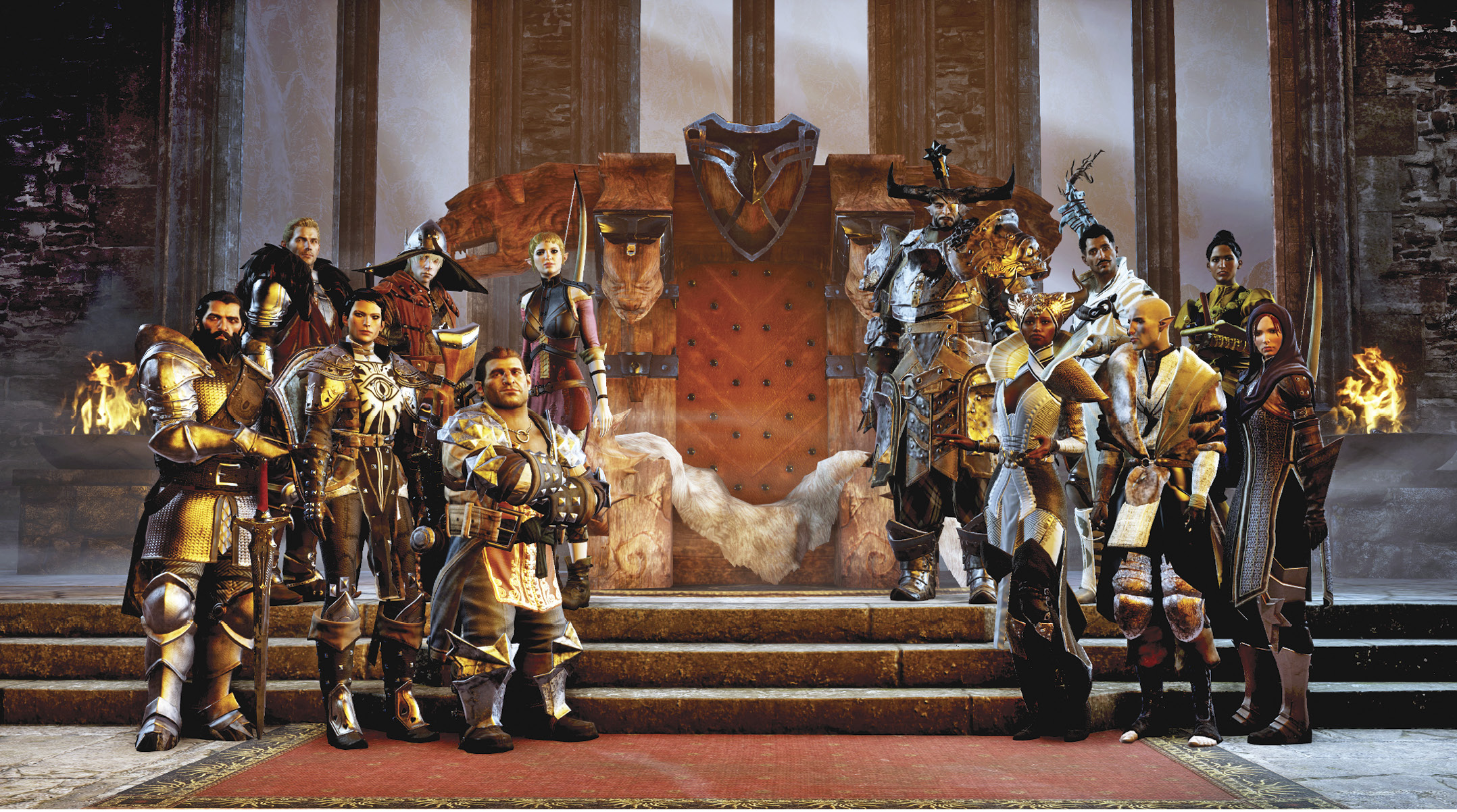
“The most rewarding (and challenging) aspect of the project has been bringing all the details together to create a place for Dragon Age fans to preserve, enjoy, and share their unique story.”
PG: This seems like a very detail-oriented project. What has been the most challenging aspect? The most rewarding?
LS: From implementing the technology that ensures your world state is always valid to designing a web-based experience that can be used across multiple devices and platforms, the most rewarding (and challenging) aspect of the project has been bringing all the details together to create a place for Dragon Age fans to preserve, enjoy, and share their unique story.
PG: Your team has been working closely with the community to ensure there are no conflicts in world states. What has it been like working with the Dragon Age community?
LS: We knew that to make sure the Dragon Age Keep accurately and faithfully represents your Dragon Age story, we would need the help of the Dragon Age community. That’s why we opened the Keep early in our development for feedback from the community—helping us to shape many of the features of the Keep into what it is today. It’s been a really positive, collaborative experience, and we couldn’t be more thankful for the support and input from the community.
Multiplayer
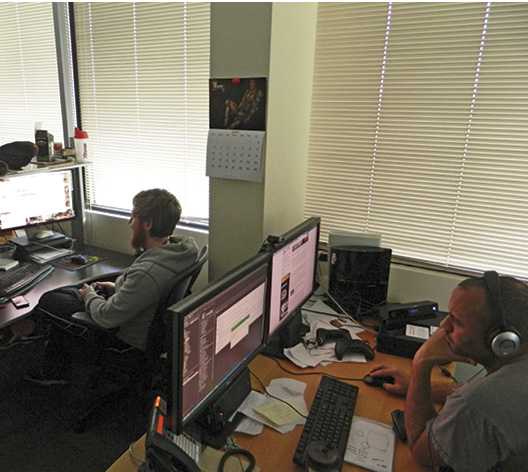
Graham and Grant finely tuning the multiplayer experience
Grant Mackay, Lead Multiplayer Design
Prima Games: What has it been like working on Dragon Age: Inquisition’s multiplayer?
Grant Mackay: Initially the challenge was to come up with a design that would fit the Dragon Age world and satisfy fans of the franchise. This went through a few iterations with feedback from the senior leadership and the guys who worked on the Mass Effect multiplayer mode. I then worked closely with the gameplay designers to make sure that we had combat and systems that would be fun both when playing a party in single player and when focusing on an individual character in multiplayer. We had to ensure we had controls, abilities, and progressions that would satisfy both sides and be familiar when moving from one mode to another if they varied. For much of the project thereafter I worked on server scripting to define the multiplayer characters, equipment, and abilities from the in-game assets, while Graham Scott established the level flow and pacing. Every day from 5 to 6 we would go down to a game room with some members of the team and play together. This is where we gathered feedback on the mode, discussed changes we could make, and then implemented them for the upcoming play-throughs.
PG: After several rounds, we’ve found the multiplayer extremely challenging, yet rewarding, particularly when it comes to playing carefully as an organized team. Was this the intent all along?
GM: The difficulty is not an accident. I wanted players to feel threatened by the environment so that they would band together as a team. I find this sort of challenge, and more importantly overcoming it with your friends, the most rewarding aspect of cooperative gaming. It was also important to build a game mode with lasting appeal. If you can conquer the dungeon on your first attempt there is very little reason to revisit it, so I pushed to have encounters and environments that the players can learn and master over time. I want players to have to come up with strategies amongst themselves to overcome the scenarios that defeated them on their first or second try. I also want the items they find, and experience they gain, to be meaningful toward conquering those defeats. The choices they make in character customization should be informed by how they’re working with their team toward the goals they’ve set for themselves and satisfying when they find the formula that works for them. Strong adversity is what makes the decisions and strategies that players will arrive at satisfying.
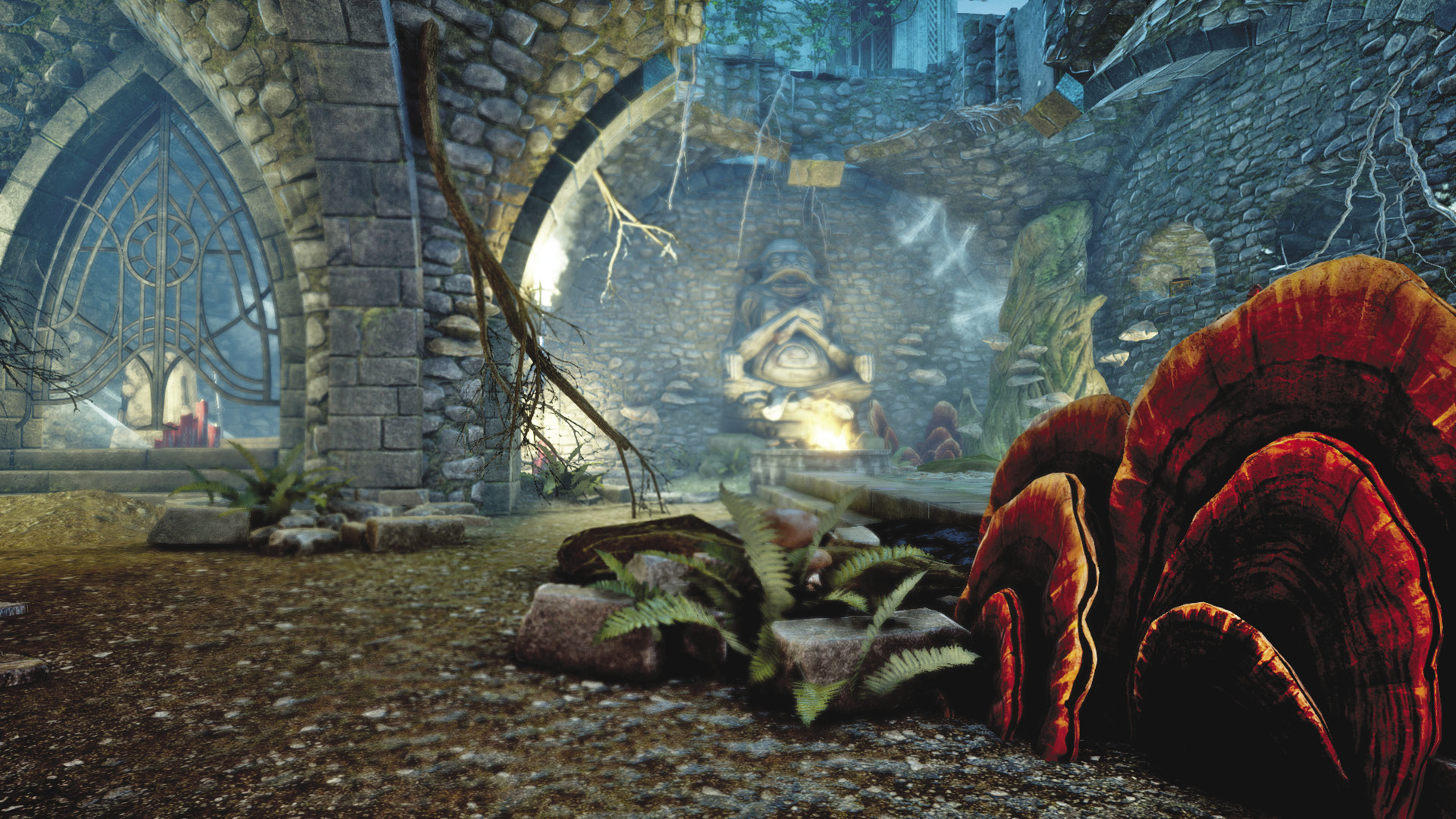
“Dragon Age is a deep and meaty RPG, and nothing suits that better than a deep and mysterious dungeon.”
PG: What was the idea behind creating dynamic environments over fixed maps? It certainly makes each round refreshing.
GM: I think the best fit for a cooperative Dragon Age experience is the traditional dungeon crawl. Dragon Age is a deep and meaty RPG, and nothing suits that better than a deep and mysterious dungeon. Part of the enjoyment of a dungeon crawl is the wonder of discovery, so we tried to make sure that we had enough dynamic content in the levels to ensure the experience wasn’t static. We didn’t want the feeling of mystery to disappear after the first run-through. We wanted things to change a little and hopefully surprise the players even after they’d visited a particular location several times.
PG: How does the game’s public matchmaking system work?
GM: The matchmaking system is aimed at being familiar, at least in form. The interface shouldn’t hold too many surprises and should hopefully be very intuitive to use. Under the hood we’ve tried to have the system facilitate balanced parties and good cooperative experiences. If a player chooses to play the Legionnaire, for example, and joins public matchmaking, the system is going to look for a party that doesn’t already have a Legionnaire and is going to prefer parties that already have rogues and mages to work with the warrior. The system will also favor a level range appropriate to the joining character, preferring not to match a first-level character with a group of 20th-level characters, for example. Finally, the system gives you a chance, once you’ve been matched with a group, to see what characters they’re running and make any final adjustments before actually entering the action.
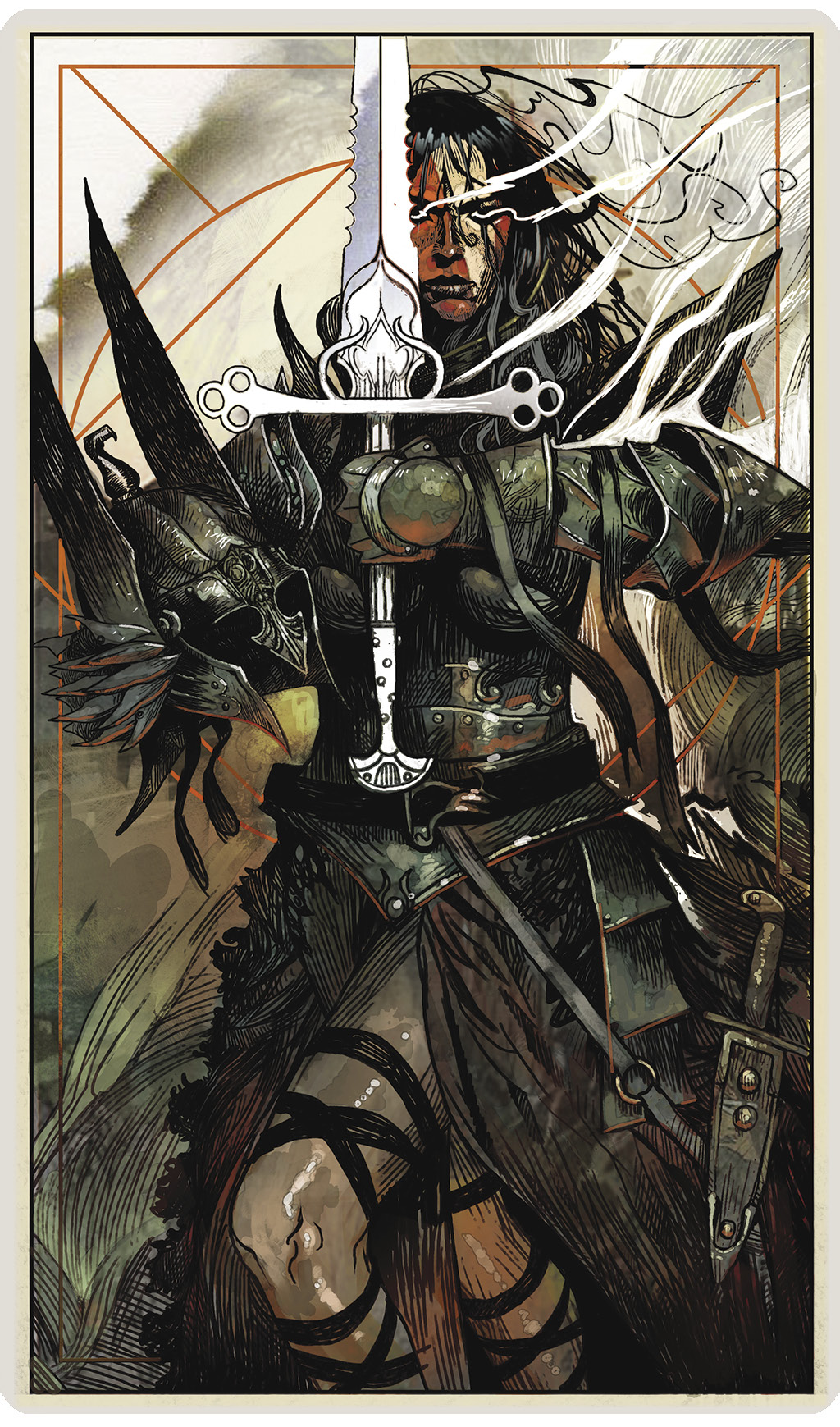
“If I had to choose one character as my singular favorite I would go with the Reaver.”
PG: The characters are all unique. Do you have a favorite?
GM: I honestly really enjoy playing all of the characters. The Assassin is great fun for executing flashy combos and taking down priority targets. The Keeper is a really engaging support experience, and the Templar and Legionnaire both provide interesting, interactive damage mitigation and enemy control. Gameplay aside, the Elementalist has a fairly hilarious personality and banter, and the Alchemist is the perfect level of crazy. If I had to choose one character as my singular favorite I would go with the Reaver. Her play style is a really great risk-reward model that keeps me on the edge of my seat. I really enjoy the thrill of explosive damage potential growing alongside the threat of dying. Her upgraded armor set looks particularly awesome as well, and her stoic, almost psychotic personality is always entertaining. I’ve had a soft spot for the Reaver advanced class in the Dragon Age world ever since I worked on the quest and ability design for it on Origins, and Tamar is the perfect fulfillment of that archetype for me.
PG: What sort of tips and tactics would you recommend to new players?
GM: Make sure to stick together; isolation can mean death in Dragon Age multiplayer. When you find a group or you’re getting together with your friends, try to pick classes that work well together. It helps to have as many different characters as possible. All the classes offer something unique to the group, and players will discover synergy and compositions that work really well for their play styles. Learning to execute the various cross-class combos can provide strong cornerstones for team strategies when working towards the highest difficulties. Dragon Age multiplayer doesn’t quite have the standard tank, damage dealer, healer role-playing game model, but the individual characters have roles that they can fulfill depending on their build. Players should look to establish roles within their party and choose characters they feel can provide that utility.
When play-testing, my teammates and I have found success using the Legionnaire or Templar to “tank,” or try to manage the enemies and mitigate their damage, while the Keeper provides shields, dispels enemy buffs, and tries to set up combos for the other two characters, usually at least one of which is a rogue for concentrated damage of some sort and combo detonation. We often employ a character like the Assassin or Hunter to single out and destroy annoying enemies like archers, mages, or enemy stalkers. We also trend toward one of the characters other than the Legionnaire or Templar being armored, having a lot of health, or having some other form of damage mitigation or control. The Katari, for example can dish out area control and damage while soaking up quite a bit himself, though not as much as one of his shield-carrying friends. We have also had success swapping out the Keeper for a more control-focused mage like the Necromancer or running with an armored-up, life-stealing Reaver tank, so party composition really comes down to the individual players and the synergies they can find.
Within the dungeons themselves, choke points can be very valuable to funnel enemies through and focus the direction the damage will be coming from. Players using shield-wielding or higher-health characters should remember that, even if the enemy isn’t attacking you directly, you can always step in between them and your party members, hold up your shield, and stop an attack or arrow meant for a friend. When all the arrows are coming from the same direction this is easier, and it’s easier for the squishier mages or archers on your team to hide behind nearby cover if your team isn’t flanked.
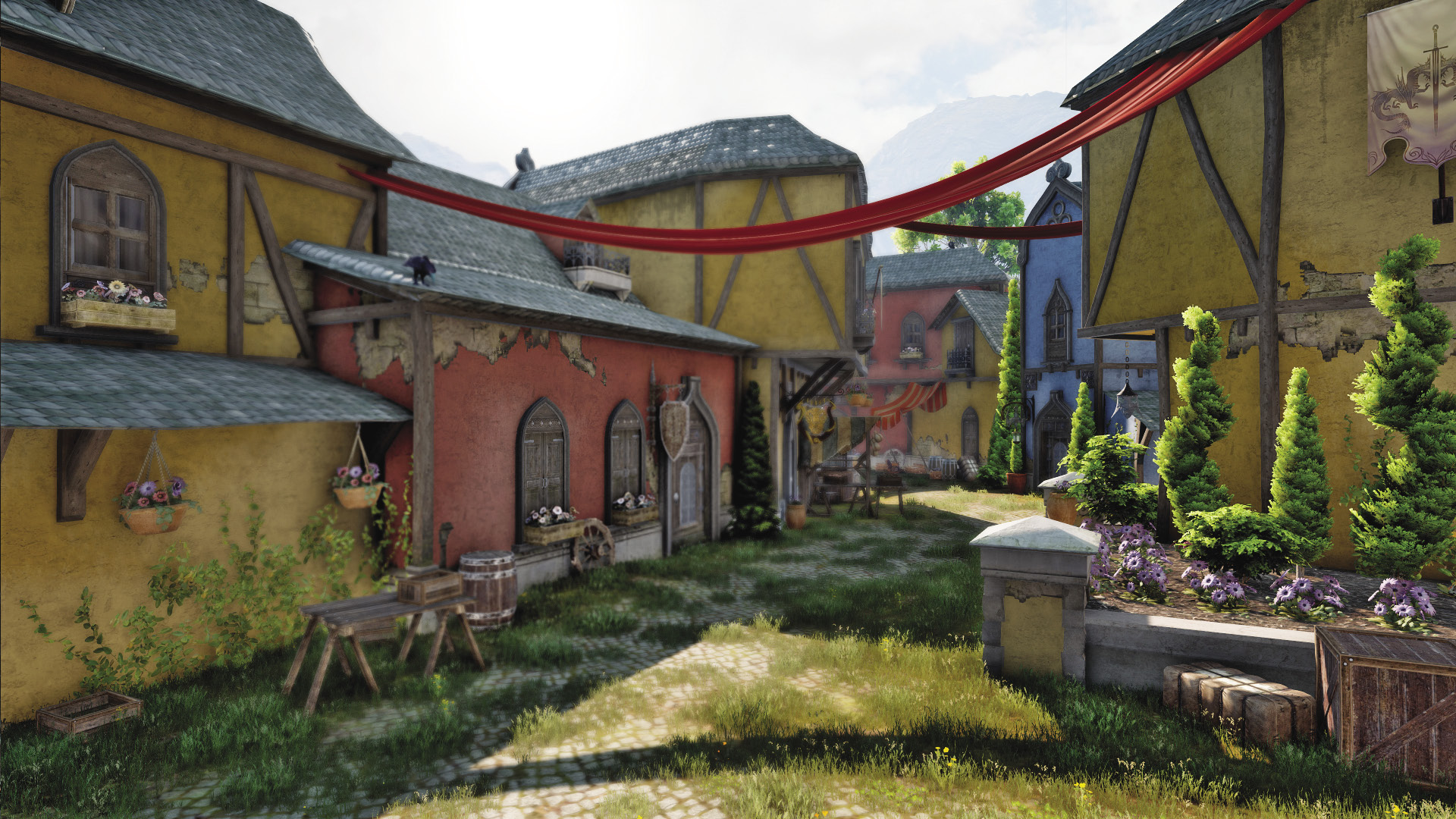
“Within the dungeons themselves, choke points can be very valuable to funnel enemies through.”
Finally, it’s really useful to bring abilities that provide mobility and control instead of a full set of damage skills. Sometimes moving to the defense of your friends and knocking back the brute that was about to down them can be the difference between an extended and profitable dungeon dive and a quick wipe. If they do go down, helping them up quickly is very beneficial as well. If a teammate bleeds out, all of the enemies gain a morale boost and deal more damage. Players who watch each other’s backs and focus their efforts make it significantly further than players who go all one-man army.