
Dragon Age Inquisition Guide Classes and Abilities
Advanced Combat Tactics
Now that you have a better understanding of the classes and their various abilities, put that knowledge to use in combat. Here we take a deeper look at how you can use abilities, status effects, and combos to gain a significant advantage on the battlefield.
Tactical Camera: Observe, Plan, Execute
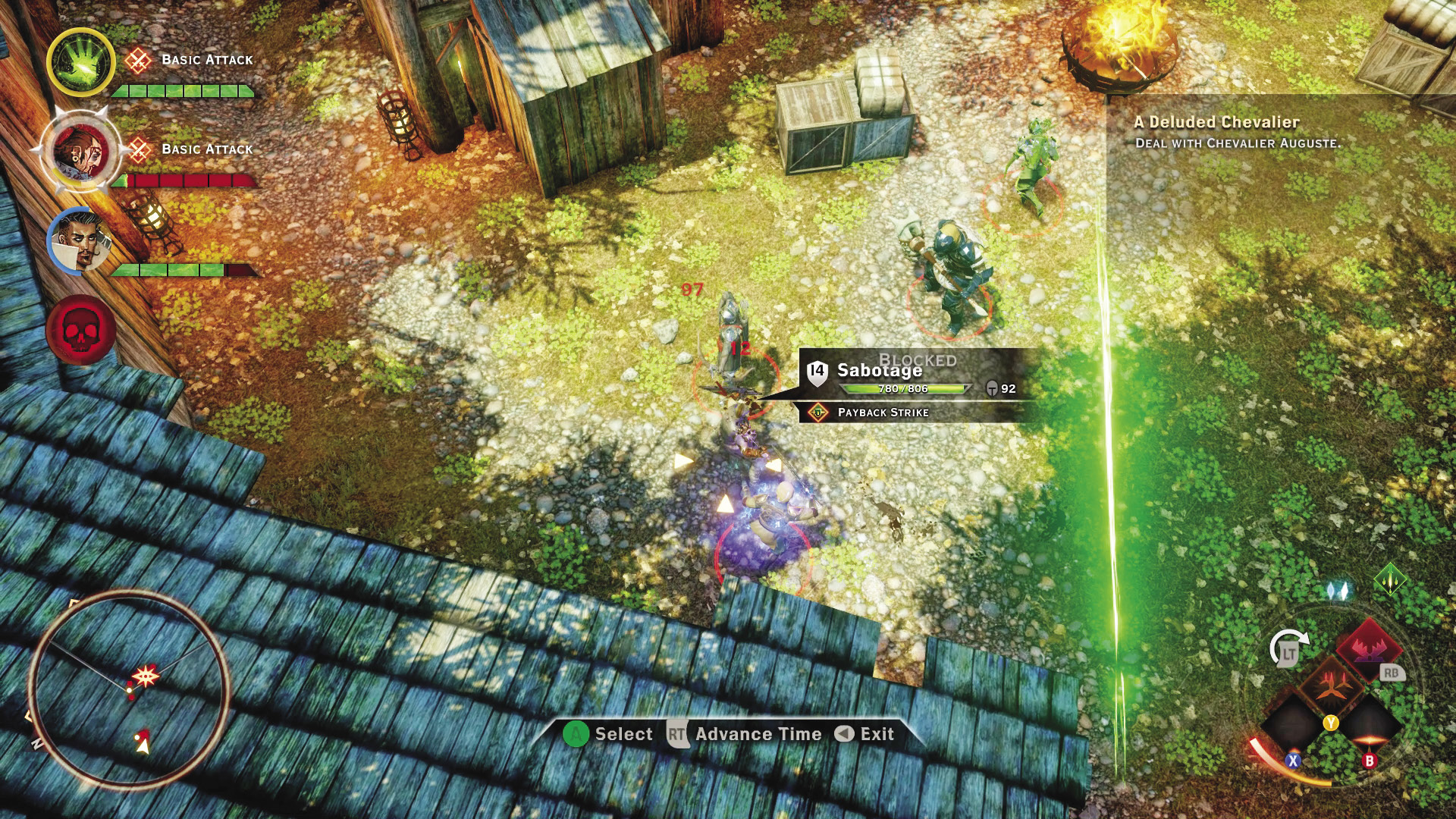
While using the tactical camera isn’t essential, ignoring its benefits puts you and your party at a serious disadvantage. So before engaging in combat, make a habit of activating the tactical camera to plan your attack. This allows you to scout your opponents, probing for weaknesses and tactical opportunities. First, move the camera around so you can inspect all hostile units in the area. How many enemies are present? Are there archers, mages, spellbinders, or other ranged threats? If so, consider targeting them first. Next, take into account the terrain of the battlefield. Are there any elevated perches where you can position your ranged units? Are there narrow hallways, stairways, doorways, or other choke points you can take advantage of? Once you’ve scouted the terrain, consider redeploying your party members to establish a dominant position on the battlefield before initiating combat. A little bit of preparation can make each engagement a little easier to manage.
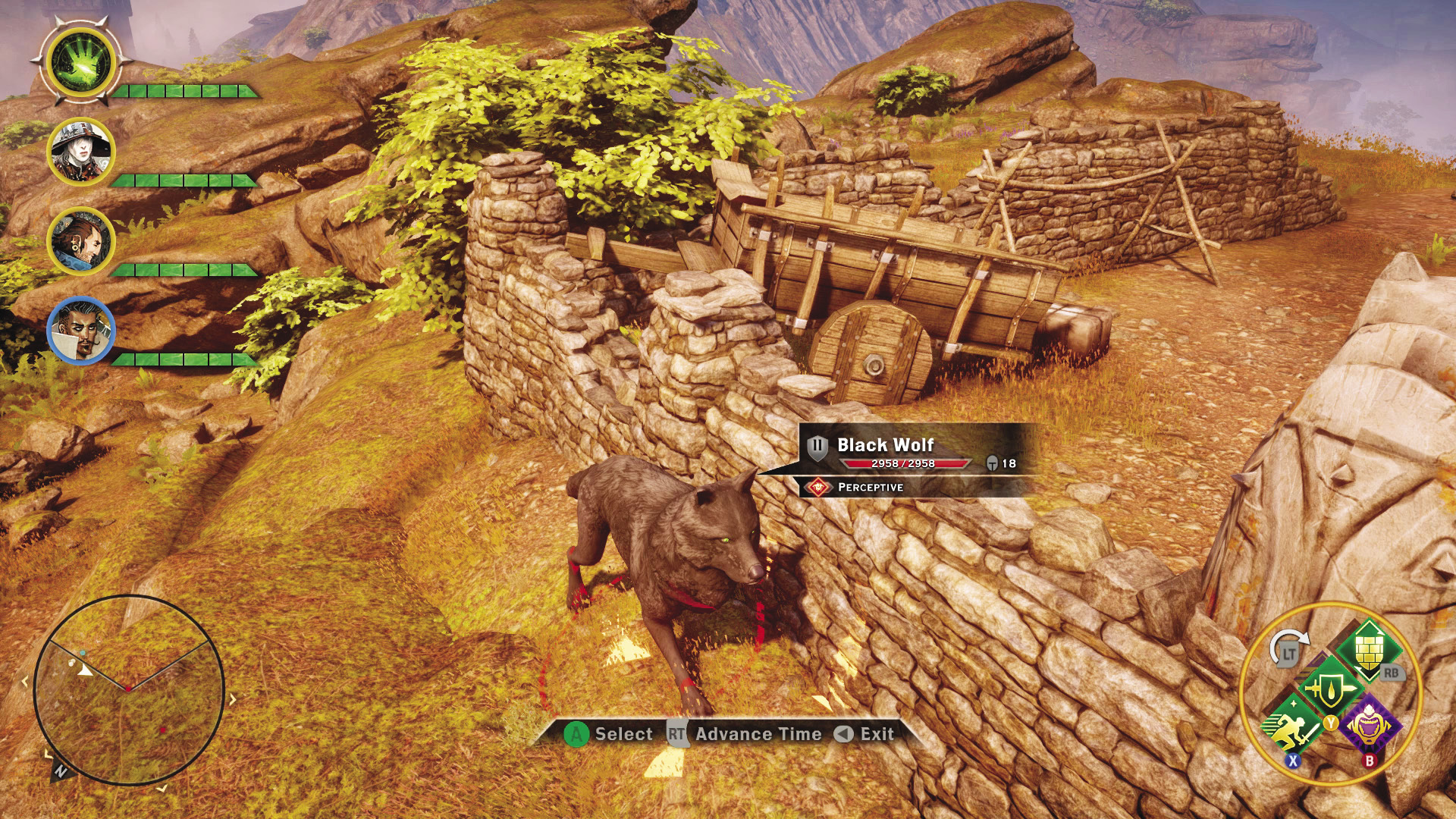
If you encounter an enemy you’re unfamiliar with, place the camera’s reticle over it to open its information box. This reveals the unit’s name, health, level, resistances, vulnerabilities, and immunities—all the information you need to make solid tactical decisions. For instance, if an enemy is resistant to cold-based attacks and vulnerable to fire-based attacks, consider altering your party’s equipped weapons and mapped abilities to take advantage of this vulnerability to fire—equipment cannot be swapped during combat.
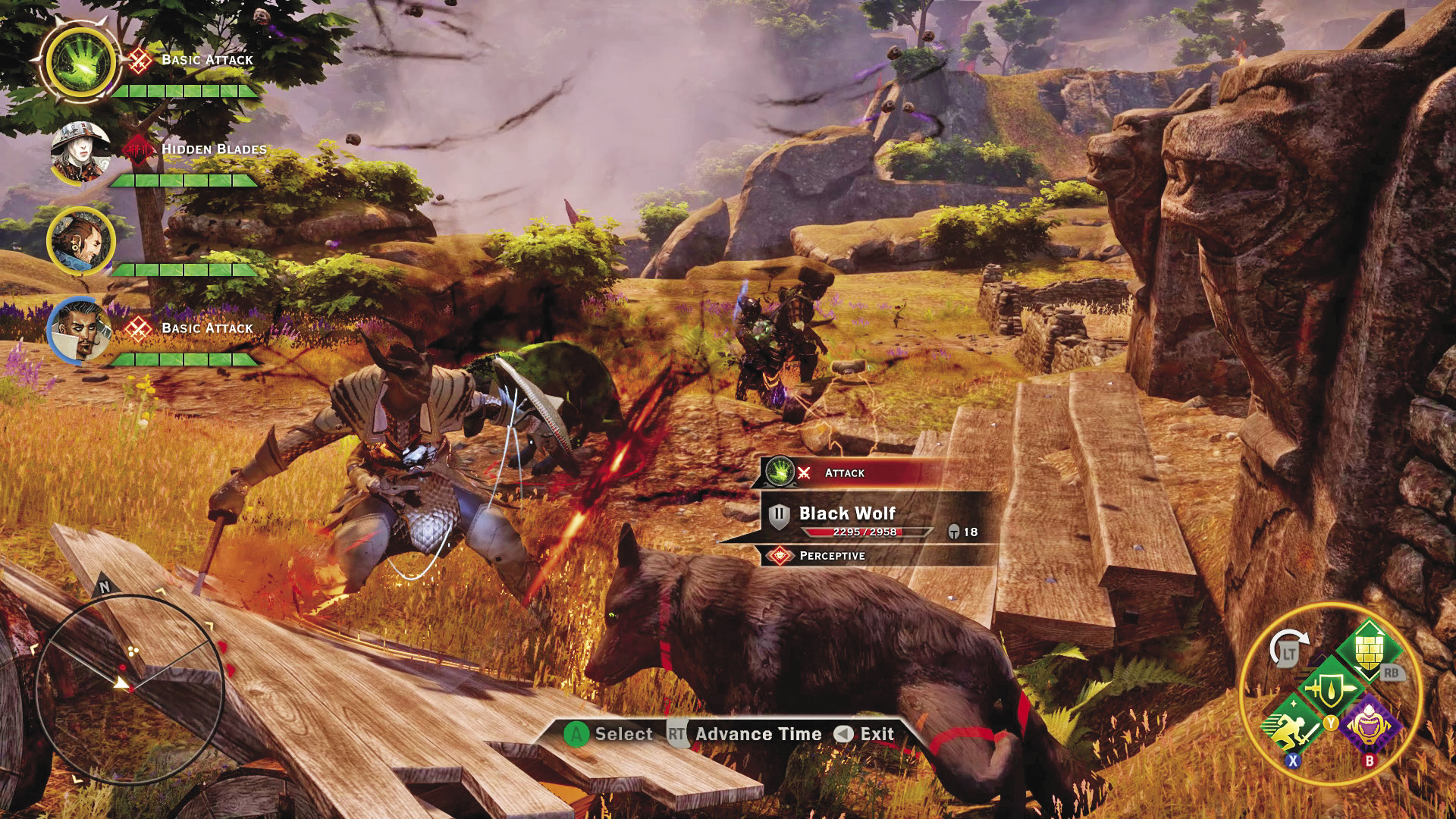
Once combat has begun, continue using the tactical camera or switch to the third-person view. But if you choose to play from the third-person perspective, remember that the tactical camera is still available if things get a little too hectic. Consider switching back to the tactical camera periodically to reposition your party members or to set up some combos. For instance, use a warrior ability like Mighty Blow to knock an enemy down, then follow up with a rogue ability like Twin Fangs to inflict heavy damage on the downed opponent. Since the tactical camera pauses the action, it makes it much easier to set up combos like this.
Focus
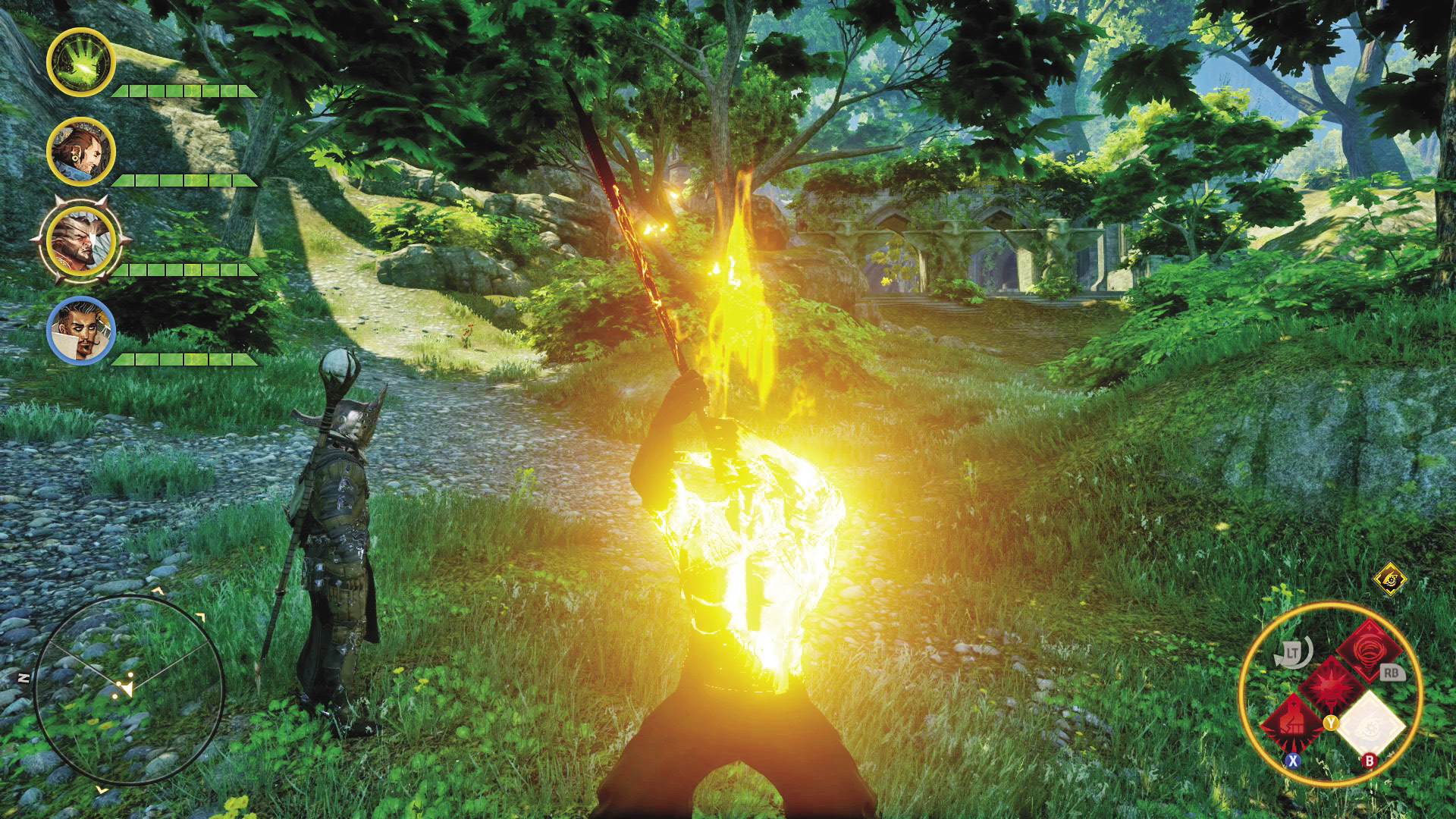
Focus is a replenishable resource like stamina or mana. All characters have their own personal focus meter. But unlike with stamina or mana, all party members gain focus when a single party member deals damage. Focus is used to initiate powerful focus abilities, like the Inquisitor’s Mark of the Rift. These powerful abilities aren’t available until after the Inquisition evacuates Haven. The Inquisitor gains Mark of the Rift immediately following the escape from Haven. The other focus abilities are tied to class specializations. Each party member unlocks a specialization upon reaching Skyhold, and the Inquisitor can choose a specialization by completing trainer quests.
All focus abilities have three tiers. By default, only tier 1 of each focus ability is available. But through the acquisition of Inquisition perks you can access tier 2 and tier 3 focus abilities. Choose Cullen’s Advanced Focus and Master Focus perks to unlock these tier 2 and tier 3 abilities. Higher-tiered focus abilities usually deal more damage or last longer, making them more effective.
During combat, look for opportunities to maximize the use of your focus abilities. Since focus abilities can’t be triggered often, consider saving your focus for tough fights, such as those against bosses, dragons, or high-level Fade rifts. If each party member has a focus ability ready to go, even the toughest battles are survivable. Area-of-effect attacks like Mark of the Rift and Firestorm are particularly devastating—trigger these early in a fight to wipe out weaker enemies.
Focus Abilities
| Ability | Name | Specialization | Description |
|---|---|---|---|
| Inquisitor | |||
 |
Mark of the Rift | Inquisitor | Mark of the Rift causes massive damage and can even kill some enemies instantly. |
| Rogue | |||
 |
Hail of Arrows | Artificer | You fire so quickly that enemies will swear there are at least two of you putting arrows into their ranks. While this ability is active, any archery ability you use is duplicated. |
 |
Thousand Cuts | Assassin | You choose a target, then dash to and fro—a shadow leaving blood with every leap. After you slice through other nearby foes, you land behind your target, striking deep. |
 |
Cloak of Shadows | Tempest | You go into stealth, and your allies follow your lead. The entire party remains undetected for the duration of the effect, even while attacking. |
| Warrior | |||
 |
Counterstrike | Champion | You push yourself to the limit, gaining full guard and taunting all nearby enemies. While the ability is active, you automatically counter all melee attacks. |
 |
Rampage | Reaver | You’re an unstoppable fury of physical force while this ability is active. Your attacks are harder and faster, and you gain health with each strike. |
 |
Rally | Templar | You inspire your allies to fight harder. Your party’s guard, stamina, and mana build over time, and all party members gain damage resistance against incoming attacks. |
| Mage | |||
 |
Resurgence | Knight-Enchanter | You call on benign spirits to restore you and your allies for continuing the fight. All party members are healed to full health, including those who have fallen unconscious, and a glyph around you provides ongoing healing to the party for the spell’s duration. |
 |
Haste | Necromancer | You increase the speed of the entire party. While this ability is active, all enemies move and attack more slowly by comparison. |
 |
Firestorm | Rift Mage | You summon flaming meteors, raining fire down upon enemies all over the area for the next several seconds. |
Stacking Status Effects
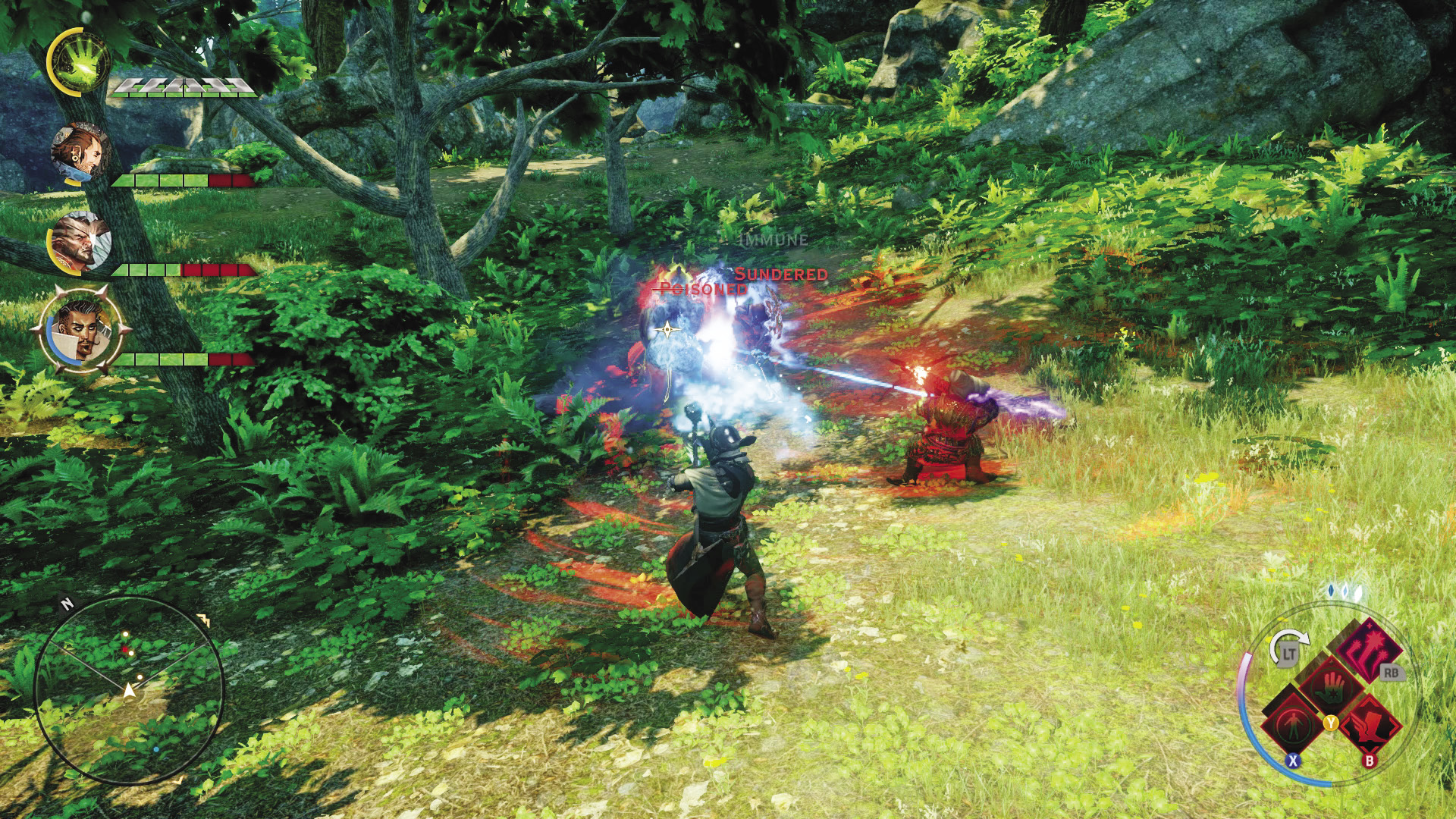
In addition to inflicting damage, many abilities also apply a status effect. There are numerous status effects, and they affect their victims in various ways for a limited time. Many status effects stack, too, allowing you to apply multiple status effects to a single target. Pour on as many status effects as possible to greatly decrease an enemy’s performance while whittling away at their health. For example, use the rogue’s Poisoned Weapons ability to apply the poison status effect while a mage strikes with Winter’s Grasp to apply the frozen status effect. In this instance, the target is encased in ice while suffering continual damage from poison. In this sense, status effects are a true force multiplier and should be applied as frequently as possible to give your party an advantage in each engagement.
Status Effects
| Status Effect | Name | Description |
|---|---|---|
 |
Berserk | Increases damage and movement speed. Additionally adds a layer of either barrier or guard, depending on the creature, and grants additional immunities to controlling effects. |
 |
Burning | Creature takes fire damage over time. |
 |
Chilled | Creature’s movement speed is reduced by 25%. |
 |
Disruption Field | Mage Knight-Enchanter ability: Creatures within the disruption field are slowed and weakened. |
 |
Fear | Creature runs away in a panic. After 1.5 seconds any direct damage will break the effect. |
 |
Frozen | Creature is disabled. |
 |
Panic | Creature runs away in a panic. After 1.5 seconds any direct damage will break the effect. |
 |
Paralyzed | Creature is disabled. |
 |
Perceptive | After a duration the player is removed from Stealth when near a perceptive creature. The duration is relative to the strength of the creature—usually 5-15 seconds. |
 |
Poisoned | Creature takes nature damage over time. |
 |
Shocked | Reduces resistance to fire, cold, and electricity by 20%. |
 |
Sleep | Creature sleeps in place. Any direct damage will break the effect. |
 |
Snared | Creature’s movement speed is reduced by 25%. |
 |
Stealth | Creature is untargetable unless the player is within 5 meters. Creatures in Stealth are still visible but harder to spot due to transparency. |
 |
Stunned | Creature is disabled. |
 |
Taunted | Creature is forced to target the caster for the duration. At the end of the forced targeting the caster is moved to the top of the threat table. |
 |
Sundered | Creature’s armor reduced by 20%. |
 |
Weakened | Creature’s damage reduced by 15%. |
Guard and Barrier
When selecting abilities for your warriors and mages, choose ones that enhance barriers and guard. Guard and barriers cover your characters’ health bars, preventing them from taking damage. Guard is generated by warriors in numerous ways and only degrades when you’re being attacked. Barrier is cast by mages as an AoE spell on party members and only lasts a few seconds. Together, guard and the Barrier ability make your party more durable and cut down on the number of healing potions they consume, which is essential during boss fights and dragon battles.