
Titanfall Guide Behind the Scenes
Weaponry: Ryan Lastimosa
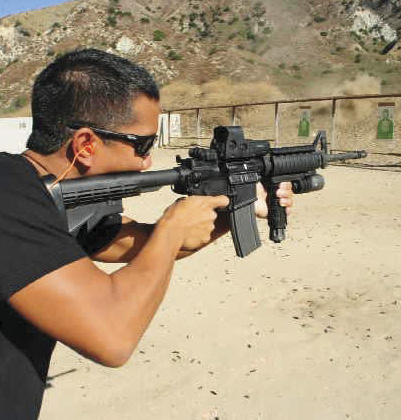
Ryan Lastimosa: Artist
Past Projects
Call of Duty: Modern Warfare 2
Call of Duty 4: Modern Warfare
The Lion, the Witch, and the Wardrobe (film)
Batman Begins(film)
The Day After Tomorrow (film)
X2: X-Men United (film)
2 Fast 2 Furious (film)
Bad Boys 2 (film)
Prima Games: The weapons are grounded in reality as opposed to a more futuristic, sci-fi vision. Why did you go that direction?
Ryan Lastimosa: We wanted the weapons of Titanfall to be relatable. We wanted people to pick it up and know the weapon’s purpose. Just like how weapons are now. If you’re familiar with firearms or any kind of weapon like a short sword, long sword, machete, ax, etc. you have an idea of what it’s gonna be used for. That’s the kind of design ideas we had with a lot of our weapons. When you have a submachine gun, it’s tight. It’s snub nosed. It has a shorter barrel and there’s more maneuverability to it. When you pick that weapon up, you instantly know it’s meant to go close quarters. But when you pick up an R-101, it’s a longer weapon. The sights are very specific to a longer-range engagement. When you pick that weapon up, you’re gonna tell yourself, “Oh okay, I’m gonna engage these people at a medium-distance range. We wanted to convey a sense of realism as opposed to crazy lasers and lights.
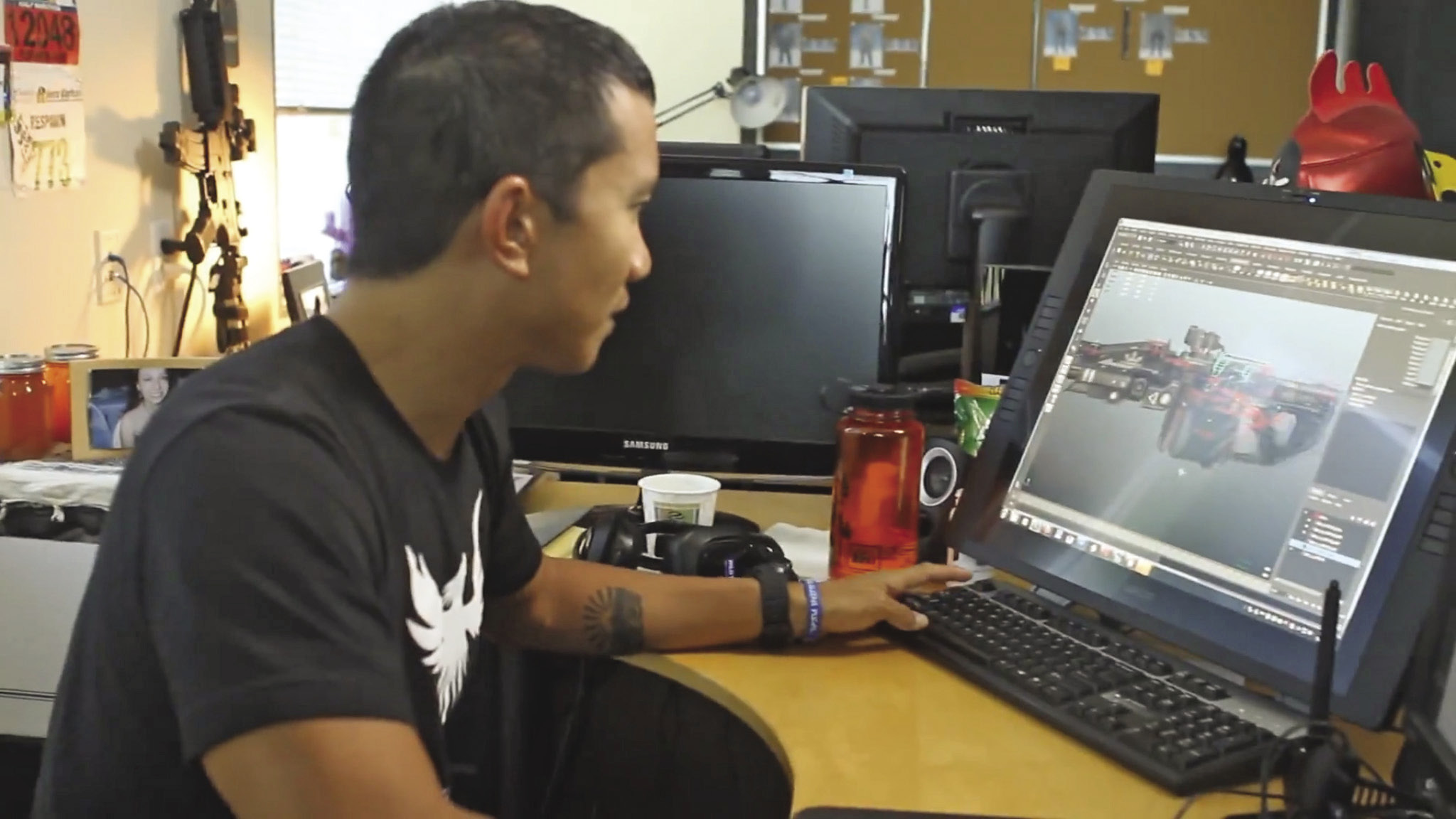
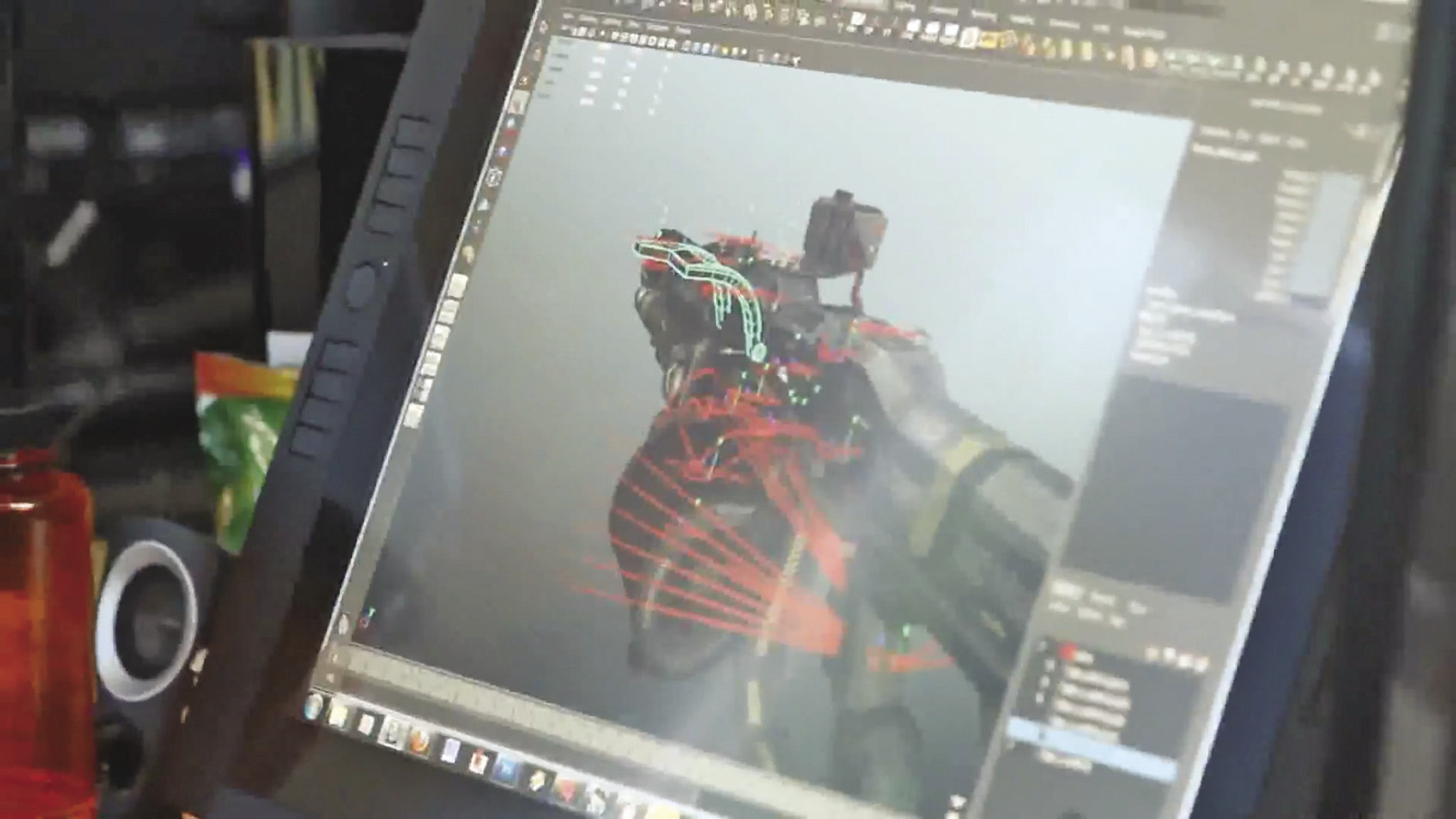
Ryan at work, applying some alterations to the X0-16 Chaingun Titan weapon.
PG: And when designing these, you had to figure how to actually chamber a round and eject magazines?
Ryan: Yeah. We took working firearm mechanisms and adapted them to our universe. We have concepts of incorporated advanced technological improvements such as internal CPUs that track ammo count and clear jams. Each tool has a specific purpose. So, if you look at the history of weaponry, the way they’ve been advancing technologically is usually through the different types of rounds that are chambered through the weapon or a different type of material in the working parts of that weapon. So, thinking of that process, we keep the mechanics of the weapon simple, but also consider the possibility that the materials used to create these weapons drastically increase efficiency with different kinds of composites and materials. We also think about different types of propellant that goes into rounds. We wanted to make sure they are still working weapons and that you can make them in modern day, but the materials used to create these weapons are far more advanced and years into the future.
PG: So, there’s not a ton of weapons, but they all feel very distinct.
Ryan: Well, yeah, we wanted them to be diverse but still retain a “class”. We wanted each tool to have a purpose and range. We have short-range weapons, which are the pistols, submachine guns, or the shotgun. We have the medium- to long-range weapons, which are the assault rifles, and then we have the sniper weapons. Then we have the anti-Titan weapons, which have a different type of optic and use for them. So, we didn’t want to shove a bunch of weapons into player’s hands. We wanted to make sure that they have weapons that are distinct enough and have a specific purpose to them. Each tool conveys its purpose.
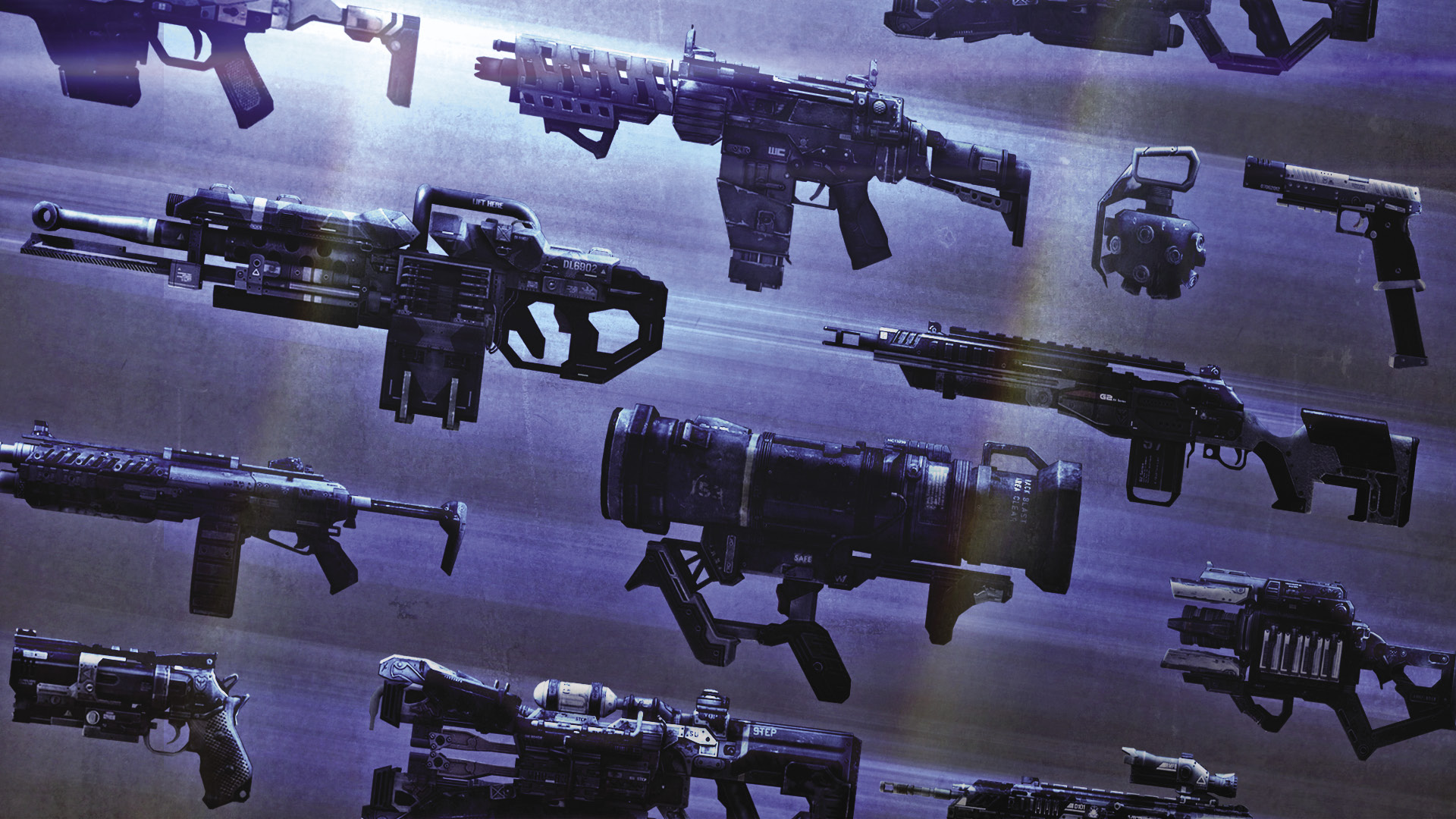
Despite the futuristic setting, all the weapons in Titanfall were designed to feel distinct but familiar.
PG: When you’re designing weapons from scratch, is that liberating or is it challenging?
Ryan: It’s challenging because when we first started Titanfall, we had a blank canvas. It’s like, “Hey, we can do anything we want to do!” and then you get writer’s block. So, we had some really wild and crazy designs. We have a lot of energy-based weapons that we designed initially, and then we went even far back to breech-loading weapons where you load one round into the chamber and fire it off. So, we went from very primitive, almost musket-type weapons, to crazy laser guns that read your mind. We set these boundaries very far. As the game progressed, and as we started to lock down things that we liked, we started to narrow our scope a lot more and figure out what we wanted in our game as far as weapons went. I had one design for caseless ammunition. We developed a concept of this type of round that doesn’t require a casing or magazine as everything disintegrates when its fired. In practice, it just didn’t look as cool and badass as kicking off a bunch of angry lead and having brass spit out of an ejection port.
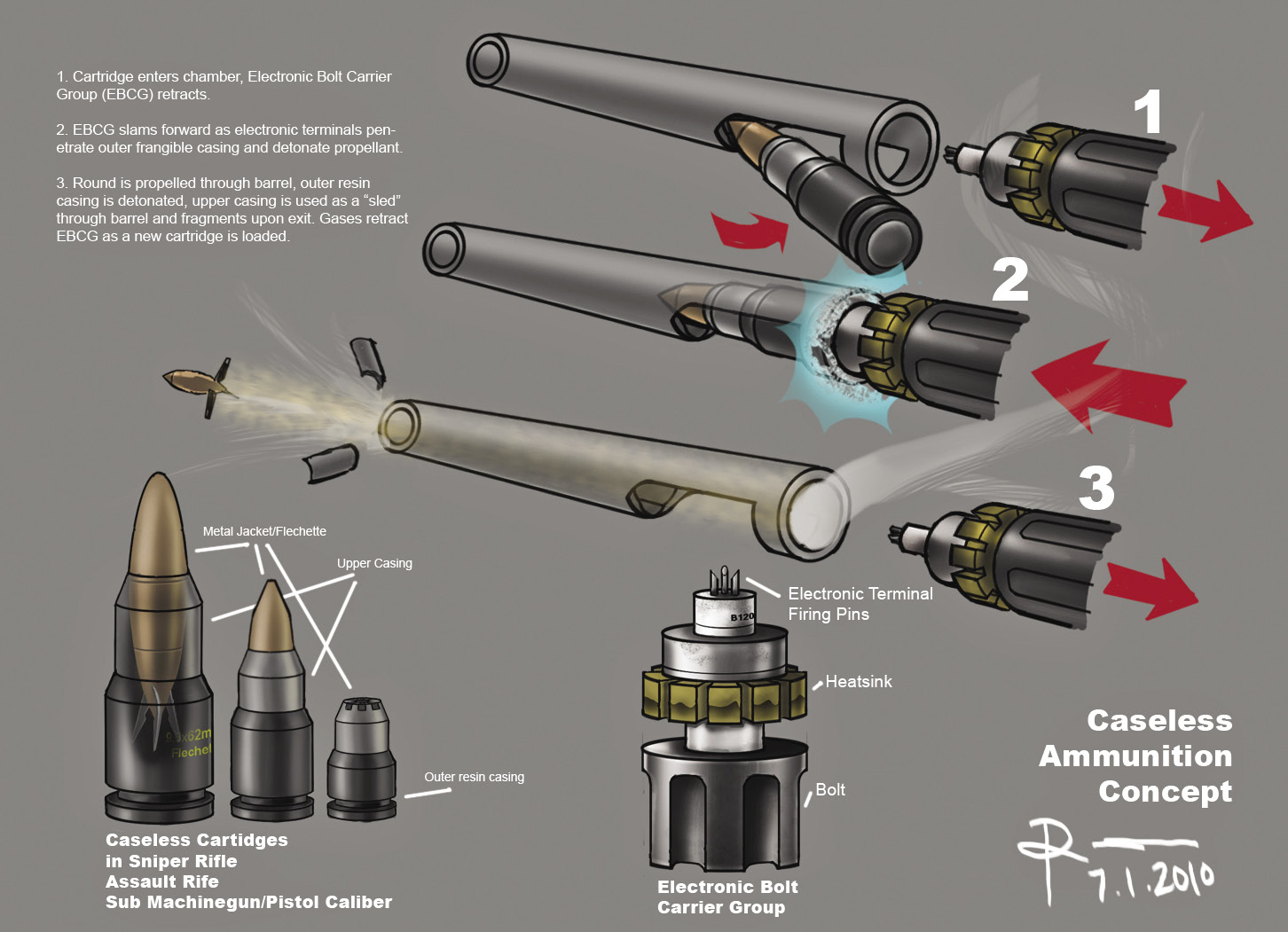
An early concept for caseless ammunition.
PG: The R-101C Carbine is very popular. Would you consider it a good starting weapon?
Ryan: Oh, absolutely. The thought process of the whole game is, “A Minute to Learn, a Lifetime Master.” It’s the same thing with the R-101. It’s a very familiar weapon because people are used to assault rifles in first-person shooters. It still has similarities to an assault rifle, like a receiver that ejects brass. It has a shape that’s vaguely familiar to people. The “iron-dot” sights are similar to the HK416 or M16. When you get more into the mods and attachments of the weapon—that’s when you’re able to truly utilize it for what it is.
PG: How do you keep people from just sticking with the R-101C? Was there some thought into saying, “We either specialize or make things more versatile?”
Ryan: Well, at first we gave the R-101 a bunch of different mods and a bunch of different attachments. That weapon was the first to be dialed in to where it felt good to use. Then we started to take away some of the attachments that went onto the R-101 along with some of the mods and started giving them to other weapons. That was one way to get other people to utilize different guns. Some people want a semiautomatic rifle and that’s where the G2A4 came in. That weapon packs a lot of punch. It’s a semiautomatic weapon that is loosely related to the M-14 family of weapons. We wanted to give different characteristics to different weapons to accommodate people with different play styles. Maybe they like to hang out on rooftops and pick people off or maybe they like to assault, so they’ll choose the R-101 or the Hemlok.
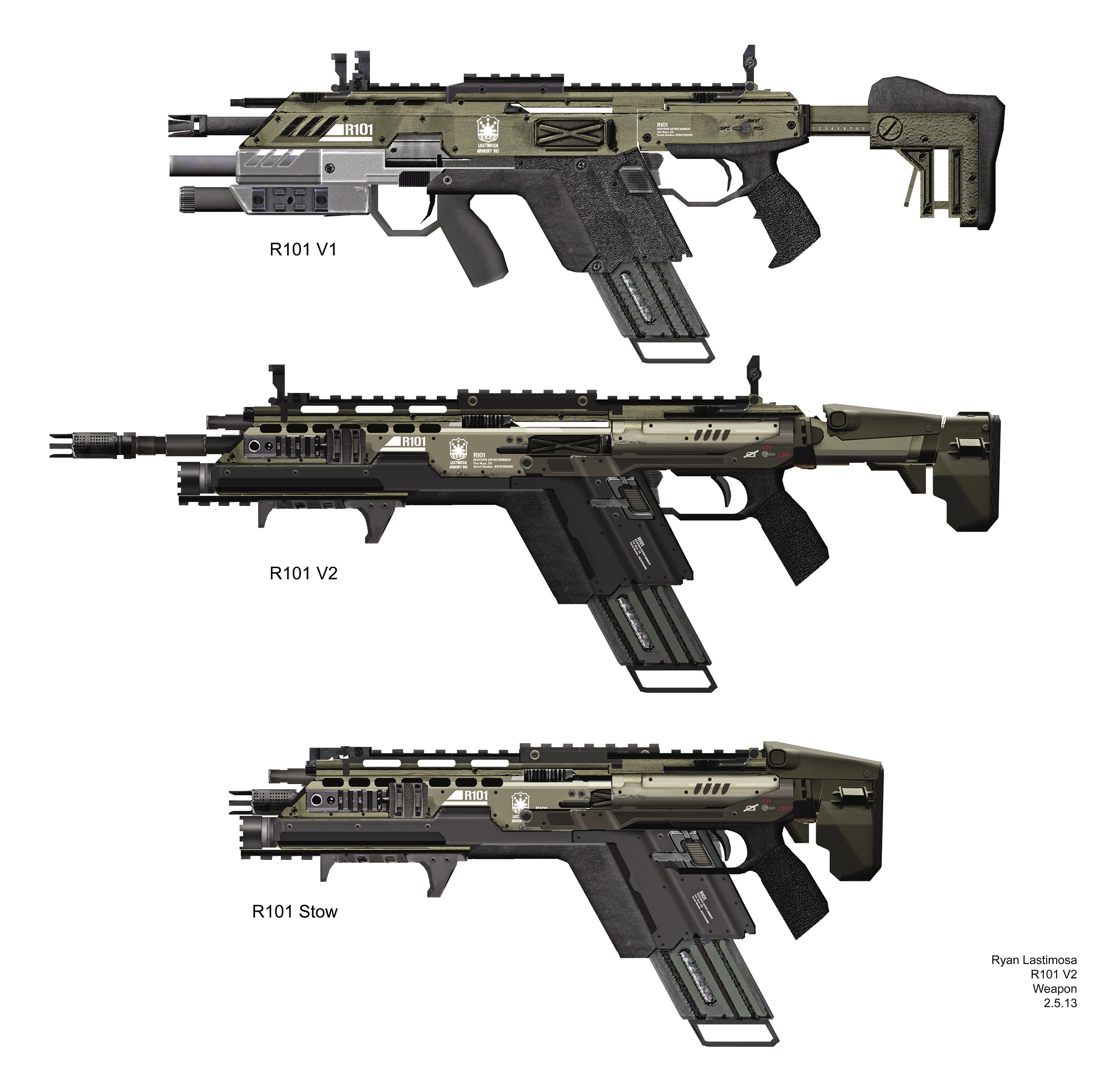
The R-101C Carbine went through several revisions.
PG: What kind of ideas went into building the Titan weapons, and were they based on anything?
Ryan: Yeah, they were based on tank armament. We referenced a lot of naval and ship-based weaponry as well. We took lots of reference photos of tanks, artillery, and anti-aircraft guns. We also referenced designs of motorcycles, concept cars, and stealth aircraft. We got a lot of mechanical working parts from forklifts and dumptrucks and incorporated them into these behemoth, bus-sized weapons. At the end, these Titan weapons came out of a mixture of brutal heavy ordnance and sleek fast-moving concept vehicles.
For anti-Titan Pilot weapons we have the Archer, which is comparable to the Carl Gustav launcher or the FGM-148 Javelin. The Archer was meant to take on a large, horizontally moving target. When designing the anti-Titan weapons, we wanted to differentiate the weapons from being anti-personnel weapons to being beefy, yet compact and lethal anti-Titan weapons. You don’t want them to carry around this long weapon the whole time. You want something compact. Something fast where you can hit a target really fast and bounce out very quickly. That was the thought behind process designing some of these anti-Titan weapons. We wanted them to still have that anti-armor and very mechanical, “heavy” feel to the weapon. Yet feel compact and maneuverable at the same time.
PG: Is there anything else you’d like people to know about Titanfall? One thing you wanted the reader to know, something they don’t already know, something that’s not out there quite yet?
Ryan: Well, we’ve been working on this game for close to four years now. There are a lot of Easter eggs on the weapons. I usually put special dates like anniversaries or birthdays on them, mostly from my coworkers at Respawn. Some of the serial numbers are people’s gamertags, wedding anniversaries, and there are little messages here and there to our friends and family. So, yeah, if you look close enough at some of the weapons, you can probably figure out that it’s someone’s birthday or anniversary. Each person who made a weapon thought up their own ideas as a weapons manufacturer. So, you’ll see a lot of logos and insignias and things that pertain to that artist. It gives that weapon a lot of flavor.