Titanfall Guide Behind the Scenes
Campaign: Steve Fukuda
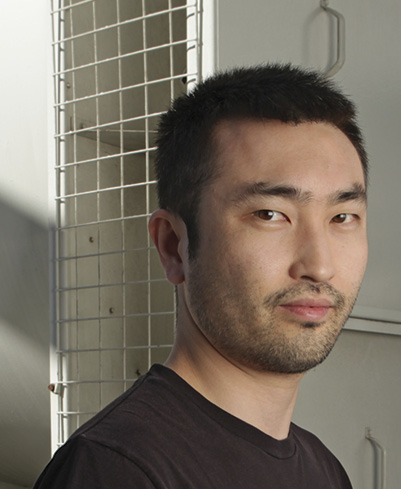
Steve Fukuda: Game Director
Past Projects
Call of Duty: Modern Warfare 2
Call of Duty 4: Modern Warfare
Call of Duty 2
Call of Duty
Medal of Honor: Allied Assault
Prima Games: As game director, what does your job entail?
Steve Fukuda: It means working with everybody in every department, not just the one I’m used to being in, which is design. There are many hats to wear, providing creative direction in design, art, animation, and audio, reconciling design aspirations with engineering realities, tie-breaking within and between departments, and at times, organizing the effort logistically. With design, it often involves bringing in people from design as well as other departments, getting their input, and trying to collate the ideas and ask, “Is this really the game that we should make? Should these ideas be together?” It’s blending all the different warring ideas and things that people want to do. Setting priorities and goals, and moving the project forward is a big part of the job. I also shouldered a lot of the development writing and editing. Usually nobody wants to write, or rewrite, the functional material, which is necessary for keeping players aware but tends to be light on dramatics. For the dramatic writing, we worked with writer Jesse Stern, with whom we’ve worked with in the past. He helped us a lot with the story and its structure as it changed throughout the project and guided us in terms of how to get things to piece together nicely.
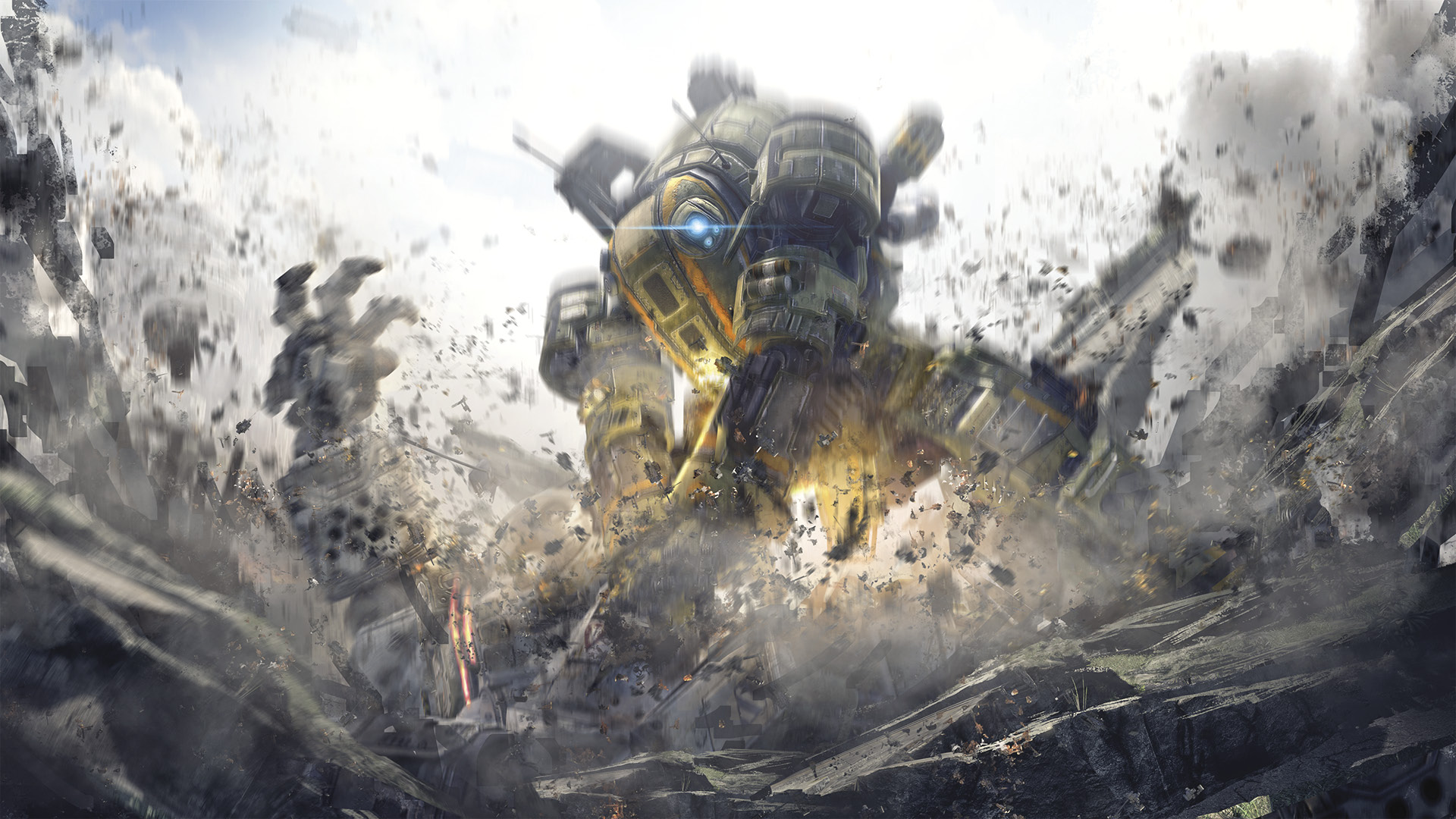
Originally the working title of the game was The Titan War. But around the studio it was simply called R1.
PG: You were talking about story.
Steve: Yes.
PG: The idea we got from some of the other people is that it was all about gameplay first and then you had to bring in some sort of narrative to fit that. What was that like?
Steve: Well, that’s really core to the development of the game. Before we said we’re making something like Titanfall, before we even thought of the name—The Titan War was the working title for quite a while—it was just R1. A lot of designs and sketches in the first, second year centered around trying to figure out what we were making the game about. There was the notion of “we had to know what the story was, what the universe was.” Many attempts to create context, more of a ‘top-down’ approach, were undertaken over a long period of time. There was a lot of arguing back and forth about this, some people (including myself, at times) wanting to know what it was about before we start designing for it. And others were saying we have to just design some gameplay concepts in the abstract (AKA ‘bottom-up’ design) and figure out what we’re doing and then we’ll figure out how it fits nicely into some context. I think the right way is that you do a bit of both, declaring a direction, then bouncing back and forth between top-down and bottom-up. But we didn’t know exactly what goals we were going to hit. Maybe our goal is to actually make a game that is accessible to people who don’t know how to play shooters. Or perhaps our goal is to make a game where it’s not so much about combat. So, the context is there and we’ll work on it for a minute. Then you go, “Oh, this doesn’t fit quite as well with some aspect of gameplay that’s we’ve found to be good, so let’s swap out this contextual element for something else and adjust the rest of the context to fit.” It’s a top-down versus bottom-up process and vice versa.
So, we start a little ’top-down’, which involves characters and story and universe, backstory, very lightly formed, not set in stone. And then we start bottom-up, which involves gameplay concepts. You just go back and forth, back and forth. One drives the other for a bit; then the other drives the other for a bit. Hopefully it all filters down and converges into something that’s tightly knit.
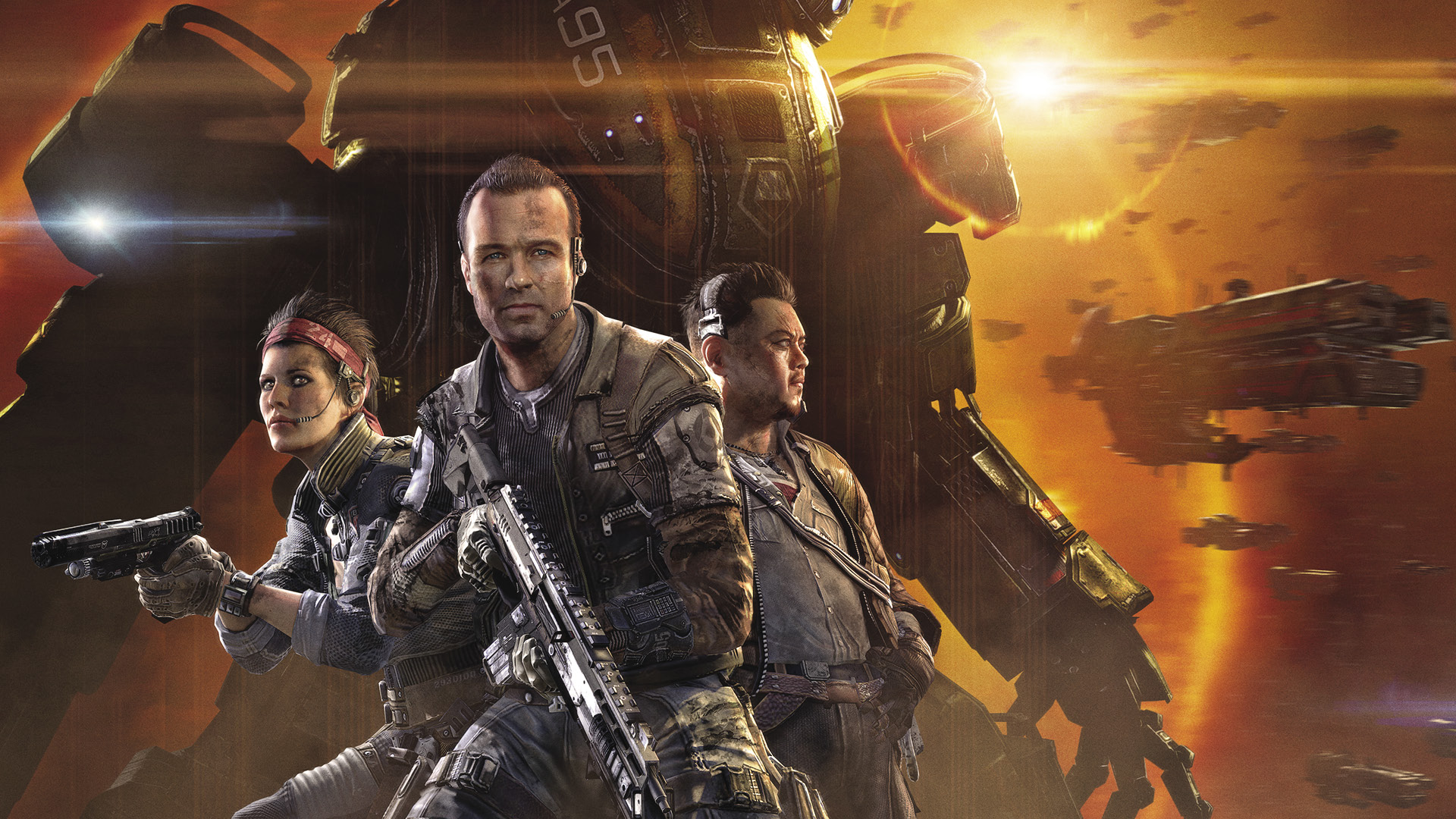
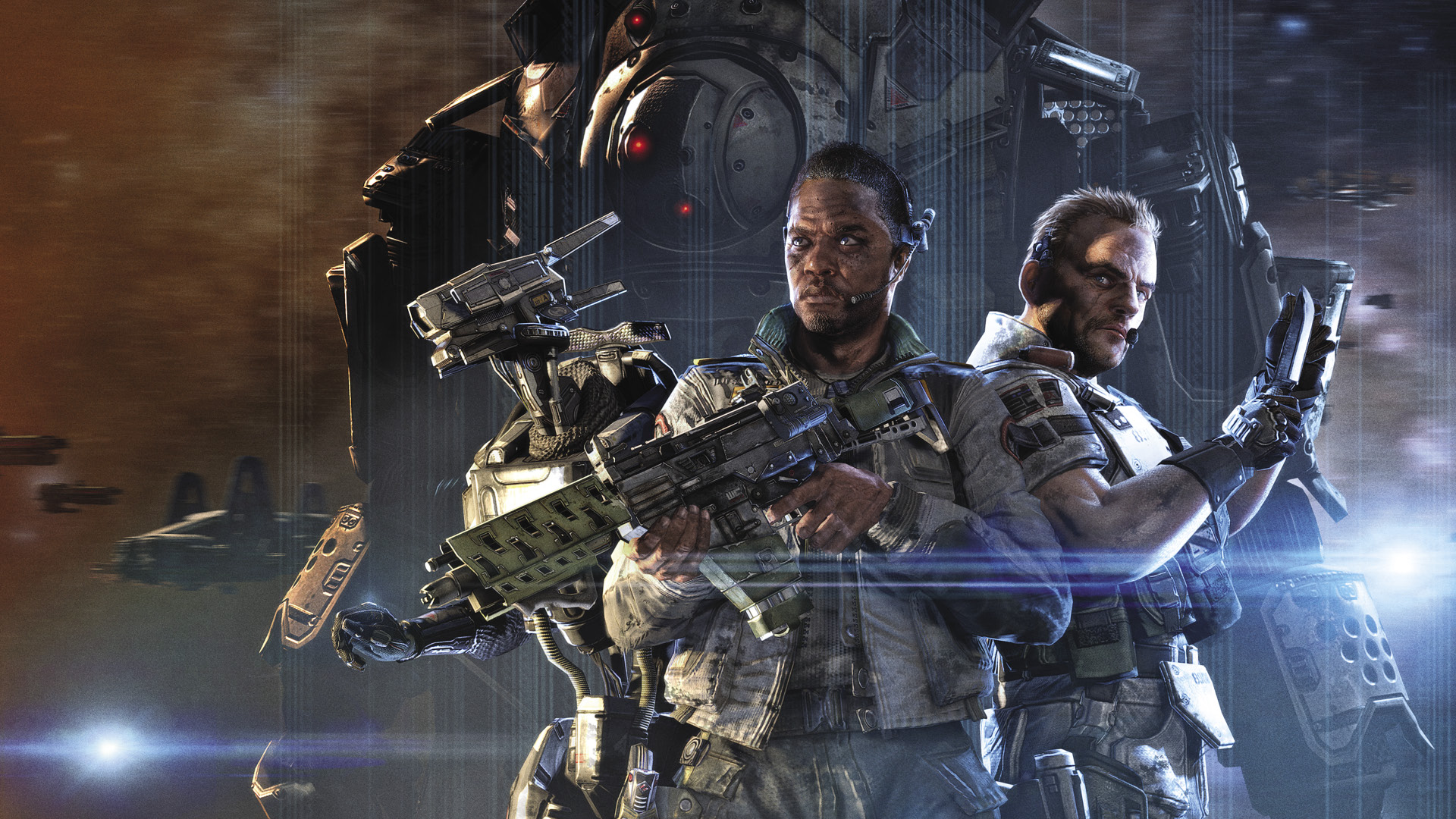
Steve assisted in developing the campaign’s narrative—writing the story about the conflict between the Militia and IMC.
PG: Now you have the campaign and the story fueling the progression—how did that come together?
Steve: Even still to this day, it’s hard to get out of the numbers game. Players often ask questions like, “How many weapons do you have? How many levels do you have?” My point with the numbers game relates to the question of doing single-player or not doing single-player. So, do we need to have single-player? Early on, we felt we had to have it. It’s “standard!” Very few of us raised our hands and said, “Yeah, I’d like to take the single-player and multiplayer and maybe do a hybrid, do something different.” You take the risk—see if it’ll work. I think part of it was our team composition. We have a lot of people who are very experienced in single-player level scripting. At the same time, we’re very busy. One of the hard things about multiplayer game development is that in single-player, everyone just sits in their office and makes their own level and it’s very self-contained. But in multiplayer, every mechanic is affecting every other mechanic; there’s a domino effect of sorts—it’s all connected. So, with multiplayer, it’s hard to have so many people working on so many interdependent things. And the other goal was also to make sure we could get some universe happening. Convey a sense of who the characters are, who the players are in the universe, what the environment’s like, how we got there, and why we’re fighting. Make it a little less sport-like, basically. Multiplayer tends to be very, very cutthroat. So, you want to take some of the cutthroat out of it. That’s how the campaign sort of came to be; that’s how it went in that direction. We wanted to make sure we had some universe-building elements.
PG: And were those elements already written?
Steve: No. We’d have the level and then we’d go, “Okay, now we need to tell a story,” but the levels are already being made. Meanwhile, Jesse, Justin, and I go in there and look at the levels. We have a list of levels, we’re moving the order around, but the levels are actually in production already and designers are making whatever they think is fun. We’re not micromanaging what they’re doing in their levels. I prefer to let the designers do their thing rather than micromanage every little detail. We eventually figure out how to piece the story together in a way that works with the levels we have to work with.
PG: In your view, what should people know about Titanfall?
Steve: I would have to say be creative. Use your imagination. Look at the world, think about it for a minute. Don’t just run around like it’s any other shooter. Take advantage of the wall running. Take advantage of double jumping. Instead of going around things, think of going over them. Look for every flat surface you can see and try to exploit those flat surfaces by jumping at them and running on them. Think about all the different combinations of abilities, kits, weapons and how they interact, and see how you can game the system. We want players to try different combinations of abilities and then try those combinations with their friends and other players, and get teamwork to flow emergently out of it. Players don’t necessarily have to be organized in their actions; many of the mechanics complement each other emergently in the course of normal play. When you play as a Titan, think in terms of cautiousness balanced against great aggression. Just think martial arts, where you think before you attack. Always keep in mind how you could get out of a situation. Maintain high levels of situational awareness and develop that and be creative about how you put your loadouts together and how you navigate the world.