
Titanfall Guide Behind the Scenes
Community: Abbie Heppe
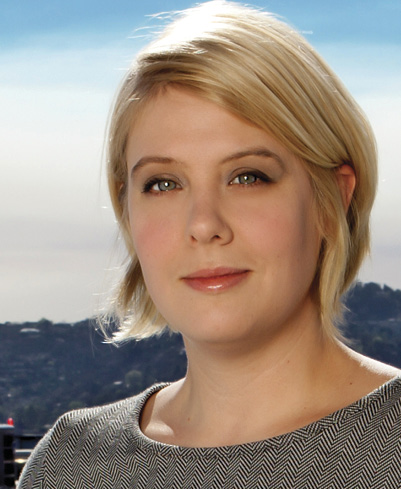
Abbie Heppe: Community Manager
Past Projects
X-Play
G4TV.com
Prima Games: How do you explain your job to friends or the uninitiated…
Abbie Heppe: Like my parents? (Laughs)
I’m very much a point person here for internal and external communications. The easy way to explain it to the uninitiated is I spend a lot of time on our forums, on Twitter, on Facebook interacting with our fans, but I’m also the person who coordinates with the companies we work with to get everything to the final execution and making sure that it’s very much in step with what the company wants and what fits Titanfall.
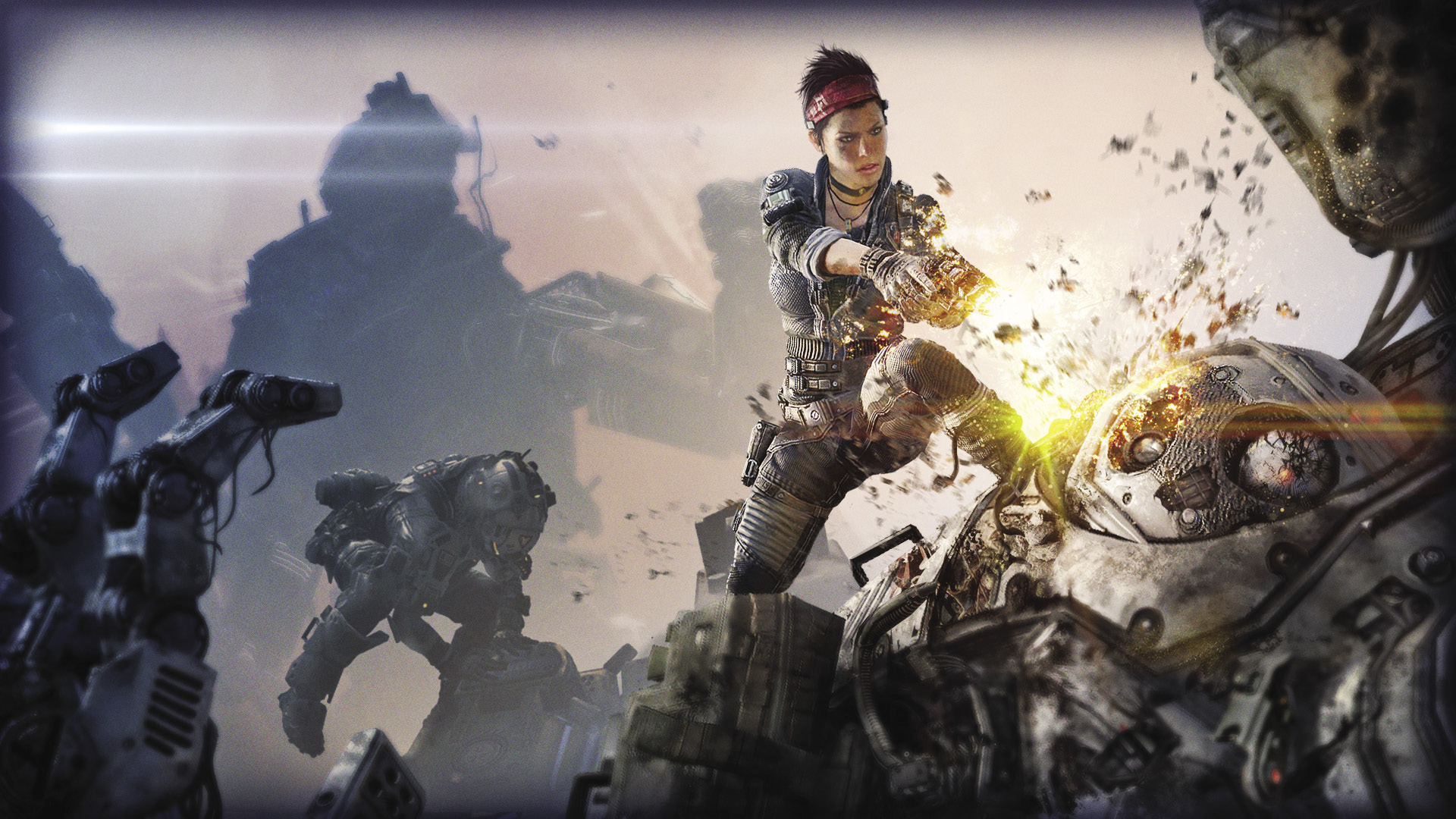
In addition to her job as Community Manger, Abbie also supplied the voice for Sarah.
PG: Okay, so you have a very broad scope of things you do?
Abbie: Yes. We’re not a very big company. Like my department is a one-person department. I work very closely with our producer and Vince and the art department and everybody else who has a say in all of this stuff. But we’re a little more flat just because we don’t have tons of internal jobs for marketing, PR, business, and licensing. And we’re a lot smaller. I mean, with QA, we’re around 95 people. We’re not huge; we all wear a lot of hats. Everybody here has a lot of roles.
PG: When did you begin working for Respawn?
Abbie: I started at Respawn in January 2011, which was about nine or ten months after the company had started. I was one of the first non-Infinity Ward employees, so, yeah, it was pretty close. I mean, Titanfall wasn’t the game that we were working on at that point. When I started, they weren’t allowed to tell me what they were working on while I was interviewing, so I just totally went in blind based on the past work of tons of people, of the staff. And I’ll take that chance.
It was funny, as soon as I started, I actually got to see what everybody was working on and it was in such early stages. It wasn’t even what is now Titanfall. And it’s really scary when you go from the world of writing about games and covering them, where you see things that are very much a finished product.
Just seeing something in the very early stages of development, where maybe a coder has done the art for something that they’re testing out, and we had one where the noise of the gun shooting, which was “pew-pew-pew-pew”—I mean, just really funny ridiculous stuff. You sort of learn how to process that, and it’s been a great experience to watch how that builds into what we’re all playing today and releasing in less than two months.
PG: Does it feel like it’s been a very short amount of time? Or does it feel like it’s been forever?
Abbie: It’s almost hard to say at this point. Especially because what I did the last months before E3 last year have just been crazy. And before that, things were much more calm on my end. So, it sort of goes up and down. The guys did warn me when I was interviewing that it would look like nothing at first, and then you’d have that day where everything sort of clicks together and you’re like, “Oh my God, this is really cool.” And it’s totally true. At a certain point, that picture forms; you see the magic eye. (Laughs)
PG: When was that for you? When did you see that?
Abbie: God, it’s so hard to pinpoint dates in my head at this point, but last year before E3. Everything was sort of coming together at that point. The major pieces were there, and then all of a sudden it was super fun to play. ’Cause that’s the other crazy thing you go through. As you do all of that balancing and adding and things, there’s points where you go from feeling like this isn’t that much fun, to like, “Oh my God, this is awesome and I can’t stop playing.”
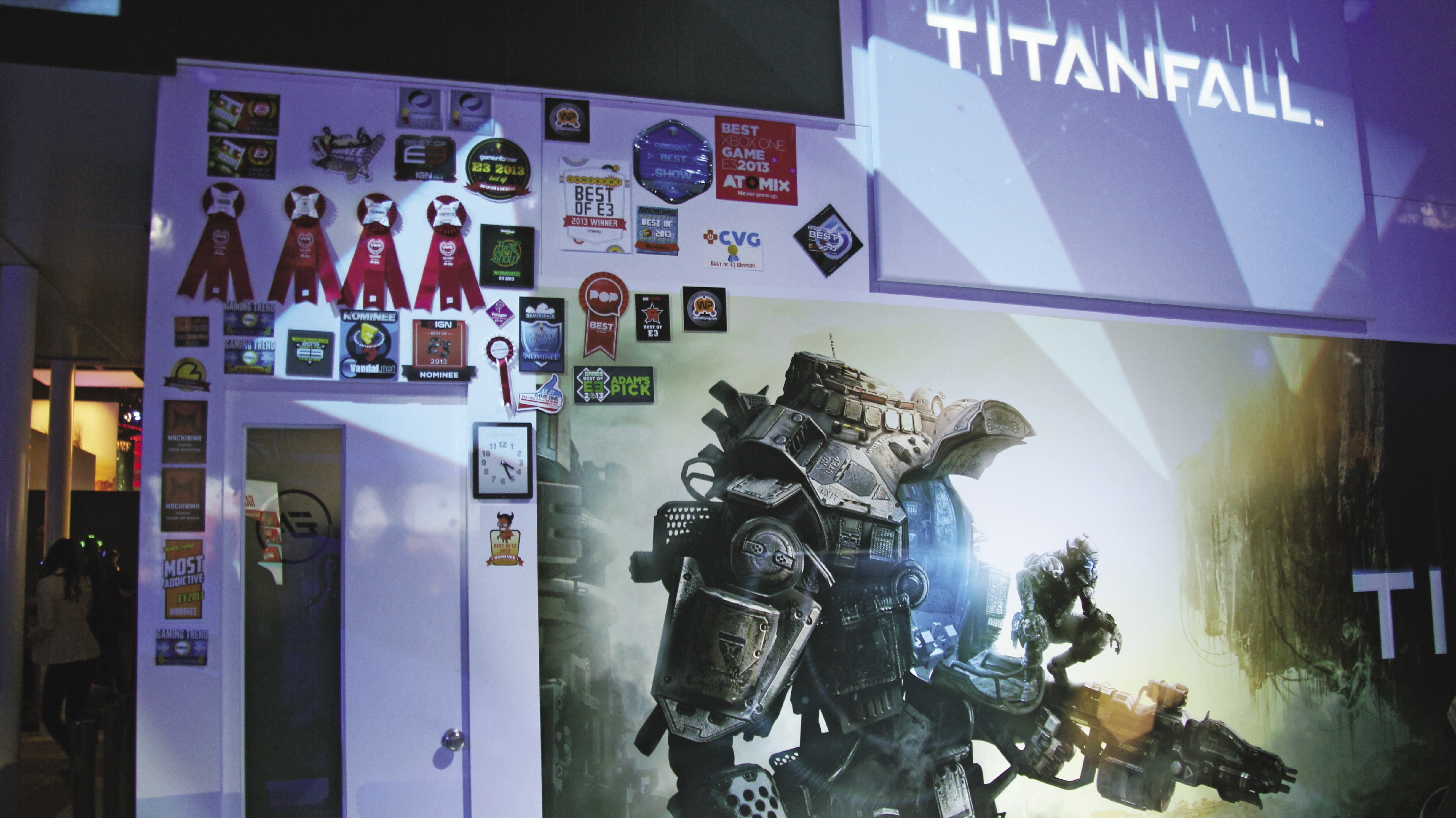
By the end of E3, Titanfall took home more than 60 awards.
PG: What has the reception been like so far for Titanfall?
Abbie: It’s been really good. It’s been really interesting because we had like two years before we even announced a game, and we had forums and we already had fans who had come over and were spending tons of time there. That’s awesome and encouraging, especially when you have nothing to offer them. I think a lot of people that have really stuck with us from the beginning, and because of the pedigree of a lot of the guys that started the studio, they had brought over a ton of fans with them. So that’s really nice as a community manager to already have a little bit of a built-in fan base. We were really nervous going into E3 because we were thinking there had been leaks and some of the reactions to the word mech were not what we’d hoped—a lot of people are very skeptical about that. It means something different to lots of people, especially that game.
And once we revealed it at E3, all of a sudden it was super positive and the coverage that we got coming out of it, which was all press, it was awesome. So we brought it on the road to Gamescom and the reception’s been just incredible. It blows us away. You consider at this point how few people have really had hands on with the game, but their impressions are always blowing us away. And sometimes it’s tough because we’ve always sort of put out there that you have to play it to understand what we’re trying to do, and it’s very difficult to describe it to people.
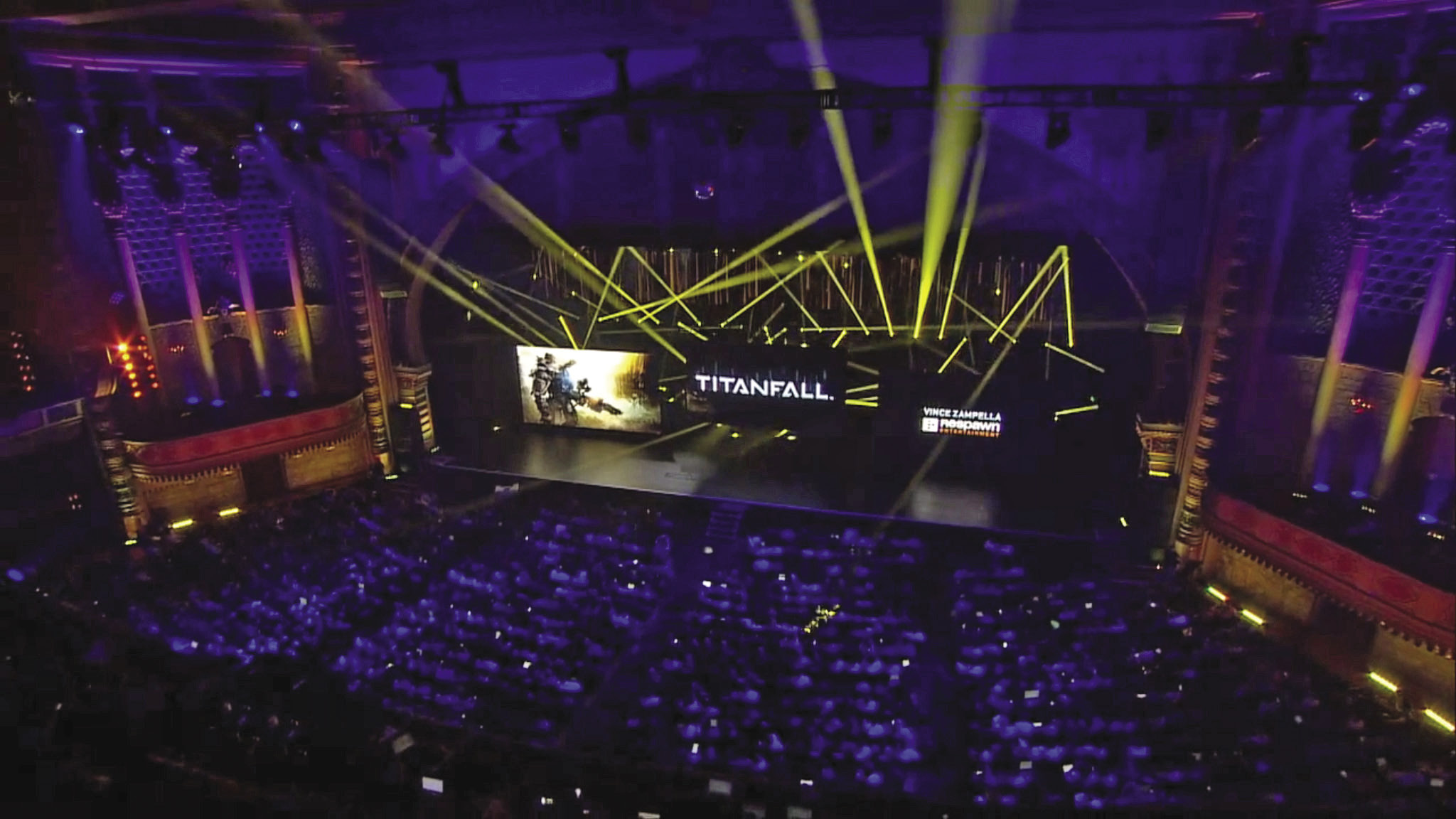
Titanfall was showcased at both the Microsoft and EA Keynotes during E3.
PG: What was the moment when you knew Titanfall was something special?
Abbie: That’s a great question. I think it may have been when we showed it at E3 for the first time, at the very end of the Microsoft press conference.
There were some tech issues in the rehearsals, and we were super worried that something would happen, and it didn’t. It went off without a hitch. And I was there in one of the boxes up at the top and sort of just burst into tears, and everybody was watching back at the studio and was tearing up. That’s the most awesome thing about social networks and the way that things work now. Like you can immediately check Twitter and see people saying, “Oh my God, what was that? Holy shit.” Like, “This game looks amazing.” That was the first time when I was like, “Hey, this is real!” And then the next few days, the interest at E3 was so high, and we hadn’t—and this sounds like, How could you guys not know?—but we didn’t have the amount of interviews scheduled and space and everything that other games might have that were bigger and more well known. But all of a sudden, we were swamped and crazy, and there was a line of like seven of us doing just pickup interviews with anybody that would take them, just constantly all day. It was insane.
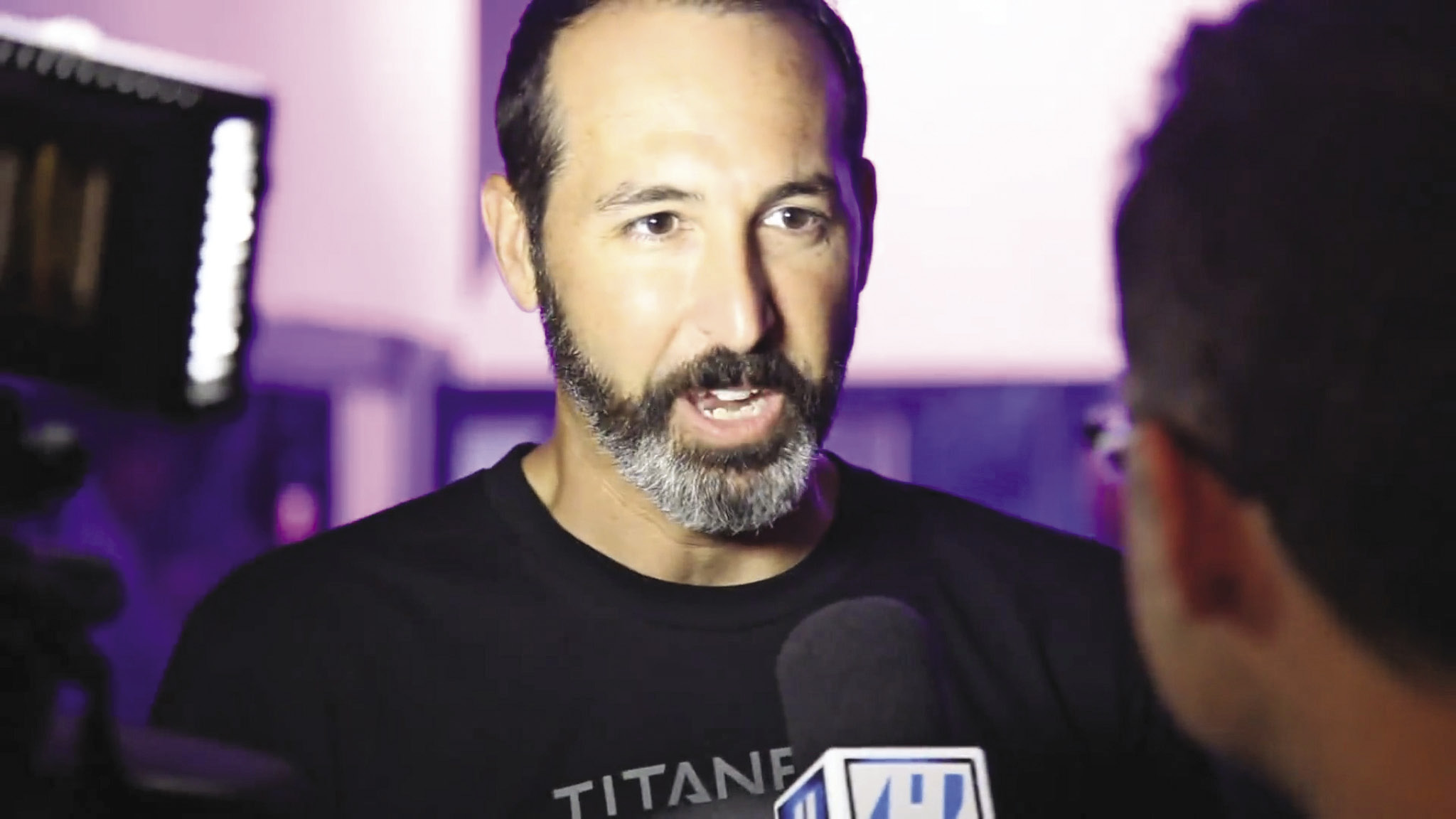
Lead Artist, Joel Emslie, conducts an interview on the show floor following the game’s announcement at E3.
PG: The word starts popping up all over the place.
Abbie: Which was super crazy, and then being able to walk into the lobby and see the Titan there—it blew everyone away. I think that was when everybody was like, “Oh my God, what is this gonna turn into?” And then you go back to going like, “Wow, we still have so much in front of us.” Now we gotta make this game, and we’ve got all these conventions coming up and all these opportunities. And now we have to figure out everything from here to launch, because we announced in June and we’re coming out in March, and that’s not even a year to get everything out; so then it was back to, oh God, well, you know, first playable, that’s gonna be crazy. We gotta figure this out. What if that goes horribly wrong? And so it’s like these cycles—happy, sad, happy, sad. (Laughs)
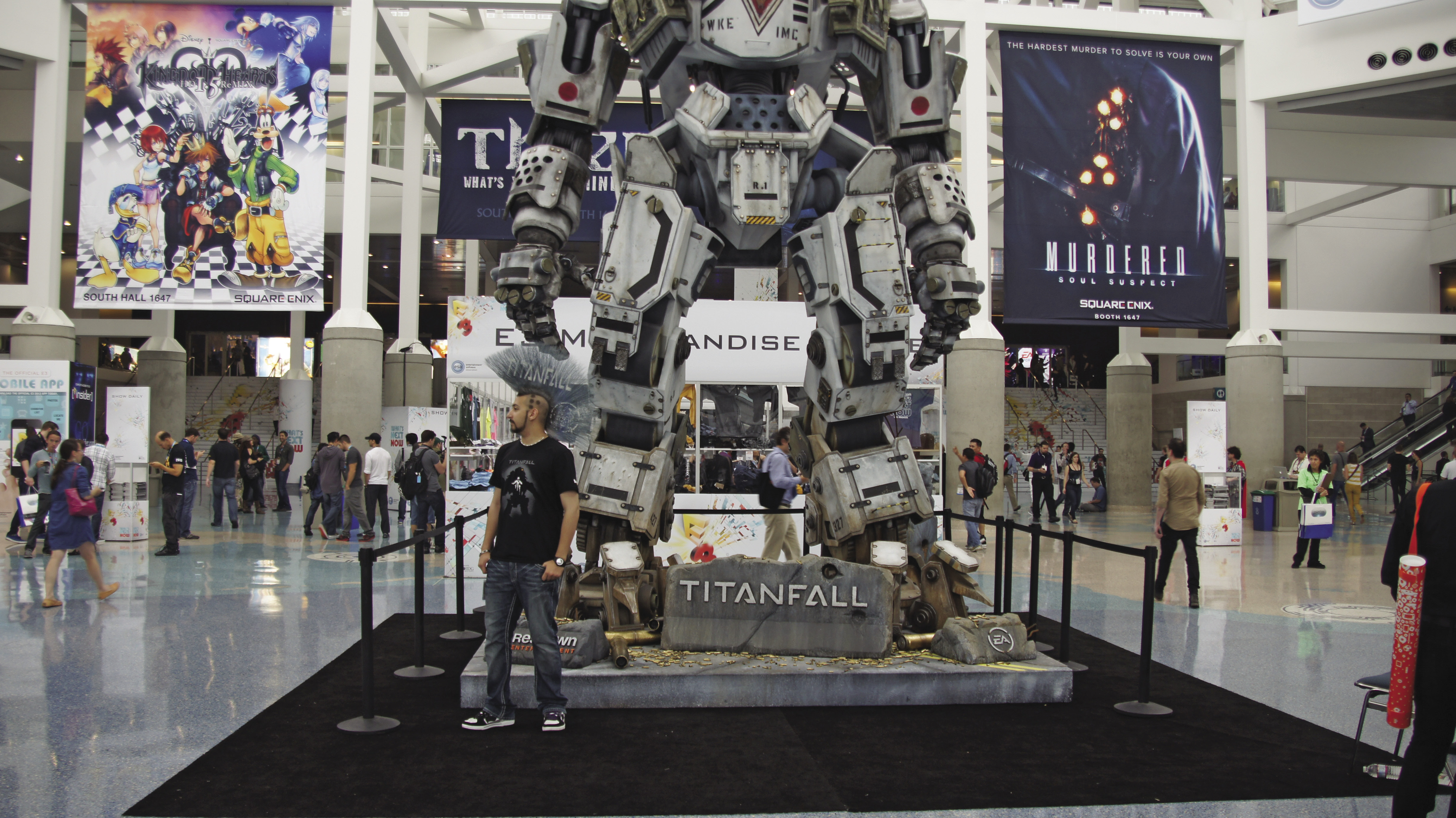
A life-size Atlas Titan stood guard in the lobby at E3.
PG: We’ve noticed some interesting artifacts in the game. Are there any Easter eggs?
Abbie: (Chuckles) There’s tons of Easter eggs. I mean, we leave stuff for our community to find. The signature of the studio is all over this game. You’ll see it in the naming, in the numbers in the game. Usually that has some meaning to someone at Respawn if you look at most of the text, most of the references—so much of it comes from the studio. Our mark is all over it, and I think it’s there because of how much we love this project and how close we really have all become to it because it’s been such a long process. We started with a lawsuit, and this office that you’re in right now had glass on the floor and people sat in crappy folding chairs with iPads. Eventually they got computers and Internet and built an office and started from scratch. And starting from scratch is hard.
I just love that almost anywhere you look in the game, you see little references. Chances are it has some meaning to someone here. I think I’ll leave a lot of the really exact stuff for the community to figure out or find, ’cause it’s really just gonna be like a couple people who will be like, “Oh, that’s that,” and some of them maybe will never figure them out, you know? But one of the ones that no one would ever figure out is the numbers on one of the guns that we used in some of our key art and stuff. It was the anniversary of one of our programmers and his wife. You know, stuff like that. So, some of the markings on the Titans, Joel put in for his wife. It’s very sweet.