
Titanfall Guide Behind the Scenes
Game Design: Justin Hendry
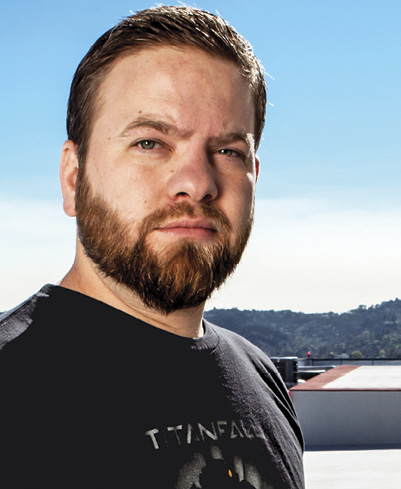
Justin Hendry: Game Designer
Past Projects
God of War 3
Stuntman Ignition
Terminator 3: The Redemption
Dr. Muto
Prima Games: Did you start with everyone else from the beginning?
Justin Hendry: I did not. Respawn formed in May of 2010 and I joined in February of 2011. I interviewed in October of 2010, but I was working on God of War: Ascension and we had a milestone there that we had to reach. So, I stuck around for an extra three months to make sure they could hit their green light before I left.
PG: When you came on board, Titanfall hadn’t started production yet.
Justin: The one thing that ended up staying the entire time, which was the core part of what the game is, was you could run around in a Titan and you could eject and turn into a soldier (not Pilot). It was extremely rough, but that concept and that idea was in place. There were a couple of rough levels that were built but none that we ended up shipping. I don’t even know if multiplayer was being played at the time. I don’t think it was. Everything was a hypothetical design at that point.
PG: So, when you were dropped into this, what did you start working on?
Justin: I started trying to get familiar with scripting, actually. We use a text-based scripting language here, and I had always used visual-based scripting editors. So, I was not hired as lead; I was hired as a senior designer. I was trying to just get my feet wet with that, so I was learning. I was sitting in an office with Mackey and Brent, who are two of our very, very good script designers here. They were showing me the ropes. It wasn’t really until we switched to Source that I was able to actually start doing stuff. It was a visual-based editor, before we modified the hell out of it. So, I was like, “Ah, I can do whatever I want here.” I was able to showcase some of the things that I could do. But before that, it was very simple, suggesting things here and there, but it was a rough beginning for sure.
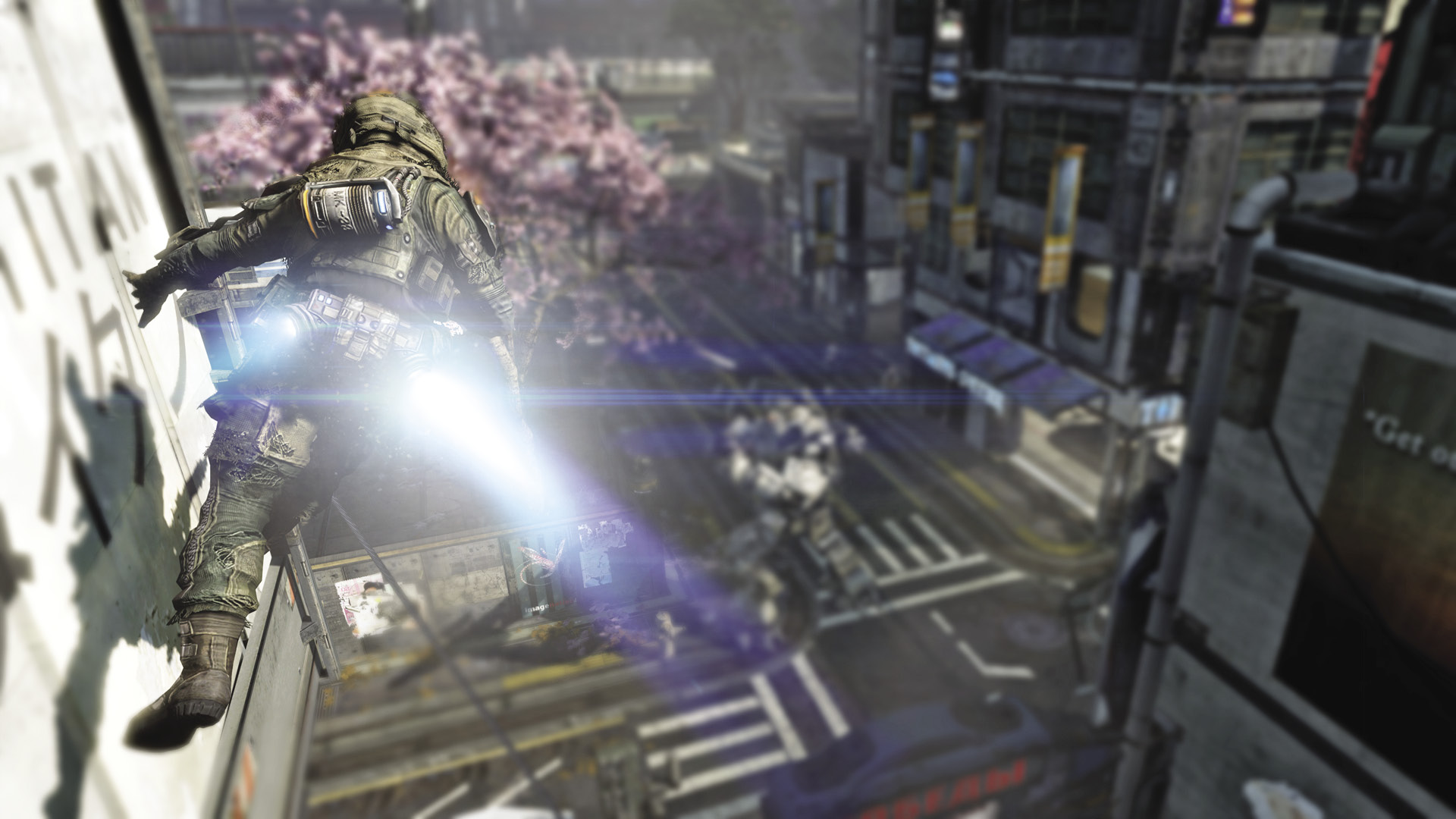
Justin helped design and refine the wall running mechanic.
PG: How did it progress from there?
Justin: I got into Source, and at the time when I started, there was a wall running prototype that I think they did in Source before we had chosen that engine. It was easier to prototype in there, but I don’t think it was actually a core part of the game yet. It wasn’t in the initial engine that we were using. I gravitated to wall running immediately—I thought it was the most interesting mechanic. So, I immediately went and started building stuff that supported wall running. Pretty much everything I built/prototyped early on featured wall running.
PG: What was the moment when everything just kind of came together and clicked?
Justin: I’d say the game was officially fun in the middle of July. The game fun was at E3, but the amount of fun you could have in a Titan was limited. Like you would get bored in a Titan after two or three matches because there wasn’t any tactical choice involved until we brought in the shield system—after E3. That was the last piece of the puzzle that made the whole game work, because up to that point, Titans couldn’t regenerate health. Probably one of the great struggles we had in this game was how to make a Titan worth having. Once the shield system got in place, the game was fun. A skilled player who has 10 percent health but a full shield could beat a player who has full shield and full health. And depending on how you played, there was always a chance to keep your Titan alive. That made all the difference.
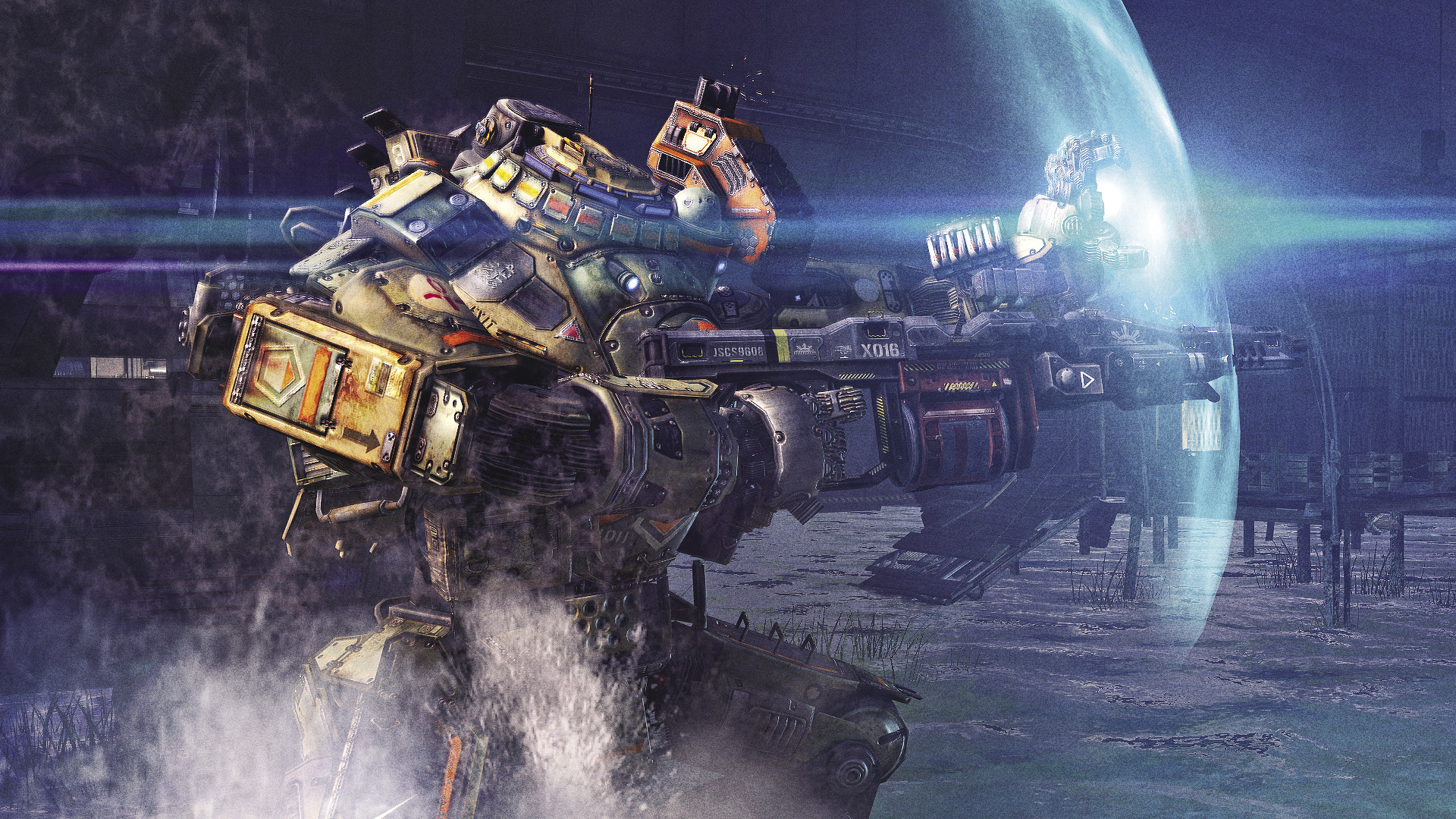
Implementation of the Titan bodyshield was a big step in balancing Titan-on-Titan combat, making it fun while rewarding skill.
The thing I’ve been saying kind of nonstop is, you’ve gotta find the fun. You can’t schedule fun. Especially when you’re making a new IP. I’ve seen this before, where places say, “We’re on this schedule and even though our core game’s not fun yet, we have to get this game done, so let’s start doing all these things. Let’s start building all this shit, even though our game’s not fun yet.” We were building levels because we did have to do that, but we actually scheduled time to revisit the first levels we did, because we knew the game’s core wasn’t done/fun yet. Our Titan’s movement speeds weren’t locked in, our Pilot movement speed wasn’t locked in, and it was like, okay, if we let you wall run just that much farther, all these distances can get pushed back or get pulled in, so you start playing with all these things and you kind of leave a little room to massage those things in the levels. Once the fun was found, we started to lock down the levels as well. It was not that long ago.
PG: If you could tell someone one thing about Titanfall that they don’t already know, what would it be?
Justin: All I’d really want people to do is play it. It’s not like anything they’ve played before, I don’t think. And it changes, the way you play it evolves over time. We took the game home over Christmas break and we let friends and family play it. We were all playing against each other and everybody was letting nephews and nieces and brothers and sisters play. You watch this progression over like 30 matches and people start going, “Oh, this is how I use wall run effectively” or “Oh, I can get up to there? Oh, okay.” This is a very different experience. People tend to play a lot of matches on the ground (like they’re used to in other games) before they start to feel comfortable with the newer mechanics like wall running, double jumping, and wall jumping. When players put it all together, it’s a very refreshing experience.
It’s interesting because it’s so hard to get that across. I don’t think people believe there is a different way to play a game. I think the genre’s really been the same for a very long time. It’s been freshened up here and there, but there’s not really been a new way to play it, I don’t think for quite some time. The way you approach an enemy or situation in Titanfall is liberating and allows players to be more creative than they can be in a lot of other games.