
Battle Tips for Experienced Fighting Game Players
No Close-Range Normals
The most obvious surface-level change with SFV is the removal of different normal moves at point-blank range. Now, you just have to worry about choosing the correct button for the situation, not whether you’re at the proper range for the move version you want.
Implications of SFV’s New Throw Properties
The throw input of 

 has input priority over all other inputs (except V-Trigger), including special moves and crouching attacks. This means that players can no longer mask a throw tech input within another move’s command (like SFIV’s option-selected crouching ). The old “crouch tech” command of
  just results in a normal throw animation.
On offense, you’ll want to go for a throw after you’ve instilled the fear of fast attacks in your opponent. On a rudimentary level, an up-close skirmish can be regarded as a constant game of rock/paper/scissors. Throwing “beats” blocking, blocking beats poking, and poking beats throws. Of course, finer details and nuances of both fighters’ capabilities need to be taken into account. The attacking player should also consider the pushback of lead-in attacks before a throw attempt because throw range is limited to near point-blank distance, and a whiffed throw attempt is easily punishable. A general up-close strategy may consist of staggered light ticks, like Ken’s standing , and mixing it up with either a throw or a well-timed medium attack (preferably with low recovery and high advantage) to set up counter-hit combos.
Another side effect of throws having less range and being much slower than before is that they can often be avoided simply by holding  , which will make your character either block standing (defending from non-lows) or walk backward (dodging throws). For instance, after you block a crouching tick, you can hold back to step away from any normal throw hitbox. If the would-be grappler expects this, it can be countered by low-hitting attacks, but they lose pressure doing so unless they guess on a crouching attack canceled into a special move for a short combo.
Defensively, throws are no longer as powerful as they were in previous iterations of Street Fighter thanks to the relatively lengthy startup time and small range. Before committing to inputting a throw escape, a defending player needs to assess the situation and make decisions based on the aggressor’s attack pattern. Of course, these decisions must be made in the heat of a fast-paced battle, so this is a skill that will usually require a hefty amount of experience in these situations.
Last but not least, if you manage to empty jump (which is jumping next to an enemy without an aerial attack) on an opponent uninterrupted, followed by a quick low attack, you’ll most likely beat out their throw attempt (especially if they’re still accustomed to three-frame throws from SFIV). Since throwing used to be one of the best defenses against this faked high-into-low mix-up, “empty jump lows” are much stronger than they were in SFIV, where they were already rather effective.
Risk/Reward Philosophy of Reversals in SFV (Crush Counters/Reversal Punish Counter-Hits)
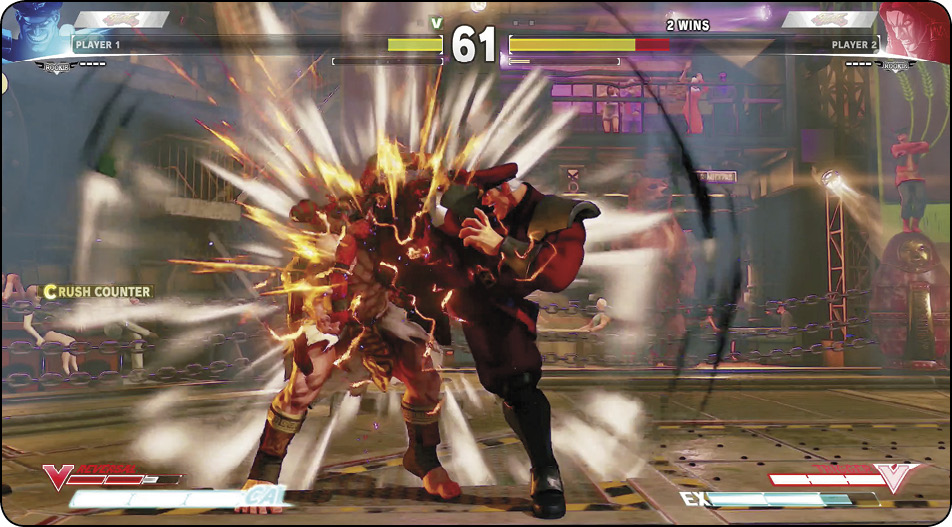
Properties of reversal and anti-air special moves in Street Fighter V differ vastly not only from other fighting games, but from other Street Fighter titles. There are fewer invincible reversals in total, and many of them are considered “counter-hittable” on recovery. With SFV’s introduction of Crush Counters, this has huge implications: whiffing something invincible like a Shoryuken has always meant being punished, but now it means being punished by totally devastating, on-demand combos. Defending players need to think twice about going for a wake-up Shoryuken, as the reward-to-risk ratio is extremely high compared with a game like Street Fighter IV. On the other hand, having an invincible reversal is still invaluable in a game that emphasizes the importance of up-close scrambles, and the counter-hittable recovery aspect doesn’t matter if you mostly make good reads with your reversal attempts.
Special Moves That Receive a Counter-Hit When Punished During Recovery:
| Cammy | All Cannon Spike versions |
| Chun-Li | EX Spinning Bird Kick |
| F.A.N.G | MK, HK, EX Ryobenda |
| Karin | EX Ressenha |
| Ken | All Shoryuken versions |
| Necalli | All Raging Light versions |
| Rashid | EX Spinning Mixer |
| Ryu | All Shoryuken versions |
Input Buffer Leniency Window
Defending or punishing moves with attacks is easier thanks to the input buffer leniency window. Knowing the startup of your attacks, as well as the recovery of blocked opposing attacks, is extremely important in optimizing damage output and punish combos. The execution barrier for punishing unsafe attacks is diminished: there are no longer one-frame punish windows (e.g., punishing Balrog’s -3 Dash Straight with three-frame jab). The smallest reversal window possible is now three frames. ALL attack inputs within three frames before recovering from a hardened state will execute something with perfect reversal timing. This includes recovering from air recovery, attack recovery, being floored, hitstun, and blockstun. This makes it easier to counter-attack things as mentioned, but it also makes it easier to eat inadvertent counter-hits if your button-pushing is a bit overzealous.
- Normals get a three-frame input buffer. This aids reversal-timed pokes and link combos.
- Inputs for throws and specials (including Critical Arts, V-Skills, and V-Triggers) are buffered forward for six frames.
- Dash/backdash inputs are buffered forward for nine frames.
This also makes it even easier to get specials or dashes with reversal/link timing when desired, and it greatly smooths over hiccups in online play.
Chainable Light Attacks and Special Move Canceling
The old Street Fighter IV limitation where normals in chain combos couldn’t cancel into specials is gone, so canceling normals into specials behaves more like in Street Fighter III. To perform a shoto bread and butter combo of two light attacks into Shoryuken in Street Fighter IV, you had to either chain the light attacks together and thenlink the special itself, or you had to perform the first light attack, link the second, and cancel it into the special. In Street Fighter V, you can simply chain the light attacks and cancel the second one directly into the special, with no limitation here. This is important, as many hit-check combos in tight spots without ideal timing and positioning in Street Fighter V involve simply jabbing twice (or even just once) before immediately canceling into a special for a knockdown.
Trade Priority and Counter-Hits
Trading attacks in SFV works differently than in SFIV. If two grounded non-specialmovesclash (more precisely, if both characters’ activehitboxes collide with each other’s hurtboxes on the same frame), the player using the higher-strength button wins the exchange and is rewarded with a clean counter-hit. So, if Ryu’s standing  hitbox connects with Ken’s hurtbox while (on the same frame) Ken’s standing
  hitbox connects with Ryu’s hurtbox, Ryu will be counter-hit (and in this case, Crush-Countered). It’s just as if Ryu was interrupted during his attack’s startup, even though his standing was active and well-aimed. If Ryu used standing instead in this scenario (or if Ken used standing /
 ), both characters would be put into hitstun since their attack strengths are equal. An actual trade occurs.
Trade priority is: Throw > Heavy > Medium > Light
This altered system mechanic has several consequences for gameplay, coming from SFIV:
You can no longer trade your heavy attack with a light attack in order to recover before your opponent’s longer hitstun and follow up with a combo. This type of “trading up” situation was common in SFIV, but in the same situation now, you counter-hit your foe cleanly.
Medium- and heavy-strength frame trap attacks are more attractive than quicker, weaker frame-trapping lights because you essentially get an extra frame to counter-hit someone who is retaliating with light attacks. They can’t just call a trade a draw, and they must rely on their speed advantage. You wipe this out if you use medium-strength frame traps with only three- or four-frame gaps.
With certain characters, there is more of a rock/paper/scissors game when playing footsies when you’re taking trade priority into account. For instance, you may be more reluctant in challenging Chun-Li’s 
 hop kick with your standing or pokes, unless your goal is to interrupt her before her first active frame.
This priority system applies to grounded normals and grounded unique attacks. It doesn’t apply to jumping attacks, nor does it apply to special moves. If a special move or jumping attack is involved in a trade scenario, they will simply trade as normal, with both characters entering hitstun. Note finally that throws will win over strikes if they clash on the same frame.
Hard Knockdowns, Set Play, and Recovery System
At the highest levels of play, SFIV revolved mainly around knockingdown opponents in order to score an ambiguous, hard-to-escape setup or frame trap. This strategy has been diminished significantly, if not outright eliminated. In SFV, all moves that knock down are recoverable with quick-recovery, back quick-recovery, or both, with rare exceptions. This design is meant to prevent certain characters from abusing “set play.” Set play is the concept of executing a series of hard knockdown combos to constantly mix-up the opponent, continually putting them in a vortex of 50/50 decisions. Especially in earlier versions (before delayed wakeup was introduced in USFIV), this made the victims of set play feel like they weren’t allowed to play the game once they were hit. Instead, they were forced to guess in coin-flip situations until they were knocked out.
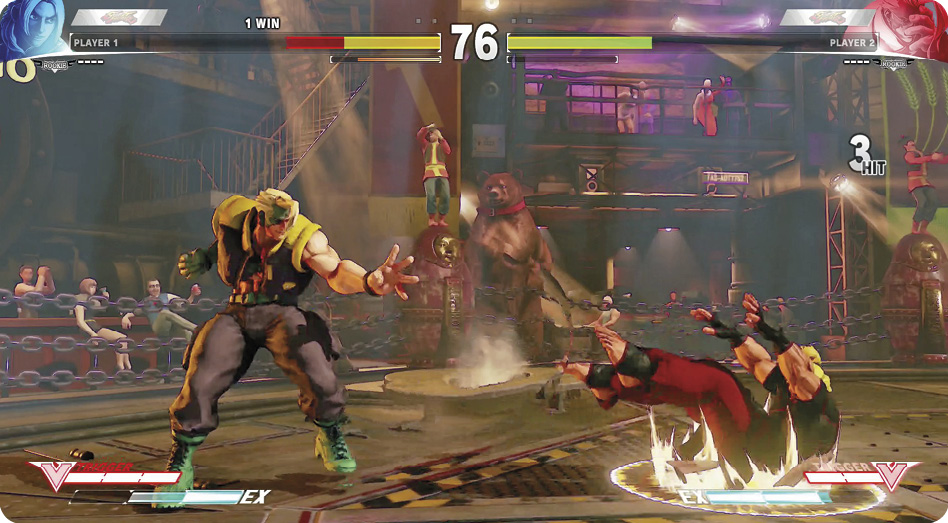
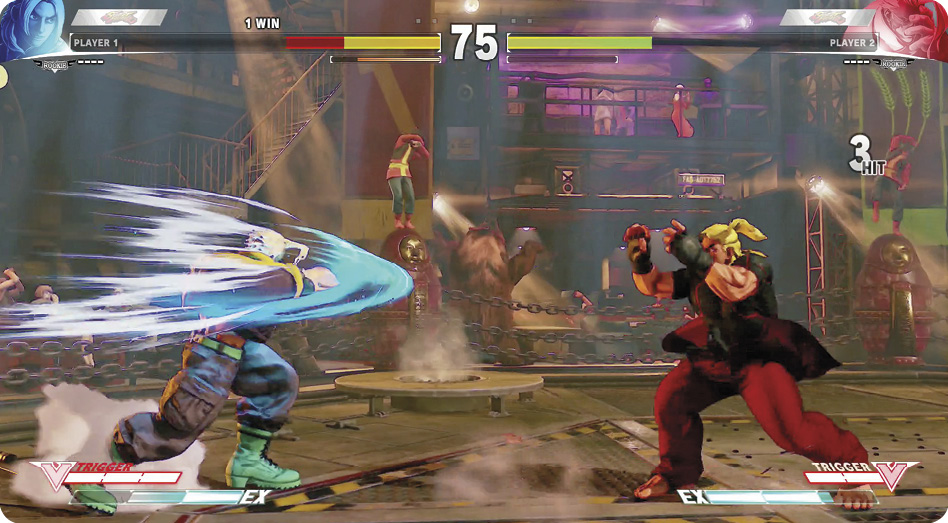
Quick-recovery ( / upon hitting the turf) allows you to spring up in place from most knockdowns, removing most of the disadvantage of being knocked down (apart from the whole taking damage part). Back quick-recovery (upon being floored,
  or ) involves an invincible backflip away from the aggressor, gaining some extra space (as long as you’re not cornered) while adding five frames to total quick-rise time (compared to quick-recovery in place). This is universal, regardless of character.
However, all throws prevent back quick-recovery. Inputting the command for a back quick-recovery when thrown simply results in regular quick-recovery. This includes striking hit-throws (such as Laura’s HP Bolt Charge and Nash’s Tragedy Assault). If someone grabs you, they at least have the mild luxury of knowing that you can only quick-recover in place or wake up at the normal slow speed, so throws grant some set-up potential.
Counter-hits from crouching sweeps will cause a Crush Counter, signaling an unrecoverablehard knockdown. This allows the aggressor to go for one guaranteed mix-up, provided they’re successful counter-hitting with sweep. Most sweep attacks are heavily punishable on block and usually have a long startup time, so if you manage to score a Crush Counter sweep, you deserve the reward of one set play cycle. The only guaranteed way of connecting with a counter-hit sweep is by sweeping one of the specials that can be counter-hit on recovery, such as Rashid’s EX Spinning Mixer, Karin’s EX Ressenha, and so on. In some edge cases where you aren’t close enough for a normal Crush Counter punish combo, you might have to resort to sweeping these whiffedreversal attempts.
Certain Critical Arts will also put the target into an unrecoverable state on hit. However, they do not provide enough advantage for a set play setup. For instance, Nash’s Judgement Saber causes a hard knockdown, but it does not provide sufficient advantage for him to get close afterward because his opponent recovers just as quickly as he does. The unrecoverable knockdown here is primarily for cinematic effect.
Block Damage and White Damage
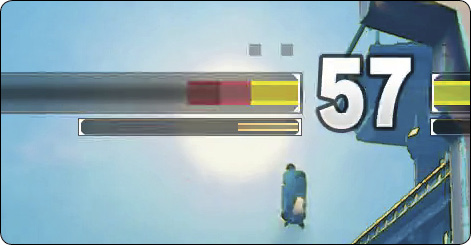
New to SFV, “chip” damage cannot K.O. unless it comes from a Critical Art. You’ll actually have to earn your final hits against low-stamina characters, instead of just being able to force them to block a special move.
“White” damage is also a new mechanic, where blocked moves stronger than jabs and shorts will incur one-sixth of their normal damage as potential future damage. This potential damage is represented by a white area on the stamina gauge, hence “white damage.” This provisional damage is “unlocked” by any cleanly inflicted damage. If a character receives white damage but then nothing touches them (including on block) for more than 90 frames, their stamina grows back quickly, reclaiming potential white damage. See the white damage and block entries in the Glossary for more details.
Armor System
Armor isn’t much different in SFV than it is in SFIV—you still take recoverable white damage on absorption, just like with absorbing attacks with Focus charging in SFIV. However, “armor-breaking” attacks don’t exist in SFV, and you can’t be knocked out while absorbing an attack, either. Like blocking a projectile with no stamina left, if you absorb an attack with an armor move (such as Laura’s EX Bolt Charge or Zangief’s EX Siberian Express), you’ll survive.
Option Selects
Street Fighter III and IV were eventually brimming with option selects upon option selects as players added years of knowledge and continued optimizing situations. Option selects are consciously pared back in Street Fighter V, partially through lack of universal mechanics like parries or Focus Attacks, and partially through the removal of certain overlapping commands. Gone is SFIV’s “crouch tech” of (which resulted in either a crouching short or a throw tech and was so useful that there wasn’t really a reason to not use the command in place of any crouching short). And with backdash invulnerability removed, a large class of important anti-backdash/anti-Focus-backdash option selects from SFIV is no longer important. But that hardly means that option selects are gone. In a certain sense, even  is a defensive option select: you either block standing, or you jump backward. Useful SFV option selects include:
- Targeting pokes to barely whiff in front of the opponent, then quickly buffering a desired cancel outcome; nothing happens if your poke indeed whiffs, but if the opponent moves forward or sticks out an attack, they’ll get hit, and the cancel will happen automatically.
- On the cusp of gaining a full V-Gauge, poking with Crush Counter-capable pokes and slapping (nothing happens on normal hit or block).
- With full V-Gauge, using Crush Counter-capable pokes and pressing very late so the cancel only occurs on an actual Crush Counter hit, thanks to the extra hitstop.