
Need For Speed Guide The Basics
Racing 101
Here are the three most important determining factors for becoming the best driver in Ventura Bay: practice, practice, and more practice. While you may understand the concepts of what makes a great drift, you must still go out and practice it. That being said, there are some basic concepts that can help you beat your opponents. In most cases, races are won on the turns. You may have the fastest car, but if you can’t control it around a turn and often crash, you’re still going to lose. Most of the courses involve lots of twists and turns, so take what you learn here and put it to good use on the streets of Ventura Bay.
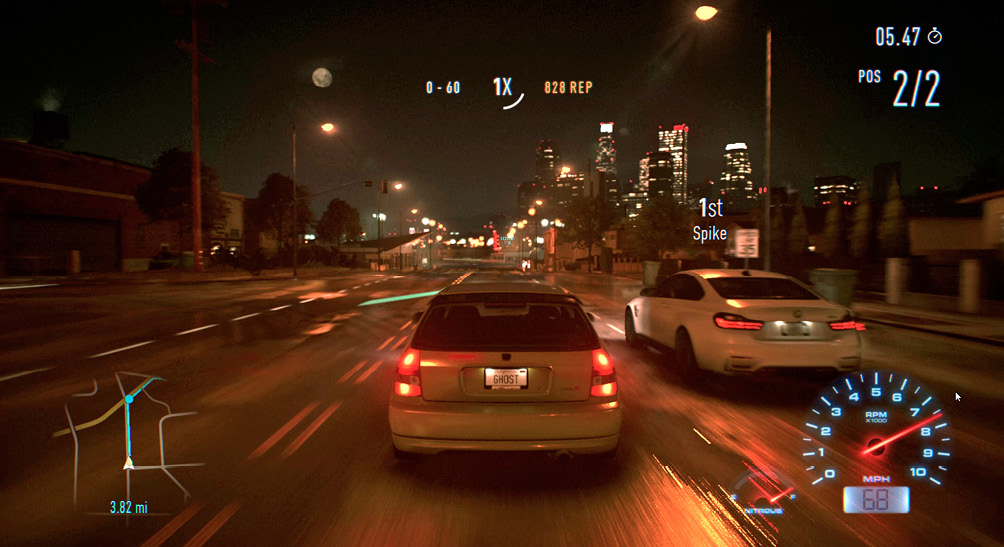
Head Up Displays
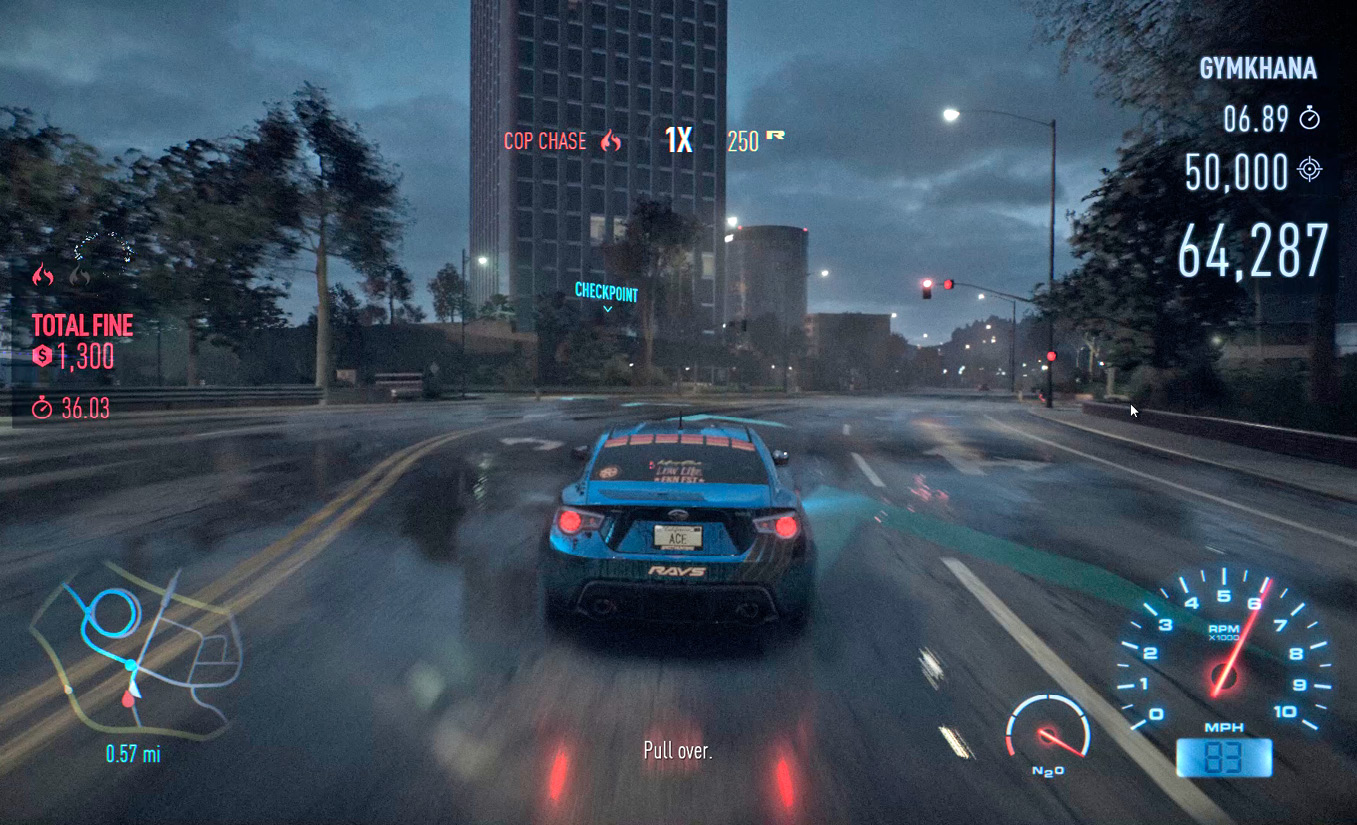
When driving, use the information available on the screen to successfully navigate around a course as fast as you can. The Driving screen is fairly simple, so you can focus mostly on the race and the road. The instruments and gauges appear in the corners of the screen so as not to obstruct your view.
The tachometer is displayed in the lower-right corner of the screen and shows your engine’s RPMs. Directly below this analog gauge is a digital speedometer that indicates your current speed. If you’ve installed a nitrous oxide package to your car, the nitrous gauge appears just to the left of the tachometer.
Your mini-map is in the lower-left corner of the screen. This shows your car in the center and the roads in the immediate area around you. The wider the roads, the thicker the lines are on the map—roads in yellow are main thoroughfares while highways appear in orange. Other racers are displayed as yellow arrows while cops in pursuit are the red arrows.
Information on the current event appears in the upper-right corner of the screen. This is where you find your drift points, position within a race, or current time and time to beat (depending on the type of event).
Check the top of the screen to see how you’re earning Rep. As you complete a drift, drive at high speed, run from a cop, or any other applicable action, you’ll see the Rep you earn for each category.
Finally, if you are being chased by the cops, your current fine and the length of the cop chase appears on the left side of the screen in red lettering. Once you slip away, the text turns to blue and another timer appears to count down the cooldown until you completely escape the fine.
Braking Essentials
General Braking
Skillful use of the brake undoubtedly makes you a better racer. There are several techniques that every racer should know. Every corner is divided into three segments: the turn entry, the apex, and the turn exit. Learn to recognize these segments in every corner to master the essential art of technical braking.
Straight Line Braking
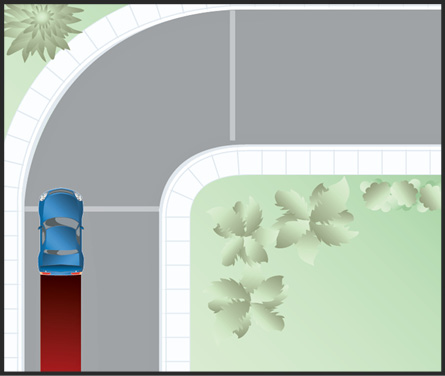
This principle is the Holy Grail of braking. Always brake the hardest when traveling in a straight line, prior to entering a turn. Any turn of the wheels at all could force your car into an understeer or oversteer condition (uncontrolled drift) given sufficient speed. Learn the threshold of your car’s brakes to anticipate just how hard to apply them without forcing the loss of traction.
When approaching a corner, press the brakes to near maximum in the straight section immediately in front of the corner entry point. Once you’re at the turn apex, release the brakes and accelerate to rip out of the turn’s exit. The key to this type of braking is to avoid braking too much and losing more speed than necessary.
Trail Braking
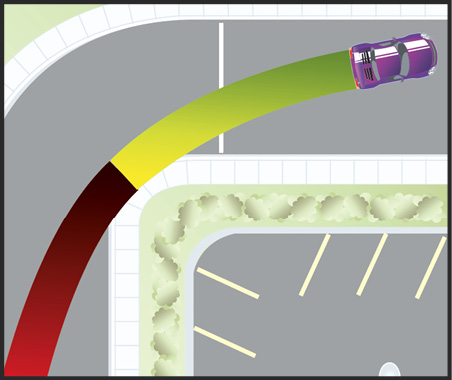
Trail braking is a more difficult technique to master. It involves delaying your braking until just before the turn entry, and then continuing to brake through the turn to the apex, where you can begin to accelerate out of the remainder of the corner. The trick here is not to force your car to drift while braking through the turn. Learn your car’s handling well enough to know its braking threshold so you know how hard to brake without causing it to oversteer and slide into a wall.
Making the Turns
When going around a corner, you must not only think about braking, but also how you enter a turn, when you begin to turn, and how you exit the turn. There are different strategies for going around various turns. These are known as lines. When street racing in the city or in the canyons on the outskirts, you’re going to face a variety of turns. Knowing how to approach each one allows you to maintain as much speed as possible and avoid crashing or going off the road. Use these strategies for races.
Right-Angle Turns
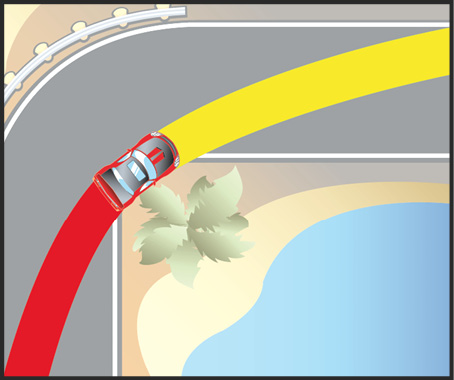
This line strikes a good balance between enter and exit speeds, and passes evenly through the apex. It’s the most common of all the corner shapes, especially in the city. Experiment with this type of turn as it may require you to go into the opposite lane and face oncoming traffic.
180-Degreee Turns (Hairpins)
Hairpin turns usually have two accepted lines, which are both based on circumstances. The low-risk line to execute is the one that hugs the apex all the way around the inside corner, staying wide on both the turn entry and exit. In other words, you’re turning tight at the entry and exit with less steering around the apex.
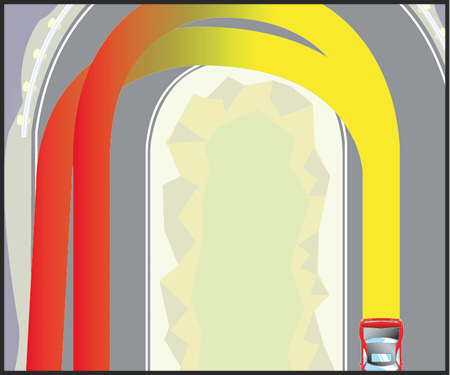
The more challenging and dangerous line is also the fastest one. However, you need a lot of practice to pull this off. Start at the center of the entry and turn a bit later along the outside edge. Follow the turn around to the exit. This smoother turn lets you maintain a higher speed and, since the exit has less steering, it’s better for accelerating out of the turn.
Chicanes
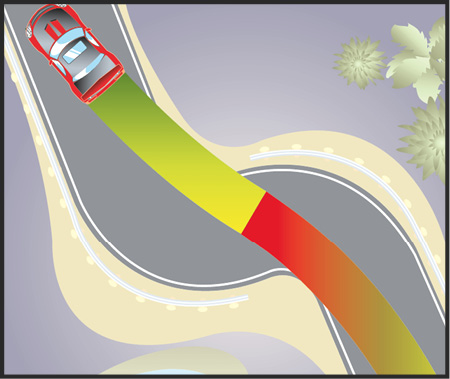
Occasionally during street racing the road may take a lateral diversion or present the need to move onto a side street quickly. These are considered chicanes and are essentially an S-turn with a shallow path between apexes. The key to getting through them as quickly as possible is to try to make as straight of a line as you can. This allows you to maintain speed and avoid sliding through the turn.
Decreasing Radius Turns
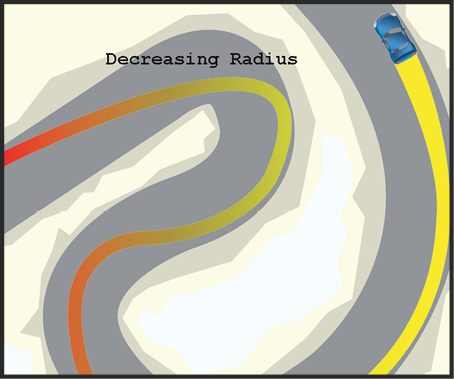
These turns are common when racing through the winding canyons outside the city. They start with a wider radius and become tighter as the corner continues. They are possibly the most challenging type of turn to maintain proper alignment and speed throughout. They’re also the most frequent cause of spins and collisions with walls or barriers at the turn exit. The best option is almost always to cut in close to the inside and early apex, then move to the outside of the turn exit as you come out of the corner, applying throttle as you do this.
Double Apexes
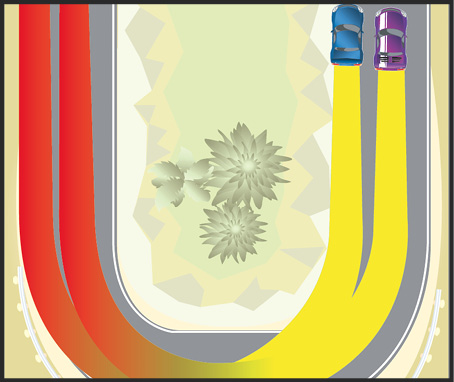
Double apexes can basically be treated like hairpin corners. The exception here is that they have a flat spot on the inside corner, effectively separating the turn into two parts with a pair of individual apexes. There are two possible lines you can take, depending on traffic or other racers. Instead of treating it as two turns, choose a fake apex between the two turns and use that as your focal point. Start the turn on the outside and cut to the inside on the exit, or start on the inside of the turn and go around to the outside of the turn on the exit. The key is to maintain a smooth turn throughout.
Increasing Radius Turns
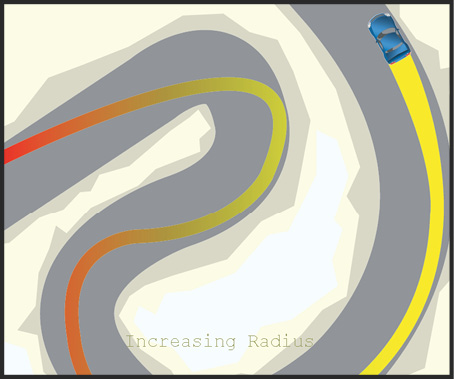
The opposite of decreasing radius turns, these become wider in radius as you progress through them. Start cornering early and keep tight to the apex as you exit the corner. Leave via the straightest path possible.
Drifting
Now that you’ve learned all about turns for racing, it’s time to forget everything you know! When it comes to drift events, you must unlearn these basic principles and think in a completely different way. Instead of avoiding sliding, in drifting you actually want to slide around the corner.
To make a car drift, you really need to adjust it in the garage so that the car grips less in the rear and more in the front. (Check out the Garage section of this guide for more info on tuning your car.) Once you get this properly set up, you’re ready to drift.
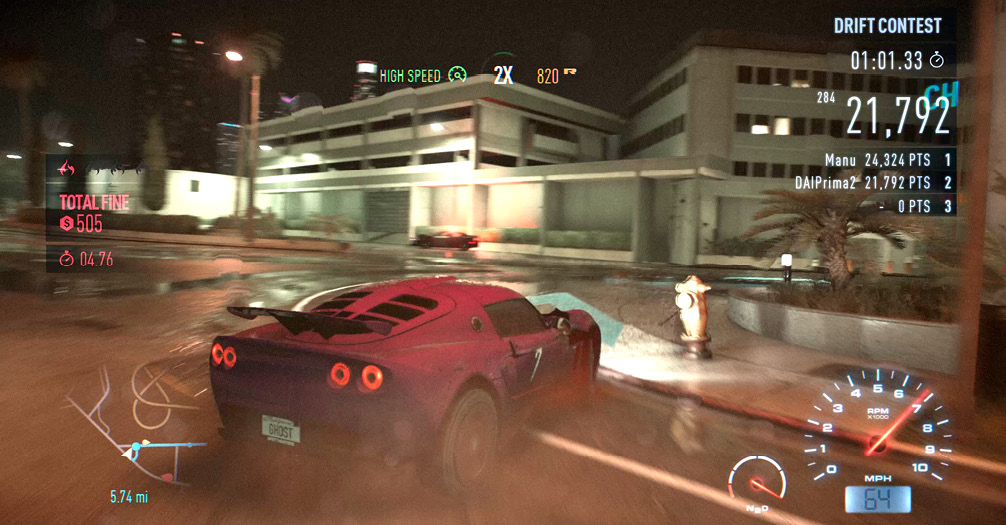
When drifting, you want to enter a turn at high speed while turning your wheels toward the corner. Your car should begin to slide on its own. If not, tap the hand brake to reduce the traction on the rear wheels. Coast through the turn rather than giving it throttle so that your rear tires don’t gain traction during the drift. As the car begins to rotate around the corner, turn the wheels toward the outside of the turn to countersteer and prevent your car from going into a spin. As you exit the turn, begin to accelerate to end the slide.
Since you’re more concerned about style when drifting than maintaining speed and staying in front of your opponents in a race, there are several things you can do to increase the score you receive when making a turn. The first is maintain high speed while going into the turn. Next, you want an extreme angle with the front of your car facing toward the apex as much as possible instead of in the direction of the road. You also gain more points the farther you drift. Finally, the closer you are to walls and barriers without hitting them, the higher your score.
Drifting requires a lot of practice. It’s easier with a rear wheel drive car since all-wheel drive and front wheel drive cars are more stable on turns and tend to pull the car into the turn and prevent sliding. While you can do a lot of drifting in the city, you’re also more likely to have cops chasing you. Therefore, head up into the canyons where there are lots of turns and you can get up some speed without worrying about a lot of traffic. As you drift, you also earn Rep, even if you’re just practicing.
The Science of Steering
There’s a lot of physics involved when steering around a corner at high speed. It’s important to understand what causes vehicles to oversteer or understeer.
Oversteer
Oversteer is the condition when the rear of the car is sliding out from the car’s direction of travel. The front wheels are tracking in the direction of travel, but the rear of the car comes out from behind the front wheels. In controllable circumstances, this is often useful for taking the tightest line through a course. However, if uncontrolled, it can send a car into a spin and you may find yourself facing the wrong direction on the road.
Oversteering usually occurs when you brake while turning. This puts more weight on the front wheels as they pull into the turn, but lessens the weight on the rear wheels, allowing them to slide. To correct this condition, apply some throttle to put weight back on the rear wheels and steer in the opposite direction of the turn to prevent your car from spinning out.
Understeer
Understeer is the condition when the front wheels are not steering the vehicle effectively. They have lost enough traction to drive the car around the corner. As a result, the car drives off the road or into a wall or barrier. This can happen if the vehicle is traveling too fast for the turn or even accelerating through a turn.
In order to correct an understeer, apply the brakes to put more weight on the front wheels so they gain more traction. However, you need to be careful when doing this. If you apply the brakes too hard, it can put the car into an oversteer condition called fishtailing. For that reason, an understeer can be even more dangerous than an oversteer.