
Mass Effect 3 Guide Extras Collectors Edition
Gameplay
Strong Player Association
From its inception, Mass Effect was intended to be an action-oriented role-playing game, or action-RPG, based within the third-person shooter genre.
In third-person shooters, players can see their character onscreen, as opposed to first-person shooters, where players mainly see their hands and the weapon they’re holding.
The benefit of third-person games is that players can see their character on the screen at all times; in many cases, this creates a stronger bond between the player and the character they are controlling.
This was particularly important to the team at BioWare, since their focus on storytelling, character development, and allowing the player to create their own Shepard meant the player would see their creation and feel an even stronger emotional connection to the hero they were playing, since they had created it themselves.
.jpg)
RPG Roots
Having just finished Knights of the Old Republic to massive critical and commercial success, the gameplay team approached the original Mass Effect from a very RPG-centric point of view.
This meant a lot of the gameplay, and combat in particular, was very statistics-based: the player’s abilities, the characteristics of a weapon, any kind of upgrade or modification made to ammunition, accuracy, and so on.
These elements all defined the player experience more than a player’s skill or whether a particular action “felt good.” The designers creating these stats-based systems were referred to as “systems designers.”
In Mass Effect 2, the gameplay team worked to better integrate third-person-shooter mechanics that were more about “feel” than about statistics.
This meant the player experience became focused on gameplay: the way the player’s control of character, camera, and systems, combined with the visual and auditory representation of the action (animation, visual effects, sound effects, etc.) resulted in an experience within the game that was challenging but enjoyable.
The designers creating these experiences became known as “gameplay designers.”
For Mass Effect 3, the team asked themselves how they could take the gameplay experience, and combat in particular, even further than they had in Mass Effect 2.
They implemented an enhanced weapons-modification system to give players the opportunity to experiment and extract even more gameplay value from each gun in the game.
They added increased mobility with actions like sliding, melee, combat rolls, and climbing. They fleshed out the cover-based gameplay of Mass Effect 2 and overhauled the character ability systems.
The Mass Effect 2 team had three gameplay designers. On Mass Effect 3, that number increased to six.
Mass Effect 1 was an excellent role-playing game, and the team’s first cover-based third-person shooter.
With Mass Effect 2, combat gameplay evolved to be competitive with other premiere shooters. Mass Effect 3 is the culmination of the previous two games in that it is both an excellent RPG and an excellent action game—the ultimate synthesis of key learnings and an evolution of process and developer skill over the course of the Mass Effect franchise.

Evolving Abilities
The ability system in Mass Effect 1 gave players a range of choices between statistics-based abilities and gameplay-based abilities.
The fact that the technology enabled physics-driven gameplay had a huge impact on the way the biotic abilities were conceived and presented in the game.
These types of physics-driven abilities, like picking up an enemy and throwing them across a room with your mind, lent themselves naturally to being more gameplay-focused than statistics-focused.
In Mass Effect 2, the gameplay team shifted the abilities system to emphasize gameplay-focused abilities nearly exclusively.
All abilities would have a visual outcome that could be perceived by the player and would not have effects that were hidden “under the hood.”
A Design Philosophy
“To me, an RPG is about debate. One of my combat designers will come to me and say, ‘Half the people love the shotgun, and half of them hate it,’ and I’ll tell him, ‘Then you’re done. It’s a good weapon.’
“But when everyone loves it or everyone hates it, you have a problem. The same logic applies to the abilities system, how players choose to build out their particular class.
Being able to debate your choices and defend them to other players, justifying your particular play style—this is at the heart of being an RPG.”
—Preston Watamaniuk, Lead Designer
.jpg)
.jpg)
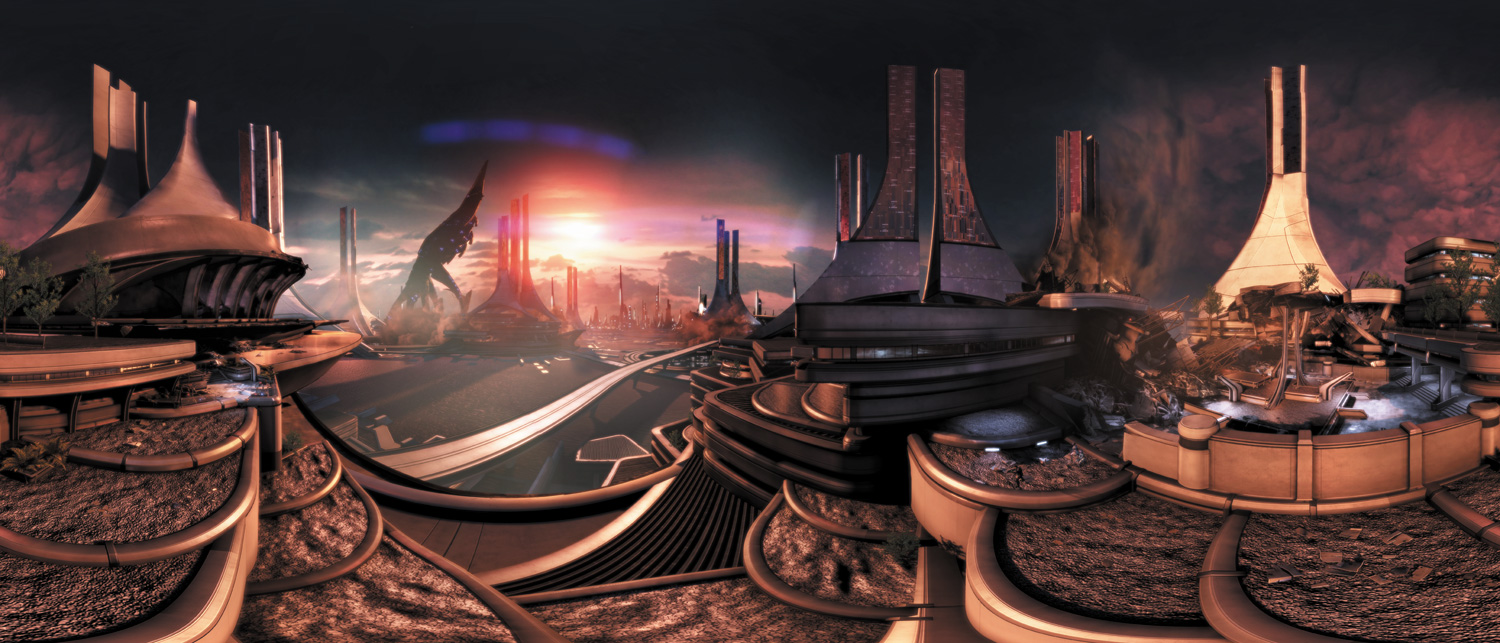
The Many Stories of Mass Effect
The Mass Effect 1 team spent the entire first year of the project developing the universe of Mass Effect. Their goal: to create a space within which they could tell dozens of interesting stories.
The Mass Effect trilogy is Shepard’s story, told inside the Mass Effect universe. But the universe is rich and diverse, with many more stories to tell.
.jpg)