
Evolve Official Strategy Guide Wildlife
Wildlife Inhabitants
Armadon
Biomes: Forest
Elite Buffs for Hunters: Damage Resistance
Elite Buffs for Monsters: Damage Resistance
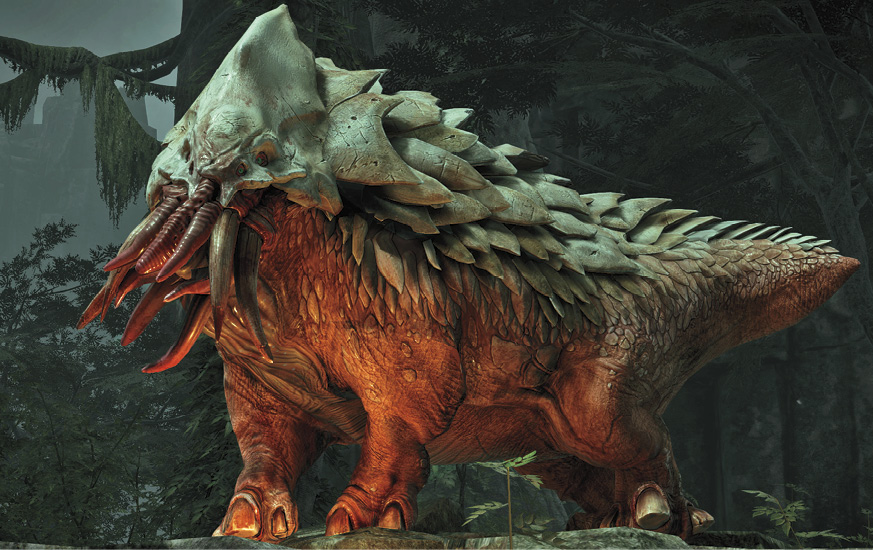
A three-stomached grazing ruminant that feeds primarily on grasses (both the leaves of grass and the grubs that live in the soil), the Armadon is technically an omnivore, capable of eating and digesting almost anything.
Though solitary and normally docile, Armadons are highly territorial. Colonists often mistake their distinctive call for a mating cry, but it is actually the territorial bellow of one male sensing the subsonic vibrations of another distant male infringing on his territory.
Much like the Steamadon, Armadons are well armored, but much bigger with a load of HP. This means a long fight for both Hunters and Monsters. The reward is worth it for the Monster, but Hunters should avoid the Armadons’ area unless a Buff is available.
Basking Cephaladon
Biomes: Acid, Ice
Elite Buffs for Hunters: Wildlife Defense
Elite Buffs for Monsters: Feeding Bonus
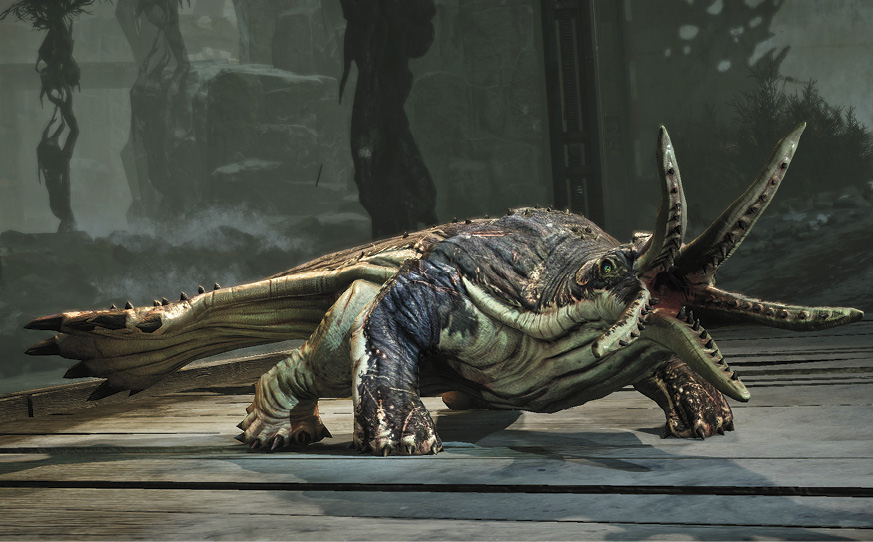
A close relative of the Mammoth Bird, the Basking Cephaladon is a “living fossil.” One of the first of Shear’s aquatic cephalopods to emerge from the seas and make its home on land, the Cephaladon is the last living remnant of Shear’s Demozoic period.
Basking Cephaladons are typically found near water in the ice biomes. The alligator-looking creatures become aggressive if their space is disturbed. A good amount of health takes a decent amount of time for either side to fight through. An albino provides a nice Buff for Hunters who keep wildlife away from the group.
Blitz leopard
Biomes: Forest, Acid, Ice, Desert
Elite Buffs for Hunters: Jump Bonus
Elite Buffs for Monsters: Climb Speed Bonus
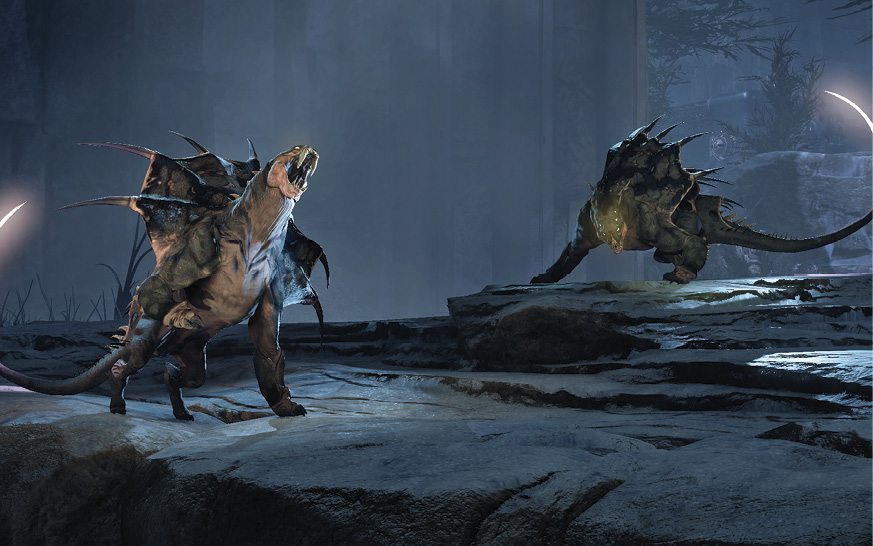
Blitzleopards are powerful ambush predators descended from seal-like aquatic pack hunters. Like their distant cousins the Mammoth Birds, Blitzleopards deploy bioluminescence, but this is purely for mating purposes. In fact, although the Blitzleopard’s distinctive tail glow looks identical to the glow from a Mammoth Bird’s tentacles (at least to humans), they are different. Only humans and Blitzleopards can see the tail glow; Shear’s other creatures are blind in that spectrum.
Blitzleopards are often found in a small pack and can do their share of damage to a group of Hunters. Hit these guys early, as they can leap on to a Hunter from a long distance. A Monster has a much easier time dealing with them, as long as it can catch up with them.
Canyon Eel
Biomes: Desert
Elite Buffs for Hunters: None
Elite Buffs for Monsters: None
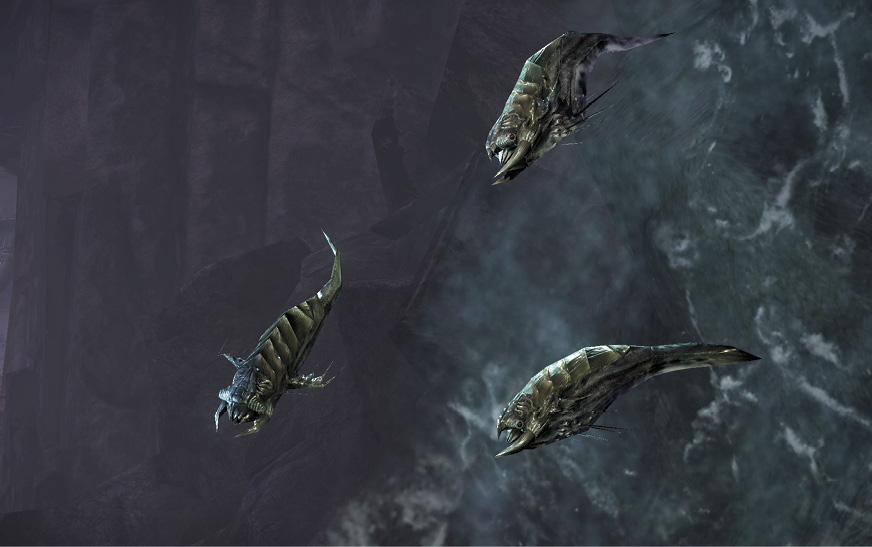
Canyon Eels are elasmobranches native to Shear’s freshwater rivers. They are sightless scavengers, carnivores, and swarm hunters. They hunt based on sensing vibration in the water.
An extremely rare wildlife species, Canyon Eels are only found in water when the Man-eating Eels map effect is enabled. Enter the water, and these little creatures can eat through a character’s health.
Canyon Strider
Biomes: Acid, Desert
Elite Buffs for Hunters: Movement Speed
Elite Buffs for Monsters: Movement Speed
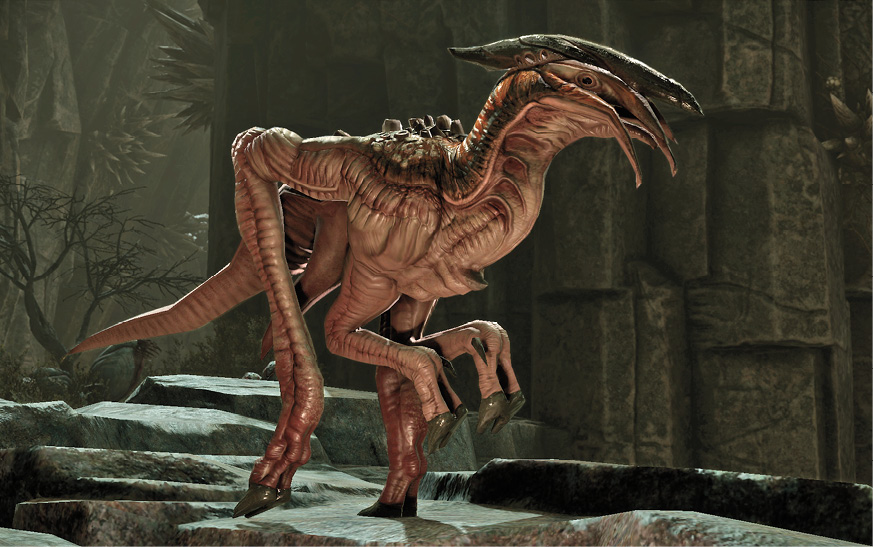
The Canyon Strider is a fast, agile pack animal that grazes across several of Shear’s biomes. Its primary defenses are its speed and sense of smell. Striders can detect the distinct aroma of Megamouths and easily avoid them.
These small creatures are extremely easy to kill. Even a shot from Val’s sniper rifle can take one down from a distance. One simple swipe from a Monster knocks it down, but it may take some effort to catch up. If the Monster can sneak up on a pack, they are very efficient when feeding.
Crowbill Sloth
Biomes: Forest, Acid, Ice, Desert
Elite Buffs for Hunters: Damage Bonus
Elite Buffs for Monsters: Damage Bonus
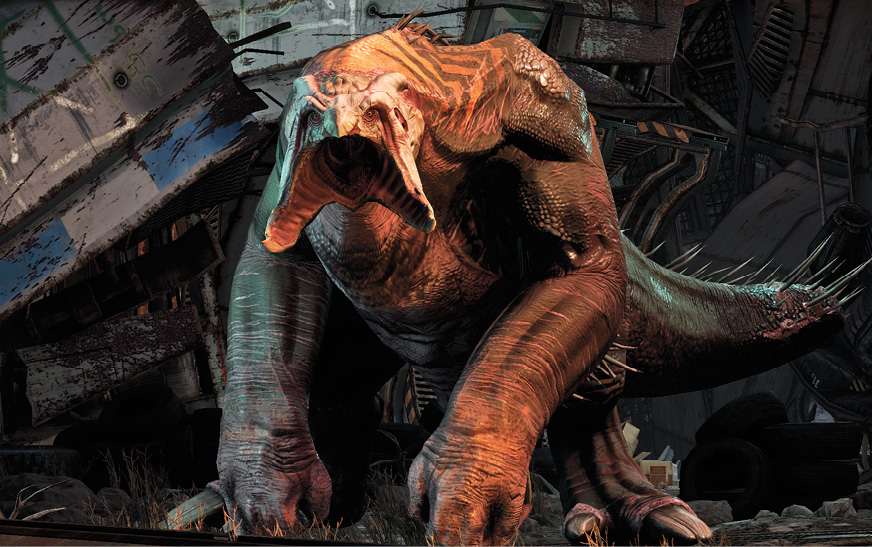
A large, typically docile herbivore, the quick-to-anger Crowbill gets its name from its distinctive beak, used to dig grubs out of soil and the bark of trees.
The Crowbill Sloth, first seen in the tutorial, charges Hunters quickly whenever disturbed. It’s not the toughest creature to take down, but it does have a good amount of health. As the Hunters, avoid them if at all possible, unless it possesses the extremely valuable Damage Bonus Buff. Monsters should take their time killing this guy, as it rewards with plenty of energy.
Dune Beetle
Biomes: Acid, Desert
Elite Buffs for Hunters: None
Elite Buffs for Monsters: None
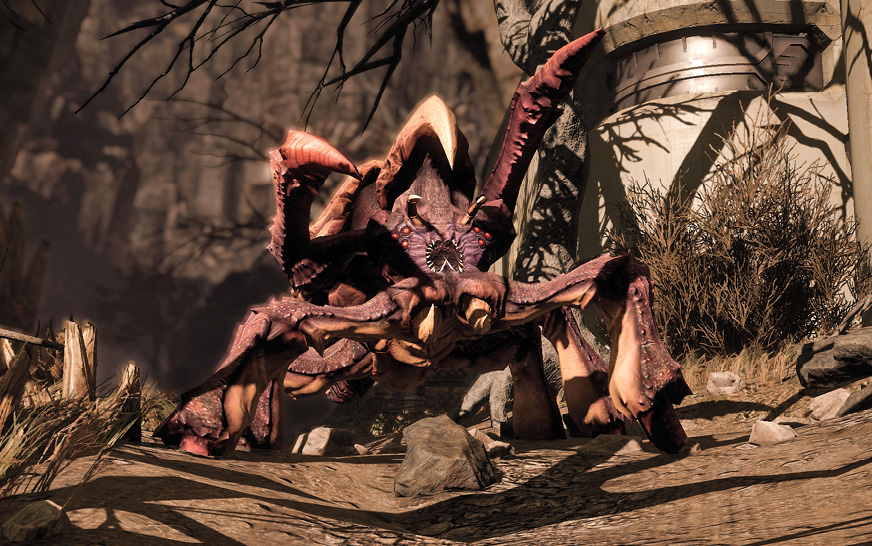
The Dune Beetle is a huge arthropod, one of the deadliest predators on Shear. Its claws are specially adapted to pierce the ignimbrite husks of creatures living near magma deposits.
They are extremely aggressive against Hunters, as they charge and use their claws. There no Buffs available from Dune Beetles, so steer clear of them when playing as a Hunter. Beetles have a decent amount of HP, making them a tougher kill for both Hunters and Monsters.
Glaciopod
Biomes: Ice
Elite Buffs for Hunters: None
Elite Buffs for Monsters: None
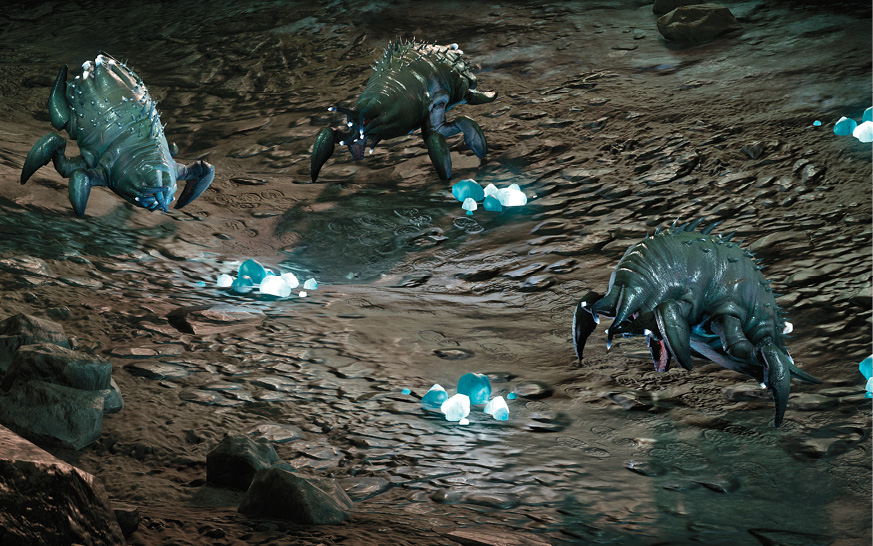
The small, sturdy Glaciopod happily whiles away the hours scraping lichen off glaciers. Its incredibly nutrient-rich scat gets its distinctive color and caloric value from the fungal spores contained within. The algae it eats depends on the Glaciopod to digest the fungus and disperse its spores for it.
These little guys do not harm either side, but they are a huge benefit to the Monster. As they slowly move around, they occasionally drop white algae behind them. The Monster can eat these to build armor and evolve. Whenever a Hunter encounters one, the player should kill it to keep the Monster from getting more energy from it.
Mammoth Bird
Biomes: Forest, Acid, Ice, Desert
Elite Buffs for Hunters: Reload Speed
Elite Buffs for Monsters: Cooldown Reduction
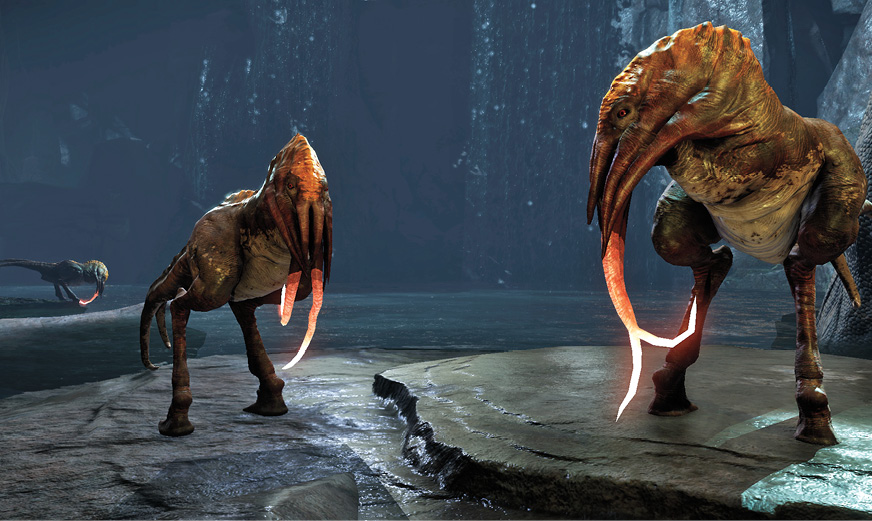
Descended from aquatic cephalopods, Mammoth Birds are not avians. Their closest land-dwelling relatives are the Blitzleopards.
Their legs are specially adapted tentacles, leaving their other tentacles free as prehensile grasping, hunting, and eating tools. Two of its tentacles evolved into sophisticated bioluminescent lures that store a potent electric charge.
Mammoth Birds use the lure/charge combination to ferret out Spotters in their dens. The tentacles worm their way into the Spotters’ den, the Spotters investigate the light, and the electric charge stuns the Spotters.
Mammoth Birds are quick but easy kills for a Monster once they have been caught. Hunters should steer clear of them, unless a Buff is available. They typically flee from the group, but their defensive electric charge can damage a character fairly quickly.
Marsh Strider
Biomes: Forest
Elite Buffs for Hunters: Movement Speed
Elite Buffs for Monsters: Movement Speed
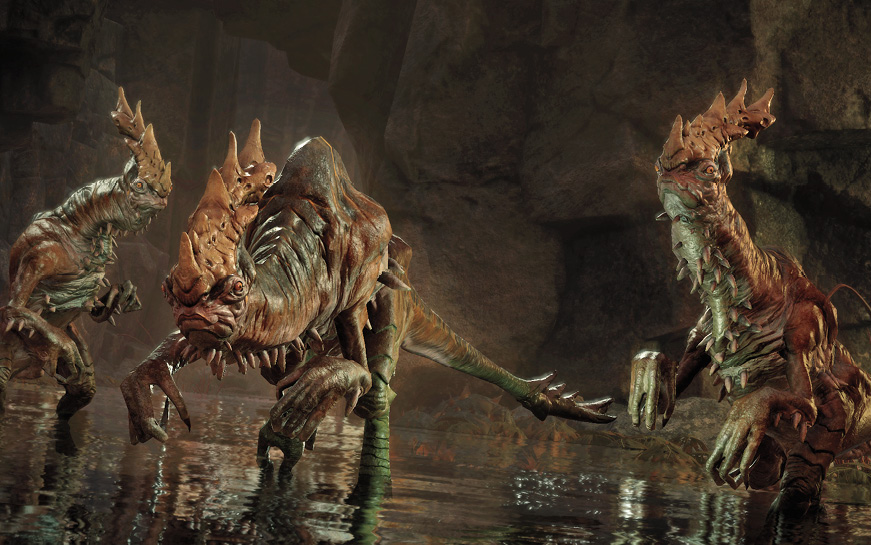
Marsh Striders are easily preyed-upon omnivores that exist primarily on a diet of grubs, bark, and moss. Apart from a high breeding rate, their only defense when attacked is to fall to the ground and mimic the behavior of a sick animal. This confuses many of Shear’s ambush predators, which instinctively avoid attacking an apparently ill creature.
When found by a Monster, these creatures should be dealt with quickly if safe from the Hunters. Take them out before they notice your presence, and feast on the energy. Marsh Striders are very efficient kills. Hunters can easily ignore these guys as they flee from the team, unless, of course, the Movement Speed Buff is available. If one is downed but not killed, do it a favor and put it out of its misery as it crawls along the ground.
Megamouth
Biomes: Acid, Desert
Elite Buffs for Hunters: Ability Bonus
Elite Buffs for Monsters: Stealth Pounce Bonus
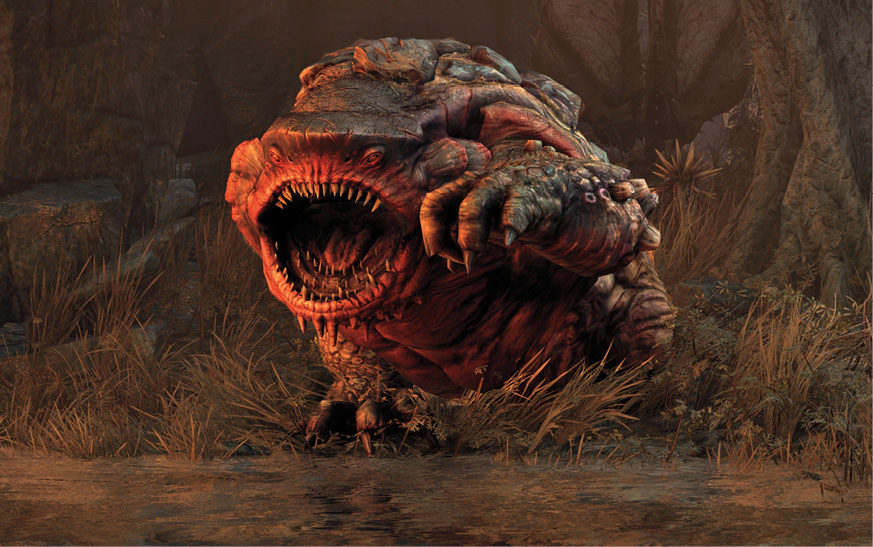
One of the most distinctive of Shear’s vast collection of unique wildlife, the Megamouth is an aptly named ambush predator that uses camouflage to hide from prospective prey.
The well-armored, boulder-looking enemy sits and waits for the Hunters to move nearby. Then, it pounces and snatches one of the Hunters. It is up to another Hunter to free the victim by damaging the creature. Be sure to move the group well wide of these guys, unless it is an albino. In that case, kill it from afar to nab a Buff. This is likewise a relatively tough kill for a Monster and may not be worth the trouble, unless there is not much choice.
Nomad
Biomes: Acid, Desert
Elite Buffs for Hunters: Jet Pack Recharge
Elite Buffs for Monsters: Special Ability Bonus
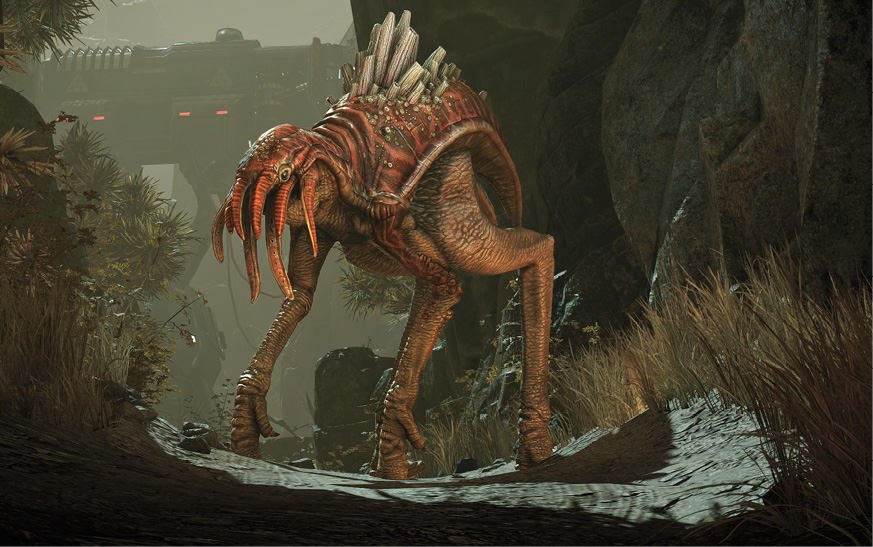
It is a popular misconception among Shear’s colonists that the Nomad’s long legs and great height are adaptations to allow it to feed on the leaves of tall trees. In fact, the Nomad’s height is part of a mating display. Taller male Nomads attract more mates, so over many generations, the Nomad has grown to the size we encounter now.
These long-legged creatures are slow to react to the Hunters and easy to slip past. However, they charge when Hunters get close. While not the easiest kill on Shear, the animal goes down after a short while.
Obsidian Grub
Biomes: Ice
Elite Buffs for Hunters: Capacity Increase
Elite Buffs for Monsters: Armor Regeneration
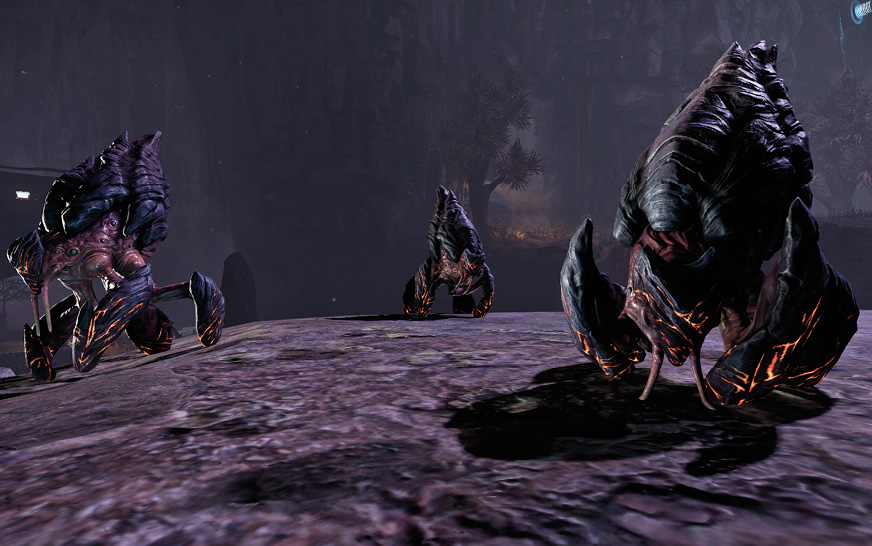
Like its close cousin the Lava Strider, the Obsidian Grub evolved several pairs of eyes. It has seven but keeps only two open at a time to minimize exposure to the extreme heat of its native lava flow environment.
The grub scours the newly created igneous plains in volcanically active regions looking for any of the many small insects specially adapted to Shear’s pyroclastic environments.
Obsidian Grubs are tiny, armored, and very docile. As Hunters, just let them be, unless one possesses a delicious Buff. Its armor does prove to be a bit of an obstacle for the humans. Monsters have a relatively easy time swiping through the armor to get to the energy.
Phantom
Biomes: Forest
Elite Buffs for Hunters: None
Elite Buffs for Monsters: None
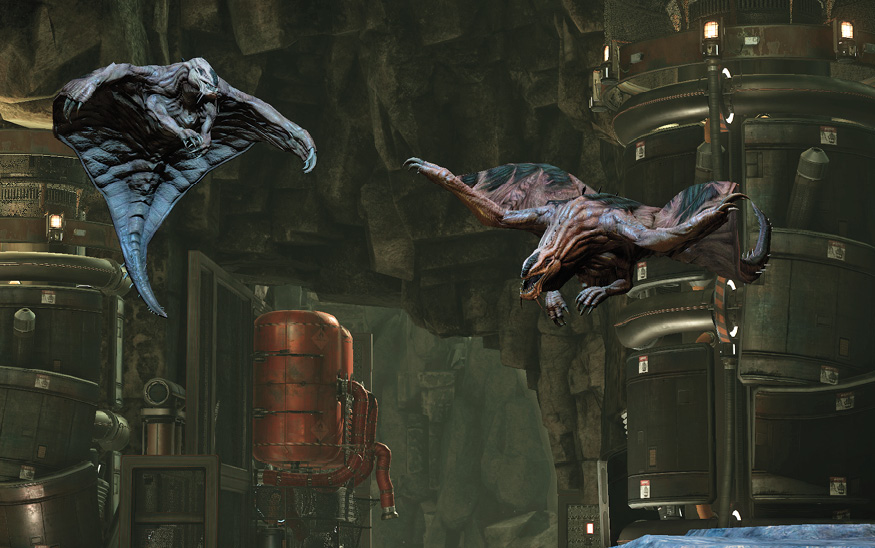
Phantoms are large, nearly man-sized flying mammalian scavengers. Highly social, they patrol in packs known as blights and use advanced chirps as signals to coordinate their hunting and alert each other to threats.
Though placental mammals that give live birth and are covered with fine hairs, Phantoms sport hard, bird-like beaks composed entirely of keratin. They use these beaks to rip and tear at the flesh of their prey. The beak’s smooth, hairless texture prevents the bacteria on the carrion they eat from growing on or near their mouths.
The Phantom’s map effect brings these flying pests out to the forest maps. Shoot or knock these guys out of the air. They attack Hunters but are easy prey for Monsters.
Reaver
Biomes: Forest, Acid, Ice, Desert
Elite Buffs for Hunters: Jet Pack Flight Bonus
Elite Buffs for Monsters: No Bird Indicator
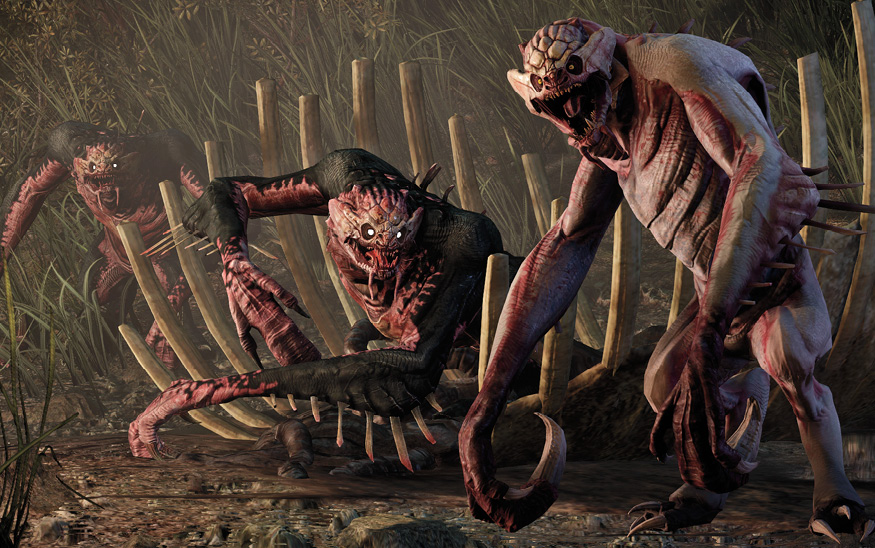
Reavers are social pack animals and scavenging hunters. They are one of a number of amniotic tetrapod species on Shear collectively known as synapsids. Like mammals, they are warm-blooded, but unlike mammals, they do not give live birth to their young and lay eggs instead.
Reavers can be found in packs or occasionally on their own. They are very aggressive and are best avoided by Hunters, unless a Buff is available. They are easy kills for a Monster and worth spending the small amount of time to get the energy.
Spotter
Biomes: Forest, Ice
Elite Buffs for Hunters: Animal Sense
Elite Buffs for Monsters: Smell Range Increase
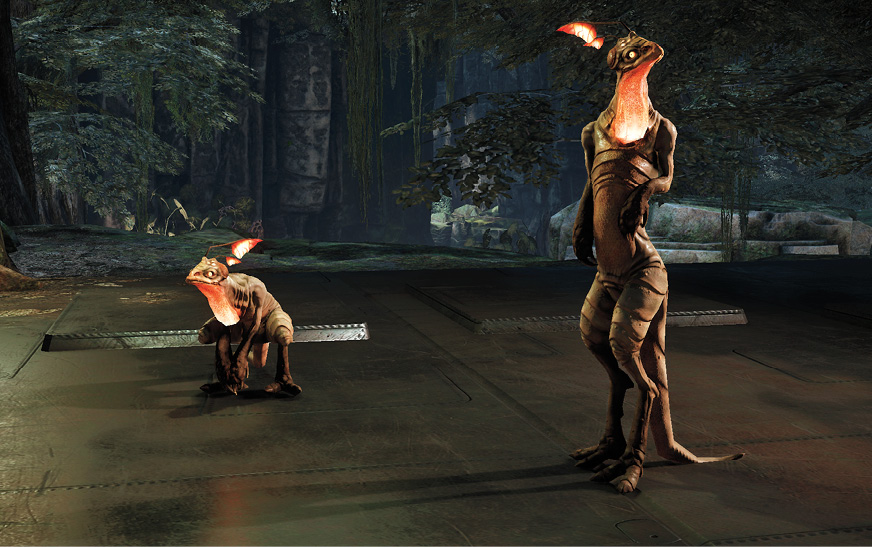
Spotters are highly social reptilian omnivores that make the wide, temperate flatlands of Shear home. Living in tightly knit extended family units (colonies), they are communicative and cooperative. They nest in self-built mounds created from their own regurgitated food. These mounds act as compost piles, allowing them to easily regulate their heat.
The tiny creature is an easy kill, if you can catch one. The only trouble one produces for the Hunters is trying to pick one off for their Animal Sense Buff. Their small size and quick feet make them tough targets. If a Monster can sneak up behind one, a quick swipe ends the Spotter’s life.
Steamadon
Biomes: Ice
Elite Buffs for Hunters: Stun Bonus
Elite Buffs for Monsters: Stun Bonus
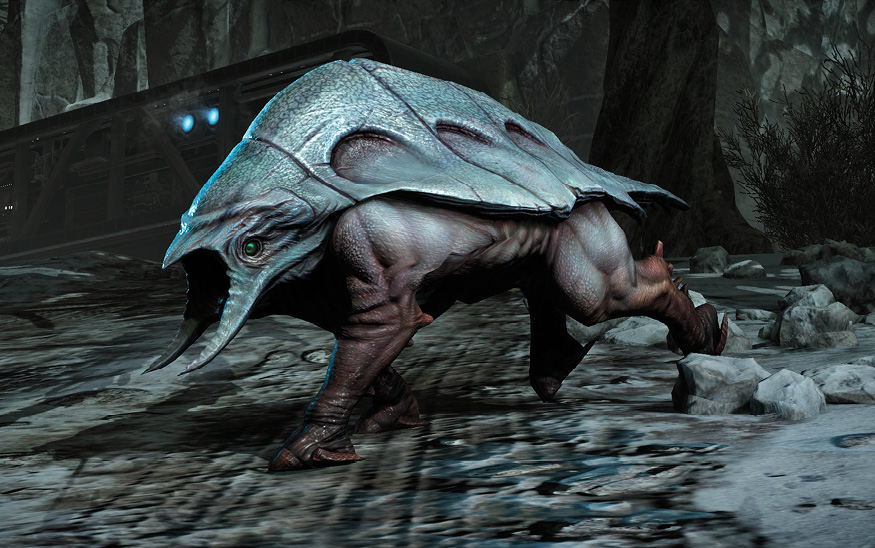
A close relative of the Armadon, the Steamadon’s third stomach is isolated from the other two. Most food goes into the first two stomachs, but the special algae the Steamadon uses to regulate its heat goes into the third stomach, where it is fermented into a compost. The compost reaches temperatures of over 100 degrees Celsius.
This normally allows the Steamadon to keep its body toasty warm, even in the freezing arctic biomes of Shear. When threatened, the Steamadon releases some of the superheated nitrous oxide from its third stomach into a special bladder it keeps filled with water.
Steamadons are very similar to their cousin the Armadon, but much smaller. They are well-armored and emit steam which obscures vision, giving a nearby Monster time to get away.
Trapjaw
Biomes: Forest, Acid, Ice, Desert
Elite Buffs for Hunters: None
Elite Buffs for Monsters: None
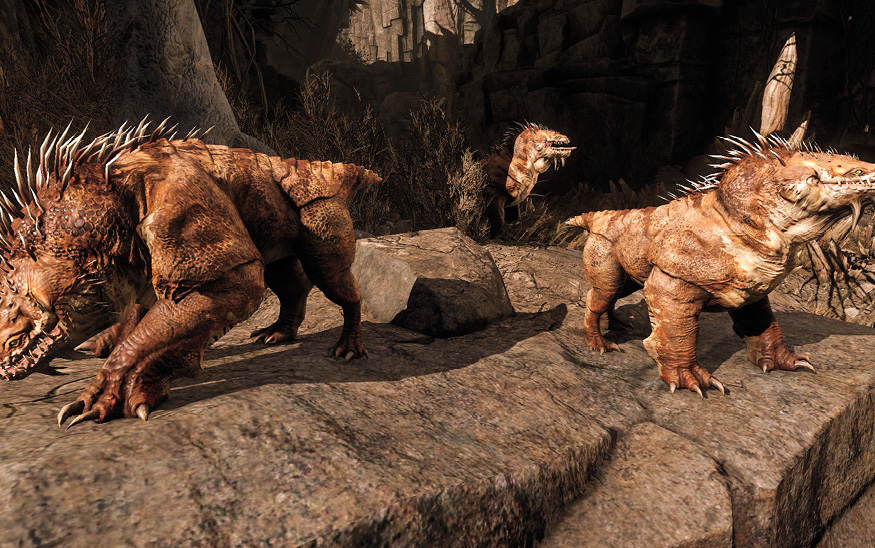
The Trapjaw is a successful and highly varied pack hunter found in all four climates on Shear. Like its distant cousin the Harpy, the Trapjaw is a scavenger, preferring to prey on sick and elderly animals and often stealing kills from larger predators.
Trapjaw have poor eyesight but excellent hearing, allowing them to dig their heads into a carrion corpse and root around for bones or nutrient-rich organs while still being able to hear approaching predators.
These cousins of Maggie’s pet, Daisy, travel around in packs and are extremely aggressive to Hunters. Use widespread weapons or Markov’s Lightning Gun to eliminate them quickly. The team must steer very wide to avoid them. A Monster that can sneak up on a group of Trapjaws can rack up some quick energy.
Tyrant
Biomes: Forest, Ice
Elite Buffs for Hunters: Health Regeneration
Elite Buffs for Monsters: Health Regeneration
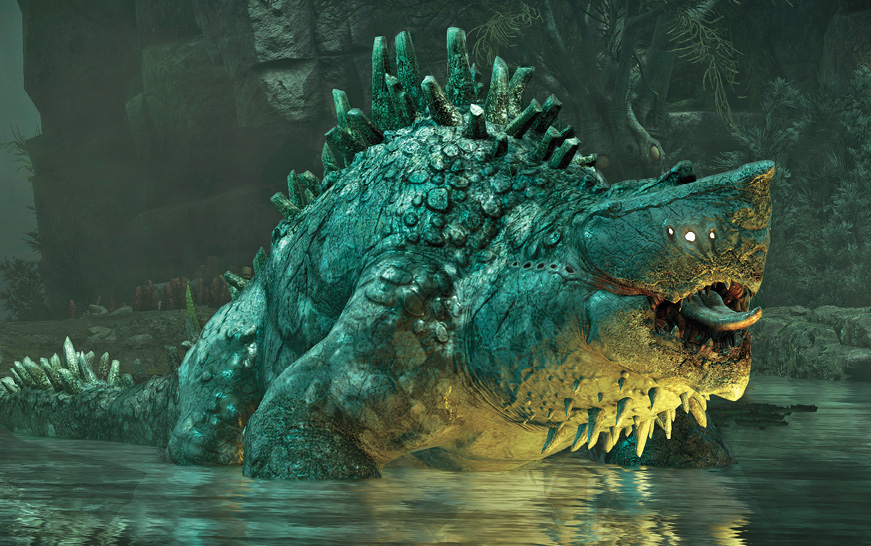
One of Shear’s iconic dominant apex predators, Tyrants can be found lurking in any freshwater lake on Shear. Equally adapted to desert and arctic conditions, these aggressive ambush hunters lunge at their prey, snapping their beak-like jaws around their victim and pulling them back into the water. Prey that are not killed by the crushing force of their jaws are quickly drowned.
Tyrants hang out in the water and are fairly slow, but they are still one of the biggest threats for Hunters outside of the Monster and its minions. Jet pack past these guys whenever possible, and if the beast grabs a teammate, free him or her with some weapon fire. A Monster will get on a Tyrant’s bad side if provoked, and the creature is a handful to take down.
Venomhound
Biomes: Forest, Acid
Elite Buffs for Hunters: Poison Target
Elite Buffs for Monsters: Poison Target
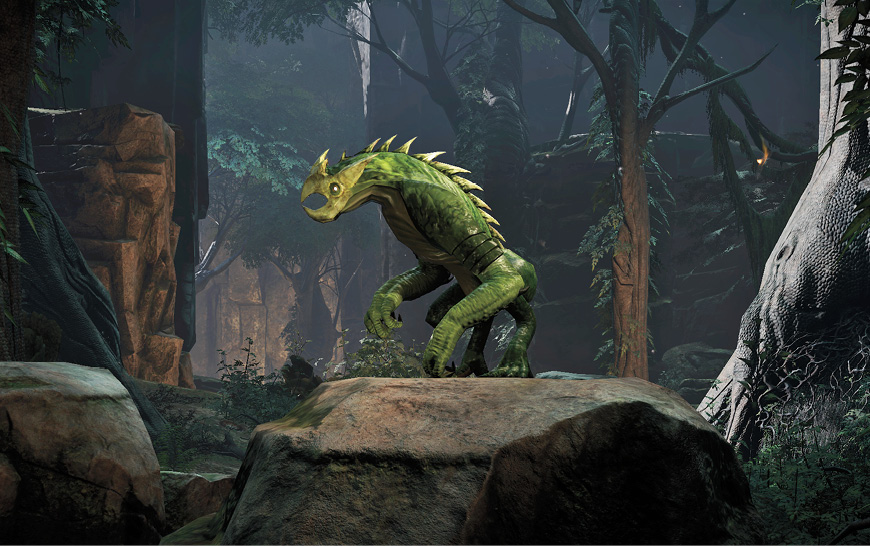
Solitary ambush predators, Venomhounds lurk in Shear’s heavy undergrowth, striking out at any herbivores unlucky enough to wander by. Their high-molecular mass neurotoxin is chemically similar to terrestrial latrotoxin. The poison is not fatal to a full-grown human, but colonists with weakened immune systems may die if bitten.
These greenish creatures jump out of nowhere and grab ahold of a helpless Hunter. If one succeeds at grabbing a Hunter, he or she is poisoned, slowly draining health for a short while. This won’t kill a healthy Hunter, but it can cause trouble if the character is already badly injured, or if the creature gets ahold of a weak colonist.