
The Witcher 3: Wild Hunt Guide Getting Started Witcher Training
Items and Inventory
A witcher doesn’t succeed simply by being a great fighter. It requires preparation and using everything in their inventory to craft an arsenal that ensures victory. Outside of the armor he wears and the swords he wields, Geralt’s inventory can be filled with items of various kinds, used for different circumstances before, during, and after combat. You can find items in the world, receive them as quest rewards, or buy them from merchants. Neglecting items makes the witcher’s life very hard (for the rest of its assuredly short duration).
Managing your inventory is important. You can’t take absolutely everything you find with you everywhere you go. If you try, Geralt becomes overburdened, is unable to move beyond a slow walk while on foot, and his ability to fight is severely diminished. However, you do need to seek out a good supply of materials to keep your potion, oil, and bomb supplies well stocked.
Geralt can carry 60 units of weight on his person at any time, and more on his faithful steed, Roach, if you purchase Saddle Bags from a merchant, or win them in a horse race (increasing the maximum to 160 units). Avoid problems by remembering to sell or disassemble any useless weapons and armor you loot from opponents, as these tend to weigh the most. Try not to carry items specified as ‘junk’ if they have a weight value, unless they sell for a decent price, or you know they can be broken down into useful crafting components. The golden rule here is to take only what you need or can use in some way. If you try to collect every single item you find, you won’t finish this adventure in a reasonable amount of time.
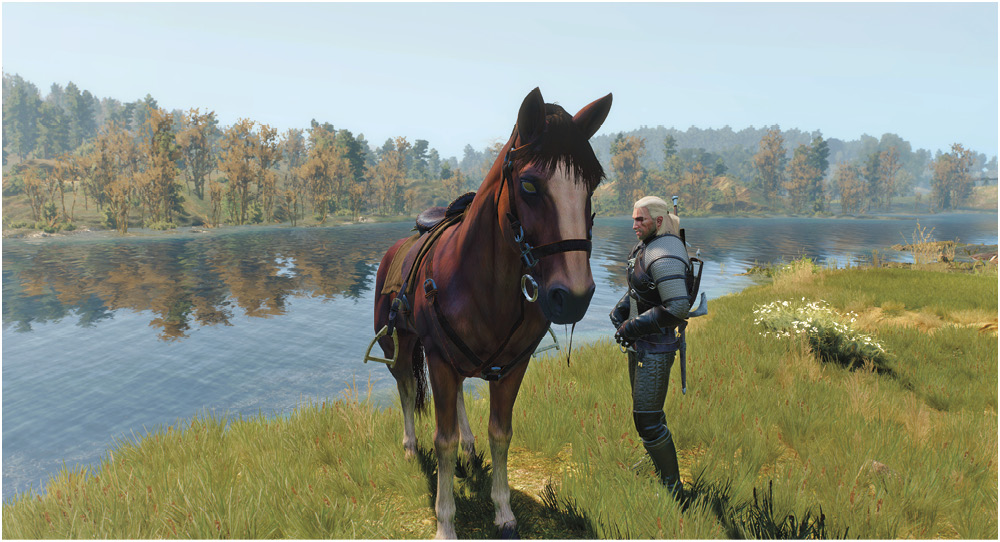
Roach, Faithful Steed
Geralt’s loyal, if somewhat finicky, mount can be given items that improve his usefulness to the witcher. Trophies from successful hunts can be mounted on a hook hanging from the side of the horse to provide special bonuses. Saddles can be won from races, purchased from merchants in the world, or found as loot. You can also earn Saddle Bags, allowing Roach to take some of the burden off Geralt’s back. You can even find Horse Blinders that help Roach remain more calm when enemies are afoot.
Potions
Highly toxic to most normal humans, potions brewed by witchers provide a variety of effects that can improve combat. However, even a witcher is not immune to the dangerous nature of these brews. If Geralt’s Toxicity meter reaches critical levels, he begins losing Vitality. All potion effects last for only a short while, though the efficacy and duration of potions can be enhanced by investing in the right Character Abilities.
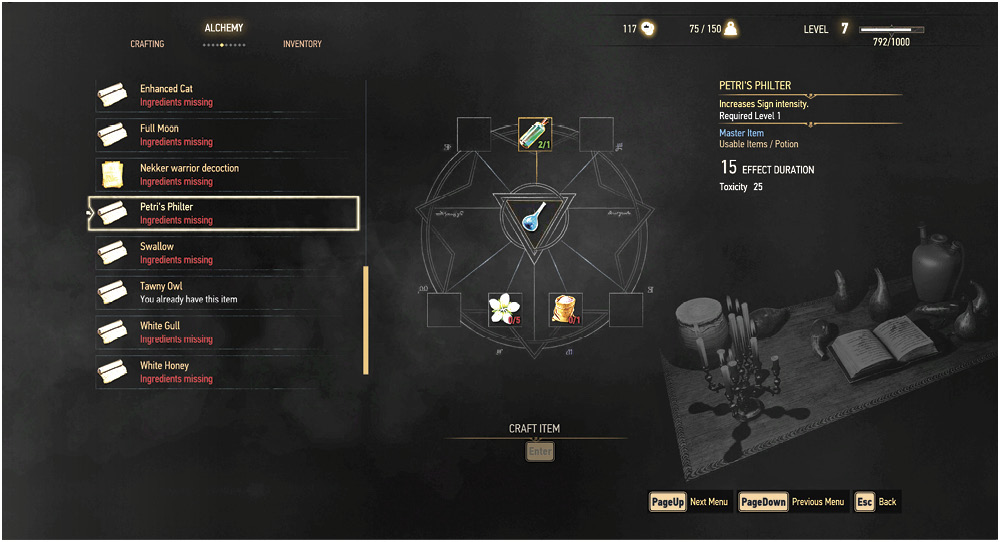
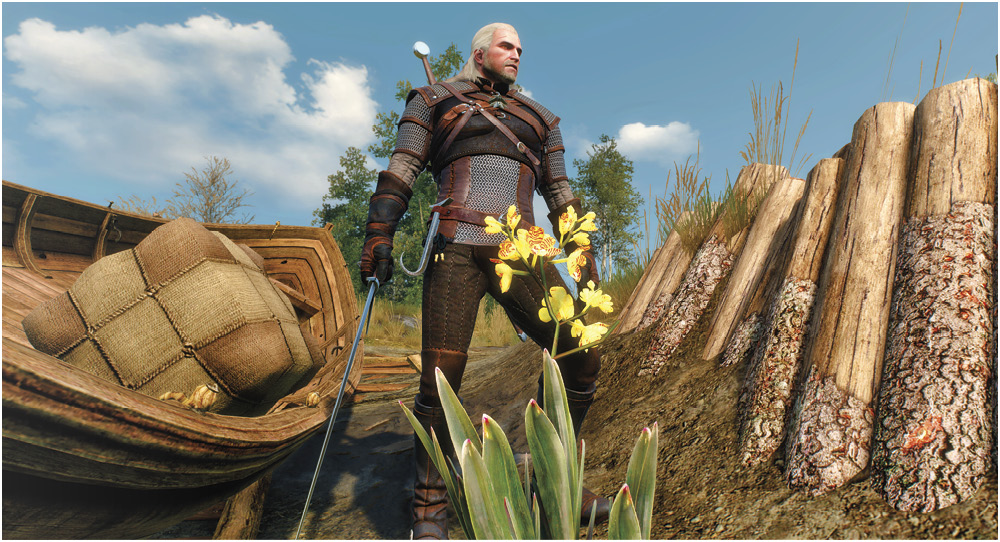
To brew potions, Geralt needs to know the formulae and have the materials they require. Most alchemy requires plants that can be found and harvested in the field. Other alchemic compounds, such as special powders, monster body parts, and minerals can be found as loot in chests and bags strewn about the world, or on the corpses of your foes. You may also purchase some of the more rare ingredients from herbalists and alchemists found in or around towns.
Once you’ve brewed a potion, it remains in your inventory, even when it has been used up. Most potions can be upgraded over the course of the adventure, starting with the basic level formulae, Enhanced level, and finally reaching Superior quality.
You’ll either find or purchase formulae for higher-powered versions of potions. These advanced formulae require already crafting the previous-level version of that potion, and new sets of ingredients. Upgrading your potions leaves you with the higher level product.
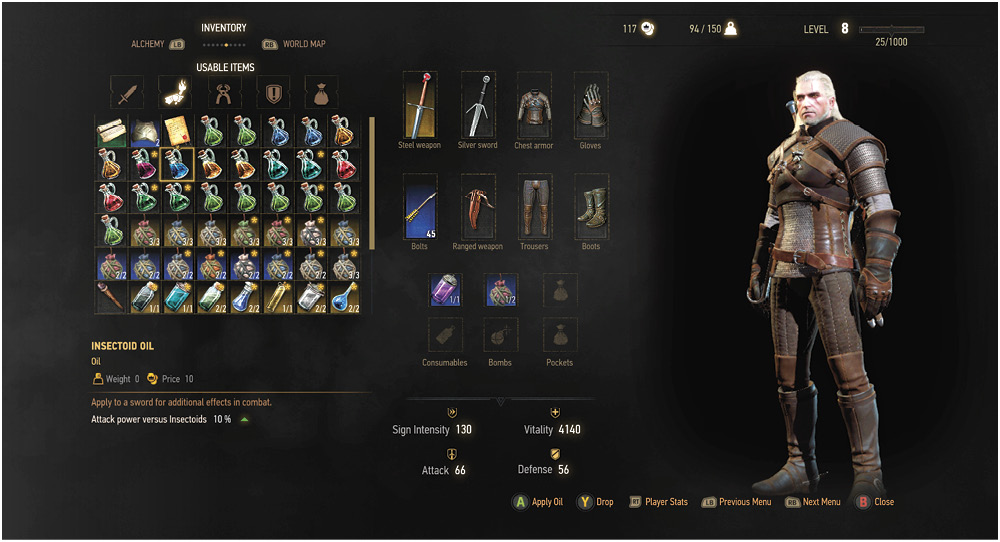
Always try to have potions readied that fit your current circumstances; once a fight begins, you can’t tell your enemies to wait a few minutes while you sit down to play with herbs. Potions can be used before and during combat from the Inventory screen. You can also set them to be one of your two Quick Access potions, allowing you to use them in battle. Each potion has a limited number of doses, but can be replenished if you enter Meditation and have enough hard alcohol to use for the replenishment. Geralt automatically does this if he has the necessary supplies, making it important to loot as many spirits as you can while out in the field.
Useful Early-Adventure Potions
Although you start the game with little in the way of resources, you quickly expand your knowledge of potion formulae with exploration. Then you must ask yourself which potions you should focus on creating.
 Swallow: Vitality naturally regenerates very slowly. Swallow grants high and constant Vitality regeneration. If Player gets hit effects of basic and enhanced Swallow are suspended for 2 seconds. Superior Swallow do not have this penalty and its effect is never suspended.
 White Raffard’s Decoction: This series of potions immediately restores a portion of your Vitality on use. Try to craft and maintain one of the three levels of this potion to keep a good stash of emergency healing on hand.
 Cat: Witcher eyes see better in the dark naturally compared to the average human, but even they need a boost. The Cat Potion allows a witcher to see farther and more clearly in dark spaces. At Superior quality, it even delivers immunity to hypnosis and puts a red glow on enemies to make them easier to see ahead of time.
 Golden Oriole: A witcher’s body naturally resists disease and poison, which makes the poisons that can hurt or kill a Witcher deadly to humans. Golden Oriole grants witchers temporary immunity to poisons while neutralizing all poisons currently in the bloodstream.
 Thunderbolt: Most combat a witcher faces ends by a witcher’s sword. Thunderbolt enhances Attack Power, and the effect only increases with each jump in potion quality. A good general use potion against any threat you can face.
Oils
To increase the effectiveness of blades, a witcher can coat them with special oils he creates. These are tailored to damage specific types of foes. Oils that assist against humans should be applied to steel swords, while any monster-specific oils are applied to your silver swords. There are as many oils as there are families of monsters, and so it falls to a witcher to be prepared for these eventualities.
Crafting oils and applying them to weapons can be done only outside of combat; once you’re in battle, it’s too late to oil up your blades.
Similar to potions, once an oil is crafted, it remains in your inventory. You can find formulae for improved versions of oils, requiring the previous level of the oil and new ingredients. This again follows the standard, enhanced, and superior quality scheme used by potions.
Oils do not last indefinitely. Each successful strike on an enemy rubs some of the oil off the blade until eventually there is none left and the effect is no longer applied to the foe. You can reapply the oil by going into your inventory once again, as long as you have not discarded it.
Oils for Common or Serious Threats
With so many monsters plaguing the land, witchers must be prepared with a wide variety of oils to counter their threat with expediency.
 Hanged Man’s Venom: Sadly, humans are as common a threat to a witcher as any monster with war raging across the land. It never hurts to have this oil ready at all times to quickly dispatch soldiers or roaming groups of bandits. This works against any human and nonhuman (but human-sized), so use this on any Scoia’tael you might face, too!
 Necrophage Oil: War leaves behind battlefields strewn with corpses, the perfect feeding grounds for necrophages. This oil gets frequent use for most witchers.
 Specter Oil: Another side effect to war is the high number of victims who died with lingering regrets in this world, or died after terrible violence. These dark and powerful emotions have resulted in great numbers of wraiths haunting the living.
 Elemental Oil: While elementals are not particularly common, their sturdiness against a witcher’s silver swords makes them incredibly dangerous to fight. Every advantage helps.
 Relict Oil: Relicts are as rare as the name suggests, but all creatures that fall under this classification can be considered threats of the highest order. If a hunt demands that you fight a chort or a fiend, relict oil is one of the few advantages any witcher can claim over these monsters.
Mutagens and Decoctions
As you kill monsters, there’s a chance that a mutagen will be found amongst the loot they drop. There are different types of mutagens—some that are exclusive to the beast slain and others that are relatively common amongst a variety of monsters.
Mutagens are used in two separate ways. The first is in connection with your Character Abilities. By placing a mutagen in the slot next to your activated Character Abilities, you gain a statistical bonus.
The ability trees are color themed: red, blue, green, and yellow. These colors stand for Combat, Signs, Alchemy, and General Abilities, respectively. This also holds true with mutagens, which can be found in red, blue, and green. If you connect a mutagen to activated abilities of the same color, the bonus provided by the mutagen increases by 100 percent for each ability matching that mutagen’s color. Geralt can gain thousands of points of Vitality and strike that much harder with his swords. His Signs will see massive intensity boosts.
The second use of mutagens comes with crafting decoctions, which can provide great statistical bonuses on their own. However, they also come with the downside of very high toxicity ratings, far above that of normal potions. This factor can limit your use of other witcher potions.
Potent Decoctions
For experienced witchers, the high toxicity of a decoction, and all the risks that come with it, are outweighed by the benefits.
 Troll Decoction: Constant Vitality regeneration in and out of combat. For witchers who are expecting multiple grueling battles against many foes.
 Ekimmara Decoction: With this decoction, a witcher restores Vitality with every successful strike against the enemy.
 Succubus Decoction: The longer a battle lasts, the harder the witcher strikes.
 Alghoul Decoction: Adrenaline is generated more quickly by a witcher in combat, but the effect is broken by the first successful enemy attack.
 Werewolf Decoction: Running, sprinting, and jumping outside of combat does not use Stamina—a perfect brew for witchers exploring large areas.
Bombs
One of the key tools of the witcher trade is the arsenal of bombs they can craft to suit their needs. Various materials go into making a bomb, and they have a wide range of possible effects that can be used to further stack a battle in their favor. You can open a battle from afar by lobbing a bomb at an unsuspecting foe, or quickly flick one out at a targeted opponent during a heated melee.
Monster nests encountered in the world require specific bombs to completely destroy them. So, if you intend to make a particular area safe to travel through or harvest materials within, make sure you always carry a supply of explosives. You can set two bomb types in your Inventory menu as quick access items. If necessary you can switch out what bombs you have quick access to in the middle of combat as well. As with potions and oils, all bombs can be upgraded beyond their initial crafted level to enhanced and superior versions.
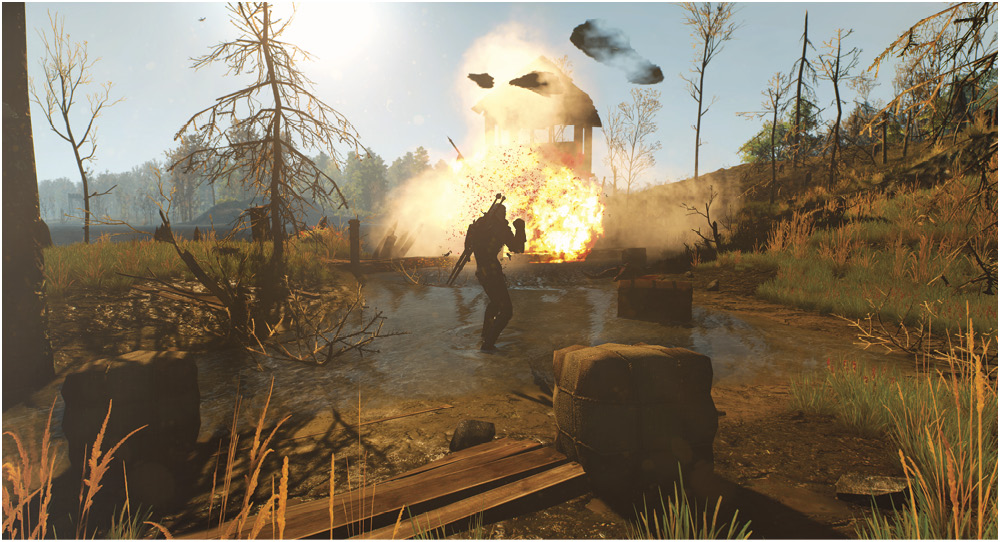
A Useful Brace of Bombs
Bombs are highly specialized weapons that can cause a variety of effects in battle. It helps to craft bombs as soon as possible, especially the higher ranking versions, so you are prepared for any situation that requires an explosive solution.
 Grapeshot: The Grapeshot bomb is one of the most useful explosives in a witcher’s arsenal. Able to destroy monster nests and deal powerful damage to enemies, while also causing some fire damage that can harm enemies weak to it. Upgraded Grapeshot bombs can make armor completely irrelevant.
 Dragon’s Dream: This bomb releases a cloud of highly flammable gas into the air. By itself, it’s relatively harmless. When ignited by Igni, another bomb, a torch or even a burning enemy, however, the resulting detonation can set foes on fire. Upgraded Dragon’s Dream can cause enemies it kills to explode, as well!
 Samum: A basic but useful bomb, Samum cannot just destroy monster nests, it blinds enemies caught in its explosive radius, giving a witcher a chance to flank them. Upgraded Samum guarantees a critical strike on a blinded opponent. Just be careful that you don’t blind yourself with your own Samum bomb.
 Moon Dust: Monsters that are known to transform cannot use this ability when struck by the silver splinters of a Moon Dust bomb. Monsters that can regenerate can find that ability temporarily disabled. The Superior version of the Moon Dust bomb can seal off regeneration permanently!
 Northern Wind: A dangerous piece of alchemy, the Northern Wind bomb freezes enemies within its blast radius in place. If a witcher improves it, the area of effect grows larger, lasts longer, and enemies struck while frozen suffer greater damage.
Ingredients
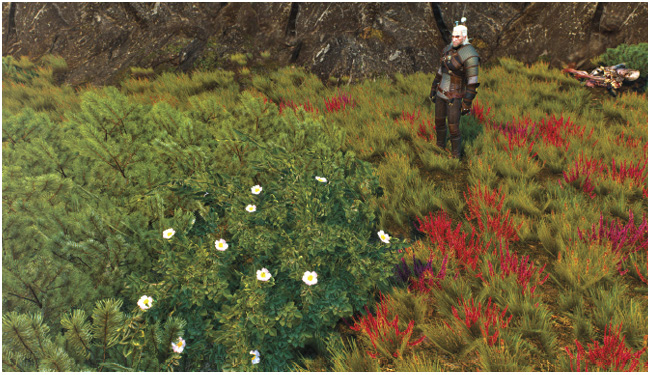
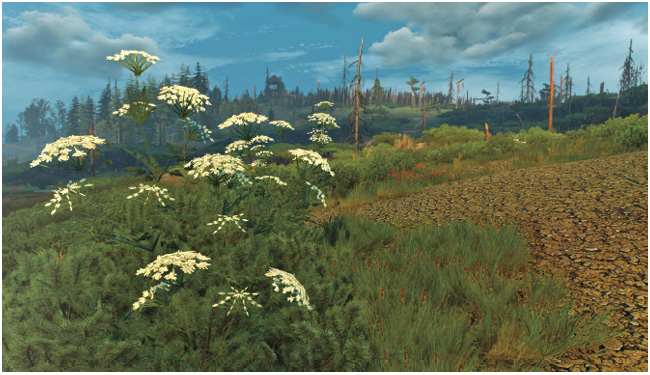
Making things requires their material components, and the world provides these if a witcher takes the time to hunt for them. Materials found within monsters and wild animals can be combined with various plants found growing throughout the world to make potions, bombs, and oils. Other materials you find, such as ores, planks of wood, or leather skinned from wild animals, can be used by smiths to craft better armor or weapons.
Weapons and equipment found in the field can be another source of ingredients. A smith of the right skill level can break down equipment, as well as other items in your inventory, to help you get extra crafting materials. This process does cost money, though.
Quest Items
Geralt finds a variety of key items throughout his quest, and while some have monetary worth, it would be a mistake to get rid of them so easily. Quest Items are marked as such when you inspect them in your Inventory screen, and they are always filed away in the Quest Item tab. They remain in your inventory and cannot be discarded until they are no longer needed. Once a Quest Item has seen all the use required from it, it can be sold to a vendor, or dropped and forgotten. Some of the key items can be used while exploring the game world.
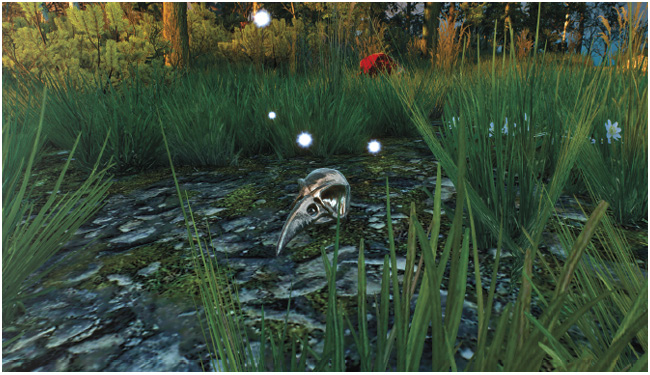
 The Magic Lamp
For example, the Magic Lamp allows you to communicate with ghosts, a necessity for completing a specific quest early in the adventure. When Geralt approaches one of these places, it is marked on your map. In the world they appear as green-tinged energy fields near bones or corpses.
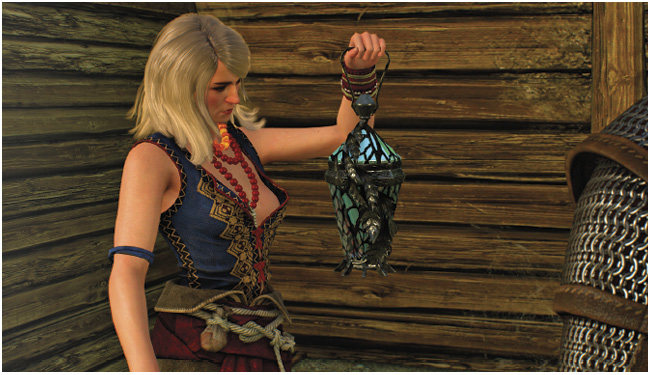
The Eye of Nehaleni
The Eye of Nehaleni is used to dispel magic illusions that guard hidden passages throughout the world. When you approach an object that can be dispelled, Geralt actually points out that his medallion is indicating a strong magic presence. Once you have the Eye, you can dispel it.
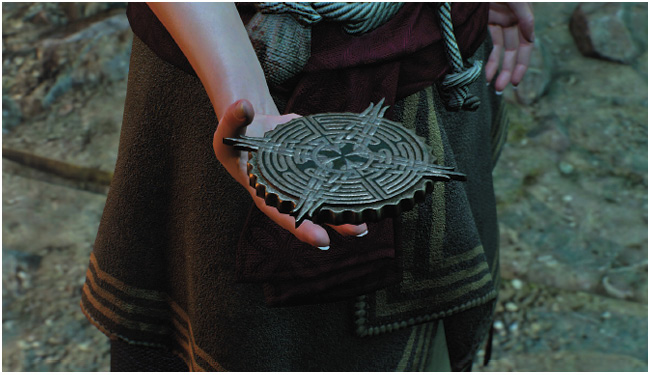
Lore Books, Torn Notes, and Notices
Lore books, torn notes, and notices collected during your adventures deserve a special mention. Not only do these items give information about the world and the quests you encounter, they can also sometimes lead to knowledge about Points of Interest! Some lore books also add information to the Bestiary. You can find some of these texts placed within your Quest Items tab, while others may be found under Usable Items or Junk.
Other Items
Junk items, and items that don’t fall into other categories are filed away in the inventory as Other Items. This includes currency that can be changed into crowns at the bank of Novigrad, torn sheets from notebooks, lore books, food, Witcher Contracts, and mutagens found on dead monsters. Food is one of the most important items in this category, as it allows Geralt to regenerate health quickly, even during combat, without the need to meditate. Mutagens can be used on the Character Abilities menu to provide a significant boost to specific stats.
Junk items should be sold. Unless the description of the item tells you that it is an ingredient or can be broken down for ingredients, there’s little reason to keep Junk in your inventory.