
The Witcher 3: Wild Hunt Guide Appendices and Compendiums The Bestiary
Relicts
Relicts are beasts that are truly unlike any other category found on the Continent. From the brutish fiends and chorts, to the tree-like leshens, and the deceptive sylvans, all relicts could be given another name—demon. Relicts are among the rarest monsters a witcher can face, and are arguably the most dangerous. If the Path leads to a contract on one of these marks, prepare as thoroughly as possible.
Doppler
| Loot: Doppler Mutagen, Assorted Items and Equipment |
| Vulnerabilities: Relict Oil |
“Your package? Your brother picked it up. You know, you two’re damn near identical… Hey! Where you running off to?!”—Hanne Kluger, Postmaster
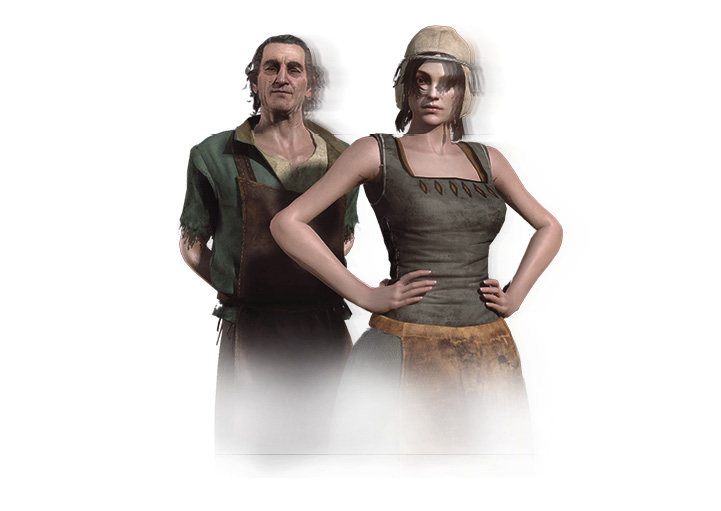
Dopplers, also known as vexlings or changelings, are beings able to take on the form of any humanoid or animal they please. This transformation is no mere illusion able to be shattered with a simple spell, but an authentic and complete metamorphosis. This means no protective amulets or witcher medallions signal a doppler’s presence—they emanate the same aura as the being whose form they have assumed. This, combined with their incredible intellect and cunning, would make dopplers supreme assassins or thieves—had not nature endowed them with generous and timid spirits which make them avoid the shedding of blood at all costs.
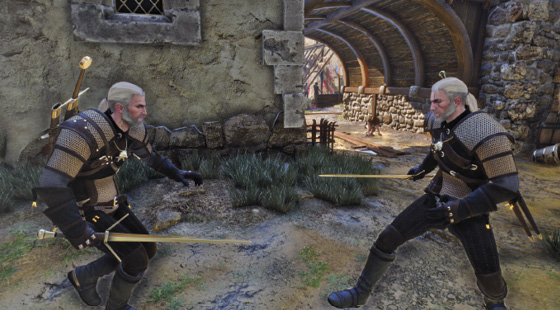
When backed into a corner, dopplers can present a grave danger by taking on the form of their assailant (and along with it his strengths and abilities). The sum result is to force the assailant to battle against himself—a battle few can win. Like other relicts, dopplers are extremely vulnerable to silver, and so a silver sword should be used when fighting them. Silver has the additional useful property of forcing a doppler to change form on contact.
Combat Tactics
When a doppler assumes the form of its attacker, it gains some of its skills. In the case of the doppler hunted by Geralt, he gains the ability to use the Active Shield mode for Quen, and can even use blasts of Igni. Additionally, the doppler’s swordplay is nearly on par with that of the witcher, he can parry and strike just as swiftly.
Be patient when fighting the doppler. Do not attack when his Active Shield is clearly visible, as the resulting detonation can knock Geralt to the ground. Focus on counter-attacks and parrying. A proper counter creates the best opportunity to land an attack or two of your own.
Yrden and Axii both provide openings to exploit against the doppler. Axii is slightly less useful in that a single strike breaks the effect on the doppler, while Yrden can be used to effectively corral the monster and allow for multiple strikes to land.
After defeating the doppler in Geralt’s form, you are given a choice to spare it or finish the fight. If you choose the latter, the doppler drops the Geralt disguise and assumes the form it tried fleeing you with. The fight actually becomes simpler, as the doppler loses the ability to use magic signs, and its swordplay is significantly less aggressive. Stay patient and remember your defense, exploit openings to the fullest, and you can win.
Chorts
| Loot: Chort Hide, Raw Meat, Chort Mutagen |
| Sub-Species/Named Variants: Howler |
| Environments: Chorts make their homes where they please, which means that the Continent and Skellige have been home to these vicious, adaptable beasts. |
| Vulnerabilities: Devil’s Puffball, Relict Oil |
“Chorts are smaller than fiends, true. But still big enough to kill.”—Agnes Thistle, herbalist from the Black Forest
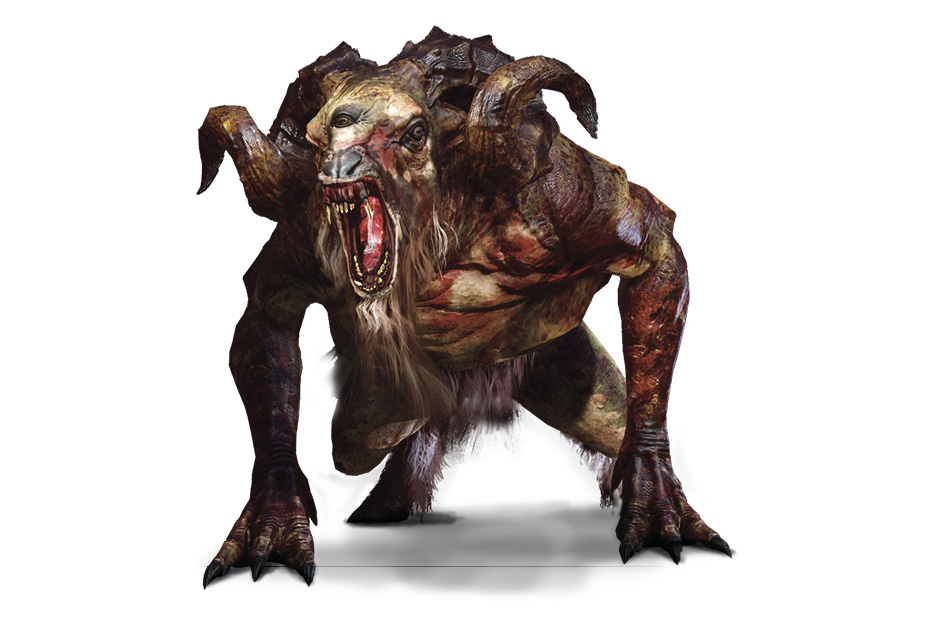
Chorts are the somewhat smaller kin of fiends and bumbakvetches. Yet any witcher who thinks their diminutive stature means they present no danger commits a grave error—the kind that can end his career permanently. These denizens of dark and ancient woods are some of the most dangerous monsters known to man.
Legends often mistake chorts for sylvans, ascribing to them the ability to speak, stand on two legs, gobble up cabbage, play pranks and work mischief around the household. The arrival of a true chort in a region soon puts an end to such tales. The creatures do not speak, at best communicating with each other through grunts, snorts and moans. They get about on four legs and as for their “mischief.” They destroy farmsteads, devouring anything that can be devoured, including cabbage, if such is available, but also extending to poultry, pork, the family dog and then the family itself.
Chorts fight with little finesse, running straight towards their opponent and trying to knock him to the ground with the force of their charge. After downing their foe they bite, kick and strike with their claw-tipped paws. Due to their size and four-legged posture, they are mostly unperturbed by the force of the Aard Sign, and the regenerative powers of their body allow any wounds they receive to heal at a rapid pace.
Combat Tactics
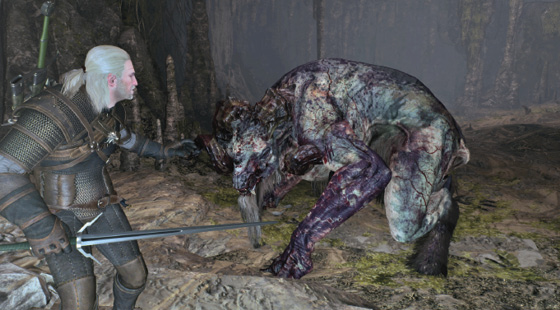
Chorts are speed and brute strength personified, rivaled only by fiends among relicts. They use their arms to pummel, claw, and smash their prey. They also charge with such speed they can barely control themselves as they smash head first into their unfortunate victims.
A stand-up fight against a chort is not an option, even for a witcher. Use their size and speed against them: bait them to charge, roll aside, and hope they run headlong into something they can just charge through. While they recover from this mishap, you can freely cut into their flanks.
A less direct tactic involves using Devil’s Puffball bombs to poison the chort. If you can drag it through the toxic fumes, it will breath in the poison, and ideally help resolve the fight sooner.
Fiends
| Loot: Fiend Eye, Fiend Mutagen, Fifth Essence, Fiend Dung |
| Sub-Species/Named Variants: Morvudd |
| Environments: Fiends roam and live where they want, but are extremely rare to ever encounter. Caves and forests tend to be their preferred hunting grounds. A fiend has been sighted near Bald Mountain. |
| Vulnerabilities: Samum, Devil’s Puffball, Relict Oil |
“I regret to inform Your Grace that Your Grace’s son fell while hunting a fiend. He died on the spot, along with his squire, his guide, the beaters, his peasant entourage and his hounds.”—Kavin Jell, manager of the Villepin Estate near Vizima
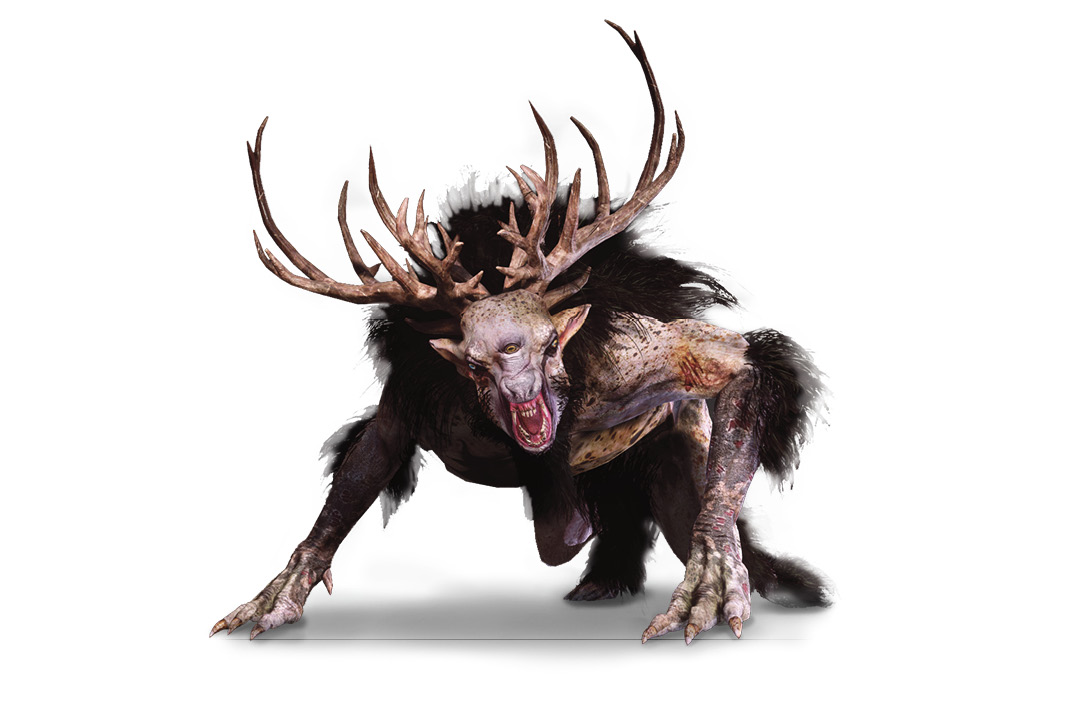
Fiends are walking mountains of muscle capped with horned, tooth-filled heads. Like their rarer cousins, bumbakvetches, they live in thick forests, swamps and bogs. When possible they avoid humans, but when not possible, they kill them, and without much difficulty.
Their size alone makes fiends and bumbakvetches extremely dangerous—one blow from their powerful paws can kill a horse along with its fully-armored mount. Their enormous heft also makes them invulnerable to Aard: even witchers specializing in the power of Signs could not move one even an inch. Furthermore, any wounds they receive heal at lightning speed.
If that weren’t trouble enough, fiends need not rely on their strength and Stamina alone when fighting. They can also call on a more refined weapon: the third eye located in the center of their forehead, which they use to draw their prey into a state of hypnosis. During these times their victim does not see anything beyond this single burning eye—the last thing they see before their death.
A fiend’s only weakness is its fear of loud noises—bombs such as Samum or Devil’s Puffball are thus quite effective when fighting this monster. Furthermore, a blade covered in relict oil can increase a witcher’s chances of victory, or at least of walking away from the fight.
Combat Tactics
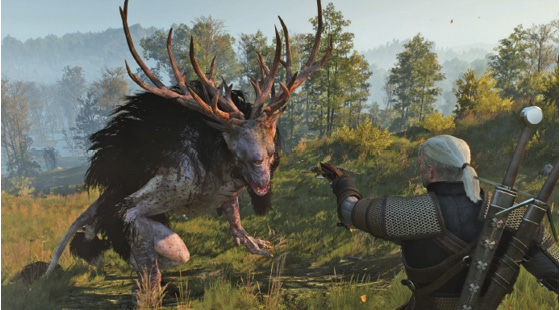
Consider fiend as one would a chort: incredible speed, strength, and a single-minded desire to kill—only more ferocious, larger, and angrier. They fight very much the same, and can be taken advantage of in similar ways.
The fiend’s third eye defines this monster as a force with which to be reckoned. It can lure victims into a state of hypnosis, where all they see is the third eye glowing in the darkness. Inexperienced hunters will die in the seconds that follow. Witchers know to follow that burning eye, and understand to use that to judge precisely when to evade.
A fiend attempting its hypnosis can be interrupted by Signs. A well timed Samum bomb can permanently disable the fiend’s third eye and prevent any use of hypnosis.
Fiends are not particularly vulnerable to fire, but it can help to use Igni or other fire-setting bombs to maintain the pressure on the monster.
Leshens
| Loot: Leshen Resin, Ancient Leshen Mutagen, Fiber, Timber, Leshy Mutagen, Infused Shard, Hardened Timber |
| Sub-Species/Named Variants: Kernun |
| Environments: Leshens are known to make forests their home, and they will rarely stray from their territory. |
| Vulnerabilities: Dimeritium Bomb, Relict Oil, Igni, Quen |
“We never hunt in these woods. Never. Even if it means the whole village starves.”—Mulliver, ealdorman of Hoshberg in lower Aedirn
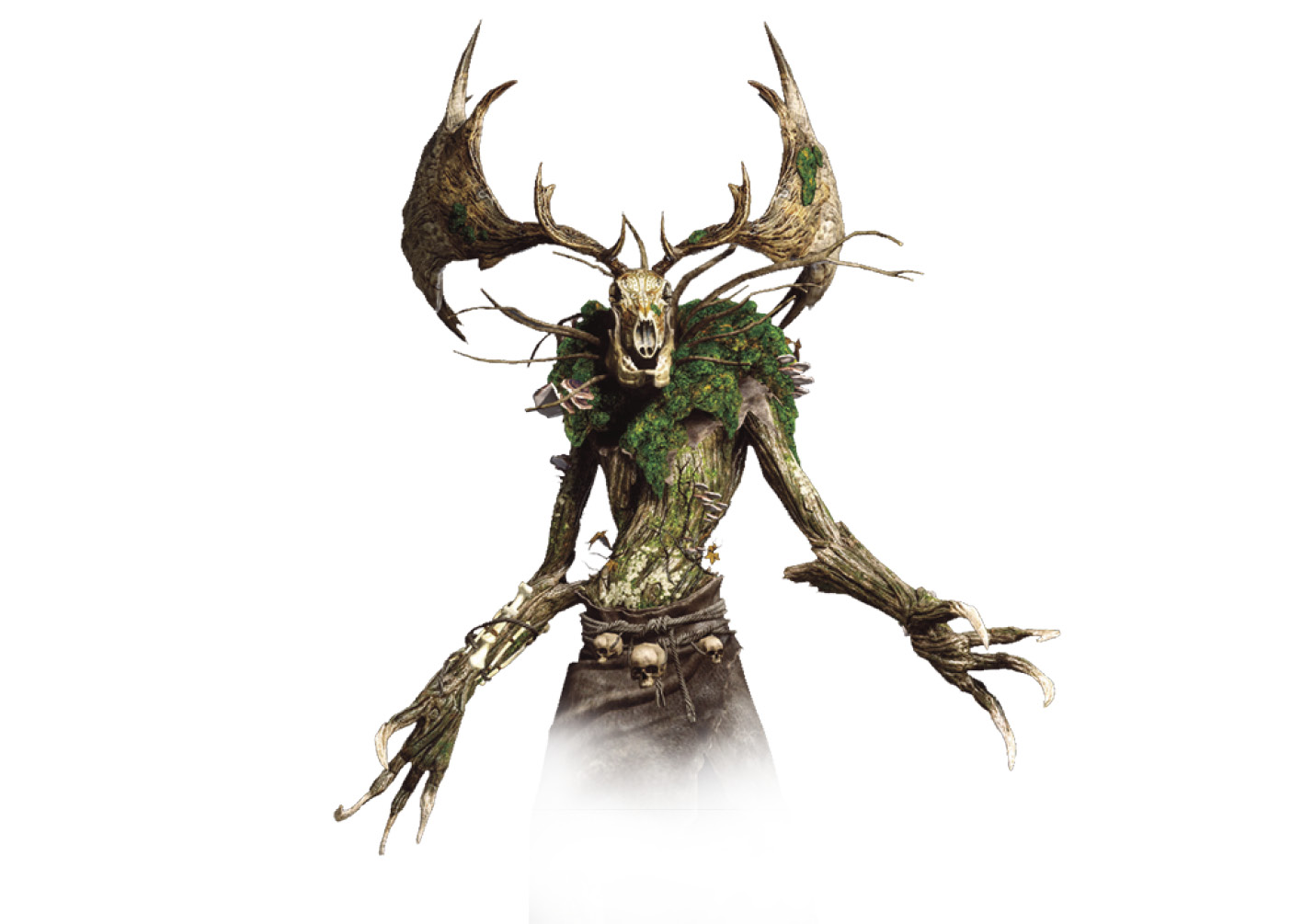
Leshens dwell in dense, primeval woods. Fiercely territorial creatures, they hunt with stealth and cunning as their only companions. They use their inborn magic to control the plants and animals within in their territory—and so, when stalking them, half the battle is merely getting near enough to strike. Leshens old enough to earn the appellation “ancient” wield advanced skills and tactics that make them particularly dangerous.
In some areas of the world these creatures form the center of local cults. Peasants living near their woods make offerings to them, usually of hares and birds, though human blood is not unheard of. This fact has given rise to many legends about helpful leshens chasing game towards hunters, helping lost travelers find their way in the forest or saving them from bandits. Sadly, these tales do not have an ounce of truth in them. Leshens see men only as sources of energy on which to feed. They drain the life force of those who live nearby until only limpid husks remain.
Some leshens create magic totems that increase their strength, in such cases these totems should be destroyed before or while fighting them. Furthermore, some leshens can create for themselves a kind of immortality in the following way: the leshen wounds a lost traveler passing through its woods with its claws and casts a black magic curse on him. For as long as the individual marked in this way stays near its territory, the leshen will be reborn every time it dies. Such leshens can only be defeated by driving away or killing the person they have marked.
In combat leshens use not only their long claws but also their many allies: wolves, who unfailingly answer their call, or ravens, which harass and distract the leshen’s opponent. Leshens are also able to bend plant life to their will and make it aid them in battle. It is a witcher’s good fortune that leshens do have one weakness—they are extremely vulnerable to the Igni Sign.
Combat Tactics
Leshens do not fight alone. They can summon swarms of crows to distract and harass their enemies, even call upon wolves to fight with them.
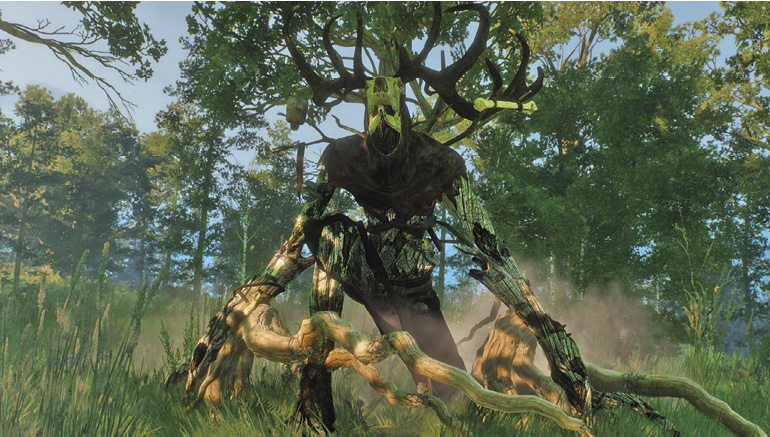
When facing a leshen, watch for them to dig their root like arms into the ground. This is a sign that they are commanding the roots to strike. This attack has surprising range, and can only be rolled away from. Leshens are slow, but powerful melee fighters, and can cause serious injury if allowed. Dodge or roll away from the swipes of their claws.
Igni, and any bombs that can potentially cause fire damage, such as Dragon’s Dream, are useful against leshens. While a leshen burns, it will be unable to defend itself.
Sylvans
| Loot: Leather, Orens |
| Sub-Species/Named Variants: Fugas |
| Environments: Typically found closer to farms and larders where they can feed. A yaksha known as Fugas has been seen at Bald Mountain. |
| Vulnerabilities: Samum, Devil’s Puffball, Relict Oil, Igni |
“Sylvans are cruel, greedy and treacherous. Still, I prefer them to dh’oine.”—Yaevinn, legendary Scoia’tael commander
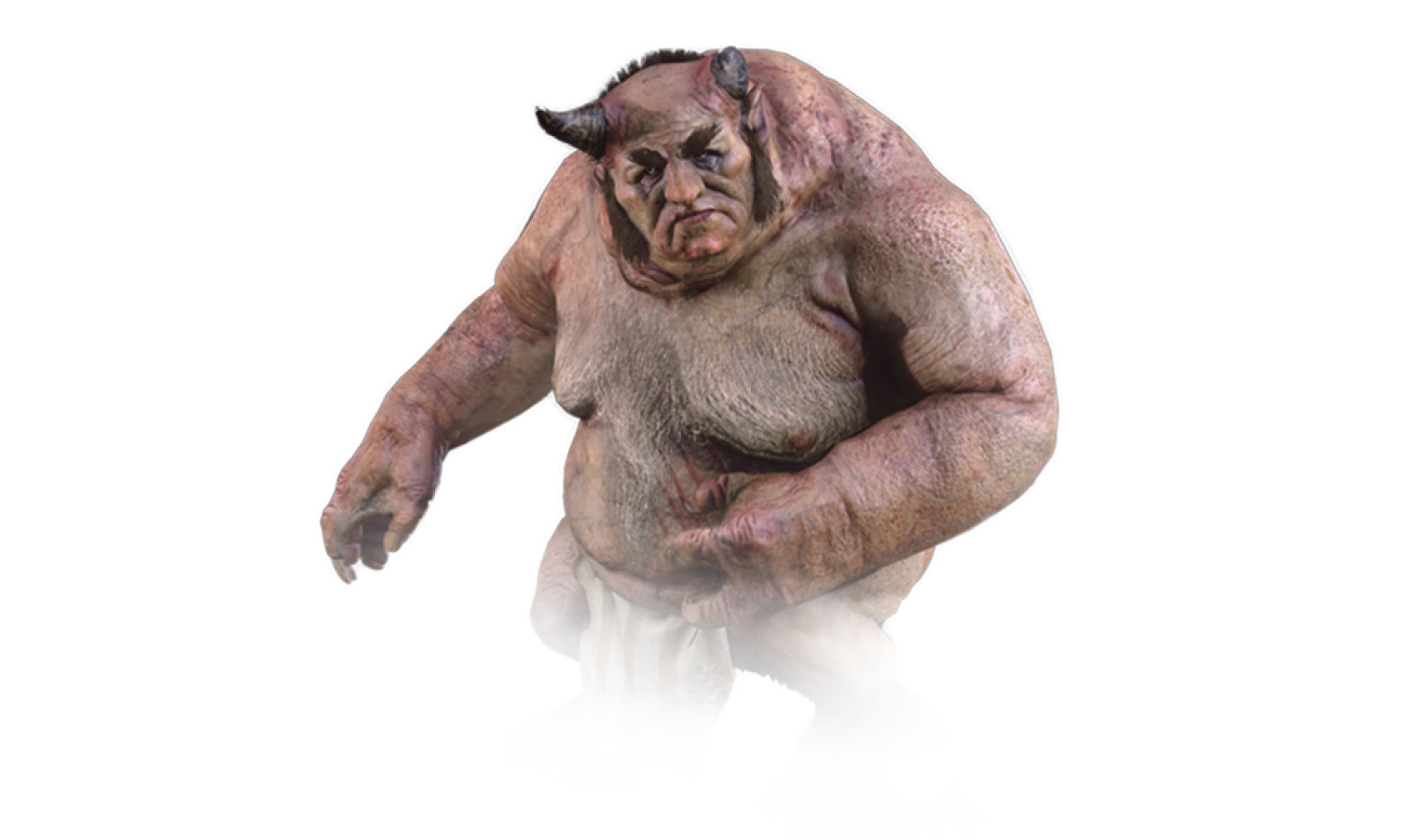
Sylvans and yakshas, a kindred species, are extremely rare woodland creatures whose appearance combines traits of goats and rotund men. These beings usually pose little danger, for they limit their contact with humans to playing harmless (though often bothersome) tricks and eating crops from their fields.
Sylvans and yakshas resemble men not just in appearance but also in behavior—though it must be said they have adopted more of our vices and weaknesses than strengths. Lazy by nature, they would gladly spend every day in idleness, puffing on pipes, gorging on rich foods and downing strong drinks.
Since sylvans and yakshas enjoy partaking of the fruits of others’ labors without asking permission, men do not take to them kindly and at times, fooled by their awkward appearance, will try to solve this problem using force. This often ends in tragedy, for sylvans, despite their corpulent frames, are astonishingly strong and agile. They also emit a powerful and extremely unpleasant scent which can cause even a witcher, whose line of work accustoms him to foul stenches, to gag and feel faint. Watch out in particular for yakshas, which are fiercer and keener on fighting than normal sylvan.
.jpg)
Combat Tactics
Sylvans (such as Fugas, the guardian of the Bald Mountain caves) are deceptive in appearance. That they are fat, and look clumsy, hides almost absurd amounts of physical strength. Melee combat against a sylvan is difficult, even for a witcher. Evade the physical strikes from a sylvan, do not attempt to parry or counterattack.Yrden can allow a witcher time to bring a silver sword into play, but a sylvan can counter this by breathing intense flames that melt through the best armor.
If close-quarters combat is not going well, you should be prepared to make use of long-ranged options. A powerful crossbow loaded with good bolts can keep you relatively safe, while still effective at slaying this beast.