
The Witcher 3: Wild Hunt Guide Appendices and Compendiums The Bestiary
Draconids
The very mention of a dragon is enough to send a shiver of fear even among experienced witchers. True dragons, however, are seen rarely these days, driven off by wars or slain by the mass-hunts of the past. It does not stop villagers from claiming that every small draconid they see is a dragon. This does not mean that basilisks or forktails are less threatening to human lives, there is good reason why contracts for their heads are written, and why witchers are sought to claim them.
Basilisks
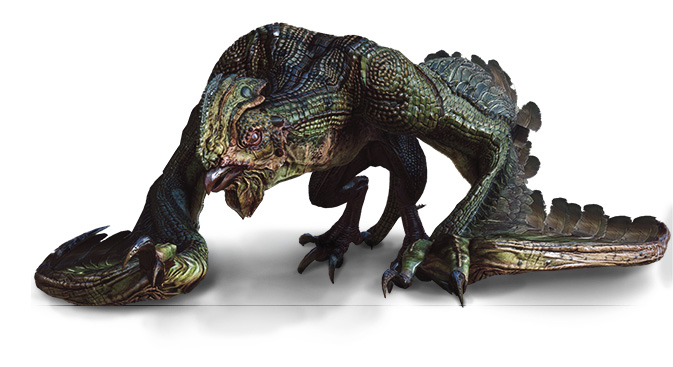
Similar to Wyverns, a basilisk spits venom at their victims, weakening armor and causing damage over time. Golden Oriole is essential.
| Loot:Basilisk Plate, Basilisk Venom, Dragon Scales, Basilisk Mutagen |
| Environments:Basilisks dwell within dark and damp locations—cellars, caves, and city sewers tend to be their preferred places. |
| Vulnerabilities: Golden Oriole, Grapeshot, Dancing Star, Draconid Oil, Aard, Igni |
“In memory of the noble knight Roderick, slain during a valiant struggle against a basilisk. Let’s hope the beast choked on his bones.”—Gravestone inscription, Vizima cemetery.
Contrary to popular belief, basilisks cannot turn anything to stone with their gaze. That is small comfort, however, given that their acid, venom, claws and teeth provide them many other ways to kill.
Basilisks love dark, damp places such as cellars, caves and city sewers. They hunt by day, waiting patiently in hiding for their prey to come, then jump out in a flash to unleash a deadly attack.
When preparing to fight such a creature one should drink Golden Oriole, which will provide resistance to its venom, and also prepare Dancing Star or shrapnel bombs, which work particularly well against basilisks.
Basilisk leather is a highly-valued material used to make fashionable shoes and women’s handbags. For this reason many men, their courage girded by goldlust, take to hunting them. Most of these hunts end in disaster, but some do manage to bag their prey, which has led to a drastic decline in this creature’s numbers in recent years. Some mages and druids are of the opinion that basilisks should be included in programs meant to safeguard dying species. Everyone else thinks those mages and druids have gone completely mad.
Combat Tactics
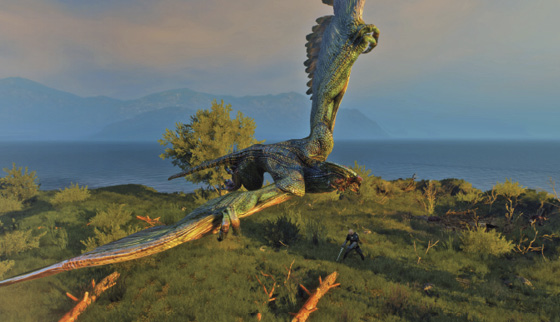
Despite appearances, basilisks are highly vulnerable to Igni, or other means of fire-starting, such as the Dancing Star bombs. A well timed Dancing Star or Igni burst can not only bring down a basilisk from the sky, but the beast will be so pre-occupied from being set aflame that it will have difficulty defending itself.
Basilisks are skilled at using their wing and foot talons in a fashion similar to cockatrices. They have been observed to react to witchers in combat by parrying sword strikes with their wings, then leaping into the air to land devastating overhead blows with their claws.
A basilisk can leap into the air, hover momentarily, and spit acid at their opponents from above. This action happens extremely fast, and a witcher should always watch for it.
Cockatrices
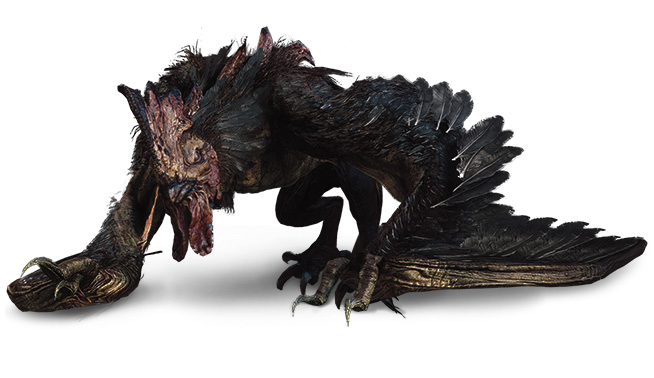
| Loot: Cockatrice Maw, Cockatrice Egg, Raw Meat, Cockatrice Mutagen |
| Sub-Species/Named Variants:Shrieker |
| Environments: Cockatrices prefer hiding in caves and abandoned structures to rest and recuperate, but are aggressive hunters, seeking prey caught in open fields. |
| Vulnerabilities: Grapeshot, Draconid Oil, Aard |
“Had meself eight heifers, five of ‘em milchers. Then this cockatrice sprung up nearby, and now all’s I got left’s dried patties in an empty field.”—Jethro, peasant from Pindal
Foolish superstitions claim cockatrices, like basilisks, can kill with their gaze alone. That is utter nonsense, however, a cockatrice’s gaze being no more dangerous than that of an angry goose. One should instead watch out for its sharp beak, as it can cause major damage.
Cockatrices thrive in dark caves, abandoned ruins, cobwebbed dungeons and old basements. Though small compared to griffins and manticores, they are more than capable of killing anyone who stumbles across them in a dark corridor.
Cockatrices do not shun direct fights, in which they strike furiously with wing and tail in an attempt to exhaust their foes. Blows from their beaks are especially dangerous, as they aim with deadly precision at exposed flesh and vital organs and leave bleeding, life-threatening wounds. When fighting them one should make liberal use of draconid oil as well as Grapeshot, whose shrapnel will pierce their delicate wings with ease.
Combat Tactics
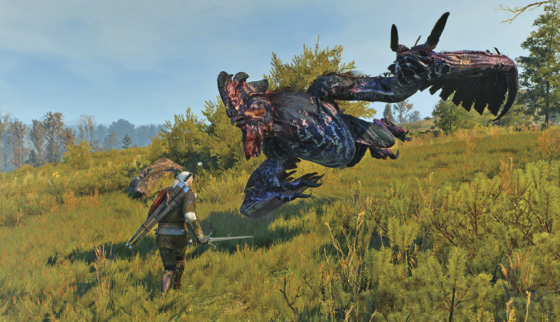
Cockatrices fight aggressively once a fight has begun. Take advantage of this aggression and ground them with Aard or Grapeshot. A crossbow can also bring them down to earth should they attempt to fly, but unlike a basilisk or griffin, cockatrices tend to favor fighting on land.
A cockatrice strikes with talons on its wings and feet, and its razor-sharp beak. These blows almost always target vital region on a victim, causing massive bleeding that leads to inevitable death. A witcher should have the Swallow potion on hand to counteract any wounds sustained from a cockatrice.
Always try to flank a cockatrice. Being in front of it exposes one to its beak and talons. It is possible, with excellent timing, to counter-attack blows from the wing talons or even from the beak, but a witcher puts themselves in grave danger to do this.
When grounded, a cockatrice will try to remain close to its prey. Should a victim attempt escape on foot, a cockatrice can leap astonishing distances to attempt tackling the target.
Forktails
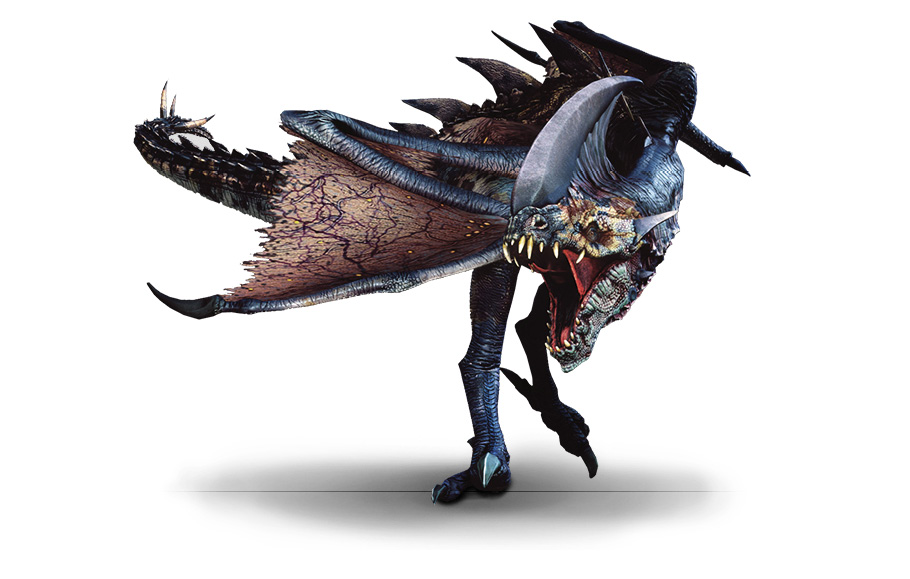
| Loot:Forktail Mutagen, Forktail Plate, Dragon Scales, Raw Meat |
| Environments:Examples of forktails can be found throughout the known world. Velen and Skellige provide adequate hunting grounds, and villagers fear the presence of forkatils as far inland as White Orchard and beyond. |
| Nests: Often found in secluded areas, overlooking potential hunting grounds. Nests themselves bear resemblance to those of birds, writ larger, accompanied by the occasional remains of humans or cattle. |
| Vulnerabilities: Golden Oriole, Grapeshot, Draconid Oil, Aard |
“Fork tails… Bah! Tails’re more like cleavers.”—Yavinn Buck, veteran of the Mahakaman Volunteer Regiment
Forktails owe their quaint name to the long, sharp growths at the tip of their tails. A blow from this weapon can slice an oaken shield in two—along with the hand that was carrying it. Thus though its name conjures images of cutlery, fighting a forktail is nothing like a dinner party and ends in death rather than dessert.
Forktails are active by day. They usually hunt alone or, more rarely, in pairs. They attack big game, including domesticated animals, mainly cattle and pigs, and even humans from time to time.
Like all draconids their massive size does not stop them from flying and attacking from the air. They use their weight and height advantage as they swoop down to knock their prey over with their wings. Once on the ground, they are somewhat less mobile but still dangerous, turning to other tactics centered on attacking with their massive, spike-covered tails.
Combat Tactics
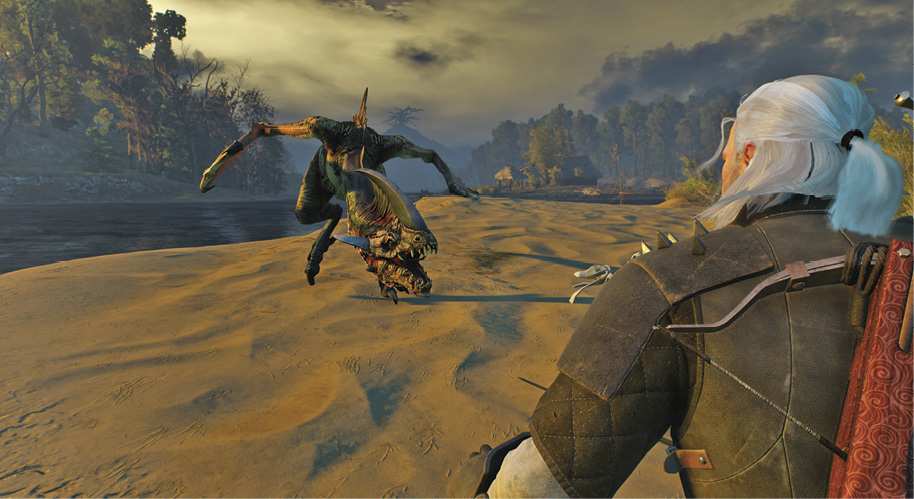
Like other draconids, the forktail is a capable flier. Bring it down to the ground with crossbow bolts or Grapeshot to start the real fight.
Forktails are as aggressive as any wyvern, making use of their foot talons to slash and kick at unfortunates they’ve hunted down.
The tail-tip stingers of a forktail are highly poisonous, and, as such, Golden Oriole is essential. Forktails will aggressively employ their tails in combat, and the only recourse is to simple evade these strikes.
Proper footwork can not only evade a tailswipe, but place a witcher in perfect position to strike at the vulnerable flanks.
Do not be so pre-occupied with the tail of a forktail that you neglect its head. Bites from a forktail come at near-lightning speeds, but they can be parried and even countered.
Wyverns
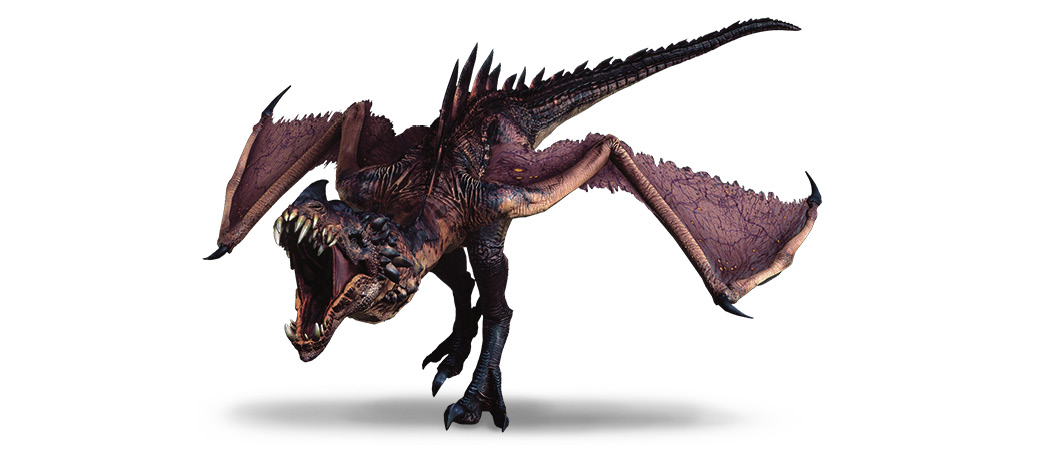
| Loot:Wyvern Egg, Wyvern Plate, Dragon Scales, Wyvern Mutagen |
| Sub-Species/Named Variants:Royal Wyverns |
| Environments: Wyverns have been spotted nesting in north-eastern Velen, though it must be stressed that these beasts are highly-adaptable, and have been sighted across the entire Continent and the Skellige isles. |
| Nests: Yes, often in high places overlooking potential feeding grounds. |
| Vulnerabilities: Golden Oriole, Grapeshot, Draconid Oil, Aard |
“Most dangerous of all are the royal wyverns. Or, as they’re called in some circles, the royal pains in the arse.”—Albina Tottelkampf, lecturer in natural sciences at Aretuza
Wyverns are often mistaken for dragons, and, though they are much smaller than their more famous kin and do not breathe fire, they are likewise extremely dangerous monsters. Especially feared are the so-called royal wyverns who, like their namesake monarchs, are exceptionally ornery and extremely deadly.
A wyvern will usually attack from the air, aiming to knock its prey down with its wings. After landing it will attack with its tooth-filled beak, trying to draw attention away from its most dangerous weapon—the stinger found at the end of its long tail. A strike from this carries the risk of poisoning from powerful toxins. Even a witcher’s body experiences wrenching pain when injected with wyvern venom, and so it is worth preparing oneself with suitable potions ahead of time.
Combat Tactics
Wyverns are especially venomous, able to spit poison at their prey, or directly inject it from their tails. Golden Oriole potions are a must.
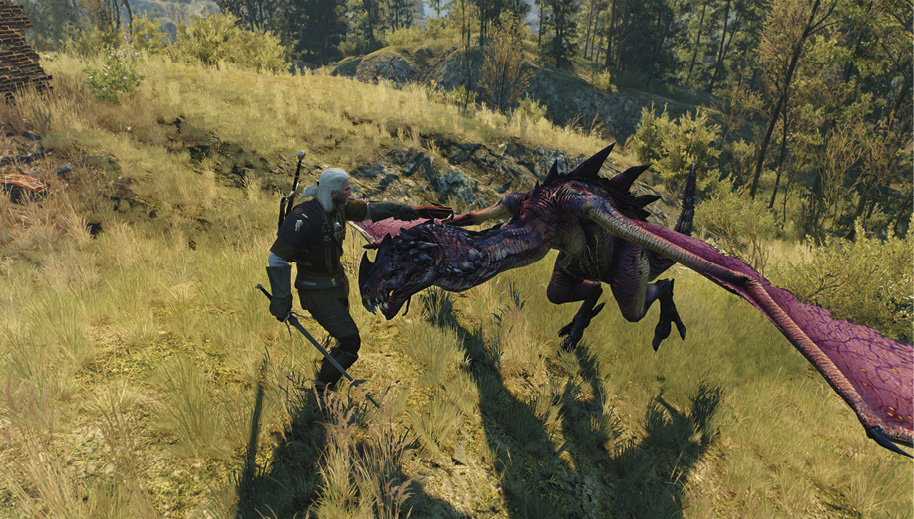
Wyverns fly around their prey, well outside of crossbow range, before swooping in at great speeds to attempt clawing their target. Even a witcher cannot stand their ground against that. It is best to get out of the way, though bolder witchers can actually score crossbow hits as the wyvern draws near.
Aard and Grapeshot can bring an airborne wyvern to the ground. Wyverns are tough enough to resist bolts from a crossbow, but more lethal munitions can still force the beast to the ground.
On the ground, a wyvern prefers to strike with the talons on its feet, its tooth-filled maw, and its tail. It is possible to parry and counter-attack bites, but the consequences for bad timing are high.