
The Witcher 3: Wild Hunt Guide Appendices and Compendiums The Bestiary
Necrophages
Local legends have painted necrophages as the dead risen, cursing and hungering for the living, but this is far from the case. It’s true that where war, death, and pestilence go, necrophages inevitably follow. Defined by an insatiable lust for flesh, living or dead, the various species of necrophage have seen a population explosion as wars have ravaged the Continent.
Alghouls
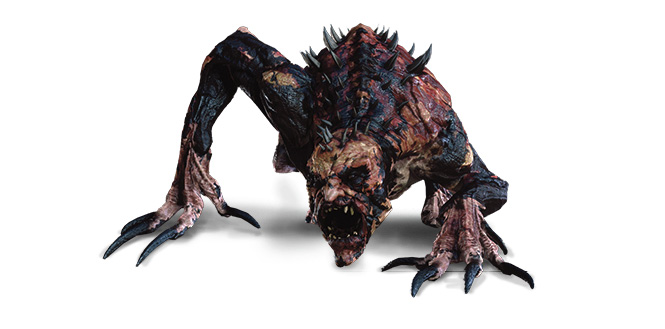
| Loot: Alghoul Bone Marrow, Alghoul Claw, Rotten Meat |
| Environments: Battlefields and any location where a large number of corpses can be found in shallow graves or left out to rot. |
| Nests: Found among ghouls and graveirs protecting nests, or leading packs of other necrophages. |
| Vulnerabilities: Necrophage Oil, Axii |
“An alghoul’s basically a badarse ghoul”—Yarpen Zigrin, dwarven warrior
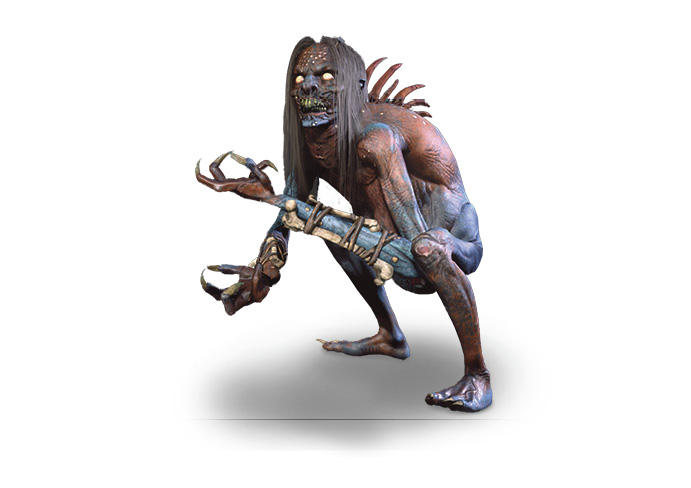
Alghouls differ from normal ghouls in size, strength, coloring and, most importantly, intelligence. Whereas ghouls and graveirs are primitive creatures unfit to plan even the simplest ambush, alghouls and their kindred (such as cemetaurs) are capable of forethought, and are thus much more dangerous.
Ghouls seem to possess wits enough to at least know a brighter mind when they see it, and so let alghouls and cemetaurs lead their packs. A pack so led will terrorize all in its path, attacking not only lone travelers but also caravans and even farmsteads. When encountering such a pack the alghoul should be eliminated as a first priority, leaving the other beasts for once their leader is gone. One be particularly careful when fighting alghouls around dusk and at night, when they fight with doubled strength.
During combat alghouls and cemetaurs try risky maneuvers aimed at knocking their opponents to the ground so the others can finish the job by tearing them to shreds. Like a normal ghoul, an injured alghoul can fall into a frenzy and attack with blind fury. An experienced witcher knows to get out of its way on such occasions and strike from behind, while for an inexperienced witcher, such a turn of events often marks the end of his Path.
Combat Tactics
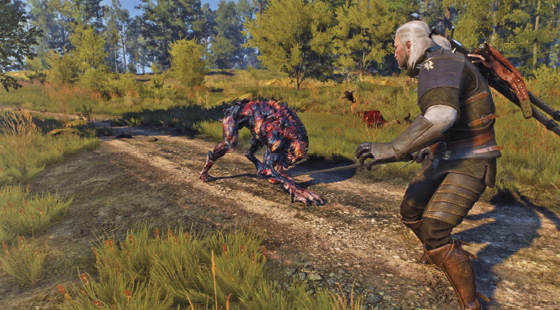
Alghouls are smarter and more powerful than ghouls or graveirs, making them the greatest threat in a ghoul pack. An otherwise coordinated pack becomes less so once the alghoul has been dealt with.
When enraged, an alghoul grows spines on its back. This makes attacking it a very dangerous proposition, as the spines are harmful if you use melee attacks. Axii can force the spines on an alghoul to retract, with the added benefit of temporarily stunning the creature.
An alghoul can emit a piercing scream to stun nearby victims, as well as send nearby ghouls into a raging frenzy.
Drowners
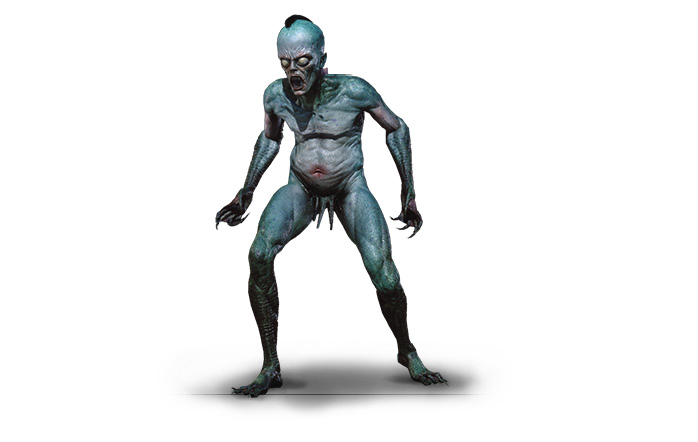
| Loot: Drowner Brain, Drowned Dead Tongue, Water Essence |
| Sub-Species/Named Variants: Drowned Dead, Mucknixers, Vodnicks |
| Environments: Battlefields or any location where a large number of corpses can be found in shallow graves or left out to rot. |
| Nests: Drowners that congregate in large enough numbers inevitably create nests near sources of water and food. |
| Vulnerabilities: Necrophage Oil, Igni |
“When at the water’s edge, you gotta be quiet. First of all, so as not to scare the fish. Second, so you don’t attract drowners.”—Yanneck of Blaviken, fisherman
A drowner resembles a corpse dredged from the bottom of a pond. It is sickly blue or green in color, with slime and sludge oozing out of every pore and the acrid stench of rot wafting off of it. That is why it is often thought drowners—along with their more dangerous cousins: vodniks, mucknixers and drowned dead—arise from the bodies of those who drown in shallow water: lost travelers falling into bogs, children who swim too far from the shore or, in the case of vodniks, inebriated peasants who stumble off narrow swamp trails.
Like so many other beliefs about monsters, this one is false. While drowners do look like humans from a distance, witchers, who have the dubious pleasure of examining them from close quarters, have reported the numerous ways in which their anatomy differs from our own. Their scaly skin, gills and dorsal fins suggest drowners and their like are an entirely foreign species.
The adaptations mentioned above make drowners excellent swimmers, well-suited to the muddy waters of the ponds and lakes in which they dwell. They often cluster near human settlements, which are for them an excellent source of food.
Cowardly creatures by nature, they usually stick to eating scraps they dig out of rubbish piles and animal carcasses. Yet if a lone traveler or careless fisherman strays into their territory, they turn from scavengers to fearsome predators. They can attack with lightning speed, taking their victim by surprise and pulling him into the water to drown. If not particularly hungry at the moment, they will keep their prey under the water for a few days, aging it until it grows deliciously tender and rotten. Drowners are particularly active at dusk and during the night, especially if the rain is falling, at such times they will even leave their watery homes and venture inland.
Drowners, mucknixers, vodniks, and drowned dead all live in putrid, rotting filth, and so have developed a high resistance to poison. Though humanoid in form, they are primitive creatures no more intelligent than carp or pike. That is why spells affecting the mind, the Axii Sign included, are ineffective against them. Yet they are particularly vulnerable to magic drawn from the element of fire, including the Igni Sign.
Combat Tactics
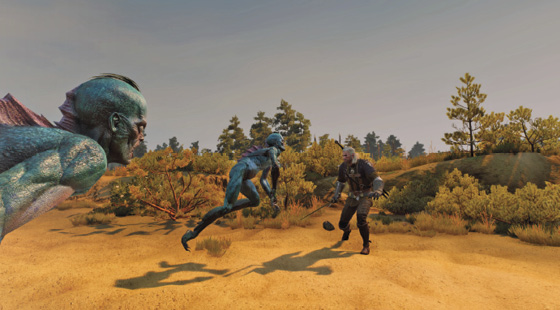
Drowners are predominantly pack creatures by nature, usually in groups of three or greater. You know they have spotted you if they burrow into the ground. This is a sure warning sign that they’re preparing to ambush if you encroach further on their territory.
Drowners are quite weak to Igni, susceptible to being lit afire and stunned while they screech in agony. When attacked by multiple drowners, it’s possible to catch the pack in an Yrden trap, then blast the drowners with Igni.
You can counterattack the claw swipes from a drowner, causing a bit of extra damage to them. However, this can be quite difficult when multiple drowners are attacking. They can interrupt your counterattacks with their own attacks. Drowners try to leap at a witcher from beneath the ground. Watch for disturbances at your feet, and roll or dodge to safety.
Drowners react to the deaths of their fellows by screaming in pain. This show of mourning leaves them defenseless for several seconds.
Foglets
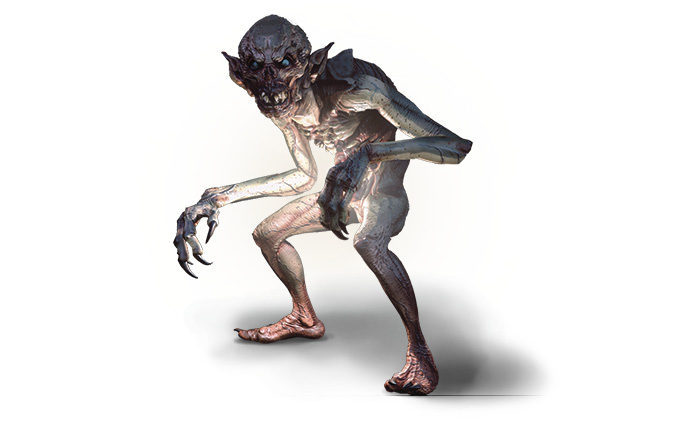
| Loot: Fogling Teeth, Fogling Mutagens, Fifth Essence |
| Sub-Species/Named Variants: Tangalore, Ignis Fatuus |
| Environments: Battlefields or any location where a large number of corpses can be found in shallow graves or left out to rot. Also found in swamp-like locations and areas where fog can occur naturally. |
| Vulnerabilities: Moon Dust, Necrophage Oil, Quen |
“If night ever catches you in the swamps, stay put and wait for dawn, even if it means standing waist-deep in water with leeches crawling down your trousers. Most important of all, if you see a light in the fog, never, and I mean never, go towards it.”—Johannes Strudd, guide
Fog is the traveler’s foe. In the forest, it can make one lose one’s way , at sea, it can send one sailing into the rocks. Yet such dangers are nothing compared to the monsters known as foglets which sometimes lurk within it. These creatures have powerful arms and claws like Zerrikanian kinjals, yet what makes them truly dangerous is their mastery of deception, beguilement and disorientation. Many times they need not attack at all, instead simply driving their prey to madness or into boggy marshlands, after which they wait patiently for it to drown in the muddy waters.
Foglets may appear wherever thick fog can arise: swamplands, mountain passes or the shores of rivers and lakes. If no fog is forthcoming, they create or summon it themselves. Quickly thickening air undisturbed by the wind infallibly signals a foglet is present—and preparing an attack.
Thick clouds of mist not only allow foglets to remain unseen, but also serve as their weapons. By manipulating fog they can separate travelers from each other, hide trails and deafen noise. Like ghastly glowworms, their bodies emit a pale light they use to lure those lost in the fog towards the ravines, swamps or caves in which they make their lairs.
Even if a traveler spies his pursuer and manages to attack, the foglet can disappear into thin air before the blade hits its target. Some foglets are additionally said to possess an ability to create complicated illusions rivaling that of human mages. Whether that is true or merely one of the dark legends men tell about these mysterious monsters remains uncertain.
When fighting foglets, a witcher must remain calm and keep his wits about him no matter what. Since foglets can take on immaterial form, a slight shimmer of air or a rustle in the grass might be the only clues a witcher has to their location. Casting the Aard Sign at these beings will cause them to become tangible, giving purchase to blades and other weapons.
Combat Tactics
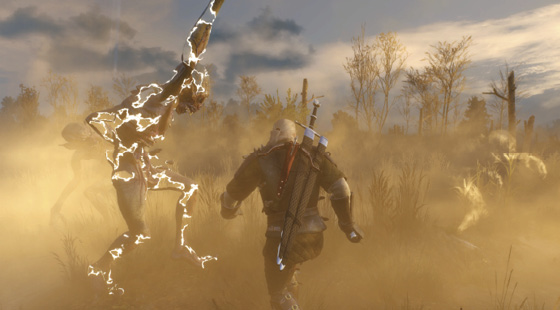
Rapidly thickening fog tends to be a sign that foglets are close. Prepare Quen if the fog is accompanied by snarling.
Foglets create illusions of themselves that can cause physical harm, while the the real foglet stalks the area. Damaging the illusions disrupts them, and can reveal the foglet’s location.
While foglets can disappear, watching for moving patches of fog or grass swaying in a path leading directly to their victims is one way to identify their location. It is possible to counterattack a foglet as they materialize to attack, a good way to begin your offense.
Yrden is particularly useful for buying a witcher time to react to a foglet ambush, slowing down the monsters and disabling their invisibility.
Moon Dust bombs can keep foglets from turning invisible and disrupt their illusions.
Ghouls
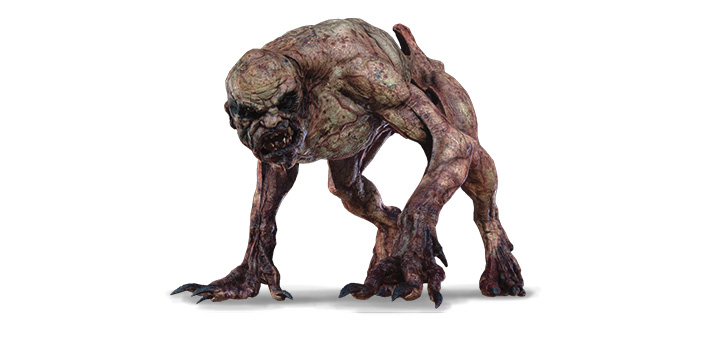
Ghoul nests can put you up against four or more ghouls all at once.
| Loot: Ghoul Blood, Venom Extract |
| Sub-Species/Named Variants: Graveirs |
| Environments: Battlefields or any location where a large number of corpses can be found in shallow graves or left out to rot. |
| Nests: Ghouls create nests near prime feeding locations, and have been seen working with alghouls and, occasionally, a grave hag. |
| Vulnerabilities: Necrophage Oil |
“Ghouls creep and crawl at night, Eating everything in sight, In a snap they’d eat you, too, Chop you up for a ghoulish stew!”—Children’s rhyme
Ghouls and graveirs are hard to describe. In part, they resemble humans—yet on the whole, they are the utter negation of all that is human. Though they have arms and legs like men, they walk on all fours like dogs or badgers. Though they have eerily familiar faces, one searches them in vain for any sign of sentiment, reason or even a spark of consciousness. They are driven by one thing and one thing only: an insatiable craving for human flesh.
Ghouls and their more dangerous cousins, graveirs, usually feed in small groups, at times led by an alghoul. Since they delight most in the taste of fresh carcasses, they appear wherever newly-dug graves are to be found: cemeteries, crypts, catacombs and battlefields. Whenever the opportunity arises they hunt the living as well, especially when they have strength in numbers.
In a one-on-one fight with a trained witcher, a ghoul poses little threat, but one must remember that wounded individuals can erupt in a mad frenzy. At such times they attack fiercely, paying no heed to their own safety and brushing off all wounds. One must likewise bear in mind that ghouls and graveirs are particular dangerous around dusk and at night.
Combat Tactics
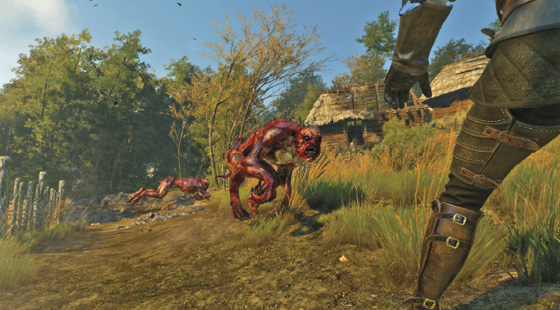
A lone ghoul is a threat only to careless or unskilled witchers. While not explicitly vulnerable to Yrden, this trap Sign slows ghouls down for easy dispatching.
Ghouls are rarely found alone. Packs of three or more often circle around Geralt rapidly, attacking from the flanks while he is occupied by another. Setting Yrden down at your feet allows you to better react when the rush inevitably comes.
Do not attack a ghoul too aggressively with your sword. They can counterattack through your own strikes, trading their blood for some of Geralt’s.
Ghouls can leap at Geralt from quite a distance. Be ready to dodge this attack, or have Quen refreshed to tank the hit. Listen for ghouls shuddering and snarling in place after an injury. This is a sign that they are enraged. They will aggressively leap at their victims, sprint around them to confuse them. Enraged ghouls will also regenerate their wounds.
Alghouls can be found in command of higher level packs of ghouls and graveirs.
Grave Hags
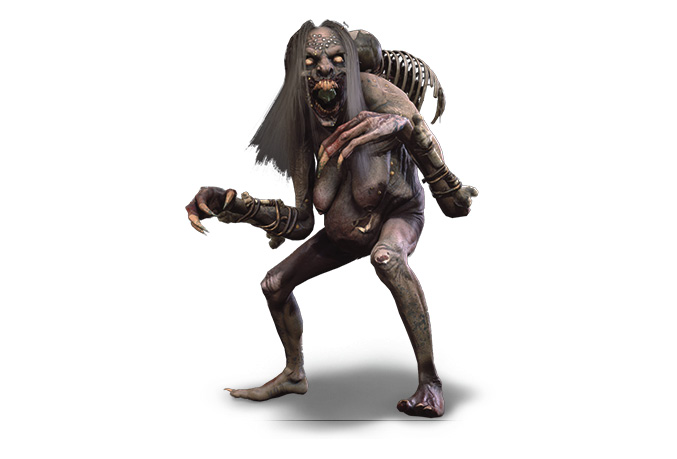
If at all possible, fight grave hags during the day. At night, they grow bolder and stronger.
| Loot: Grave Hag Ear, Hag Teeth, Venom Extract, Greater Triglav Runestone, Grave Hag Mutagen |
| Sub-Species/Named Variants: Mourntart |
| Environments: Battlefields or any location where a large number of corpses can be found in shallow graves or left out to rot. |
| Nests: Grave hags have been seen near ghoul nests. Some are intelligent enough to create dwellings of their own, as opposed to resorting to natural locations near feeding grounds. |
| Vulnerabilities: Black Blood, Necrophage Oil, Yrden, Quen |
“Cremation, now that’s one thing men could learn from gnomes. Burying bodies out in the fields, why, it’s like laying out a welcome mat for monsters! Best case scenario, some ghouls will sniff them out, eat their fill and be on their ghoulish way. But if, gods forbid, a grave hag takes to feeding at your cemetery, you’ll have no end of trouble.”—Jacques de Villepin, Oxenfurt Academy
Few monsters’ names fit as well as grave hags’. As one might guess, they resemble aged, deformed women who loiter near graveyards and battlefields. Grave hags feed on human corpses, and in particular on the rotten marrow which they slurp from human bones using their long, prehensile tongues. Once a hag has devoured all corpses within reach, she turns takes to killing men and burying them in the cemetery as she waits for them to decompose.
Grave hags use their tongues in combat to grab or flog their victims. Claws built for digging up buried bodies serve just as well as weapons to rend flesh. Though clumsy in appearance, grave hags move and attack at great speed—sometimes even a witcher’s reflexes are too slow to avoid their blows.
Grave hags are territorial creatures. Their lairs resemble caricatures of human homes and are built near burial sites. They venture out at night to hunt, stalking straggling travelers or mourners too lost in their grief to notice the setting of the sun. On rare occasions hunger-driven grave hags will hunt during the day. They are less dangerous at such times, for sunlight weakens them considerably.
Combat Tactics
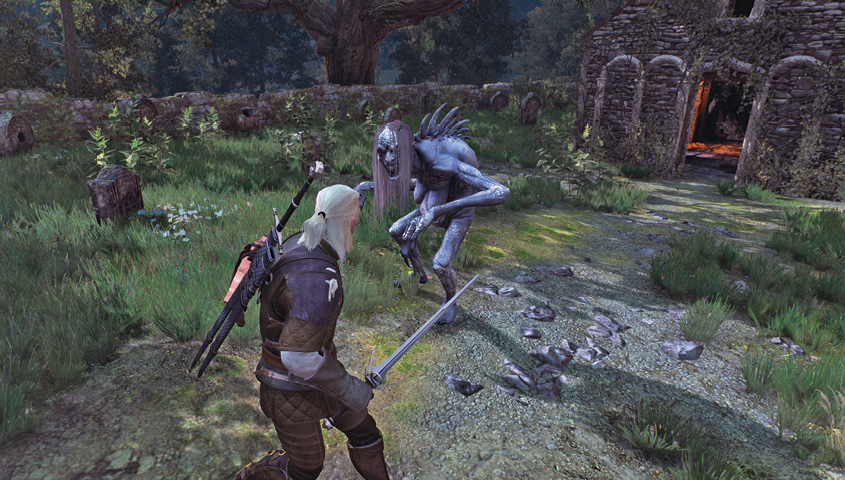
Grave hags are territorial and aggressive when provoked, using their great speed to rapidly close on prey. You should always have Quen active, and Yrden prepared for use, in the event that a hag is spotted before combat begins. This provides the best chance to defend yourself.
The tongue of a grave hag can surprise even veteran witchers with the speed and range it can lash out. Being struck by it can cause temporary blindness, leaving the victim unable to properly defend themselves. However, a well-timed counterattack can sever the tongue.
While not explicitly vulnerable to Igni, igniting a grave hag can give a witcher a needed respite from their assault.
The claws of a grave hag are sharp, but not enough that skilled swordplay cannot defend against them. A well-timed parry can stop a maddened hag’s claws. The follow-up counter-attack can then open the grave hag up to successive silver sword blows.
Black Blood can be effective at stopping a grave hag that has gotten the best of a witcher in the melee. This is another useful way to push back against their relentless assault.
Rotfiends
| Loot: Rotfiend Blood, Greater Rotfiend Blood, Necrophage Skin |
| Sub-Species/Named Variants: Devourers |
| Environments: Battlefields or any location where a large number of corpses can be found in shallow graves or left out to rot. |
| Nests: Approaching rotfiend nests is particularly dangerous, due to the explosive nature of the monsters themselves. |
| Vulnerabilities: Necrophage Oil |
“Course it reeks. Think they’re called rotfiends because they smell like roses?”—Vesemir, witcher of the Wolf School
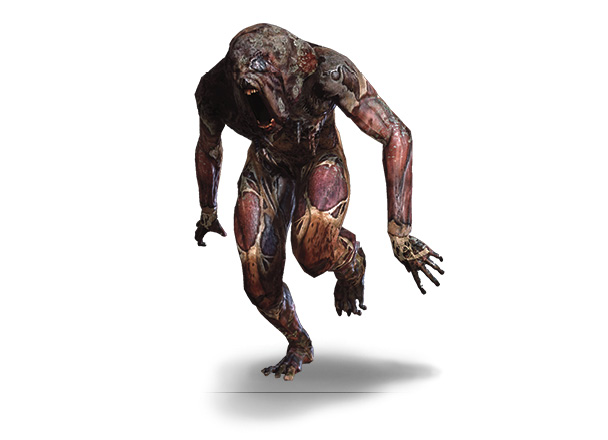
Rotfiends resemble decomposing human bodies that have been stripped of their skin. Their presence is given away by the overwhelming stench of the rot which gives them their name. Devourers are a particularly dangerous kind of rotfiend marked by an insatiable appetite for human flesh.
Rotfiends and devourers were once rarities, but in the present age of constant warfare and violence they have become a veritable plague, particularly around battlefields and in disease-stricken areas. Though they feed mainly on carrion, they will at times attack the living. They usually feed in large groups and thus present a danger to lone travelers—especially considering their speed, which is more than a match for a horse at full gallop.
The rotfiend’s decomposing body is filled with gasses which are poisonous even to those who, like witchers, are immune to most other toxins. These emissions are also highly flammable, meaning any spark, not to mention a carelessly-cast Igni sign, can lead to an explosion. This is particularly likely after a rotfiend dies, when its body thrashes around in uncontrollable tremors.
Rotfiends and devourers feed in the twilight hours and at night, when they become much more dangerous than during the day.
Combat Tactics
Similar to ghouls and alghouls, rotfiends roam in packs. They are fast enough to run down horse riders, so be wary when traveling near known rotfiend haunts.
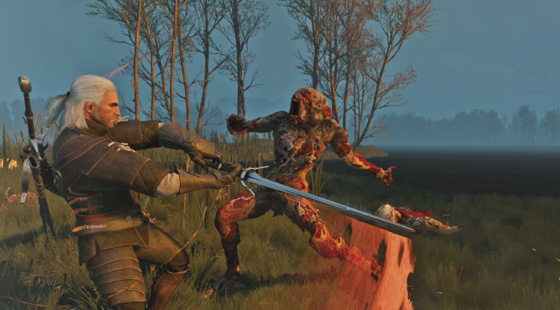
The gasses building up within a rotfiend’s body are highly unstable and become even less stable as combat with them wears on. When a rotfiend begins to spasm uncontrollably in place, it could be a sign that they’re about to explode. It is not safe to stand near these creatures, nor is it wise to try slaying them with a silver sword in this state. They will more than likely explode, possibly ending a witless witcher’s career.
Igni can trigger rotfiend explosions quicker. This can be a useful attribute to exploit when confronted by multiple rotfiends.
Water Hags
| Loot: Water Hag Teeth, Venom Extract, Water Essence, Ducal Water, Ribleaf |
| Sub-Species/Named Variants: Bilge Hag, Abaya |
| Environments: Battlefields or any location where a large number of corpses can be found in shallow graves or left out to rot. Water hags prefer to be closer to water sources. |
| Nests: Water hags have been known to enthrall drowners, using them to guard their lairs. Like grave hags, a water hag is intelligent enough to make their own lairs near water. |
| Vulnerabilities: Northern Wind, Necrophage Oil, Quen, Igni |
“Folk say water hags are drowners’ wives. If that be true, ‘tain’t no wonder why they’re so ornery.”—Shemhel of Dregsdon
Some tales mention water hags and swamp bints masquerading as lost old women to lure travelers back to the rickety shacks they build in the wetlands. In truth, only a blind man, or a sighted man blinded with drink, could mistake the rank sludge and rotting carrion of a water hag’s den for a cozy cottage, and the hideous hag herself for an innocent grandmother. Their wrinkled, wart-covered bodies stand nearly two yards tall, colored a pinkish-green and stinking of muck and fish. Bony growths two spans long stick out from their backs, with hair like a tangle of seaweed and claws that would make a werewolf proud completing the picture.
Like drowners, with whom they often share hunting grounds, water hags and swamp bints dwell near shallow streams, rivers and wetlands. Though bulky, they are excellent swimmers. They can even swim through thick mud with astonishing agility, surfacing beside their victims to attack them with their sickle-shaped claws. They are also able to form this mud into balls, which they toss to temporarily blind opponents.
Water hags are particularly active and dangerous during rainstorms, conditions which furthermore hinder the use of the Igni Sign, usually the most effective weapon against all moisture-loving creatures.
.jpg)
Combat Tactics
Water hags can ‘swim’ through mud as swiftly as they can through water, and they can use this to ambush their prey. Slow the water hag down with Yrden. A clever witcher can catch a hag with Yrden just as it bursts from the ground, allowing plenty of time to savage it with their silver swords.
The brutal power of a water hag may be familiar to those who have faced a grave hag, but possibly more threatening is their ability to throw balls of mud at the faces of their opponents in order to blind them, and they do this with frightening accuracy. Witchers must keep their eyes focused on a water hag attempting this maneuver so they can evade it with time to spare.
Water hags have been known to work alongside drowners, making these ancient hags some of the most dangerous monsters. In these situations, it may help to carry Dragon’s Dream bombs. Combining them with a shot of Igni may set the hag and the drowners on fire.
Northern Wind bombs are another way to contain a water hag, freezing them and making them more susceptible to physical harm.