
The Witcher 3: Wild Hunt Guide Appendices and Compendiums The Bestiary
Hybrids
Hybrids come in various shapes and sizes, but one of the key defining traits of these monsters is that they mix physical aspects of other creatures. A perverted mix of man and bird of prey could describe a harpy, while a griffin could be likened to an eagle melded with a tomcat.
Harpies
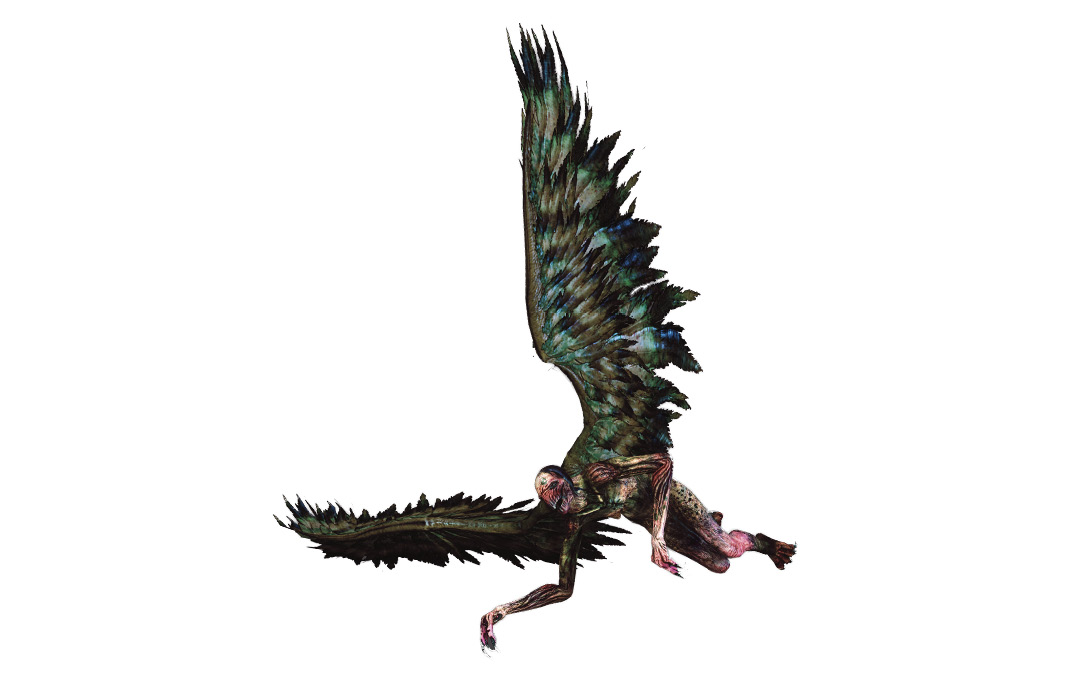
| Loot: Harpy Feathers, Harpy Talon, Harpy Egg, Raw Meat |
“Most monsters don’t actually keep any treasure in their lairs. Harpies, though—they like shiny things.”—Letho, Viper School witcher
It is hard to say what is most repulsive about harpies and their cousins, the shishigas: their hideous appearance, the overwhelming stench of rot and bird excrement that clings to them or their bloodcurdling screech. Suffice it to say that even rats, who dwell happily among the rankest fecal matter and rotten waste, give their nests wide berth.
Harpy nests are most often found atop high cliffs or rocky ravines. Sure signs of having strayed near one are crumbling human and animal remains, guano-streaked rocks and feathers littering the ground.
Harpies and shishigas hunt in flocks consisting of a handful to up to twenty individuals. Though rather cowardly and cautious, harpies fiercely defend their nests and will not hesitate to attack when outnumbering their foes.
During combat they use their ability to fly to dive swiftly to strike their victims one by one before soaring back up out of reach. They can kill with their wings or their sharp beak and talons. Once on the ground they move slowly and clumsily, and thus no longer present much of a threat.
Erynias
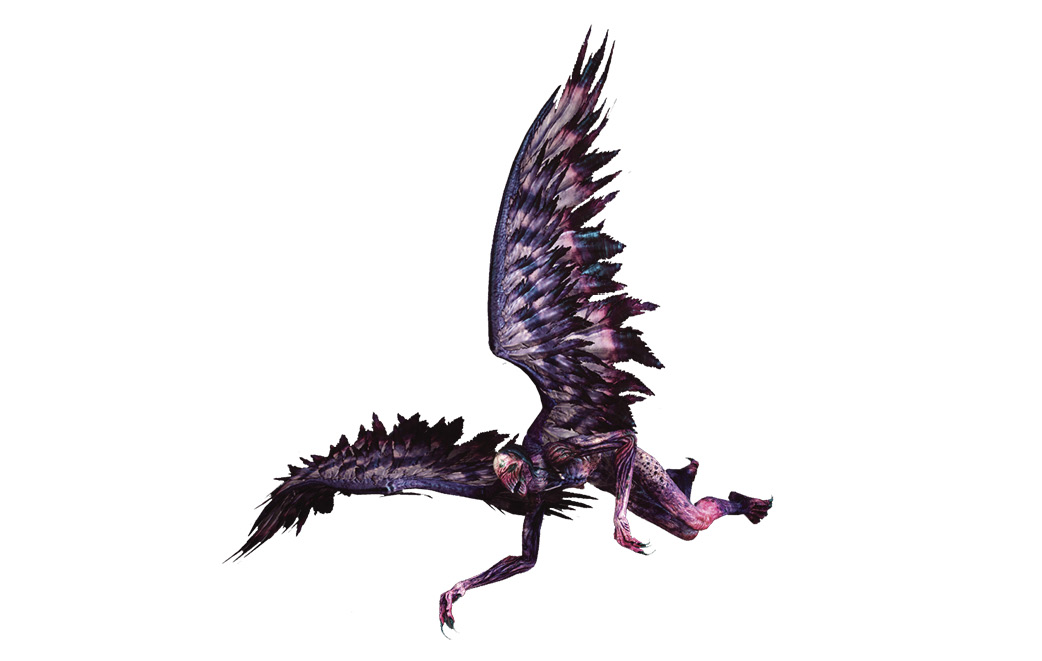
| Loot: Erynie Eye, Infused Shard |
| Environments: Found all throughout the main Continent and Skellige. |
| Nests: Yes, typically found in difficult to reach locations. Tall cliffs and abandoned human structures, such as castle towers, tend to be favored. |
| Vulnerabilities: Grapeshot, Hybrid Oil, Aard |
“A merchant once told me I reminded him of an erynia. Naturally, I immediately teleported him to one of their nests, so he could see for himself how ill-fitting a comparison it was.”—Lytta Neyd, the sorceress also known as Coral
Hard as it is to imagine, the erynias found in Skellige are even more repulsive (and dangerous) than harpies, their close relatives. Though well-rotten carrion is their food of choice, they will not turn up their noses at fresh meat, man flesh included.
When they spy a potential victim, erynias, like harpies or shishigas, will try to make full use of the strength of their numbers and their ability to control the skies. They will circle above their prey then attack from several directions at once, striking with razor-shark talons and tearing their targets to shreds.
While attacking they aim for the neck, eyes and other vital organs, often causing their prey to bleed to death as a result. In this way a small flock of erynias is able to make quick work of larger and better-armed victims, who often are not able to defend themselves effectively from several opponents attacking at once.
Combat Tactics
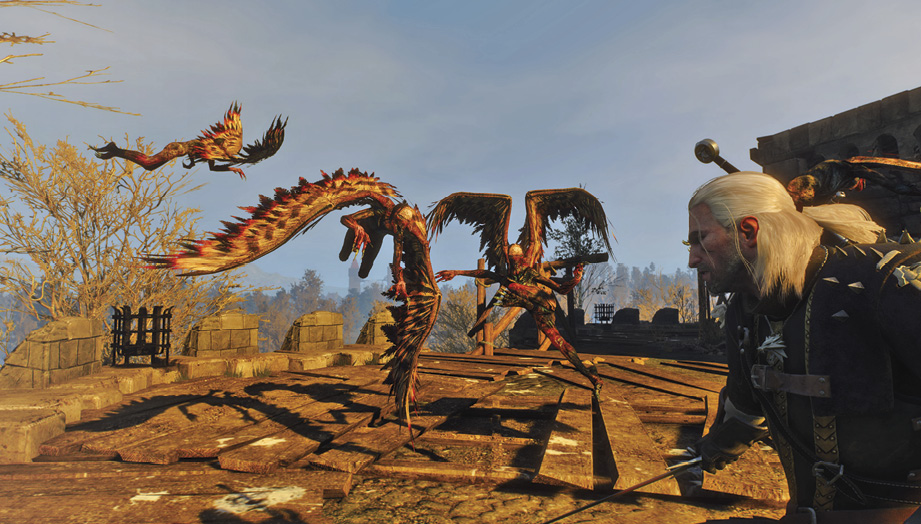
Harpies, erynias, and all their varied sub-species, favor flying and hunting in packs. This could mean a handful of five or six individuals, upwards of twenty. Approach known nesting grounds with extreme caution.
When provoked, harpies and erynias begin circling them from above, swooping alone or in groups of two or three. If they are grouped close enough during a dive, you can catch multiple harpies with area-of-effect abilities or bombs.
Igni is effective against harpies, able to light them on fire and bring them out of the air. Yrden is good for situations where a witcher is surrounded by many harpies in close proximity. Harpies and erynias often come to a hover in front of humanoid victims before lashing out with their talons. Use that moment to prepare a counterattack, or Aard to bring them to the ground.
Like many flying creatures, a bolt from a crossbow, or a good blast of Aard, can be enough to ground a harpy or erynia. They can also be knocked out of the air with a well timed counter-attack. If a witcher is close to one of these grounded creatures, they should take advantage of this moment of weakness and execute them quickly, before they recover.
If many individuals in a flock are converging around a witcher, they should use Aard to blast a path to freedom. Grapeshot can also be used, but one should be mindful of the blast radius.
Erynias are more vicious than their harpy cousins, able to cause bleeding wounds that can overwhelm even a witcher.
Griffins
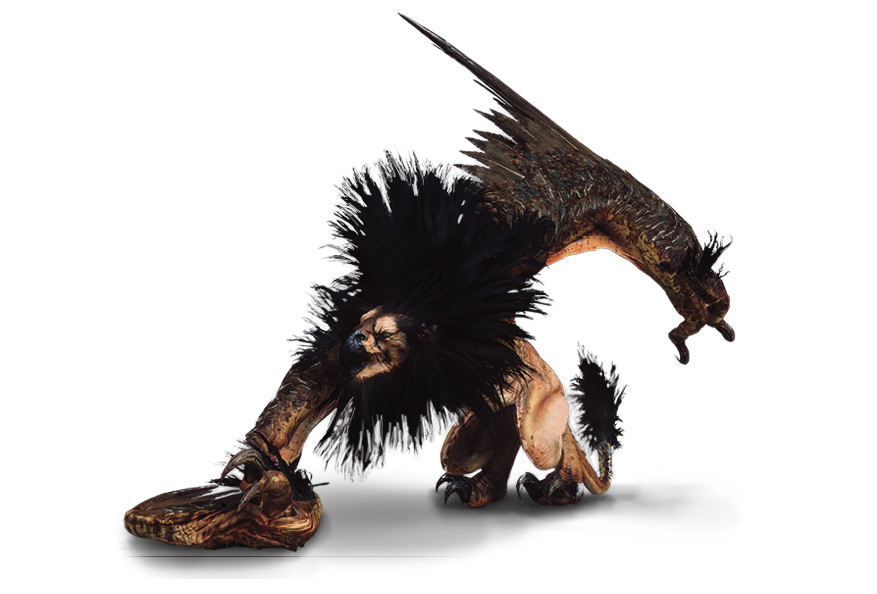
| Loot Griffin: Griffin Egg, Griffin Feathers, Griffin Mutagen, Infused Dust, Raw Meat |
| Loot Archgriffin: Archgriffin Mutagen, Infused Shard, Amber Dust |
| Sub-Species/Named Variants: Royal Griffin, Archgriffin, Opinicus |
| Environments: Griffins have been sighted nesting in Skellige, Velen, the wilderness near Oxenfurt, and even in White Orchard. |
| Nests: Yes. Griffins are fiercely protective of their life-partner and their nests, approaching a known nesting location should be done with caution. |
| Vulnerabilities: Grapeshot, Hybrid Oil, Aard, Quen |
“Aye, half-eagle, half-tomcat, just like on the lord’s crest. ‘Cept this ‘un was carryin’ me dead cow ‘stead of a scepter.”—Griffin attack witness, name unknown
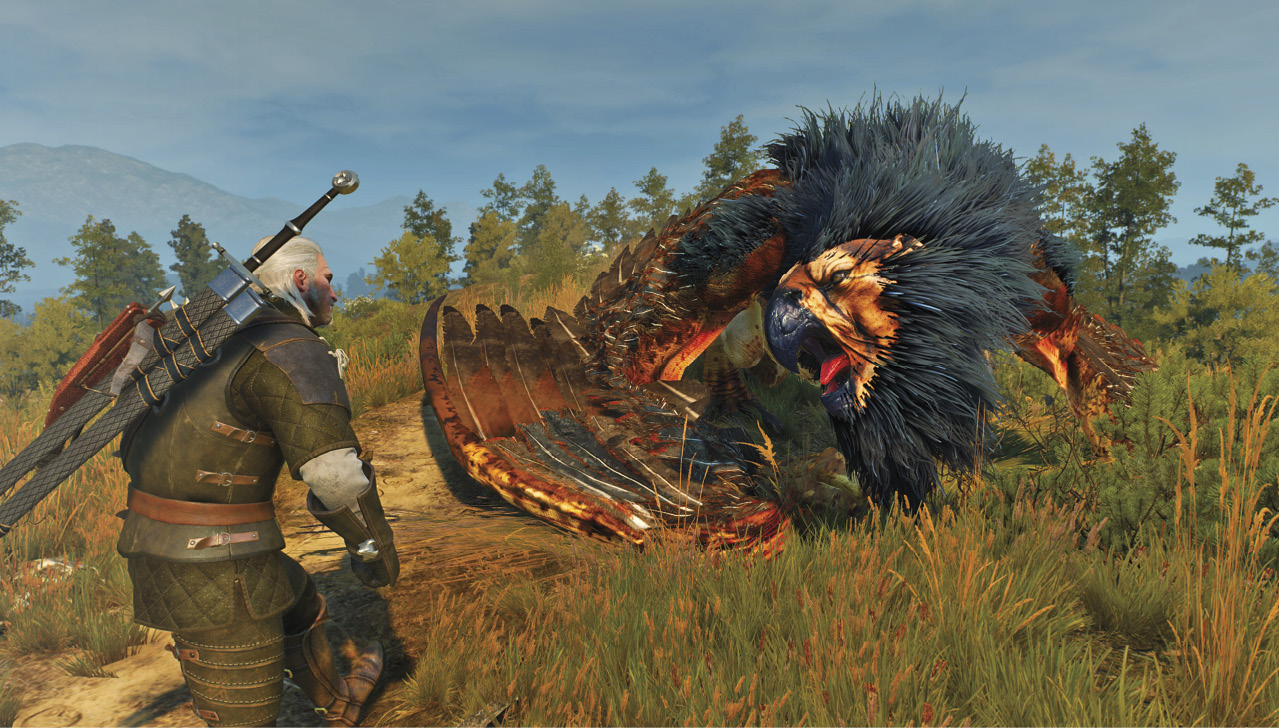
Griffins were once only found high in the mountains, where they would hunt marmots and wild goats. When humans encroached on their lands, however, griffins soon discovered a new source of much more plentiful and easier-caught prey: cows, sheep, and shepherds. Though still wary of main roads and towns (where folk with the means to hire a witcher are likely to dwell), these half-eagle, half-wildcat creatures have gone from rarities to oft-encountered pests known throughout the Northern Realms. Especially hated are the subspecies known as royal griffins and archgriffins.
Griffins mate for life and when their partner is attacked they will defend it to the death. For this reason they are often considered the embodiment of courage, loyalty and fighting spirit. This last attribute no one would deny them—when provoked, they will not cease their attack until they have torn their opponent to shreds.
Griffins find their victims using their extraordinarily perceptive sense of smell. After drawing near to their chosen target they attack by swooping down from great height. Their muscular mass combined with their swift speed mean this blow alone is often enough to end the fight. If, however, the victim survives this aerial assault, the griffin will immediately engage it in direct combat, making use of its sharp, curved beak and powerful talons.The wounds it deals are deep and cause powerful bleeding. Even worse, griffins do not have any true weaknesses, except for their vulnerability to hybrid oil and certain kinds of bombs.
Combat Tactics
Griffins enjoy toying with their prey, swooping in from the skies and raking victims with their talons. A shot from a witcher’s crossbow, or a well timed Aard, can bring a griffin to the ground, but this only means the fight truly begins.
Grounded griffins make excellent targets for explosive crossbow bolts, just be sure to fire them from a safe distance.
You can use Northern Wind bombs to freeze a griffin in place, useful if you need a moment’s respite.
On the ground, a griffin is still incredibly dangerous. They can roar at such a high pitch that even a witcher can be put off balance, pounce from great distances claw and bite at prey.
From the sky, griffins try to repeatedly claw at their targets as they sweep past, or attempt to dive onto their prey. Archgriffins also spit highly corrosive acid at their targets, weakening armor and leaving the man under it exposed to its talons.
Every slash or bite from a griffin can cause serious bleeding. Counter this by casting Quen, or with Swallow potions to regenerate any wounds sustained throughout the battle.
When facing a griffin on the ground, try to stay in and around the reach of your silver sword. If you are too far, the griffin may try to tackle you. This can be very difficult to avoid, and failing to do so could result in death.
Watch the wings of a griffin while fighting it on the ground. Each swipe from the wing talons is telegraphed by that wing being raised high. Try to evade to the side of the griffin to score hits on its unprotected side.
Sirens
| Loot Siren: Siren Vocal Cords, Water Essence, Shell |
| Loot Lamia: Lock of Lamia Hair, Water Essence, Lamia Mutagen, Seashell |
| Sub-Species/Named Variants: Lamia, Ekhidna, Melusine |
| Environments: Sirens can be encountered in costal regions throughout Velen and Novigrad. Skellige is also a major breeding ground or sirens. |
| Vulnerabilities: Grapeshot, Hybrid Oil, Igni, Aard |
“Out at sea, if you hear a beautiful woman singing, turn the ship around at once. You understand? Even if it means sailing straight back into a storm.”—Arike of Hindarsfjall, advice given to his son before his first solo voyage
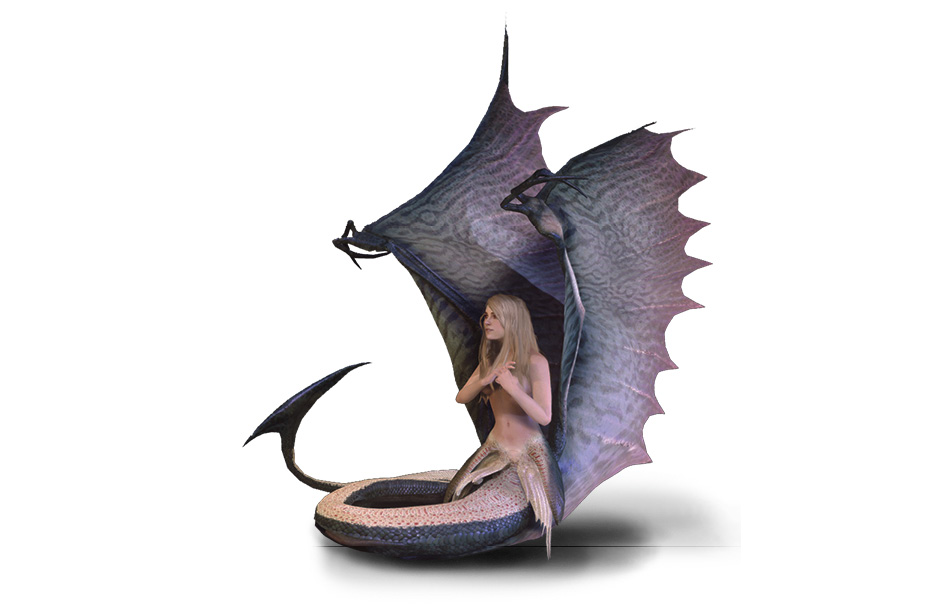
Like skilled hunters setting out wooden ducks to lure in drakes, sirens and lamias lure men near—using their own bodies as decoys. They can transform to resemble beautiful human maidens, though with tails covered in silver scales instead of legs. Once a naive sailor gets within arm’s reach of these beautiful creatures, their fair faces suddenly turn to fang-filled, fish-like maws, and lovely tails promising unknown delights become sharp, death dealing talons.
One legend claims sirens and lamias were once friendly towards men—and supposedly were even known (albeit on rare occasions) to accept some sailors’ clumsy attempts at courtship. In our day, however, they are decidedly aggressive, perhaps soured by the numerous kidnappings of carried out by frustrated sea salts. Whatever the truth, one thing is certain: these days the monsters display no signs of good will, and so when spotting them one should immediately reach for one’s silver sword.
Sirens and lamias (the sirens’ more dangerous cousins) usually hunt in flocks, making use of their numbers as well as their ability to move effortlessly through water and air.
On the ground, however, they are virtually defenseless, and so a wise tactic is to damage their fin-like wings to force them to land. The Igni Sign also proves effective when fighting against them. Threatened or injured sirens will let out a terrifying shriek, leaving their opponents stunned while they escape, and their sisters swoop down for an easy attack.
Combat Tactics
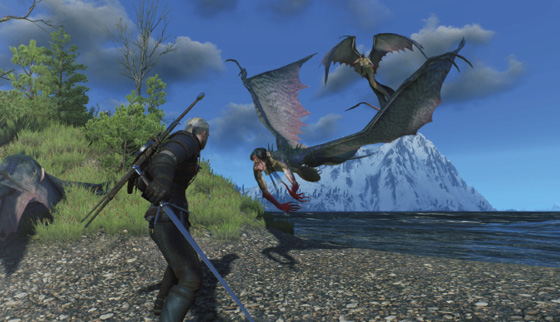
Sirens work in packs, akin to harpies and their ilk. They have been spotted attempting to lure in victims by transforming their appearance to that of an attractive human woman, a deception that quickly ends the moment they become aggressive.
Sirens can move as quickly in water as they do in the sky. When sailing in siren-infested waters, expect to see the monsters transition from the seas to the air as they surround their prey.
Aard, Grapeshot, and a witcher’s crossbow are enough to ground a flying siren. Sirens of all types are especially vulnerable to Igni, as well as any bombs that can set victims afire. It is possible to counterattack a siren as they dive out of the air at their target. This grounds them and can severely wound them.
As with the harpy, a grounded siren is a siren that has all but presented themselves for execution. Witchers presented with this opportunity should not hesitate.
Sirens prefer swooping on their prey, slashing with their claws, or tails as they sweep past their victims. They rarely stay still in the air, but are at their most vulnerable when they do so.
Wounded sirens can produce an ear-piercing screech that stun their attackers. Other sirens can use this moment to rescue their sister, diving in on the enemy and allowing their injured to escape.
Succubi

| Loot: Perfume, Flowers, Succubus Mutagen |
| Sub-Species/Named Variants: Salma |
| Environments: Succubi will try to live close to their ‘prey’, near towns and villages. Bolder succubi have been known to inhabit cities. |
| Vulnerabilities: Hybrid Oil, Quen |
“Again?! Good grief, woman, I’m spent…”—Lester of Smallton to a succubus, a few days before taking a vow of celibacy
Unlike other monsters, succubi and menads feel no desire to kill, do not crave human blood and usually do not, in fact, mean any harm at all. They are motivated by one thing and one thing only—an insatiable lust. They try in vain to slake this by engaging in sexual acts with any other humanoid species they encounter. While it must be admitted that their “victims” rarely put up much resistance, this does not mean succubi and menads do not present any danger: their never-ending advances, though pleasurable at first, have pushed more than one man to madness or even death.
Succubi and menads usually can be found near human settlements, including small villages and populous cities. They prowl at night, though when stricken by serious need they will leave their lairs during the day as well. They shower their affections on men as well as women, the young as well as the old, the ugly as well as the beautiful. Some of them are particularly fond of pastors and other holy men, whose seduction they treat as a sort of game.
Though succubi are peaceful by nature, when forced to fight they will defend themselves fiercely. One should thus not be fooled by their fair appearance—under the velvety skin of their arms lie muscles of iron, and a blow delivered with their rear, goat-like legs or the thick horns on their head can easily crush bone.
Combat Tactics
Clever witchers may be able to talk down a succubus, with stories of witchers seducing a succubus and allowing them to flee a region whispered among commoners.
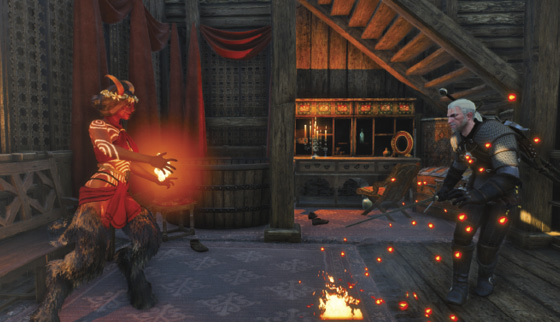
Should a witcher choose to slay a succubus, they must act quickly. Succubi are known for the surprising brute strength. They can also be accomplished spell-slingers in their own right, commanding fire with natural aptitude.
The simple flashes of fire that a succubus can call upon can disrupt any sword technique a witcher is capable of, and there is no defense save for Quen, or frantic rolls away from the flames.
Relentlessness is key. A succubus cannot be allowed to control a battle. Explosive bolts or Aard can disrupt their spell-weaving, Northern Wind can freeze them in place. A witcher will succeed in slaying a succubus if they can pin them down and unleash a flurry of silver sword strikes.