
The Witcher 3: Wild Hunt Guide Getting Started Witcher Training
Gwent: A Game of Cards
Gwent is a dwarven card game that simulates battle between two opposing armies. Your first opportunity to play it is in the small of village of White Orchard, which you visit at the beginning of the game. A scholar at the tavern is willing to teach you the ropes with a tutorial game, and this opens Geralt to the world of Gwent, as well as an extensive series of side-quests that put him up against the best players across the known world!
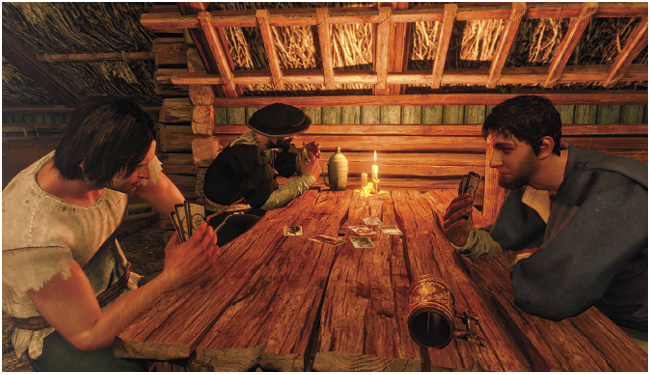
Who plays Gwent?
Several merchants and innkeepers are willing to play Gwent if you ask, but the game isn’t limited to just them. You may stumble across professionals in a regional competition or encounter an ongoing tournament at a larger social event. There are also players that you have only one opportunity to challenge while tackling another quest.
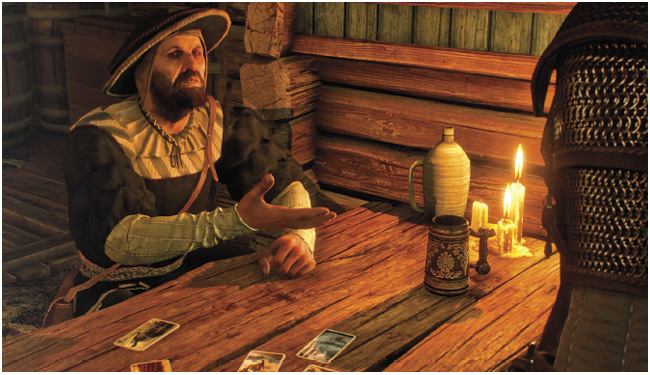
Basic Game Flow
- Starting player is chosen via coin toss.
- Players draw 10 randomized cards from their current deck, then choose up to two cards from those to discard and redraw, in hopes of replacing them with better cards. This is your hand for the duration of the match (Special Abilities affecting your draw not-withstanding).
- When the match begins, players place a Unit Card on the game board in the appropriate combat rows, one card per turn unless special abilities of the card deck dictate otherwise. Additionally, Weather Cards can be put into play to further influence Unit Card Strength. Each Unit Card is worth a certain number of Strength points. These points add to your total. The ultimate goal in a round of Gwent is to have more points than your opponent.
- Play continues until cards are exhausted or a player passes their turn and their opponent’s Strength total outweighs theirs.
- The first to win two rounds is the winner of the match.
Deck Types
There are four types of decks in Gwent: The Northern Realms, the Nilfgaardian Empire, the Scoia’tael, and Monsters. Each deck type has a unique Leader Card, and themed sets of Unit Cards, Weather Cards, and Special Cards. Each deck has a special ability that further differentiates it from the others.
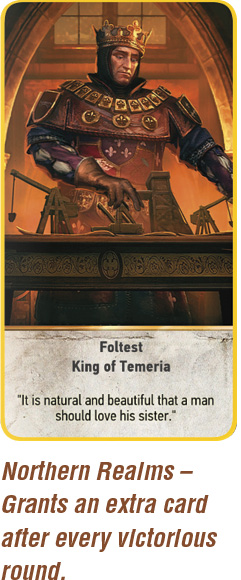
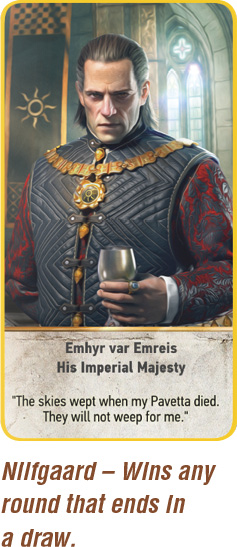
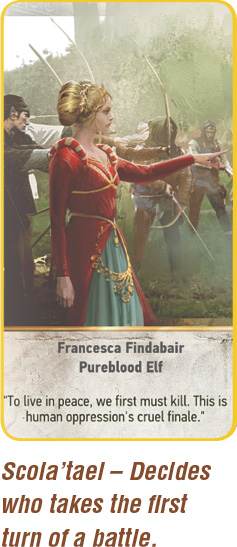
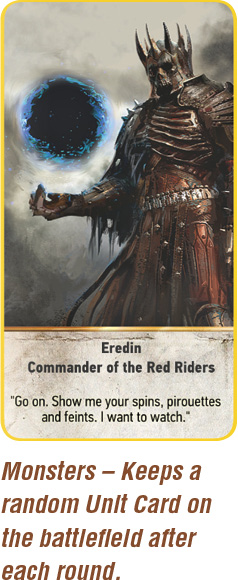
Important individuals in the world are often memorialized as a Gwent Card, which gives them value to collectors. Many games you play end not with a monetary reward, but with a unique card.
Leader Cards
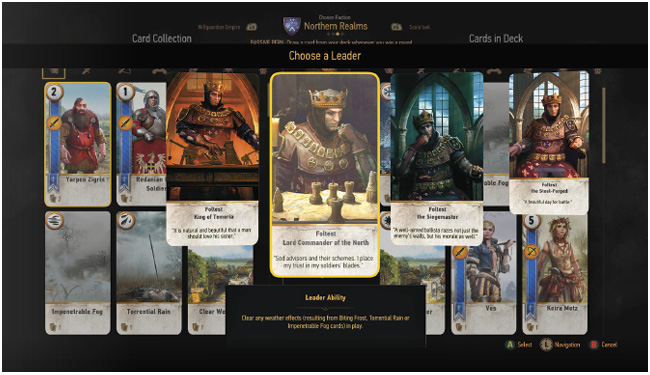
Each of the four deck types in Gwent has a Leader Card, the commander of the forces represented by that deck. These special cards have abilities that can be invoked during a player’s turn, once per match. Used correctly, a Leader Card can cause dramatic comebacks, so it’s important to understand what your Leader Card can do and then use that ability accordingly. Each Leader Card has a number of variants that can be earned, found, or purchased, each with special abilities unique to it. The Gwent Card Collection section has a full listing of Leader Cards and their abilities.
Unit Cards
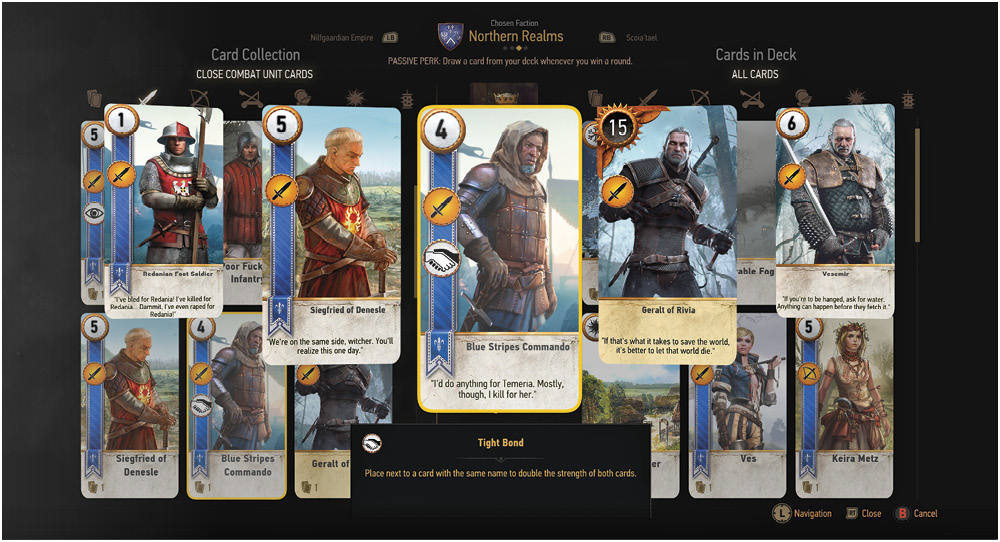
Unit Cards constitute your primary means of earning points. There are three types of Unit Cards to place on combat rows: Close, Ranged, and Siege. Some of these cards possess special abilities that enhance the Strength of other cards on the board, and can allow for dramatic reversals in the middle of a match. A full list of Unit Cards can be found in the Gwent Card Collecting Appendix.
Special Cards
Each deck type includes special cards that have a variety of effects on cards in play, giving the decks additional ways to respond to plays made by opponents. Among these are Weather Cards, which are shared across all deck types.
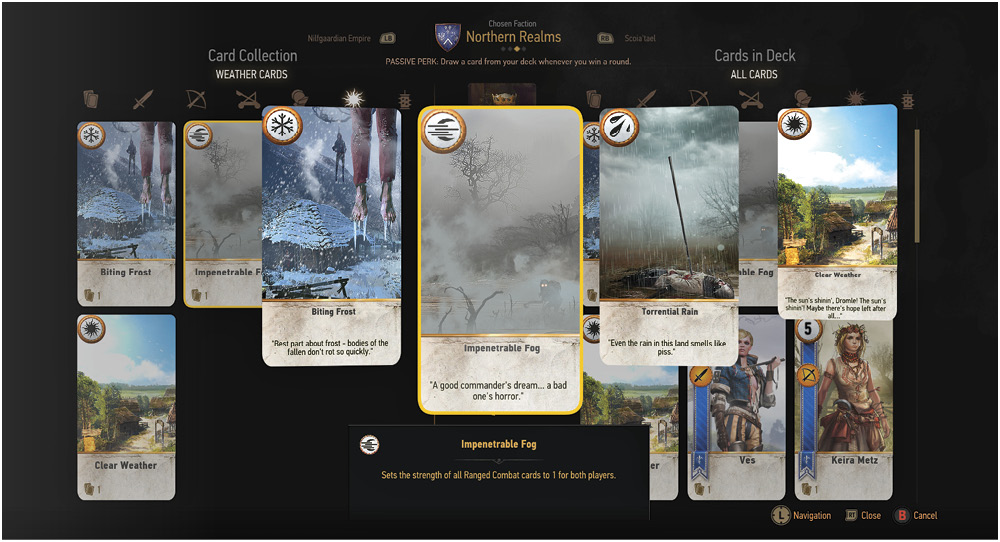
Weather Cards can cripple the Strength of all cards of a given type on the battlefield—both the opponent’s and yours. Playing them requires some forethought, as this can wildly affect the Strength totals for both sides. There’s also a special Weather Card that clears all other Weather Cards in play. This can completely negate a stratagem relying on Weather Cards.
There are three offensive types of Weather Cards and each affects a specific Unit Type: Snow that affects Close Combat cards, Fog that affects Ranged Combat cards, and Rain that hampers Siege cards. All Weather Cards should be played with care, as they can ruin your own strategy, as well as the competition’s. Remember that just as you can play a weather-clearing card, so too can your opponents.
Hero Cards
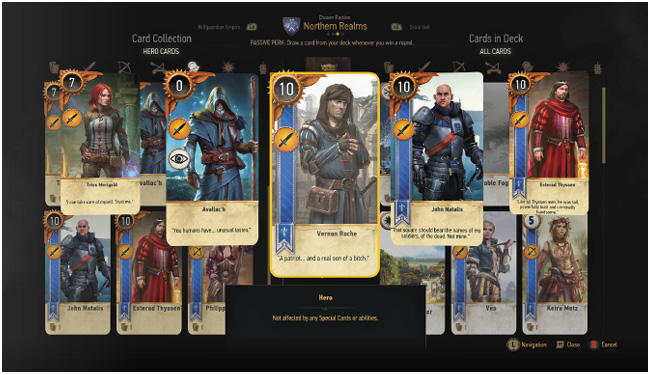
Heroes are unique to each deck. These special individuals are related to the factions represented by the four Gwent deck types. Heroes are immune to the abilities of Special Cards, which makes them very useful in situations where the rest of your card draw is being stymied in some way by Special Cards. In general, Hero Cards are far more powerful than standard Unit Cards.
Neutral Cards
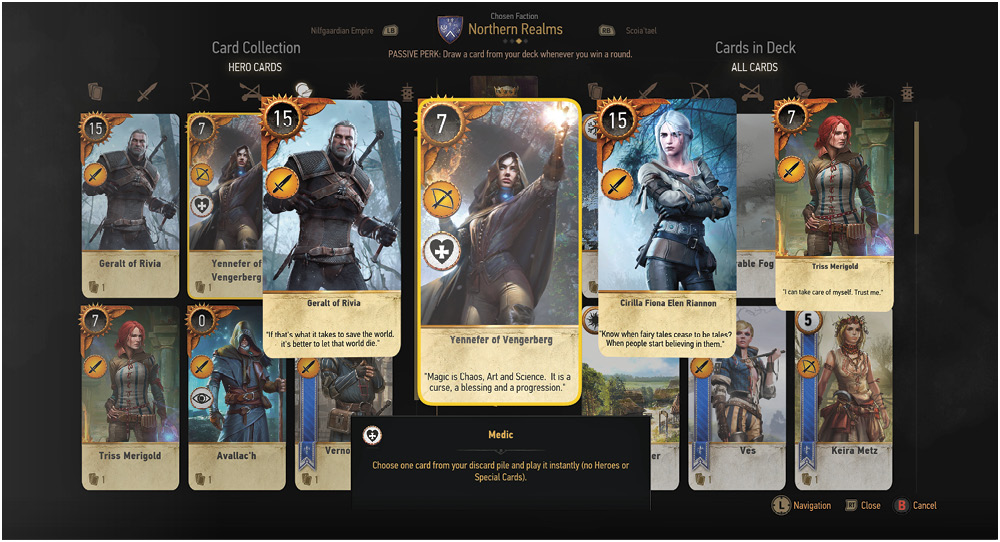
There are Hero Cards that do not belong to specific decks. These special Unit Cards include Geralt of Rivia, himself; Yennefer of Vengerberg; and even Cirilla. They fill the roles of various Unit Types and can have special abilities to further improve other cards on the table.
General Gwent Tips
- Play Cautiously: You draw only 10 cards from your customized deck at the start of a match. Outside of any special abilities that allow you to draw more cards from the deck, that’s it! Don’t blow all of your best cards too early in a match; you must win two rounds with those 10 cards!
- Pass if you must, and pass wisely: You can choose to pass a turn for any number of reasons. If your opponent’s cards feel too overwhelming for that round, if you feel that they might be over extending their cards and playing too strong in an early round, if you’re confident they cannot counter your hand, etc. Just remember that passing a turn is not automatically forfeiting a match! It is just as much a part of your strategy as playing a card at the right time. Again, remember that you have only 10 cards to work with across potentially three rounds of Gwent!
- Weather Cards are a double-edged sword: Weather Cards can dampen the effects of cards for both players. Knowing this, if you intend to use a Weather Card, wait until it looks like your opponent is favoring a row that your weather can affect, then try to strengthen combat rows that aren’t going to suffer the weather effect.
- Acquire new Gwent cards ASAP: The deck you begin with might be capable of beating your earliest competition, but if you want to defeat all comers, including the special opponents holding onto the rarest cards in the world, you must form a much better deck. You can buy new cards as early as the Inn at White Orchard during the story’s prologue, where you first learn how to play Gwent.
- Integrate powerful new cards into your deck as soon as you get them: Decks do not make themselves. You need to add the cards to your deck for them to be of any use.
- Minimize your deck size: The more cards you have in a deck, the less chance you have of drawing the specific ones you want. Craft your decks to be as lean as possible, ensuring a good spread of Unit, Special, Neutral, and Hero Cards to cover your bases. It’s just as important to cull weaker cards or those that don’t fit the strategy to which you’re tailoring the deck.
- Challenge Gwent players met during quests: Some quests involve larger events where Geralt may encounter Gwent players while he takes on other important tasks. If you have an interest in collecting all the cards, challenge them as soon as possible. You may not get another chance, and this can cost you some rare and powerful cards! We have identified quests where Geralt encounters Gwent opponents in the Quest sections of this guide.
Collecting Gwent Cards
It’s possible to acquire the 197 Gwent cards in many different ways.
- You can win a random card from the list presented in the Complete Gwent Card List Appendix. These are won by bettering merchants, crafters, traders or innkeepers you meet on your travels, in a game of Gwent. You can only win one random card from each until the pool is depleted. Need to know where all these potential players are? Look for “Merchants and Repairs” icons in the guide’s Atlas.
- You can win unique cards by playing with different NPCs as part of Gwent-related quests, or during specific events and non-Gwent related quests. It’s possible to miss out on these cards entirely, so be sure to play any important faces you encounter over the course of the game!
- You can buy them from vendors. Check out taverns and inns all around the world. Various curio merchants in Novigrad may also offer a wide selection of cards.