
The Witcher 3: Wild Hunt Guide Appendices and Compendiums The Bestiary
Vampires
The classic tale of the vampire is that he or she disguises themselves as an individual of refined breeding. One that seeks out their victims with the interest one would expect from a person culture. They seduce their prey, drink their blood, and can transform into a bat. Effectively immortal, a vampire can live for decades, even centuries, before they are detected, much less slain.
For one type of vampire, all this can hold true. For other others, they are monsters like any other.
Ekimmaras
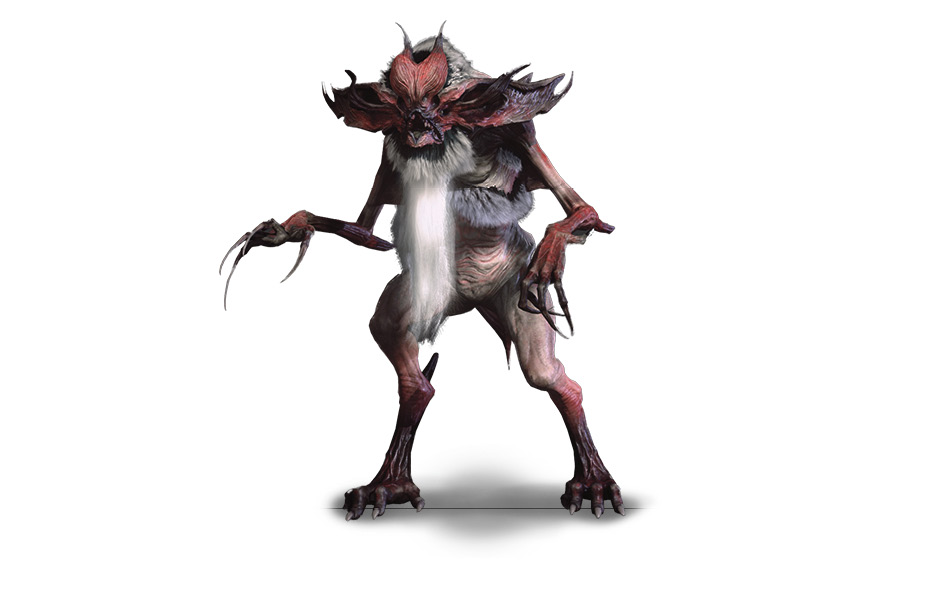
| Loot: Ekimma Epidermis, Vampire Saliva, Ekimma Mutagen, Vampire Fang |
| Sub-Species/Named Variants: Sarasti |
| Environments: Ekimmaras are intelligent enough to hunt in cities despite the number of potential threats, or stalk remote villages. |
| Vulnerabilities: Devil’s Puffball, Vampire Oil, Igni |
“Bah, ain’t nothing to fear. Ekimmaras, why, they ain’t nothing more than overgrown bats.”—Anonymous city guardsman’s last words
Like other vampires, ekimmaras are not, despite what village gossips might say, undead humans. They are instead post-Conjunction monsters who have no particular feelings about garlic, holy water or religious symbols.
Unlike their portrayals in ballads and legends, they look nothing like handsome, pale aristocrats with charming eastern accents, though, like katakans or nekurats, they do bear a strong resemblance to overgrown bats. They also do not suck blood from the necks of virgins with a delicate, kiss-like bite—they tear them to shreds using long, sharp claws and then slurp the splattered blood off the ground.
Ekimmaras are unusually cruel and exceptionally swift. They are able to quickly land blow after blow capable of smashing even the best Mahakaman-made armor into tiny shards. They should be fought with a silver sword, remembering that they can regenerate back health over time. One should thus never attempt to tire them out or, gods forbid, wait for them to bleed to death. Instead, cut them down as quickly as possible and, if possible, burn the body to ash and scatter it to the four winds.
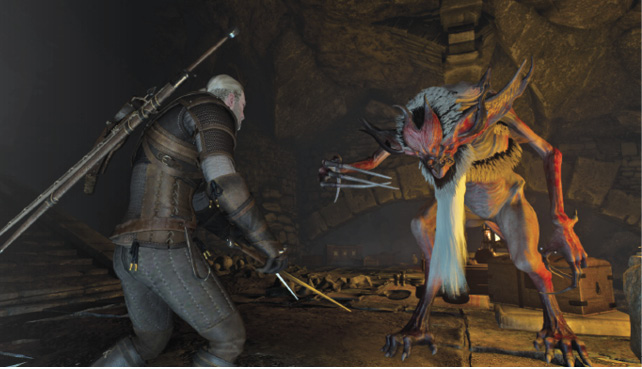
Combat Tactics
Ekimmaras are especially dangerous foes due to their ability to regenerate. They can even outlast a witcher using the finest potions.
Black Blood potions are an effective way to weaken an ekimmara. If you are stricken by their claws, you will bleed profusely. That blood can harm the ekimmara and knock it back, allowing you a brief respite from its assault.
Dodging is essential when fighting ekimmaras. Their claws cannot be parried, and even if Black Blood is an available witcher brew, it is best to avoid being wounded altogether, if you can help it.
Higher Vampires
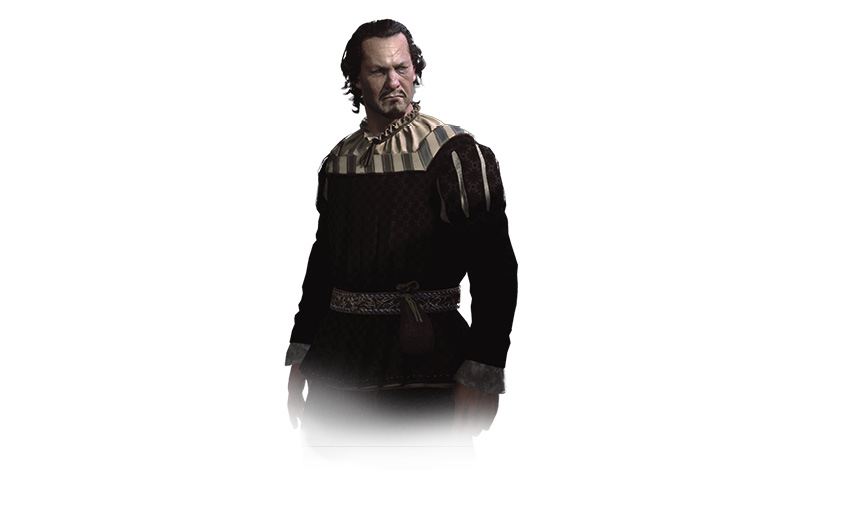
| Loot: Orens, Deargdeith, Sapphire Dust, Rubedo |
| Sub-Species/Named Variants: None |
| Environments: Higher vampires have been found living among humans in cities. The problem is finding them in the first place. Some vampires have lived for centuries, and cannot be easily caught. |
| Vulnerabilities: Vampire Oil, Igni |
“Men, the polite ones, at least, would call me a monster. A blood-drinking freak.”—Emiel Regis, higher vampire
Only a mutual thirst for blood links higher vampires to their distant and much more primitive cousins: ekimmaras, alps, katakans and the like. Higher vampires are, in fact, much more similar to humans than to those bat-like blood slurpers. They not only resemble us in appearance, but also share our intelligence and behavioral patterns. This means they do not squat in distant forests or hide in the shadows. On the contrary, they are particularly fond of cities, where they live out deceivingly normal lives. Even witchers are not capable of recognizing them at once, for their medallions remain perfectly motionless in the presence of higher vampires. Yet all these similarities should not blind us to an essential difference: unlike men, higher vampires are immortal. Those who have faced them in combat and survived can be counted on one hand.
It is a witcher’s good fortune that higher vampires are extremely rare, and not all are dangerous to humans. Though they do have a taste for blood, they do not need to drink it to survive. Some higher vampires have renounced feeding on humans altogether and do no harm to anyone, but others give in to their desires. A witcher who braves fighting a higher vampire must bear in mind that he faces a monster endowed with incredible strength, one invulnerable to fire, able to manipulate men and animals, turn invisible and transform into a giant bat—and furthermore one which it is nearly impossible to kill. In other words, even an experienced monster slayer should think twice before accepting a contract on one of these creatures, even if half a kingdom and a princess’ hand is in the offing.
Combat Tactics
An exceedingly rare opponent for a witcher, higher vampires possess nearly unmatched strength and intelligence among all foes one could face. When they are transformed into their beastial state, evasion is key to surviving the encounter, but this is made difficult due to their speed.
Higher vampires also favor striking while invisible, appearing only when they are an eyeblink away from sinking their claws into a victim. This makes Yrden absolutely vital both for revealing the vampire, but also for keep it in place long enough to cut it down with a silver sword, ideally coated in vampire oil. Igni is one of the few real weaknesses a higher vampire possesses. Use it if you can, if it catches on fire it will be stunned for a brief moment.
Black Blood is useful… but comes with the obvious risk of allowing the vampire to draw blood in the first place. Do not rely on it to save you. It is best to have Quen prepared to absorb a blow, then cast Yrden to keep the monster in place for your silver sword. Drink a Tawny Owl potion to make it possible for faster Sign usage.
Katakans
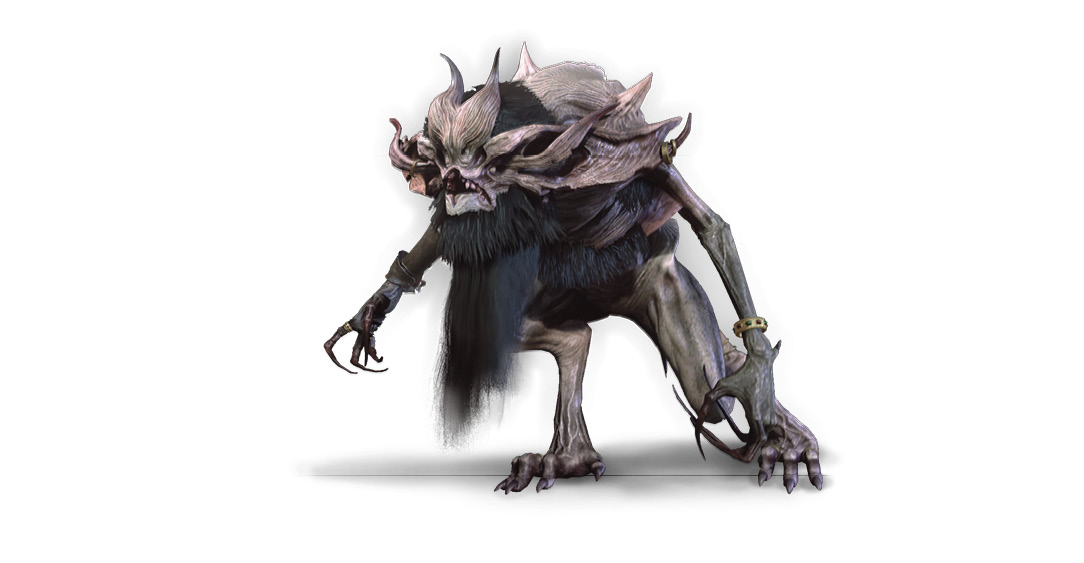
| Loot: Vampire Fang, Vampire Saliva, Katakan Mutagen |
| Sub-Species/Named Variants: Gael |
| Environments: Katakans, like their ekimmara cousins, these monsters can hunt just as easily in a city, or in dark caves somewhere in the wilderness anywhere in the world. |
| Vulnerabilities: Moon Dust, Devil’s Puffball, Vampire Oil, Yrden, Igni |
“Melitele, Great Mother, protect us from evil, from unclean devils and foul demons, and most of all from the clutches of katakans and nekurats...”—Fragment of a prayer
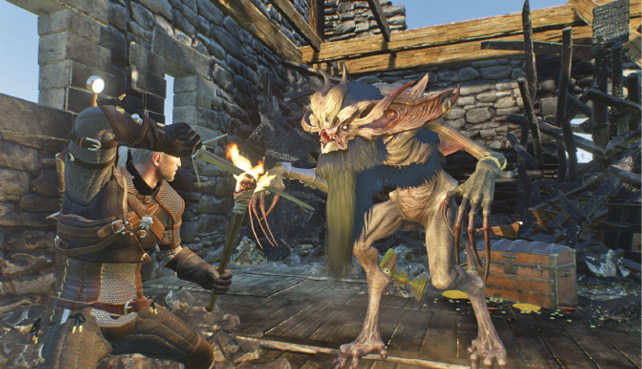
Katakans and their more dangerous kin, nekurats, are the embodiments of human fear. They hide in the shadows. They feed on blood. They resemble enormous bats, though with long fangs and even longer talons. And, as if that weren’t terror enough, they can turn invisible, waiting unseen while dread of their unpreventable attack overwhelms their victim.
When fighting a katakan one must pay particular attention to its shadow—often the only way to know its location.
Katakans are invulnerable to steel, regenerate quickly, and demonstrate acute hearing. To even the odds one can temporarily immobilize katakans using the Yrden sign, then seize that moment to attack with all one’s might, for there might not be another chance.
Unfortunately, the legends are wrong and the sun’s rays do not turn katakans to ash. They are vulnerable to sunlight, however, and when the sun stands at its zenith their regeneration is considerably slowed.
Combat Tactics
Katakans are notably smarter and more powerful than ekimmaras. Their power only increases at night, and so a witcher should take additional precautions if they hunt one at those late hours. Alternatively, the witcher should wait for daylight, so the katakan’s natural regeneration is impaired.
Yrden is one of the most valuable tools when hunting a katakan, undoing its invisibility, allowing a witcher to feed them a silver sword.
Another way to draw out a katakan from invisibility is through the use of Igni, fire-starting bombs, and Moon Dust.