The Witcher 3: Wild Hunt Guide Getting Started Witcher Training
Interactions
Geralt can interact with the world without putting fists to faces or swords to skulls. He must find the supplies he needs in the environment that surrounds him, pick up on clues or notes, or speak with individuals who know what he needs to know.
Looting and Theft
After combat, or while exploring a locale, Geralt can sift through containers, crates, leather bags, treasure chests, dead bodies, and just about anything that could possibly contain something of use. Plants of many varieties can be picked for use in potions and mutagen decoctions. Defeated enemies can be looted, or will leave behind bags that can be looted.
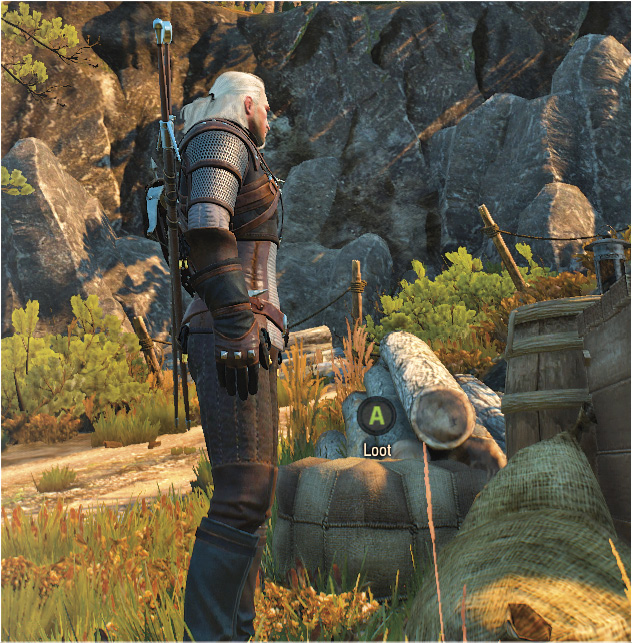
Be careful about where you are when you’re ‘procuring’ supplies. Breaking into someone’s home to ‘borrow’ expensive plates and cutlery to fence to a merchant will be seen as theft by witnesses, and whatever counts as law enforcement in the area may be inclined to respond with violence, even if it means standing up to a witcher.
How Equipment Loot Works
Outside of very specific items, loot from all sources (bags, chests, drawers, etc.) is generated at random. However, you will generally not find a relic silver sword in a farmer’s bucket.
All possible lootable objects have a hidden value, and if the loot container is of high value, the better the chances are that you will receive powerful items and high-quality crafting and alchemy materials. Check the Atlas for maps showing many of the highest quality loot containers.
The other factor affecting loot is Geralt’s level. If Geralt finds a weapon or piece of armor in a chest, Witcher 3: Wild Hunt will make the item be set at or around his level, sometimes lower, sometimes higher. The only exceptions to this are pieces of loot that have a fixed level regardless of Geralt’s. The level a piece of armor or a weapon can be equipped at greatly influences its stats, so always be on the look out for stronger pieces of equipment as you travel through the world!
Repairing Items
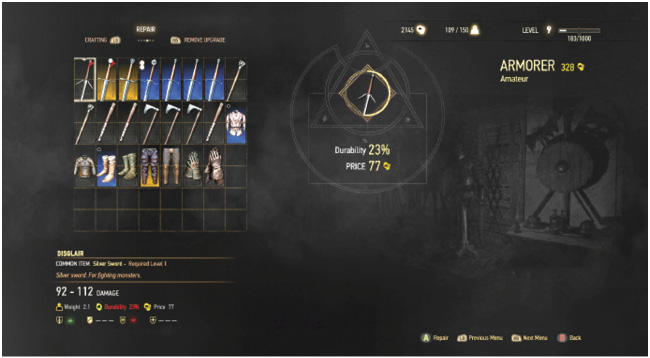
Swords dull, armor bends and breaks. As each item wears down, it loses value and becomes less effective. Hiring a properly skilled smith to repair the item can fully restore it’s durability. Some smiths also have crafting tables and grindstones that can provide a time-limited bonus to armor and damage when used. Additionally, armor and weapon repair kits can be purchase or crafted to help maintain gear in the field.
Beginning Conversations
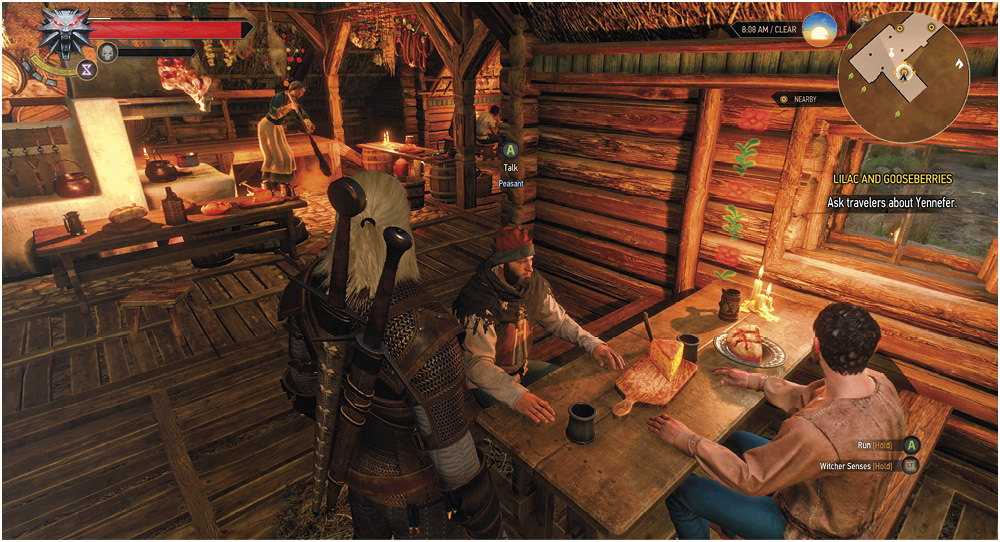
You can walk up to any individual who isn’t already spoiling for a fight and try to speak with them. If they have more to say, or if it’s someone with whom Geralt needs to discuss important business, you enter a full conversation, complete with various choices in dialog that influence the direction of the dialogue.
Portals
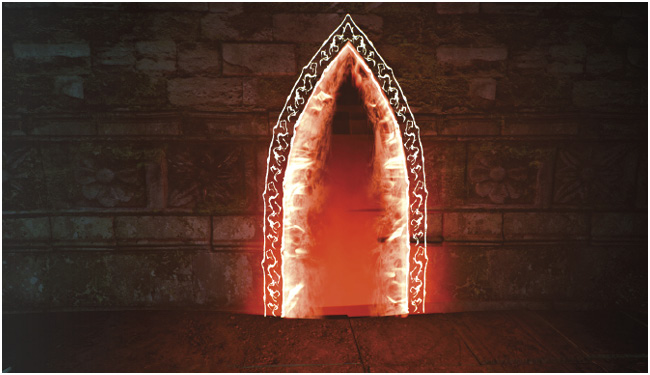
Portals (usually) require some kind of power source to be turned on before they can be used. Mainly utilized during quests, or by sorceresses as a means of rapid travel, expect to walk through these rips in time and space, then emerge in a different location—and sometimes even a different world! All important portals are noted throughout the Quest sections of this guide.